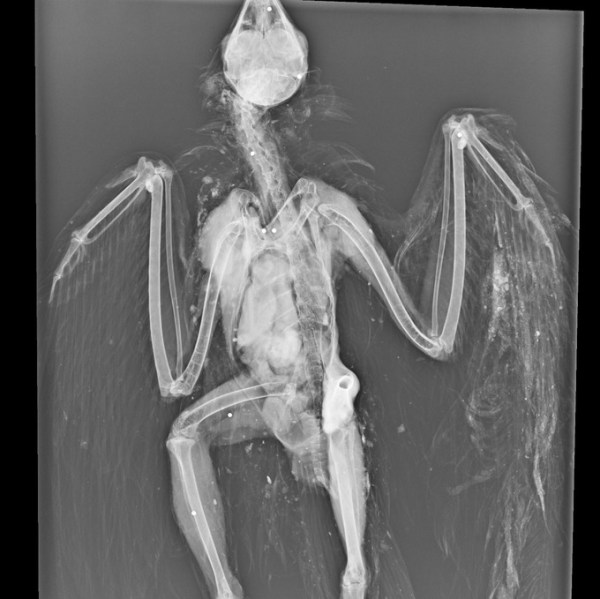
Buzzards found poisoned & decapitated in Co Cork

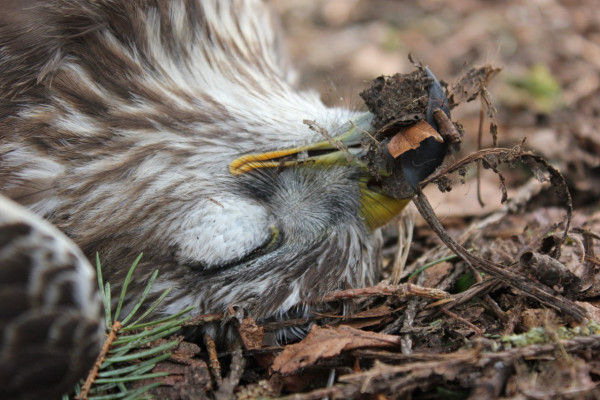
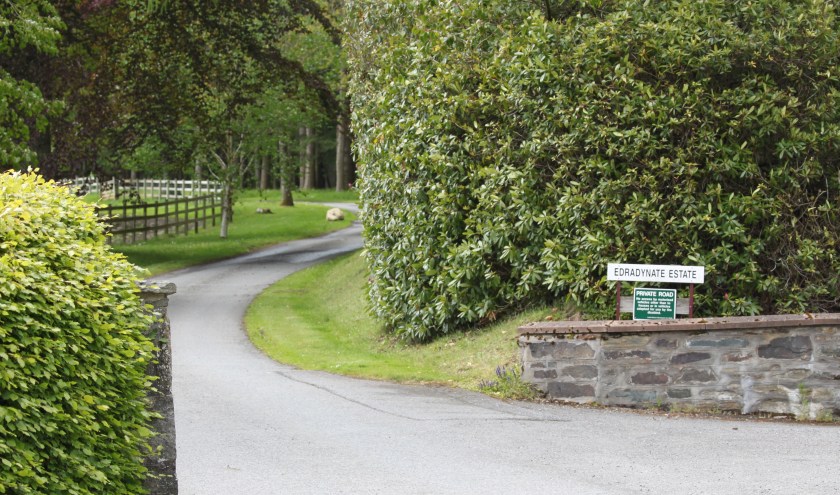
Reported on BirdWatch Ireland’s facebook page on 24 April 2018, news of three dead buzzards found in a field at Ring, near Clonakilty, Co Cork.

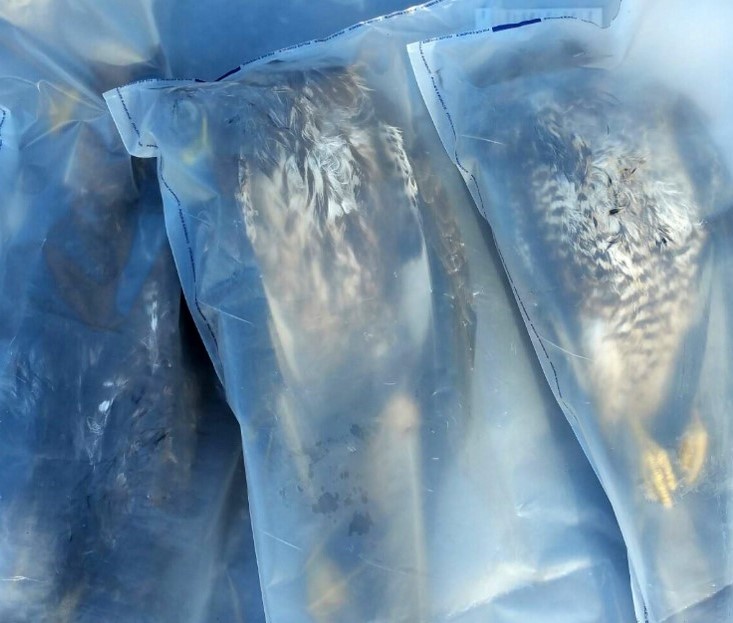
The birds were found in January and collected by staff from the National Parks & Wildlife Service (NPWS) to be sent for post-mortem. X-rays showed no sign of lead shot but two of the buzzards had missing heads and one had a missing leg.

Toxicology results have revealed high levels of the highly toxic pesticide Carborfuran as well as two rodenticides.

The NPWS is investigating and calling for information.

More details on the BirdGuides website (here).

Photo of the dead buzzards in evidence bags [photo by NPWS]

SNH issues licence for mass raven cull in 5-year ‘experiment’

To the utter disbelief of conservationists, statutory conservation agency Scottish Natural Heritage (SNH) has issued a licence authorising the mass killing of ravens in a large area of Perthshire (an area identified as a wildlife crime hotspot where six satellite-tagged eagles have suspiciously disappeared in recent years), as part of a proposed five-year experiment, on the basis of ‘seeing what happens’ to wader populations when ravens are removed.

The licence has been issued to a consortium calling itself the Strathbraan Community Collaboration for Waders (SCCW) which, according to the licence application, ‘represents some of the local land management (farmers, gamekeepers) and private interests in the area who value wading birds for their biodiversity, social and economic value to the area and to Scotland more widely. The application is supported by the Scottish Gamekeepers Association and technical advice and support, notably data gathering and interpretation, is being provided by the Game & Wildlife Conservation Trust (GWCT)‘.

The following has been written by a group of Scottish Raptor Study Group (SRSG) members as a guest blog:

STRATHBRAAN RAVEN LICENCE

The news about the missing white tailed sea eagle disappearing in Glen Quaich on Tuesday 17th April could sadly not have been more timely as Scottish Natural Heritage, (SNH), have issued a licence to several estates in the Strathbraan area in Perthshire, including Glen Quaich Estate, for the killing of 300 ravens in a large scale trial over five years to see if wader productivity and populations can be improved by removing raven predation.

The manner in which the government’s statutory nature conservation agency have conducted themselves has come as a shock and there is grave concern about the mis-application of science, the lack of consultation with key stakeholders, such as the RSPB and SRSG, their choice of estate partners and the lack of transparency, trust and honesty, and even seasoned SNH watchers are aghast.

We have raised our concerns and are unhappy with the response so far and have resorted to writing this blog to make the matters public. Following the “suspicious” disappearance of the white tailed sea eagle and the fact the police are describing this as ‘an illegal act’ we call upon SNH to conduct a review and if the circumstances fulfil what we consider to be the established criteria set out in SNH’s own report then we expect the licence to be withdrawn.

Our concerns focus on three areas, firstly the choice of partners:-

Firstly when selecting a trial area why would you choose an area dominated by driven grouse shooting with a history of illegal raptor persecution? What message does this send out to the many law-abiding estates? Is it that persecution will enable you to ‘cut a deal’ with the statutory nature conservation body? Cynics might suggest this is more about an opportunity to kill ravens in an attempt to protect red grouse stocks and it could also be argued that a licence has been issued to kill one species of bird to enable another bird to be shot for fun.

[Map of proposed cull area in north Perthshire, from the licence application, running from Loch Tay in the west to the A9 in the east]:

Raptor workers over the years have been monitoring the area and can speak with authority on raptor persecution. The Scottish Government’s review of satellite-tagged golden eagles showed that four of these birds have disappeared suspiciously in this area, with a satellite-tagged red kite also disappearing in 2010. In all cases, the tags can be classed as “stopped – no malfunction” as used in the review – ie. highly suspicious.

[Map of north Perthshire showing the last known fixes of five satellite-tagged golden eagles that disappeared in suspicious circumstances. Sea Eagle Blue X also disappeared in Glen Quaich last month]:

In addition, a radio-tagged white-tailed eagle was tracked to this area, but disappeared in January 2012, while a further satellite-tagged white-tailed eagle recently similarly disappeared in Glen Quaich. An illegal clam trap was found in November 2012, while a buzzard was spring-trapped in January 2012. A red kite was found poisoned in January 2015. A raven was poisoned in 2017. In addition, licenced raptor study group members have noted a number of cases of suspicious failure of nesting attempts by hen harrier, red kite and buzzard across the area. They have also recorded a higher than usual turnover of red kites and a loss of breeding pairs at nearby sites. All of which indicates on-going illegal persecution.

Even bearing in mind these detected incidents represent an unknown proportion of actual persecution taking place, this is an area where land management practices have displayed a proven criminal intolerance to protected species, stretching back for many years. All this has been in the public domain so why did SNH press on knowing that their partners in this initiative have such a dubious record, and what level of confidence can we have in their honesty and integrity?

Secondly, science and key questions that remain unanswered:-

  • What monitoring is in place to assess that this cull will not affect the raven population status?
  • How will SNH be able to differentiate from other factors affecting the decline of waders such as other predatory pressures, the loss of suitable habitat and changes in agricultural practices?
  • What criteria will be used to differentiate between breeding and non-breeding birds? This year we have noticed that the breeding season is later than usual.
  • What allowance has been made for the immigration of immature flocks into the proposed licence area?
  • Why has the licensing decision been taken in the absence of the raven population modelling report, as it was commissioned with the sole, or at least the main, purpose of underpinning raven licensing decisions with sounder background information?
  • What is the nature and extent of the independent scrutiny that has been carried out?
  • If any raven roosts are located during the period of the licence, can we be assured that any Schedule 1 non-breeding species and other protected species (possibly also using the same roosts) will not be disturbed?
  • What safe guards are in place to ensure the numbers killed will remain within that permitted?

Thirdly, the lack of engagement

SNH are always keen to trumpet words such as ‘trust’, ‘building relationships’, ‘shared objectives’ ‘working collaboratively’ but we have seen none of this.

  • There has been no communication with SRSG workers who have been active in the proposed licence area and have many years of breeding data on ravens and raptors.
  • We understand that not all landowners/managers within the area of licence have been contacted about this licence, contrary to reassurances provided.
  • This proposed application was developed outside the much lauded ‘Working for Waders’ initiative and we only became aware of this by accident; hardly working together or building trust!
  • Under the Scottish Raptor Monitoring Scheme raven data are submitted to SNH (who is a key partner), yet it seems this information was not included in the licence considerations, (we know this as under the permission sharing protocols raptors workers who collected the information in the first place would have had to have been consulted).

We are deeply suspicious that the lack of engagement was deliberate as SNH knew their proposal was weak and would not stand up to the rigour of an independent scientific review.

We again call upon SNH to withdraw the licence.

ENDS

It’s well known that SNH issues a number of licences every year to cull ravens where they are considered a ‘serious threat’ to livestock (e.g. see here, here) but these are apparently for a limited cull, not related to game management and supposedly based on sound scientific evidence of a perceived local problem.

It’s also well known that gamekeepers have long wanted ravens to be added to the General Licence (e.g. see here, here) because they are seen as a perceived threat to grouse stocks.

It’s also well known that ravens are routinely demonised in the press, including this outrageous piece published by the BBC (see here, and well worth a read to understand the hysteria whipped up around this protected species).

However, this latest licence authorising a multi-year mass culling of ravens over a large area for spurious reasons (and apparently very little, if any, scientific justification) is unprecedented. That it also happens to be a well-known raptor persecution hotspot just adds to the lunancy of this situation.

If you share the concerns of the SRSG members, please consider sending an email to Mike Cantlay, SNH Chair, calling on him to withdraw the licence with immediate effect. Emails to: chair@snh.gov.uk

UPDATE 14.20hrs: Thanks to the blog reader who brought this article to our attention, reporting on the results of a scientific study that dispels many of the myths associated with ravens and wader population declines. And here is the scientific peer-reviewed paper by Amar et al that specifically warns against making predator control licensing decisions without a thorough evaluation of the evidence.

UPDATE 21 April 2018: A quote from SNH Head of Wildlife, Robbie Kernahan:

We understand the concerns over wildlife crime in Strathbraan, but we are also clear that the granting of this licence is wholly unconnected to the issues concerned.

This licence is about a pressing and complex conservation issue. It  is a large-scale collaborative trial which will help improve our understanding of factors affecting key wader species, populations of which are declining at an alarming rate. We are satisfied this licence will not affect the population of ravens overall, and is over a five year period.

The licence places significant responsibility and expectations on all those involved – to be able to show that this approach can work and will help deliver what are essentially shared objectives.

Trust is a key element of this and this presents a great opportunity to develop that trust and relationships with all involved. If it becomes apparent that actions are not being carried out in accordance with the terms of any licence then we will have no hesitation in removing the licence“.

UPDATE 21 April 2018: A quote from RSPB Scotland Head of Species & Land Managament, Duncan Orr-Ewing:

We are extremely concerned about the likely scale on impact of this research licence on the local raven population in the Strathbraan area of Perthshire. We are also very surprised that SNH have issued such a research licence  in the vicinity of Strathbraan, which has an appalling  and well documented track record of illegal persecution of raptors, noting also the very recent “suspicious” disappearance of a satellite tagged white-tailed eagle in this very same area.

We, together with local raptor workers who have been monitoring ravens in the area for decades, could have helped SNH with this background detail to the licence application if we had been consulted.

We will be seeking a high level meeting with SNH shortly to discuss. We will be pressing for the research licence to be revoked on the back of the white-tailed eagle incident, and instead consideration given by SNH to removing the use of the Open General Licence in this area, as is within their powers“.

UPDATE 22 April 2018: Raven cull update and what you can do to help (here)

UPDATE 23 April 2018: Article published in The National (here)

UPDATE 23 April 2018: Article published in The Herald (here)

UPDATE 23 April 2018: RSPB Scotland blog in response to raven cull licence (here)

UPDATE 25 April 2018: OneKind blog in response to raven cull licence (here)

UPDATE 25 April 2018: Chris Packham’s response to raven cull licence (here)

UPDATE 26 April 2018: Is the raven cull licence still active whilst SNH review takes place? (here)

UPDATE 26 April 2018: SNH refuses to say whether raven cull licence has been suspended (here)

UPDATE 27 April 2018: Green MSPs seek urgent meeting with SNH re: raven cull licence (here)

UPDATE 27 April 2018: ‘No justification’ for raven cull licence, says RSPB Scotland Director (here)

UDATE 28 April 2018: Raven cull licence: SGA evasive on benefits to grouse moors (here)

UPDATE 1 May 2018: Strathbraan Community Collaboration for Waders: who’s involved? (here)

UPDATE 4 May 2018: Raven cull: next steps to take as SNH blunders on (here)

UPDATE 7 May 2018: “Let’s have more trials [culls] whether it’s about ravens or other things” says SNH (here)

UPDATE 8 May 2018: Parliamentary questions lodged on raven cull licence (here)

UPDATE 9 May 2018: Alison Johnstone MSP lodges Parliamentary motion on raven cull licence (here)

UPDATE 12 May 2018: Raven cull: please ask your MSP to support this Parliamentary motion (here)

UPDATE 23 May 2018: Raven cull update: scientific advisory committee not being asked to repeal licence (here)

UPDATE 23 May 2018: Raven cull: Parliamentary questions and answers (here)

UPDATE 20 May 2018: Raven cull: latest update (here)

UPDATE 5 June 2018: Legal challenge to raven cull licence: your help needed! (here)

UPDATE 6 June 2018: Raven cull: legal challenge crowdfunder smashes £10k target on day one! (here)

UPDATE 19 June 2018: Raven cull: a few updates (here)

UPDATE 20 June 2018: #Justice4Ravens fundraising merchandise now available (here)

UPDATE 22 June 2018: Preston man receives warning for raven cull death threat (here)

UPDATE 1 July 2018: Last push on #Justice4Ravens crowdfunder (here)

UPDATE 1 July 2018: #Justice4Ravens crowdfunder target smashed! (here)

UPDATE 5 July 2018: #Justice4Ravens: application lodged for judicial review (here)

UPDATE 23 July 2018: Surprise! Gamekeeper in raven cull area declares cull a success (here)

UPDATE 30 July 2018: Raven cull licence: scientific rigour ‘completely inadequate’ says SNH’s scientific advisory committee (here)

UPDATE 30 July 2018: Voluntary suspension of raven cull is meaningless greenwash (here)

UPDATE 7 August 2018: #Justice4Ravens: judicial review update (here)

UPDATE 20 August 2018: Raven cull: application for judicial review withdrawn, for now (here)

UPDATE 30 April 2019: SNH reluctant to discuss licensed raven cull in Strathbraan this year (here)

UPDATE 2 May 2019: SNH rejects 2019 licence application for Strathbraan raven cull (here)

UPDATE 30 May 2019: Scottish Gamekeepers Association’s pity party in response to failed Strathbraan raven cull bid (here)

UPDATE 10 November 2022: Ravens illegally shot on two Strathbraan grouse moors (here)

Buzzard found shot dead at Leadhills, south Scotland

From the Carluke Gazette (13/4/18):

POLICE NEED INFO ON BUZZARD THAT WAS SHOT

Police Scotland officers at Lanark are seeking the public’s help as they investigate the shooting of a bird of prey.

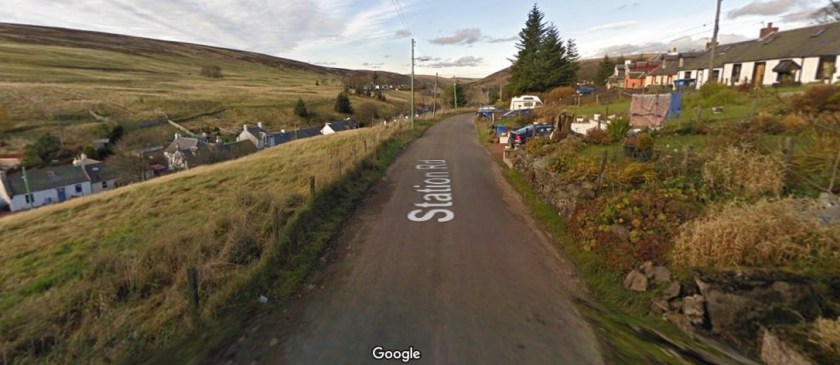
A deceased buzzard was found near to Station Road in Leadhills. Examination of the bird showed that it had likely been shot, had managed to recover, before then being shot a second time and killed.

Officers are seeking witnesses to any shooting activity which is suspicious.

Those with information on the dead bird are urged to contact police on 101, or Crimestoppers on 0800-55511, quoting incident number 0571 of 03/04/18.

ENDS

There is no information about when this buzzard was found dead although a local source advises it was earlier this year.

Here is a photo of Station Road, surrounded on either side by the grouse moors of Leadhills Estate:

Here is the position of Leadhills Estate (and the neighbouring Buccleuch Estate boundary in red dashes) in south Scotland. [Boundary details from Andy Wightman’s Who Owns Scotland website]. It’s in close proximity to the Moffat Hills, the proposed release site for the South Scotland Golden Eagle Project, due to begin later this year.

Leadhills is a notorious raptor persecution hotspot, with over 50 confirmed crimes recorded in the area since 2003. Only two of these have ever resulted in a successful prosecution (gamekeeper convicted in 2004 for shooting a short-eared owl; gamekeeper convicted in 2009 for laying out a poisoned bait).

Last year, witnesses reported the alleged shooting of a hen harrier on Leadhills Estate (here) and the alleged shooting of a short-eared owl (here). We’re not aware of any pending prosecutions in relation to these incidents.

We have been waiting to see whether SNH would impose a General Licence restriction but so far SNH has refused to comment, saying it’s not in the public interest to explain these decisions.

Injured buzzard rescued from trap, rehabbed & released back to the wild

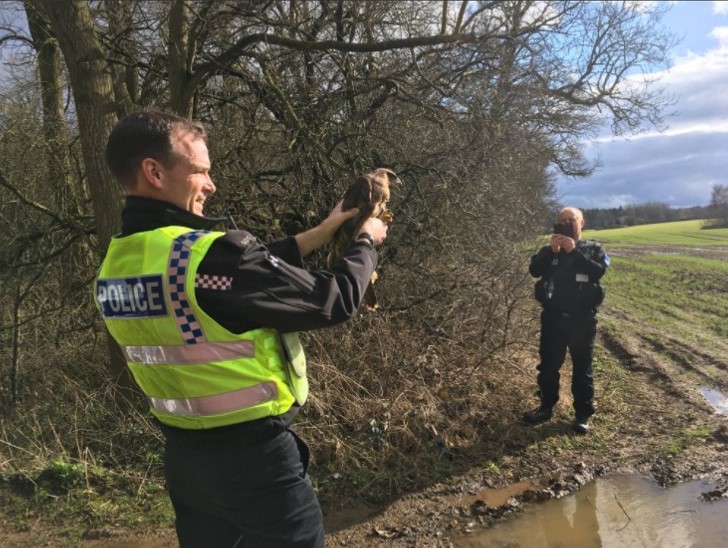
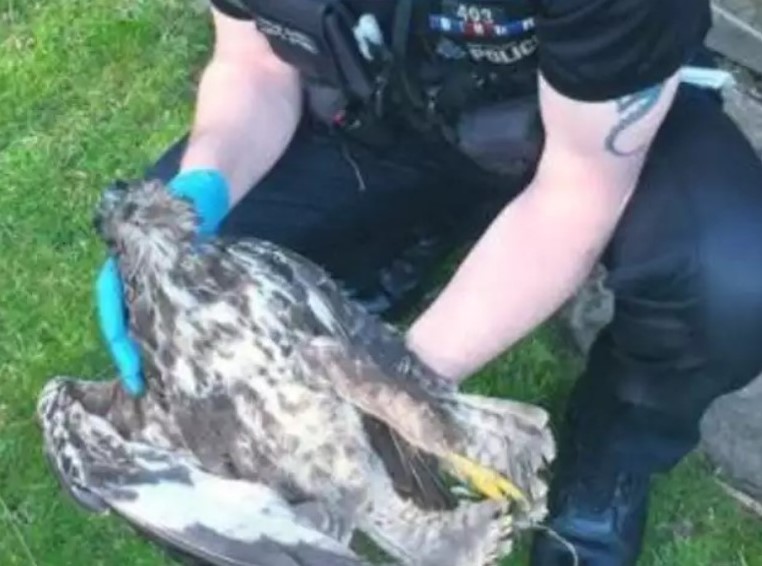
Great partnership working by North Yorkshire Police, RSPCA and Jean Thorpe (Ryedale Wildlife Rehabilitation Centre) resulted in an injured buzzard being released from a trap, rehabilitated and then released back to the wild.

There’s no information about the type of trap, whether it was illegally-set, or the extent of the buzzard’s injuries, but still a job well done by all concerned.

Read the full press release and watch the video of the buzzard’s release on North Yorkshire Police website here

Police Wildlife Crime Officer Jez Walmsley prepares to release the buzzard (photo by Jean Thorpe)

Witness observes buzzard shot dead in Norfolk

From today’s Eastern Daily Press (11/4/18):

BUZZARD SHOT NEAR DOWNHAM MARKET

A buzzard has been shot dead in the West Norfolk fens.

A gardener believes he saw a man shoot the protected bird of prey at Boughton, near Downham Market this lunchtime.

It came down near the home of retired insurance broker Paul Coulten, 77, who is now preserving the carcass until it can be examined by police wildlife crime officers.

My gardener was out walking the dogs on my land when he heard some gunfire,” said Mr Coulten. “The next thing he saw a buzzard come down in the woods and saw a man on a quad bike in the distance.”

Police confirmed the incident had been reported to them and officers had arranged to visit Mr Coulten.

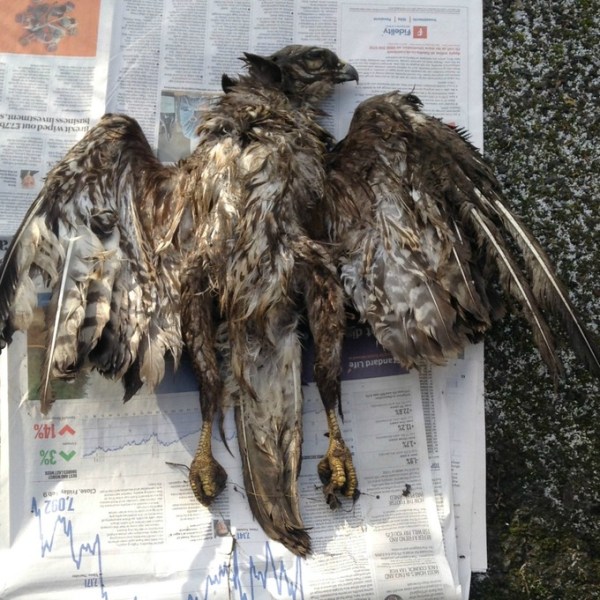
[Photo of the shot buzzard, by Susan Simper]

I hope someone gets nabbed for it,” he said. “We’re getting fed up with it around here, there are no foxes because they all get shot to death, so I’m hopeful the police will progress it.”

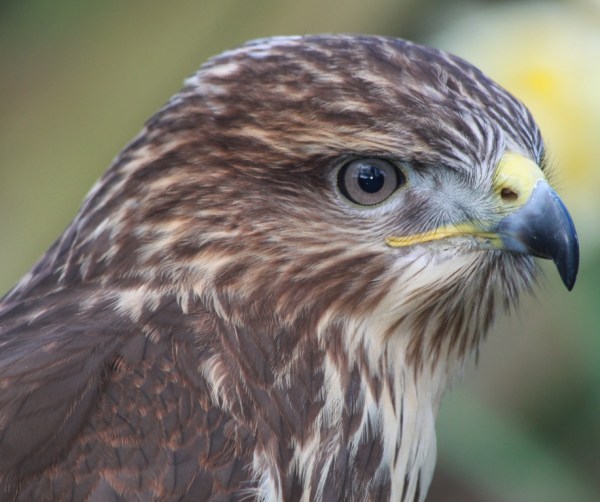
Buzzards are one of our commonest birds of prey. They are frequently seen soaring on their large, broad wings, when warm rising air creates convection currents over woods and farmland.

The species is protected by the 1981 Wildlife and Countryside Act. Anyone convicted of killing one could face an unlimited fine and up to six months’ imprisonment.

Despite this, the RSPB says birds of prey are still persecuted. In 2016 – the latest year for which figures are available – some 40 were shot, including 14 buzzards, 11 red kites, seven peregrines and two hen harriers. Some 22 birds, including 13 buzzards, were also poisoned.

The RSPB, which fears the figures are the tip of the iceberg, says there were no prosecutions during that entire year.

Norfolk is one of the worst areas for bird crime. A total of 262 incidents were recorded between 2011 and 2016 across England and Wales, with 146 of these caused by shooting and 66 by poisoning.

Norfolk recorded the second highest number of incidents at 17 after North Yorkshire at 39.

Its senior investigations officer Mark Thomas said of the latest killing: “Raptor persecution, the illegal killing of birds of prey, is really common, it’s widespread across the UK. What should happen now is it should be X-Rayed, there would have to be an investigation, it’s very likely they’ll find out who’s responsible.”

ENDS

UPDATE 12 April 2018: EDP now reporting the buzzard was not shot (here)

Buzzard shot in the head, south Yorkshire

From Yorkshire Post (7/4/18):

‘WILDLIFE CRIME WILL NOT BE TOLERATED’, SAY SOUTH YORKSHIRE POLICE AFTER BUZZARD IS FATALLY SHOT IN THE HEAD

‘Wildlife crime will not be tolerated in our county’ – that’s the message from South Yorkshire Police after they found a buzzard that had been fatally shot in the head.

The force confirmed yesterday that the buzzard was found dead in the lower part of Hound Hill Lane, Barnsley, with trauma to its head attributed to either a pellet or shot projectile.

Police Constable Mark Winter, Penistone Community Constable and Wildlife Crime Officer said: “Buzzards, being part of the bird of prey family are protected in law and it is quite obviously an offence to shoot, injure or trap one.

This incident has occurred over the last few days and this is an appeal for information to assist with this investigation. Wildlife crime will not be tolerated in our county, please enjoy the countryside safely, responsibly and leave it as you found it”.

ENDS

[Photo by South Yorkshire Police]

Stody Estate exonerated after gamekeeper’s conviction for mass raptor poisoning

Regular blog readers will remember the mass poisoning of birds of prey on the Stody Estate, Norfolk in 2013.

In October 2014, Stody Estate gamekeeper Allen Lambert was convicted of a series of wildlife crime offences on the estate, including the mass poisoning of birds of prey (10 buzzards and one sparrowhawk) which had been found dead on the estate in April 2013. He was also convicted of storing banned pesticides and other items capable of preparing poisoned baits (a ‘poisoner’s kit’) and a firearms offence (see here and here).

Photo of nine of the buzzards poisoned by gamekeeper Lambert [photo: RSPB]

In our opinion, gamekeeper Lambert got off pretty lightly when he was sentenced in November 2014. Even though the judge acknowledged that Lambert’s crimes had passed the custody threshold, Lambert received a 10-week suspended sentence for poisoning 11 raptors (suspended for one year), a six-week suspended sentence for possession of firearms and dead buzzards (suspended for one year) and was ordered to pay £930 prosecution costs and an £80 victim surcharge. In our opinion (see here), this was absurdly lenient for one of England’s biggest known mass raptor poisoning incidents, and on top of that, Lambert wasn’t even sacked – it was reported that he’d been allowed to take early retirement from the Stody Estate.

However, even though Lambert appeared to have got off lightly, his employers at Stody Estate were hit with a massive financial penalty (through cross-compliance regulations), believed to be the biggest ever civil penalty imposed for raptor persecution crimes.

Today though, the High Court has ruled that Lambert’s actions were “not directly attributable” to Stody Estate or its senior management and the subsidy penalty has been quashed!

In other words, the employer (Stody Estate) cannot be held accountable for the criminal actions of its employee (Allan Lambert). That’s quite astonishing, although it’s difficult to comment in detail without knowing the finer details of Lambert’s employment contract with Stody Estate. [UPDATE 7th March – full written judgement now available at foot of this blog post]

It does seem like yet another example of the need to introduce vicarious liability legislation for specific offences against birds of prey in England, as has been done in Scotland.

Stody Estate photo by RPUK

The following article has been published in the EDP:

A farm company was wrongly penalised after a gamekeeper poisoned wild birds of prey to preserve game birds for shooting, the High Court has ruled.

Allen Lambert poisoned 10 buzzards and a sparrowhawk which he saw as a threat to 2,500 pheasants and partridges laid down for a 10-day “family shoot”.

The gamekeeper on the 4,200-acre Stody Estate in north Norfolk was convicted of an offence under the Wildlife Conservation Act 1981 in October 2014.

And, in January last year, then Environment Secretary, Andrea Leadsom, stripped Stody Estate Ltd of 55pc of its farm subsidy for that year.

Overturning the penalty today, a senior judge noted that there had been “no finding of fault” against the company, based in Melton Constable, or its senior management.

The mere fact of Mr Lambert’s conviction did not prove that poisoning the birds was “directly attributable” to his employer, said Mrs Justice May.

“Some further enquiry directed at the level of fault, if any, on the part of Stody Estate in connection with Mr Lambert’s actions was required,” she added.

“In the absence of any finding of fault there was no proper basis for the imposition of a penalty.”

The Stody Estate, which has 15 employees, has been farmed by the MacNicol family for 75 years and Charles MacNicol is its managing director.

Estate manager, Ross Haddow, has day to day management of the farm and Mr Lambert had been a gamekeeper since 1990, living in a tied cottage.

The Rural Payments Agency, which administers the single farm payment subsidy scheme, at first said the company should lose 75pc of its subsidy.

That was reduced to 20pc by the Independent Agricultural Appeals Panel, but the penalty was upped again, to 55pc, by Ms Leadsom last year.

Stody Estate Ltd and its management were “exonerated” from any involvement in poisoning birds, the court heard.

But Ms Leadsom concluded that “the intentional acts of Mr Lambert, acting within the scope of his employment, were to be treated as those of the farmer, being Stody Estate.”

The issue was of such importance to the farming industry that the National Farmers Union intervened in the case, arguing that the penalty could only lawfully have been imposed if Charles MacNicol, or possibly Mr Haddow, had poisoned the birds.

Mrs Justice May said that that was going too far, but nevertheless ruled that Mr Lambert’s actions could not be “directly attributed” to Stody Estate or its management. The penalty was quashed.

ENDS

UPDATE 7 March 2018: The written judgement can be read HERE (with thanks to @borobarrister)

Buzzard found shot dead in Suffolk

From East Anglian Daily Times (26 Feb 2018)

INVESTIGATION AFTER AT LEAST ONE BUZZARD FOUND DEAD IN SUFFOLK WOODLAND

Police are investigating the shooting of at least one Common buzzard – a legally protected bird of prey – that was found dead in a Suffolk wood.

Two buzzard corpses were reported to Suffolk Constabulary’s wildlife crime team in an incident described by naturalists as “appalling and abhorrent.” The bodies were found in woodland known as Little Carr, “on the edge of a shooting estate” on the banks of the River Dove, near Hoxne, the team’s Sgt Brian Calver said yesterday.

The discovery was reported by “a person with shooting rights”, but when a police officer visited the site only one corpse could be found. It was believed that the birds died in January, he said.

At first it was thought the bird that was found may have died as a result of poisoning but analysis of X-rays has proven that the bird was shot. We are in the process of looking into this and we will be as absolutely thorough in our investigations, as we are with all wildlife crime – and we will be trying to secure a prosecution,” said Sgt Calver.

He urged members of the public who discovered any bird of prey corpse in the countryside to report their find and its exact location to police. Any corpse should not be handled, because of the risk of poison being involved, but photographic evidence would be helpful, he added.

[Buzzard photo by RPUK]

Gi Grieco, chairman of the 400-strong Suffolk Ornithologists’ Group, said the latest persecution case was “appalling and abhorrent.”

The illegal persecution of birds of prey on the grouse moors of upland Britain is a well-documented, ongoing and major conservation issue but cases such as this latest one in Suffolk – which is certainly not the first of its kind – shows that this illegal activity is also a problem in lowland Britain,” said Mr Grieco.

This is a disgraceful incident and we hope that the police investigation results in a prosecution that ends with the appropriate penalty imposed on the perpetrator.”

The site of the incident is in Waveney Bird Club’s catchment area and club founder Steve Piotrowski, the author of The Birds of Suffolk, said: “This is yet another upsetting case of raptor persecution. It’s a shame that countryside thugs are tarnishing the name of the shooting estates that do stick to the law and do some good things for conservation.

The criminals think they can get away with it. The police do seem to struggle with prosecutions and they need all the help a vigilant public can give them.

Common buzzards were rare in Suffolk up to the 1980s because of heavy persecution that took place previously but now they are recovering, hopefully, to the level they should be at. For them to still be persecuted is not just upsetting, it’s illegal.”

Lewis Thornley,the British Association for Shooting and Conservation’s director for central England, said: “While it’s important to remember that an investigation is ongoing, BASC utterly condemns crimes against protected raptors and would urge anyone with information to assist the police.

Anyone shooting a protected species damages shooting’s reputation and puts at risk the freedoms currently enjoyed by those who shoot legally and sustainably. Such actions have no place among the law-abiding shooting community.”

Anyone with information relating to the buzzard deaths is asked to contact Suffolk police on 101 and ask for Pc Lee Andrews-Pearce, quoting the crime reference 37/8990/18

ENDS

Buzzard found shot dead near Powys

From ITV News:

A buzzard which was found illegally shot near Powys has prompted concern by the RSPB and police.

The bird was found dead on the ground by a walker near Llanrhaeadr-ym-mochnant on 10 February, and it was reported to the police.

The bird was X-rayed by a local vet and found to contain at least eight pieces of shot.

Buzzards, like all birds of prey, are protected under the Wildlife and Countryside Act 1981. To kill or injure one is a criminal offence and could result in an unlimited fine or up to six months in jail.

Jenny Shelton of the RSPB said: “It is saddening and concerning to hear that another protected bird of prey has been shot. This is a serious problem in Wales and the rest of the UK, and one which the RSPB employs a specialist team to tackle. We recently launched a hotline to provide a means of reporting crimes against birds of prey in complete confidence. Someone out there will know what has happened to this bird – please speak out and help end this brutal and illegal behavior“.

41 reports of wild bird crime in Wales were made to the RSPB’s Investigations unit in 2016, according to the 2016 Birdcrime report, published last November.

The report also revealed that there were no prosecutions for bird of prey persecution in the UK during 2016.

RSB Cymru Biodiversity Manager Stephen Bladwell said: “Knowing another bird of prey has fallen foul to persecution in Wales is disheartening. The latest Birdcrime report showed Powys was joint second highest UK County for raptor persecution from 2012-16 – with 22 confirmed incidents during the period. It seems there is a real problem in the county that needs addressing quickly if we are to protect the area’s wildlife. Our investigations team will continue to support Natural Resources Wales and the Rural Crime Team to address the issue“.

ENDS

5 red kites, 1 buzzard & 1 raven found dead in suspicious circumstances in Oxfordshire

Press article from today’s Oxford Mail:

A police investigation has been launched after five red kites, a raven and a buzzard were discovered dead in a village in Oxfordshire.

The birds were discovered by a family on Sunday, September 17, near the village of Pyrton, on the edge of the Chilterns, who reported them to the RSPB.

All the birds were recovered and x-rayed by a local vet. The x-rays revealed no signs of shot.

However, the birds have now been sent off for toxicology testing by Natural England as part of the Wildlife Incident Investigation Scheme (WIIS), to see if the birds have been poisoned.

All birds of prey and ravens are protected by UK law, making it illegal to kill or harm them. Those found to have done so could face six months in jail or an unlimited fine.

Thames Valley Police, Natural England and RSPB are now working together on a joint investigation and are appealing to the public for information.

If you have any information relating to this incident, call Thames Valley Police on 101.

With their six-foot wingspan, red kites are Britain’s third-largest bird of prey and feed mainly on carrion.

If you find a wild bird which you suspect has been illegally killed, contact RSPB Investigations on 01767 680551, email crime@rspb.org.uk or fill in the online form: https://www.rspb.org.uk/our-work/our-positions-and-campaigns/positions/wildbirdslaw/reportform.aspx

ENDS

Four months after discovery and still no toxicology report?

UPDATE 31 Dec 2018: This incident has now been reported in the WIIS database as follows:

7 birds were found under a bridge caught in netting or barbed wire. Analysis has confirmed a residue of bromadiolone which may have contributed to the death of a red kite. Case closed as unable to determine where the exposure occurred‘.