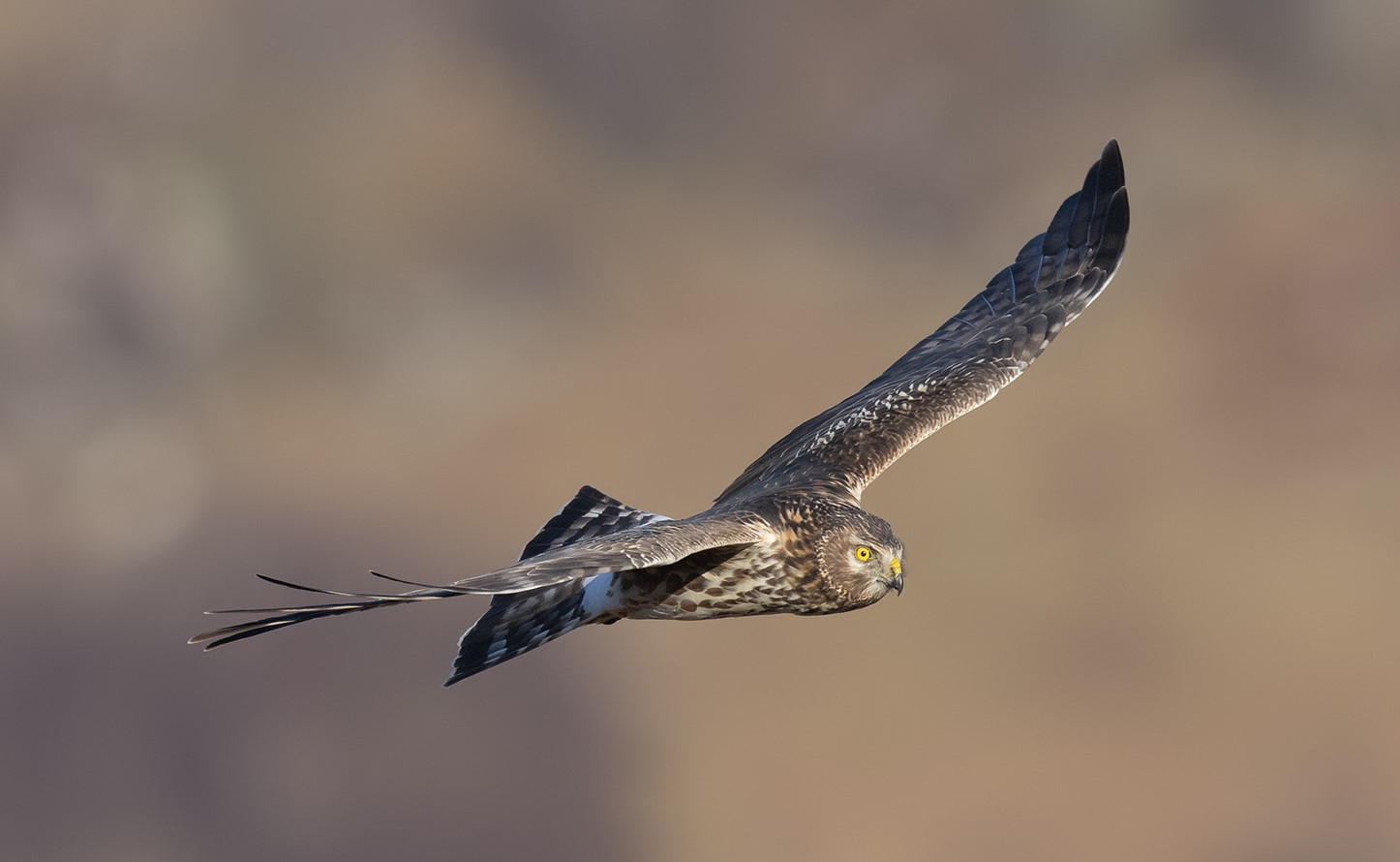
Hen Harrier found poisoned on a grouse moor in North Yorkshire

I’ve blogged recently about a number of illegally-killed Hen Harriers whose deaths have not been publicised by the authorities (Hen Harrier ‘Susie’ who was found dead with gunshot injuries on a grouse moor in the North Pennines, here; and Hen Harrier ‘254843’ who was found dead on moorland in Northumberland National Park with shotgun damage to her satellite tag, here).

Here’s another one. This time found illegally poisoned on a grouse moor in North Yorkshire.

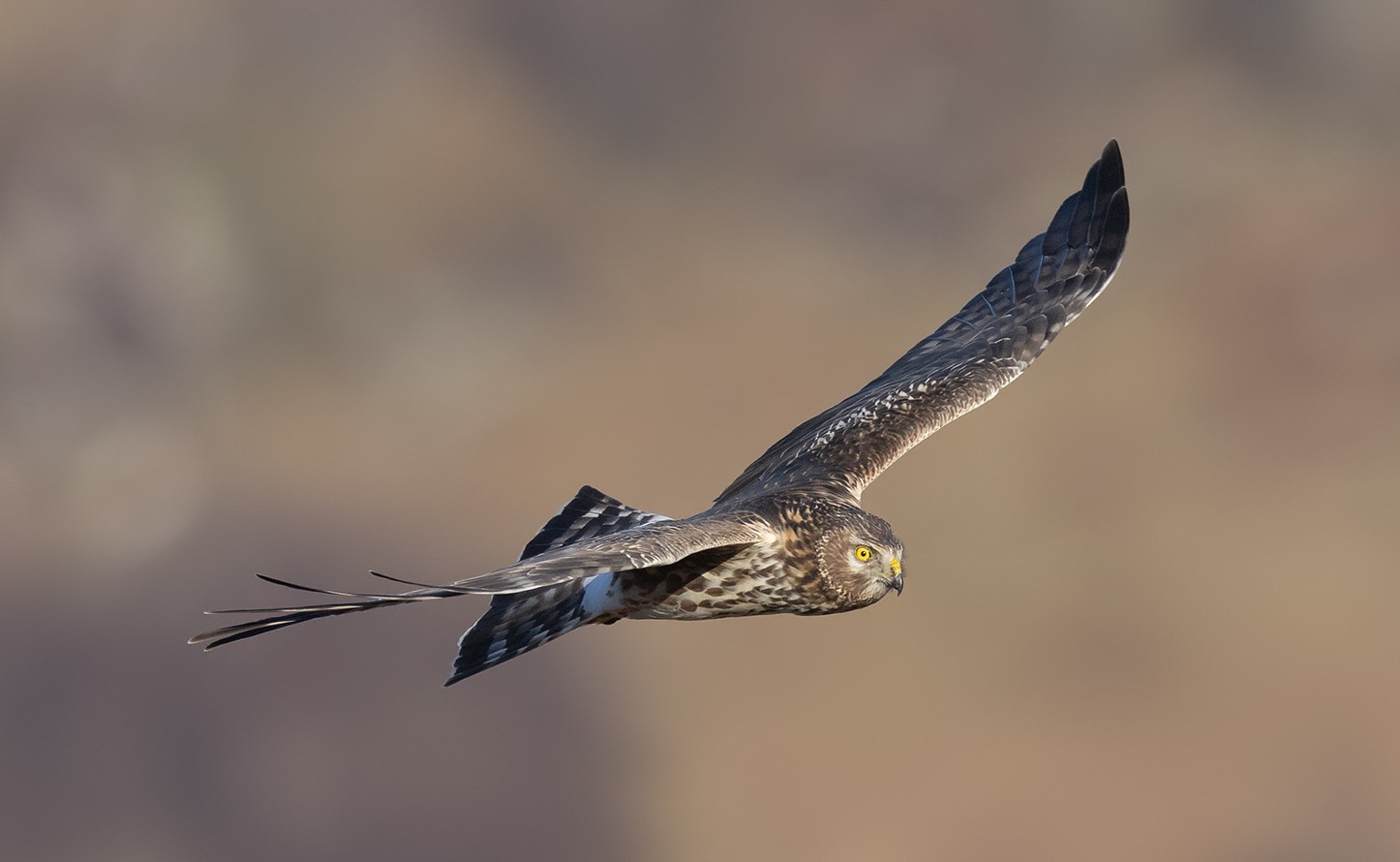
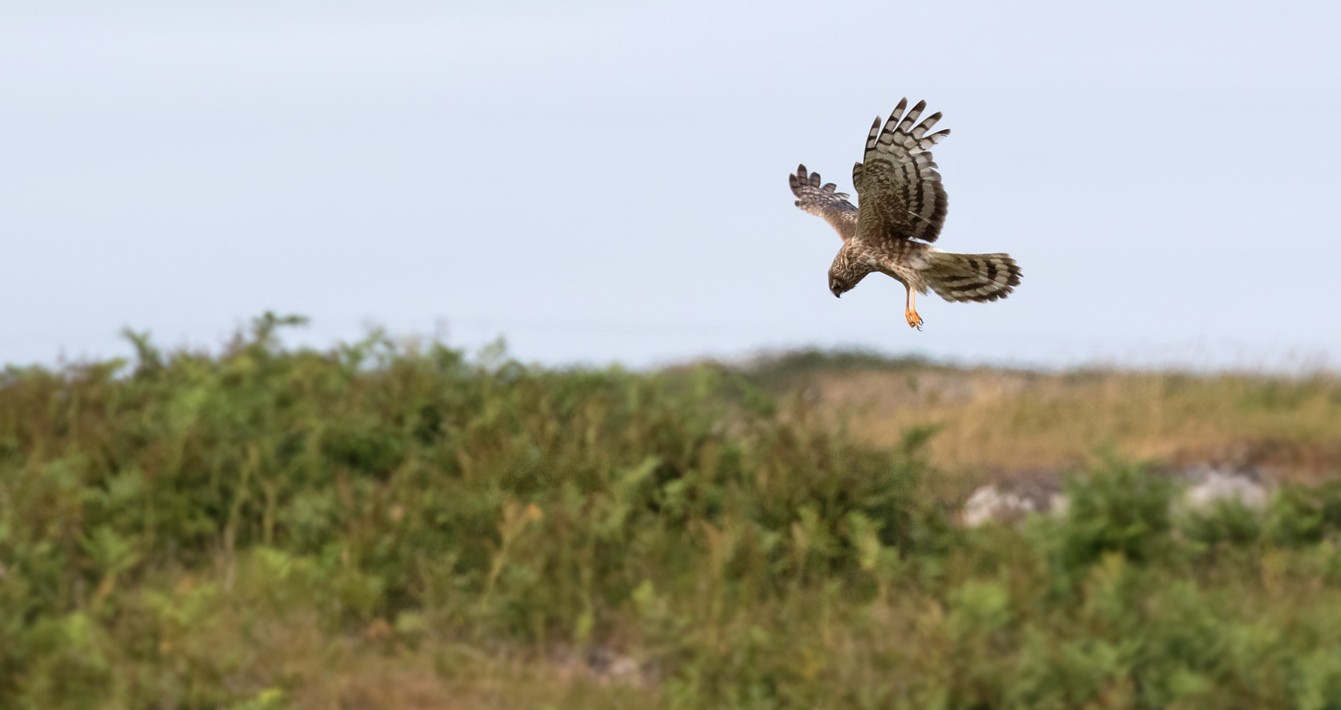
A poisoned Hen Harrier in Co Meath, Ireland, November 2019 (NB: not the poisoned HH found in North Yorkshire in January 2025). Photo by RSPB Investigations

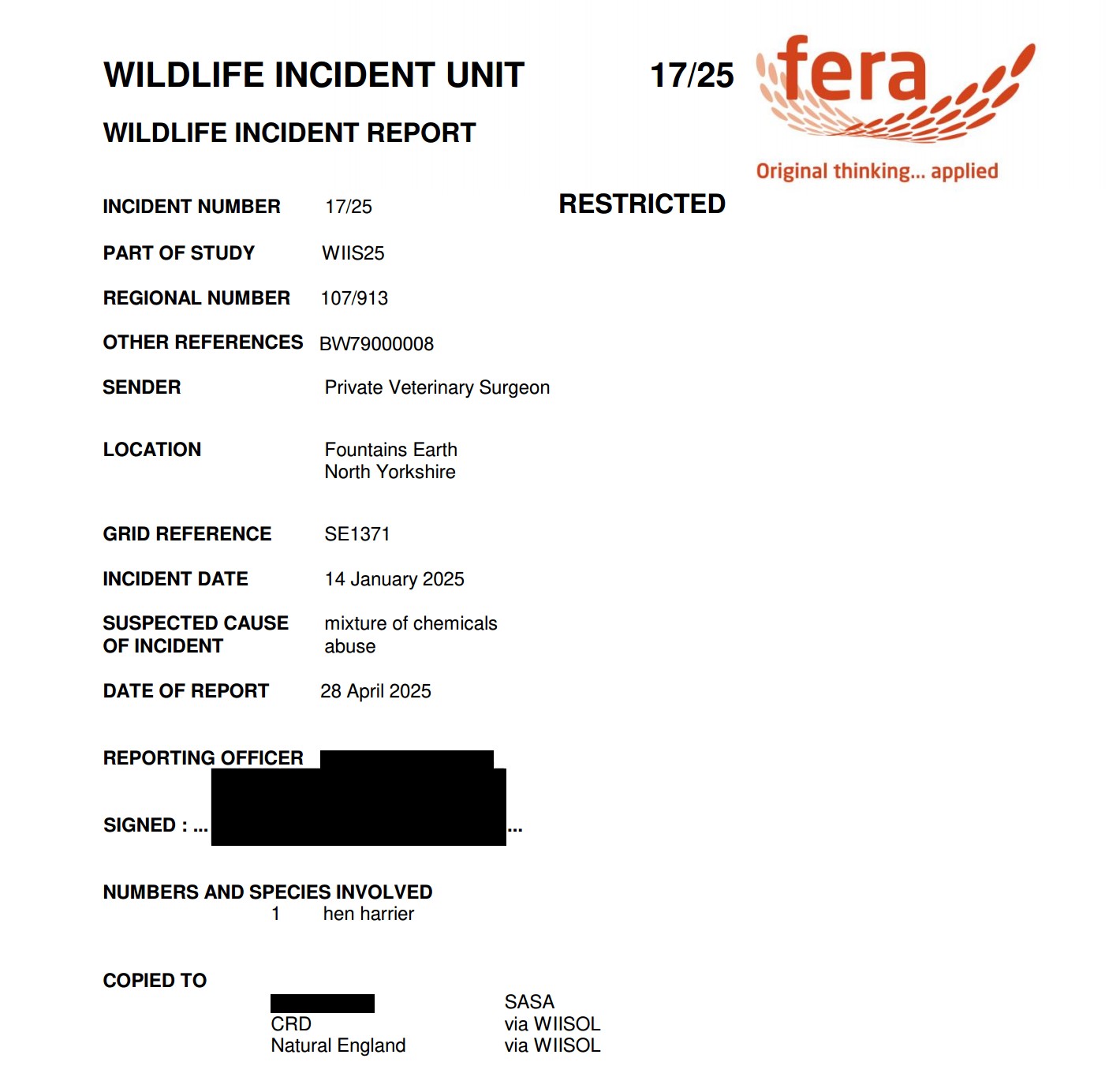
Once again, the details of the illegal killing of this latest Hen Harrier have only become public after careful scrutiny of a national database (this one operated by the Health & Safety Executive) – an entry on a spreadsheet rather than a full-blown press release from the investigating authorities.

Here are the limited details that I’ve found:

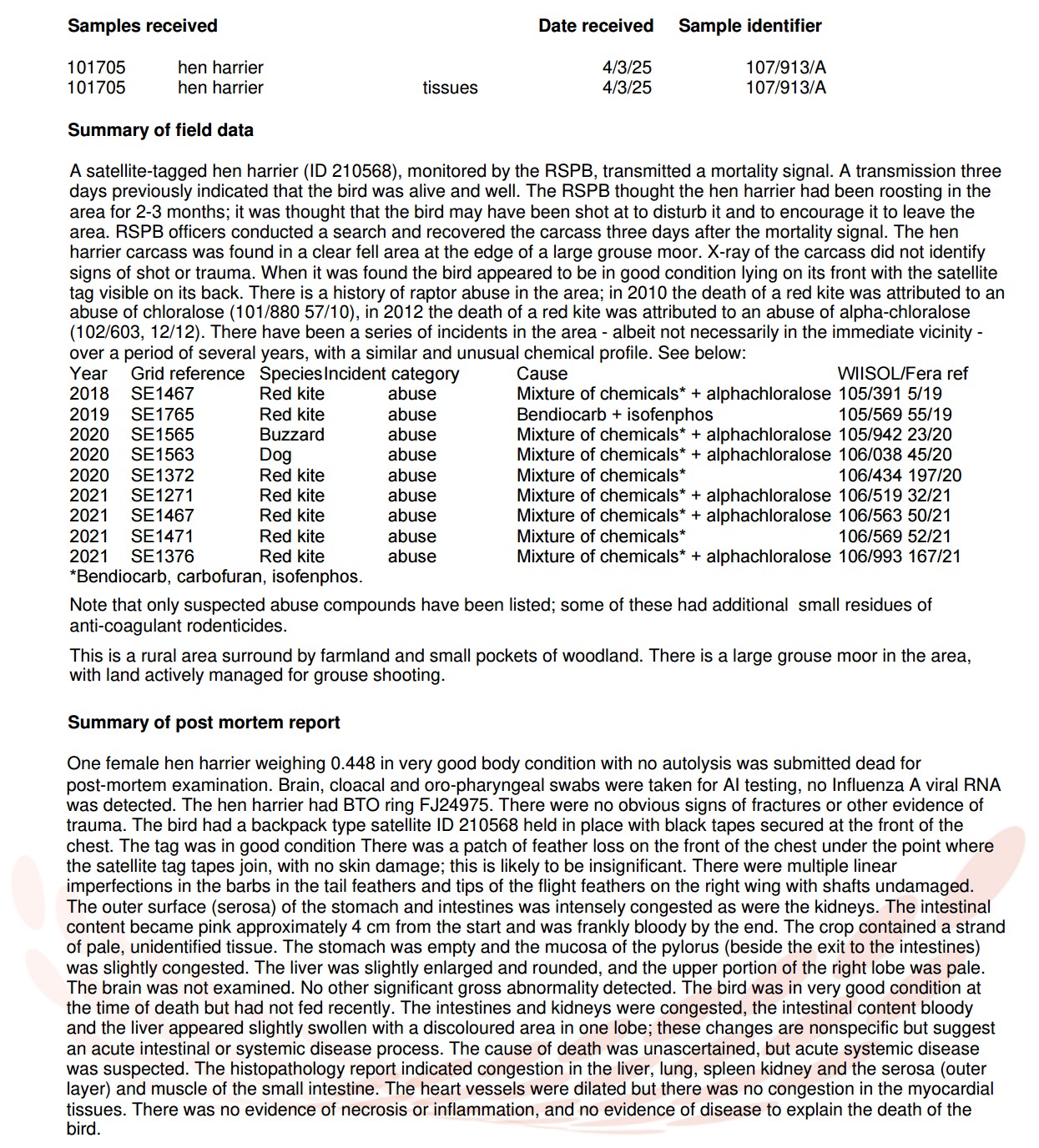
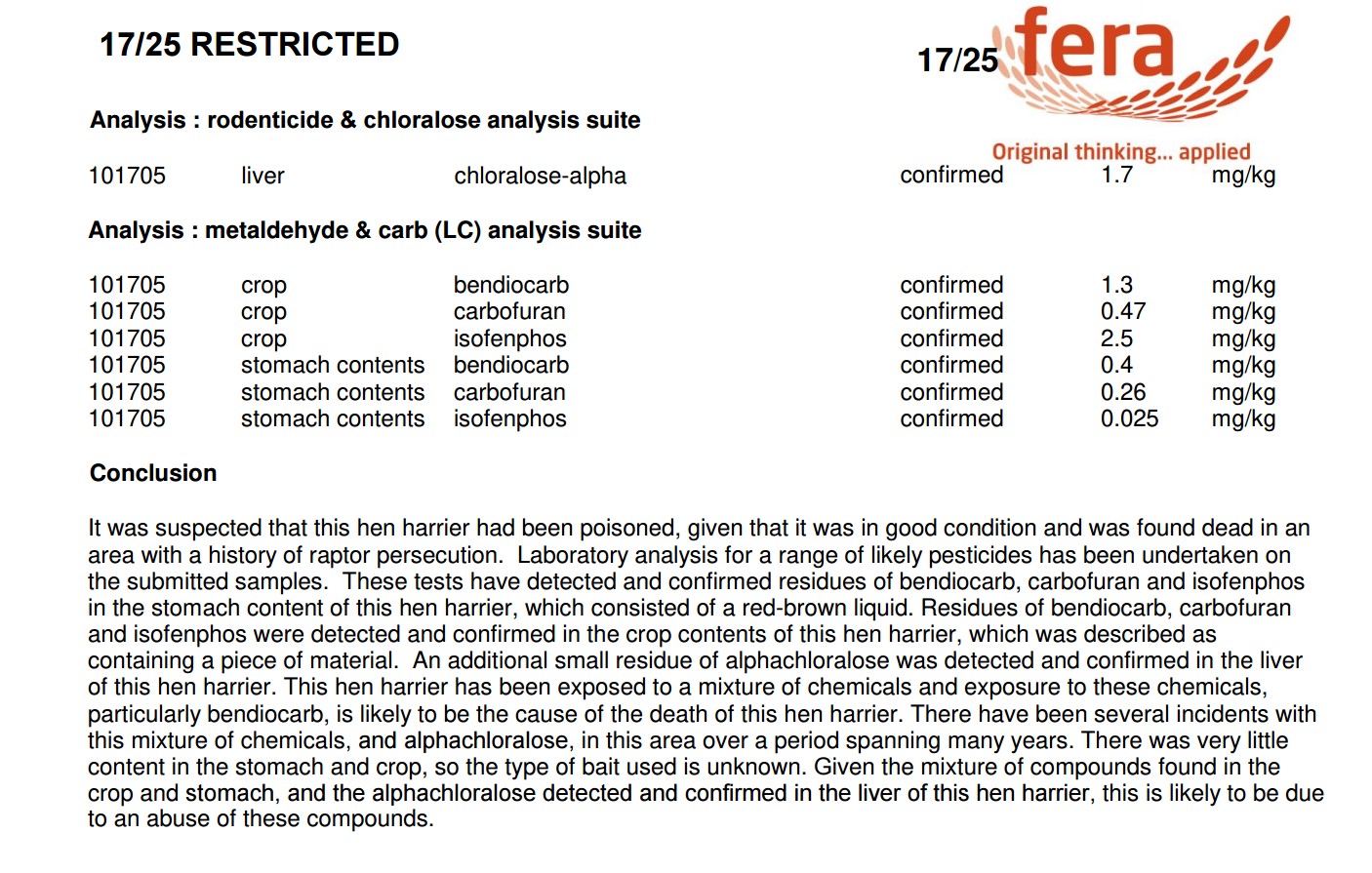
HSE Ref number 107/913. Confirmed poisoning, North Yorkshire, January 2025. Chemicals Bendiocarb, Carbofuran, Isophenphos, Alphachloralose. Notes: ‘A dead Hen Harrier was found on a grouse moor. Residues of Bendiocarb, Carbofuran, Isophenphos and Alphachloralose were found in the samples analysed, which is an abuse of these compounds. Case closed as passed to the Police‘.

I haven’t seen ANY police appeal or press release about the illegal poisoning of this Hen Harrier or the discovery of its corpse in North Yorkshire 11 months ago in January 2025. Not a single word.

Where is the publicity from the National Wildlife Crime Unit-led Hen Harrier Taskforce? The specialist group set up explicitly to tackle the ongoing illegal killing of Hen Harriers. Not a single word.

Where is the publicity from the police-led national Raptor Persecution Priority Delivery Group (RPPDG), one of whose functions is apparently ‘awareness raising‘ and ‘raising the profile [of illegal raptor persecution] via media exposure‘? Not a single word.

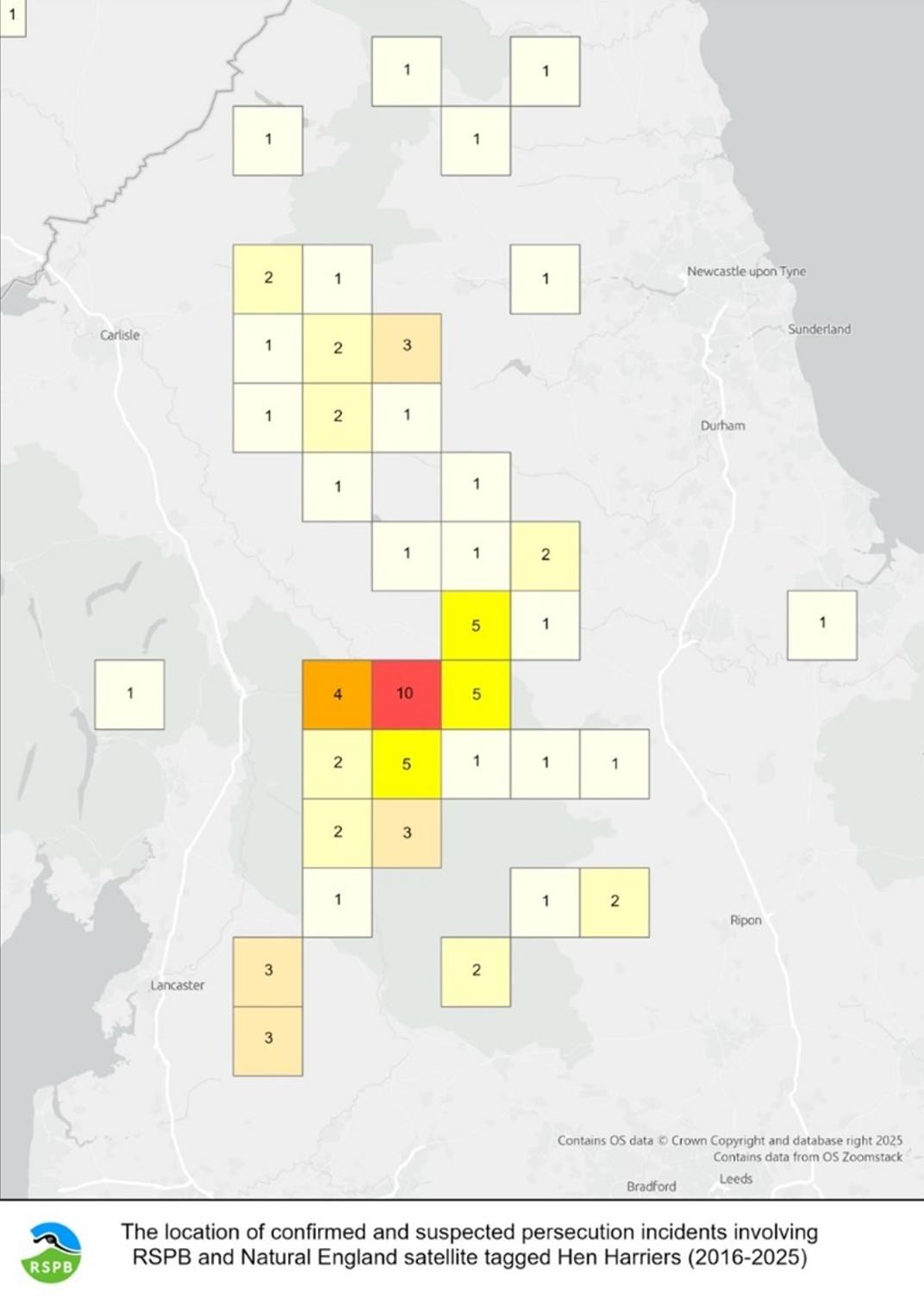
Poisoning is not a commonly-used method for killing Hen Harriers because this species is not a routine carrion eater. Typically they are shot when foraging low for live prey or flying towards a roost site, or trapped on or next to their nest sites and then bludgeoned to death instead. Although there was one case of a Hen Harrier being found poisoned on a Pheasant-shoot in County Meath, Ireland in 2019 (here).

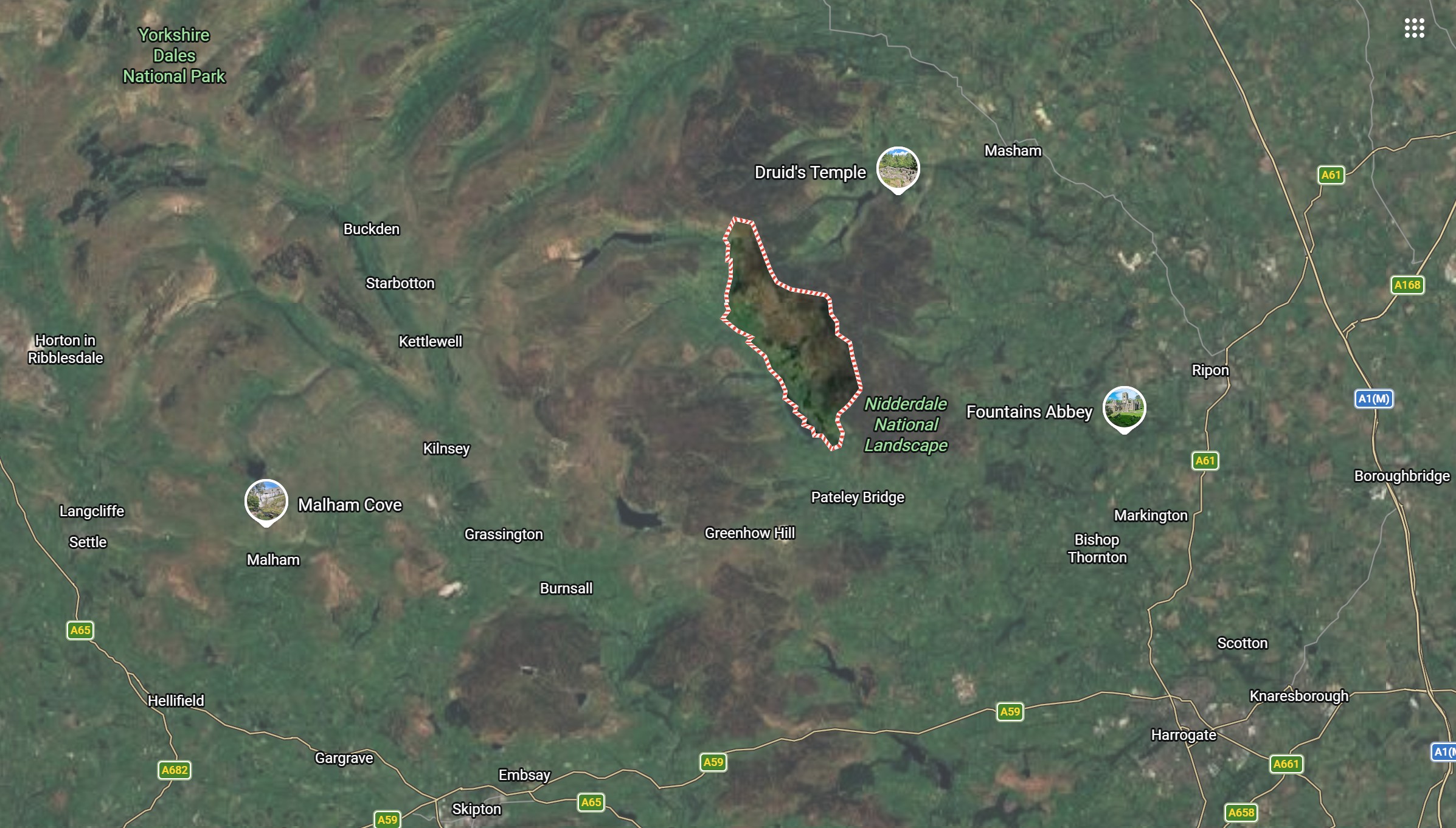
The information I’ve gleaned so far about this latest Hen Harrier poisoning just refers to ‘North Yorkshire’. It’s a huge county, with grouse moors in the Yorkshire Dales National Park, Nidderdale National Landscape (previously called an AONB), and the North York Moors National Park.

However, the eagle-eyed amongst you will have noticed the distinctive combination of chemicals used – a highly lethal mixture widely known as the ‘Nidderdale Cocktail’, so described due to the frequency of use of this nasty combination in Nidderdale, where it has killed a number of birds of prey over the years, particularly Red Kites, and also a pet dog (see here).

That might suggest a Nidderdale grouse moor as the location of the January 2025 Hen Harrier poisoning, although the Nidderdale Cocktail has also been detected in other poisoning cases as far north as Scotland, perhaps indicative of gamekeepers moving jobs, so it’s not conclusive.

This isn’t the first time that I’ve been critical of an apparent lack of action from North Yorkshire Police in relation to a national wildlife crime priority incident. Just a couple of years ago they refused to investigate the circumstances of an illegally poisoned Red Kite that had been found dead on Swinton Estate (see here).

This apparent lack of inertia is in direct contrast to how North Yorkshire Police’s Rural Crime Team used to function a few years ago, under different leadership, when it was proactive and very public about its work (e.g. see here, here, here, here etc).

I’ve submitted a number of FoIs to various agencies about this latest Hen Harrier persecution incident. I’ll report more when they respond.

Northern Ireland Minister commits to taking action on illegal poisoning of birds of prey

Some very good news from Northern Ireland.

Andrew Muir MLA, Minister of Agriculture, Environment and Rural Affairs made the following statement in the Northern Ireland Assembly this week:

The killing of birds of prey, whether deliberately or through improper use of pesticides or other poisons, is deplorable, it’s a crime, and it diminishes our biodiversity.

I recently met with the Northern Ireland Raptor Study Group, RSPB and Ulster Wildlife last week to discuss this issue and I recognise the need to address bird of prey persecution in Northern Ireland and am determined to take more action to help stamp out this repugnant activity.

My department is exploring ways to strengthen the enforcement and sanctions for the current plant protection product [PPP, also known as pesticides] legislation relating to storage and use of unauthorised plant protection products.

A new working group will also be established to pull together relevant stakeholders and fully consider a potential road map and requirements for any new secondary legislation to prohibit the possession of dangerous pesticides in Northern Ireland in the next Assembly mandate“.

Wow! 14 years of can-kicking by DAERA (Dept of Agriculture, Environment & Rural Affairs) seems to have finally been brought to an end by this decisive commitment to take action from Minister Muir.

Without doubt, this is a direct result of evidence-collecting and campaigning by the Northern Ireland Raptor Study Group (NIRSG), led by the wonderful Dr Eimear Rooney & Dr Marc Ruddock.

Following the discovery in May 2023 of two illegally poisoned White-tailed Eagles at Glenwherry, Northern Ireland’s only driven grouse moor, the NIRSG began a petition calling for Ministers to add a list of proscribed poisons to section 15B of the Wildlife (Northern Ireland) Order 1985, which has been missing from the legislation since it was last updated in 2011.

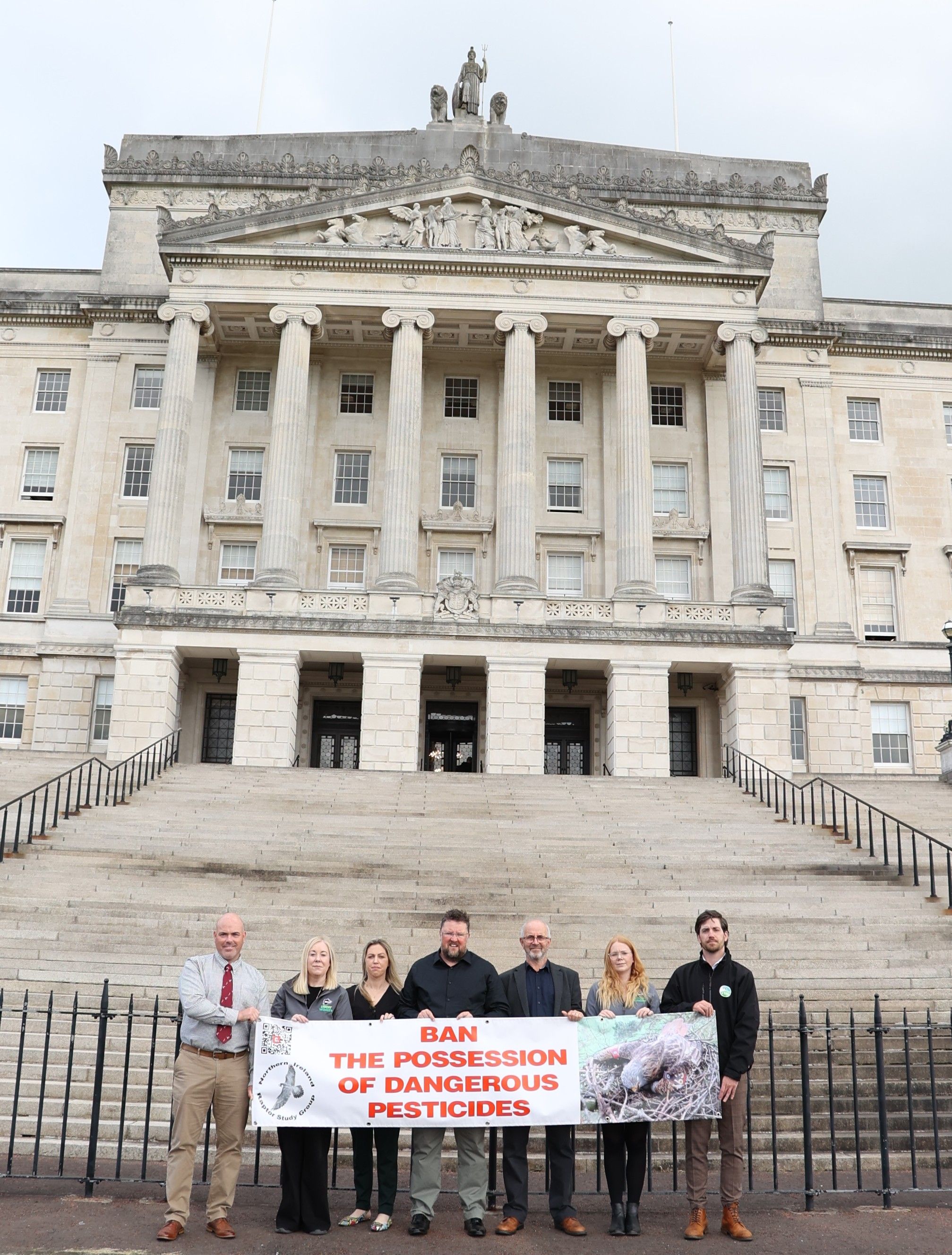
That petition attracted over 50,000 signatures (including many RPUK blog readers – thank you) and was handed in by the NIRSG to Minister Muir at Stormont last month, with support from the RSPB and Ulster Wildlife.

A week later, the Police Service of Northern Ireland revealed that a Red Kite had been found illegally poisoned in a raptor persecution hotspot in County Down (here).

Minister Muir’s recognition of this long-standing and ongoing issue, and his pledge to actually do something about it, is very welcome news and is in stark contrast to Defra’s pathetic filibustering on the same issue in England.

Huge congratulations to the Northern Ireland Raptor Study Group and their partners – this is a big win.

Police launch investigation after Red Kite killed in poisoning hotspot

Press release from Police Service of Northern Ireland (PSNI), 25 June 2025:

INVESTIGATION AFTER TESTING CONFIRMS RED KITE POISONED

Police have commenced an investigation after tests confirmed that a red kite which was found dead near Loughbrickland [County Down] had been fatally poisoned.

Testing determined that the legally protected bird of prey bird, which was discovered on land in the Tullymore Road area at the end of December, had died by what’s believed to have been targeted poisoning using the rodenticide Chloralose and the insecticide Bendiocarb.

Red Kite photo by Dr Marc Ruddock of the NI Raptor Study Group

Superintendent Johnston McDowell, the Police Service lead for Wildlife Crime and Animal Welfare, said: “Red kites, along with all birds of prey, are protected in Northern Ireland under the Wildlife (Northern Ireland) Order 1985, as amended by the Wildlife and Natural Environment (NI) Act 2011

These birds were reintroduced to Northern Ireland in 2008 after being extinct here for centuries, and tragically this is not the first time we have had reports of this nature in this same area. Two ravens were also recently found dead having been poisoned using similar chemicals [Ed: see here], and it saddens me that these incredible birds are being intentionally killed.

Anyone who finds a dead bird of prey such as a red kite which they suspect to have been poisoned, shot or illegally trapped, or anyone with information about the illegal trade in these birds, should contact police and report their concerns. The poisons used in these most recent incidents are deadly not only to birds and wildlife, but also to humans and as such anyone who comes across the body of any of these birds shouldn’t touch them, but alert the authorities instead.

PSNI along with Northern Ireland Environment Agency conducted a number of enquiries along with a site visit, and utilised the technical and advisory support of the UK’s National Wildlife Crime Unit throughout the time since the discovery of the Red Kite.  

The Police Service also works closely with our colleagues in the Health and Safety Executive and the Department of Agriculture and Rural Development to identify poisons being used and where a crime is found to have been committed, we will take steps to identify and prosecute offenders. Those found guilty of persecution of protected birds of prey can face a custodial sentence and/or fines of up to £5,000 per offence.”

The Health and Safety Executive NI, one of the enforcing authorities responsible for Biocidal Product Regulations in Northern Ireland, said: “HSENI, who is one of the enforcing authorities responsible for Biocidal Product Regulations in Northern Ireland said: “Where duty-holders are found to have incorrectly used or have misused biocidal products or continue to use or store biocidal products that have been withdrawn from the market, HSENI will take appropriate enforcement action to achieve compliance. This highlights the importance of responsible use of all chemicals including biocidal products.”

A spokesperson for the Department of Agriculture, Environment and Rural Affairs said: “The intentional poisoning wildlife and birds is abhorrent. Supplying, storing (being in possession of) or using a Plant Protection Product (PPP), that has been banned, is an offence. It is also an offence to use an authorised PPP in contravention of the conditions and the specific restrictions established by the authorisation and specified on the product label. If convicted of committing an offence, fines will incur.”

Superintendent McDowell added: “Our Operation Raptor – Peregrine Watch, is an initiative between the PAW Bird of Prey Sub Group and our Air Support Unit, working alongside local police officers, which uses drones to monitor and protect the nesting sites of birds of prey, and is a direct result of birds being targeted, just like in this case, with very serious and dangerous substances in a number of areas across Northern Ireland.

Along with our partners we will continue to investigate wildlife crime and seek to prevent further instances, whilst bringing offenders to justice.”

Please report wildlife crime by calling 101. A report can also be made online via http://www.psni.police.uk/makeareport/ or you can also contact Crimestoppers anonymously on 0800 555 111 or online at http://crimestoppers-uk.org/. 

If you have any information on this particular incident please quote incident number 419 24/12/24.

ENDS

Earlier this month representatives from the NI Raptor Study Group, Ulster Wildlife and the RSPB handed in a 50,000-signature petition to Environment Minister Andrew Muir, calling for a ban on the possession of dangerous, raptor-killing poisons (here).

It’s not yet clear what the Minister intends to do, if anything.

If you’re a NI resident and you’re reading this, please consider contacting your local politician and ask them to raise the issue at Stormont – all the Minister has to do is write a list of proscribed poisons and get it added to section 15B of the Wildlife (Northern Ireland) Order 1985. It really should be very simple.

The most recent summary report of raptor persecution in Northern Ireland (2021-2022, published last year by the NI Partnership for Action Against Wildlife Crime), shows that illegal poisoning is the most commonly used method of persecution in the country. The report can be read/downloaded here:

50,000-signature petition calling for ban on possession of poisons, handed into Stormont, Northern Ireland

Press release from Northern Ireland Raptor Study Group (17 June 2025)

50,000-signature petition, calling for a ban on poison possession, handed into Stormont.

Today (17th June), a petition begun by the Northern Ireland Raptor Study Group (NIRSG), calling for the possession of various toxic pesticides to be made illegal, was handed in to officials at Stormont by representatives of the Group, alongside staff from RSPB NI and Ulster Wildlife.

Photo by Northern Ireland Raptor Study Group

The petition, which was instigated in response to the widely condemned poisoning of two young White-tailed Eagles in Glenwherry, Co Antrim, in May 2023, has garnered over 50,000 signatories from Northern Ireland and beyond.

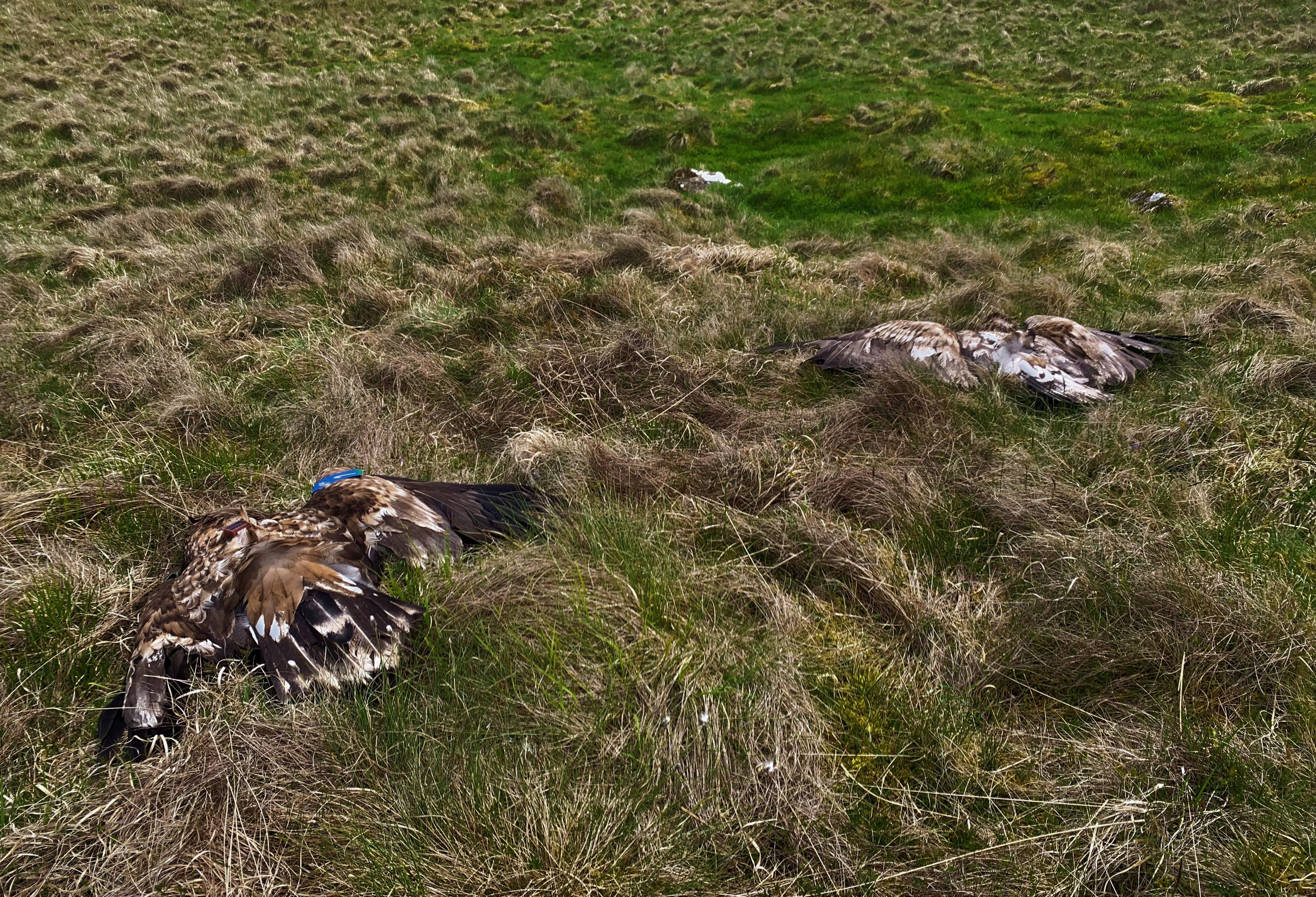
The eagles died after consuming a bait laced with Bendiocarb, a chemical prohibited from outdoor use in Northern Ireland, and were the latest victims in a series of poisoning incidents here that has claimed the lives of over 60 protected birds of prey in recent years.

The two poisoned White-tailed Eagles found dead on a grouse moor in May 2023.
Photo by Northern Ireland Raptor Study Group

NIRSG’s raptor officer, Dr. Eimear Rooney said: “The day we recovered the bodies of those two eagles from the hillside at Glenwherry was one of the most upsetting of my career working with Northern Ireland’s raptors. White-tailed Eagles are only just making a return to our skies after being made extinct on the island of Ireland by past human actions over 100 years ago. But it’s not just eagles that fall victim to the criminals illegally using these poisons – it’s Red Kites, Buzzards and Peregrine Falcons as well as people’s pet cats and dogs.”

Dawn Miskelly, Ulster Wildlife CEO, said “Poisons have devastating impacts on raptor populations. Protecting these birds from poisoning is not just about conserving individual species – it’s about safeguarding and preserving biodiversity for future generations. We urgently call on the Assembly to recognise the significant public concern around this issue and act by resolving to create legislation to make the possession of these toxic pesticides illegal.

Ian Thomson, RSPB’s Investigations Manager added “Similar legislation in Scotland has led to the successful prosecution of a sizeable number of individuals linked to the illegal poisoning of wildlife. There is no legal reason to hold onto these chemicals, long banned from use, but we repeatedly see Northern Ireland’s birds of prey fall victim to these same substances. Making their possession illegal here will make identifying the perpetrators of these crimes more straightforward, will hopefully create a significant deterrent to the illegal use of poison, and most importantly, will help protect wildlife, domestic pets and people from harm.”

Dr Marc Ruddock, also from NIRSG, continued: “The Wildlife Order already includes legislation banning the possession of pesticides containing a proscribed ingredient, but, in the 14 years since that legislation was passed, lawmakers have never produced the required list of proscribed ingredients. This means that highly toxic poisons such as carbofuran and aldicarb, banned from legal use, are being stored and utilised by those wishing to do harm to our wildlife. It is clear that the intention of the legislature, in passing these laws back in 2011, was for the possession of these awful chemicals to be a crime, but the final step to do so was never completed. It needs to be done, now, with no further delays and recognise the public’s considerable concerns and acts quickly to create a pathway to finally resolve this issue.”

The organisations that attended today at Stormont are all members of the Partnership for Action Against Wildlife Crime and previously met with DAERA officials. They were also able to discuss their concerns with Minister of Agriculture, Environment and Rural Affairs, Andrew Muir MLA, yesterday.

Dr. Rooney added “Our meeting with the Minster was welcome and constructive, and he acknowledged that the poisoning of our birds of prey is deeply concerning. We are grateful to Minister Muir for meeting us today at Stormont and receiving the petition.”

ENDS

First of all, many thanks to all of you who signed this petition, which reached 50,000 signatures in March this year (see here).

Secondly, well done to the Northern Ireland Raptor Study Group for curating this campaign, supported by the RSPB and Ulster Wildlife. The illegal poisoning of those two White-tailed Eagles, found on Northern Ireland’s only driven grouse moor in May 2023, was both shocking, and yet not shocking. It’s a sad reflection of what we’ve come to expect on many driven grouse moors across the UK.

The groups did well to secure a meeting with Minister Andrew Muir, but it’s surprising to see it described as “constructive”. What does that mean? The Minister was presented with a petition of 50,000 signatures calling for a ban on the possession of these lethal, unlawful chemicals, and he said what, exactly?

Oh yeah, thanks, it’s awful isn’t it, let me think about what we can do about it‘?

The remedy is simple, and obvious. Write the list of proscribed poisons and get it added to section 15B of the Wildlife (Northern Ireland) Order 1985.

It’s not that difficult!

UPDATE 25 June 2025: Police launch investigation after Red Kite killed in poisoning hotspot (here)

UPDATE 6 July 2025: Northern Ireland Minister commits to taking action on illegal poisoning of birds of prey (here)

Police investigation launched after two ravens found poisoned in Newry

The Police Service of Northern Ireland (PSNI) has issued a press release following confirmation that two ravens found dead in December 2024 had been poisoned.

PSNI press release (3 April 2025):

INVESTIGATION AFTER TWO RAVENS CONFIRMED TO HAVE BEEN FATALLY POISONED

Police in Newry have commenced an investigation after two ravens were confirmed to have been fatally poisoned in Poyntzpass.

Testing determined that the birds, which were found in a field in the Drumbanagher Wall area in December, had consumed high levels of the rodenticide Chloralose, and Bendiocarb, an insecticide and concluded this was likely an abuse case, potentially causing their deaths.

Raven photo by Pete Walkden

Superintendent Johnston McDowell, the Police Service lead for Wildlife Crime and Animal Welfare, said: “These birds should have been safe in the wild and yet someone has sought to intentionally poison them. This is not the first time we have had reports of this nature in the area and it saddens me that our incredible wildlife and birds are being killed. They are a beautiful asset to our countryside that we should work to protect.

It’s important that anyone who comes across dead birds, which they believe to have been poisoned, shot, illegally trapped or even taken to sell, that they report their find to PSNI immediately and do not handle them. The poisons being used are deadly not only to birds and wildlife but also to humans and chances should never be taken when potentially dealing with such chemicals.”

The Health and Safety Executive NI, one of the enforcing authorities responsible for Biocidal Product Regulations in Northern Ireland, said: “Where duty-holders are found to have incorrectly used or have misused biocidal products or continue to use or store biocidal products that have been withdrawn from the market, HSENI will take appropriate enforcement action to achieve compliance. This highlights the importance of responsible use of all chemicals including biocidal products.” 

A spokesperson for the Department of Agriculture, Environment and Rural Affairs said: “Illegal poisoning of birds and wildlife is completely reprehensible. It is an offence to supply, store (be in possession of) and use a Plant Protection Product (PPP, or Pesticide), that has been banned or withdrawn. Further it is an offence to use an authorised PPP in contravention of the conditions and the specific restrictions established by the authorisation and specified on the product label. The penalty, if convicted on summary conviction, is a fine not exceeding the statutory maximum or on conviction on indictment, to an unlimited fine.”

Superintendent McDowell added: “Along with our partners we will continue to investigate these crimes and seek to prevent further instances whilst bringing offenders to justice.

Please report wildlife crime by calling 101. A report can also be made online via http://www.psni.police.uk/makeareport/ or you can also contact Crimestoppers anonymously on 0800 555 111 or online at http://crimestoppers-uk.org/

If you have any information on this particular incident please quote incident number 723 13/12/25.

ENDS

This isn’t the first time poisoned ravens have been found in Newry. In October 2024 wildlife crime officers ‘visited an estate in Newry to talk to residents and employees about the confirmed poisoning of ravens on two separate occasions‘ (see here, although there are no details about when those two poisoning crimes took place).

It would help if the Department for Agriculture, Environment & Rural Affairs (DAERA) would get on with updating and implementing stronger pesticide legislation in Northern Ireland. It’s not difficult -they just have to write a list of the banned chemicals and add it to the Wildlife (Northern Ireland) Order 1985, as amended. This simple measure is widely supported by over 50,000 people who signed the Northern Ireland Raptor Study Group’s recent petition calling for this action.

UPDATE 25 June 2025: Police launch investigation after Red Kite killed in poisoning hotspot (here)

Northern Ireland Raptor Study Group Conference, 22 February 2025 – booking open

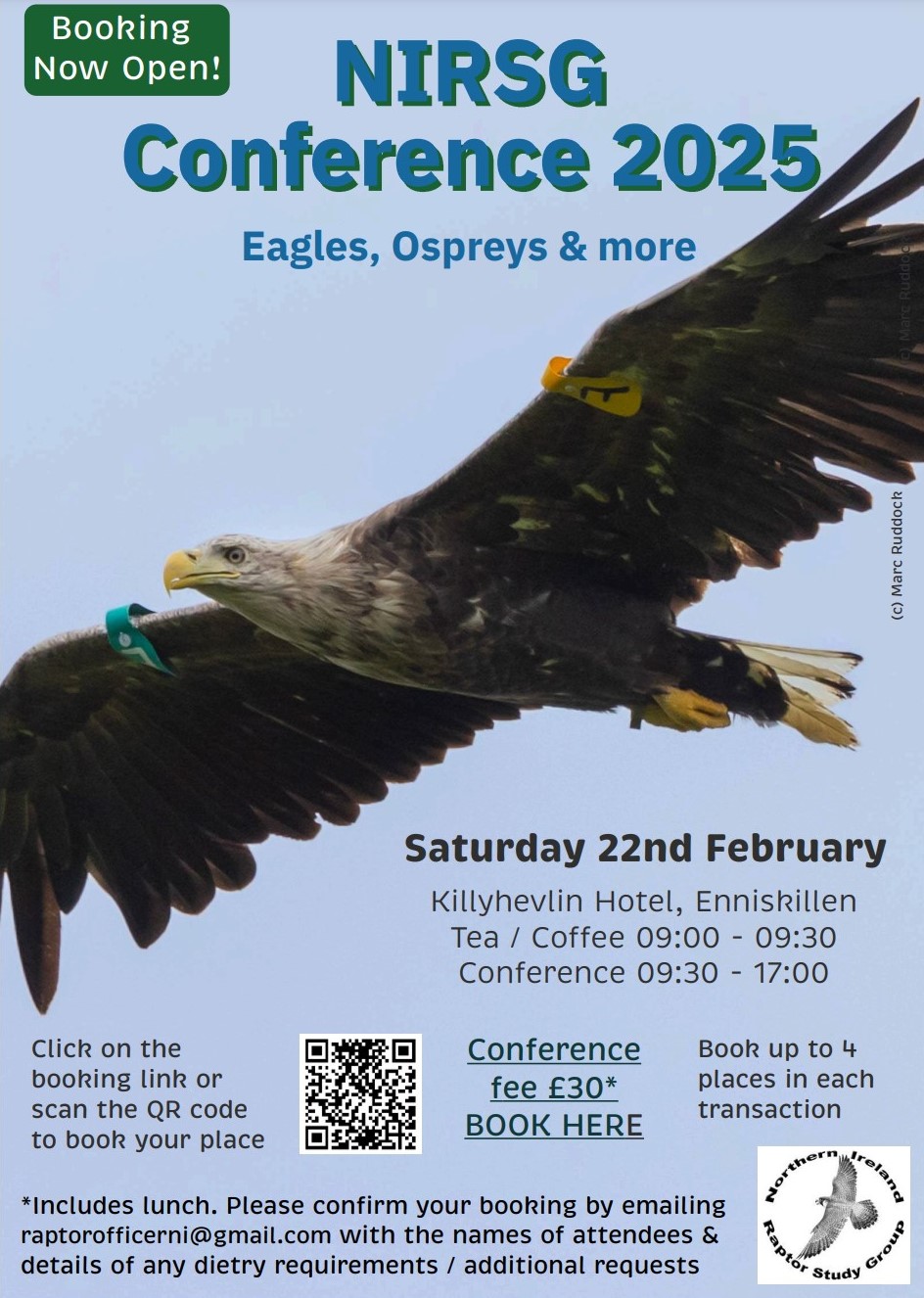
Booking is open for The Northern Ireland Raptor Study Group (NIRSG) conference taking place this Saturday (22 February 2025) at the Killyhevlin Hotel, Enniskillen.

The conference is open to everyone – you don’t need to be a member of the NIRSG to attend. To find out more information and details of how to book, please visit the NIRSG website (here).

You’ll see that Phase 2 of the NIRSG’s campaign to ban dangerous, raptor-killing pesticides will be launched on Saturday morning. I wrote about this campaign a few days ago (see here) and wanted to drum up support to help the petition reach 50,000 signatures before this coming Saturday (it had been stubbornly stuck at 46, 206 signatures for a while).

This petition/campaign was initiated after the discovery of two young white-tailed eagles that were found dead on Northern Ireland’s only driven grouse moor in 2023 – they’d both been illegally poisoned by the toxic pesticide Bendiocarb.

Many, many thanks to the approx 1,500 of you who have signed in the last few days – the current total is 47, 761 signatures. We need a couple more thousand people to pledge their support to reach the target.

Can you help? You don’t need to be a resident of Northern Ireland to sign – the petition is open to anyone, anywhere, who cares about the illegal use of these dangerous poisons to kill birds of prey (and any other wildlife that comes into contact with indiscriminately placed poisonous baits).

If you’d like to sign and/or share the petition with others, please click HERE.

Thank you.

Petition to ban possession of dangerous, raptor-killing pesticides in Northern Ireland approaches deadline: please sign

Your help is needed to ensure a petition, calling for a ban on the possession of dangerous, raptor-killing pesticides in Northern Ireland, passes the target of 50,000 signatures before next week.

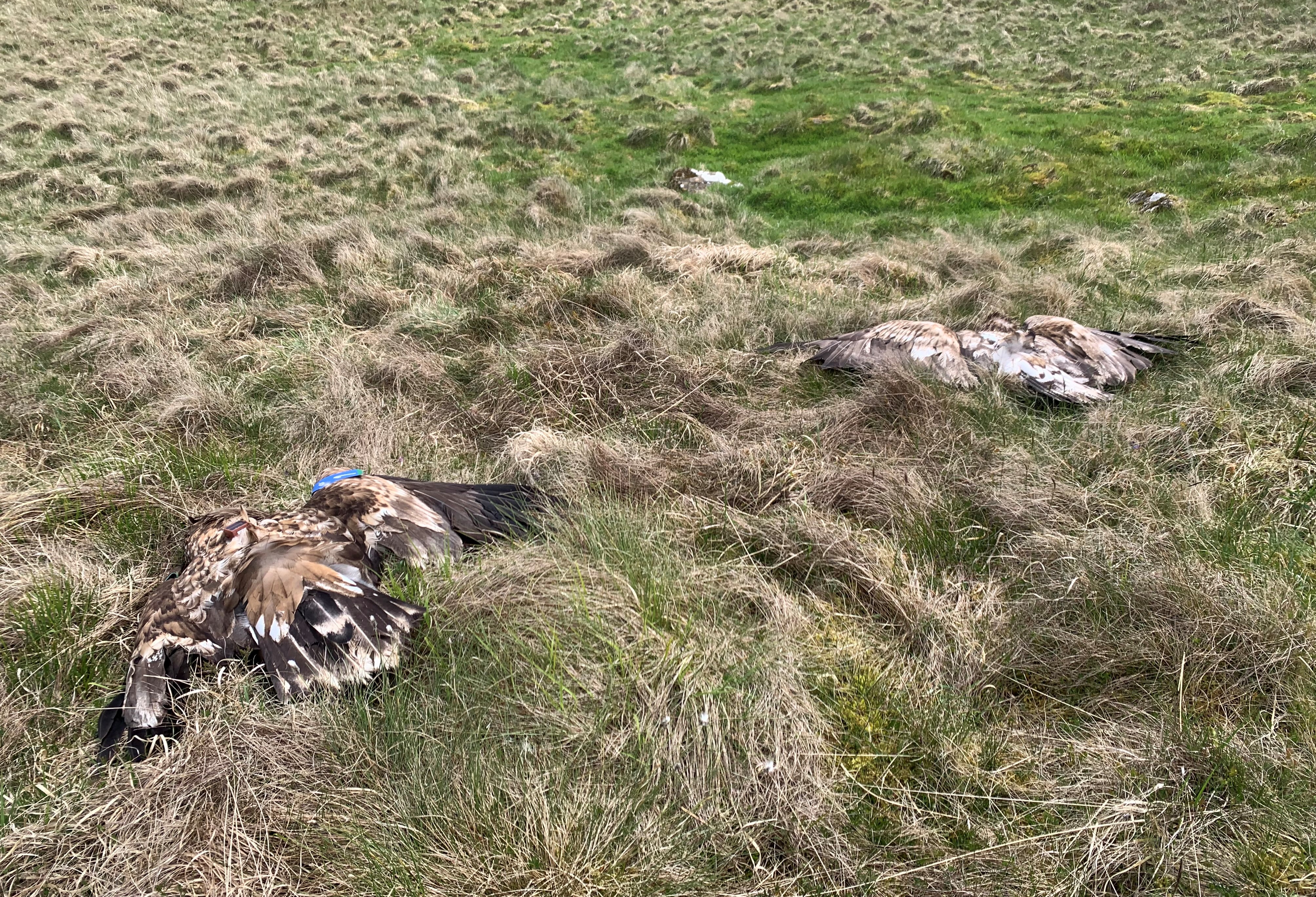
The petition was launched by the award-winning Northern Ireland Raptor Study Group (NIRSG) in July 2023 following the illegal poisoning of two young White-tailed Eagles that were found dead, side by side, on Northern Ireland’s only driven grouse moor at Glenwherry, in the Antrim Hills.

The two poisoned white-tailed eagles. Photo: Northern Ireland Raptor Study Group

The eagles had both ingested the highly toxic insecticide, Bendiocarb, which is currently only licensed for indoor use in Northern Ireland. This chemical is so dangerous that it’s an offence to even possess it in Scotland, let alone place it out in the open on a bait to attract any passing predators.

The petition calling for a ban on the possession of Bendiocarb and a range of other dangerous chemicals used to illegally target birds of prey currently has 46,206 signatures. The target is 50,000 signatures and ideally this target can be met before next week, when the NI Raptor Study Group will be announcing Phase 2 of its campaign to get these pesticides out of circulation. A petition with 50,000+ signatures will help get the attention of the politicians the NIRSG will be approaching.

You don’t need to be a NI resident to sign the petition; any decent human being with an interest in protecting birds of prey and other wildlife can sign it.

If you haven’t already signed, and want to help this important campaign, please sign the petition HERE.

Thank you.

Red kite poisoned in Norfolk – police appeal for information

Press statement from Norfolk Constabulary (2 January 2024):

APPEAL AFTER BIRD OF PREY POISONED

Police are appealing for information after further tests revealed a Red Kite discovered dead in North Creake had died from suspected insecticide poisoning.

Red kite photo by Pete Walkden

Officers from Norfolk Police’s Op Randall team have been investigating the death of the protected bird of prey, which was found dead by a member of the public in a field in North Creake in August 2023, and had suffered no obvious physical injuries.

Further tests were ordered to establish the cause of death and a post-mortem examination carried out through the Wildlife Incident Investigation Scheme (WIIS) at the end of November has subsequently detected a number of pesticides and insecticides, including very high levels of Bendiocarb which has been concluded as the likely cause of death.

Searches carried out out  by police alongside National Wildlife Crime Unit officers and the RSPB investigation team to find the source of the substance have so far proved negative and now officers are keen to speak to anyone with information that may help their investigation or who has witnessed anything similar in the area.

Wildlife officer PC Chris Shelley said: “We’ve been waiting for the results of the toxicological analysis, and now know the levels of Bendiocarb contained within the samples taken from the bird have not come from the approved use of such a product.

I have to conclude that this product has been used illegally in very close proximity to where the bird was recovered.

Bendiocarb has been the active ingredient in a number of insecticide products in the past approved to deal with wasps and ants. In more recent years the number of products including this ingredient has reduced and its approved use has been to tackle such species inside buildings. Products containing this ingredient can only be purchased and used by professional pesticide users, and only then can they use the product inside a building to reduce the risk to non-target species.

Red Kites are listed under Schedule 1 of the Wildlife and Countryside Act. We have a zero tolerance approach to the persecution of birds of prey and I’d appeal to anybody who knows anything that may help get to the bottom of what happened here or indeed has any information about anything similar happening, please get in touch with us.”

Anyone with any information is asked to get in touch via the following channels, quoting reference 38/82207/23:

Website: https://www.norfolk.police.uk/tell-us

Email: OperationRandall@norfolk.police.uk

Phone: 101

Crimestoppers: Contact the independent charity Crimestoppers anonymously on 0800 555 111, or via their online form: www.crimestoppers-uk.org

ENDS

Channel 4 News reports two thirds of raptor persecution crimes in 2022 linked to shooting estates

Channel 4 News aired an exclusive seven-minute report this evening about raptor persecution on gamebird shooting estates across the UK.

Fronted by Chief Correspondent Alex Thomson, this was a pre-cursor to the publication tomorrow of the RSPB’s latest Birdcrime report (2022) and the film featured two case studies that are included in that report – the illegal shooting of a hen harrier found dead on the Knarsdale Estate in Northumberland earlier this year, and the illegal poisoning of a red kite and a white-tailed eagle found on a pheasant shoot in West Sussex in October 2021. A beater’s gundog also died from the same poison, on the same estate, within a few days.

I’ll be writing in detail about both these cases and others, once Birdcrime has been published. There’s a lot to say.

In the meantime, I thoroughly recommend you watch the Channel 4 report here:

24 more White-tailed eagles reintroduced in Ireland

Press release from the Irish Government:

WHITE-TAILED EAGLE CHICKS SPREAD THEIR WINGS FURTHER INTO IRISH SKIES

  • 24 white-tailed eagle chicks were released in August around the country, as part of an ongoing National Parks and Wildlife Service (NPWS) programme to reintroduce this once extinct species
  • A total of 171 white-tailed eagles have now been released through the programme to date
  • A small, established population of eagles is now fledging chicks around the country and has even produced triplets

Over the past week, twenty-four white-tailed eagle chicks have been released in locations around Lough Derg, the Shannon Estuary and the west of Ireland, as part of a long term reintroduction programme managed by the NPWS.

White-tailed eagles are predators who play an important role in nature and the ecosystem.

Once native to Ireland, they became extinct in the nineteenth century. Since 2007, the NPWS has been working with partners in Norway along with farmers and communities around the country to reintroduce the white-tailed eagle to Ireland.

Young White-tailed eagle. Photo: Valerie O’Sullivan

Minister of State for Heritage and Electoral Reform, Malcolm Noonan TD, who released four chicks at Killarney National Park as part of the release programme, said:

The juvenile white-tailed eagles we have released this week are joining a growing population across our island. This incredible endeavour is the result of 16 years’ work and collaboration, not just on the reintroduction programme, but also on habitat restoration and engagement with landowners to secure their ongoing protection.

These apex predators perform a vital role in our ecosystems and the sight of them soaring in the thermals is a privilege that everyone who lives in or visits Ireland will now have the opportunity to enjoy. I would like to pay tribute to NPWS staff for their commitment and dedication to this initiative, our international partners from Norway, and the communities around the country who are embracing the return of the white-tailed eagle to our landscapes.”

A comprehensive satellite tagging system is now in place so that the birds can be monitored as they disperse around the country.

Minister for Housing, Local Government and Heritage, Darragh O’Brien who also participated in the release of chicks at in the vicinity of Lough Derg added:

This reintroduction programme is the result of a combined effort by my Department’s National Parks and Wildlife Service, participating landowners and communities and endangered species experts. I commend each of them for the role they are playing in protecting these iconic birds of prey“.

Niall Ó Donnchú, Director General with the NPWS said:

This programme is one of several initiatives underway in the NPWS to protect endangered species in Ireland and prevent their decline. This work takes time, and calls for a partnership approach if it is to be sustainable in the long term. Collaboration with the science community and international partners, along with the involvement of our expert staff and communities around the country has been key to the success we have seen so far“.

Eamonn Meskell, Divisional Manager NPWS, Killarney National Park who heads up the white-tailed eagle reintroduction Programme added:

There is huge interest from the public in the white-tailed eagle programme. Locations where they are spotted attract many visitors and local interest and we love to hear about sightings of the birds around Ireland and further afield. There are great stories to tell about the project. For example, the first Irish bred female to breed in over a hundred years has fledged seven chicks in three years! In Lough Derg this year for the second time a nesting pair fledged triplets. This is incredibly unusual – even in the wilds of Norway, and it shows how well suited Ireland really is for the white-tailed eagle from both a habitat and a feeding perspective. We’ll be watching this year’s chicks with interest as they mature and hopefully go on to fledge more chicks“.

Bente Lyngstad, chargé d’affaires at the Norwegian Embassy in Ireland said:

Watching the release of the white-tailed sea eagles is a truly extraordinary and mighty experience. Over the years more than 150 eagle chicks have been collected in Norway and released in Ireland. Today’s stock in Ireland is the result of a long-term collaboration between Norway and Ireland, which again stems from our deep friendship and our shared values. I would like to acknowledge all volunteers whose efforts have been imperative to make this happen“.

The retention of species is essential for maintaining the intricate web of life and the functioning of ecosystems. It contributes to the sustainable use of natural resources and the well-being of both present and future generations. Yet we now see a rapid loss of species world-wide. This development must be halted. The reintroduction of white-tailed sea eagles into their natural habitat is a great example of how we can work together against biodiversity loss.”

ENDS

These releases form part of phase two of the reintroduction project. Phase one involved releasing 100 White-tailed eagles into Killarney National Park in County Kerry, between 2007-2011. A scientific review of the project in 2019 suggested that the small population was still vulnerable to issues such as Avian Influenza, extreme weather events and illegal poisoning so phase two began in 2020, to reintroduce more young birds and release them in different parts of the country.

Unfortunately some of the eagles released in phase two have already been killed illegally after consuming poisoned bait (see here and here).