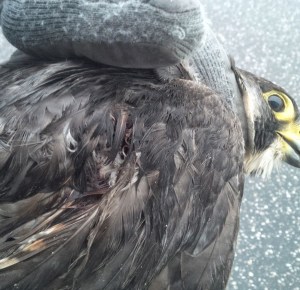
Another peregrine poisoned in Derry

Last week we blogged about the suspected poisoning of a famous peregrine that had been found dead in the grounds of St Columb’s Cathedral in Derry (see here).

Seven days on and we’ve been told by one of our contributors (thank you) of another dead peregrine in Derry, this time confirmed to have been poisoned.

The dead bird was discovered at the Carmean Road in Moneymore on the afternoon of Tuesday July 15th. The carcass was taken to a vet at the Department of Agriculture and Rural Development for a post mortem. Tests revealed it had been killed by ingesting the banned poison Carbofuran.

Police in Magherafelt have launched an appeal for information about this incident and about any suspicious activity around the local quarries. Anyone with information is asked to contact Magherafelt Police Station on Tel: 101.

This is the 19th peregrine known to have been targeted in these isles this year. And these are only the ones that have been reported. Details of the first 17 can be found here, details of the 18th here.

Peregrine photo by Steve Waterhouse

Famous Derry peregrine found dead: poisoning suspected

A well-known peregrine has been found dead in the grounds of St Columb’s Cathedral in Derry and is suspected to have been poisoned.

The bird was found on Saturday and the carcass has been sent for toxicology tests.

BBC news story here

Buzzard shooting condemned as abhorrent

Police are investigating following the discovery of a buzzard that had been shot dead in July.

The bird was found in a wooded area near Dundrum Road, Newcastle, Co Down on 9th July, according to an article in the local Mourne Observer (thanks to the contributor who sent us a copy).

An RSPB spokesperson said: “Any incident of wildlife crime is to be condemned but the shooting of a majestic bird of prey is completely abhorrent”.

Anyone with information about the shooting is asked to contact Newcastle police station on the non-emergency number 101.

Buzzard photograph: unknown photographer.

By the way, in case you’re thinking that due to a paucity of recently reported information, raptor persecution in Scotland has suddenly stopped, think again. We’re just waiting to see how long it takes Police Scotland to make these crimes public…..

Raven found poisoned at Killard Nature Reserve

raven poisoned KillardThanks to the contributor who sent us a copy of the following article, published in the (County) Down Recorder, 23 July 2014. We’ve shortened it slightly:

The poisoning of a raven at Killard Nature Reserve, County Down, has prompted a police investigation and raised serious concerns amongst environmentalists.

The dead bird was found on 15th March 2014 but it has only now been confirmed that it was poisoned with the banned pesticide, Carbofuran.

Situated at the mouth of Strangford Lough opposite Ballyquintin, where walkers are attracted by the area’s rich wildlife and interesting rock formations, the site is managed by the Northern Ireland Environment Agency (NIEA).

An NIEA spokeswoman said they were “deeply concerned” and advised members of the public at Killard not to pick up any dead wildlife in case they are poisoned. She explained that the raven, protected by the Wildlife (NI) Order 1985, was found by one of their wildlife officers on the cliff top above Benderg Beach.

“The dead raven was found in an unnatural posture which, from experience, led the officer to believe that it may have been poisoned”, said the spokeswoman. “Despite a thorough search no evidence was found that poison had been laid in the reserve. Tests completed in early July revealed that the raven had died as a result of ingesting Carbofuran, a poison banned for use throughout the EU. It is likely that the bird picked this up from a poisoned bait within 100 metres of where the raven was found.

“NIEA is deeply concerned, not only the poisoning of a protected species nesting locally, but also that it took place on or near a protected site where wildlife should be safe”.

NIEA said it wasn’t aware of any other incidents at the reserve but issued the following advice: “Members of the public visiting Killard are asked to avoid handling any dead animals such as rabbits or birds in case they may have been poisoned or baited with poison. Dogs should be kept on the lead and prevented from approaching any such corpses, and dogs are not permitted on the Reserve when livestock graze there over the winter months.

“If members of the public in the Killard and Ballyhornan area do come across any dead crows, birds of prey or foxes, or find any suspicious carcasses or rabbits or chickens covered in granular or powdered substances, or see any suspicious activity which could relate to illegal poisoning, they are asked to contact Downpatrick PSNI”.

A spokeswoman for the RSPB in Northern Ireland said the incident was “very disappointing”.

“All cases of birds or wildlife being poisoned by an illegal substance are worrying, but this incident is particularly concerning because the County Down area is a stronghold for the threatened red kite”, she said.

“Having been persecuted to extinction in Northern Ireland more than 200 years ago, kites were reintroduced here in 2008. Sadly, last year alone around 30% of the breeding population were confirmed poisoned, making it more difficult for the species to thrive.

“Leaving out poisoned bait is an illegal practice as it is indiscriminate and can affect not only scavenging birds like red kites, but also pets, livestock and humans”.

Another suspected red kite poisoning incident in Northern Ireland

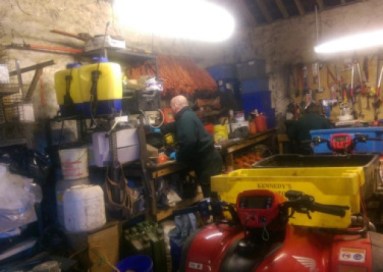
There’s more grim news from Northern Ireland this week with the discovery of a dead adult red kite on her nest, along with two chicks. Poisoning is strongly suspected.

RKBLUE13_NIJune2014

The authorities were alerted to a potential problem at the Katesbridge nest in Co. Down by a sharp-eyed local resident who had been watching the nest from her house and was worried something had happened to the female.

The site was subsequently visited by members of the Northern Ireland Raptor Study Group, RSPB and the Police Service of Northern Ireland where they found the adult (wingtagged ‘Blue 13’) slumped on the nest, along with the two chicks. Their bodies have been sent for toxicology tests.

These birds were part of the small breeding population in Northern Ireland, reintroduced (with donor birds from Wales) between 2008-2010. The population is still tiny and is extremely vulnerable to illegal poisoning.

In 2013 alone, six dead red kites were recovered. Tests revealed that two had been poisoned with Carbofuran, three with Alphachloralose, and one was too decomposed for analysis but was found in the same (very small) geographical area as three of the others.

At least this time the police have issued a very quick alert (within 24 hours of the discovery), in sharp contrast to the 13-month delayed announcement about a poisoned white-tailed eagle that we blogged about a couple of days ago (see here).

As a side issue, this is our 1,000th blog entry. It’s a milestone, but unfortunately not one to celebrate.


Sea eagle poisoned in Northern Ireland: police appeal for info one year later!

Last week, at the end of May 2014, the Police Service of Northern Ireland issued a vague press release calling for information about the discovery of a poisoned white-tailed eagle in the Armoy area of Northern Ireland. Toxicology results revealed the bird had been killed by the banned poison, Carbofuran.

The thing is, this bird was discovered in April 2013 – over a year ago – and yet this is the first time the PSNI have published anything about it.

Here’s what their press release said:

“Police are investigating the circumstances surrounding the death of a sea eagle.

During April 2013 police received a report from a member of the public regarding a dead sea eagle found within the Armoy area.

Subsequent toxicology reports confirmed Carbofuran poisoning to be the cause of death.

Carbofuran is a banned substance which is highly toxic and poses a serious risk to public health and safety.

Police are appealing to anyone with information in relation to this incident to contact them on the new non-emergency number 101″.

It’s not known if this was an adult or a juvenile bird, or whether it was from the Kerry reintroduction project in SW Ireland or whether it was a Scottish bird.

It’s also not known whether this appalling delay was due to the toxicology lab, or whether it was due to the police, or both. It’s not the first time that such chronically long delays have occurred here – see here and here for previous blogs. Whichever agency is responsible, it’s shocking that it has has taken over a year for an appeal for information.

It’s worth asking some questions about this. Let’s email the following people to ask about why it has taken so long to (a) appeal for information about this crime, and (b) warn the public in the Armoy area of Northern Ireland about the serious risk of a banned and highly toxic poison lying around in the countryside:

Environment Minister Mark H. Durkan (who incidentally has recently pledged improved action against wildlife crime – see here). His email address: doe.iemonitoring@doeni.gov.uk

Minister for Agriculture Michelle O’Neill (who is directly responsible for overseeing the process of toxicology sampling). Her email address: private.office@dardni.gov.uk

The local police office of the Armoy area: NPTBallycastle@psni.pnn.police.uk

Photo of a white-tailed eagle by Mike Watson


Peregrine shot in Devon as this year’s tally continues to rise

Perg shot seaton Devon May 2014A critically-injured peregrine was found at Seaton Beach in Devon on Bank Holiday Monday. The bird, soaked and unable to fly, was found by members of the public.
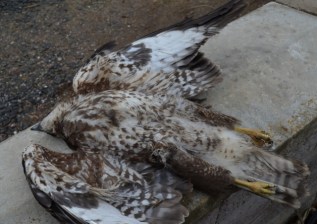
It was taken to a vets but had to be euthanized. Its injuries were consistent with a gunshot wound.

The police quickly issued an appeal for information (see here) and local birder Steve Waite has written about the incident on his blog (see here).

So here we are, another month, another reported raptor persecution crime to add to the year’s growing death toll:

Jan 2014: Shot buzzard, Norfolk.

Jan 2014: Dead bird (species unknown) & poisoned bait, South Lanarkshire.

Feb 2014: Shot buzzard, North Yorkshire.

Feb 2014: Shot buzzard, Norfolk.

Feb 2014: Shot sparrowhawk, Norfolk.

Feb 2014: Spring-trapped buzzard, West Yorkshire.

Feb 2014: Poisoned peregrine, South Lanarkshire.

Mar 2014: Shot peregrine, Dorset.

Mar-April 2014: Poisoned red kites (x 16) & buzzards (x 6), Ross-shire.

April 2014: Man arrested for alleged attempted raptor trapping, Aberdeenshire.

April 2014: Shot buzzard, North Yorkshire.

April 2014: Shot red kite, Northamptonshire.

April 2014: White-tailed eagle ‘disappears’ in suspicious circumstances, Aberdeenshire.

April 2014: Peregrine ‘illegally killed’, Stirlingshire.

May 2014: Shot peregrine, Devon.

Meanwhile, over in Northern Ireland a wildlife crime summit has learned that 90 raptors have been found poisoned there since 2006 – see here.

Buzzard poisonings in Northern Ireland: 1 confirmed, 3 suspected

BZNIPolice in Northern Ireland are appealing for information about the suspected poisonings of 3 buzzards in two separate incidents.

In the first incident (April 2013!) a dead buzzard was found on land at Drumdreenagh Road in the Hilltown area of Warrenpoint, County Down. We happen to know that this bird was found with a dead red kite which has since been confirmed as being poisoned with Carbofuran.

The second incident (October 2013) was also in the Hilltown area – this time two buzzards were found dead on land in the Lisnamulligan Road.

Anyone with information can contact the police in Warrenpoint on 0845-600-8000. Article in Newry Times here.

It’s more than a little concerning that the police appeal for information has only just appeared and that the cause of death has not yet been confirmed – poisoning is still only suspected at this stage. We’ve blogged before about the excessively long delays in getting toxicology results from the lab in Northern Ireland (e.g. see here) and it seems reasonable to assume from the information provided in the latest press release that this is an on-going problem. Such slow response times can only hinder the police investigations, and also the work of the conservationists trying to assess whether the buzzards were deliberately targeted or were the unintended victims of secondary poisoning.

Another dead buzzard that was found in Castledawson, Co. Londonderry in March 2013 has been confirmed as being poisoned with Carbofuran. The police put out an appeal for information about this incident in October 2013 (article here).

Rescued peregrine succumbs to its injuries

Last week we blogged about the valiant efforts made by a farmer, an RSPB warden, a politician and a falconer/gamekeeper to save a stricken peregrine that was believed to have been poisoned (see here).

We heard yesterday that she didn’t make it. Her body has now been sent to the veterinary labs at the Agri-Food and Biosciences Institute for testing.

5th suspected red kite poisoning in Northern Ireland this year

Y1D2013Last week we blogged about the growing concern of suspected red kite poisonings in Northern Ireland, following the discovery of a fourth dead bird in County Down this year (see here). Incredibly, conservationists had not been able to confirm the poisonings as they were still waiting for toxicology results from the lab – from as far back as January!

This week brings news of a 5th dead kite, this time found in the Cairncastle area of County Antrim and also suspected to have been poisoned. It was found by walkers on Sunday 18th August.

This bird (Yellow 1D) was born in May this year and was the offspring of one of the poisoned adults found in County Down.

The RSPB and the Police Service of Northern Ireland (PSNI) are appealing for information. Adam McClure, the RSPB’s Red Kite Officer in Northern Ireland said: “While we can’t say for certain until we have the results of the post-mortem, we strongly suspect that this bird, and potentially some of the others, has fallen victim to poisoning. All birds of prey are protected under the law, but unfortunately this doesn’t mean they are safe from poison. In some cases they are deliberately targeted as some people incorrectly see them as a threat to livestock or game birds. They are also vulnerable to poisoned bait left out with the intention of controlling foxes and crows. However, this is an illegal practice as it is indiscriminate and can affect not only scavenging birds like red kites but also pets, livestock and humans“.

Anyone with information about these suspected poisonings is urged to call PSNI: 0845 600 8000 or contact Crimestoppers anonymously: 0800 555 111.