East Arkengarthdale Estate: some questions for the grouse shooting industry

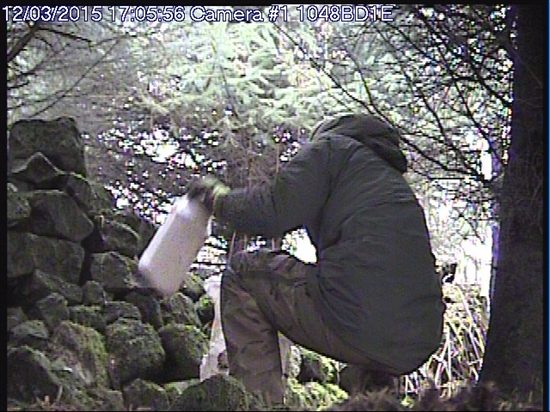
Following on from today’s earlier news that in December 2014 a poisons cache had been uncovered on a driven grouse moor at East Arkengarthdale Estate in Yorkshire, and that a gamekeeper had admitted that he was responsible for placing poisons in the cache, but he avoided prosecution and had his firearms certificates reinstated (see here), we’ve got some questions for the grouse-shooting industry.
arken

Let’s start with questions for the Moorland Association. Email: amanda@moorlandassociation.org

  1. Is East Arkengarthdale Estate a member of the Moorland Association?
  2. When were you first aware of the discovery of this poisons cache, that was found two years ago?
  3. Were you aware of it when you gave evidence at Westminster on the petition to ban driven grouse shooting?
  4. If East Arkengarthdale Estate is a member, will you be expelling them from your organisation?
  5. If not, why not?
  6. Will you be publishing a statement about the discovery of a poisons cache on a driven grouse moor in Yorkshire?
  7. If not, why not?
  8. Will you be praising the superb work of the RSPB Investigations Team for uncovering this poisons cache on a driven grouse moor?
  9. Can you confirm whether Adrian Thornton-Berry, a Moorland Association official, was the sporting agent (via Dalesport Sporting Agency) at East Arkengarthdale Estate in December 2014 when the poisons cache was discovered?
  10. Did Amanda see the poisons cache through her kitchen window?

Questions for the National Gamekeepers’ Organisation. Email: info@nationalgamekeepers.org.ukĀ 

  1. Is this (unnamed) gamekeeper a member of the National Gamekeepers’ Organisation?
  2. If yes, do you intend to expel him from your organisation?
  3. If not, why not?
  4. Could you explain why this gamekeeper had an electronic calling device (typically used to attract predators) with a series of raptor calls stored in it?
  5. Could you explain why this gamekeeper was visiting a poisons cache on a driven grouse moor?
  6. Could you explain why those poisons had been hidden in a bucket, underground?

Questions for the Game & Wildlife Conservation Trust. Email: info@gwct.org.uk

  1. When did you first become aware of the discovery of a poisons cache at East Arkengarthdale Estate?
  2. Were you aware of it when one of your 2014 auction prizes (some driven grouse shooting on 4 Yorkshire grouse moors, including East Arkengarthdale Estate) was fulfilled in October 2015?
  3. Have you received funding/donations from East Arkengarthdale Estate?
  4. Will you be accepting any further funding/donations from East Arkengarthdale Estate in light of today’s news?

Questions for BASC. Email: click here

  1. Why did your senior staff member, Dr Colin Shedden, tell a Scottish parliamentary committee that “any hint of illegal activity can lead to the right to hold a [shotgun] certificate, and the ability to shoot, being withdrawnā€œ, when on the very same day, the BASC Chairman was defending the right of a gamekeeper to keep his shotgun certificate despite him admitting to placing poisons in a secret cache?
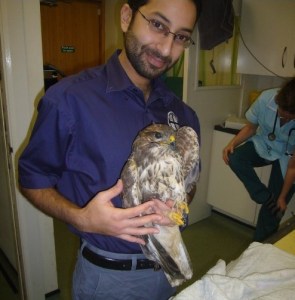
Shot buzzard rehabilitated & returned to the wild in North Yorkshire

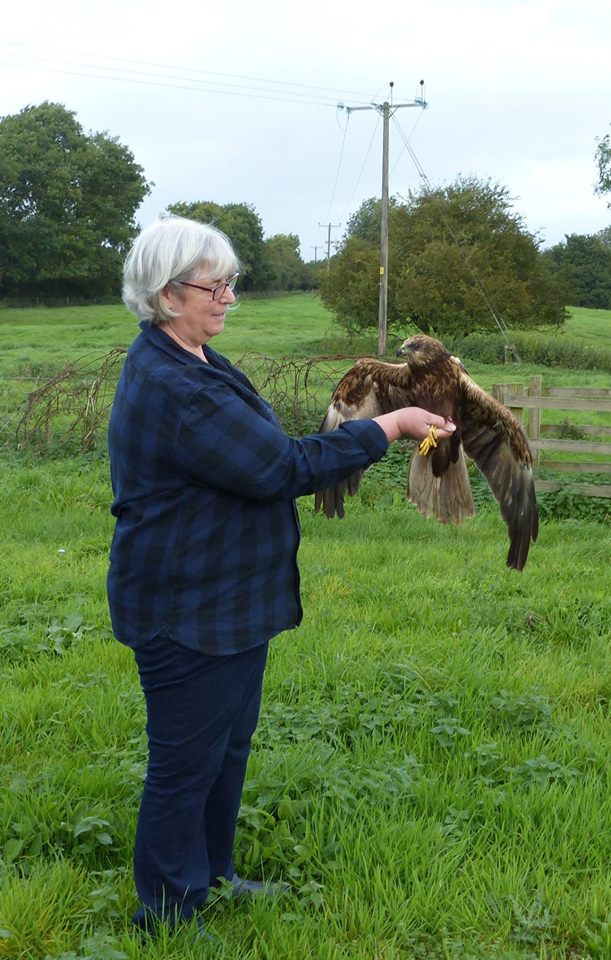
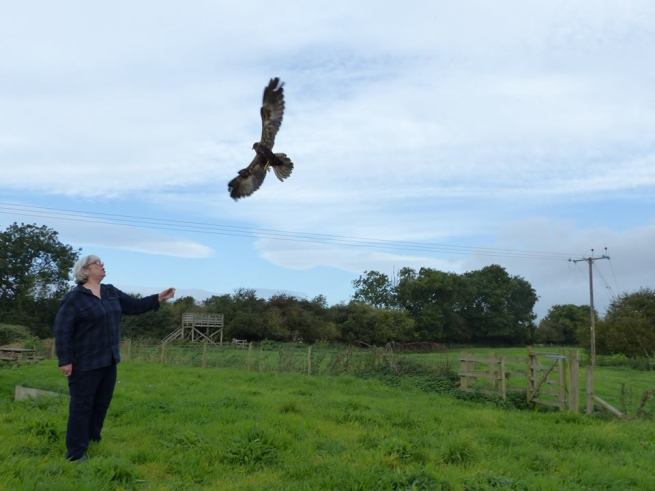
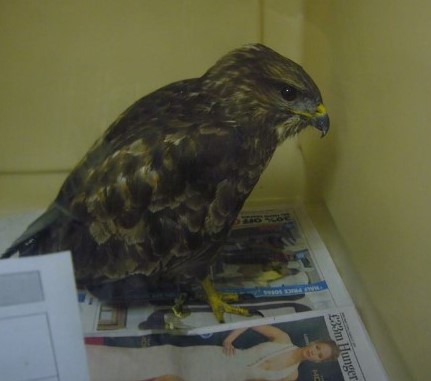
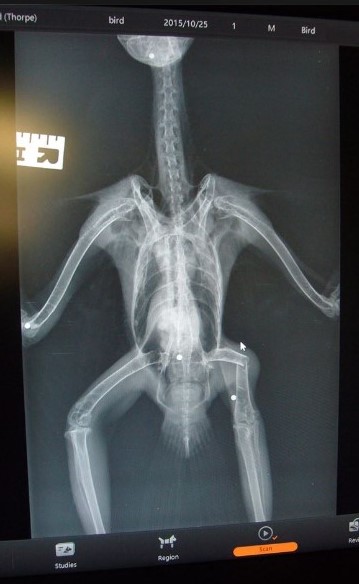
At the end of October we blogged about a buzzard that had been found with shotgun injuries in Thirsk, North Yorkshire (see here).
The bird’s broken femur was expertly pinned by Mark Naguib of Battle Flatts Veterinary Clinic and the buzzard then underwent a period of care and rehabilitation with the wonderful Jean Thorpe of Ryedale Wildlife Rehabilitation.

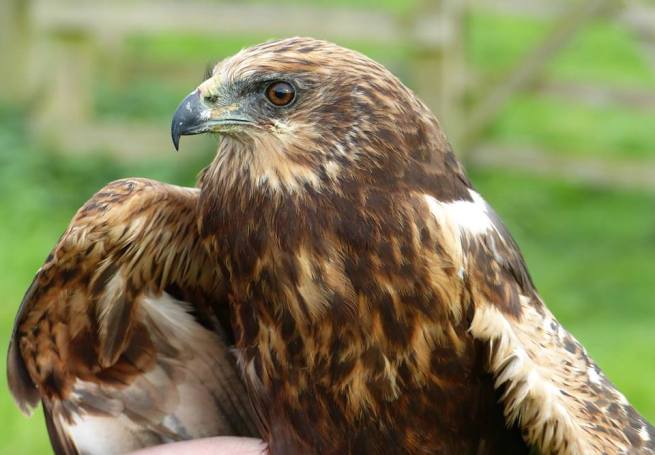
Yesterday this buzzard was released back to the wild (pictured here with vet Mark Maguib – photo by Jean Thorpe)

We’ve said this before but we’ll say it again – Jean’s work is entirely voluntary. If you want to support her efforts, please consider making a donation here.

Satellite-tagged hen harrier Tarras ‘disappears’ in Peak District National Park

‘Tarras’, a young hen harrier from this year’s Langholm cohort, has ‘disappeared’ in the Peak District National Park.

tarras

The following statement has been issued on the Langholm blog:

We have concerns for ‘Tarras’ a young female Hen Harrier tagged by Stephen Murphy (Natural England) at Langholm this summer.

The transmitter on the juvenile Hen Harrier Tarras has not transmitted since the 23rd October. The area has been searched and nothing was found and no hen harriers were seen in the area.

The last known fix area is on land owned by United Utilities in the north Peak District.

Tarras flew south from Scotland in the last weeks of September, arriving in the Nottingham area on the 11th October. She then headed north through Staffordshire and was roosting in the Peak District, near to the last known fix area on 13th October.

Tarras’ transmission period (duty cycle) was regular until 23rd October; on 23rd October it ran a complete transmission period (e.g. no sudden cessation of data within the 10hr transmission period). The local weather in the days immediately after 23rd were damp and overcast so this can delay the recharge time. However, by 26th concerns were raised. We have some evidence that suggest this may be a tag failure and we are currently trying to gather more information to help us resolve this.

END

That final sentence is a bit strange, and is at odds with what has been reported about the tag’s last smooth-running duty cycle. It’s worth revisiting a comment about tag reliability made recently by experienced researcher Dr Raymond Klaassen, who has been using satellite tags to track the movements of Montagu’s Harriers:

ā€œTechnical failures generally are rare. We have recorded a few throughout the years (6% of all cases), however failures have always been preceded by irregular transmission periods and, most importantly, a drop in battery voltage (another parameter monitored by the transmitter). This makes it relatively straightforward to distinguish between a likely mortality event and a likely transmitter failureā€œ.

So, given Tarras’ tag was not transmitting irregularly prior to her disappearance, what ‘evidence’ does Natural England have to ‘suggest this may have been a tag failure’?

It’s all a bit vague, isn’t it? A bit like the information put out about hen harrier Rowan who, according to Cumbria Police, was “likely to have been shot” in the Yorkshire Dales National Park.

We look forward to a timely update from Natural England about Tarras’ disappearance in the Peak District National Park.

UPDATE 16 March 2021: Interestingly, ‘Tarras’ is not listed on Natural England’s database of satellite-tagged hen harriers – why is that? See: https://www.gov.uk/government/publications/hen-harriers-tracking-programme-update/hen-harrier-annual-tracking-update

Hen Harrier Rowan ‘likely to have been shot’ in Yorkshire Dales National Park

On 28 October 2016 we learned that one of this year’s young hen harriers had been found dead in Cumbria in suspicious circumstances (see blog here).

This was a hen harrier called Rowan, who had hatched at Langholm this summer and was one of two hen harriers being satellite-tracked by the Hawk & Owl Trust.

rowanhh

The press release from the Hawk & Owl Trust and Natural England had just said Rowan’s body had been found in Cumbria on 22 October 2016, and following a post mortem, details had been passed to the police.

Today, Cumbria Police have issued a press statement as follows:

Cumbria Police have opened an investigation into the death of a hen harrier.

The body of a male Hen Harrier was found in the Ravenstonedale area of the county on 22nd October 2016. A post-mortem examination funded by Natural England and carried out by the Zoological Society of London has established that the bird was likely to have been shot.

The hen harrier, called Rowan, was satellite tagged at the Langholm Project as part of a joint venture between Natural England and the Hawk and Owl Trust. The bird had recently flown in the Cumbria and North Yorkshire Dales area before being found at Ravenstonedale.

Hen Harriers are specially protected under the Wildlife and Countryside Act, and the Government has set raptor persecution as one of their wildlife crime action priorities.

There is huge pressure on the survival of the hen harrier in England particularly and projects such as this are working hard to assist with the bird’s survival. Cumbria Police are working alongside such organisations to progress this investigation.

Anyone with information is asked to contact police on 101 and ask to speak to PC 2059 Helen Branthwaite.

END

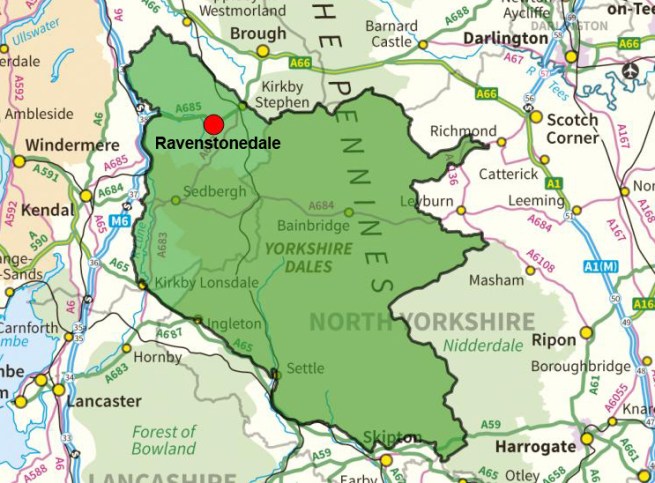
Ravenstonedale lies within the Yorkshire Dales National Park (the bit that was recently added in August 2016).

ravenstonedale

The statement that Rowan “was likely to have been shot” is a bit odd. It would have been useful for Cumbria Police to release a copy of the x-ray, as other police forces often do when appealing for information about shot birds. Perhaps there is justification for the vague statement about the cause of death, but then again, perhaps there isn’t. Did the post mortem report use the words ‘likely shot’? That would be an unusual phrase. Usually they say something like ‘injuries consistent with’ (being shot). There’s a big difference in interpretation. There’s a faint whiff of a cover up here. Not an overpowering stench, but definitely an aroma of something….

The reputation of the Yorkshire Dales National Park as a hell hole for hen harriers (and most other raptors) continues to grow. Hen harriers haven’t bred in this National Park since 2007 and young birds that visit don’t last very long either. Here are some YDNP hen harrier data (2007-2014) from Natural EnglandĀ we’ve blogged about before:

Female, tagged N England 26/6/07: last known location YDNP 5/10/07. Status: missing.

Female, tagged N England 16/7/09: last known location YDNP 27/9/09. Status: missing.

Male, tagged Bowland 29/6/09: last known location YDNP 17/8/09. Status: missing.

Female, tagged N England 29/6/10: last known location YDNP 25/11/10. Status: missing.

Female (Bowland Betty), tagged Bowland 22/6/11: last known location YDNP 5/7/12. Status: shot dead.

Female (Kristina), tagged N England 25/6/12: last known location YDNP 9/10/12. Status: missing.

Male (Thomas), tagged N England 4/9/12: last known location YDNP 4/9/12. Status: missing.

Male (Sid), tagged Langholm 21/9/14: last known location YDNP 21/9/14. Status: missing.

Female (Imogen), tagged N England 26/6/14: last known location YDNP 1/9/14. Status: missing.

Marsh harrier found shot on East Yorkshire sporting estate

On 7th September 2016 an adult female Marsh harrier was found with shotgun injuries next to a partridge release pen on an East Yorkshire sporting estate.

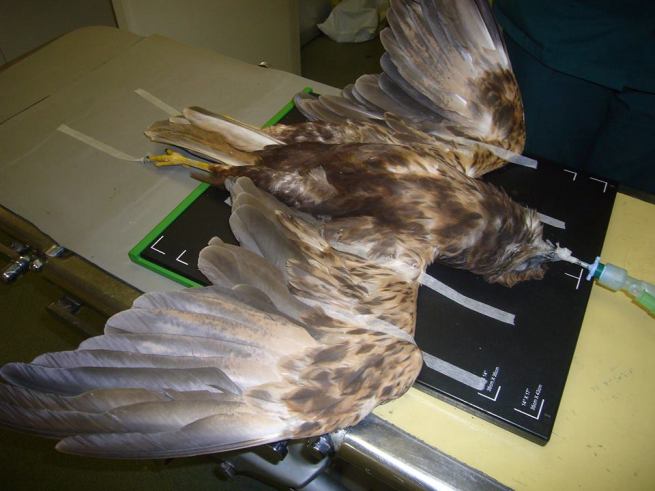
The bird was rescued and underwent surgery at Battle Flatts vets in North Yorkshire.

mh-theatre

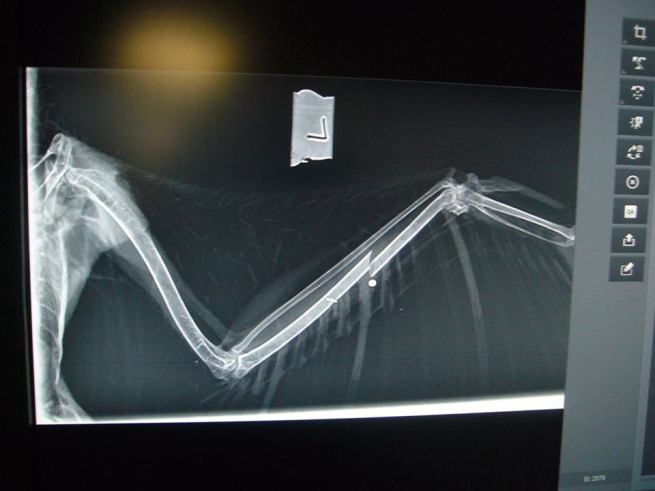
mh-xray

After surgery the bird was sent to Jean Thorpe in Ryedale for a period of rehabilitation.

On 31 October 2016, Jean was able to release this bird back to the wild.

mh-release

mh-jean-1

mh-jean-2

A couple of things to mention here. This wildlife crime was uncovered nearly two months ago. We don’t know the circumstances of the bird’s discovery (e.g. Who found it? Who reported it?). We don’t know where or when it was shot, although looking at that x-ray it would be fair to assume the bird wouldn’t have been able to fly far from the location it was shot. We haven’t seen a Police press statement about this crime. Have they charged a suspect? If not, where’s the Police appeal for information? Are they still investigating? Isn’t wildlife crime supposed to be a police national priority? Pathetic.

On a more positive note, the work of Jean Thorpe at Ryedale Wildlife Rehabilitation continues to amaze us (and not forgetting the skill of vet Mark Naguib at Battle Flatts Veterinary Clinic). Jean’s efforts are the perfect antidote to watching those disgraceful braying Tory MPs on Monday evening. They’d do well to visit her for an hour and learn about decency and compassion. Of course, Jean is not the only raptor rehabber in the UK but, living in North Yorkshire, she sees more than her fair share of raptor persecution victims. We’ve said this before but we’ll say it again – Jean’s work is entirely voluntary. If you want to support her work, please consider making a donation here.

UPDATE 4 Nov 2016: North Yorkshire Police have finally issued an appeal for information here. They’ve carefully avoided naming the estate where this bird was found.

Satellite-tagged hen harrier ‘Rowan’ found dead in suspicious circumstances

rowanhhAnother of this year’s young satellite-tagged hen harriers has been found dead.

This time it’s Rowan, a bird that hatched at Langholm and was being satellite-tracked by the Hawk & Owl Trust.

Here’s a joint statement put out by the Hawk & Owl Trust and Natural England:

The body of a juvenile, male hen harrier – named Rowan – was recovered in Cumbria on 22nd October. He was satellite tagged at the Langholm project in the Scottish borders, as part of a joint venture between Natural England and the Hawk and Owl Trust. Following an autopsy, Natural England has passed details to the police for investigation.

We are unable to make further comments or enter into discussion at this time as this may be prejudicial to ongoing investigations.

END

This press statement is clearly suggestive that criminal activity was responsible for the death of this hen harrier.

We look forward to further details about the cause of death and appeals for information from the Police in the very near future.

We especially look forward to the Hawk & Owl Trust announcing its withdrawal from the DEFRA Hen Harrier Action Plan on the grounds that one of its ‘immoveable provisos‘ for taking part has been broken (again).

UPDATE 7 November 2016: Hen Harrier Rowan ‘likely to have been shot’ in Yorkshire Dales National Park (see here)

Buzzard with shotgun injuries found in Thirsk, North Yorkshire

A buzzard with shotgun injuries has been found in Thirsk, North Yorkshire, this week. It had a broken femur. The bird has undergone surgery and is currently in rehabilitation with the wonderful Jean Thorpe of Ryedale Wildlife Rehabilitation.

bz-thirsk-oct-2016shot

bz-thirsk-oct-2016-xray

A quote from Jean: “Amazing work once again by Mark Naguib of Battleflatts vets. The shot buzzard is stood square once again with shiny pins correcting the break. He looks so much better already. Long way to go yet but looking good so far“.

North Yorkshire Police have been informed.

North Yorkshire maintains its status as one of the worst places in the UK for the illegal killing of birds of prey.Ā It’s a county where much of the landscape is dominated by grouse moors, particularly in the two National Parks: the North York Moors NP and the Yorkshire Dales NP, as well as a large number of pheasant and partridge shoots.

This year, other raptor persecution crimes uncovered in North Yorkshire have included several illegally spring-trapped buzzards, several shot buzzards, at least ten shot red kites, and a gamekeeper filmed setting three illegal pole traps on a grouse moor.

Peregrine shot dead in Yorkshire Dales National Park

A female peregrine has been found shot dead (5 October 2016) in Hebden, near Grassington in the Yorkshire Dales National Park.

No further details available.

If anyone has any information please contact PC Crossley at Skipton police station quoting incident #12160181442

shot-perg-grassington-2

shot-perg-grassington-1

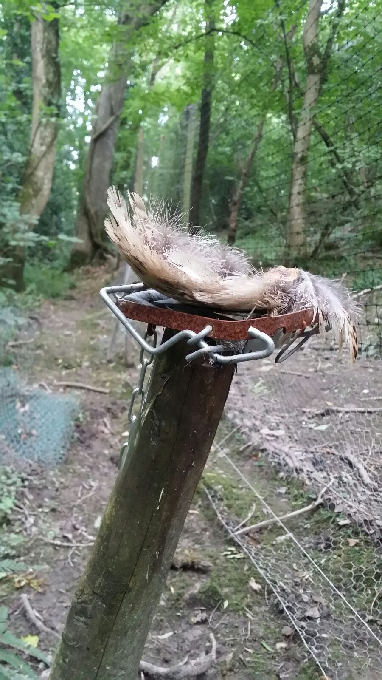
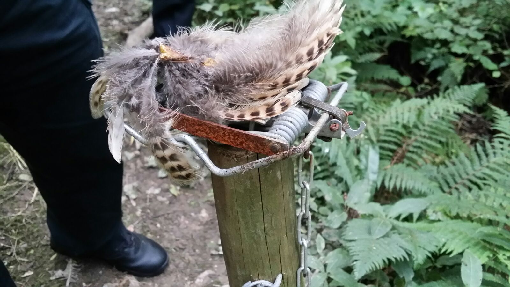
Baited pole trap found next to pheasant pen in Devon: appeal for information

RSPB press release:

Reward for information after baited pole trap discovered on east Devon farmland

pole-trap-1

The RSPB and Devon & Cornwall Police are appealing for witnesses after a trap designed to kill birds of prey was found on farmland, next to a pheasant release pen.

Police attended a location near Dunkeswell, in the Blackdown Hills, East Devon, following a tip off recently, where they discovered a live, baited pole trap.

Police officers photographed the trap, which was set and ready to use, but left it in situ. When police returned the next day the trap had been removed. Further visits accompanied by the RSPB’s Investigations unit have yielded no more information.

pole-trap-2

Pole traps have been outlawed for more than 100 years and work by smashing the bird’s legs when it lands on the trigger plate.

Mark Thomas, a senior investigations officer at the RSPB, said: “There is a reason why these traps have been illegal for so long, they are barbaric and they are designed to kill protected birds of prey“.

Inspector Martin Taylor, wildlife crime coordinator for Devon & Cornwall Police, said: “Despite it being illegal for over a century, we are still getting reports of spring traps being placed on poles or perches set to kill birds of prey. We will prosecute anyone setting these indiscriminate and lethal traps“.

Birds of prey habitually use posts as lookouts when hunting and in this case the trap had been baited using meat to encourage a bird to land.

The trap’s presence was reported on August 11 2016 and police first visited the following day. The RSPB is offering a reward of Ā£1,000 for information that leads to a successful prosecution.

Anybody with information should contact Devon & Cornwall Police by phoning 101 or emailing 101@dc.police.uk quoting crime reference CR/56051/16.

END

pole-trap-3

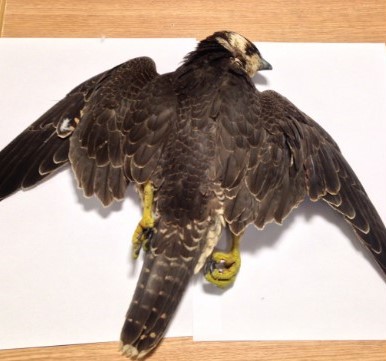
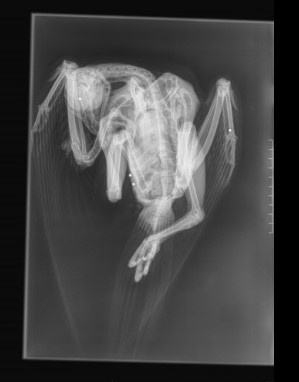
Young peregrine shot in Devon

Devon & Cornwall Police are appealing for information after a peregrine was found shot in Ipplepen, south Devon, in August.

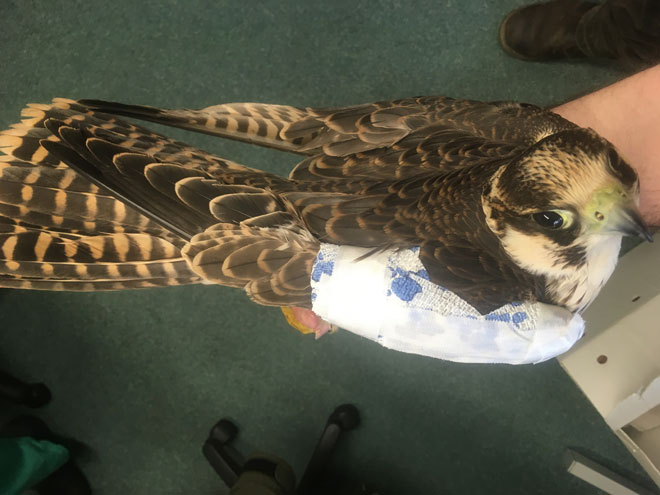
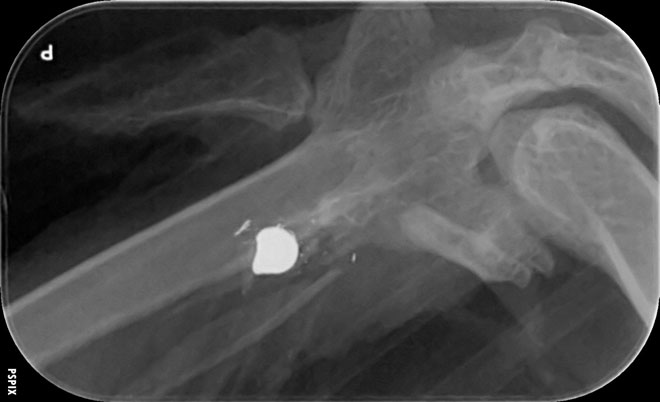
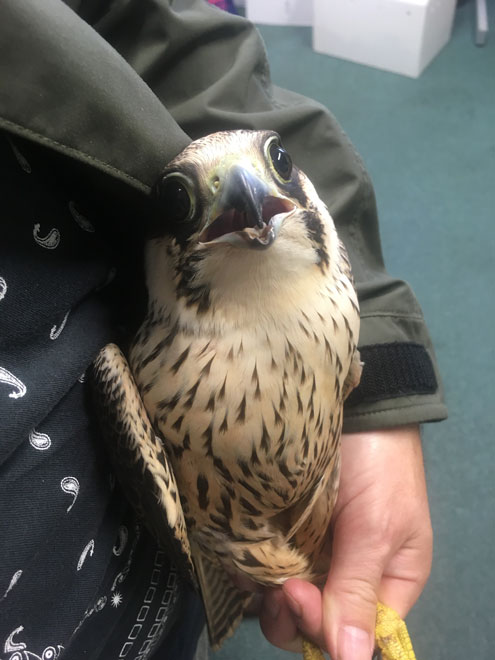
The young bird (hatched this year from a coastal site in Devon) was found with an injured wing on 23 August 2016. An x-ray revealed an air rifle pellet had caused fractures and the bird is currently in the care of a wildlife rehabilitator. Whether it recovers sufficiently to be released back to the wild remains to be seen.

devon-perg-1

devon-perg-2

This incident is now subject to a police investigation and Devon and Cornwall’s Police Wildlife Crime Officer Josh Marshall is appealing to anyone who can help to contact them with information that will assist in locating the offenders.

He said: ā€˜These types of investigation are incredibly hard to investigate as very often there are no witnesses or lines of enquiry. It is clear that someone in the local community will hold the key to what has taken place.

This Peregrine Falcon will have been shot by someone having a clear motive to destroy this rare bird of prey. The community in this area need to be aware of this incident and every effort should be made to bring the offender to justice.

Within the community of Ipplepen are extremely privileged to have such magnificent birds on doorstep. I am calling on those residents to stand up, come forward and report to me any concerns or suspicions they have around those that may be responsible for such an act.ā€

The RSPB is offering a reward of £1000 for information leading to a conviction.

Tony Whitehead, speaking for the RSPB in the south west said: ā€œWe know that Devon has long been a bird of prey persecution black spot and the area where these birds were found has seen five such incidents over the past 25 years alone. We need to stop this.

Whatever drives a person to do this, it’s important to understand that killing birds of prey is not only barbaric, it is also against the law. This makes the perpetrators, however they seek to justify their behaviour, no more than common criminals and we’d expect them to be treated as such.

The incident at Ipplepen follows a long history of persecution within the local area. Nowhere else in Devon do birds of prey suffer as they do in the Teignbridge area”.

Confirmed poisoning incidents within the Teignbridge area over the last 25 years

1992 Two Peregrine Falcons located dead along with poisoned bait

2000 Peregrine Falcon located dead, poisoned

2005 Peregrine Falcon and poisoned bait found

2005 Live pigeon covered in poison left as bait for Peregrine Falcons

2011 Peregrine Falcon – poisoned

If you have any information that can help the police with their investigations of this crime, please contact 101@dc.police.uk or call 101, quoting reference CR/069253/16

Information can also be passed on anonymously via Crimestoppers on 0800 555 111.

devon-perg-3