
Last month we blogged about a series of Parliamentary questions and answers about mountain hare massacres on Scottish grouse moors and how these unregulated culls are, in our opinion, in breach of EU conservation legislation (here).
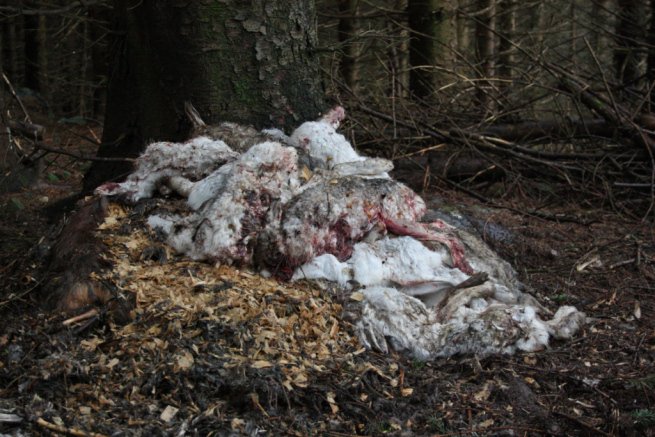
Those Parliamentary questions had been lodged by Scottish Greens MSP Mark Ruskell. Now Alison Johnstone, a fellow Scottish Greens MSP, has lodged some more and the Government’s response to those questions is, frankly, shocking.
Question S5W-00222. Date lodged: 25/5/2016:
To ask the Scottish Government what it is doing to establish a working group to help plan the future arrangements for sustainable management of mountain hares.
Answered by Environment Cabinet Secretary Roseanna Cunningham 3/6/2016:
Under the auspices of Scotland’s Moorland Forum (which represents a range of stakeholders involved in moorland management, including the Scottish Government and Scottish Natural Heritage) it has been agreed that guidance on the management of mountain hare be produced by a selected sub-group of specialists and representatives from relevant interest groups. The inaugural meeting of this sub-group took place on 23 May 2016.
The sub-group will produce and publish interim best practice guidance in the autumn. This interim guidance will be updated after the anticipated publication (in 2017) of the findings from a study being undertaken by the James Hutton Institute, the Game and Wildlife Conservation Trust and Scottish Natural Heritage into the most appropriate methods of assessing mountain hare numbers.
The outputs of the study will be used to standardise the method of establishing mountain hare density in conjunction with the promotion of more cooperative working between estates, thus facilitating better informed decisions on sustainable hare management at regional scale.
Question S5W-00223. Date lodged: 25/5/2016:
To ask the Scottish Government what level of estate compliance Scottish Natural Heritage has recorded in relation to its 2014 position statement, ‘SNH-GWCT-SLE position on large-scale culls of mountain hares to reduce louping ill‘.
Answered by Environment Cabinet Secretary Roseanna Cunningham 3/6/2016:
The position statement issued by Scottish Natural Heritage, the Game and Wildlife Conservation Trust, and Scottish Land and Estates sets out a number of different recommendations relating to the management of mountain hares in Scotland. There are no formal arrangements for monitoring the extent to which the recommendations are being followed.
Question S5W-00224. Date lodged: 25/5/2016:
To ask the Scottish Government when SNH plans to require formal mountain hare cull returns from estates in order to inform future sustainable management practice for this species.
Answered by Environment Cabinet Secretary Roseanna Cunningham 8/6/2016:
There are no current plans to require mountain hare bag returns.
END
So ‘best practice guidance’ is to be produced in the autumn by a sub-group of the Moorland Forum. We don’t yet know which organisations have representatives on that sub-group but we can take a guess. One of them is bound to be Scottish Land & Estates – that’s the group that repeatedly says, without any supportive evidence, that widespread and indiscriminate culls are not having a detrimental effect on mountain hare populations.
And will that ‘best practice guidance’ follow the recommendations made in a recent independent review on sustainable moorland management which was submitted to SNH’s Scientific Advisory Committee in October 2015? One of the main recommendations made in that review was that the case for widespread and intensive culling of mountain hares in the interests of louping-ill control has not been made (see here). That should, technically, put a stop to mountain hare massacres on grouse moors. Why hasn’t it?
And what, exactly, is the point of producing best practice guidelines anyway? The estates involved in mountain hare massacres are not obliged to adhere to these ‘guidelines’, and, as we can see from the Government’s responses to the two other Parliamentary questions, there are no formal arrangements for monitoring estate compliance and nor are there any plans to require these estates to submit figures on how many hares they’ve massacred each year.
Why is that? How difficult is it to actually monitor estate compliance? If it is so very difficult, there is no point whatsoever in producing best practice guidelines for an industry with a reputation for long-term criminality. Guidelines can be ignored without suffering a penalty. Legislation can, and often is, ignored by many in this industry but at least there’s the (very slim) possibility of a penalty if they’re caught at it.
And what possible reason is there not to ask for annual cull figures from each estate? Why isn’t the Government demanding these figures? Surely they are obliged to do so in accordance with their obligations under the EU Habitats Directive? It can’t be that difficult for the estates to produce these figures. After all, they claim their culls are already ‘done in accordance with best practice’ and are ‘informed and balanced’ (see here). If they can make such claims then presumably they’ve already got the evidence to back them up? If they haven’t got the evidence then these claims should be treated with the contempt they deserve. It’s just another propaganda exercise to deflect attention from what’s actually going on on those grouse moors.

The Scottish Government’s lack of critical evaluation of this situation, their willingness to ignore the findings of an independent review, and their unwillingness to take any meaningful steps to prevent the ongoing extensive and indiscriminate slaughter of this so-called protected species at the hands of grouse moor managers is nothing short of disgraceful.


 Ian Botham used to be best known for his world-class reputation as an English cricketer. These days he’s better known to some of us as being the grouse-shooting industry’s teller of cock and bull stories [definition: an absurd, improbable story presented as the truth].
 Raptor Persecution UK