Grampian Police show commitment to tackling wildlife crime

How many of the eight Scottish police forces have a dedicated wildlife crime unit? How many of them have a full-time Wildlife Crime Officer? How many of them have a Wildlife Crime Education Officer? How many of them publish quarterly wildlife crime statistics for their region? Answer = not many. But one of them has all of the above, and more.

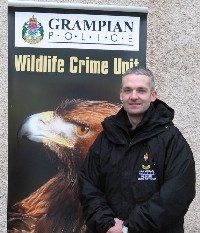
Grampian Police Force, covering the north-east region of Scotland, is way ahead of all the other Scottish police forces when it comes to tackling wildlife crime. This police force has employed a full-time Police Wildlife Crime Officer since 2006 – the excellent and highly effective Dave MacKinnon, who apparently stepped down earlier this year. Much of the Grampian Police Wildlife Crime Unit’s success is as a result of Dave’s hard work and commitment. In addition, there are up to 11 part-time Police Wildlife Crime Officers spread throughout the Grampian region.

In July 2010, Grampian Police appointed the UK’s first ever Wildlife Crime Education Officer to the Unit. Andy Turner, a former National Nature Reserve Manager with SNH, took on the three-year secondment to raise awareness of wildlife crime and to provide educational inititatives to schoolchildren and communities throughout the region.

As far as we know, Grampian Police is the only force that publishes quarterly wildlife crime statistics (see here), although oddly, these figures do not explicitly include raptor persecution incidents. The North East of Scotland has been recently reported as having some of the highest rates of wildlife crime in the UK (see here).

But the Grampian Police Wildlife Crime Unit is not content with just regional coverage of its own area. In recent months, it has worked to produce resource material that is useful to other police forces as well as to the general public. For example, it has produced a set of 11 ‘Aide-Memoir’ cards that have been issued to Wildlife Crime Officers throughout Scotland. These cards cover issues such as raptor persecution, badger persecution and deer poaching. Each card provides basic information on the subject, straightforward instructions on how to deal with alleged incidents, and contact details for specialist advice (see here).

In addition, it has produced an information card called ‘Wildlife Crime: How to Report It’. This card provides simple information, including a list of essential do’s and don’ts when at the scene of a suspected wildlife crime, as well as a list of contact details for every police force in Scotland. With the help of a PAW Scotland grant, Grampian Police has printed an initial 30,000 cards that are being distributed throughout Scotland (see here).

Grampian Police deserve recognition for their proactive stance on tackling wildlife crime. This police force puts many of the other Scottish police forces to shame. The Grampian Police Wildlife Crime Unit isn’t perfect, but then who is? What’s important is that this group has taken giant steps towards a zero tolerance policy on wildlife crime. Some might say, ‘Well, it’s their statutory duty to deal with wildlife crime so why are you congratulating them for doing what they’re supposed to be doing?‘ It’s a fair point, but when you compare what Grampian Police has been doing with what most of the other Scottish police forces have (or haven’t) been doing, then we would argue that Grampian Police has actually gone further than its statutory duties and has demonstrated a meaningful commitment far greater than any other police force in the UK, let alone in Scotland.

For further information about the Grampian Police Wildlife Crime Unit:

Grampian Police (wildlife crime) website here

Introduction to Andy Turner, Grampian Police Wildlife Crime Educator here

Aug 2011 article about Grampian Wildlife Crime published in Aberdeen Voice here

What’s the problem with the RSPB?

I recently read a nasty little editorial in the September 2011 edition of ‘Modern Gamekeeping’ (we’ve mentioned them before – see here). Basically it was an all-out offensive on Mark Avery, the RSPB’s former Director of Conservation, who was described amongst other things as a “master manipulator“, “the man who steered the RSPB like MOSSAD for 13 years“, “a grandstander of the highest order“, and “a has-been“. What prompted this very personal attack? Avery had dared to discuss on his blog the obvious link between raptor persecution and upland game management.

After reading the editorial, I wondered whether Avery would have received the same treatment had he not had such a long association with the RSPB? It seems to me that even the merest mention of this organisation’s name causes an automatic knee-jerk reaction from the groups associated with game-shooting; the knee-jerk reaction usually being an attempt to discredit the integrity of the organisation and often in response to the latest RSPB report on raptor persecution figures.  Here are a few (of many) examples over the years:

The RSPB has been accused by the Countryside Alliance and the Scottish Gamekeepers Association of harrassing gamekeepers (see here, here and here);

The RSPB has been accused by the Scottish Gamekeepers Association of attempting to pervert the course of justice (see here);

The RSPB has been accused by James Marchington (currently Editorial Director at Blaze Publishing – home of the rag ‘Modern Gamekeeping’) of using raptor persecution to ‘drum up membership and donations’ (see here);

The RSPB has been accused by Skibo Estate Sporting Manager Dean Barr (the man later convicted of being in possession of the largest stash of banned Carbofuran on record) of planting dead raptors on his estate (see here);

The RSPB has been accused by the National Gamekeepers Organisation of waging a ‘phoney war’ about raptor persecution (see here);

The RSPB has been accused by the National Gamekeepers Organisation, Scottish Countryside Alliance, British Association for Shooting and Conservation (Scotland), Scottish Gamekeepers Association, Scottish Estates Business Group and the Scottish Rural Property and Business Alliance (now called Scottish Land and Estates) of exaggerating the statistics on raptor persecution (see here, here and here);

The RSPB has been accused by the Scottish Gamekeepers Association of receiving too much public money and ‘squandering the rich wildlife and rare species attracted to their reserves’ (see here);

The RSPB has been accused by the Shooting Times of running an ‘offensive’ advert. The ad in question was promoting a confidential hotline for gamekeepers to report wildlife crime (see here). Shooting Times claimed their readers would find the ad ‘insulting’ (see here and the RSPB’s reaction here).

Most recently, the Scottish Land and Estates organisation dismissed the RSPB’s latest report on raptor persecution by hinting that the contents weren’t ‘official’ (see here). This claim is nothing new – its widely known that some of the game-shooting groups will only recognise the annual SASA stats as being ‘official’. Of course what they fail to mention is that the SASA statistics only relate to poisoning incidents – they do not include incidents where raptors have been found trapped, shot or battered to death, as detailed in the annual RSPB reports. Convenient, eh?

So what’s the problem with the RSPB? It’s fairly obvious isn’t it? They’ve been exposing the link between criminal raptor persecution and game management for a good many years now and slowly but surely the public is beginning to take note.

“Professional gamekeepers do not poison raptors” says Alex Hogg

Episode 11 of the BBC 2 Scotland ‘Landward’ programme went out on Friday 27 May and included a segment on the new vicarious liability regulation in the Wildlife and Natural Environment (Scotland) Act 2011. The programme is available here for a limited period.

The segment opened with Duncan Orr-Ewing, Head of Species at RSPB Scotland, who told the interviewer, “Bird of prey poisoning is particularly associated with driven grouse moors in the upland of Scotland, in the central and eastern highlands, parts of Perthshire and also down in the southern uplands”.

The interviewer, Dougie Vipond, asked: “So who is doing this? Who is killing the birds?”

Orr-Ewing: “Well, it is estate employees, gamekeepers who are usually involved, but they are only employees, they are acting under the direct instructions so ultimately it is the landowners that are responsible for this”.

A short section followed with a brief interview with Liz Plath, listed as a rural law specialist and a partner at Thorntons Law LLP. Basically she explained in simple terms how vicarious liability brings the landowner or the employer into the frame in cases of raptor poisoning.

Next up was Alex Hogg, chairman of the SGA, whose opening line was: “Professional gamekeepers do not poison raptors”. Funny that, because if you bother to look back at the statistics on raptor poisoning for the ten-year period that Hogg has been in post, you’ll see that raptor poisoning incidents have been recorded on many estates, and yes, ‘professional’ gamekeepers have been convicted.

He then contradicted himself (and not for the first time) by saying: “It’s only a small minority that are still at it. A rogue few if you like”.  Lest we forget, here is the official government map showing confirmed raptor poisoning incidents between 2006-2010. Widespread, I’m sure you’ll agree, and the trend is pointing upwards.

He continued: “And we’ve tried our hardest over the past, I’ve now been in this job for ten years, to impress on everybody that it’s absolutely illegal to poison raptors”. Peer pressure from Hogg and co., while welcome, has been ineffective. It can’t help the situation when he and others from his industry continue to claim that raptors are having a significantly negative effect on game birds, songbirds, waders and lambs. Is there any scientific evidence for this? No, not a shred.

Next up came David Hendry, listed as the proprietor of Cardney Estate, near Dunkeld in Perthshire. Now this was an interesting interview. The piece opened with an introduction to Hendry, and video footage of a diving osprey on his estate. We were told that this estate ‘is home to many endangered birds of prey’. Unfortunately, Hendry was not asked how many and what species of raptors made their home there. The osprey was implied, but of course the osprey only eats fish, not exotic red-legged partridge (also known as French partridge) or pheasant, which are reared and released in large numbers for sport shooting on this estate, according to this shooting directory.

Vipond talked about the belief that the only way to stop poisoning is to introduce a licensing system which would allow landowners to control [kill] raptors. Hendry agreed, and suggested “it should become the gamekeeper’s job for instance to look after the rare raptors like harriers, your merlins, bring on your red kites, but they should also be allowed to reduce buzzards and sparrowhawks to numbers that are sustainable, because what we have today is not sustainable”.

Ok, so this is the first time we’ve officially heard that sparrowhawks are also the landowners’ intended target for licensed killing. Until now, the list has ‘just’ included buzzards and ravens. So what happens if they get the go ahead to kill these species? Will we see goshawks added to the next list? They’re just an over-sized sparrowhawk after all, so why not? And golden eagles? They’re just over-sized buzzards, so why not? Where will it stop?

It’s also very interesting that he thinks the current number of buzzards and sparrowhawks is ‘unsustainable’. According to this shooting website, Cardney Estate offers shooting days where between 200-400 exotic birds (partridge/pheasant) can be shot. That’s 200-400 birds per shooting day, depending on the time in the season. In September 2010, a record 677 birds were shot on one day according to one participant! Sounds to me like this sporting estate is doing very nicely thank you, without the need to kill off any indigenous protected raptors, whatever species they may be.

We then went back to Orr-Ewing, who was asked for his opinion about the need to ‘manage’ [kill] protected raptors. “These birds of prey are rightly protected because they’re vulnerable. We have a history of killing birds of prey in Scotland, many species are just recovering from that situation, there’s no other country in Europe that [legally] kills birds of prey”.

His first three points are accurate, but his last statement is not. In 2008 the provincial government of Lower Austria issued a decree allowing hunters to shoot 1,000 buzzards and 250 goshawks over the following five years. It previously allowed the killing of Montagu’s harriers until the EC stepped in to halt it. The decree allowing the legal persecution of buzzards and goshawks resulted in an international public outcry – the same can be expected if the licensed killing of raptors for the benefit of the game bird-shooting industry is permitted in Scotland.

And of course, it’s not just poison that is used to illegally kill raptors. Unfortunately our government does not produce annual statistics on the other incidences of raptor persecution that take place every single year. Thankfully, the RSPB does. Their annual reports (one covering bird persecution in the UK as a whole, and the other covering incidents in Scotland) are a welcome insight into the extent of the problem. Their 2010 annual reports are due for publication in the very near future. Their efforts to compile and publish these reports are worthy of the public’s gratitude because without them, we would only have Alex Hogg and co’s word about the extent of illegal raptor killing on Scotland’s sporting estates.

Review of ‘Fair Game?’ documentary – our “ugly secret”

The BBC 2 Scotland documentary, ‘Fair Game? Scotland’s Sporting Estates’ was aired last night and opened with the BBC reporter visiting the Leadhills Estate with an undercover investigator from OneKind. This investigator was the guy who watched gamekeeper Lewis Whitham staking out a rabbit laced with Carbofuran in April 2009, leading to a conviction in 2010 (see blog post 17 Nov 2010). The BBC reporter, David Miller, was shown what was alleged to be an illegal ‘snapper trap’, and in forestry a few feet away he was shown the rotting carcasses of foxes and other animals, piled up at a ‘stink pit’ – used as a lure to draw in predators who are then snared as they approach the area. Also in the forest, he was shown the decomposing bodies of two raptors that someone had apparently tried to conceal under pine needles. Miller was visibly disturbed by what he’d witnessed in one small corner of one sporting estate, calling it ‘our ugly secret’ – not quite the public ‘conservation’ image that the shooting industry likes its estates to portray. The OneKind investigator has written an excellent account of his time out on the hill with Miller: http://www.onekind.org/resources/blog_article/fair_game

The discovery of the dead raptors and the apparently illegal snapper trap led to a later police search, in which a third raptor corpse was discovered, in addition to more raptor skulls. The trap was removed, and Leadhills Sporting Ltd denied all responsibility for the dead birds. Fountains Forestry, the owners of the private forest on the shooting estate, also denied any knowledge of the bodies and said the snares found were illegal as they had not given permission for anyone to set snares on that ground. Later in the programme, we learned about the weight of evidence of alleged criminal activity on Leadhills Estate. Since 2003, the RSPB has recorded 46 incidents where the government, police and/or other agencies have confirmed that poisoned baits have been set or birds have been illegally killed, just on Leadhills Estate. We were told that the current management at Leadhills Estate took over in 2008 and they say they ‘deplore wildlife crime’. However, the RSPB has since recorded 10 incidents since 2008, although none since 2009 – following the conviction of gamekeeper Lewis Whitham.

There followed a series of interviews with various people, including Dave Dick, the former head of RSPB Scotland Investigations (and a regular contributor to this site – thank you Dave), who talked about the hundreds of raptor persecution incidents he had seen first-hand over the last 20-30 years. We also heard from Mark Oddy from Buccleuch Estates who spoke briefly about the old glory days of grouse-killing at Langholm, and then we went to the RSPB’s Abernethy Reserve where Duncan Orr-Ewing showed Miller that it is possible for grouse-shooting and raptors to co-exist. Orr-Ewing also discussed the RSPB’s persecution figures and how these clearly show the effect of persecution on some raptor species. Government scientists have predicted that there should be 500 pairs of hen harriers on the UK’s grouse moors – there are actually only five. You don’t need to be Carol Vorderman to work out the missing numbers.

Next up was gamekeeper Peter Fraser from Invercauld Estate, who is also the SGA’s new vice chairman (see blog post 26 Nov 2010). There followed a fascinating conversation between Miller and Fraser, when Miller pointed out that 3 poisoned buzzards [and a poisoned raven] had been discovered on Invercauld Estate in 2003 [our sources suggest it was 2005] for which no-one was ever prosecuted:

Fraser: “All keepers know and understand that if they do that [poison a raptor] and they’re caught, you automatically lose your job”. NOT TRUE, Mr Fraser, as anyone who has read the contents of this blog site can attest.

Miller: “There are scientists who argue clearly that birds of prey in Scotland are being killed, shot, poisoned on our hills. Does that happen on this estate or neighbouring estates?”

Fraser: “Well, as I’ve said on this estate, if anyone does that we’re finished, and I can honestly say no. Never”.

Miller: “So, how do you explain the dead birds which routinely turn up in the Scottish countryside?”

Fraser: “I wish I could answer you that. Erm, in every walk of life there are some that lets the profession down and unfortunately we’re no different to everybody else. And it has been known that these birds have been planted on various areas so it’s a ticklish subject to deal with and to be quite honest, but er, I would like to think that poisoning has been greatly reduced over the years”. NOT TRUE, Mr Fraser – read the government statistics!

Miller: “Just to be clear, when poisoned or shot birds of prey are found on a gamekeeper’s land, clearly the stakes are very very high. Are you suggesting that those birds may have been deliberately placed there by a third party?”

Fraser: “Well, I haven’t got that evidence on me but erm I’m quite sure that has happened, quite sure that has happened”.

So there you have it. Peter Fraser, vice chairman of the SGA, admits that he has no evidence to support the claim that poisoned raptors have been ‘planted’ on sporting estates. It’s a shame Miller didn’t mention the poisoned buzzard found here in 1992, nor the 1997 conviction of an Invercauld Estate gamekeeper for the illegal use of a spring trap (see blog post 4 March 2010). Also a great pity that Fraser wasn’t asked how many breeding pairs of golden eagles and hen harriers are present on Invercauld Estate.

We then heard from Mike Yardley, a journalist and shooter, who stood smugly bragging about the ’20 safaris’ and other trips he has taken in Africa, North America and throughout Europe to shoot animals – and we were even treated to viewing some of his home videos of these trips. He probably met every expectation that the general public has of a typical shooter. It was hilarious. Not all shooters are of his ilk, of course, but the programme failed to get this across.

We heard from Robbie Kernahan from SNH who admitted that the evidence of illegal raptor persecution ‘should not be ignored’. We also heard from the laird at Alvie Estate, Jamie Williamson, who didn’t really discuss the issue of raptor persecution at all, and then we heard from an apparently very cagey Simon Lester, head gamekeeper at Langholm Estate who was obviously trying to pick his words carefully and not put his foot in it. Unfortunately he didn’t have anything substantial to offer in the comments that he did make. There was also an interlude at Mar Lodge Estate, although this was mainly about deer management and not really raptor persecution.

Miller went on to provide some interesting details about the performance of the procurator fiscals at the Crown Office. The BBC had asked them about the number of gamekeepers they had taken to court. Amazingly, they said they had only started recording their performance on wildlife crime early last year! Why? Since then, they’ve had one successful prosecution – Lewis Whitham from Leadhills Estate. There is ‘a handful’ of cases in the system – presumably these include the current cases concerning Skibo Castle Estate, Moy Estate and Inverinate Estate. We await these results with great interest to assess whether the extent of the charges brought are an accurate reflection of the evidence uncovered.

The finale came with an interview with Doug McAdam, CEO of SRPBA. Another apparently cagey performance that included what some might perceive as a blatant lie. Miller asked McAdam whether he thought the game industry was being unfairly targeted:

McAdam: “I think that there is a feeling out there amongst landowners and estates that there are people who would seek at every opportunity to damage the reputation of landowners and estates. If we look at the statistics, 28 cases of confirmed bird of prey poisoning incidents in Scotland in 2010 – it’s small, it’s in the tens, and it is a decreasing number”.

Actually, Doug, if you care to look at the official poisoning statistics that your organisation helped to analyse, you’ll see that the number of poisoned raptors discovered in 2010 was GREATER than the number discovered in 2009. Do you think that if you say it enough times (i.e. that the poisoning figures are declining) that somehow we’ll all forget the official statistics and believe your version? I don’t think so.

Miller also asked him: “Your very well informed members must know where those [poisoning] cases are taking place, surely?”

McAdam: “Er, I don’t, I don’t think that’s necessarily the case, no”.

So, our ignorant landowners are now pushing for licences to kill protected raptors as a method of reducing illegal persecution incidents, but they ‘don’t neccessarily’ know where these incidents are taking place. Brilliant.

For those of us hoping for some words of wisdom from SGA chairman Alex Hogg, sorry, he wasn’t included. I wonder why?

The programme is available for one week on the BBC iPlayer: http://www.bbc.co.uk/iplayer/episode/b0116lfs/Fair_Game_Scotlands_Sporting_Estates/

Here is the SRPBA response to the programme: FairGameSRPBAresponse May 2011

Dead Silence

Last week’s police raid on a sporting estate in Perthshire was widely reported in the media. We were told that three week’s earlier, two poisoned buzzards and poisoned bait had been discovered on the estate, and that this had led to the issuing of a police warrant to search various properties on the estate. What we weren’t told was the name of the estate in question. Was this omission just a genuine oversight? Apparently not. According to an article published in The Courier on 8 April 2011, Tayside Police ‘refused to disclose the exact location of the estate’. This suggests that the journalist from The Courier had specifically asked for the name of the Estate but Tayside Police decided to keep it a secret. Courier article here: http://www.thecourier.co.uk/Living/Outdoors/article/12730/inquiry-into-discovery-of-poisoned-birds-of-prey-on-a-perthshire-estate-continues.html

Similarly, the other agencies involved with the raid (reported to be the RSPB, National Wildlife Crime Unit and the Scottish Government Rural Payment Inspections Directorate) have remained tight-lipped about the operation.

Let’s contrast this silence with the report of another police raid that Tayside Police undertook last week. According to a news item on the Tayside Police website, they raided six properties across Dundee last Friday ‘as part of a pre-planned operation aimed at disrupting a serious and organised crime group believed to be involved in a number of offences including drug dealing, money laundering and mortgage fraud’. Were they silent about the locations of the raids and the on-going inquiries? Were they heck. They named the actual streets where these properties were located, the type of property searched and even disclosed what they’d found so far. See news item here: http://www.tayside.police.uk/default.aspx.locid-013new0k8.Lang-EN.htm

Let’s also contrast the silence with the reporting of the two poisoned peregrines that were discovered at the base of a block of flats in Motherwell in February. The SSPCA, who are leading that particular investigation, immediately released the location of where those poisoned birds had been found. And quite right too. See their press release here: http://www.scottishspca.org/news/571_warning-after-falcons-poisoned

So, why would Tayside Police, the RSPB, NWCU and SGRPID not want to reveal the name of the Estate where they have discovered poisoned birds and poisoned bait? They might argue that revealing the Estate’s name is likely to defeat the ends of justice, for example, that evidence could be destroyed or removed. That would be a perfectly legitimate concern BEFORE the raid took place, but their news release was made AFTER the raid and AFTER they had collected potential evidence, so that particular argument doesn’t wash here.

This silence is also an interesting strategy considering the recent launch of the Tayside Policing Plan 2011-2014 (available for download on the Tayside Police website). This Policing Plan sets out the Force’s ‘high level aims for serving and supporting local communities, the local economy and the environment over the next three years. The plan focuses on two Community Priorities – Public Safety and Public Reassurance’. So, how does keeping quiet about the location of potentially lethal poison (which could kill humans and pets, as well as the wildlife it has already killed), fit in with this new Policing Plan? Does this secrecy benefit public safety? Does this secrecy benefit public reassurance? That’s for the local community to decide – although hang on, they can’t decide because they haven’t been told that this poison was found within their community.

Imagine if Tayside Police had discovered a car bomb in, say, Perth town centre. Would they be so coy about revealing the location? Would we see a press release along the lines of ‘We have discovered a car bomb but we’re not telling you where it is and we’re keeping its location a secret’?

I think not. It would obviously be in the public’s interest to be informed about such a threat. So why does Tayside Police and these agencies think that it’s ok not to tell the public where poisoned birds and poisoned bait has been discovered, regardless of whether they can or cannot identify the individual who laid the bait? It’s all very curious.

Wishy Washy WANE Bill

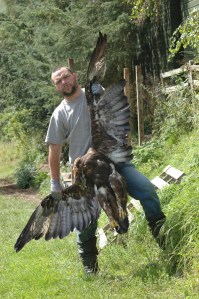
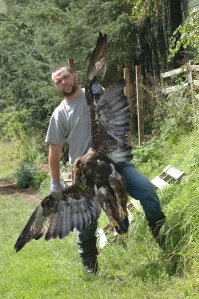
We can expect to see more images like this in the coming years

The long-debated WANE Bill (Wildlife and Natural Environment [Scotland] Bill) was finally passed by the Scottish Parliament on Wednesday 2nd March 2011. Talk about a missed opportunity to crack down on an industry that continues to flout the law when it comes to wildlife crime! “The Scottish Government is not prepared to tolerate continued persecution of our magnificent birds of prey. This government is prepared to act to introduce new measures to combat wildlife crime”, said a pig as it flew over Inverness Police Station.

A concise overview of how the final Bill relates to the continuing illegal persecution of our so-called protected raptors can be found here:

http://www.scottishraptorgroups.org/news.php

While some aspects of the new Bill are to be welcomed, including the introduction of vicarious liability, other measures that could have had a greater impact were refused. One such measure, estate licensing, was turned down in favour of allowing the sporting estates an opportunity to introduce voluntary self-regulation. This manifests itself in the form of the ‘Wildlife Estates Initiative’, dreamt up by the SRPBA in the later stages of the WANE Bill proceedings when it looked like they were under threat from the introduction of a licensing system. Who believes that this ‘initiative’ will work? Isn’t it crystal clear, after five decades of systematic raptor persecution, that the shooting industry has proven itself incapable of voluntary self-regulation? Will the new ‘initiative’ be as lacking in credibility as their May 2010 letter to the Environment Minister that 200+ estate owners signed to say that they opposed raptor poisoning? (The same letter that proved to be highly embarrassing just a few weeks later when multiple poisoned raptors were found on Moy Estate, one of the letter’s signatories). We look forward to watching how their latest ‘initiative’ rolls out, and particularly whether they actually publicise the names of the estates that have signed up to it (information that they have so far failed to make public). If they wish to be taken seriously then transparency will be essential.

In summary, there is as much chance of the current WANE Bill being an effective deterrent to illegal raptor persecution as there is of the SGA opening a wildlife sanctuary. However, full credit should go to Peter Peacock MSP for doing his utmost to secure a safe future for our declining raptor populations. He will be sorely missed when he steps down from politics in May, although we are pleased to note that he intends to lobby his colleagues from the sidelines. RSPB Scotland and the SRSGs also deserve credit for their lobbying efforts throughout the WANE Bill process. Some credit should be given to Roseanna Cunningham for sticking to her guns on the vicarious liability issue, although she loses points for stamping all over some of the other proposals that really could have made a difference.

As we approach the Scottish elections in May, you may want to know how your MSP voted on the raptor persecution issue during the WANE Bill. Check out the official report here:

http://www.scottish.parliament.uk/apps2/business/orsearch/ReportView.aspx?r=6146&mode=html#iob_55286

Silence over hen harrier carnage – now updated

One week on from the publication of the Hen Harrier Conservation Framework, leaked by investigative journalist Rob Edwards on 16 January 2011, here are the published responses from the shooting lobby and from those with a statutory duty to protect this species of high conservation concern:

Scottish Gamekeeper’s Association – silence

Scottish Rural Properties & Business Association (SRPBA) – silence

Scottish Estates Business Group (SEBG) – silence

Scotland’s Moorland Forum – silence

Game and Wildlife Conservation Trust (GWCT) – silence

Scottish Natural Heritage (SNH) – silence

Partnership Against Wildlife Crime Scotland (PAWS) – silence

National Wildlife Crime Unit (NWCU) – silence

Interesting. Perhaps they’re all hoping that if they keep quiet, everyone will forget about the damning evidence presented in the report? It is, after all, only the 5th scientific study published since 1997 to demonstrate the indisputable link between hen harrier persecution and heather moorland that’s managed for red grouse shooting. Here’s a quick summary for anyone who missed the latest scientific facts:

  • The potential national Hen Harrier population for Scotland is estimated to be within the range 1505 – 1790 pairs.
  • The most recent national survey of Hen Harriers in Scotland (2004) was estimated to include 633 pairs.
  • This means that 872 – 1,157 harrier pairs (1,744 – 2,314 individuals) are missing.
  • The areas from where these birds are missing are areas managed as grouse moors.
  • Illegal persecution of hen harriers is particularly prevalent in five areas, where the majority of breeding attempts fail. These five areas are: Central Highlands, Cairngorm Massif, Northeast Glens, Western Southern Uplands and Inner Solway, and Border Hills.
  • At a national scale, the hen harrier in Scotland is not in favourable conservation status, largely due to illegal persecution. Ditto the English hen harrier population.

So, up to 2,314 hen harriers are missing in Scotland, and no-one has anything to say about it? Think about that number. It’s not 23, it’s not even 213 – it is two thousand, three hundred and fourteen birds. This is wholesale destruction on a massive scale! Are we to believe that “just a few rogues” are responsible?

How much more scientific evidence is required before we see the effective enforcement of our wildlife legislation? How can those people who own and manage the sporting estates still be getting away with this level of illegal activity? Why is the Environment Minister still set against the licensing of sporting estates, when it is blindingly obvious that they are unable to self-regulate?

In light of the contents of the leaked report, it is to be hoped that the Scottish Government’s Rural Affairs & Environment Committee will once again push for an amendment to the WANE Bill for estate licensing. Stage 2 of the Bill was completed on Wednesday 19 January and there was no mention of the Hen Harrier Framework during that meeting, probably because the RAE Committee hadn’t had time to read the report in full. Stage 3 begins in several weeks and by that time the Committee and the Environment Minister should be fully conversant with the extent of illegal raptor persecution on Scottish grouse moors.

UPDATE: 28 January 2011. SRPBA denies extent of persecution (yawn)

The SRPBA has written a letter of response to The Sunday Herald, dated 16 January 2011. I’m not sure if it was actually published by The Herald, but here it is as a PDF – SRPBA response to killing fields article 16 Jan 2011

UPDATE: 19 February 2011. See our blog entry on 19 Feb 2011 for an update on this story.

Eagle killers getting away with it? Part 3

In our blog post on 13 October, we revealed that one golden eagle and one white-tailed eagle were found dead in the Highland region in June 2010. Laboratory testing by the government agency SASA (Science and Advice for Scottish Agriculture) revealed that both eagles had been poisoned by the illegal pesticide Carbofuran. We also noted that, four months after the dead eagles were discovered, there hadn’t been any news reports of this incident even though the SASA report stated that “The incident is part of an ongoing police investigation”. So either the police (in this case, Northern Constabulary) have decided that they don’t need to make a public appeal for information because they already know who dunnit (although now five months on, no public statements about arrests or charges have been made), or, Northern Constabulary are failing in their statutory duty to investigate wildlife crime.

On 18 October, The Guardian published an article about hen harrier persecution (see blog post 18 October). Within that article were a few lines about the poisoned golden eagle (no mention was made about the sea eagle), said to have been found on a grouse moor near Inverness in the Eastern Highlands, an area notorious as one of the worst areas for golden eagle persecution in the country.

In a press release on 3 November (see blog post 3 November), the Scottish government acknowledged the two eagle deaths and included them in their official roll-call of the 16 poisoned raptors found dead in Scotland during the first half of 2010. Of these 16 poisoned raptors, five were eagles (4 golden eagles and 1 sea eagle), making 2010 the worst year in two decades for eagle poisoning – and these figures only relate to the first six months of 2010.

Also on 3 November, Scottish Environment Minister Roseanna Cunningham, was giving evidence to the Rural Affairs and Environment Committee as they continue to deliberate over Stage 1 of the WaNE bill. Video footage from this meeting is available on Holyrood TV at: http://www.holyrood.tv/library.asp?iPid=3&section=102&title=Rural+Affairs+and+Environment+Committee

During this meeting (20.17 minutes into the video), Ms Cunningham is asked by MSP Peter Peacock (Highlands & Islands, Labour) to give her opinion on whether sufficient is being done by the police in general to investigate wildlife crime. Her response, including, “It’s a challenge……..I won’t pretend that I think the situation is perfect, it is not” is quite refreshing, given the usual sound bites that are trotted out by the various government officials that are charged with addressing the continual and widespread problem of illegal raptor persecution.

Maybe the Minister will make a quick call to Northern Constabulary’s Wildlife Crime Co-ordinator, Chief Inspector Paul Eddington, to see how he’s getting on with investigating the deaths of these two poisoned eagles?

eagle killers getting away with it: Skibo update

Given the deafening silence on the progress of the Skibo case (see blog report 12 May 2010, where it was reported that three golden eagles, one sparrowhawk and one buzzard had been found on the Skibo Estate in north Scotland), we’ve done some digging around.

Last month (see blog post 20 September 2010), we noted that the results from the toxicology investigation on the dead birds had not been made public. We also noted that the results of the police investigation had not been made public. Infact, since the police raid in early May, the only press coverage was that on 21 June 2010, where Skibo gamekeeper Dean Barr had accused the RSPB of planting the dead birds: http://www.dailyrecord.co.uk/news/scottish-news/2010/06/21/gamekeeper-at-skibo-estate-probed-after-three-golden-eagles-are-found-dead-86908-22348349/

We have discovered that the three golden eagles and one sparrowhawk  had all been killed by eating poisoned baits, according to scientific analysis undertaken by government scientists. Their results conclude that two of the golden eagles, plus one sparrowhawk were killed by the banned pesticide Carbofuran. They state the third golden eagle was killed by the banned pesticide Aldicarb. Click here for the SASA report detailing these incidents: SASA poisoning positive results 2010

Given the confirmation that these  raptors that were found dead on Skibo Estate in May 2010 had been killed by illegal poisons, it is worrying that there has been no formal notification of any charges brought against anybody for these crimes.

Does this mean that, along with every other single case of eagle persecution in this country, the eagle killer(s) in the Skibo case will be getting away with it?

It is perhaps timely that the WaNE bill is currently being reviewed by the Scottish parliament. Measures proposed in that bill will, if implemented, help to stop these criminals getting away with murdering our iconic birds of prey. For example, if the concept of vicarious liability is accepted, then the Estate Owner/Manager will take full legal responsibility for the actions of their staff.

Right now, nobody takes responsibility and we’re all sick of reading these news stories about yet another eagle/kite/buzzard/peregrine/goshawk/osprey/sparrowhawk/tawny owl/hen harrier/kestrel being persecuted.

Hogg-wash and the WANE Bill at Langholm.

As most readers of this blog will be aware the Scottish Government introduced the Wildlife and Natural Environment (Scotland) bill to parliament on 9th June 2010.

The purpose of this bill is to modernise game law, abolish the designation ‘areas of special protection’, improve snaring practice, regulate invasive non-native species, change the licensing system for protected species, amend current arrangements for deer management and deer stalking, strengthen protection of badgers, change how muirburn can be practised, and make operational changes to the management of Sites of Special Scientific Interest.

The bill (as introduced) can be seen here.

http://www.scottish.parliament.uk/s3/bills/52-WildNatEnv/b52s3-introd.pdf

The Rural Affairs and Environment Committee has been appointed the lead committee to scrutinise the bill and as such has called on various bodies to provide views on the general principles of the bill.

Written submissions can be read here.

http://www.scottish.parliament.uk/s3/committees/rae/bills/WANE/writtensubmissions.htm

Naturally the most important issue on this bill, from a raptor conservation aspect, will be any change to the licensing system for protected species which could theoretically pave the way for the licensed killing of raptors in Scotland.

In a change to the usual passage of such bills the 18th meeting was held in The Buccleuch Centre in Langholm on 7th September 2010 . A full transcript of the meeting can be viewed here.

http://www.scottish.parliament.uk/s3/committees/rae/or-10/ru10-1802.htm#Col2967

(The most relevant discussion involving raptors commences at col 2991)

Alex Hogg (chairman of the Scottish Gamekeepers Association) had much to say on the subject of the licensed killing of raptors and ravens. Mr Hogg pleaded his case saying –

I only have a problem with young rogue buzzards. If I could deal with those specific ones, the problem would stop, I am quite sure. A lot of money would be lost to the rural economy if every shoot in Scotland ended up losing poults. A pheasant poult is worth the same as a lamb—it is worth about £35 when it is shot, and that is a huge amount of income for the rural economy. All that we are asking for is something to deal with specific rogue birds. We do not feel that a huge number would be involved,

Mr Hogg forgot to mention that his last application to the Scottish Government was to kill 12 buzzards on his estate alone, is that a few rogues? And that multiplied by the number of shooting estates in Scotland! Mr Hogg also omitted to expand upon his valuation of his pheasant poults. On an average pheasant shoot the number of pheasants shot is (optimistically) around 50% of the number of poults released so Mr Hogg’s pheasant poult is actually worth £17.50 As he already stated that his employers shoot is a small family operation, i.e. non commercial, it could be argued that they are in fact worth considerably less.

Mr Hogg went on to comment about the “fantastic”number of raptors in Scotland. He obviously fails to mention the vast tracts of Scotland’s uplands where raptors could be expected to be found, but invariably aren’t, these areas being generally termed “grouse moors”

  We have worked hard to reduce wildlife crime, and anybody who is caught poisoning any birds of prey will be thrown out of the SGA. Nevertheless, I point out that the numbers of birds of prey in Scotland are at a fantastic high. We have 440 pairs of golden eagles and more than 700 pairs of harriers, whereas there is nothing in England at all. Our raptor population has not stopped rising since the 1960s. The incidence of bird poisoning rose last year, but I am sure that, through peer pressure over the next couple of years, it will go down to nearly zero, although we will not get rid of poisoning. It is like rape and murder—it will always be there. We will try our hardest to drive it out of the country. However, we also need some means of managing the raptor population, the raven population or whatever population we are trying to balance with our work in the countryside.

Mr Hogg is often telling us that poisoned raptors are planted on shooting estates and gamekeepers are blameless scapegoats, therefore it’s hard to understand why he thinks that peer pressure will stop raptor poisoning. Is this an admission that gamekeepers are carrying out raptor persecution crimes?

Mr Hogg’s finale was his roadmap to stop wildlife crime in Scotland which can basically be summarised as “give me my licence to shoot buzzards and wildlife crime is a thing of the past” !

  I feel that wildlife crime would stop in the next two or three years if we could address the question that Mike Russell asked, which was how many is too many. How many hen harriers does Langholm need? How many raptors, ravens, rabbits or whatever does an estate need? An estate needs to be managed and kept in balance with nature. It is dead easy to make a political decision about enforcement—to say, “We should jail people for 20 years”—but we should try to get people around a table to try to get them to come to a commonsense solution that everyone will benefit from. People who are involved in wildlife tourism, grouse shooting and the private estates all want the same thing, so we must be able to get around a table and thrash out the issues until we get an answer.

Is anyone fooled by Alex Hogg’s apparent willingness to negotiate? Certainly, the Rural Affairs and Environment Committee asked some very well-informed and revealing questions.  Mr Hogg and the SGA appear to be desperately trying to drum up some support for the licensed killing of raptors. We can only hope that the committee recognises and appreciates the damage that this proposed legislation could cause Scotland’s reputation across the world as an environmentally responsible, modern and forward thinking country.