Want to see what an intensively driven grouse moor looks like?

Then look no further than Chris Townsend’s latest blog about the Eastern Highlands, complete with photographs, here.

As Chris says, “A savaged, stripped, blasted land“.

East Highlands Devastation Chris Townsend

Meanwhile, the Scottish Moorland Group (part of Scottish Land & Estates and chaired by Mr Leadhills himself, Andrew Hopetoun), has submitted a briefing note in preparation for a forthcoming meeting of the Scottish Parliament’s Rural Affairs, Climate Change and Environment Committee. This meeting will take place on Wednesday 4th June and will be discussing the newly-published report from the Land Reform Review Group (we blogged about it here), which places some focus on the future of Scotland’s massive sporting estates.

According to the Scottish Moorland Group’s briefing note, Scottish grouse moors provide the following:

  • Land-based businesses working with nature to contribute more to Scotland’s prosperity; and
  • Responsible stewardship of Scotland’s natural resources delivering more benefits to Scotland’s people.

Yes, that’s really what it says. In fact there are seven whole pages of this guff. You can read it for yourself (pages 23-30): RACCE_Meeting_Papers_04_06_2014

Funnily enough, there’s no mention of the rampant and illegal killing of raptors that has been taking place for decades on these moors, so much so that it is having a population-level impact on several species, especially the golden eagle and the hen harrier. You don’t get population-level effects from a few one-off poisoning incidents – it has to be killing on an industrial scale to have this sort of effect….

SNH launches ‘independent’ (ahem) study into trap use

The long-awaited study into the use of corvid traps in Scotland has finally begun.

This research was first proposed in late 2012, following SNH’s controversial decision to permit the use of clam-type traps on the 2013 General Licences (see here for associated blog posts). There was much opposition to this inclusion, based on concerns that these traps are likely to cause unacceptable risks to non-target species (including raptors). SNH ignored the majority of respondents to a public consultation, who had called for research to be conducted BEFORE the traps were authorised; SNH decided to go ahead and allow the use of these traps and do the research AFTERWARDS.

Following a series of Parliamentary Questions in December 2012 about this decision, Environment Minister Paul Wheelhouse said: “We will commission objective research on these traps“. SNH then announced they would conduct ‘rigorous and independent’ tests.

SNH has now commissioned two organisations to conduct that ‘objective, rigorous and independent’ research. Those two organisations are Science and Advice for Scottish Agriculture (SASA) and the Game and Wildlife Conservation Trust (GWCT).

We have no problem with SASA – they have no vested interests in the removal of predators to enhance the number of gamebirds available for shooting and therefore can be seen as being thoroughly independent on this topic. But GWCT? This is the organisation that has consistently petitioned for buzzards and sparrowhawks to be included on the General Licences (thus allowing them to be culled in the interests of game-shooting) and many of their Trustees are directly involved with game-shooting. Not what we’d call ‘independent’.

According to the SNH press release about this new study, the research will cover all the different types of traps that are currently licensed for use in Scotland (e.g. clam-type traps, Larsen traps, crow cage traps). That’s good – concerns about these traps and their use have been unresolved for many years. These include (but are not limited to) compliance (or not) with European environmental legislation; welfare concerns; poor trap design that allows indiscriminate species trapping; year-round use (as opposed to seasonal use); ineffective regulation of crow trap users; ineffective monitoring of crow trap use (i.e. number and species caught/killed); inability to identify an individual trap user (traps are registered to estates, not to individual users); and a lovely get-out clause for any General Licence user with an unspent criminal conviction. Will this new research address all of those concerns? We’ll have to wait and see.

The press release states that the first phase of the research involves a survey of trap users from the following organisations: British Association for Shooting and Conservation (BASC), Scottish Gamekeepers Association (SGA), Scottish Land and Estates (SLE), GWCT, and National Farmers Union of Scotland (NFUS). Hmm. Does anybody believe that these users are going to admit to having caught a non-target species? Or admit to ‘accidentally’ injuring or killing a trapped non-target species? Given that it is widely accepted (even by the Environment Minister) that these traps are often used for the illegal persecution of raptors, how reliable will these survey results be?

Curiously, there’s no mention of other interest-groups being involved (e.g. RSPB, SSPCA, SRSG, OneKind) – all of whom have previously expressed concerns about how these traps are used – but hopefully that’s just an oversight in the wording of the press release and not an accurate reflection of their actual participation in the study.

Later stages of the study will apparently include ‘field studies of how different traps are used in practice’. We hope the final report will also include information about every single incident of illegal trap-use recorded in Scotland over the last five years, including incidents that resulted in the conviction of a gamekeeper and those cases that remain unresolved.

Download the SNH press release: General Licences – Trapping Project – May 2014 press release

UPDATE 13.40hrs: A previous study looking at the use, abuse and misuse of crow cage traps in Scotland was undertaken by the Scottish Raptor Study Groups and RSPB Scotland in 1998. It was published in 1999 in the journal Scottish Birds (Vol. 20, pages 6-13). Download it here: Dick & Stronach 1999 Use, Abuse & Misuse of Crow Traps

A feeble, question-dodging response from the Environment Minister

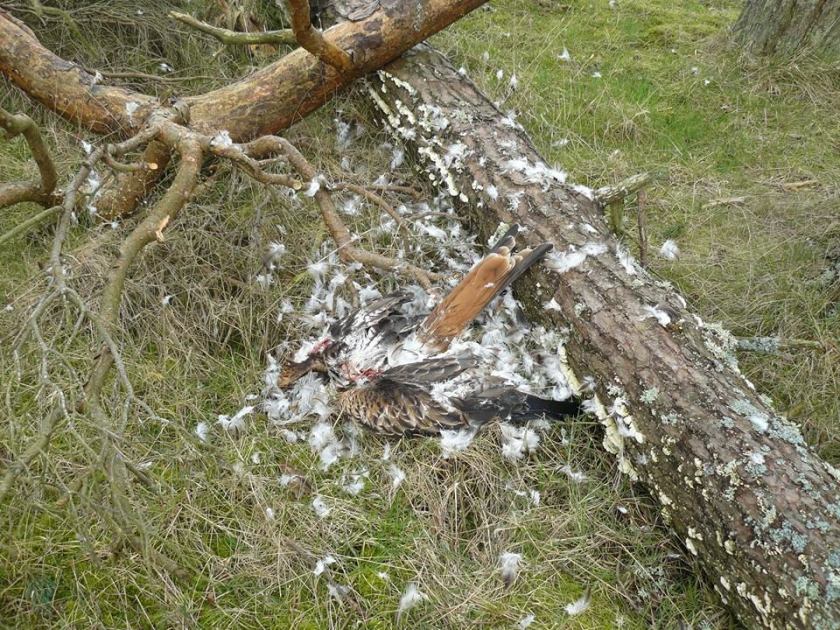
Peregrine poisoned Leadhills Feb 2014In early April we blogged about the poisoned peregrine that had been found close to the boundary of Leadhills Estate in South Lanarkshire (see here). We encouraged blog readers to email the Environment Minister with a series of questions about this specific incident and the broader topic of long-term raptor persecution in this particular area. We know from our site stats that over 100 of you emailed the Minister (well done and thank you) and perhaps this volume of email traffic was the reason for his delayed response.

Anyway, last week his formal response was eventually mailed out and we’ve been sent a few copies by several readers. As usual, it’s a fairly generic response and here is a general overview of what he had to say (or to be more precise, what his civil servant had to say on his behalf) -:

“Thank you for your letters to the Minister for Environment and Climate Change, Paul Wheelhouse. I have been asked to respond.

The Minister has been appalled at the recent incidents of raptor persecution including the mass poisoning in Ross-shire which has claimed the lives of 16 red kites and 6 buzzards. Clearly there have been other incidents across Scotland involving peregrine falcons and most recently a juvenile sea eagle, the first born to the reintroduced east coast birds, has gone missing in an area where raptors have been lost before. The mass poisoning is a terrible loss for the Black Isle and has rightly been condemned by the local community as well as the wider public. The Minister was heartened however, by the contributions made by members of the public, as well as landowners and farmers, to the reward fund set up by the Royal Society for the Protection of Birds (RSPB) for information which leads to a successful conviction.

These incidents threaten to undermine Scotland’s reputation as a country that cares for its wildlife and natural environment but reinforce the need for the new measures the Minister announced in July 2013.

In addition to these measures, the Scottish Government launched a Consultation to gather views on extending the investigative powers for inspectors in the Scottish SPCA in relation to certain wildlife offences. The Consultation will run from 31 March until 1 September 2014 and of course all views will be taken into account before a decision is made.

The possession of certain poisons is an offence in Scotland and in order to help rid our countryside of these dangerous chemicals, we shall be looking at building on existing mechanisms to remove them from Scotland’s environment.

You raised a number of specific points about the peregrine falcon poisoning incident in Lanarkshire and I will deal with each in turn below.

1. Why did Police Scotland tell a member of the public this was not a police matter? Will you launch an inquiry and publish the findings?

Police Scotland call handlers must consider the information they are given at the time of the call and not all reported incidents may be crimes. It would be inappropriate for the Minister to comment on Police operational matters.

2. Will you launch an inquiry into PC Everitt’s alleged response to this incident and publish the findings?

The Minister will not be making any statement based on speculative comments posted on social media sites about a serving Police officer. This would not be appropriate.

3. Will you launch an inquiry into why illegal raptor persecution continues to flourish in the Leadhills area, and publish the findings?

The area where the poisoned peregrine falcon was discovered was disclosed by Police Scotland as ‘the Abington area of South Lanarkshire’. The Minister will not be drawn into any speculation about a live police investigation which might prejudice the outcome of the investigation.

4. Will SNH use the new enabling clause in the General Licences to withdraw their use in the Leadhills area with immediate effect?

SNH will consider restricting the use of General Licences where they believe it is appropriate to do so, and on a case by case basis.

5. Over what period of time are you going to measure the success of the new measures introduced in July 2013?  It seems the threat of these new measures has not managed to stem the mass destruction of Scotland’s Natural Heritage.

The Minister has decided it would be inappropriate to impose exact time scales on the effect of the new measures as each measure is unique and will require its own consideration. However, it is hoped to report on the findings of the penalties review before the end of 2014.

Once SNH have had the opportunity to implement any General Licence restrictions the Minister will seek an update on how these have worked in practice. The final measure about Police Scotland use of technology can only be considered on a case by case basis and these are decisions made in the course of operational policing. It would be inappropriate for the Minister to seek to influence operational decisions of police colleagues in respect of an investigation.

Whilst current legislation and these new measures should be given due time to take effect, the Minister is on record confirming that he will take further action if it appears that current measures are insufficient. The Scottish Government takes this issue seriously and I hope that this response illustrates the extensive work that is taking place.

Yours sincerely,

Karen Hunter

Wildlife Crime Policy Officer”.

There’s nothing in his response that comes as a surprise. It’s full of the same old rhetoric that we get every time we ask for more robust action to be taken. To be fair to him, we can understand his view that the measures he brought in last July need time to take effect. The problem with that though, is that here we are, 10 months later, still waiting for many of those measures to actually be enacted and meanwhile the filthy criminals continue with their systematic persecution, knowing full well they’re still untouchable. His refusal to set a review date to assess whether his new measures have been effective is very disappointing. We’ll probably be here in the same place two years down the line, still waiting, and still counting the cost (in terms of raptor deaths) of this constant procrastination.

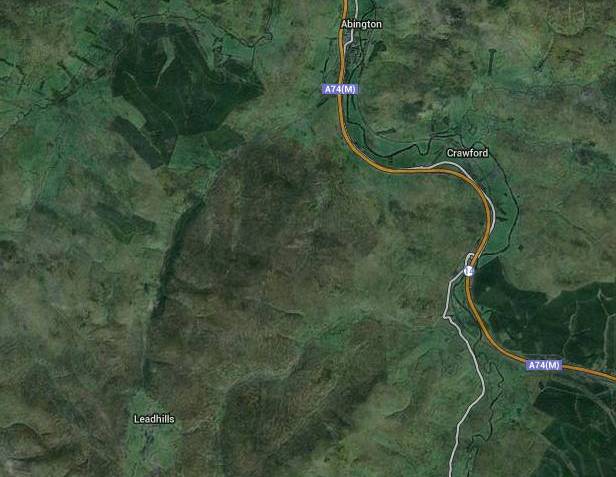
We were particularly disappointed with his answer to question 3. Perhaps he’s not familiar with the geography of South Lanarkshire, and especially the proximity of Abington village to the Leadhills Estate boundary. Here’s a map:

Leadhills Abington map

The big brown smudge in the middle (or, to borrow a phrase from George Monbiot’s latest excellent article, that “bare black misery“) is Leadhills grouse moor. The site where the peregrine was found poisoned with Carbofuran is closer to that grouse moor than it is to Abington village. That’s not to say that we’re accusing anyone from Leadhills Estate of being responsible for poisoning the peregrine, it’s just a clarification that the site falls within what we would describe as the ‘Leadhills area’ – an area with a 40+ year history of illegal killing, including plenty of Carbofuran abuse in recent decades. Perhaps Police Scotland chose to describe the site as being in the ‘Abington area’ to deflect attention from this being yet another persecution incident in what is one of  Scotland’s blackest areas for long-term raptor killing. It’ll make the crime stats look better is this one can’t be attributed to the Leadhills area.

We’ll look forward to hearing the results of their ‘live police investigation’….yeah, right.

Ross-shire Massacre: two months on

It’s been two months since the massacre of 22 birds of prey was first uncovered near Conon Bridge in Ross-shire.

We know that 12 of the victims were poisoned (nine red kites and three buzzards) but there has been a complete lack of information about the other seven red kites and three buzzards.

RK5

Although it is known that some sort of poison was involved,  there hasn’t been any information about the type(s) of poison used. The police and the Environment Minister have both said this information hasn’t been released for ‘operational reasons’. This lack of information has led to a great deal of speculation, even from inside the Parliamentary Chamber, where one MSP suggested the whole incident might have been ‘an awful accident’ – perhaps from, he suggested, unintentionally-contaminated meat at the Tollie Red Kite feeding station.

Whilst it is perhaps understandable that, in some circumstances and for a limited period, the specific type of poison is not revealed to the public, there is no reason whatsoever why the police can’t confirm whether the poison(s) used was a banned pesticide (as is common in most raptor poisoning incidents in Scotland), without having to actually name it specifically. By withholding this information, the police and the government are allowing this incident to be dismissed as a possible inadvertent/unintentional poisoning when actually it is anything but.

So, two months on and it’s all gone quiet. Six weeks ago the police were surprisingly willing to allow their official searches of various properties in the Conon Bridge area to be photographed and publicised in the media – we counted at least five different photographs depicting police officers or police vehicles at the scene of the crime – that level of media exposure of an investigation is relatively rare, but perhaps it was an attempt to demonstrate that the investigation was being taken seriously, in response to the huge outpouring of public anger and demands for action.

It’s probably obvious to most of us who follow these crimes that it is highly unlikely, two months on, that anyone will be prosecuted for this offence. Just like the majority of these crimes, the weeks will turn into months and then into years and we’ll hear nothing more about it. Just look at any of the high-profile incidents of the last few years – they all follow the same pattern – e.g. see here.

The Ross-shire Massacre was different in some respects, in that the corpses were discovered over a period of five weeks and each discovery led to a new press release, which led to a steady rise of public fury. That fury led to an unprecedented public demonstration in Inverness town centre, as well as an influx of public donations towards a reward fund for information leading to the successful prosecution of the poisoner(s).

That reward currently stands at £27,423. Of that total, £10,423 came from 217 members of the public. RSPB Scotland, who set up the donations website, told us that if the reward wasn’t claimed it would be put towards the work of their wildlife crime investigations team in Scotland. It seems to us that, two months on, the reward is unlikely to be claimed (because a prosecution is so unlikely) and so some of us that donated might want to ensure our money is put to good use now, instead of it languishing in an account for three years while the police claim they’re still working on a ‘live investigation’. Ten and a half grand is a lot of money and could be used to buy all sorts of equipment that might just lead to the prosecution of another raptor killer somewhere else in Scotland.

If this is your view (and it’s certainly ours) and you’d prefer your donation to be made immediately available to the RSPB’s Investigations Team, we’d recommend you contact the Director of RSPB Scotland, Stuart Housden, and tell him (don’t forget to mention how much you donated). His email address: stuart.housden@rspb.org.uk

Previous blogs on the Ross-shire Massacre here.

Liam McArthur’s parliamentary questions answered (raptor crime in Leadhills area)

Liam McArthur MSPLast month, Liam McArthur MSP posed a series of parliamentary questions following our report on the poisoned peregrine found in the Leadhills area of South Lanarkshire (see here).

His four questions have now been answered; two by the Cabinet Secretary for Justice, Kenny MacAskill, and two by Environment Minister Paul Wheelhouse:

Question S4W-20745: Liam McArthur, Orkney Islands, Scottish Liberal Democrats, Date Lodged: 15/04/2014

To ask the Scottish Government what steps Police Scotland is taking to ensure that its staff are aware of their responsibilities regarding the protection of protected species.

Answered by Kenny MacAskill (15/05/2014):

The training of wildlife crime officers is a matter solely for the Chief Constable. It is not appropriate for Scottish Ministers to seek to intervene on operational policing matters.

I can advise however that since Police Scotland came into being on 1 April 2013, there have been significant changes to the structure and training for wildlife crime officers.

The strategic lead for wildlife crime which sits in the Specialist Crime Division is held by the Assistant Chief Constable. A Detective Chief Superintendent holds the portfolio lead and the post provides essential direction and governance around strategic issues relating to wildlife crime prevention and investigation.

A full time national Wildlife Crime Co-ordinator at Detective Sergeant level provides engagement with national issues relating to coordination, policy, performance and training, and supports the Detective Chief Superintendent.

In each of the 14 territorial divisions there are wildlife crime liaison officers who are supported by a Superintendent (or above). Wildlife crime officer posts can be either full or part-time and deal with crime prevention and investigation when required for operational policing issues.

It is important to highlight that the investigation of wildlife crime is not the exclusive preserve of dedicated staff, and a variety of investigative and intelligence resources and tactics are brought to bear on such matters, from local and national policing.

Our comment: This is basically a cut and paste response from the response he’s just given to Claire Baker MSP. We keep seeing this statement: “It is not appropriate for Scottish Ministers to seek to intervene on operational policing matters”, but hang on a minute, didn’t the Environment Minister ‘seek to intervene’ only ten months ago when he instructed the Lord Advocate to have a word with COPFS and Police Scotland ‘to ensure law enforcement utilises all investigative tools at their disposal in the fight against wildlife crime’? (see here). What’s that if it isn’t an intervention?

Question S4W-20746: Liam McArthur, Orkney Islands, Scottish Liberal Democrats, Date Lodged: 15/04/2014

To ask the Scottish Government whether it will hold an inquiry into reports that Police Scotland told a member of the public that the poisoning of a peregrine falcon in the Leadhills area was not a police matter.

Answered by Kenny MacAskill (15/05/2014):

Police Scotland is committed to investigating wildlife crime and have confirmed that on this occasion well established protocols and processes were adhered to in order to allow the bird to be recovered successfully. As a result of this, and the subsequent analysis carried out by Science and Advice for Scottish Agriculture identified that the bird had been poisoned, Police Scotland is now working in cooperation with both RSPB and National Wildlife Crime Unit to fully investigate this crime.

In any given case, police call handlers must consider the information they are given at the time of the call and not all reported incidents may be crimes. Police Scotland has also confirmed that no official complaint has been received from the reporter of the original incident.

Our comment: The police call handler told the member of the public (who was reporting this dead peregrine that had been found in suspicious circumstances in an area notorious for raptor crime) that it wasn’t a police matter. That is a fact. The police response was not in adherence with ‘well established protocols and processes’, as Mr MacAskill claims, unless those protocols and processes include ignoring a suspected wildlife crime. The only reason this poisoned peregrine was recovered successfully was because the member of the public bothered to call the RSPB, who then attended and collected the corpse. If the member of the public had not bothered to call the RSPB, this poisoned bird would not have been picked up nor recorded in the wildlife crime stats. That is also a fact. Police Scotland screwed up on this one, and rather than admit it and ensure they have procedures in place to stop it happening again, they are claiming success. That’s not very impressive. And they wonder why the public is losing (has already lost?) confidence in their ability to cope with wildlife crime?!

Question S4W-20747: Liam McArthur, Orkney Islands, Scottish Liberal Democrats, Date Lodged: 15/04/2014

To ask the Scottish Government what steps it is taking to combat illegal raptor persecution in the Leadhills area.

Answered by Paul Wheelhouse (12/05/2014):

The Leadhills area has been identified as a poisoning ‘hotspot’ in the maps that are published annually by the Scottish Partnership for Action Against Wildlife Crime. There have also been incidents in the area involving illegal shooting of raptors.

Operational policing and the targeting of enforcement activity in any specific area is a matter solely for Police Scotland.

The Scottish Government works closely with the police, conservation groups and landowners through the Partnership for Action Against Wildlife Crime (PAW) Scotland. The PAW Scotland Raptor Group has established a short-life working group tasked with developing a clear message that raptor persecution must stop now. The message will have the explicit backing of all PAW partners and be aimed in particular at those areas where raptor persecution is most persistent.

See also my response to S4W-20748 on 12 May 2014 which sets out the additional steps being taken by the Scottish Government and partners to combat illegal raptor persecution.

Our comments: Oh brilliant, here comes the PAW Raptor Scotland Group to save the day, once they’ve decided how to ‘develop a clear message that raptor persecution must stop now’. Is Wheelhouse really so stupid? The PAW Scotland Raptor Group has been established since 2009 (formerly called the Scottish Raptor Persecution Priority Delivery Group). They’ve had five (yes, five) years to develop a clear message that raptor persecution must stop! Why the hell do they have to form a ‘working group’ to come up with a few lines?? It’s simple, isn’t it? STOP ILLEGALLY PERSECUTING RAPTORS NOW. There, that’ll do it. Although perhaps when you realise which organisations are represented on this group (see here) it’ll become apparent why they’ve achieved so little in so long. We’ve been particularly scathing of this group before (see here) and we’ve seen no reason to change that view.

Question S4W-20748: Liam McArthur, Orkney Islands, Scottish Liberal Democrats, Date Lodged: 15/04/2014

To ask the Scottish Government whether there is sufficient evidence to assess the effectiveness of the new enforcement measures to tackle raptor persecution announced by the Minister for Environment and Climate Change on 1 July 2013.

Answered by Paul Wheelhouse (09/05/2014):

There is not yet sufficient evidence to assess the effectiveness of the new measures announced on 1 July 2013. A report on the review of penalties is due by the end of the year and the changes to the general licences will be fully implemented by Scottish Natural Heritage over the next few months. The use by the police of the full range of investigative techniques in raptor persecution cases is an operational matter, however it is unlikely that results would be seen less than 12 months after the announcement of new measures.

Our comment: It’s becoming more and more apparent that Wheelhouse won’t be pinned down to give a time scale for how long he’s prepared to wait to see whether these new measures have any effect. Is he thinking in terms of months or years? A lot will probably depend on the number of raptor crimes that are uncovered during the rest of this year, and particularly, the public’s response to those crimes. We must maintain this pressure on the government to act.

Well done again to MSPs Claire Baker and Liam McArthur for keeping these issues at the forefront of parliamentary business.

Disappointing radio debate on wildlife crime in Scotland

bbc radio scotlandThere was a radio debate yesterday about zero tolerance of wildlife crime in Scotland. The debate was hosted by the Good Morning Scotland programme and for those who missed it, here is the transcript:

Presenter: This week the Scottish Wildlife Trust called for zero tolerance when it comes to wildlife crime. It says that the current punishments aren’t enough to deter people. In recent months 22 raptors have been found dead, 12 of them have been confirmed as poisoned. So what would zero tolerance look like and do we need it? Joined now by Tim Baynes from the Scottish Moorland Group, part of the Scottish Land and Estates, and Mike Flynn, Chief Superintendent of the Scottish SPCA.

Mike Flynn, first of all, you approve of the idea of zero tolerance?

Mike Flynn: Well I don’t think anybody disapproves of it, I mean even if you’re talking about Scottish Land & Estates, they’ve roundly come out saying that all these kind of acts have got to stop and what we really need is some of the people that are linked with those involved to come forward so they can be dealt with.

Presenter: What would it look like though, Mike Flynn?

Mike Flynn: Well, what it’d look like is we’d have a lot more wildlife going about, you wouldn’t be getting organisations like the landowners and gamekeepers being instantly castigated every time some of these incidents happen and you can’t just point the finger at any organisation, this could be down to single individuals and they’ve got to be stopped.

Presenter: Well Tim Baynes from the Scottish Moorland Group, what’s wrong with enforcing the law?

Tim Baynes: Well absolutely nothing at all and I agree with what Mike says there. I think that zero tolerance is one of these quite easy phrases to use but in fact there is already zero tolerance for wildlife crime; zero tolerance within the law and the range of measures that are there to deal with it, zero tolerance within the organisations like ours and the Scottish Gamekeepers, who as Mike says are frequently castigated for this. So it is there, I mean the law governing wildlife crime is tough to start with in the sense that anyone committing a crime could have up to six years in jail, they could be fined for up to £5,000, sorry six months in jail, someone was jailed for poaching recently for 8 months, there is also a law called vicarious liability which deals with an employer or a manager of someone who is convicted, they can face the same penalties. Recently the Minister for the Environment has announced various other new measures, some of them aimed particularly at the land management sector.

Presenter: Well Mike Flynn, some people argue that actually what you should do is have a sort of absolute liability for landowners so that if a raptor or something is found on land the owner could be held responsible and perhaps even fined or sent to jail. Would you agree?

Mike Flynn: Well, Tim’s just said there is an offence now of vicarious liability but you can’t really point the finger at someone if they have absolutely no knowledge of what’s happening. If you’re looking at the crime that Tim just mentioned, poaching, people do not allow poaching on their land but it goes on quite often so you couldn’t blame the landowner for that kind of thing happening.

Presenter: Tim Baynes, it has been suggested, what’s wrong with the idea of, it would certainly focus minds wouldn’t it?

Tim Baynes: Well there is already absolute liability if someone is responsible for a crime on their land and they are absolutely liable. What the problem is that there are a whole lot of different circumstances and it seems to be very difficult for the police ever to find sufficient evidence to secure convictions, and you know, there’s a whole range of things that can go on on the ground that may not be quite so obvious to people looking from outside.

Presenter: What are you suggesting though, if an eagle or a buzzard or something is found on somebody’s moor that, you know, it’s been brought there by somebody else, it’s surely the responsibility of those whose ground it is?

Tim Baynes: Well yes it is, well there are a number of things that have happened and if you look back at some of the recent incidents where, you know, the police, very extensive investigations have gone on and yet they’ve not been able to work out exactly what happened. I mean I think the one, the extraordinary one at Conon Bridge recently as an example, I mean there’s a very big police investigation there but they haven’t managed to work out what happened there…

Presenter: Well we should point out that’s on farmland rather than estates…”

Tim Baynes: Yes but I think the same sort of accusations have been levelled at the landowners there at which quite possibly this incident is nothing to do with certainly anything deliberate that’s been done by the people responsible for managing that land. There are a whole range of different things that can happen and we have to be extremely careful about trying to apportion blame, you know it’s very easy to do but the police have to be given time to conduct these investigations, work out what really happened and then deal with the causes.

Presenter: Mike Flynn, on some readings the conservation movement has actually been extraordinarily successful hasn’t it, in actually bringing back lots of birds of prey, there’s far more around now than it used to be 10 or 20 years ago?

Mike Flynn: Yeah and a lot of that’s down to public awareness, I mean there is far greater awareness now that wildlife crime is illegal; the problem that we’ve got is that there’s so little enforcement and you’ve got to remember, a lot of these wildlife crimes happen in very remote areas, where there’s nobody’s actually around and about to actually witness these things and you do have a kind of anomaly in the law where one part of the Wildlife & Countryside Act a person can be prosecuted on the evidence of one person, and that was kind of brought in because like osprey eggs being stolen, it might be just one hill walker that sees somebody going up the tree, so there is legislation there, what it is is that there’s a lack of enforcement.

Presenter: Mike Flynn from the Scottish SPCA and Tim Baynes from the Scottish Moorland Group, thank you to both.

This debate highlights the importance of having an interviewer who knows the right questions to ask. In our opinion, this one didn’t. Why didn’t he challenge Mike Flynn’s assertion that you can’t blame an organisation when all the official statistics demonstrate very clearly that the majority of these incidents are taking place on land managed for game-shooting? Why didn’t he challenge the poaching example – you can hardly place poaching (a so-called wildlife crime that isn’t actually a wildlife crime at all – it’s based on the principle of ‘theft’) alongside raptor persecution when one ‘crime’ (poaching) is ‘against’ the landowner’s interests and the other crime (raptor persecution) is very much in the landowner’s interest?

Why didn’t he challenge Tim Baynes’ assertion that there already is zero tolerance for wildlife crime in certain organisations when several estates well-known as raptor blackspots, and their employees, are members of those very organisations or provide funding to those organisations?

Why didn’t he challenge Tim Baynes’ assertion that the incident at Conon Bridge was ‘possibly nothing to do with anything deliberate done by the people responsible for managing that land’? He doesn’t know that – the police haven’t yet released information about their investigation.

Why didn’t he challenge Tim Baynes’ assertion that the law governing wildlife crime is tough – how many of those convicted of raptor persecution have ever received the maximum fine for their crimes or received any jail sentence? None of them!

Having said that, we know that there is currently a review underway to assess wildlife crime penalties (a review instigated by the Environment Minister last July). He said in parliament earlier this week that he expected the review group to report their findings by December this year. The group’s remit is this:

“To examine and report on how wildlife crime in Scotland is dealt with by the criminal courts, with particular reference to the range of penalties available and whether these are sufficient for the purposes of deterrence and whether they are commensurate with the damage to ecosystems that may be caused by wildlife crime”.

Interestingly, the identities of the group’s members were revealed this week:

The group’s Chair is Professor Mark Poustie, an esteemed legal academic from the University of Strathclyde.

Detective Chief Superintendent Robbie Allan from Police Scotland.

Hugh Dignon (senior civil servant) from the Scottish Government.

An un-named representative from the Crown Office.

Jeremy Greenwood, former Director of the British Trust for Ornithology.

Hugh Campbell-Adamson, owner of Stracathro Estates.

An interesting line-up. A well-qualified Chair and senior representatives from Police Scotland and the Scottish Government. We’ll reserve judgement on the COPFS rep until we find out who it is. The former Director of the BTO is presumably there to provide scientific expertise about the population-level impact of raptor persecution. But what on earth is the owner of a landed estate doing on this panel when the panel’s remit is to make recommendations for penalties for wildlife crimes, some of which will have been carried out by, er, estate owners?!!!!

What we learned from today’s Parliamentary debate on raptor persecution

ScottishParliamentChamberEarlier today there was a debate in the Scottish Parliamentary Chamber about eradicating raptor persecution from Scotland. The debate stemmed from a motion lodged by Environment Minister Paul Wheelhouse (see here for details of that motion and several suggested amendments).

We very much welcome the Environment Minister’s action of bringing this topic to the attention of Parliament, although given the recent foul catalogue of current crimes against raptors, and the enormous public response to these on-going crimes, he had to be seen to be doing something.

The debate lasted for an hour and twenty minutes, beginning with an opening address from the Minister during which he expressed his “anger, revulsion and utter frustration” that these crimes continue in 21st Century Scotland. He ran through a list of previous measures brought in since 2007, some of which are still to be fully implemented. He said he understood the calls from some quarters for further measures to be introduced now, but insisted that more time was needed to allow these measures to take effect. Here’s one quote that we’ll be reminding him of in due course when we see the next inevitable incident, and the next, and the next:

If and when we judge it necessary, I am committed to taking further action. If that involves licensing certain types of businesses, then we will do so“.

He’s made this commitment before, on many occasions, and there are only so many times that he can make such a commitment before he will be forced to actually follow up his words with action.

During his opening speech he was questioned by Liam McArthur MSP about the alleged police response to the poisoned peregrine incident at Leadhills (see here for info on that incident). The Minister’s response:

We do believe proper procedures were followed“.

Really? How interesting. We look forward to reading the full written response that is now due about this incident following the emails that were sent to him by RPS blog readers in early April. [Incidentally, we haven’t yet received a response – if anyone else has, we’d be interested in reading it]. We’ll also be paying close attention to his written answers to the parliamentary questions that were raised about this issue by Claire Baker MSP and Liam McArthur MSP.

One significant point he made was that proceedings have commenced in the first vicarious liability case at Stranraer Sheriff Court. We believe this case relates to the Glasserton & Physgill Estates buzzard poisoning case in June last year, where gamekeeper and SGA member Peter Bell was convicted of several poisoning offences (see here). The news that this vicarious liability prosecution is going ahead is excellent news and we await the outcome with great interest.

There were a number of other MSPs who spoke during this debate, with many of them being strongly supportive of the consultation to increase the SSPCA’s investigatory powers, and a number of them expressing concerns about the ability of Police Scotland to prioritise wildlife crime.  Dennis Robertson MSP demonstrated a refreshingly sceptical view of the SGA and their claimed attempts to eradicate raptor persecution.

Talking of the SGA, their parliamentary cheerleader, Jamie McGrigor MSP, gave a rousing but wholly irrelevant speech about the SGA’s Year of the Wader project, and mentioned the SGA’s briefing document for today’s debate in which they apparently call for an investigation into the cause of wildlife crime, i.e. the old ‘too many’ raptors routine. Perhaps they mis-read the title of today’s debate as ‘Eradicating Raptors from Scotland’. At one point, Mr McGrigor announced:

Wildlife crime is being perpetrated by a very few individuals, rather than any sector of the Scottish countryside“.

Oh dear. He clearly needs to go back and look at the statistics of where the majority of raptor persecution incidents take place [on land managed for game-shooting] and the occupation/interests of the majority of those convicted for these crimes [gamekeepers].

Mr McGrigor also gave a surprising commentary on the possible cause of the Ross-shire Massacre, in which he suggested that the “hand-fed” (?!!) red kites at Tollie Red Kite feeding station may have been fed contaminated food. He did admit this was based purely on rumour but we were surprised that such speculation on a live police investigation would be allowed during a parliamentary debate.

The Environment Minister ended the debate by saying that he was looking into a poisons amnesty. In our view, a total waste of time and effort – it’s been done before with little, if any, effect. Besides, some of these poisons (e.g. Carbofuran) have been banned since 2001 – that’s 13 years ago – how many more chances are these criminals going to be given to comply with the law? The one saving grace of an amnesty is the potential for anyone found to be in possession of poisons AFTER the amnesty has passed would then face a more severe penalty. That’d be good, if only we could believe that a severe penalty would be handed down. The Minister did mention that there is currently an academic review being undertaken to review the penalties for wildlife crimes and the authors of that review are expected to report in December this year.

Video footage of the debate is available here for about a month [starts at 1:29; ends at 2:49].

The official transcript of the debate can be read here: Minutes of debate: eradicating raptor persecution 6 May 2014

A sad morons’ coalition

Some stuff:

1. The Moorland Association (representative body of grouse moor owners in England & Wales) has commissioned some ‘research’ which, they claim, shows that ‘merlin thrive on grouse moors’ (see here). The quality of this ‘research’ was ably shredded by a commentator called ‘Rich’ on Mark Avery’s blog a few weeks ago (see here). Now another blogger, Steve Mills, has written an excellent piece about the so-called ‘protection’ of raptor species on driven grouse moors. Read it here.

For anagram fans: Moorland Association / A sad morons coalition.

2. There’s an article just published in the Holyrood magazine about the illegal poisoning of raptors in Scotland, including an interview with RSPB Scotland’s Duncan Orr-Ewing, who suggests that raptor persecution levels on Scottish grouse moors are at similar levels to those of the Victorian era. Read it here.

There have been various responses to the article on Twitter from the great and the good:

From Doug McAdam, CEO of Scottish Land & Estates (the landowners’ representative body):

Raptor crime unacceptable but article and assertions not supported by evidence“.

From Daye Tucker, Director at Scottish Land & Estates:

Without wishing to defend indefensible, that claim [that persecution is at Victorian levels] is so beyond exaggeration“.

From Adam Smith, Director GWCT (Scotland):

All condemn recent appalling non-moor raptor killing but most opinions in story not evidence led“.

These are all interesting responses/denials, especially in relation to item 3:

3. The PAW Scotland Raptor Group has today issued what it describes as a ‘united’ statement of condemnation over the recent mass poisoning of red kites and buzzards in Ross-shire. Also included in this statement is the following:

The Group recognised that more needs to be done to strengthen the message that all forms of raptor persecution are completely unacceptable. The Group will ensure that this message is heard throughout Scotland and is strongly and publicly supported by all bodies representing land use, field sports and conservation.  The Group agreed to set up a short life working group to make recommendations as to how to deliver a strong message that commands wide support and is focused on preventing raptor persecution. The aim is to encourage all those with any information about such illegal practices to report this to the police“. Read the full statement here.

Both Scottish Land & Estates and the GWCT are members of the PAW Raptor Group. Can’t wait to see how they’re going to reconcile their denials about the extent of raptor persecution and turn it in to “a strong message that commands wide support and is focused on preventing raptor persecution”.

It’ll also be fascinating to see how the Scottish Gamekeepers’ Association (also a PAW Raptor Group member) “encourages all those with any information about such illegal practices to report this to the police” when their own policy advice to their members is to say nothing to the police except to give their name, address and date of birth, if asked.

Interesting to note that the PAW Scotland Raptor Group failed to provide any condemnation about the poisoned peregrine found recently in the Leadhills area. Can’t think why.

Some light relief, thanks to the SGA

Following the news of the last few weeks, we’re all in need of some light relief.

Thanks to our friends at the Scottish Gamekeepers’ Association, we’ve got some.

The following was posted on the SGA’s facebook page this morning – it’s about their latest so-called ‘scientific’ study of waders on grouse moors. Whoever chose this image to illustrate this particular story is a genius. Thanks for the laugh, SGA!

SGA 1st wader counts

Public consultation on increased powers for SSPCA investigators finally launched

sspca_badgeThe Scottish Government has finally launched its public consultation on increasing the powers of the SSPCA to investigate a wider suite of wildlife crimes.

We have campaigned long and hard for this and it’s taken the Government three years since they first committed to opening a consultation, so now it’s vitally important that as many people as possible actually respond to it. The Government wants to hear your views, whether in support or opposition, so this is your chance to influence policy and make a real difference in the fight against wildlife crime in Scotland.

The consultation document itself is extremely well-written, and we are delighted to see that the consultation period will be open for five months (closing 1st September 2014). We are also pleased to see that the consultation questions are straightforward:

1. Do you agree that the law in Scotland should be changed to give the SSPCA the powers as set out in section 4.1 [of the consultation document]?

2. Please set out your reasons for your answer to Q1.

3. If you would prefer to see changes to the SSPCA’s powers to investigate wildife crime other than those set out in section 4.1, please describe them.

So what’s it all about? The finer details can be read in the consultation document (see below) but in a nutshell….

Currently, the SSPCA has the power to investigate wildlife crimes that involve an animal in distress. So for example, if they are called out to an incident of a golden eagle that had been caught in an illegally-set spring trap and the eagle was still alive, the SSPCA has the power to collect evidence as part of a criminal investigation. This is because they have powers under the animal welfare legislation and this incident would certainly fall into a welfare category where the animal was ‘under the control of man’.

However, if they are called out to an incident where a golden eagle had eaten a poisoned bait and had died two minutes before the SSPCA arrived on scene, the SSPCA does not currently have the power to investigate because the welfare legislation doesn’t apply (the bird is already dead) and the dead bird is not ‘under the control of man’. In this scenario, all the SSPCA can do is to call the police and hope that the police attend the scene in a timely manner. How stupid is that?

Another example – if the SSPCA was called out to an incident of an illegally-snared badger, and that badger was already dead, and the SSPCA found 100 illegally-set snares at the same location, the SSPCA would not be able to investigate; they would have to rely upon the police to attend. If the badger was still alive (suffering), the SSPCA could investigate.

The proposal laid out in the consultation is to widen the investigatory powers of the SSPCA so that they’re not just limited to operating under welfare legislation; the increased powers, if granted, would also allow them to operate under certain parts of the Wildlife & Countryside Act in addition to the welfare legislation.

Importantly, the increased powers would  allow them to continue their investigations into animal welfare incidents where an animal is in distress, but also to investigate wildlife crimes where the animal is already dead, and even wildlife crimes that haven’t yet involved an animal – for example an illegally-set trap.

For us, the increased investigatory powers are a no-brainer. If you care about wildlife crime and you want to see improved detection rates, more prosecutions and a greater chance of conviction, then these increased investigatory powers are a logical step. Here’s why:

1. The SSPCA has a successful track record for investigating [a limited number of] wildlife crimes, both on their own and in partnership with the police.

2. Their inspectors and specialist investigations team have long experience in this field and are already fully trained.

3. SSPCA inspectors are fully focused on animal welfare and wildlife crime – they are not part-timers like many of the police WCOs and nor are they distracted by having to investigate other types of crime, as police WCOs can be.

4. The SSPCA is already a Specialist Reporting Agency, which means they can report alleged offences [within their limited remit] to the Procurator Fiscal and they know what evidence is required for a potential prosecution.

5. With increased investigatory powers, a total of 64 experienced SSPCA staff would be available to respond to a wider range of wildlife crimes.

6. These 64 experienced SSPCA staff would come at no cost whatsoever to the public purse. It would be a free resource to bolster an often under-resourced police force.

7. The specialist skills of the SSPCA are already recognised and utilised by the police in multi-agency searches. The sticking point, under current legislation, is that the police are not obliged to invite them to participate on such searches. Sometimes they do, sometimes, inexplicably, they don’t; it all depends on the personalities involved, which is not, in our opinion, the best way of investigating a wildlife crime.

8. The increase of powers to the SSPCA would not mean that the police are excluded from such investigations. The police would still retain their powers but crucially, they’d now have a further resource to call upon if they needed help. Alternatively, the SSPCA would have the powers to conduct their own investigation if the police couldn’t attend at short notice, for whatever reason. That would be true partnership working and, most importantly of all, increase the chances of a thorough investigation leading to a successful prosecution.

9. Last year we calculated the conviction rate for raptor persecution crime in Scotland as being a pathetic 7.3% (see here). Obviously, something is not working and by giving increased powers to the SSPCA we would expect to see this conviction rate rise considerably. Surely that’s in everyone’s interest (apart from the wildlife criminals, of course).

We know that there will probably be a lot of opposition to the proposal. For example, the Scottish Gamekeepers Association were not in support when the issue was first raised during the WANE bill consultations several years ago. We’re fairly sure that others from within the game-shooting industry will also oppose it – you’ll have to draw your own conclusions on their motivation for opposition. It’ll certainly be interesting to see the consultation responses of various organisations when they are published after the close of the consultation period.

At a time when there is an increasing public awareness of wildlife crime, and an ever-growing sense of frustration at the endless series of failed investigations (with a handful of exceptions), this consultation couldn’t have come at a better time.

Please, have a look at the consultation document and send in your views to the government using the official response form (see below). If you want to copy and paste any or all of our reasons listed above for increasing the SSPCA’s investigatory powers, please feel free.

The time is long-overdue for the pressure to be ramped up on the wildlife criminals (the Untouchables) running amok in our countryside, illegally poisoning, shooting, trapping and bludgeoning our wildlife and sticking up two fingers to the rest of us. Let them know we’ve had enough and let the government know that they have our full support to implement these changes.

Download the SSPCA Consultation document: SSPCA Consulation document

Download the Consultation and Response Form: SSPCA Consultation Questions and Response Form