Pesticide disposal scheme reveals massive stash of banned poisons

In February this year the Scottish Government launched the latest ‘pesticide disposal scheme’ – a free service allowing those who are still in possession of certain banned poisons an opportunity to get rid of them without fear of consequence.

We had mixed feelings about this scheme (see here), not least a sense of frustration that ten years after many of these poisons were banned, the criminals still in possession would have yet another opportunity to escape justice. However, this feeling was outweighed by the importance of removing these substances so they could no longer be (illegally) held / used.

Two and a half months in to the scheme, the Scottish Government has today announced that the scheme will end on 29th May 2015 – press release here.

According to this press release, so far the scheme has received requests for 99 poisons to be collected. These are as follows:

Sodium Cyanide (44)

Strychnine (30)

Aluminium Phosphide (8)

Mevinphos (5)

Carbofuran (5)

(Alpha)Chloralose (4)

Unknown (2)

Aldicarb (1)

We were particularly interested in the amount of Carbofuran that had been handed in – apparently more than 80kg from just five sites.

80kg of the gamekeepers’ ‘poison of choice’! That’s an incredibly large stash. To put it in context, the largest stash found to date was 10.5kg – recovered during a raid on Skibo Estate in 2010 after the discovery of three poisoned golden eagles. The RSPB calculated that that was enough to kill every single raptor in Scotland six times over (see here). Bear in mind that Carbofuran is so highly toxic that it only takes a couple of grains to kill; imagine how much damage 80kg of the stuff could do – imagine the equivalent of 80 bags of 1kg sugar and the hundreds of thousands of granules inside each of those bags!

It’s frightening to think how much more Carbofuran has been stockpiled on estates and farms across Scotland. If 80kg has been recovered from land users who have no intention of using it, imagine how much is being kept hidden by those who have no intention of handing it in but every intention of continuing to use it.

It’ll be interesting to see just how much more is handed in before the end of the disposal scheme, and even more interesting to see what sort of sentence the next inevitable poisoning case will bring.

The release of today’s information is interesting to us for another reason, too. On 27th March, one of our blog readers submitted an FoI to the Scottish Government to ask for the following information relating to the pesticide disposal scheme:

1. The type and number of poisons handed in since the scheme began on 23 February 2015 to date.

2. The cost of the scheme to date.

3. The first three letters of postcodes from where the poisons had been collected.

Our blog reader knew that all this information was being collated by the Scottish Government and he also knew that the scheme was on-going, so he qualified his questions by adding ‘to date’ at the end.

Here’s the reply he received last week:

Dear XXXXX

REQUEST UNDER THE ENVIRONMENTAL INFORMATION (SCOTLAND) REGULATIONS 2004 (EIRs)

Thank you for your request dated 27 March 2015 under the Environmental Information (Scotland) Regulations 2004 (EIRs).

Your request

You asked to be provided with the following information:

  1. The type and number of poisons handed in since the scheme began on 23 Feb 2015 to date.
  2. The cost of the scheme to date.
  3. The first three letters of postcodes from where the poisons have been collected.

As the information you have requested is ‘environmental information’ for the purposes of the Environmental Information (Scotland) Regulations 2004 (EIRs), we are required to deal with your request under those Regulations.  We are applying the exemption at section 39(2) of the Freedom of Information (Scotland) Act 2002 (FOISA), so that we do not also have to deal with your request under FOISA.

This exemption is subject to the ‘public interest test’.  Therefore, taking account of all the circumstances of this case, we have considered if the public interest in disclosing the information outweighs the public interest in applying the exemption.  We have found that, on balance, the public interest lies in favour of upholding the exemption, because there is no public interest in dealing with the same request under two different regimes.  This is essentially a technical point and has no material effect on the outcome of your request.

Response to your request

While our aim is to provide information whenever possible, in this instance an exception under regulation 10(4)(d) (unfinished or incomplete information) of the EIRs applies to all of the information you have requested. This exemption applies because that information is still in the course of completion.  We are unable to provide the information you have requested because the scheme has not been concluded. As the scheme has not yet closed the data you have requested is still being collated, some of this work is being undertaken by an external administrator. We intend to publish some details in respect of your points 1 and 3 in a press release ahead of the closure of the scheme; this is likely to be issued before the end of May 2015.  When the scheme is formally closed and a final report is given to the Minister for Environment, Climate Change and Land Reform, further information, including costs related to the scheme will be published.

This exception is subject to the ‘public interest test’. Therefore, taking account of all the circumstances of this case, we have considered if the public interest in disclosing the information outweighs the public interest in applying the exception. We have found that, on balance, the public interest lies in favour of upholding the exception. We recognise that there is some public interest in release as part of open, transparent and accountable government, and this will be met by our planned publication. However, this is outweighed by the public interest in ensuring that unfinished or incomplete information which is still in being worked on is not disclosed when it might misinform the public.

END

That’s a fascinating response. They refused to release ‘unfinished or incomplete information’ to an individual member of the public, and yet a week later they publish, er, ‘unfinished or incomplete information’ in an official government press release!

It’s also interesting to note that Scottish Land & Estates published a news article on their website, dated 9th April 2015, stating that more than 80 calls had been taken by the scheme (see here). The question is, how did SLE get that privileged information and did they get it from the Scottish Government?

One rule for one and one rule for another? Surely not.

Henry’s Tour: Day 24

Wed 6 May - Copy

Henry is visiting the premises of Yorkshire Game in North Yorkshire.

According to its website, Yorkshire Game supplies fresh and frozen oven ready game and wild venison to supermarkets, wholesalers, butchers and food service. Their most popular products are grouse, pheasant, partridge, hare, rabbit, wild venison, wild duck and woodpigeon.

You might remember we blogged about Yorkshire Game quite a lot last year. Yorkshire Game was the sole supplier of grouse to Marks and Spencer: See this information sheet –  Marks and Spencer Game

However, when we, Mark Avery, Ethical Consumer, RSPB, and many others asked Marks and Spencer to reassure their customers that they were sourcing their grouse from estates that weren’t involved in the illegal persecution of hen harriers and other protected species (see here, here, here, here), they couldn’t. They couldn’t even tell us the name of the individual estates because that was considered “commercially sensitive information“, which was slightly odd for a company that is big on traceability and is more than happy to tell you the name of the actual farmer who has supplied their beef and lamb!

Anyway, as we all know, increasing public pressure forced Marks and Spencer to eventually make the bold move to stop selling grouse for the forseeable future, stating, “We have not been able to guarantee a responsible source of red grouse in the numbers we need” (see here).

That was a big result. We’ll be watching with interest to see what happens this year.

Meanwhile, Mark Avery has today published a long list of London restaurants who are believed to sell red grouse and he’s encouraging people to contact those restaurants to ask them about the provenance of their grouse. Hopefully many of you will join in.

We’ll also be keeping an eye on Yorkshire Game’s website, which prominently features the word ‘Traceable’ on its home page. It also has a sub-category named ‘Suppliers’ which should make for interesting reading, if Yorkshire Game ever get around to finishing the site’s construction. Which of those suppliers are grouse moors in North Yorkshire and which of those moors has supported the successful breeding of hen harriers in recent years? According to our information (which comes from an impeccable source) hen harriers haven’t bred successfully in North Yorkshire since 2007!

We’re also interested in Yorkshire Game’s sister company, The Blackface Meat Company in Scotland. According to their website, they ‘insist on traceability’, they source their gamebirds from ‘selected Scottish estates’ which are ‘well managed’ and grouse is their ‘speciality’. Sounds like a wonderful company who’d be happy to share information about the provenance of their game birds. Let’s see, shall we?

Interesting bedfellows 3

GWCT Scottish Auction 2015 cover - CopyThe Game and Wildlife Conservation Trust (GWCT) would probably like to be thought of as an organisation with strong leadership within the game-shooting industry and a zero tolerance of illegal raptor persecution. Noble aims indeed.
Like most charities, they undertake a lot of fundraising activities to help them achieve their aims. One such activity is their annual Scottish auction – the next one due to take place on 14th May 2015.

They’ve very thoughtfully published this year’s auction catalogue (see here) which allows us to see exactly who is providing financial support to this ‘independent charity‘.

They have several big-name sponsors, and not for the first time, one of them includes the investment bank and hedge fund Artemis. Artemis was reportedly co-founded by John Dodd, the former owner of Glenogil Estate in the Angus Glens (he reportedly sold up in 2013 – see here).

A quick scan of John Dodd’s directorships shows his current links to various Artemis companies and his resignation from Glenogil Estates Limited in 2013.

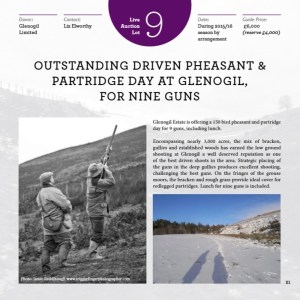
GWCT Scottish Auction 2015 Glenogil lot - CopyOf further interest is one of the live auction lots listed in the catalogue. Live auction lot #9 to be specific. This lot is for a day’s driven pheasant and partridge shooting for nine guns at Glenogil Estate. The donor is listed as Glenogil Limited. We wondered who was behind Glenogil Limited and whether this was a different company to Glenogil Estates Limited.

It turns out that Glenogil Limited is a relatively new company (two years old) whose business activity is listed as ‘Hunting, trapping and related service activities’. The registered office address and the trading office address are listed as ‘The Estate Office Glenogil, by Forfar, Angus’. Hmm. We were also interested to note that their most recently-appointed Director is someone by the name of Mr R.C. Turcan. Would that be the same Robert Turcan from the esteemed law firm Turcan Connell? Apparently so.

Fascinating stuff.

Previous blogs on interesting bedfellows here and here.

Number of poisoned raptors in Scotland more than quadrupled in 2014

Persecution map 2010 to 2014 - CopyThe Scottish Government has today released the annual poisoning and persecution maps relating to crimes against raptors in 2014.
The accompanying press release is a careful study in damage limitation. We can’t blame them – it must be a constant source of embarrassment for them that raptor persecution continues with virtual impunity so of course they’re going to put out a statement that showcases the positives (there aren’t that many) and plays down the negatives (there are many).

The basic premise of their press release is that reported raptor crimes (incidents) have dropped from 23 in 2013 to 19 in 2014. Sounds like progress, eh? But wait – what if you look at the actual number of persecuted raptors – that tells a completely different story!

Let’s ignore the different types of persecution crimes (e.g. shooting, trapping, disturbance) for a minute and just start with poisoning. Here are the Government’s official number of reported poisoning incidents for the last three years:

2014: 6

2013: 6

2012: 3

So on the face of it, no change from last year and still double the number of reported incidents in 2012. But now let’s look at the number of reported individual raptors that were poisoned over those three years:

2014: 27 (17 x red kite; 7 x buzzard; 1 x peregrine; 2 x unknown because Police Scotland hasn’t released the data)

2013: 6 (1 x red kite; 4 x buzzard; 1 x golden eagle – data from Scot Gov annual report on wildlife crime)

2012: 3 (2 x buzzard; 1 x golden eagle – data from Scot Gov annual report on wildlife crime)

That’s quite an increase, isn’t it? Three reported in 2012, 6 in 2013 and a whopping 27 reported in 2014. Does that sound like raptor poisoning in Scotland is in decline? Nope, it shows that the number of poisoned raptors actually quadrupled in 2014.

However, the Government doesn’t agree that 27 raptors were poisoned in 2014. According to their data, only 16 raptors were poisoned in the Ross-shire Massacre (12 red kites + 4 buzzards). They seem to have conveniently forgotten that 22 dead birds were found, not 16. Even Environment Minister Aileen McLeod ignores the ‘missing six’ and just refers to the poisoned 16 in today’s press release! Sure, there may only be toxicology reports for 16 of those victims – we don’t know the cause of death for the remaining six victims because Police Scotland hasn’t bothered to tell us. But surely they and the Scottish Government aren’t trying to convince us that the remaining six victims (four red kites + two buzzards) weren’t poisoned at all, but that they all just happened to die of natural causes at the same time and in the same fields as the other 16 poisoned birds? Come on. Why try and diminish the extent of such an appalling crime?

And, once again, the poisoning maps exclude other crimes where bait was discovered but with no apparent raptor victim. We know of at least one of these incidents that occurred in 2014 – a poisoned rook found in January close to a poisoned rabbit bait and a poisoned hare bait (Carbofuran & Chloralose) (here). Why doesn’t this count?

Now let’s have a look at the other types of raptor persecution crimes reported in 2014. These include shooting, trapping and disturbance. According to the Government’s data released today, there were 8 reported shootings, 2 reported trapping offences, 1 reported disturbance incident and 2 listed as ‘other’.

Interestingly, they’ve excluded incidents where satellite-tagged raptors have (un)mysteriously disappeared in known persecution hotspot areas, such as the young white-tailed eagle (see here) and several others that Police Scotland has so far chosen to keep under wraps.

They’ve also excluded incidents where illegally-set traps have been found but without an apparent raptor victim. Again, the police have chosen to keep these under wraps. Why don’t those count?

So let’s now look at the Government’s ‘official’ three-year figures for all types of raptor persecution incidents in Scotland (including poisoning, shooting, trapping, disturbance, and ‘other’):

2014: 19

2013: 23

2012: 13

As we said at the beginning, on a superficial level it appears that reported raptor persecution incidents have declined since 2013, although we now know that the Government has excluded several known incidents, and we also know that these are only the reported crimes – many more will have occurred but weren’t detected. But let’s have a look at the number of known raptor victims during that three-year period:

2014: 40

2013: 23

2012: 13

That’s pretty clear then. Illegal raptor persecution continued in 2014 and the number of (known) victims rose considerably from the previous year and the year before that.

What an utter disgrace.

Scottish Government press release here

Scottish Government’s persecution maps and background data can be downloaded here:

Scottish Gov background raptor persecution data (released 31 Mar 2015)

More publicity needed for wildlife crime-related subsidy withdrawals

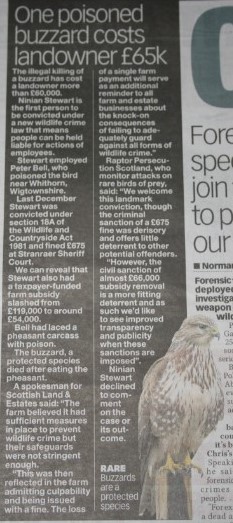
VL subsidy removal Sunday Mail 22 March 2015 - CopyRegular blog readers will know how difficult it is to find out whether farms and shooting estates that have a proven link with wildlife crime have had any of their agricultural subsidies withdrawn as a result of their non-compliance with the subsidy regulations.
A good example is the ridiculous on-going saga of Stody Estate in Norfolk – blog readers have, for the last six months, been asking the Rural Payments Agency about any potential subsidy withdrawal, ever since their gamekeeper Allen Lambert was convicted of poisoning 11 birds of prey last October (see here for blog posts). We’re still non the wiser.

You’d think, given the potentially large sums of money involved, that the authorities would be shouting about these penalties from the rooftops. The realistic threat of having thousands of pounds of public money removed from your business is an excellent deterrent and is far greater than the typically pathetic fine imposed by the criminal justice system.

Another case in point is that of Ninian Johnston Stewart, the first landowner in Scotland to be convicted under the vicarious liability legislation. Johnston Stewart received a puny £675 fine for his crimes (see here). His gamekeeper, Peter Bell, convicted of poisoning a buzzard and having a stash of banned poisons capable of killing 10,000 birds received a £4,450 fine. Johnston Stewart’s miserable fine is hardly likely to see other landowners quaking in their tweeds.

However, in March we were able to blog about Johnston Stewart’s subsidy penalty, which amounted to almost £66,000 (see here). Now THAT’S a deterrent!

But where did we get this information from? We didn’t read about it in a Government press release. We didn’t read about it in the mainstream media. Nor did we read about it on SLE’s website.

The place we found it was in the RSPB’s Legal Eagle newsletter; an excellent publication but one of specialist interest that is probably mostly only read by those with a special interest in crimes against birds of prey.

Here it is: Legal Eagle 75 March 2015

Since then, we’re only aware of a couple of other publications that have mentioned it. One, authored by RSPB Scotland’s Head of Investigations Ian Thomson, appeared in another specialist journal, Scottish Justice Matters Vol 3(1). This can be downloaded here:

SJM Vol 3 March 2015

The other publication that we’re aware of was much more mainstream – the Sunday Mail (22nd March 2015) had a headline-grabbing article, ‘One poisoned buzzard costs landowner £65k’.

We were pleased to be quoted in this piece, as follows:

We welcome this landmark conviction, though the criminal sanction of a £675 fine was derisory and offers little deterrent to other potential offenders. However, the civil sanction of almost £66,000 subsidy removal is a more fitting deterrent and as such we’d like to see improved transparency and publicity when these sanctions are imposed“.

Well done to the RSPB for getting the info out there in the first place, and thanks to journalist Billy Briggs for reading this blog and taking the story to a wider audience.

Hare-brained propaganda from the grouse shooting industry

Over the last couple of years we’ve blogged a lot about the obscene massacre of mountain hares on Scottish grouse moors (see here for previous posts).

It’s quite the hot topic these days, resulting in Parliamentary questions, public petitions, and even a call from SNH/GWCT/SLE for grouse moor managers to practice “voluntary restraint”  – a pointless exercise in our opinion (see here).

It seems that SNH doesn’t have much faith that voluntary restraint will be employed – a few weeks after they issued their plea to landowners, they asked hill-walkers to report any evidence of large-scale culls (see here).

Today, the grouse-shooting industry issued their own press release about mountain hares on grouse moors. We thought it was an early April Fools’ Day stunt but apparently it isn’t. It reads as follows:

MOUNTAIN HARES ON THE MARCH AFTER GROUSE BONANZA

(Issued on behalf of a Scottish Moorland Group)

The Highlands are celebrating a special conservation bonus following two very good grouse seasons.

Scottish moorland managers are reporting large numbers of the much loved and easily recognised mountain hare, linked to last year’s ‘best in a generation’ grouse season. The Scottish population of hares is thought to be around 350,000 and in some areas they are now at historically high levels – the hares have the red grouse to thank!

Concern has been expressed recently that hare numbers may be going down; however grouse moors in the Angus Glens, Speyside and Highlands report that their numbers have increased along with grouse levels. Heather moorland managed for red grouse is an extremely good habitat for hares to thrive on.

The mountain hare is the only native species of hare or rabbit in Britain, easily distinguished by its white plumage during the winter months and brown during the summer. It is known that its population fluctuates in 7-10 year cycles, however actively managed moorlands give this iconic Scottish species a sustainable future.

Danny Lawson, head gamekeeper on Glenogil Estate in the Angus Glens, said: “I have seen more mountain hares this year than at any time since I came here. Our mountain hare population has been increasing along with grouse over the last three years because our heather management gives them good grazing and because of predator control over the estate and other neighbouring estates.

Good weather in the breeding season helps mountain hare numbers and the last two seasons, 2013 and 2014, have been very good for both grouse and mountain hares. Like grouse, mountain hare populations have to be carefully managed. Culling is legal and is necessary in some circumstances and such management should be done sustainably and be supported by a sound management plan.”

Tim Baynes, Director of the Scottish Moorland Group, says: “There are surprising gaps in our collective knowledge about this secretive animal.  This can lead to assumptions about population changes which are not correct and we support the research project commissioned by Scottish Natural Heritage to get a better handle on how to accurately count hares on the open hill.  What does seem certain from the long term observations of moorland managers on the ground is that there is a strong link to land use; hare numbers are likely to go down where moorland is unmanaged or afforested but will increase where managed for red grouse.”

-ENDS-

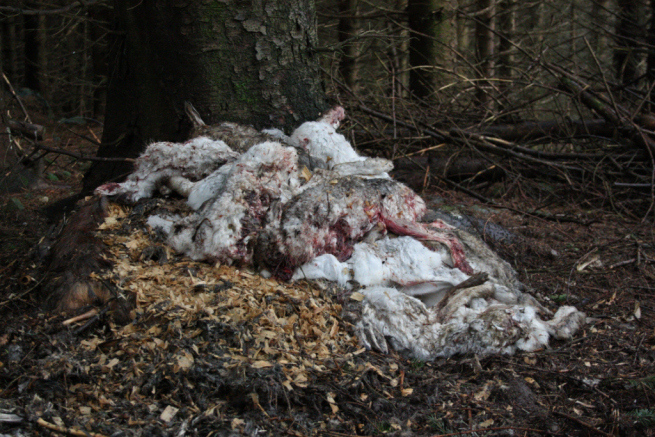
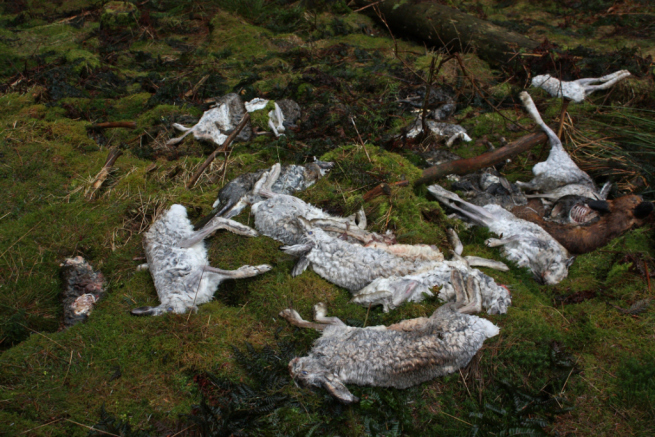
Anyone convinced that grouse moor managers view mountain hares as “much loved”? Anyone convinced that hare culls by grouse moor managers are “carefully managed”?

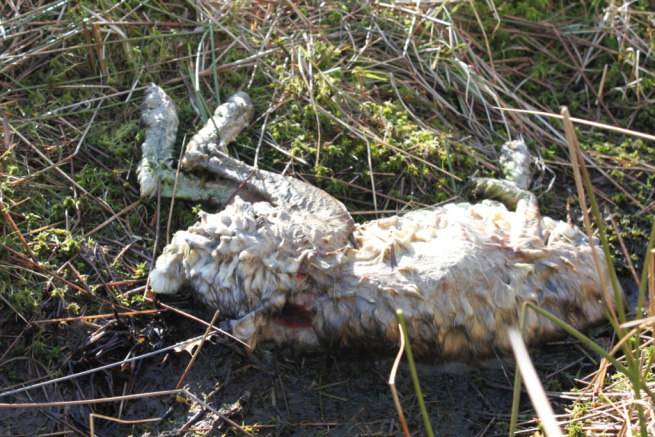
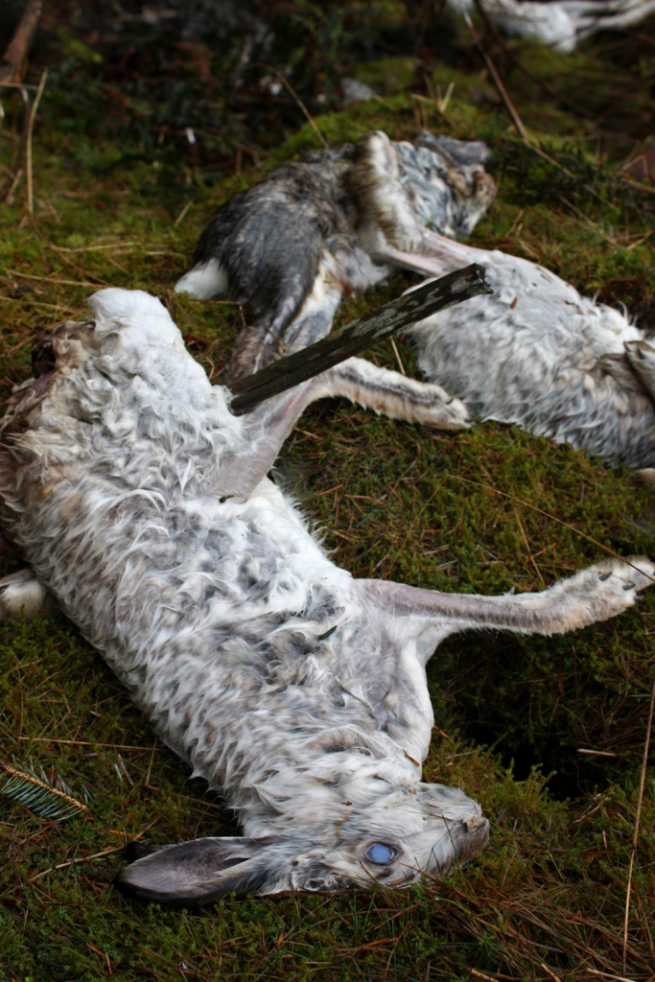
Have a look at the photographs at the foot of this blog and make up your own minds.

What’s also interesting about this press release is the decision to include a quote from the head gamekeeper of Glenogil Estate. We’ve blogged a lot about Glenogil Estate over the years (see here). Glenogil Estate is one of several grouse-shooting estates in the Angus Glens. Here’s some information about raptor persecution in the Angus Glens, mainly gleaned from the RSPB’s annual BirdCrime reports and SASA’s annual reports:

2004 May, near Edzell: long-eared owl and two short-eared owls starved to death in crow cage trap.  No prosecution.

2004 May, Invermark Estate: peregrine nest destroyed. No prosecution.

2006 March, Glenogil Estate: poisoned rabbit bait (Carbofuran). No prosecution.

2006 April, Easter Ogil: poisoned buzzard (Alphachloralose). No prosecution.

2006 April, Easter Ogil: poisoned tawny owl (Alphachloralose). No prosecution.

2006 May, Glenogil Estate: poisoned rabbit bait (Carbofuran). No prosecution.

2006 June, Glenogil Estate: poisoned woodpigeon bait (Carbofuran). No prosecution.

2006 June, Glenogil Estate: Traces of Carbofuran found in estate vehicles & on equipment during police search. No prosecution. Estate owner had £107k withdrawn from his farm subsidy payments. This was being appealed, but it is not known how this was resolved.

2006 July, Millden Estate; poisoned sheepdog (Lindane). No prosecution.

2007 November, Glenogil Estate: Disappearance of radio-tagged white-tailed eagle ‘Bird N’ coincides with tip off to police that bird been shot. No further transmissions or sightings of the bird.

2008 May, ‘Nr Noranside’: poisoned white-tailed eagle ‘White G’ (Carbofuran, Isophenfos, Bendiocarb). No prosecution.

2008 May, ‘Nr Noranside’: poisoned buzzard (Bendiocarb). No prosecution.

2008 May, ‘Nr Noranside’: poisoned mountain hare bait (Carbofuran, Isophenfos, Bendiocarb). No prosecution.

2008 May, Glenogil Estate: 32 x poisoned meat baits on fenceposts (Carbofuran, Isophenfos, Bendiocarb). No prosecution.

2008 October, ‘Glenogil Estate: poisoned meat bait on fencepost (Carbofuran). No prosecution.

2009 March, Glenogil Estate: poisoned buzzard (Carbofuran). No prosecution.

2009 March, Glenogil Estate: poisoned buzzard (Carbofuran). No prosecution.

2009 April, Millden Estate: poisoned buzzard (Alphachloralose). No prosecution.

2009 July, Millden Estate: poisoned golden eagle ‘Alma’ (Carbofuran). No prosecution.

2009 August, Glenogil Estate: poisoned white-tailed eagle “89” (Carbofuran). No prosecution.

2010 May, ‘Nr Noranside’: poisoned red kite (Carbofuran). No prosecution.

2010 September, Glenogil Estate: poisoned buzzard (Chloralose). No prosecution.

2010 October, Glenogil Estate: poisoned buzzard (Carbofuran). No prosecution.

2010 October, Glenogil Estate: poisoned pigeon bait (Carbofuran). No prosecution.

2010 October, Glenogil Estate: poisoned pigeon bait (Carbofuran). No prosecution.

2011 February, Airlie Estate: buzzard caught in illegal crow trap. (see below)

2011 March, Airlie Estate: 3 x buzzard caught in illegal crow trap. Prosecution (!) but dropped after statement from suspect given to SSPCA deemed inadmissible.

2011 April, Millden Estate: shot buzzard. No prosecution.

2012 April, ‘Nr Noranside’: Remains of buzzard found beside pheasant pen. Suspicious death.

2011 June, Rottal & Tarabuckle Estate: dead kestrel inside crow cage trap. No prosecution.

2012 February, ‘Nr Edzell’: spring-trapped buzzard. No prosecution.

2012 February, ‘Nr Bridgend’: remains of buzzard found under a rock. Suspicious death.

2012 May, Millden Estate: satellite-tagged golden eagle seemingly caught in spring trap, then apparently uplifted overnight and dumped on Deeside with two broken legs & left to die. No prosecution.

2012 May, Glen Esk: disappearance of sat-tagged red kite. No further transmissions or sightings of bird.

2013 January, Invermark Estate: white-tailed eagle nest tree felled. No prosecution.

2013 November, Glen Lethnot: poisoned golden eagle ‘Fearnan’. No prosecution.

2014 October, Nathro: shot buzzard. Prosecution? Unknown.

Can we take it then, that as this press release was issued by the Scottish Moorland Group – a sub-group of Scottish Land & Estates – that Glenogil Estate is a member of SLE? If so, surely the partner organisations of the PAW Scotland Raptor Group will be asking questions at their next ‘partner’ meeting.

A few newspapers have picked up on this press release today, including an article in the P&J entitled, ‘Mountain hare thriving thanks to grouse management‘.

Here are some pictures of ‘much-loved’ mountain hares ‘thriving’ on Scottish grouse moors, including one photograph that was taken on, er, Glenogil Estate.

mountain-hare-cull-angus-glens-large - Copy

mh4 - Copymh2 - Copyslry30 - Copymh3 - Copy

Leadhills Estate confirmed as member of Scottish Land & Estates

The Leadhills (Hopetoun) Estate in south Lanarkshire has featured regularly on this blog (see here).

Since 2003, 46 confirmed incidents of wildlife crime have been discovered either on or near to the estate, but only resulting in two successful convictions (2004 – gamekeeper convicted of shooting a short-eared owl; 2009 – gamekeeper convicted of laying out a poisoned rabbit bait). Here’s the list:

2003 April: hen harrier shot [prosecution failed – inadmissible evidence]

2003 April: hen harrier eggs destroyed [prosecution failed – inadmissible evidence]

2004 May: buzzard shot [no prosecution]

2004 May: short-eared owl shot [gamekeeper convicted]

2004 June: buzzard poisoned (Carbofuran) [no prosecution]

2004 June: 4 x poisoned rabbit baits (Carbofuran) [no prosecution]

2004 June: crow poisoned (Carbofuran) [no prosecution]

2004 July: poisoned rabbit bait (Carbofuran) [no prosecution]

2004 July: poisoned rabbit bait (Carbofuran) [no prosecution]

2005 February: poisoned rabbit bait (Carbofuran) [no prosecution]

2005 April: poisoned buzzard (Carbofuran) [no prosecution]

2005 June: poisoned rabbit bait (Carbofuran) [no prosecution]

2005 June: poisoned rabbit bait (Carbofuran) [no prosecution]

2006 February: poisoned buzzard (Carbofuran) [no prosecution]

2006 March: poisoned buzzard (Carbofuran) [no prosecution]

2006 March: poisoned pigeon bait (Carbofuran) [no prosecution]

2006 April: dead buzzard (persecution method unknown) [no prosecution]

2006 May: poisoned rabbit bait (Carbofuran) [no prosecution]

2006 May: poisoned rabbit bait (Carbofuran) [no prosecution]

2006 May: poisoned egg baits (Carbofuran) [no prosecution]

2006 June: poisoned buzzard (Carbofuran) [no prosecution]

2006 June: poisoned raven (Carbofuran) [no prosecution]

2006 June: 6 x poisoned rabbit baits (Carbofuran) [no prosecution]

2006 June: poisoned egg bait (Carbofuran) [no prosecution]

2006 September: 5 x poisoned buzzards (Carbofuran) [no prosecution]

2006 September: poisoned rabbit bait (Carbofuran) [no prosecution]

2006 September: poisoned rabbit bait (Carbofuran) [no prosecution]

2007 March: poisoned buzzard (Carbofuran) [no prosecution]

2007 April: poisoned red kite (Carbofuran) [no prosecution]

2007 May: poisoned buzzard (Carbofuran) [no prosecution]

2008 October: poisoned buzzard (Carbofuran) [listed as ‘Nr Leadhills’] [no prosecution]

2008 October: poisoned rabbit bait (Carbofuran) [listed as ‘Nr Leadhills’] [no prosecution]

2008 November: 3 x poisoned ravens (Carbofuran) [listed as ‘Nr Leadhills’] [no prosecution]

2009 March: poisoned rabbit bait (Carbofuran) [no prosecution]

2009 March: poisoned raven (Carbofuran) [no prosecution]

2009 April: poisoned rabbit bait (Carbofuran) [gamekeeper convicted]

2009 April: poisoned magpie (Carbofuran) [no prosecution]

2009 April: poisoned raven (Carbofuran) [no prosecution]

2010 October: short-eared owl shot [no prosecution]

2011 March: illegally-set clam trap [no prosecution]

2011 December: buzzard shot [no prosecution]

2012 October: golden eagle shot (just over boundary with Buccleuch Estate) [no prosecution]

2013 May: shot otter found on estate [no prosecution]

2013 June: significant cache of pre-prepared poisoned baits found on estate [no prosecution]

2013 August: red kite found shot and critically-injured in Leadhills village [no prosecution]

2014 February: poisoned peregrine (Carbofuran) [‘Nr Leadhills’] [no prosecution]

For a long time, we’ve been trying to find out whether this estate is a member of the landowners’ organisation Scottish Land and Estates – an organisation that regularly claims to be fighting hard against raptor persecution. All our attempts to find out have been met with a wall of silence. We knew that Lord Hopetoun served on the SLE Board, so it was quite likely that his estate would be a member of SLE, but we weren’t able to find definitive evidence.

Well, we have now. Leadhills Estate has launched its own website (see here). It’s a spectacular example of how to conduct a public relations charm offensive – lots of info about how the estate is supporting the local community: providing a new home for the volunteer fire crew, lending a hand on Gala Day, engaging in a village clean-up for Christmas, and providing support for the Leadhills Miners Library. It brings a tear to the eye. There’s also plenty of encouragement for walkers to keep to the tracks so as not to disturb the wildlife – because Leadhills Estate really cares about wildlife.

Of most interest to us is a statement on the web site’s home page:

‘Leadhills Estate is a member of Scottish Land and Estates – an organisation which promotes the work of landowners and rural businesses undertake [sic] for the benefit of rural Scotland’.

Amazing. We’d love to hear how SLE justifies the membership of Leadhills Estate in their wildlife-crime-fighting organisation.

The Leadhills Estate website also includes a gallery showing images that visitors can expect to see when they visit this most welcoming of estates. Here’s another one for them – taken at one of many stink pits hidden away on Leadhills Estate (far from the tracks that visitors are encouraged to stick to). For those who don’t know, stink pits are used (legally) by gamekeepers in which to dump the rotting carcasses and entrails of dead wildlife. They set snares around the edge of the stink pit to catch (and then kill) any animals that may be attracted to the stench of death (typically foxes). This particular stink pit includes a few fox carcasses oh, and a cat. Nice, eh? Welcome to Leadhills Estate.

Leadhills dead cat stinkpit - Copy


Modern criminal

Modern Poisoner Mike Wood article March 2015 - CopyA few days ago we blogged about an attack on the campaign group Birders Against Wildlife Crime that had appeared in this month’s edition of Modern Gamekeeping (see here).

We also said we’d be blogging about another article that had been published in this industry rag. It’s a full-page spread on page 18, written by Mike Wood. Here’s the bio that accompanies this piece:

Michael Wood is a partner at Westfield Farms in Pickering, North Yorkshire. Founded in 1953, the farm has 59 years of experience breeding game birds, including pheasant, mallard, red-leg partridge and grey partridge“.

What the bio doesn’t say is ‘Michael Wood is a criminal with eight wildlife crime convictions to his name’.

See here and here.

Interesting, eh? How many times are we told not to tar all gamekeepers with the same brush? But why should we distinguish between lawful and criminal gamekeepers when the game-shooting industry itself doesn’t seem to bother? We already know that the National Gamekeepers’ Organisation doesn’t mind that Wood has wildlife crime convictions – they’ll still accept fund-raising donations from him and Charles Nodder from the NGO will still work with the Game Farmers’ Association, even though convicted wildlife criminal Wood is the GFA’s current Chairman (see here).

So we know that Noddy and the NGO don’t shun convicted wildlife criminals. But what about BASC? Surely they’ve got standards? Hmm. Take a look at this header from the front of Modern Gamekeeping:

 Modern Poisoner header March 2015 - Copy

It’s hard to read from this image so here’s what it says:

Modern Gamekeeping is proud to be in partnership with The British Association for Shooting and Conservation”.

Does that mean that BASC (a member of the Partnership for Action against Wildlife Crime (PAW UK)) endorses the idea that a wildlife criminal with multiple convictions should be given column inches in an industry publication to discuss the ‘management’ of his game-rearing farm? Surely not.

All in it together…?

Gamekeepers rattled by Birders Against Wildlife Crime

bawc logo - CopyThis month’s edition of Modern Gamekeeping (“Britain’s only independent industry publication“) reveals that the gamekeeping industry is definitely rattled by the campaign group Birders Against Wildlife Crime.
There’s a regular article at the back written by someone calling himself ‘Predator’. This month, ‘Predator’ writes about “a motley group of soap-dodging, benefits-scrounging parasites” (the badger cull protesters), the “disingenuous” RSPB (referring to the RSPB’s claim that video evidence in the George Mutch case was a by-product of a scientific study), and an attack on Birders Against Wildlife Crime:

It’s said that the price of freedom is eternal vigilance, and boy – do we need to be vigilant nowadays. It’s only going to get worse. A bunch of antis calling themselves Birders Against Wildlife Crime are holding a conference in Buxton, Derbys, in March [see here]. They’ll be calling on all birdwatchers, hikers and dog-walkers to turn amateur crimespotters, poking about looking for trouble where none exists, and reporting the slightest suspicion to the police. 

It has the potential to cause all sorts of bother for the police, farmers, landowners and keepers, who could quickly become bogged down by well-intentioned reports about anything and everything. But then, perhaps that’s the idea. This may be a good time to invite your local wildlife crime officer round and establish a good working relationship before it all gets out of hand“.

It’s an interesting view. You’d think that the law-abiding gamekeeping industry, with nothing to hide, would welcome well-informed members of the public keeping an eye out for wildlife crime, wouldn’t you? It’ll be far easier for the police to catch those balaclava-clad, gun-toting District Nurses if everyone’s on the look out for them.

Well done, BAWC – you’ve got the criminals looking over their shoulders.

We’ll be blogging again about Modern Gamekeeping very soon….they’ve got an article in this edition written by someone with eight wildlife crime convictions to his name…

Scottish Government launches poisons disposal scheme

PoisonThe Scottish Government has today launched it’s promised ‘pesticides disposal scheme’ – a free service allowing those who are still in possession of these banned substances an opportunity to get rid of them without fear of consequence.

This scheme was initiated by former Environment Minister Paul Wheelhouse whilst he was still in office.

We have mixed views about the scheme.

On the one hand, it’s a proactive approach to rid Scotland of highly toxic substances that are still being used, illegally, with devastating effect on some of our raptor species, notably golden eagles, red kites, peregrines and buzzards. Only yesterday we blogged about the latest victim  -a poisoned peregrine found on a grouse moor (see here).

On the other hand, many of these poisons have been banned for years, and even being in possession of them has been an offence since 2005 (Possession of Pesticides (Scotland) Order 2005), so why, ten years later, are the criminals who are still in possession of these poisons being given yet another opportunity to escape justice?

The bigger concern of these two views undoubtedly has to be that these poisons need to be removed, and that concern outweighs the lesser concern that the criminals won’t be punished, so from that perspective we welcome the new scheme.

However, what we want (expect) to see as a result of the scheme is that anybody caught with these poisons after the scheme has ended MUST be given a more serious sentence for their crime. We fully expect that even after this scheme has ended, there will still be substantial amounts of these poisons being held illegally. Why? Because the criminals who hold and use these poisons have been doing so for a long, long time, despite the legislation and despite previous amnesties, because they know there’s a good chance that they’ll get away with it. And for those who do get caught, the penalty is usually so ineffectual that the risk was worth taking anyway. Those people, when caught, must feel the full force of the law and not some pathetic fine or community service order – nothing less than a mandatory custodial sentence will do.

It’s not clear for how long the free disposal scheme will run, other than a quote from the current Environment Minister, Dr Aileen McLeod, that the scheme will be “short-lived”.

Those wishing to dispose of their banned poisons via this scheme can do so without fear of prosecution, and without their personal details being given to the authorities. The Government will be collecting data about the uptake of the scheme, but these data will be limited to the type and number of poisons handed in, the cost of the scheme, and only the first three letters of the postcode from where the poisons have been collected.

As this is a free and confidential service, there is absolutely NO EXCUSE WHATSOEVER for anyone to still be in possession of these poisons by the time the scheme ends. Mind you, it’s been that way for the past decade and yet….

Scottish Government press release here

Details about how to use the free disposal service here

Frequently Asked Questions about the scheme here

A list of the poisons that will be accepted by the scheme and a description of what they look like and some common generic names here