Would jubilee’ve it: hen harriers finished in England?

We’ve been hearing rumours that the last remaining pair of hen harriers attempting to breed in England have now failed. We don’t yet have confirmation but several (usually reliable) sources are telling us the same thing.

In a recent BBC news article (here), a spokesman from the National Gamekeepers’ Organisation said:

We are unaware of any instance of human interference with hen harriers in England in recent years“.

Yeah, of course you are. Just like Bashar al-Assad is unaware of any instance of government troops massacring the Syrian people?

So, while the country celebrates ’60 glorious years’, take a moment to reflect on the effects of 60 years of raptor persecution.

Inadmissable evidence: double standards for wildlife crime offences?

In February we blogged about the Crown Office & Procurator Fiscal Service (COPFS) decision not to accept the video evidence showing a head gamekeeper apparently bludgeoning crows to death with a stick inside a crow cage trap on a Scottish sporting estate (see here). The video had been filmed by a field officer from the charity OneKind who, by chance, happened to be in the right place at the right time (or the wrong place at the wrong time, depending on your view).

OneKind appealed against the COPFS decision not to initiate court proceedings against the gamekeeper but the Lord Advocate ruled that the COPFS decision would stand. In response, OneKind submitted a petition to the Scottish Government, signed by over 2,000 members of the public who were disgusted by what they’d seen in the video. OneKind asked the Scottish Environment Minister, Stewart Stevenson, for greater clarity on what is / isn’t considered admissable evidence in wildlife crime cases.

Here’s his reply:

“….the Scottish Government believes it is vital to all our efforts in tackling wildlife crime, for members of the public who come across anything suspicious to report what they have seen to the police.

I would however note that there is a difference between cases where members of the public come across evidence that seems to point to a wildlife crime, and those cases where a person who is employed as, or is acting in some capacity as, a wildlife crime investigator, reports such evidence. It is for the Crown Office to decide on how a court would deal with evidence in either of those cases, and their decision on whether to prosecute a case is final”.

See here for the full update on the crow-killing incident provided by OneKind.

So, what have we learned? If you’re a member of the public who doesn’t really know what you’re looking at, or how to record evidence that might be crucial in a subsequent prosecution, then your ‘evidence’ will probably be admissable. However, if you’re someone who knows exactly what you’re looking at and has been trained in the best techniques of evidence collection and preservation, then your evidence will probably be inadmissable.

And the logic in that is….what, exactly? Are there any other areas of criminal law where these double standards apply? (This is a genuine question – we don’t know the answer but would like to hear from anyone who can enlighten us and help us to understand these rules).

Is it any wonder our wildlife crime conviction rates (and especially for raptor persecution incidents) are so pathetically low? How many more legal obstacles are going to be placed in the way of bringing these criminals to justice?

Police cautions for Devon peregrine disturbers

Back in March we blogged about the activities of Police Wildlife Crime Officer Josh Marshall, who had been installing covert cameras at active raptor nest sites in Devon in a pro-active effort to deter/catch would-be wildlife crime offenders. Within 48 hours, two suspicious characters were caught on camera visiting an active peregrine site (see here).

Today, PC Marshall has announced that the two men have both received police cautions and were issued with ‘strong words of advice’ (see here).

Well done Josh, keep up the good work!

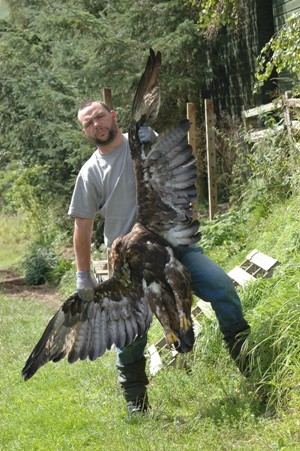
Yet another golden eagle mysteriously ‘disappears’

Last month we blogged about the ‘disappearance’ of a satellite-tagged golden eagle (see here). Now 22 days later we’re blogging about another one. Isn’t it strange how many UK satellite-tagged raptors go ‘missing’; not just golden eagles, but white-tailed eagles, hen harriers and red kites too. Wonder how these figures compare with tagged raptors in other parts of the world?

The last signal from the latest young golden eagle (#32857) to go ‘missing’ was received on May 11, just to the north-east of the Cairngorms National Park (see here).

Was it just a satellite tag failure and the eagle is still alive and well? Possibly.  Did it die of natural causes? Possibly. Was it poisoned? Possibly. Was it shot? Possibly. Was it caught inside a crow cage trap and bludgeoned to death? Possibly. Will we ever find out? Possibly. If it is found to have been killed illegally, will the perpetrator be brought to justice? Probably not (see here for the ever-growing list of dead and/or missing eagles in recent years for which nobody has ever been prosecuted).

Somebody asked a question the other day and we’ve still not been able to provide an answer:

What does it take to secure a conviction for killing an eagle in the UK?”.

We’ve heard all the excuses in the book, some valid, some not:

(i) The discovery of a poisoned eagle on a sporting estate isn’t enough to secure a conviction because either it could have been poisoned elsewhere and then flown to die at that location, or, it could have been ‘planted’ on the estate by the anti-game-shooting lobby (according to claims made by various gamekeepers over the years although without any actual evidence).

(ii) The discovery of a poisoned eagle lying next to a poisoned bait on a sporting estate isn’t enough to secure a conviction because it’s virtually impossible to identify which individual gamekeeper laid the bait, especially when they all deny it.

(iii) The discovery of a poisoned eagle and a stash of the same poison found on premises on the same sporting estate, and an admission from an individual gamekeeper that he had sole access to the poison isn’t enough to secure a conviction because….well, we don’t know the answer to that one, you’d have to ask COPFS.

(iv) The discovery of a poisoned eagle and a stash of the same poison found in vehicles and traces of it on knives and gamebags on the same estate isn’t enough to secure a conviction because….we don’t know the answer to that one either – ask COPFS.

(v) What if somebody was filmed laying out a poisoned bait and was then later filmed returning to remove the eagle poisoned by that bait? The film evidence would probably be ruled inadmissable because the cameraman was operating ‘covertly’ (i.e. without the landowner’s permission!).

(vi) What if a gamekeeper was found with a dead eagle in the back of his vehicle, and the eagle had injuries consistent with being caught in an illegal spring trap (e.g. broken legs) and having had its head caved in with a blunt object (e.g. smashed skull)? This wouldn’t be enough to secure a conviction because the keeper would probably claim he had just found the dead bird and was taking it home to report it to the authorities. At best he’d be charged with ‘possession’.

The shocking truth is, there has never been a successful prosecution for the illegal killing of an eagle in the UK, in spite of the sometimes overwhelmingly compelling evidence in some cases. So, just what does it take for someone to be convicted of killing an eagle in the UK?

Scottish gamekeepers in court: latest

Two cases against two Scottish gamekeepers have been heard recently at Perth Sheriff Court:

David Campbell, head gamekeeper at Edradynate Estate, Perthshire, is charged with various offences relating to firearms and explosives (see here). His case has been continued for an intermediate diet on 26 July 2012. At that hearing it will be decided whether the case proceeds to trial on 20 August 2012. This is an interesting one for several reasons which will become clear in due course.

Jonathan Graham, apparently a gamekeeper at Glenlyon Estate, Perthshire, is charged with three offences under the Wildlife & Countryside Act (Section 5 (1) (b) relating to the prohibition of certain methods of killing or taking wild birds. The hearing was continued today until 27 June 2012. Those of you interested in the topical subject of crow cage traps (see here) might want to follow this case.

DEFRA backs down on buzzard ‘management’ trial!!

News just in, from Defra’s twitter account, Richard Benyon says the following:
“We’ve listened to public concerns, so we are stopping current research and developing new proposals on #buzzards”

Fantastic news (well, at least until we find out what these ‘new proposals’ entail). A big, fat, massive WELL DONE to everyone who blogged, tweeted, emailed, petition-signed etc about this outrageous ‘study’. The people have been heard! It’s incredible to see how effective 9 days of campaigning can be!

By the way, it looks like GWCT had tendered for the buzzard ‘study’ (see here). They seem to be quite good at undertaking unpopular ‘research’ – they’re currently carrying out  a ‘study’ funded by those doyens of conservation, Songbird Survival, which involves a large scale corvid removal experiment (basically killing crows & magpies and calling it science….hmm, sound familiar? See here). If you’re not sure who Songbird Survival are, see here.

We’ll post responses about the DEFRA u-turn here as and when they are published:

Update on DEFRA website here (scroll down underneath the ‘mythbuster’ bit)

Article in the Guardian here (includes info about new research proposals)

RSPB response here

BBC news article here

Article in the Independent here

Article in the Telegraph here

Mark Avery’s thoughts here

Country Land & Business Association (CLA)  response here

British Assoc. for Shooting & Conservation (BASC) response here  (just a statement, no opinion offered)

Countryside Alliance response here (Benyon’s glum chums)

National Gamekeepers’ Organisation response here (not very happy either)

Glen Orchy poisoner: sentence deferred ’til July

Tom McKellar, a gamekeeper/farmer at Auch Estate in Argyll who was convicted last month of possession of the banned pesticide Carbofuran (see here and here) was due to be sentenced today. Sentencing has now been deferred until 23 July (we don’t yet know the reason for this further delay).
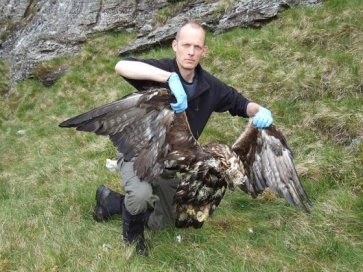
The Carbofuran was discovered at McKellar’s place nearly three years ago in June 2009 during a police raid in connection with the discovery of a poisoned golden eagle at Glen Orchy on 7 June 2009 (see here). Toxicology results showed the dead eagle had been poisoned with Carbofuran. McKellar reportedly admitted during a police interview that he had previously laid out poison baits to kill foxes (see here) but he wasn’t charged with poisoning that golden eagle.

Also discovered during that police raid was a stash of illegal handguns in McKellar’s loft. On conviction at the High Court in Glasgow in December 2010, instead of receiving the mandatory five-year prison term he was given a sentence of 300 hours’ community service (see here).

There is a lot more to the Glen Orchy eagle-poisoning incident than meets the eye but we’re unable to disclose further information until McKellar has been sentenced. Rest assured, we’ll be writing more about this in due course.

Buzz off Benyon, & other news from the murky underworld of raptor persecution

There are no signs of the public’s outrage subsiding over #Buzzardgate. You only have to type in the words ‘buzzard’ and ‘DEFRA’ into a search engine and the strength of feeling against DEFRA’s outlandish plan is almost palpable.

The best article we’ve read, so far, is that written by George Monbiot in the Guardian (here). There’s also a good article by Michael McCarthy in the Independent today, entitled ‘Richard Benyon: The bird-brained minister (see here). Although McCarthy seems to think that the buzzard-nest destroyers will start their shotgun antics as of this Friday (1st June), presumably because that was the proposed start date in DEFRA’s research tender document (see here). However, the buzzard breeding season is well underway and many nests now contain small chicks and the DEFRA ‘study’ suggests that nests will be destroyed during ‘construction’; it doesn’t say anything about destroying active nests containing breeding adults, eggs and/or young (not that that would stop the trigger-happy nest destroyers, of course).

But perhaps the destructive parts of this study won’t start this Friday (if they ever start at all, depending on how loudly we all shout our objections). According to the June edition of ‘Modern Gamekeeping’ (which could just as easily have been called ‘Victorian Gamekeeping’ because nothing seems to have changed except for new bits of kit designed to help the ‘keeper kill more wildlife), the trial’s start date is not that clear:

Though DEFRA insists it is too early to comment on the finer details of the study, it is expected to launch some time this year. A spokesperson said: “The tender for the research project on management techniques to reduce the predation of pheasant poults by buzzards closed yesterday. We will announce the successful bid later in the summer“”.

Modern Gamekeeping isn’t available online (another example of its misnomer) but a photograph of its buzzard trial cover story can be found on Alan Tilmouth’s blog (here). Incidentally, Alan Tilmouth has been one of the most prolific tweeters on this issue and we know he was directly responsible for directing some ‘important’ people to this blog when we led on this story last week, so many thanks Alan, and good luck with your DEFRA FoI request to find out which Northumberland estates are involved; we’re all VERY interested in those results.

Another DEFRA FoI request has been lodged by ‘SWBirdWatch’ which can be followed on the public website ‘What Do They Know?’ (see here).

Since the buzzard trial story hit the news last week, several commentators on various blogs and websites have mentioned that the game-shooting lobby may have shot themselves in the foot over their latest attempt to get rid of raptors, because now the full glare of the spotlight has been turned onto their industry, with mainstream media taking a real interest. Mark Avery’s blog this morning (see here) focuses on some of the questions now being asked by a wider audience where previously they were just being asked by a smaller minority of special-interest groups. All good stuff.

For those who haven’t already done so, there are two main petitions to sign to show your disapproval of the buzzard trial – please, take a minute to sign both of them and let Mr Benyon feel the full force of our discontent:

https://raptorpersecutionscotland.wordpress.com/2012/05/24/add-your-name-to-petition-against-buzzard-management/

http://www.change.org/petitions/minister-for-wildlife-and-biodiversity-defra-stop-the-subsidy-for-buzzard-nest-destruction?utm_medium=facebook&utm_source=share_petition&utm_term=friend_inviter_action_box

In other news, Tom McKellar is due to be sentenced today (he’s the gamekeeper from Glen Orchy who was convicted in April of possessing the banned pesticide Carbofuran, although he didn’t face any charges over the dead golden eagle found at Glen Orchy which had been poisoned by er… Carbofuran – see here). We’ve received some further information about that poisoned eagle and we’ll discuss it once McKellar’s case has ended.

Another hearing opening today concerns the head keeper at Edradynate Estate in Perthshire. More on that case in due course…

BTO backs out of buzzard plan

The following statement has appeared on the British Trust for Ornithology’s website:

Following recent discussion in the media on Defra’s proposals regarding Buzzards and Pheasants, Andy Clements comments on the BTO’s position.

“Alongside RSPB, Raptor Study Groups, GWCT & a range of other stakeholders, BTO has attended two meetings at Defra in a scientific advisory capacity. 

BTO has not tendered for the work and we have declined an invitation to be part of the Project Advisory Group. We have also indicated we no longer wish to be part of the ongoing stakeholder group.

If Defra ask us for specific independent scientific advice, for example up to date population estimates for Buzzard, we would provide that advice as normal.”

Andy Clements, BTO Director

Well done, BTO!

Add your name to petition against buzzard ‘management’

A petition has been set up against DEFRA’s outrageous plan to ‘manage’ buzzards. Please sign it! (It doesn’t matter which country you’re in, anyone can sign this) –

http://www.thepetitionsite.com/304/227/564/defra-dont-spend-taxpayers-money-on-harassing-buzzards/