It sounds like an odd thing to say, but something good has stemmed from the ‘disappearance’ of five breeding hen harrier males this year, and that’s the amount of media coverage generated by these incidents.
The national press has been all over these crimes (and yes, we are calling them crimes because you’d have to be either pretty dense and/or wilfully obstructive to claim that these ‘disappearances’ are the result of anything else) with plenty of column inches in the Guardian, Independent, Daily Mail and Express, as well as TV broadcasting on the BBC News and Channel 4 News. Social media has also been busy, with massive coverage on Twitter and Facebook in addition to constant coverage on several well-read personal blogs, all with a wide social reach.
Instrumental to all this media attention was the release of the information in the first place, and for that we have the RSPB to thank. As a result, the RSPB find themselves at the centre of (another) targeted slur campaign, funded by the industry with the most to lose in terms of public perception when news gets out about another ‘missing’ hen harrier in yet another area managed for driven grouse shooting. The funny part is, the more they smear the RSPB, the more that news editors will want to run the story, so the more people are going to hear about what’s going on.
Some may worry about what’s been written in some of the papers – the Daily Mail coverage was, well, pretty much what you’d expect from the Daily Mail (with it’s grouse moor-owning proprietor), but did that matter? Apparently not. The plight of the hen harrier has never been so high profile and never have so many people raised their voices in support of this species – it’s inconceivable that just a couple of years ago the hen harrier would have been voted the nation’s 9th favourite bird (as it was this week) – it would have been lucky to have made the Top 100, let alone the Top Ten. That’s pretty impressive, especially when you consider that the grassroots campaign in support of the hen harrier is still pretty young – it’s only really just got started.
There’s even more media coverage this weekend, with this article in the Independent. It doesn’t really tell us anything new, apart from learning that United Utilities had ‘banned’ the reporter from visiting the one remaining hen harrier nest in Bowland because the issue had become “too political”, whatever that means. But the content of the article isn’t really what’s interesting – what is interesting is that the Independent thought this issue newsworthy enough to send a journalist all the way from London to Cumbria to look at the now abandoned hen harrier nest on the Geltsdale Reserve. The accompanying text is largely irrelevant (although undoubtedly it will have been read by some people who were previously unaware of hen harrier persecution on driven grouse moors, so that’s good); it’s the fact that the story is being published in the mainstream media, again, that’s important.
Not only does extensive media coverage reach an ever-increasing audience, it also helps to build pressure on the authorities who are in a position to do something about these seemingly untouchable raptor killers, but so far have managed to do virtually nothing, or at least anything meaningful.
A few days ago the UK Government’s statutory nature conservation agency, Natural England, published a statement in response to the news that five breeding male hen harriers have ‘disappeared’. You can read it here. It tells us how ‘concerned’ they are, but other than that, it seems to be business as usual. More satellite-tagging to “provide even more detailed information on how birds move around the landscape and the factors currently limiting the population”.
That’ll be the same satellite tag information they’ve been collecting for the last eight years and have yet to publish in any detail.


 Last month somebody stole a clutch of eggs from a Marsh harrier nest in Norfolk (see
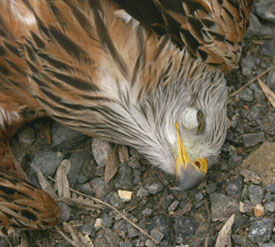 A farmer in Spain has been found guilty of laying out poisoned baits and poisoning at least 11 red kites, five dogs, six foxes, a cat, a raven, a buzzard and four vultures.
 Raptor Persecution UK