The real price of grouse: episode 5

NotsoGlorious-black-bg - Copy

Here’s episode 5 in a series of videos hosted by Chris Packham about the #NotSoGlorious damaging management practices associated with the driven grouse shooting industry. Episode one (an introduction to driven grouse shooting) can be watched here.  Episode 2 (the damaging environmental effects of heather burning) can be watched here. Episode 3 (traps) can be watched here. Episode 4 (parasites, medication and the mass killing of mountain hares) can be watched here.

Here’s episode 5, all about flooding:

Over 119,000 people have joined Chris and signed the e-petition to ban driven grouse shooting. We’ve passed the 100,000 signatures needed to trigger a Westminster debate and we’re currently waiting to hear when that debate will take place. In the meantime, this petition is open until 20th September and the more signatures, the better. Please join us and sign HERE 

Thank you!

‘Dodgy’ traps now ‘improved’ in Peak District National Park

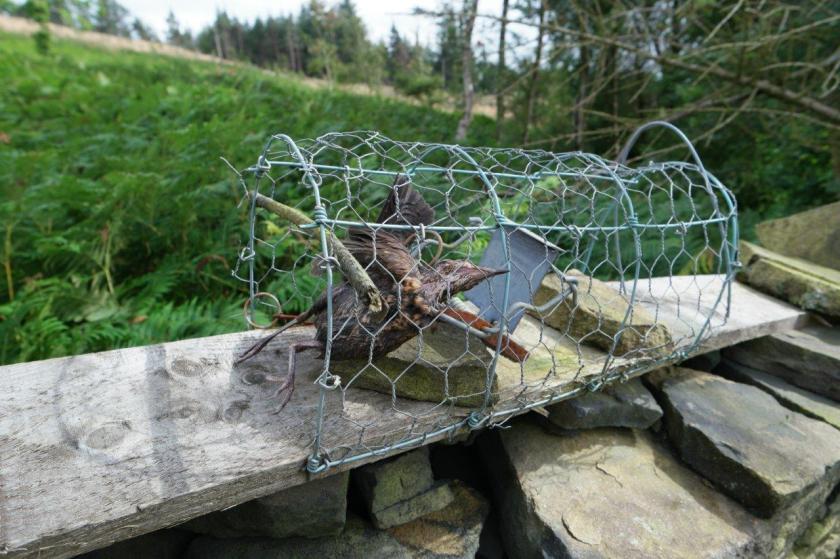
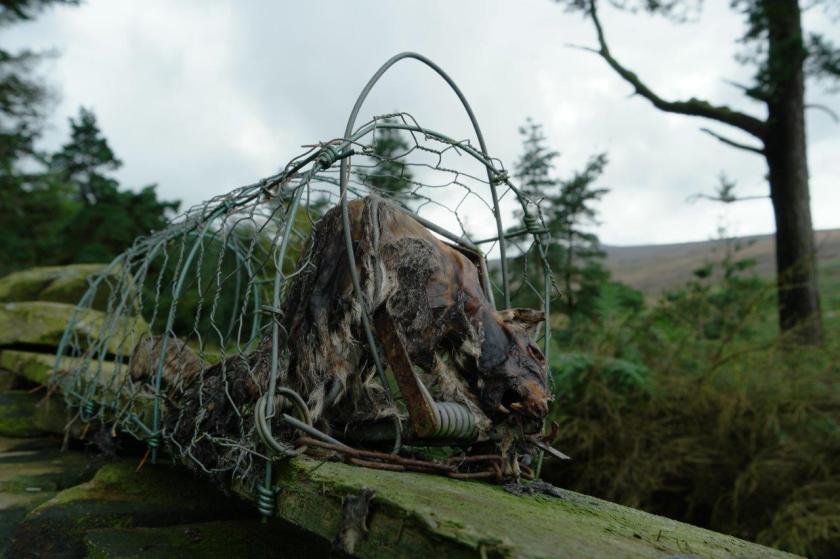
Last week we blogged about two ‘dodgy’ tunnel traps that had been photographed in the Peak District National Park (see here).

There was some debate about the legality of both traps because the tunnel entrances hadn’t been sufficiently restricted to minimise the risk to non-target species, although one of the traps did have a twig shoved across the entrance – it was wholly ineffective but it could be argued that an attempt to restrict the entrance had been made.

Here are a couple of the images again:

sam3 - Copy

sam1 - Copy

Anyway, it appears that whoever manages the northern side of the Bole Edge Plantation (Strines Wood) close to Bradfield grouse moor, where these photographs were taken, has been paying attention to the criticism.

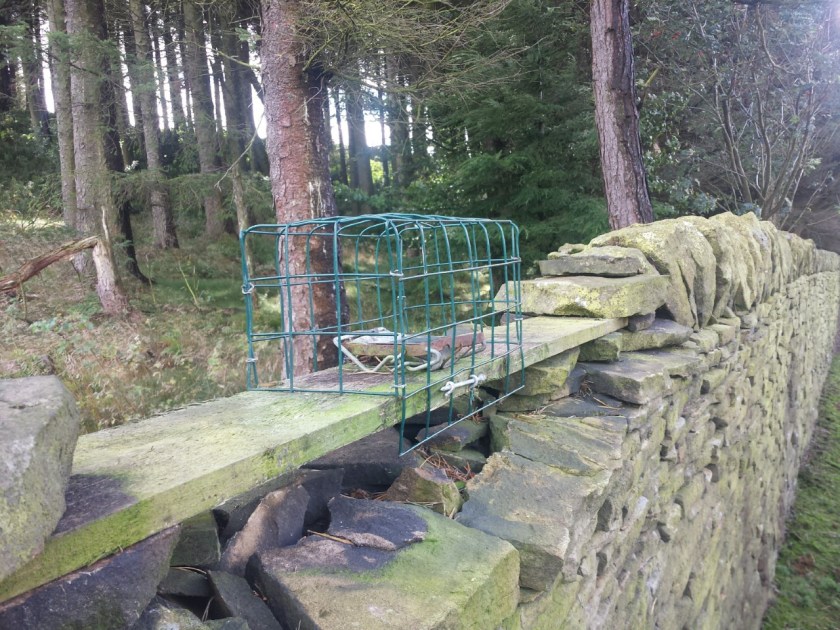
The two traps have now been rebuilt and the tunnel entrances are now clearly restricted:

TRAPrebuilt

TRAPrebuilt2

That’s a definite improvement (the power of social media, eh?) although the issue of whether these (legal) traps should be deployed inside a National Park is still up for debate.

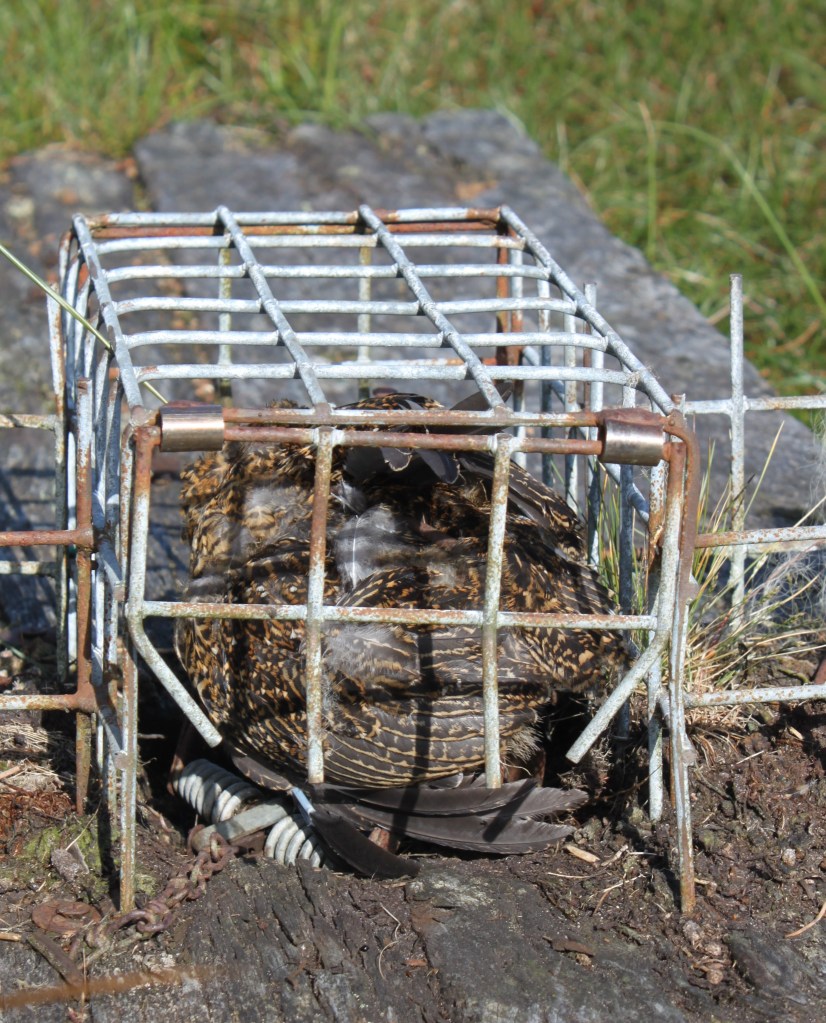
And even when the tunnel entrance has been restricted, that doesn’t mean that non-target species won’t be caught. Have a look at the trap in these two photographs, taken earlier this summer on a driven grouse moor in North Yorkshire. Not good, is it?

B1 - Copy

B2 - Copy


Another hearing set for Raeshaw Estate’s judicial review (General Licence restriction)

Regular blog readers will know we’ve been writing about the General Licence (GL) restriction order placed on Raeshaw Estate (a grouse moor estate near Heriot in the Scottish Borders) for some time (see here for a summary). The restriction order was implemented due to alleged raptor persecution incidents reportedly taking place on the Estate (according to evidence provided by Police Scotland), even though nobody has been charged with any criminal offence and the Estate has denied any responsibility.

This restriction order, placed by SNH in November 2015, has been on and off for months, temporarily suspended and then reinstated as Raeshaw Estate mounted various legal challenges over the following months.

Currently, the GL restriction order is back in place, although SNH has issued a number of ‘individual’ licences permitting the Estate to continue with many activities that are supposed to have been restricted (see here).

Raeshaw Estate has launched a judicial review of the process that SNH used to issue a General Licence restriction order. We’re not that clear about the judicial review process in Scotland but here’s what we’ve managed to work out so far:

In April 2016, Raeshaw Estate petitioned for a judicial review.

In May or June 2016, the Court of Session granted permission for the judicial review to go ahead.

Another court date has now been set for a ‘procedural hearing’ on 3rd November 2016:

RaeshawJR3Nov2016

Our limited understanding is that this ‘procedural’ hearing is when the scope and duration of any later ‘substantive’ hearing will be decided.

This judicial review is an important test case with potentially far-reaching consequences. If the court decides that SNH acted fairly, then presumably SNH will get on with issuing other General Licence restrictions to other estates where Police Scotland has evidence of raptor persecution incidents having taken place since 1 January 2014 (there must be quite a backlog by now). Although it could be argued that if SNH continues to then issue ‘individual’ licences to those penalised estates, the purpose and effectiveness of the original General Licence restriction order is lost.

If the court decides that SNH acted unfairly in imposing a General Licence restriction order, then either the process for implementing a GL restriction order will have to be revised or the scheme scrapped altogether. If it’s scrapped, that’ll leave the Scottish Government in an interesting position. What next for addressing the never-ending cycle of raptor persecution?

Trial for gamekeeper re: alleged shooting of a hen harrier

Criminal proceedings continued at Elgin Sheriff Court on Thursday against Scottish gamekeeper Stanley Gordon.

Mr Gordon, 60, of Cabrach, Moray, is facing a charge in connection with the alleged shooting of a hen harrier in June 2013.

Mr Gordon entered a not guilty plea at Thursday’s hearing and so this case will now move to trial. An intermediate diet has been set for 18 November 2016 (this is an administrative hearing to establish whether both the defence and prosecution are ready for trial) and the trial date itself has been set for 19 December 2016.

Previous blogs on this case hereherehere and here

The real price of grouse: episode 4

NotsoGlorious-black-bg - Copy

Here’s episode 4 in a series of videos hosted by Chris Packham about the #NotSoGlorious damaging management practices associated with the driven grouse shooting industry. Episode one (an introduction to driven grouse shooting) can be watched here.  Episode 2 (the damaging environmental effects of heather burning) can be watched here. Episode 3 (traps) can be watched here.

Here’s episode 4, all about parasites, medication and the mass killing of mountain hares:

Over 119,000 people have joined Chris and signed the e-petition to ban driven grouse shooting. We’ve passed the 100,000 signatures needed to trigger a Westminster debate and we’re currently waiting to hear when that debate will take place. In the meantime, this petition is open until 20th September and the more signatures, the better. Please join us and sign HERE 

Thank you!

An interesting letter from Invercauld Estate

In July we blogged about the discovery in June of a critically-injured Common gull that had been found caught in two illegally-set spring traps on Invercauld Estate in the Cairngorms National Park (see here).
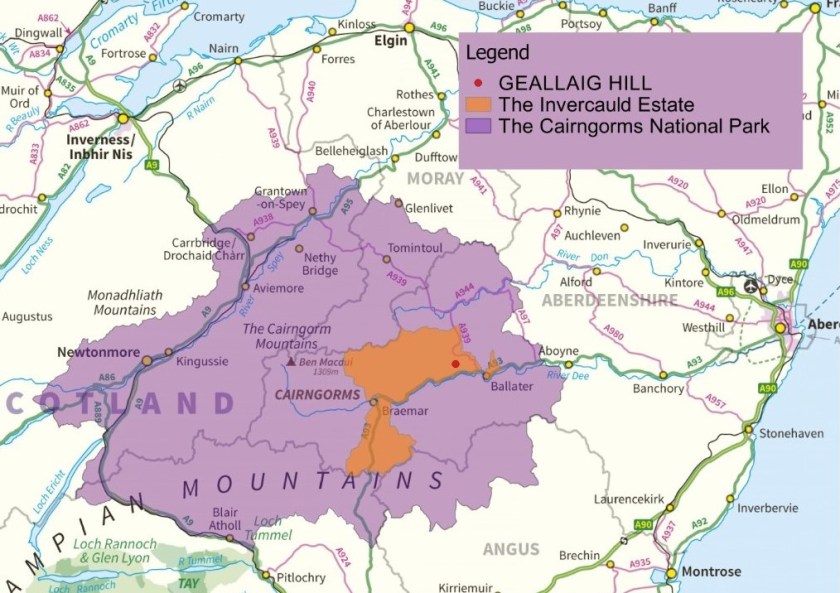
Cairngorms Invercauld - Copy

We also blogged about a bizarre press statement from Invercauld Estate (issued via the GWCT’s twitter feed) in which they denied any illegal activity had taken place or if it had, it was perhaps a set-up ‘intended to discredit the grouse industry‘ (see here).

We also blogged about the Scottish Gamekeepers’ Association’s press statement, which said the SGA was conducting its own enquiry (see here).

We also blogged about Police Scotland’s view that a Common gull had been found caught in an illegally-set trap but ‘despite a thorough investigation‘, Police enquiries had failed to find further evidence to proceed with a potential prosecution and ‘there are at present no further investigative opportunities available‘ (see here).

So that looked like the end of it. Until, through a series of FoIs to the Scottish Government and the Cairngorms National Park Authority, a very interesting letter has emerged.

The letter, dated 27 July 2016 (so a week after the original story had broken) was written by Angus McNicol, who identifies himself as the Estate Manager for Invercauld Estate, and was addressed to the Cabinet Secretary for the Environment, Roseanna Cunningham. A copy of the letter was also sent to the Cairngorms National Park Authority. It’s a fascinating read.

Here is a copy of the letter: Invercauld Estate letter

Having read it, our first question was, ‘Why was this letter written?’ That’s a hard question to answer because we can’t get inside Mr McNicol’s head to read his thought processes. We can, though, speculate about the intentions. In our opinion, this letter was written to reassure the Cabinet Secretary that Invercauld Estate takes wildlife crime seriously and they’ve done something about it.

You’ll see that one paragraph in this letter has been partially redacted (by the Scottish Government – and, incidentally, the copy of the letter received from the Cairngorms National Park Authority was redacted in exactly the same place). It’s this partial paragraph that interests us the most. Here it is:
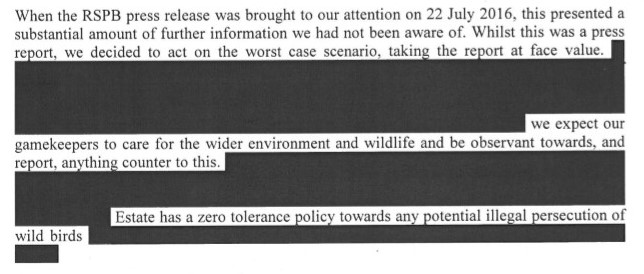
Invercauld redacted

Let’s focus on the sentence immediately before the redaction begins. “Whilst this was a press report, we decided to act on the worst case scenario, taking the report at face value“. Assuming that the ‘worst case scenario‘ might have been that an Estate employee was responsible for illegally setting the traps, the Estate ‘decided to act‘. What action they took is unknown, because that bit has been redacted. But interestingly, the word ‘gamekeepers’ appears later in the same paragraph.

Later in the letter, Mr McNicol reiterates that ‘action‘ had been taken:

Invercauldredacted2

So, was the ‘action’ to which Mr McNicol refers, disciplinary action against one or more Invercauld Estate gamekeepers in relation to this crime? Has somebody been sacked?

If that’s actually what happened, and if Mr McNicol has admitted this in writing, wouldn’t that trigger an investigation in to a potential vicarious liability prosecution?

Is that why, later in the letter, Mr McNicol goes to great lengths to explain the measures that Invercauld Estate has put in place to ensure its staff do not commit wildlife crimes? These measures, explained in such detail, might form the defence of ‘due diligence’ – remember, if an estate is accused of being vicariously liable for certain wildlife crimes, a defence of due diligence is permitted (see here).

Whether an estate’s attempts at due diligence are a sufficient defence to an accusation of vicarious liability is for a court to decide. We presume, if our interpretation of what happened is accurate, that both the Scottish Government and the Cairngorms National Park Authority have notified Police Scotland about the content of Mr McNicol’s letter and Police Scotland will now be following this up with an investigation? Time will tell.

The content of Mr McNicol’s letter raises some other interesting points.

Why, if Invercauld Estate has taken action against an employee, did the Estate deny in their original press statement that the offence had even taken place or claim that if it had, it had been a set-up ‘intended to discredit the grouse industry‘?

Who is the person/organisation that conducted “independent searches of hill ground and of buildings on the Estate to check for illegal traps, snares and illegal pesticides“? Presumably it wasn’t the GWCT – they can hardly be classed as being ‘independent’ if they’re publishing press statements on their twitter feed on behalf of Invercauld Estate. And presumably it wasn’t anybody from Scottish Land & Estates – they can hardly be classed as ‘independent’ as Mr McNicol states Invercauld Estate is a member of SLE. And presumably it wasn’t anybody from the SGA – they can hardly be classed as ‘independent’ as Mr McNicol states that ‘all the relevant staff are members of the SGA‘. So who was it?

When did these ‘independent searches of hill ground and of buildings on the Estate to check for illegal traps, snares and illegal pesticides” take place, and how often have they been conducted?

Why did Police Scotland, as part of what they described as a ‘thorough investigation‘, only speak to a representative of Invercauld Estate (Mr McNicol)? Why didn’t officers question, under caution, the gamekeepers who work on the part of the Estate where the illegally-set traps were found?

It’s all very interesting.

Perhaps we’ll get some answers once the SGA has finished its enquiry in to what happened. Presumably they’ll be publishing their findings in due course….

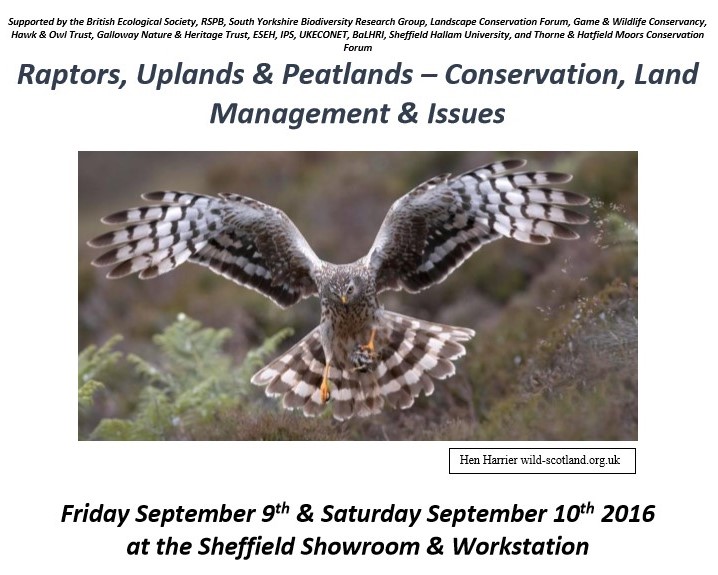
Raptor conference Sheffield: bookings close this Sunday

Raptor conference poster

There are still a lot of places available to attend this event (83 places available for Friday, 105 places available for Saturday).

Programme & booking form can be found here

Bookings close this Sunday 4 Sept.

PAW Scotland rejects gamekeeper’s claims as ridiculous

Further to the claims of Scottish gamekeeper Donald McBeath that ‘bird activists’ are killing golden eagles and hen harriers as part of a smear campaign against grouse shooting (see here and here), the Partnership for Action against Wildlife Crime (PAW Scotland) has dismissed his claims as ridiculous.

PAW Scotland statement:

The Partnership for Action Against Wildlife Crime (PAW) Scotland is calling for a cool-headed discussion about the disappearance of birds of prey in the Scottish highlands.

The call comes following unsubstantiated claims by a gamekeeper who believes ‘bird activists’ might be to blame. Louise Batchelor, a spokesperson for PAW Scotland, says that there appeared to be no evidence to back the claims. There were reports that the gamekeeper said: “I certainly would imagine that there would be a few activists who would take a chance of doing something and I wouldn’t put it past them.’’

Reports also said that some pressure groups had called for grouse shooting to be outlawed and they reported the gamekeeper as saying that call ‘might give activists a motive for sacrificing a few birds of prey’. Louise Batchelor said: “The idea that ‘bird activists’ were responsible for the disappearance of golden eagles and hen harriers as part of some conspiracy theory, to smear gamekeepers, is ridiculous. This kind of claim, made without foundation, cannot go unchallenged and PAW Scotland will continue to take the lead in any serious debate about what is happening to Scotland’s birds of prey. ”

It’s understood that the gamekeeper behind the claims does not belong to the Scottish Gamekeepers Association, who are members of PAW Scotland. A spokesman for the SGA said: “As has always been the case since these reports have emerged, our sole focus is the investigation.  The SGA will do anything we can to assist Police Scotland and the Scottish Government in their investigations and we do not comment on the opinion of private individuals.”

END

Well done, PAW Scotland!

SSPCA consultation: another year rolls by

sspca logoTwo years ago today saw the closure of the Scottish Government’s public consultation on increasing the SSPCA’s investigatory powers in relation to wildlife crime investigations, and particularly in relation to raptor persecution.

We’ve been told, repeatedly, by successive Environment Ministers that tackling raptor persecution is a Scottish Government ‘key priority’. It’s now been five and a half years since the notion of a public consultation on increasing the SSPCA’s powers was first mooted (ironically, mooted by Roseanna Cunningham in her former role as Environment Minister). Five and a half years of dragging the Government kicking and screaming towards what should be an obvious and easy next step in the fight against the raptor killers. And yet, five and a half years on, still we wait for a decision.

Here’s how the Scottish Government has handled this particular ‘key priority’ –

February 2011: Increased powers for the SSPCA was first suggested by former MSP Peter Peacock as an amendment during the WANE Bill debates. The then Environment Minister Roseanna Cunningham rejected it as an amendment but suggested a public consultation was in order.

September 2011: Seven months later MSP Elaine Murray lodged a parliamentary motion that further powers for the SSPCA should be considered.

November 2011: Elaine Murray MSP formalised the question in a P&Q session and the next Environment Minister, Stewart Stevenson MSP, then promised that the consultation would happen ‘in the first half of 2012’.

September 2012: Nine months later and nothing had happened so we asked Paul Wheelhouse MSP, as the new Environment Minister, when the consultation would take place. The response, in October 2012, was:

The consultation has been delayed by resource pressures but will be brought forward in the near future”.

July 2013: Ten months later and still no sign so we asked the Environment Minister (still Paul Wheelhouse) again. In August 2013, this was the response:

We regret that resource pressures did further delay the public consultation on the extension of SSPCA powers. However, I can confirm that the consultation document will be published later this year”.

September 2013: At a meeting of the PAW Executive Group, Wheelhouse said this:

The consultation on new powers for the SSPCA will be published in October 2013“.

January 2014: In response to one of our blog readers who wrote to the Minister (still Paul Wheelhouse) to ask why the consultation had not yet been published:

We very much regret that resource pressures have caused further delays to the consultation to gain views on the extension of SSPCA powers. It will be published in the near future“.

31 March 2014: Public consultation launched.

1 September 2014: Consultation closed.

22 January 2015: Analysis of consultation responses published by Scottish Government. 233 responses (although 7,256 responses if online petition included – see here).

We were told a decision would come from the new Environment Minister, Dr Aileen McLeod MSP, “in due course”.

1 September 2015: One year after the consultation closed and still nothing.

25 February 2016: In response to a question posed by the Rural Affairs, Climate Change & Environment Committee, Environment Minister Dr Aileen McLeod said: “I have some further matters to clarify with the SSPCA, however I do hope to be able to report on the Scottish Government’s position on this issue shortly“.

May 2016: Dr Aileen McLeod fails to get re-elected and loses her position as Environment Minister. Roseanna Cunningham is promoted to a newly-created position of Cabinet Secretary for the Environment.

12 May 2016: Scottish Greens MSP Mark Ruskell submits the following Parliamentary question:

Question S5W-00030 – To ask the Scottish Government when it will announce its decision regarding extending the powers of the Scottish SPCA to tackle wildlife crime.

26 May 2016: Cabinet Secretary Roseanna Cunningham responds with this:

A decision on whether to extend the investigatory powers of the Scottish SPCA will be announced in due course.

1 September 2016: Two years after the consultation closed and still nothing.

Gamekeeper accusing ‘bird activists’ of killing raptors was on TV last night

Following yesterday’s blog about that Scottish gamekeeper who was interviewed on BBC Scotland radio, accusing “bird activists” of killing satellite-tagged golden eagles and hen harriers (see here), he was also on the telly last night.

The TV piece was a shortened version of the radio interview. Here’s the transcript they left out:

I now have very strong reason to believe that we’ve got some bird activists in the area. I now have strong suspicions it’s a bird activist. They’re so close to winning this case against the grouse moors. I don’t know if any of the gamekeeper lads over this side of the hill would like to be responsible for going down in history for getting the grouse shooting banned but I certainly would imagine there’d be a few activists who’d take a chance of doing something and I wouldn’t put it past them“.

The TV version focuses on him denying any gamekeeper involvement because there’s ‘no evidence’. Unfortunately, the presenter didn’t do a very good job as he failed to challenge Mr McBeath’s views. He could have discussed the 30+ years worth of overwhelming evidence that all points to the grouse shooting industry, but he didn’t. Or if he did it was edited out.

Ah well, the video is still very funny. Here’s the clip from BBC Reporting Scotland (evening news, 30 Aug 2016).

Enjoy!