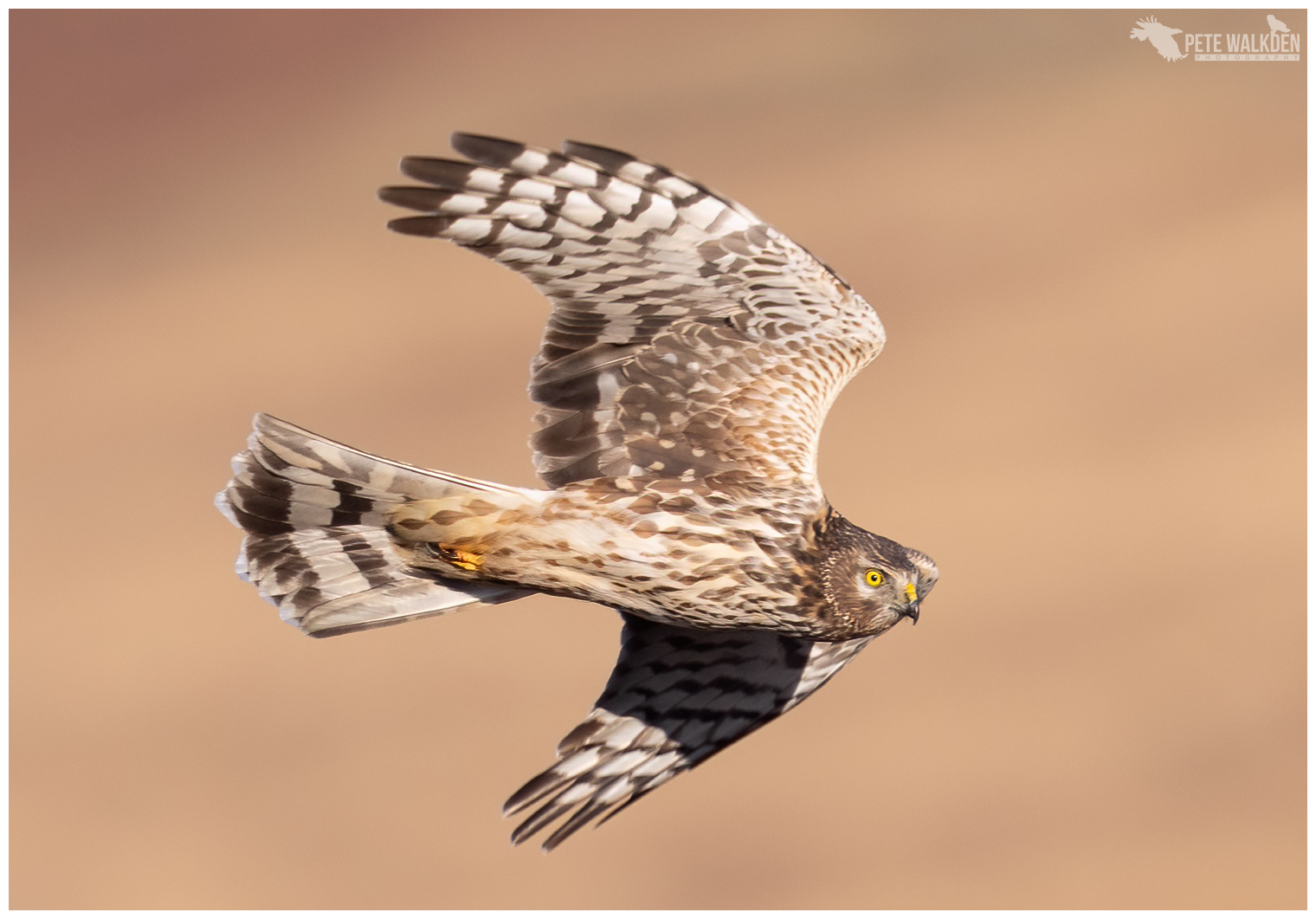
Two criminal investigations are underway following the discovery of two dead hen harriers earlier this spring.
According to Natural England’s most recent update on the fates of its satellite-tagged hen harriers (updates are periodical – the most recent was April 2024), the following two harriers have been found dead, one at an undisclosed location in Northumberland and another at an undisclosed location in Devon:
Hen harrier ‘Susie’, female, Tag ID: 201122, satellite-tagged in Cumbria on 21 July 2020. Date of last transmission: 12 February 2024 in Northumberland. Notes: “Recovered awaiting PM” [post mortem].
Hen harrier R2-M1-23, male, Tag ID: 213927, satellite-tagged as part of the brood meddling trial /sham on 19 July 2023 at site BM-R2-Cumbria. Date of last transmission: 7 March 2024 in Devon. Notes: “Recovered awaiting PM”.
You might remember ‘Susie’ – she’s the hen harrier whose chicks were brutally stamped on and crushed to death in their nest on a grouse moor in Whernside in the Yorkshire Dales National Park, in June 2022 (here).
I hadn’t seen any media about the latest two dead hen harriers so in May I submitted an FoI to Natural England to ask for the details of the post mortem reports to determine whether they’d been killed illegally.
Natural England responded in June and told me the information was being withheld under Regulation 12(5)(b) which states:
“A public authority may refuse to disclose information to the extent that its disclosure would adversely affect: (b) the course of justice, the ability of a person to receive a fair trial or the ability of a public authority to conduct an enquiry of a criminal or disciplinary nature”.
Natural England also told me:
“Natural England can confirm the investigations for the two Hen Harriers cases are live. As such it is our view that this exception covers the information we hold in scope of your request and therefore we are withholding because if it were to be disclosed at this stage it could comprise the result and have a serious impact on the ongoing process and proceedings“.
Natural England’s response suggests that criminality is indeed suspected but I’ll await confirmation before adding these two to the ever-growing list of hen harriers that have been illegally killed / disappeared in suspicious circumstances since the brood meddling sham began in 2018 (the running tally currently stands as 123 hen harriers).
These are the second and third known investigations this year, following the suspicious disappearance of a hen harrier called ‘Shalimar’ on a grouse moor in the Angus Glens on 15 February 2024 (see here).
Although I was at a wildlife crime forum in London last month where a police officer from the NWCU’s Hen Harrier Taskforce told the audience that there were currently five investigations ongoing, although no details were provided.
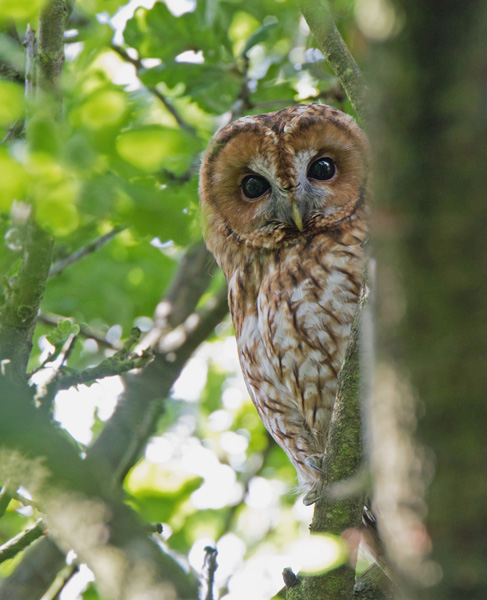
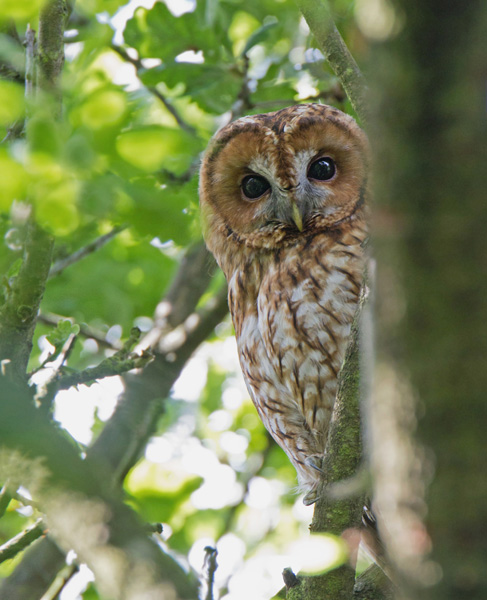
A man has been charged with killing two wild birds with an air rifle after police received reports of someone seen dumping a Tawny Owl and a Woodpigeon in a wheelie bin in Colne, Lancashire, in March 2024.
Joe Morris, 28, of White Grove, Colne, Lancashire has been charged with killing a non-Schedule 1 bird, causing unnecessary suffering to a protected animal and possessing an air weapon in a public place.
He is due to appear before Blackburn Magistrates on 22 August 2024.
UPDATE 29 April 2025: Lancashire man convicted of shooting Tawny Owl in local park (here)
Press release from Police Scotland (28 June 2024):
APPEAL FOR INFORMATION AFTER GOSHAWK NEST FOUND ABANDONED NEAR LOCH GYNACK
Police are appealing for information after a suspected attempt to target birds of prey in the Strathspey area.
On Saturday, 8 June, 2024, officers received a report of an active Goshawk nest having been found abandoned in suspicious circumstances, within a forest near Loch Gynack.
Enquiries were carried out at the site, in partnership with RSPB Scotland, showing the nest had been deliberately targeted with a shotgun. The nest and damaged branches were taken for x-ray with the assistance of staff at the Kincraig Highland Wildlife Park.
Police Constable Daniel Sutherland, Highland and Islands Wildlife Crime Liaison officer, said: “All birds of prey are fully protected under the Wildlife and Countryside Act 1981 and it is illegal to kill them. I am asking anyone in the local community who may be able to help with our enquiries to come forward.
“The area is close to popular walking paths from Newton More. If you were walking in the area during May or early June, and may have seen or heard anything suspicious, then please get in touch.”
Anyone with information is asked to contact Police Scotland on 101, quoting reference CR/0211821/24, or make a call anonymously to the charity Crimestoppers on 0800 555 111.
ENDS
UPDATE 24 October 2025: BBC’s Highland Cops programme features investigation into shot out Goshawk nest in Cairngorms National Park (here)
Blog readers may recall a press release in April 2024 from North Yorkshire Police detailing the execution of a search warrant on an unnamed grouse moor in the Yorkshire Dales National Park, in relation to the illegal persecution of hen harriers (see here).
This hen harrier was euthanised after suffering catastrophic injuries in an illegal trap set next to its nest on a grouse moor in Scotland in 2019. Photo by Ruth Tingay
The very first line of that press release said this:
“On Wednesday, (17 April 2024), a National Harrier Task Force operation was held at an undisclosed location in the Yorkshire Dales“.
That was the first time I’d heard of the ‘National Harrier Task Force’ but I’ve since learned much more about it.
I’ll begin this blog with the reproduction of a press article about the new Taskforce that appeared on a relatively obscure website (CandoFM) in May 2024, then I’ll provide some of my own commentary on this new initiative.
Here’s the press article:
Hen Harrier Task Force Launched To Tackle Illegal Persecution
A new task force has been launched to tackle the illegal persecution of hen harriers, one of the rarest bird of prey species in the UK.
The National Wildlife Crime Unit (NWCU) will use innovative technology and strategic partnerships to detect, deter and disrupt offenders.
Given the rarity of hen harriers, significant resource is invested in their conservation. Satellite tags are fitted to the birds to research their ecology, but these tags have also revealed a concerning amount of illegal killing.
Criminals are intent on targeting this vulnerable species and operate with impunity. There have been no successful prosecutions in recent years despite the efforts of the police and partners.
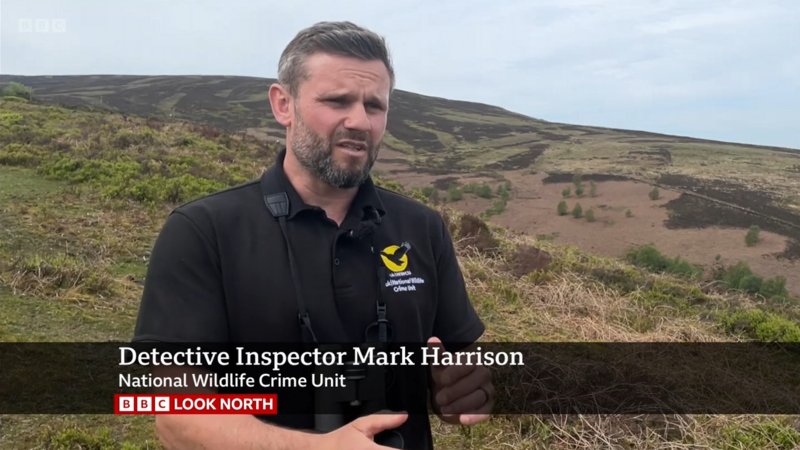
In response, the launch of the Hen Harrier Task Force, led by Detective Inspector Mark Harrison of the NWCU, represents a pivotal shift in combating wildlife crime.
“The persecution of birds of prey is not just a wildlife issue; it’s serious crime blighting our countryside,” said DI Harrison. “With the launch of the Hen Harrier Task Force, we are determined to disrupt illegal activity and protect this vulnerable species.”
Central to the bird of prey task force’s approach is standardising reporting practices and improving the police response to incidents. Police and partners will work together to ensure resources are deployed swiftly and investigative opportunities are maximised. The task force will also bring together partners to engage with local communities and raise the profile of hen harrier persecution in a unified effort against wildlife crime.
“We cannot tackle this problem alone,” emphasised DI Harrison. “Through proactive partnerships and community engagement, we can strengthen our response and hold perpetrators to account.”
The task force will tackle crimes involving satellite tagged birds of prey. It is data-led, relying on analysis of police data and hotspot mapping. The NWCU has identified crime hot spots where they can focus enforcement efforts, as well as other areas of historic vulnerabilities where they will be seeking to revisit and raise their presence with landowners and land users. These meetings are an opportunity to highlight the issues/risks and identify ways to prevent further incidents from occurring.
Rather than purely focusing on the wildlife aspect of the crime, DI Harrison has tasked his team with taking a holistic view of the criminality and considering all types of offences. Criminals will often steal and destroy the satellite tags to conceal their offending. This could constitute criminal damage, theft and fraud. In the last few years alone, £100,000 worth of satellite tags have been lost in circumstances suspected to be criminal. The apparent use of firearms adds a further level of seriousness to these cases.
Recent examples of this include Anu, a hen harrier in South Yorkshire, which had its satellite tag deliberately cut off by someone possibly using scissors or a knife. Asta, a hen harrier in North Yorkshire, is another example. Although the dead bird was not found, its tag was recovered from a dead crow. The NWCU suspect that fitting the tag to a crow was an attempt to make it look like the hen harrier was still alive and hide the fact that it had been illegally killed. Unfortunately, the crow also died from unknown causes.
The task force’s multifaceted approach includes:
Improved incident response: Standardised reporting processes enable rapid response to suspicious incidents, ensuring investigative opportunities are maximised.
Innovative technology: From tracking drones to specialised detection dogs, the task force uses innovative tools to overcome logistical challenges and enhance evidence collection in remote areas.
Strategic partnerships: The taskforce brings together law enforcement, government agencies, non-governmental organisations, landowners and communities to tackle crime in hotspot areas.
Community awareness Initiatives: Building on successful models like Operation Owl, the task force seeks to boost public support and encourage vigilance against wildlife crime.
As the task force gains momentum, the team will be dedicated to protecting the UK’s hen harriers. Through collaboration and innovation, it is set to make a lasting impact in the fight against wildlife crime.
About the Hen Harrier Task Force
The Hen Harrier Task Force is an initiative led by the UK National Wildlife Crime Unit and supported by seven police forces (Cumbria, Derbyshire, Durham, Northumbria, North Yorkshire, South Yorkshire and West Yorkshire), DEFRA, the RSPB, National Gamekeepers’ Organisation, British Association for Shooting and Conservation (BASC), The Wildlife Trusts, GWCT, national parks, Country Land and Business Association (CLA), Natural England and The Moorland Association to combat the persecution of hen harriers in the UK. The taskforce aims to detect, deter, and disrupt offenders involved in wildlife crime by using technology and improving partnership working.
ENDS
My initial reaction to this new Taskforce was one of deep cynicism. Given some of the organisations involved, it just looks like yet another pseudo-‘partnership’ that will achieve nothing other than providing a convenient vehicle for DEFRA and its raptor-killing mates within the grouse shooting industry to be able to pretend that they have a zero tolerance approach to the illegal killing of hen harriers because they are all ‘cooperating’ on this Taskforce.
It’s a ploy that’s been utilised many times before and has simply facilitated the continued illegal killing of hen harriers (and other raptor species) without anyone being held to account. The RPPDG (Raptor Persecution Priority Delivery Group) is a prime example – established thirteen years ago in 2011 and has served no useful purpose in terms of tackling raptor persecution, but has provided numerous Government Ministers with an opportunity to appear to be dealing with it. Utter greenwashing.
Those of you with long memories will remember Operation Artemis, another police-led initiative launched twenty years ago in 2004 designed to work in ‘partnership’ with grouse moor owners to tackle the illegal killing of hen harriers. Here’s some info about it from the RSPB’s 2004 Birdcrime Report:
As described by the RSPB, Op Artemis was not well-received by the shooting industry, even resulting in an article published in The Times where the then Chief Executive of the Countryside Alliance, Simon Hart (who later became Chief Whip for the Conservatives) said the police operation was “part of a wider witch-hunt against gamekeepers“.
Operation Artemis stumbled along until 2007 when it was closed down after achieving nothing at all. Here are two more write-ups about it from the RSPB’s Birdcrime Reports in 2006 and 2007 respectively:
Given the complete failure of Operation Artemis to effectively tackle the illegal killing of hen harriers on driven grouse moors, how will this latest initiative, the National Hen Harrier Taskforce, rolled out some 20 years later, be any different?
Well, there are some positive differences.
This time around, the police have the benefit of access to hen harrier satellite-tracking data (provided by Natural England and the RSPB) which has allowed the National Wildlife Crime Unit (NWCU) to identify clear persecution hotspots, i.e. the estates where a disproportionate number of hen harriers are killed / ‘go missing’ in comparison to the rest of the species’ range.
These wildlife crime hotspots have been known for years but this time the NWCU has done its own analysis on the tag data and, even though it has drawn the same conclusions as the RSPB previously, because the hotspots have been identified by the Police it cuts off any opportunity for estate owners to claim that the data are ‘biased’ or ‘fabricated’ simply because the data belonged to the RSPB. In other words, the estate owners/managers can’t so easily dismiss the data as not being credible.
Another major difference this time around is that the police officer leading the Taskforce, Detective Inspector Mark Harrison, is taking a much more strategic approach. He’s not only looking at the offence of killing a hen harrier – he’s looking at the wider, associated offences such as theft (of very expensive satellite tags) and firearms offences. In combination, these crimes amount to a considerable and serious level of offending and can open the door to the police receiving permission to undertake covert tactics, including surveillance and communications monitoring.
To reach that stage, certain steps have be taken first as part of a longer-term strategy. These include police visits to the known hotspot estates (and I understand that there have now been several of these visits in addition to the one in the Yorkshire Dales National Park that was reported in April). If, after these visits, hen harrier persecution continues to be suspected at those hotspots, the police will then be in a position to demonstrate to senior officers that the ‘nicely nicely’ approach has been tried but hasn’t worked and so permission to begin more covert tactics is more likely to be granted.
Permission should be granted just on the basis of suspected firearms offences taking place. If the estate owners / managers / gamekeepers are denying any knowledge of the offences (which is what they’ve been doing for 30+ years) then the police can legitimately conclude that ‘someone’ [apparently unidentified] is running around an estate committing firearms offences and is clearly a threat to the public. As the fundamental role of the police is a duty to protect the public then I can’t see how permission to deploy more covert tactics can legitimately be withheld under these circumstances.
Of course none of these ideas are anything new – we’ve all been saying for years that if estate owners / managers / gamekeepers claim not to know who’s committing firearms offences on their land then there’s a serious concern that armed individuals are running amok and those estate owners / managers / gamekeepers should be fully supportive of the police doing everything they can to find them, just as any of us would if armed criminals were operating on our property.
However, the difference this time is that here we have a senior police officer, with a background specialism in covert surveillance (and thus a deep understanding of what hoops need to be jumped through to get permission for covert ops), prepared to push the envelope and take a more radical approach and actually implement this strategy instead of just talking about it, and I applaud him for that. Whether he’ll be allowed to stay in post for long enough to carry through with this strategy remains to be seen.
Another new initiative with this Hen Harrier Taskforce is a ‘mutual aid agreement’ between a number of police forces. One of the big issues in tackling wildlife crime, and particularly raptor persecution, has always been the availability of a wildlife crime officer to attend the scene promptly to secure evidence. We all know that the police are stretched, budgets are stretched, and it’s not always possible to get an officer on scene quickly – sometimes delays run into days and weeks, which is ridiculous. The mutual aid agreement means that a number of regional police forces have committed to making officers available at short notice for cross-border searches if the local officers can’t attend in time. If that works in practice, it should be good.
Once on scene, the Taskforce is also utilising a wide array of new techniques and equipment to aid any searches. These include the use of drones working within the range of satellite tag signals and the use of specialised detection dogs trained to search for bird corpses, amongst other things.
This all sounds very promising, on paper. Although to be fair, the Taskforce has already started the strategic plan by paying visits to those known persecution hotspots and has given fair warning to the estates about what they can expect if the persecution continues.
The only issue I have with that approach at the moment is that those crime hotspot estates have not been publicly named. The police say this is because they’re trying to build relationships of trust. I say they’re shielding the criminals. I have been told that the decision not to name hotspot estates is ‘not set in stone’ and may be revisited.
Let’s see.
I wish the Taskforce well and, given the current rate of ongoing hen harrier persecution on grouse moors, I’ll expect to see results in the not-too distant future.
UPDATE 17 July 2024: Is the Moorland Association already trying to sabotage the police’s new National Hen Harrier Taskforce? (here)
Derbyshire Constabulary’s Rural Crime Team has today issued the following appeal for information:
‘We are currently looking into reports of a recent Peregrine Falcon nest disturbance at Belper Mill and would like to advertise that a live investigation is currently being completed with partner agencies to establish the circumstances of how this happened. We would also like to hear from anyone who may have information. Please quote occurrence number 24*283748 when doing so‘.
Photo provided by Derbyshire Constabulary’s Rural Crime Team
This isn’t the first time that peregrines at Belper Mill have been at the receiving end of criminal activity. In March 2015 the adult breeding male was found shot (here) and another breeding male was found shot in March 2020 (here).
A local resident has informed me that peregrines have been breeding at Belper Mill East since at least 2011 and it’s estimated that almost 40 fledglings have been produced at this site. The peregrines’ breeding attempt has failed this year.
Comments on social media suggest this latest incident is believed to relate to the alleged disturbance of the breeding pair by contractors carrying out groundwork nearby.
Further to last week’s news that Norfolk Police were appealing for information after a laser was shone directly into a peregrine’s nest box at Cromer disturbing the breeding female (here), the BBC News website is today reporting that a man has handed himself in.
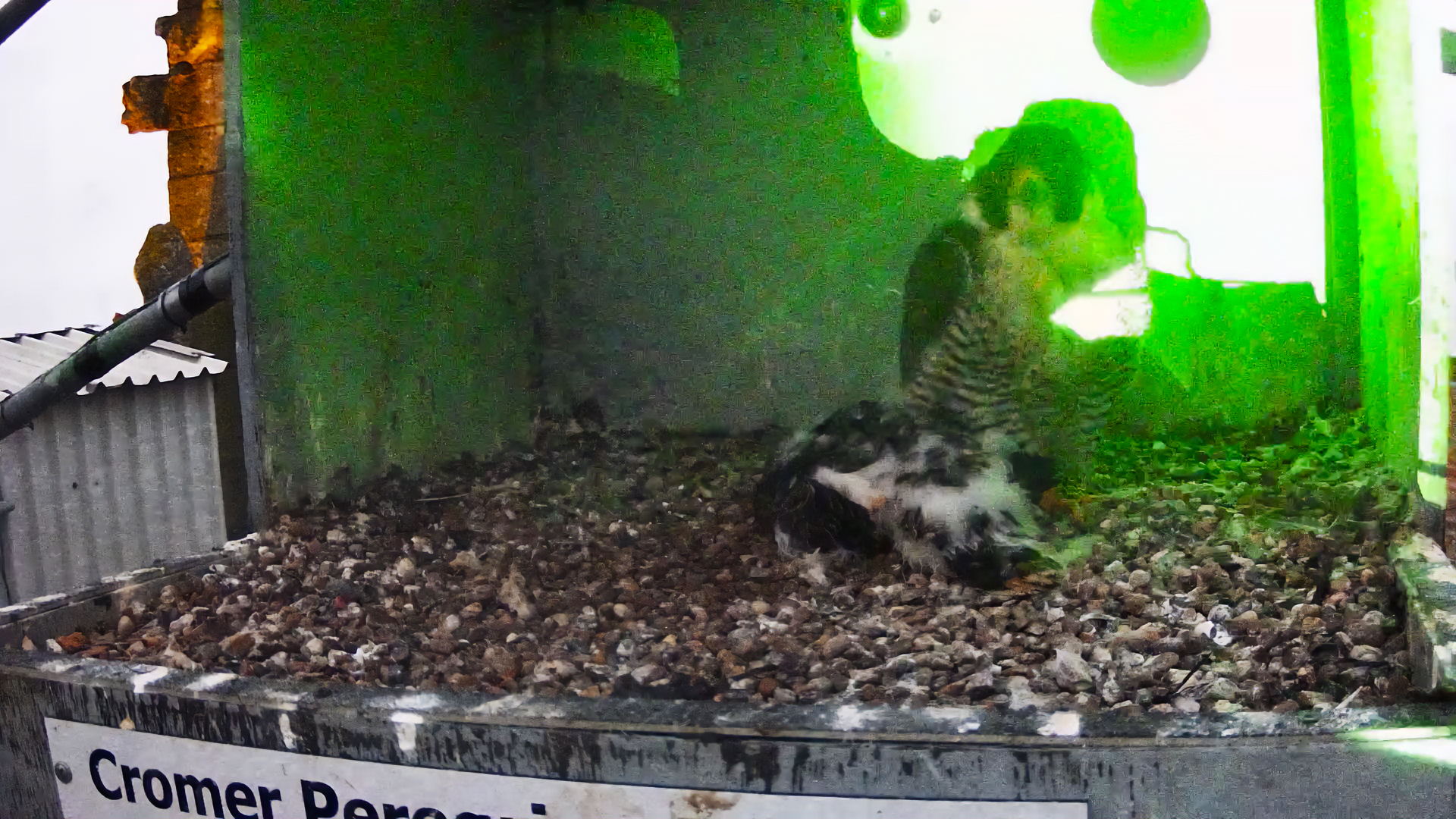
Green laser being shone directly into Peregrine nest. Photo by Cromer Peregrine Project
According to the article, a man in his 40s from the Cromer area, who has not been identified by police, turned himself in at Cromer Police Station on Saturday. He apologised and said he’d made a genuine mistake.
A spokeswoman for Norfolk Police said the incident was dealt with by way of a community resolution and it was agreed the laser would be destroyed.
The man also agreed to make a donation to the Cromer Peregrine Project and would engage in a formal discussion with a police officer about the safe use of lasers.
The Police Service of Northern Ireland (PSNI) has issued an appeal for information about the illegal shooting of a red kite in Newry in April 2024.
The kite, nicknamed Vivienne, was well known in the Mournes. She was found with gunshot injuries on Cullion Road in Newry on 20 April 2024 but was later euthanised due to the extent of her injuries.
“Following an x-ray on April 22, and later confirmation from Agri-Food and Biosciences (AFBI), it became evident in the x-ray that the bird had been shot, as pellets were embedded in its wing and neck, including a fracture to its humerus.
The Red Kite is a large, protected bird of prey, re-introduced to Northern Ireland in 2008 and is a truly beautiful raptor with distinctive markings, recognised by its fork tail.
This Red Kite, nicknamed ‘Vivienne’ due to its identifying wing-tags brown-pink 6V, was well-known in the area and throughout the Mournes since it was born here back in 2018.
At this time, we are asking for information from the public due to offences falling under the Wildlife (NI) Order 1985 as amended by the Wildlife and Natural Environment Act (NI) 2011.
Police take all wildlife crime very seriously and are appealing to anyone who has information about what may have happened to this protected bird to call us on 101, quoting reference number 1229 22/04/24.
If you are aware of anyone in the area intent on harming birds of prey, please contact police.”
Officers from Norfolk Police’s rural crime team are appealing for information after a laser was shone directly into a peregrine’s nest box disturbing the breeding female.
The incident was caught on cctv by the Cromer Peregrine Project although no date has been provided.
[Photos by Cromer Peregrine Project, via Norfolk Police]
Writing on X yesterday, Norfolk Police said this:
We are currently investigating a report of the @CromerPeregrine Peregrines having a laser shone straight into the box disturbing the female making her leave the nest for an extended period of time leaving the chick. This is a criminal offence to disturb any nesting bird.
We are appealing for any information in regards to this matter. These birds are on Schedule 1 of the Wildlife Countryside Act and anyone found disturbing these birds could be subject to significant consequences. #CromerPeregrines#BirdsofPrey#OPRandall
If anyone has any information please contact Norfolk Constabulary on Tel 101.
UPDATE 4th June 2024: Man hands himself in over laser disturbance at Peregrine site in Norfolk (here)
Like most birds in the UK, tawny owls are protected under the Wildlife and Countryside Act 1981, which makes it illegal to kill, injure or capture a bird and also to damage or destroy their nests.
Officers investigating the incident are appealing for information about sightings of anyone with a rifle in the Badsaddle Wood area.
Anyone with information about the incident is asked to call Northamptonshire Police on 101, or Crimestoppers in confidence on 0800 555111.
Please quote incident number 24000191237 when getting in touch to ensure your information reaches the right person as quickly as possible.
SHOT PEREGRINE FOUND ON DOVE STONE NATURE RESERVE IN PEAK DISTRICT NATIONAL PARK
A shot Peregrine was found in early April on Dove Stone nature reserve, landowned by United Utilities and managed in partnership with the RSPB
Due to the severity of its injuries the Peregrine was euthanised
This is the latest incident in catalogue of raptor persecution incidents in the Peak District
The RSPB is appealing to the public for information relating to this incident
The RSPB has offered a £5,000 reward for information which leads to a successful conviction for this wildlife crime. This amount has been matched by the Peak District National Park Authority, taking the reward to £10,000.
The shot peregrine. Photo supplied by RSPB
On 4 April an adult female Peregrine was found on Dove Stone nature reserve north of Woodhead reservoir, near Crowden, in the Peak District National Park. The bird was taken to a local veterinary practice where they confirmed it had been shot and due to the extent of its injuries, it was euthanised. The incident was immediately reported to Derbyshire Police.
The grounded peregrine. Photo supplied by RSPB
X-rays showed shotgun pellets lodged in the elbow and shoulder of the bird’s left wing. An expert post-mortem also revealed a puncture wound in the bird’s chest caused by shotgun pellets and concluded that the bird was shot at or near the location it was found, as the injuries it sustained would have prevented it from flying.
X-ray showing shot gun pellets lodged in the peregrine’s body. Image supplied by RSPB
Although Peregrine populations are recovering in many lowland areas across the UK, breeding Peregrines are missing from some upland areas in England due to illegal persecution. The RSPB has recorded 182 confirmed incidents of Peregrine persecution across the UK from 2003 to 2022. Between 2018 and 2022 alone, 30 Peregrines were killed or injured in England, including 19 which were shot. Data shows that nationally a significant proportion of raptor persecution incidents are linked to land managed for gamebird shooting. In 2022 at least 64% of confirmed incidents of raptor persecution in the UK were associated with land managed for gamebird shooting.
Mark Thomas, RSPB Head of Investigations UK: “To think that this stunning bird was found shot at Dove Stone – a place which we help manage for the benefit and safety of species such as the Peregrine – is shocking.
“This is just the latest incident of raptor persecution in the Dark Peak, a notorious blackspot for birds of prey, where these species should naturally be thriving. If anyone has any information about this crime, please contact us or the police.”
Chief Executive of the Peak District National Park Authority, Phil Mulligan added: “It’s deeply concerning to see a species as iconic as the Peregrine shot within our National Park, and so much more distressing during the crucial breeding season for many of our birds of prey. This is therefore not just the loss of a single bird of prey, but impacting on a potential further generation when every one of these charismatic raptors counts.
“Our birds of prey of all shapes and sizes have a right to call the Peak District home without fear of falling victim to acts of wildlife crime. That’s why we have committed to supporting the reward for information in this case, and I would urge anyone to contact the police regarding this or other potential incidents that may be putting wildlife at risk.”
Chris Wilkinson, Derbyshire Police Rural Crime Team “It is a sad fact that bird of prey crime is still prevalent in Derbyshire and particularly concerning is that this incident appears to have occurred on an RSPB reserve. We are keen to speak with anyone who may have information about this crime”.
If you have any information, please call Derbyshire Police on 101 and quote crime reference number: 24000198336. Alternatively, you can call the RSPB anonymously on their dedicated Raptor Crime Hotline on 0300 999 0101.







 Raptor Persecution UK