THREE MORE SATELLITE-TAGGED HEN HARRIERS VANISH ON DRIVEN GROUSE MOORS, ALL WITHIN DAYS OF THE ‘GLORIOUS 12TH’
Three satellite tagged Hen Harriers have disappeared on private driven grouse moors in Northern England between August 9th and August 15th.
All three birds were fitted with a satellite tag, which regularly transmit data, allowing their movements to be monitored.
Two birds had fledged recently on the United Utilities Bowland Estate, and the third was a one-year-old female from the National Trust for Scotland Estate at Mar Lodge.
Three satellite-tracked Hen Harriers have suddenly disappeared over land managed for driven grouse shooting. All three disappearances have happened within days of the Glorious Twelfth, the official start of the shooting season for Red Grouse, and a time where grouse numbers are managed to be at their peak level to ensure a successful shooting season.
Hen Harriers are a rare, protected species, known for their acrobatic ‘skydancing’ courtship display over the uplands. The Hen Harrier is categorised as a red listed species in the UK, due to its low population levels.
Hen harrier. Photo: Ian Poxton
Martha was a one-year-old female Hen Harrier. She was tagged as a chick at Mar Lodge, a National Trust for Scotland estate in Aberdeenshire in the spring of 2022. The satellite tracking data shows that Martha moved into Northumberland in early August 2023 and gave her last transmission from Westburnhope Moor near Hexham, in the North Pennines on 9 August 2023.
Selena was a juvenile female tagged on United Utilities land in Bowland in the spring of this year. Her satellite tag showed that she had just moved to the Yorkshire Dales before her last transmission from Mossdale Moor near Hawes, in the Yorkshire Dales on 11August 2023.
Hepit was another young female Hen Harrier. She had also been tagged as a chick on United Utilities land in Bowland this year, before moving to the Yorkshire Dales last month. Hepit’s last transmission came from moorland at Birkdale Common near Kirkby Stephen, on 15 August 2023 – an area where 9 other satellite-tagged Hen Harriers have vanished or been found dead with injuries consistent with persecution since September 2020.
Despite being legally protected, multiple studies and reports confirm that illegal killing is the main factor limiting the recovery of Hen Harrier in the UK, causing a reduction in nesting success, annual productivity and survival of breeding females. A recent RSPB Centre for Conservation Science study which investigated the illegal killing of satelite-tagged Hen Harriers in association with gamebird management (Ewing, et al 2023) has shown that the survival rates of Hen Harriers in the UK is “unusually low” with birds surviving for just 121 days after fledging. Human persecution accounted for 27-41% of deaths on Hen Harriers aged under one year and 75% of deaths in birds aged between one and two years. It also highlighted a strong overlap between Hen Harrier mortality and the extent of grouse moors.
Sadly, although this pattern of satellite tagged birds disappearing around the start of the Red Grouse shooting season has been seen before, the RSPB have never had a case of three satellite-tagged Hen Harriers going missing within six days.
Beccy Speight, RSPB Chief Executive said – “This is the first time so many hen harriers have gone missing in such a short space of time, all on driven grouse moors. This is on top of the 21 birds that we reported on in April, as having gone missing in the last twelve months. If these magnificent birds are ever going to have a sustainable population in England this has to stop, productivity from nests simply means nothing if the birds don’t survive.
We call on the UK Government to introduce a licencing system for grouse shooting in England similar to measures now being taken forward in Scotland, to act as a meaningful deterrent to raptor crime whilst also protecting the legitimate interests of those landowners who operate legally.”
All three incidents have been reported to the police and the NWCU (National Wildlife Crime Unit). Sadly, there are several other Hen Harrier persecution incidents that we cannot report on at this time.
If you have information about anyone killing birds of prey which you wish to report anonymously, call the RSPB’s confidential Raptor Crime Hotline on 0300 999 0101.
ENDS
These latest three victims mean that at least 101 hen harriers have gone ‘missing’ / been killed illegally in the UK since 2018, most of them on or close to driven grouse moors. I’ll update the list shortly.
It’s clear from the statement in the RSPB press release, ‘Sadly, there are several other Hen Harrier persecution incidents that we cannot report on at this time‘, that there are multiple other cases of missing/killed hen harriers still to be publicised, no doubt delayed by certain police forces not doing their jobs.
It’s interesting to see the RSPB take the decision not to wait before publicising these latest three incidents. All three have been reported to the police, quite rightly, but given the appalling track record of both North Yorkshire Police and Northumbria Police in dealing with investigations into suspected raptor persecution crimes, there seems little point in waiting anymore. In fact I’d go as far to say that there should be independent inquiries into the mishandling of investigations into raptor persecution crimes by these two police forces. Some of their latest failures are yet to be reported but some are already in the public domain (e.g. here, here, here).
UPDATE 11.40hrs: 101 hen harriers confirmed ‘missing’ or illegally killed in UK since 2018, most of them on or close to grouse moors (here).
The news this week that at least 98 hen harriers are now known to have either ‘disappeared’ in suspicious circumstances or been found illegally killed, mostly on or close to grouse moors (here) is not something the Moorland Association wants anyone to highlight.
That’s hardly a surprise – this is the lobby group for grouse moor owners in England and it has a well-deserved reputation for distorting the truth when it comes to raptor persecution (e.g. see here, here, here, here, here, here, here etc etc).
What is a surprise, though, is the staggering indifference it has just demonstrated to the ongoing illegal persecution of hen harriers on grouse moors. The indifference isn’t staggering, but the decision to display it so publicly is astonishingly stupid.
It posted this tweet yesterday, in response to the news of the 98 ‘missing’/killed hen harriers since 2018:
The tweet has attracted a great deal of online criticism, and deservedly so.
I pointed out that it was like saying, ‘Allegations that 221 women have been killed in the UK since the murder of Sarah Everard wilfully ignores the increase in the human population, now at its highest for 100 years‘.
Mark Harris tweeted: ‘I robbed a bank yesterday and the police came to arrest me. They wilfully ignored the fact the bank’s profits are at an all time high‘.
There are others, but my favourite response so far is from Gavin Deane, who wrote to the Moorland Association: ‘Your post would only make sense if your position was that persecution is acceptable so long as there’s enough breeding success. Perhaps that is your position, but it shouldn’t be. Breeding success is irrelevant to RPUK’s point‘.
I think Gavin nails it. As I wrote the other day (here), one of the main concerns about DEFRA/Natural England’s decision to ‘reintroduce’ hen harriers to southern England is that it will provide a distraction to what’s going on on northern grouse moors. It’ll allow the grouse moor lobby to claim that hen harriers are doing ok in the south (assuming they survive) and so there’s no need to worry about focusing resources/time/attention to the ongoing criminality on the grouse moors.
In my view, the Moorland Association’s tweet has just demonstrated that very position.
Meanwhile, I asked the Moorland Association if they’d like to chat about the number of hen harriers that have suspiciously ‘disappeared’ on grouse moors, or been found illegally shot, since Natural England’s last update in May.
The Moorland Association’s response? They’ve blocked me.
Not to worry, the news will be out soon enough and it’ll be fascinating to see how they try to limit the negative press – they’re going to have one hell of a job on their hands, given the number that have disappeared / been killed in the last three months.
Regular blog readers will know that I keep a running total of the number of hen harriers that ‘disappear’ in suspicious circumstances or have been found illegally killed, since 2018.
This morning the total was 95 (see here) but this number has just increased to 98 after it was pointed out to me that three more hen harriers that vanished in 2019 hadn’t been included on my list (many thanks to the person who alerted me to these omissions).
The three harriers (Ingmar, Artemis & DeeCee) were all tagged by the RSPB as part of the Hen Harrier LIFE Project.
I’ve now updated the list (below) and here is the blog I always write when more victims are added…
For anyone who still wants to pretend that the grouse shooting industry isn’t responsible for the systematic extermination of hen harriers on grouse moors across the UK, here’s the latest catalogue of crime that suggests otherwise.
[This male hen harrier died in 2019 after his leg was almost severed in an illegally set trap that had been placed next to his nest on a Scottish grouse moor (see here). Photo by Ruth Tingay]
This is the blog I now publish after every reported killing or suspicious disappearance.
“They disappear in the same way political dissidents in authoritarian dictatorships have disappeared” (Stephen Barlow, 22 January 2021).
Today the list has been updated to include three more victims: a hen harrier named ‘DeeCee’ who disappeared in January 2019 in the notorious Glen Esk area of the Angus Glens; a hen harrier named ‘Artemis’ who disappeared near Long Formacus in south Scotland in November 2019; and a hen harrier named ‘Ingmar’ who vanished in December 2019 in the notorious Strathbraan grouse moor area of Perthshire.
I’ve been compiling this list only since 2018 because that is the year that the grouse shooting industry ‘leaders’ would have us believe that the criminal persecution of hen harriers had stopped and that these birds were being welcomed back on to the UK’s grouse moors (see here).
This assertion was made shortly before the publication of a devastating new scientific paper that demonstrated that 72% of satellite-tagged hen harriers were confirmed or considered likely to have been illegally killed, and this was ten times more likely to occur over areas of land managed for grouse shooting relative to other land uses (see here). Incidentally, a further scientific paper published in 2023 by scientists at the RSPB, utilising even more recent data, echoed these results – see here.
2018 was also the year that Natural England issued a licence to begin a hen harrier brood meddling trial on grouse moors in northern England. For new blog readers, hen harrier brood meddling is a conservation sham sanctioned by DEFRA as part of its ludicrous ‘Hen Harrier Action Plan‘ and carried out by Natural England (NE), in cahoots with the very industry responsible for the species’ catastrophic decline in England. For more background see here.
Brood meddling has been described as a sort of ‘gentleman’s agreement’ by commentator Stephen Welch:
“I don’t get it, I thought the idea of that scheme was some kind of trade off – a gentleman’s agreement that the birds would be left in peace if they were moved from grouse moors at a certain density. It seems that one party is not keeping their side of the bargain“.
With at least 98 hen harriers gone since 2018, there is no question that the grouse shooting industry is simply taking the piss. Meanwhile, Natural England pretends that ‘partnership working’ is the way to go and DEFRA Ministers remain silent.
‘Partnership working’ according to Natural England appears to include authorising the removal of hen harrier chicks from a grouse moor already under investigation by the police for suspected raptor persecution (here) and accepting a £75k ‘donation’ from representatives of the grouse shooting industry that prevents Natural England from criticising them or the sham brood meddling trial (see here). This is in addition to a £10k ‘donation’ that Natural England accepted, under the same terms, in 2021 (here).
Cartoon by Gerard Hobley
So here’s the latest gruesome list. Note that the majority of these birds (but not all) were fitted with satellite tags. How many more [untagged] harriers have been killed?
February 2018: Hen harrier Saorsa ‘disappeared’ in the Angus Glens in Scotland (here). The Scottish Gamekeepers Association later published wholly inaccurate information claiming the bird had been re-sighted. The RSPB dismissed this as “completely false” (here).
5 February 2018: Hen harrier Marc ‘disappeared’ on a grouse moor in Durham (here).
9 February 2018: Hen harrier Aalin ‘disappeared’ on a grouse moor in Wales (here).
March 2018: Hen harrier Blue ‘disappeared’ in the Lake District National Park (here).
March 2018: Hen harrier Finn ‘disappeared’ near Moffat in Scotland (here).
18 April 2018: Hen harrier Lia ‘disappeared’ in Wales and her corpse was retrieved in a field in May 2018. Cause of death was unconfirmed but police treating death as suspicious (here).
8 August 2018: Hen harrier Hilma ‘disappeared’ on a grouse moor in Northumberland (here).
16 August 2018: Hen harrier Athena ‘disappeared’ on a grouse moor in Scotland (here).
26 August 2018: Hen Harrier Octavia ‘disappeared’ on a grouse moor in the Peak District National Park (here).
29 August 2018: Hen harrier Margot ‘disappeared’ on a grouse moor in Scotland (here).
29 August 2018: Hen Harrier Heulwen ‘disappeared’ on a grouse moor in Wales (here).
3 September 2018: Hen harrier Stelmaria ‘disappeared’ on a grouse moor in Scotland (here).
24 September 2018: Hen harrier Heather ‘disappeared’ on a grouse moor in Scotland (here).
2 October 2018: Hen harrier Mabel ‘disappeared’ on a grouse moor on the edge of the Yorkshire Dales National Park (here).
3 October 2018: Hen Harrier Thor ‘disappeared’ next to a grouse moor in Bowland, Lanacashire (here).
23 October 2018: Hen harrier Tom ‘disappeared’ in South Wales (here).
26 October 2018: Hen harrier Arthur ‘disappeared’ on a grouse moor in the North York Moors National Park (here).
1 November 2018: Hen harrier Barney ‘disappeared’ on Bodmin Moor (here).
10 November 2018: Hen harrier Rannoch ‘disappeared’ on a grouse moor in Scotland (here). Her corpse was found nearby in May 2019 – she’d been killed in an illegally-set spring trap (here).
14 November 2018: Hen harrier River ‘disappeared’ on a grouse moor in the Nidderdale AONB (here). Her corpse was found nearby in April 2019 – she’d been illegally shot (here).
16 January 2019: Hen harrier Vulcan ‘disappeared’ in Wiltshire close to Natural England’s proposed reintroduction site (here).
28 January 2019: Hen harrier DeeCee ‘disappeared’ in Glen Esk, a grouse moor area of the Angus Glens (see here).
7 February 2019: Hen harrier Skylar ‘disappeared’ next to a grouse moor in South Lanarkshire (here).
22 April 2019: Hen harrier Marci ‘disappeared’ on a grouse moor in the Cairngorms National Park (here).
26 April 2019: Hen harrier Rain ‘disappeared’ on a grouse moor in Nairnshire (here).
11 May 2019: An untagged male hen harrier was caught in an illegally-set trap next to his nest on a grouse moor in South Lanarkshire. He didn’t survive (here).
7 June 2019: An untagged hen harrier was found dead on a grouse moor in Scotland. A post mortem stated the bird had died as a result of ‘penetrating trauma’ injuries and that this bird had previously been shot (here).
5 September 2019: Wildland Hen Harrier 1 ‘disappeared’ on a grouse moor nr Dalnaspidal on the edge of the Cairngorms National Park (here).
11 September 2019: Hen harrier Romario ‘disappeared’ on a grouse moor in the Cairngorms National Park (here).
14 September 2019: Hen harrier (Brood meddled in 2019, #183704) ‘disappeared’ in the North Pennines (here).
23 September 2019: Hen harrier (Brood meddled in 2019, #55149) ‘disappeared’ in North Pennines (here).
24 September 2019: Wildland Hen Harrier 2 ‘disappeared’ on a grouse moor at Invercauld in the Cairngorms National Park (here).
24 September 2019: Hen harrier Bronwyn ‘disappeared’ near a grouse moor in North Wales (here).
10 October 2019: Hen harrier Ada ‘disappeared’ on a grouse moor in the North Pennines AONB (here).
12 October 2019: Hen harrier Thistle ‘disappeared’ on a grouse moor in Sutherland (here).
18 October 2019: Member of the public reports the witnessed shooting of an untagged male hen harrier on White Syke Hill in North Yorkshire (here).
November 2019: Hen harrier Mary found illegally poisoned on a pheasant shoot in Ireland (here).
November 2019: Hen harrier Artemis ‘disappeared’ near Long Formacus in south Scotland (RSPB pers comm).
14 December 2019: Hen harrier Oscar ‘disappeared’ in Eskdalemuir, south Scotland (here).
December 2019: Hen harrier Ingmar ‘disappeared’ in the Strathbraan grouse moor area of Perthshire (RSPB pers comm).
January 2020: Members of the public report the witnessed shooting of a male hen harrier on Threshfield Moor in the Yorkshire Dales National Park (here).
23 March 2020: Hen harrier Rosie ‘disappeared’ at an undisclosed roost site in Northumberland (here).
1 April 2020: Hen harrier (Brood meddled in 2019, #183703) ‘disappeared’ in unnamed location, tag intermittent (here).
5 April 2020: Hen harrier Hoolie ‘disappeared’ on a grouse moor in the Cairngorms National Park (here)
8 April 2020: Hen harrier Marlin ‘disappeared’ on a grouse moor in the Cairngorms National Park (here).
19 May 2020: Hen harrier Fingal ‘disappeared’ on a grouse moor in the Lowther Hills, Scotland (here).
21 May 2020: Hen harrier (Brood meddled in 2019, #183701) ‘disappeared’ on a grouse moor in Cumbria shortly after returning from wintering in France (here).
27 May 2020: Hen harrier Silver ‘disappeared’ on a grouse moor on Leadhills Estate, Scotland (here).
2020: day/month unknown: Unnamed male hen harrier breeding on RSPB Geltsdale Reserve, Cumbria ‘disappeared’ while away hunting (here).
9 July 2020: Unnamed female hen harrier (#201118) ‘disappeared’ from an undisclosed site in Northumberland (here).
25 July 2020: Hen harrier Harriet ‘disappeared’ on a grouse moor in the Yorkshire Dales National Park (here).
14 August 2020: Hen harrier Solo ‘disappeared’ in confidential nest area in Lancashire (here).
7 September 2020: Hen harrier Dryad ‘disappeared’ on a grouse moor in the Yorkshire Dales National Park (here).
16 September 2020: Hen harrier Fortune ‘disappeared’ from an undisclosed roost site in Northumberland (here).
19 September 2020: Hen harrier Harold ‘disappeared’ on a grouse moor in the Yorkshire Dales National Park (here).
20 September 2020: Hen harrier (Brood meddled in 2020, #55152) ‘disappeared’ next to a grouse moor in North Yorkshire (here).
24 February 2021: Hen harrier Tarras ‘disappeared’ next to a grouse moor in Northumberland (here)
12th April 2021: Hen harrier Yarrow ‘disappeared’ near Stockton, County Durham (here).
18 May 2021: Adult male hen harrier ‘disappeared’ from its breeding attempt on RSPB Geltsdale Reserve, Cumbria whilst away hunting (here).
18 May 2021: Another adult male hen harrier ‘disappeared’ from its breeding attempt on RSPB Geltsdale Reserve, Cumbria whilst away hunting (here).
24 July 2021: Hen harrier Asta ‘disappeared’ at a ‘confidential site’ in the North Pennines (here). We learned 18 months later that her wings had been ripped off so her tag could be fitted to a crow in an attempt to cover up her death (here).
14th August 2021: Hen harrier Josephine ‘disappeared’ at a ‘confidential site’ in Northumberland (here).
17 September 2021: Hen harrier Reiver ‘disappeared’ in a grouse moor dominated region of Northumberland (here)
24 September 2021: Hen harrier (Brood meddled in 2021, R2-F-1-21) ‘disappeared’ in Northumberland (here).
15 November 2021: Hen harrier (brood meddled in 2020, #R2-F1-20) ‘disappeared’ at the edge of a grouse moor on Arkengarthdale Estate in the Yorkshire Dales National Park (here).
19 November 2021: Hen harrier Val ‘disappeared’ in the Lake District National Park in Cumbria (here).
19 November 2021: Hen harrier Percy ‘disappeared’ in Lothian, Scotland (here).
12 December 2021: Hen harrier Jasmine ‘disappeared’ on a grouse moor (High Rigg Moor on the Middlesmoor Estate) in the Nidderdale AONB in North Yorkshire (here).
9 January 2022: Hen harrier Ethel ‘disappeared’ in Northumberland (here).
26 January 2022: Hen harrier Amelia ‘disappeared’ in Bowland (here).
10 February 2022: An unnamed satellite-tagged hen harrier ‘disappeared’ in a grouse moor dominated area of the Peak District National Park (here). One year later it was revealed that the satellite tag/harness of this young male called ‘Anu’ had been deliberately cut off (see here).
12 April 2022: Hen harrier ‘Free’ (Tag ID 201121) ‘disappeared’ at a ‘confidential site’ in Cumbria (here). It later emerged he hadn’t disappeared, but his mutilated corpse was found on moorland in the Yorkshire Dales National Park. A post mortem revealed the cause of death was having his head twisted and pulled off. One leg had also been torn off whilst he was still alive (here).
April 2022: Hen harrier ‘Pegasus’ (tagged by the RSPB) ‘disappeared’ on a grouse moor at Birkdale in the Yorkshire Dales National Park (here).
May 2022: A male breeding hen harrier ‘disappeared’ from a National Trust-owned grouse moor in the Peak District National Park (here).
May 2022: Another breeding male hen harrier ‘disappeared’ from a National Trust-owned grouse moor in the Peak District National Park (here).
14 May 2022: Hen harrier ‘Harvey’ (Tag ID 213844) ‘disappeared’ from a ‘confidential site’ in the North Pennines (here).
20 June 2022: Hen harrier chick #1 stamped to death in nest on a grouse moor in the Yorkshire Dales National Park (here).
20 June 2022: Hen harrier chick #2 stamped to death in nest on a grouse moor in the Yorkshire Dales National Park (here).
20 June 2022: Hen harrier chick #3 stamped to death in nest on a grouse moor in the Yorkshire Dales National Park (here).
20 June 2022: Hen harrier chick #4 stamped to death in nest on a grouse moor in the Yorkshire Dales National Park (here).
17 August 2022: Hen harrier (brood meddled in 2022, #R1-M1-22) ‘disappeared’ on moorland in the Yorkshire Dales National Park (here).
September 2022: Hen harrier ‘Sullis’ (tagged by the RSPB) ‘disappeared’ on a grouse moor in Cumbria (here).
5 October 2022: Hen harrier (brood meddled in 2022, #R3-M2-22) ‘disappeared’ on moorland in the Yorkshire Dales National Park (here).
10 October 2022: Hen harrier ‘Sia’ ‘disappeared’ near Hamsterley Forest in the North Pennines (here).
October 2022: Hen harrier (brood meddled in 2021, #R1-F1-21) ‘disappeared’ in the North Sea off the North York Moors National Park (here).
December 2022: Hen harrier female (brood meddled in 2020, #R2-F2-20) ‘disappeared’ on moorland in Cumbria (here).
1 December 2022: Hen harrier male (brood meddled in 2021, #R1-M1-21) ‘disappeared’ on moorland in the Yorkshire Dales National Park (here).
14 December 2022: Hen harrier female (brood meddled in 2022, #R3-F1-22) ‘disappeared’ on moorland in the North Pennines AONB (here).
15 December 2022: Hen harrier female (brood meddled in 2022, #R2-F1-22) ‘disappeared’ on moorland in the Yorkshire Dales National Park (here).
March 2023: Unnamed male hen harrier (tagged by Natural England – details not yet released) ‘disappeared’ in North Yorkshire (here).
April 2023: Unnamed female hen harrier (tagged by Natural England – details not yet released) ‘disappeared’ in North Yorkshire (here).
April 2023: Hen harrier ‘Lagertha’ (tagged by RSPB) ‘disappeared’ in North Yorkshire (here).
April 2023: Hen harrier ‘Nicola’ (Tag ID 234078) ”disappeared’ in North Yorkshire (here).
April 2023: Untagged male hen harrier ‘disappeared’ from an active nest on RSPB Geltsdale Reserve in Cumbria (here).
April 2023: Another untagged male hen harrier ‘disappeared’ from an active nest on RSPB Geltsdale Reserve in Cumbria (here).
April 2023: Untagged male hen harrier ‘disappeared’ from an active nest in Durham (here).
4/5 May 2023: Satellite-tagged male hen harrier called ‘Rush’ ‘disappeared’ from a grouse moor in Bowland AONB in Lancashire (here).
17 May 2023: Satellite-tagged hen harrier called ‘Wayland’ ‘disappeared’ in the Clapham area of North Yorkshire, just north of the Bowland AONB (here).
To be continued…….
Not one of these 98 incidents has resulted in an arrest, let alone a prosecution. I had thought that when we reached 30 dead/missing hen harriers then the authorities might pretend to be interested and at least say a few words about this national scandal. We’ve now reached NINETY EIGHT hen harriers, and still Govt ministers remain silent. They appear not to give a monkey’s. And yes, there are other things going on in the world, as always. That is not reason enough to ignore this blatant, brazen and systematic destruction of a supposedly protected species, being undertaken to satisfy the greed and bloodlust of a minority of society.
When will the tally pass 100 hen harriers? Watch this space…
10 million blog views feels like a significant milestone.
Many thanks to all the friends, colleagues, collaborators, supporters, followers, commentators and funders, who make this worthwhile.
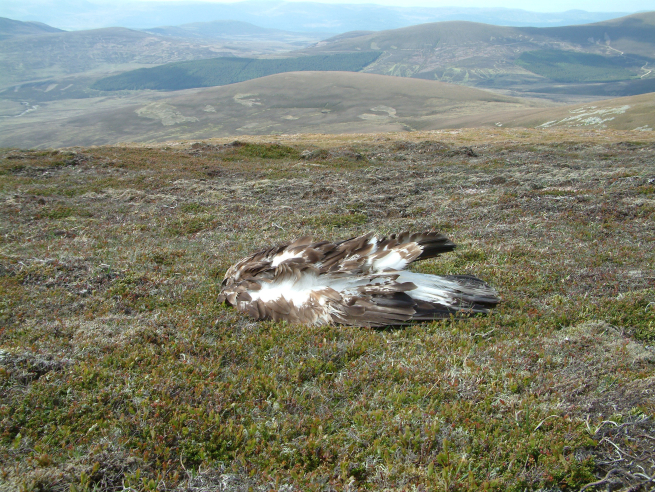
Here’s the photograph that I publish every time a new milestone is reached. This is a golden eagle that was found dead on a grouse moor in the Cairngorms National Park in 2006. It had been illegally poisoned. It epitomises everything in its pitiful, poignant, senselessness.
Photo: RSPB
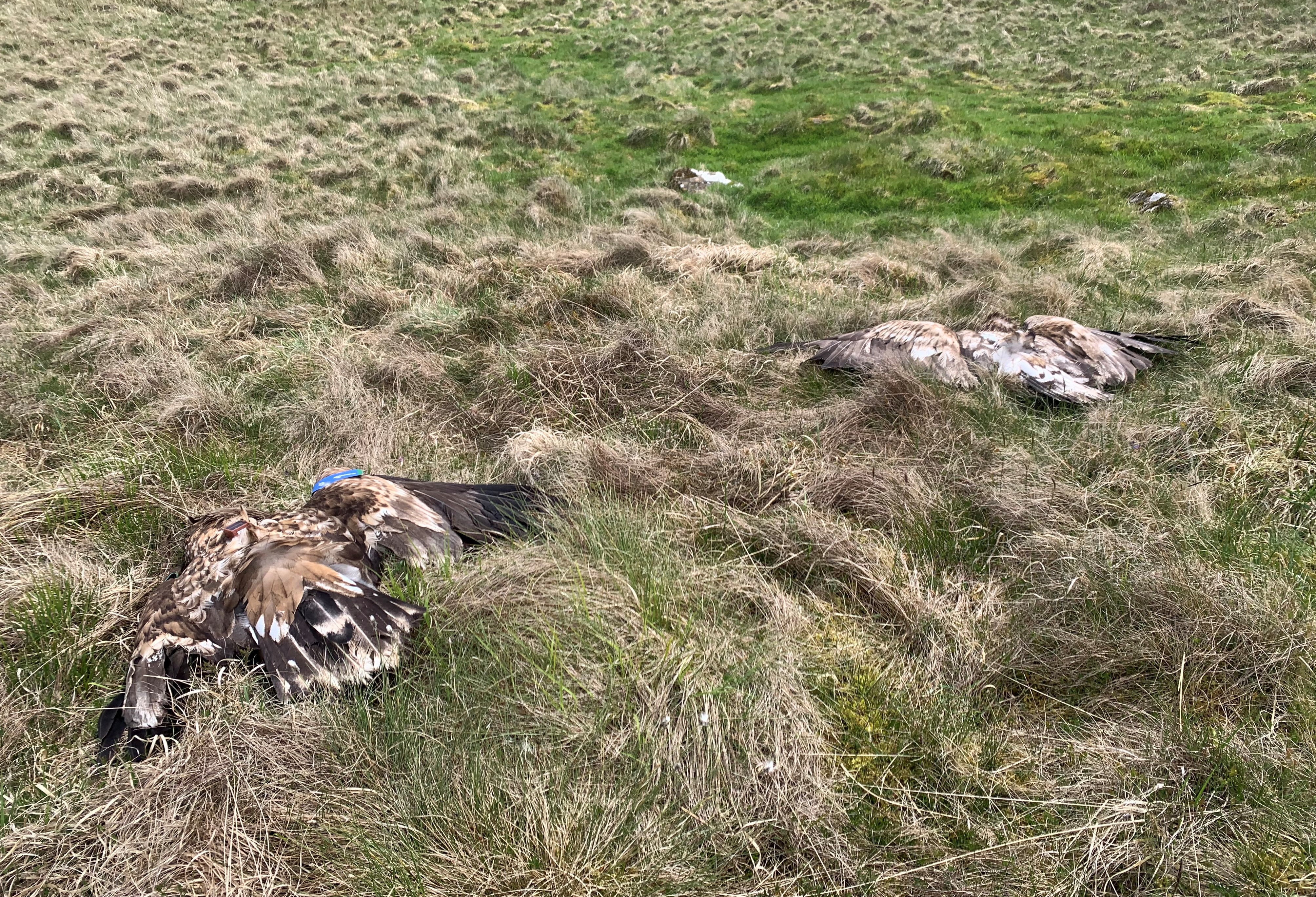
Unfortunately there is still a lot more work to do, as evidenced by the recent discovery of two young white-tailed eagles found poisoned on a grouse moor in Northern Ireland in May 2023:
Photo: RSPB
The illegal killing of birds of prey in the UK continues and so must this blog. It can often feel like no progress is being made, but it is, albeit more slowly than any of us would like.
I read a report over the weekend where representatives of the game-shooting industry said they felt ‘under siege’ from campaigners. That’s good, some of them have been allowed to get away with far too much for far too long, often assisted and shielded by the very authorities who should be holding them to account.
Change will only come when enough of us demand it.
Further to the news on Friday that the two white-tailed eagles found dead on Northern Ireland’s only driven grouse moor at Glenwherry in the Antrim Hills had been illegally poisoned (see here), the Northern Ireland Raptor Study Group (NIRSG) has launched a new petition calling for a ban on the possession of dangerous pesticides.
The two poisoned white-tailed eagles. Photo: Northern Ireland Raptor Study Group
Here is the petition text:
Pesticides which have been deemed toxic to non-target plants and animals have been banned for use across many countries, including Northern Ireland. However, although ‘banned for use’, these dangerous substances are still being used, unlawfully, to target protected birds of prey.
There have been 64 confirmed incidents of abuse of banned or highly toxic chemicals to target birds of prey in Northern Ireland since 2009. However, prosecutions are notoriously difficult to attain because unless an individual is actually seen to be laying out a poisoned bait, it is virtually impossible to determine who laid the bait that subsequently kills a protected species. To date, we are not aware of any successful prosecutions for poisoning protected wildlife in Northern Ireland.
Scotland faced a similar problem with illegal wildlife poisoning so in 2005 it introduced new legislation making it an offence to be ‘in possession’ of certain banned substances (Possession of Pesticides (Scotland) Order 2005). The substances listed were those known to be used to illegally target birds of prey. This legislation has led to the successful prosecution of many individuals who were found to be in possession of the named banned substances, for example where it was discovered in their vehicles, at their work premises and even in their homes. Not only has the poison been confiscated and destroyed, these prosecutions have doubtless saved the lives of countless species and raptors that otherwise would have been targeted.
The banned pesticides are not just a threat to wildlife and the wider environment; many of them can have fatal consequences for any human (adult or child) who happens to inadvertently come into contact with them, for example by touching a poisonous bait laid out in the countryside.
In light of the most recent illegal poisoning of two young white-tailed eagles in County Antrim in May 2023, we are seeking an urgent review of the use of banned pesticides to kill wildlife in Northern Ireland, leading to the creation of a new law which prohibits the ‘possession’ of named, highly toxic poisons.
If a pesticide has already been banned for use on the basis of its toxicity and threat to humans, wildlife and the wider environment, there can be no justification for keeping it.
Please help our campaign by signing this petition (you don’t have to be a resident of Northern Ireland to sign). Thank you.
The poisons we would like to see prohibited for possession are:
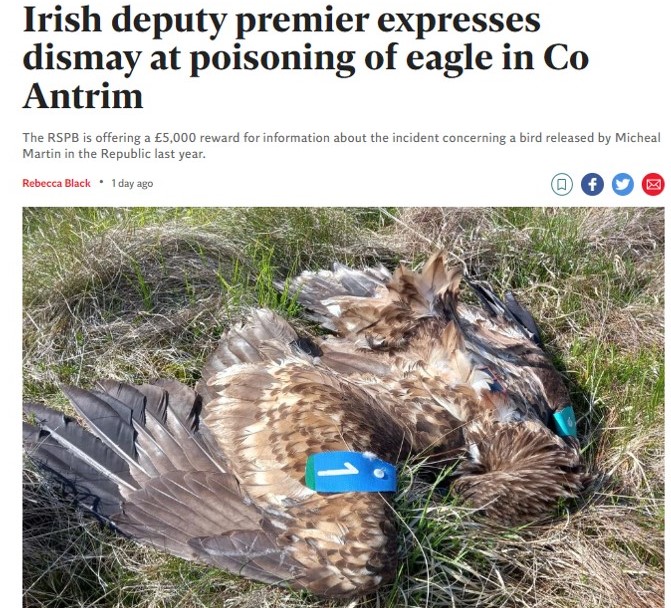
Indeed, condemnation has even come from Michael Martin, the Irish Deputy Premier (the second most senior officer in the Irish Government) who had released one of these eagles last year as part of the reintroduction project in the Irish Republic:
The RSPB is offering a £5,000 reward for information leading to a conviction (see here).
The Northern Ireland Raptor Study Group’s press release (here) describes the location where the two eagles were found poisoned as follows:
‘Glenwherry Hill Farm is owned by the Department of Agriculture, Environment and Rural Affairs (DAERA) and operated by College of Agriculture, Food and Rural Enterprise (CAFRE). This area has many young student farmers, conservationists and volunteers carrying out field work and studies on a daily basis. It also is the part of the Glenwherry Hill Regeneration Partnership (GHRP) and a site for driven grouse shooting and winter woodcock shooting and a site of the Curlews in Crisis restoration project‘.
I think it’s notable that the NIRSG resigned from the ‘partnership’ in 2020 over ‘incompatible management objectives’. The moorland management has recently shifted from walked-up grouse shooting to becoming managed for driven grouse shooting.
Dr Marc Ruddock of NIRSG is quoted:
“We know these parts of the Antrim Hills intimately having monitored birds of prey there for many years and seen various visiting golden eagles and white-tailed eagles there in the past. We are horrified and devastated at the death of these two young eagles. We sincerely hope that this is not a reflection of a renewed intolerance of birds of prey in county Antrim and within Northern Ireland. White-tailed eagles eat fish and seabirds but also other birds, rabbits and hares and more often scavenge dead animals in the countryside. They, along with other native birds of prey, are an essential component of a healthy ecosystem and for such indifference and intolerance to be displayed towardsnative eagles by somebody in this area is distressing“.
Dr Eimear Rooney of NIRSG said, “These majestic creatures are part of our ancient heritage and deserve to be revered, not poisoned and left to rot on a hillside. The suffering these birds must have felt in their final moments, and then dying side by side, it is just heart-breaking. Birds of prey are essential in balancing a healthy ecosystem and are already under pressure from loss of suitable nesting and foraging habitat. With the additional losses of birds through illegal poisoning, whether targeted at them or not, it is a massive blow to conservation efforts in Northern Ireland and on the island of Ireland.
“We have been contacted by many people outpouring their upset at the death of these eagles, and people are incensed that these pesticides, many of which are banned due to toxicity to human health, and which unbelievably remain in use illegally, causing the destruction of our native wildlife, and yet are not illegal to have in your possession”.
If you want to sign the NIRSG’s new petition calling for a ban on the possession of dangerous pesticides in Northern Ireland please click HERE.
UPDATE 3 March 2025: 50,000 people support the Northern Ireland Raptor Study Group’s petition to ban possession of dangerous, raptor-killing pesticides (here)
UPDATE 17 June 2025: 50,000-signature petition calling for ban on possession of poisons, handed in to Stormont, Northern Ireland (here)
In May this year, the Police Service of Northern Ireland (PSNI) appealed for information after the discovery of two dead white-tailed eagles found next to one another in suspicious circumstances on moorland in Ballymena, County Antrim (see here).
The corpses were sent for post mortem and toxicology results have now confirmed they were both poisoned by Bendiocarb.
The two poisoned white-tailed eagles. Photo: Northern Ireland Raptor Study Group
The PSNI has issued the following statement this afternoon:
POLICE INVESTIGATE POISONING OF TWO WHITE-TAILED EAGLES
Police are appealing for information from the public, after the confirmed poisoning of two white-tailed eagles.
Police investigating the circumstances following the discovery of two dead white-tailed eagles, in the Glenhead Road area of Ballymena on Monday, 15th May, can confirm the birds were subsequently poisoned.
Following a post-mortem examination, both birds tested positive for the insecticide bendiocarb.
How the birds came into contact with the insecticide remains part of an ongoing investigation, and the Police Service of Northern Ireland is committed to working with partners and members of the public to determine how the birds consumed the toxic insecticide.
Rural and Wildlife Crime Superintendent Johnston McDowell said: “Sadly, police can confirm the two majestic birds found on land in the Glenhead Road area were poisoned, following a post-mortem examination.
“The test results suggest that an individual not only has access to the insecticide bendiocarb but has placed this into the outside environment illegally, so that wild birds have been able to consume it.
“Bendiocarb is present in the trade product Ficam D, a powder which is only permitted for indoor use to control crawling insects such as wasps and ants, so using this active ingredient in fields would be a breach of Biocidal Products Regulation (BPR).
“The illegal killing of these beautiful birds in a popular rural area is disgraceful, and for any individual to think that they can ignore the law and lay poisonous bait which has led to the killing of these birds, is unacceptable and will not be tolerated.
“Officers with support from the National Wildlife Crime Unit, have been on the ground conducting house-to-house enquiries, engaging with local residents and landowners, in the areas of where the birds were gravitating towards, before they were found deceased.
“The Police Service of Northern Ireland will continue to work with our partners to tackle this criminal activity, investigate any reports made to us and prosecute offenders. In this case we have liaised with our partners in the Partnership for Action Against Wildlife Crime (PAWNI) Agri-Food and Biosciences, Royal Society for the Protection of Birds, NI Raptor Study Group, Health and Safety Executive for Northern Ireland, Northern Ireland Environment Agency and received additional support from the National Wildlife Crime Unit. Police have a strong multi-agency support group which we are very grateful for, but we need the help of the public too.
“There must be people in the community who are aware of individuals committing these offences, and who can come forward and assist police with any information they have.
“If you notice any suspicious activity in rural areas, notice a dead or injured bird of prey, please call police on 101, or alternatively you can make a report via Crimestoppers anonymously on 0800 555 111 or online at http://crimestoppers-uk.org. Alternatively, you can submit a report online using the non-emergency reporting form via http://www.psni.police.uk/makeareport/.
“We are also very grateful to our partners in the charity Royal Society for Protection of Birds (RSPB) who are offering a reward of £5000 for information leading to the prosecution of those involved in the poisoning of the two white-tailed eagles. The charity is completely independent from the police and can be contacted on their confidential Raptor Crime Hotline on 0300 999 0101 or online at crime@rspb.org.uk.”
ENDS
I’ll have more to say about this case, not least to discuss the location where the poisoned eagles were found – the only moor that’s managed for driven grouse shooting in Northern Ireland.
More soon…
UPDATES:
Press release from Northern Ireland Raptor Study Group (here)
Poisoned eagles found on grouse moor in Northern Ireland: New petition calls for ban on the possession of dangerous pesticides (here)
UPDATE 3 March 2025: 50,000 people support the Northern Ireland Raptor Study Group’s petition to ban possession of dangerous, raptor-killing pesticides (here)
UPDATE 17 June 2025: 50,000-signature petition calling for ban on possession of poisons, handed in to Stormont, Northern Ireland (here)
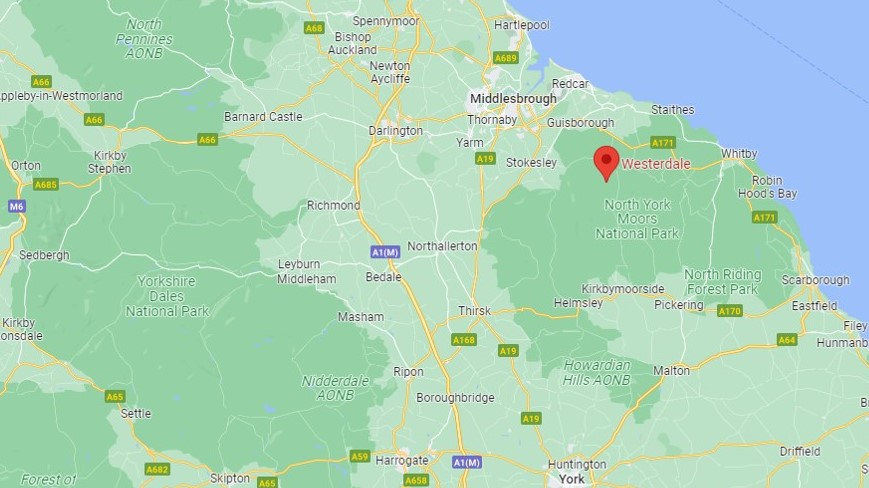
Following the recent confirmed shooting of at least two red kites (with a third one suspected) near Westerdale in the North York Moors National Park (see here), the North York Moors Park Authority has issued the following statement:
Following the most recent report from North Yorkshire Police regarding a Red Kite found with gunshot wounds, the North York Moors National Park is issuing the statement below.
Tom Hind, Chief Executive Officer of the North York Moors National Authority, said:
“We are appalled to hear of recent shootings of Red Kite in the North York Moors. Wildlife crime and raptor persecution are illegal, immoral and have no place in this National Park.
“Those behind these callous acts should recognise the disservice they have done to the entire North York Moors community. Ultimately those responsible may find they have shot not only a wonderful bird of prey, but also themselves in the foot.
“It is vital that anyone with information about these incidents, or any other wildlife crime in our region, call North Yorkshire Police on 101. We cannot let this crime go unpunished.”
A couple of weeks ago, North Yorkshire Police appealed for information after a red kite was found with shotgun injuries near Westerdale in the North York Moors National Park on 13th June 2023. It didn’t survive (see here).
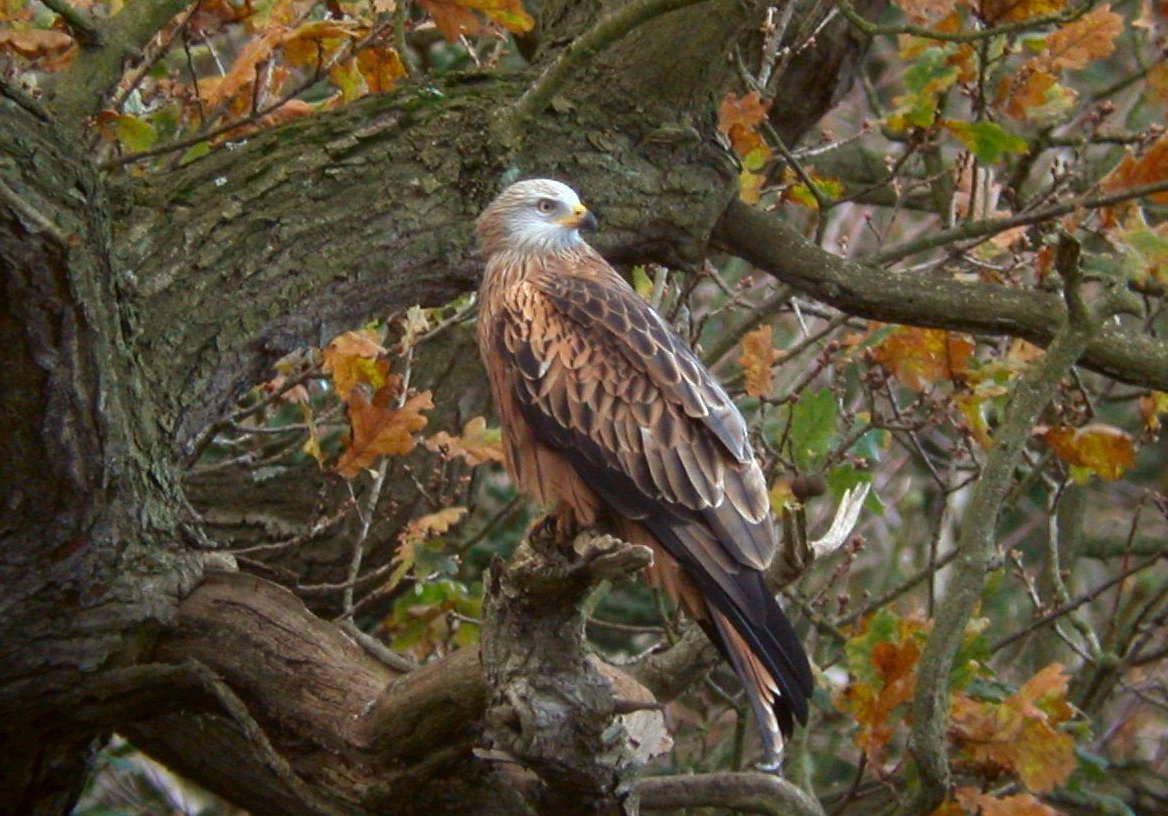
Red kite. Photo by Ben Hall (RSPB Images)
Today, North Yorkshire Police has issued another appeal for information after the discovery on 26th June 2023 of a second shot kite in the same area (which also didn’t survive its injuries) and suspicions that a third kite has also been shot, based on photographs taken on 23rd June 2023 provided to the police by walkers.
The appeal for information by North Yorkshire Police’s Rural Task Force is a bit bizarre, to say the least. Here it is:
NORTH YORK MOORS: APPEAL FOR INFORMATION ABOUT THE SHOOTING OF A RED KITE
North Yorkshire Police’s Rural Task Force is appealing for witnesses and information about the shooting of a Red Kite on the North York Moors near Westerdale.
The Red Kite, suffering with gunshot wounds, was found by a local farmer at 9.30pm on Monday 26 June in Westerdale. Sadly, despite being taken to a vet it did not survive its injuries.
This incident follows another recent shooting of a Red Kite in the area on Tuesday 13 June. North Yorkshire Police have also received information that there may be a third injured Red Kite, photographed by walkers on Friday 23 June, on the opposite side of the valley.
We believe that these incidents are linked. This disturbing criminal behaviour and persecution of innocent birds of prey will not be tolerated and must cease immediately.
Police are renewing their appeal for any information in relation to raptor persecution. Anyone with information that could assist our investigation should email Jack.donaldson@northyorkshire.police.uk
If you spot a dead or injured bird, poisoned bait or a pole trap, please note the location, take a photo and call North Yorkshire Police on 101 to report it.
If you wish to remain anonymous, you can pass information to Crimestoppers on 0800 555 111.
Please quote police reference 12230107850 when passing on information.
Red kites were saved from national extinction by one of the world’s longest-running protection programmes and have been successfully reintroduced to England and Scotland. Red kites are listed under Schedule 1 of The Wildlife and Countryside Act.
North Yorkshire Police in collaboration with the British Association of Shooting and Conservation (BASC), Countryside Alliance, Moorland Association and the National Gamekeepers Association take a zero-tolerance approach to raptor persecution. All agencies agree that ‘there is no excuse for illegally killing of any bird of prey and unreservedly condemn all such acts. Any individual convicted of a crime against a bird of prey will be expelled from the organisation’.
Police are aware that local gamekeepers will come under suspicion, however we will investigate with an open mind, gathering information from a variety of sources, and not be led by assumptions.
In response to the ongoing persecution against birds of prey in the North Yorkshire Moors, North Yorkshire Police Rural Taskforce Officers have increased marked and unmarked patrols in target areas to protect wildlife and deter offenders.
ENDS
This looks very much like North Yorkshire Police has been ‘got at’ by the shooting lobby. How else do you explain the police including what is blatant propaganda in their own press release, from an industry responsible for the vast majority of raptor persecution crimes?!
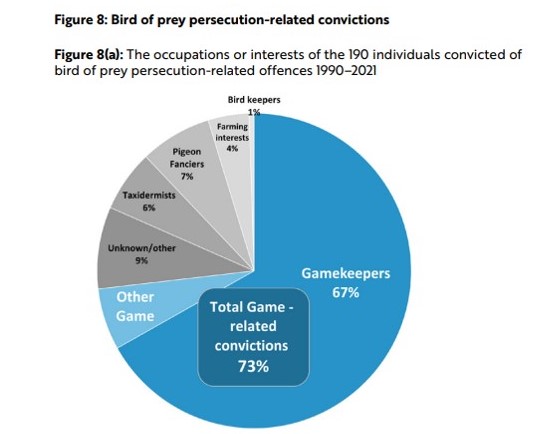
Data from the RSPB’s latest Birdcrime Report
How many members of the public are wandering around this grouse-moor dominated landscape with shotguns, taking pot shots at birds of prey?
How many members of North Yorkshire Police’s Rural Taskforce have links to the game-shooting industry?
Meanwhile, supposedly protected birds of prey continue to be targeted and killed in what is supposed to be a National Park.
UPDATE 7th July 2023: Red kite shootings: statement from North York Moors National Park (here)
UPDATE 9th October 2023: Buzzard shot & critically injured in North York Moors National Park (here)
Last month, Police Scotland and the Scottish SPCA issued an appeal for information in relation to the discovery of a critically-injured red kite near Closeburn in Dumfries & Galloway on 5th June 2023 (see here).
The kite’s injuries were so severe it had to be euthanised, and the Police/SSPCA were keen to trace the man who had handed in the kite.
Red kite. Photo by Doug Simpson
In an update published on the BBC News website (here) it is reported that this kite had suffered gunshot injuries.
It’s also reported that the person who handed in the injured kite has now been traced and inquiries are ongoing.
Press release from North Yorkshire Police (30 June 2023):
MAN SENTENCED AFTER DEATH OF BARN OWL NEAR SCARBOROUGH
A man has been sentenced after the death of an owl that was trapped on an allotment plot in Hunmanby.
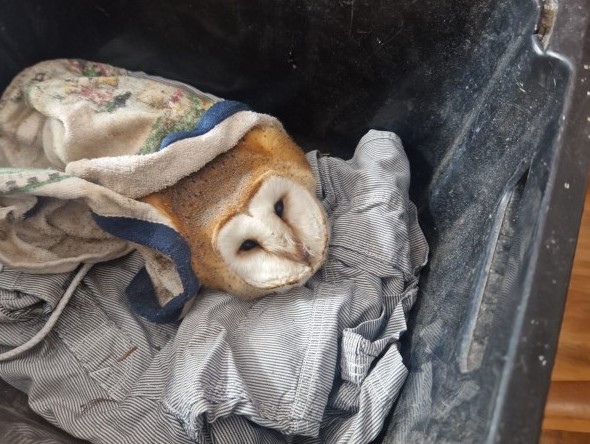
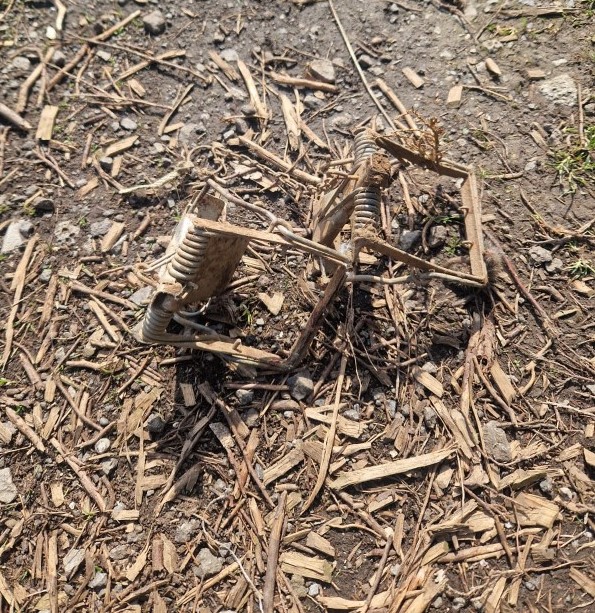
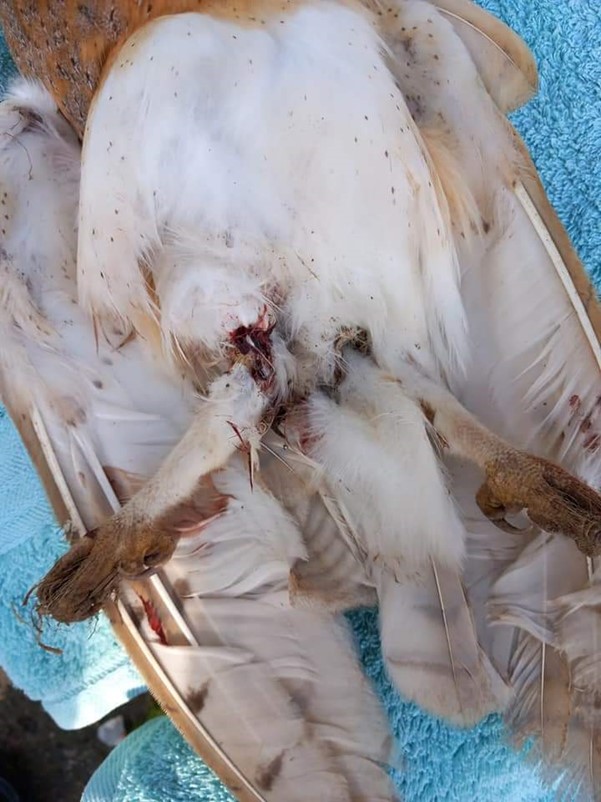
On 8 April 2023, a dog walker discovered a badly-injured adult Barn Owl caught in a spring-operated trap in the allotments at Sands Lane, Hunmanby. Despite the bird being rescued and taken to a vet, the injuries to its legs were so severe that it had to be euthanized.
When spoken to by police, the tenant of the plot, Leslie Shooter, 57, stated that he had set a number of traps to control rats. However, he had not covered the traps as required by law, resulting in the trapping of the bird.
Barn Owls are particularly susceptible to disturbance and human interference. They are listed under Schedule 1 of the Wildlife and Countryside Act 1981, giving them legal protection. The species is also an early breeder, with a typical season being March to September, so any issues affecting adult breeding birds during this time brings additional risks to dependant eggs and young.
Spring-operated traps, often referred to as ‘Fenn’ traps, can be legally operated in the UK, but their use and target species is strictly controlled by legislation. Potential offences include use whilst uncovered, neglect in checking and use to capture wild birds.
Following an investigation by North Yorkshire Police, Shooter was charged with using an animal trap in circumstances for which it is not approved, causing a trap to be set to cause injury to a wild bird and causing unnecessary suffering to a protected animal.
After pleading guilty at Scarborough Magistrates Court on 29 June 2023, Shooter was sentenced to a community order with 100 hours’ unpaid work requirement, as well as £199 of costs and surcharges.
PC Graham Bilton, Wildlife Crime Officer for North Yorkshire Police, who investigated the incident alongside the RSPCA, said: “Raptor persecution is a national wildlife priority but unfortunately despite the legal protection offered to these birds it continues to be a problem throughout the UK.
“The incident in question, which resulted in the tragic death of the barn owl, could have been avoided had the defendant used the traps in a responsible and lawful way.”
Geoff Edmond, RSPCA Inspectorate Wildlife Lead, said: “This has been a very distressing incident and I would like to thank the member of the public who took this Barn Owl to the vet even though sadly – due to its horrific injuries – it could not be saved.
“I believe this incident will have caused upset and concern for the community of Hunmanby, many of whom will have enjoyed watching this Barn Owl.
“By correct training in and knowledge of the use of this trap, this death should not have occurred. I would urge anyone using traps to ensure they are fully conversant with the legislation surrounding them.
“I am grateful that the RSPCA continues to work in partnership with North Yorkshire Police to tackle wildlife and rural crime.”
Mark Thomas, RSPB Head of Investigations, added: “Raptor persecution is a national issue, impacting on a range of threatened species including public favourites like the Barn Owl, which in this case was inexcusably trapped in a heinous manner. Our thanks go to North Yorkshire Police for bringing this case to justice and highlighting the issue.”








 Raptor Persecution UK