Police in Derbyshire charge man for alleged disturbance of Peregrine nest & theft of eggs

Derbyshire Constabulary posted the following statement on social media yesterday:

A suspect from Matlock has been charged with taking eggs of a Schedule 1 wild bird and disturbing the nesting site of a Schedule 1 wild bird following an incident at a Peregrine falcon nesting site at Bolsover, Derbyshire in April 2023. The suspect will appear at North East Derbyshire and Dales Magistrates Court in October“.

Peregrine falcon. Photo: Ben Hall, RSPB Images

There is further commentary on Derbyshire Constabulary social media where the individual is named as Christopher Wheeldon of Lime Grove, Darley Dale, Matlock. The 34-year-old has apparently been released on bail and is due to appear at Chesterfield Justice Centre on 16th October 2023.

PLEASE NOTE: As this is a live court case comments won’t be accepted until criminal proceedings have concluded. Thanks for your understanding.

UPDATE 16th October 2023: Man fails to attend court to face charges of alleged peregrine egg theft in Derbyshire (here)

UPDATE 22nd November 2023: Case adjourned for Christopher Wheeldon accused of alleged peregrine egg theft in Derbyshire (here)

UPDATE 16 January 2024: Derbyshire ‘drug addict’ jailed for stealing peregrine eggs (here)

Buzzard found with shotgun injuries in East Sussex

A buzzard was found with shotgun injuries in a field off Birch Grove Road near Chelwood Gate in East Sussex on 23rd July 2023, according to an article on the SussexWorld website.

It was collected by the East Sussex Wildlife Rescue and Ambulance Service (WRAS) and an x-ray revealed two shotgun pellets, one causing a wing fracture and the other one lodged in the buzzard’s leg.

Buzzard x-ray. Image via East Sussex Wildlife Rescue & Ambulance Service

Vets were able to remove both pellets and after a month of expert care and rehabilitation, the buzzard has been released back into the wild.

It’s not clear to me whether the shooting of this buzzard was reported to the police. There’s an odd quote in the article from the founder and operations director of East Sussex WRAS, Trevor Weeks, who apparently said this:

Shooting and injuring any wild animal or bird is generally an offence unless they are dispatched swiftly after injury. We regularly see wildlife coming into our centre after being shot and not killed out right – swans, badgers, foxes, gulls and many more”.

Whilst Trevor’s work, and that of his colleagues at East Sussex WRAS, is fantastic and greatly appreciated, his knowledge about wildlife crime appears to be sorely lacking. That he seems to be unaware that it’s an offence to shoot a buzzard (and any other protected species), whether it dies swiftly or not after being hit, is just staggering. I’m hoping he’s just been misquoted.

If he hasn’t, then hopefully the RSPB’s investigations team will be able to offer some training (similar to this) to help this valuable rescue team to recognise the signs of a wildlife crime and submit appropriate reports to the police.

More trouble brewing for hen harriers from grouse moor owners’ lobby group, the Moorland Association

I’ve been passed some very worrying correspondence, sent to Moorland Association members in early August by Moorland Association Director Amanda Anderson, which signals that there may be more trouble brewing for hen harriers beyond the trouble already caused to them by brood meddling.

Male hen harrier. Photo: Pete Morris (RSPB Images)

It appears that the Moorland Association, the grouse moor owners’ lobby group, isn’t content with just brood meddling (removing entire broods of hen harrier chicks from grouse moors, keeping them in captivity hundreds of miles away and then releasing them again several weeks later back in the uplands, supposedly to reduce the number of red grouse that the parent hen harriers might take to feed their young because the grouse moor owners want to be able to shoot the grouse for fun/profit instead).

The Moorland Association is now turning its attention to the alleged ‘disturbance’ caused to driven grouse shoots by hen harriers (and other raptors) flying around during a grouse shoot ‘drive’ which causes the grouse to scatter instead of being forced (‘driven’) by the beating line towards the waiting guns in the grouse butts.

Here’s what Amanda Anderson sent to Moorland Association members just before the opening of the grouse-shooting season this year:

Listening to feedback from the moors last year, early packing up as well as difficulties controlling the grouse were noted. We are therefore encouraging reporting of disturbance in the line from Hen Harriers (and other birds of prey) to inform the Hen Harrier Recovery Plan. A simple to use form will be circulated next week and GWCT will do the analysis.  It is our intention to capture the extent of this disturbance and subsequent economic loss. Please look out for this form and do fill it in for each drive on every day that you are affected.  The Hen Harrier brood management scheme is to help find a mechanism for co-existence with hen harriers. If the conflict has shifted from predation of grouse chicks to harvesting grouse, we need to measure it and present the evidence.

It’s not clear from this what sort of ‘remedy’ the Moorland Association might be looking for when they’ve ‘presented the evidence’ to DEFRA and/or Natural England (‘evidence’ collected by the grouse shooters and analysed by the GWCT – hmm, that’ll be convincing then!). Amanda’s message mentions “subsequent economic loss” so it may be that they’re gearing up to ask for financial compensation for the perceived economic loss from their over-stocked grouse moors.

Or maybe they’re conspiring to ask for licences to remove those troublesome hen harriers (and other raptors). It wouldn’t surprise me – that is after all what’s going on with the hen harrier brood meddling trial, and there was previously discussion from the Moorland Association about lethal control in relation to Marsh harriers on grouse moors, although Amanda denied the discussion ever took place (see here) but meeting notes later revealed that some others in the room did recall the discussion taking place (see here).

Whatever it is they’re planning, they can expect a strong response from those of us who think, apart from anything else, that if a business can’t operate without damaging protected species then it’s not a viable/sustainable business, and in the case of driven grouse shooting the business certainly shouldn’t be receiving tax payers’ money as compensation whilst the illegal killing continues – that’d be like robbing the public with both hands instead of just one.

The irony of this latest revelation is of course linked to the hen harrier brood meddling sham. Brood meddling results in a (temporary) increase of hen harriers, which surprise, surprise, the grouse moor owners don’t want because they disrupt their grouse shooting drives (now admitted by Amanda).

This is presumably why, since brood meddling began in 2018, at least 101 hen harriers have been killed/gone missing, mostly on driven grouse moors (see here).

24 more White-tailed eagles reintroduced in Ireland

Press release from the Irish Government:

WHITE-TAILED EAGLE CHICKS SPREAD THEIR WINGS FURTHER INTO IRISH SKIES

  • 24 white-tailed eagle chicks were released in August around the country, as part of an ongoing National Parks and Wildlife Service (NPWS) programme to reintroduce this once extinct species
  • A total of 171 white-tailed eagles have now been released through the programme to date
  • A small, established population of eagles is now fledging chicks around the country and has even produced triplets

Over the past week, twenty-four white-tailed eagle chicks have been released in locations around Lough Derg, the Shannon Estuary and the west of Ireland, as part of a long term reintroduction programme managed by the NPWS.

White-tailed eagles are predators who play an important role in nature and the ecosystem.

Once native to Ireland, they became extinct in the nineteenth century. Since 2007, the NPWS has been working with partners in Norway along with farmers and communities around the country to reintroduce the white-tailed eagle to Ireland.

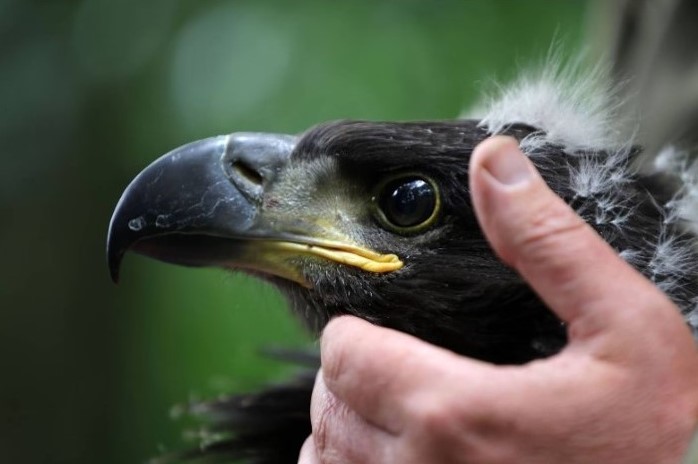
Young White-tailed eagle. Photo: Valerie O’Sullivan

Minister of State for Heritage and Electoral Reform, Malcolm Noonan TD, who released four chicks at Killarney National Park as part of the release programme, said:

The juvenile white-tailed eagles we have released this week are joining a growing population across our island. This incredible endeavour is the result of 16 years’ work and collaboration, not just on the reintroduction programme, but also on habitat restoration and engagement with landowners to secure their ongoing protection.

These apex predators perform a vital role in our ecosystems and the sight of them soaring in the thermals is a privilege that everyone who lives in or visits Ireland will now have the opportunity to enjoy. I would like to pay tribute to NPWS staff for their commitment and dedication to this initiative, our international partners from Norway, and the communities around the country who are embracing the return of the white-tailed eagle to our landscapes.”

A comprehensive satellite tagging system is now in place so that the birds can be monitored as they disperse around the country.

Minister for Housing, Local Government and Heritage, Darragh O’Brien who also participated in the release of chicks at in the vicinity of Lough Derg added:

This reintroduction programme is the result of a combined effort by my Department’s National Parks and Wildlife Service, participating landowners and communities and endangered species experts. I commend each of them for the role they are playing in protecting these iconic birds of prey“.

Niall Ó Donnchú, Director General with the NPWS said:

This programme is one of several initiatives underway in the NPWS to protect endangered species in Ireland and prevent their decline. This work takes time, and calls for a partnership approach if it is to be sustainable in the long term. Collaboration with the science community and international partners, along with the involvement of our expert staff and communities around the country has been key to the success we have seen so far“.

Eamonn Meskell, Divisional Manager NPWS, Killarney National Park who heads up the white-tailed eagle reintroduction Programme added:

There is huge interest from the public in the white-tailed eagle programme. Locations where they are spotted attract many visitors and local interest and we love to hear about sightings of the birds around Ireland and further afield. There are great stories to tell about the project. For example, the first Irish bred female to breed in over a hundred years has fledged seven chicks in three years! In Lough Derg this year for the second time a nesting pair fledged triplets. This is incredibly unusual – even in the wilds of Norway, and it shows how well suited Ireland really is for the white-tailed eagle from both a habitat and a feeding perspective. We’ll be watching this year’s chicks with interest as they mature and hopefully go on to fledge more chicks“.

Bente Lyngstad, chargé d’affaires at the Norwegian Embassy in Ireland said:

Watching the release of the white-tailed sea eagles is a truly extraordinary and mighty experience. Over the years more than 150 eagle chicks have been collected in Norway and released in Ireland. Today’s stock in Ireland is the result of a long-term collaboration between Norway and Ireland, which again stems from our deep friendship and our shared values. I would like to acknowledge all volunteers whose efforts have been imperative to make this happen“.

The retention of species is essential for maintaining the intricate web of life and the functioning of ecosystems. It contributes to the sustainable use of natural resources and the well-being of both present and future generations. Yet we now see a rapid loss of species world-wide. This development must be halted. The reintroduction of white-tailed sea eagles into their natural habitat is a great example of how we can work together against biodiversity loss.”

ENDS

These releases form part of phase two of the reintroduction project. Phase one involved releasing 100 White-tailed eagles into Killarney National Park in County Kerry, between 2007-2011. A scientific review of the project in 2019 suggested that the small population was still vulnerable to issues such as Avian Influenza, extreme weather events and illegal poisoning so phase two began in 2020, to reintroduce more young birds and release them in different parts of the country.

Unfortunately some of the eagles released in phase two have already been killed illegally after consuming poisoned bait (see here and here).

Durham Police appeal for information after sparrowhawk shot dead in public woodland

A sparrowhawk has been found shot and killed in a public woodland in Darlington, prompting a police appeal for information.

Members of the Friends of Geneva Wood first spotted dead pigeons a few weeks ago and further incidents have seen several more pigeons shot and now a sparrowhawk.

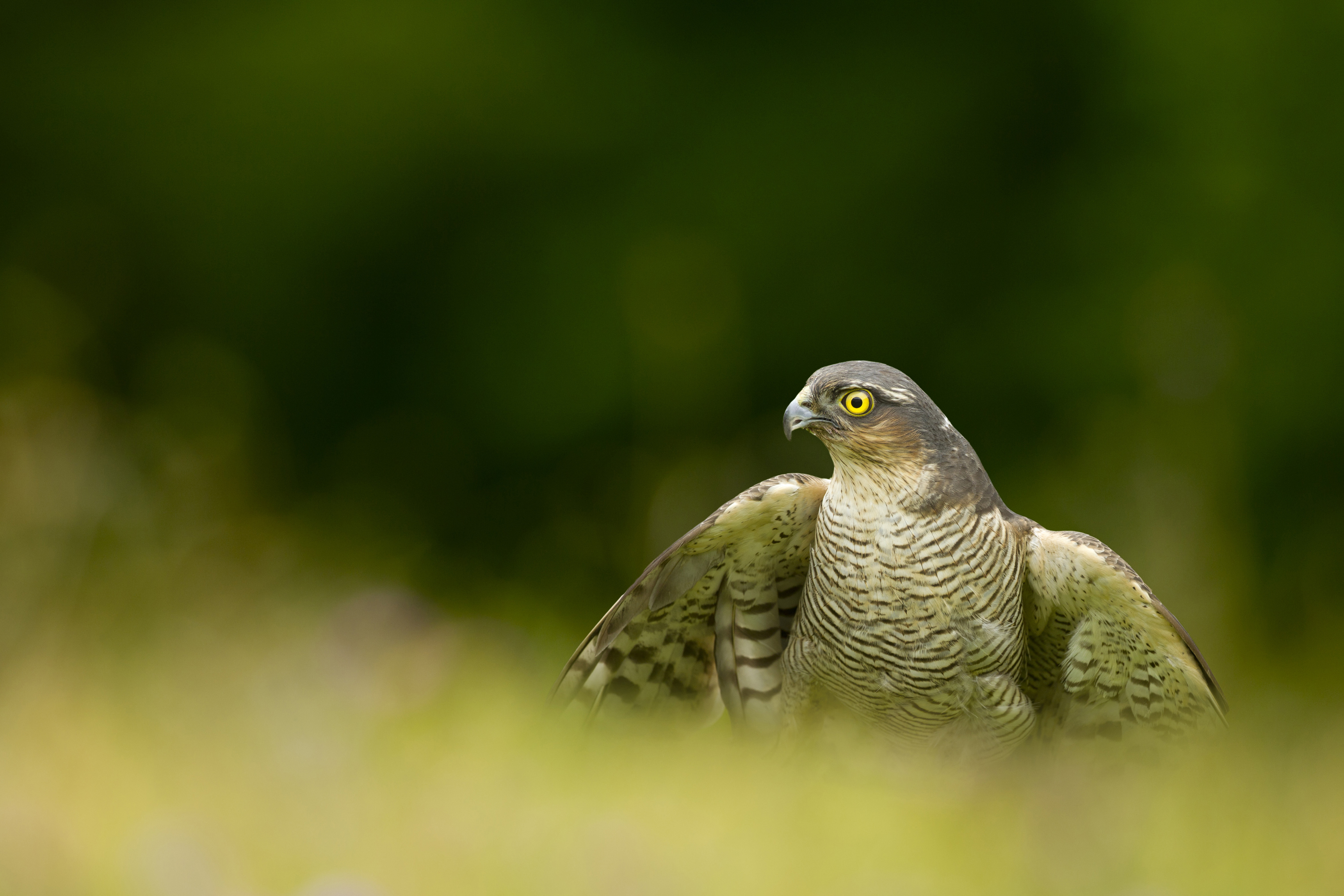
Sparrowhawk. Photo: Ben Hall, RSPB Images.

Durham Police and civic enforcement officers from Darlington Borough Council’s community safety team have issued a joint appeal urging anyone who uses the wood to be alert and to get in touch if they have any information that can identify those responsible.

Sergeant James Woodcock, of Darlington Neighbourhood Policing team, said: “There is legislation in place that protects various wild bird species. We will be working with the council and other relevant agencies, including the Royal Society for the Protection of Birds (RSPB), the Animal and Plant Health Agency (APHA) and local wildlife conservation organisations to ensure legal action is taken where necessary.

We would ask anyone in the Geneva Wood area to be alert and to report any incidents to us or the council’s civic enforcement officers.”

Councillor Amanda Riley added: “Our civic enforcement officers are working closely with local police and will be carrying out extra patrols in the area, but we will also need the support of local residents if we’re to identify those responsible.

Shooting and killing wild birds in a public woodland such as this is not only illegal, but also poses a danger to others who may be in the area and anti-social behaviour of this kind will not be tolerated.”

Anyone with information is asked to contact Durham Police on 101 or the community safety team on 01325 406999.

Moorland Association Chair claims: “Clearly any illegal [hen harrier] persecution is not happening”

Just how stupid/arrogant do you have to be to go on record saying, “Clearly, any illegal [hen harrier] persecution is not happening“, when it so demonstrably is?!

This is what Mark Cunliffe-Lister, Chair of the grouse moor owners’ lobby group, the Moorland Association, told BBC Radio 4’s Farming Today programme this morning.

It’s an astonishing claim to make when the evidence to refute such a claim is so readily available, and even more so on the day when we learned that at least 101 hen harriers have now gone ‘missing’ / been illegally killed since 2018 (see here).

Although Cunliffe-Lister does have a history of ‘forgetting’ to mention things when it comes to hen harrier persecution (see here). Oh, and he also forgot to mention this morning the poisoned red kite that was discovered on his estate (Swinton) in 2021 – the one that North Yorkshire Police refused to investigate (see here).

When Cunliffe-Lister was called out on his claim by the interviewer Caz Graham, he had the brass neck to argue that there “do seem to be isolated incidents“. Does he think that 101 missing/killed hen harriers are ‘isolated incidents’?? Oh, and some of those 101 include brood meddled hen harriers.

Also interviewed on this morning’s programme was John Holmes, Director of Strategy at Natural England and who oversees the hen harrier brood meddling sham. Holmes was questioned at length about Wild Justice’s criticisms of the hen harrier brood meddling sham, including the unimpressive scientific approach to the trial. Holmes argued that Natural England was being advised by an independent panel of ornithologists and statisticians. What he didn’t say, as Mark Avery pointed out on Twitter, is that the identities of those ornithologists and statisticians is being kept a secret, as is their scientific advice.

Holmes also argued that Natural England has ‘expert social scientists’ to examine whether brood meddling has changed the opinion of grouse moor owners and managers towards hen harriers. NE don’t need ‘expert social scientists’ to find an answer, the illegal persecution statistics tell us all we need to know.

The interview is available on BBC iPlayer for the next 29 days (here, starts at 4.59 mins) but I’ve produced a transcript for posterity:

Presenter Caz Graham: Hen harriers are beautiful birds that live in the uplands across the UK but their numbers are precariously low, particularly in England.

These low numbers are blamed on predation and on persecution by gamekeepers who illegally target birds of prey because they feed on grouse eggs and chicks. Most hen harrier nests in England are on land managed as grouse moor.

To try and rebuild the population a Government-led Hen Harrier Recovery Plan began in 2016. One element of it is a trial of what’s called ‘brood management’, where eggs and chicks are taken from hen harrier nests, raised in captivity and re-released later back in to the wild so their parents take fewer grouse chicks to feed them.

The Moorland Association, one of several partners in the brood management trial say that this year has been a real success with 24 chicks released. The population of hen harriers in England is now at the highest it’s been for 100 years, they say.

The wildlife campaign group Wild Justice welcomes the increase in hen harrier numbers but is critical of brood management. I put some of their points to Mark Cunliffe-Lister, the Chair of the Moorland Association who first gave me his response to these latest figures.

Chair of Moorland Association Mark Cunliffe-Lister: It’s been a fantastic success, we’ve shown that as a dedicated team we can take the chicks from the nest, we can breed them in captivity, we can re-release them on another site and they can live a perfectly good wild life going forwards.

Caz Graham: How have the birds that have been reared this way in previous years fared? Presumably they’re all tagged, they’re all tracked, you know how they’re doing?

Mark Cunliffe-Lister: Yep, no, absolutely. So, I mean like everything in the wild, they look around for different territories, they move about. I think one of the interesting things has been when we release them is they’re not necessarily, quite a lot of hen harriers will come back to exactly where they were born and bred, these ones will look around for other territories so that’s been very successful as they’ve taken on different territories and gone to different areas.

Caz Graham: Have they bred themselves?

Mark Cunliffe-Lister: Yes, they’ve bred themselves as well so they’ve shown breeding technique,sadly some of them have died but that’s the same in the wild, you have mortality going on in the wild.

Caz Graham: Wild Justice is very critical of brood management, in fact they call it brood meddling rather than management and they published a report last week saying it is a waste of money. They argue that that money could be spent in other conservation areas and that there isn’t really robust scientific evidence to prove that it’s doing any good.

Mark Cunliffe Lister: The figures speak for themselves in terms of how successful it’s been, so going from hardly any hen harriers now to having hundreds of hen harrier chicks that have been bred through the scheme and through the wild, so in terms of Wild Justice, clearly they’re anti-grouse shooting and that’s their agenda and that’s fine, but as a conservation programme I’d say it’s been an incredible success and very happy to sit down and go through the numbers and compare that with other schemes and we can see, can compare that.

Caz Graham: How would you respond to their claim that really this is just a delaying tactic to put off more stringent and effective measures against those gamekeepers who break the law by either shooting or poisoning birds of prey?

Mark Cunliffe-Lister: Yeah, well it’s clearly not about that and clearly it’s dealing with any conflict there so we’re seeing birds every day flying around grouse moors, with keepers, we’re seeing them on, by tag data, we’re seeing them in the air so clearly any illegal killing is not happening. They would like to say it is but you can see that for your own eyes that it isn’t happening.

Caz Graham: Oh well there is evidence that illegal killing happens, we do report on cases where gamekeepers have been convicted, even, for shooting or for poisoning birds of prey.

Mark Cunliffe-Lister: Yeah, there, sadly do seem to be isolated incidents.

Caz Graham: And where do you see brood management going in the future because some would say it’s not a very sustainable kind of way forward is it?

Mark Cunliffe-Lister: Oh I’d say it’s very sustainable. As I say, we’re clear that there is a conflict between hen harriers and grouse, we’re not hiding away from that and this allows it to be managed, so it’s a job that people came together, decided what the best way forward was, brood management was the way they thought would work best, we put that in to practice, we’ve shown it does work and yeah, I’d say it’s very sustainable moving forwards.

Caz Graham: Mark Cunliffe-Lister from the Moorland Association. We asked Wild Justice to come on this morning’s programme but without seeing more extensive data from Natural England, they declined. Well, Natural England, the Government’s advisor on nature is also a partner in the brood management trial project. John Holmes, a strategy director for Natural England oversees it.

Natural England Strategy Director John Holmes: The purpose of the brood management trial is to test the significance of the availability of brood management to moorland managers in achieving that increase.

Caz Graham: And Natural England lead the monitoring for this project. The Moorland Association tell us that they have reared and released 24 chicks this year, does that figure tally with what you have?

John Holmes: That’s absolutely right, we work alongside them in that work and that’s spot on.

Caz Graham: Can you explain to us who funds this project and how much it’s cost so far?

John Holmes: Part of it is funded by the industry itself through the Moorland Association so actually all the practical work to do brood management is funded by them, release aviaries, buying tags for monitoring and things. Natural England we estimate has spent around £800,000 since the trial started but that will be on things like staff to undertake sound assessment of the science that underlines the licences to allow it to happen and alongside that some work on persecution and investigations.

Caz Graham: £800,000, that sounds like an awful lot really.

John Holmes: Well I would say that sounds good value for recovering of a species that’s been completely extinct. Years and years of way more money than that being spent on investigation but no successful prosecutions whatsoever. We know that illegal persecution goes on and we’re continuing to investigate it. We certainly know that it would cost hundred of thousands for protection of a single nest by the police year round so actually in terms of the increase we’ve got that’s really good value for money.

Caz Graham: Isn’t just cracking down on the criminal element who persecute raptors, birds of prey, isn’t that really where the focus should be?

John Holmes: The simple answer is it hasn’t worked, you know, enforcement was tried and it still goes on, you know, we absolutely back enforcement and work with the police to try and find those criminals but it simply didn’t work. The other thing is to say cracking down on criminals assumes that everybody who manages a moor, or owns a moor, is a criminal and the simple fact is that if landowners and gamekeepers come to us and say, ‘Look, we want to have hen harriers, we want to look after hen harriers’, we’re gonna work with them because the results are clear.

Caz Graham: A point that Wild Justice might well make though is that you’re dealing with a criminal act by perhaps just removing the temptation rather than arresting the perpetrators, you know it’s a bit like ignoring car thieves in an area but paying for a few cars to be stuck in a garage.

John Holmes: I think a better analogy would be to assume that if you’re having your car stolen you’re assuming everyone you meet near your car is gonna steal it and that’s simply not the case.

Caz Graham: I want to put to you another questions as well about Wild Justice’s claims. They say they’re really unimpressed by the standard of scientific enquiry that’s evident in Natural England’s brood management study. How would you respond to that?

John Holmes: Well we’ve got an independent panel that advises us on that science, made up of ornithological and statistical experts, it is a trial, things aren’t always perfect in both the planning and execution, you have to react to real situations on the ground. One of the things we’re trying to measure is how the availability of brood management has influenced people’s opinions of hen harriers and may have resulted in less persecution. That’s really hard to do, it’s not easy to figure out what questions you ask but we’ve got expert social scientists who know how to ask those sorts of questions and we’re still part way through the trial.

Caz Graham: I mean the trial’s been going on for five years, it’s had an extra two years added to it, I mean, gosh, is it still a trial, can you still call it a trial at that length?

John Holmes: It’s still a trial because we don’t actually know the answer to the significance of brood management in achieving the outcome that we’ve got so far.

Caz Graham: So how many years can the trial go on? When will you be able to say whether it does work?

John Holmes: Well it’ll go on until we get a scientifically robust answer. We’re hoping that these next two years will significantly increase our information and lead to some better answers and where we might take hen harrier management in the future.

ENDS

101 hen harriers confirmed ‘missing’ or illegally killed in UK since 2018, most of them on or close to grouse moors

For anyone who still wants to pretend that the grouse shooting industry isn’t responsible for the systematic extermination of hen harriers on grouse moors across the UK, here’s the latest catalogue of crime that suggests otherwise.

[This male hen harrier died in 2019 after his leg was almost severed in an illegally set trap that had been placed next to his nest on a Scottish grouse moor (see here). Photo by Ruth Tingay]

This is the blog I now publish after every reported killing or suspicious disappearance.

They disappear in the same way political dissidents in authoritarian dictatorships have disappeared” (Stephen Barlow, 22 January 2021).

Today the list has been updated to include the three most recently reported victims, all going missing on grouse moors (see here): hen harrier Martha who ‘vanished’ on Westburnhope Moor nr Hexham in the North Pennines on 9th August 2023; hen harrier Selena who ‘vanished’ on Mossdale Moor in the Yorkshire Dales National Park on 11th August 2023; hen harrier Hepit who ‘vanished’ on Birkdale Common nr Kirkby Stephen in the Yorkshire Dales National Park on 15th August 2023.

I’ve been compiling this list only since 2018 because that is the year that the grouse shooting industry ‘leaders’ would have us believe that the criminal persecution of hen harriers had stopped and that these birds were being welcomed back on to the UK’s grouse moors (see here).

This assertion was made shortly before the publication of a devastating new scientific paper that demonstrated that 72% of satellite-tagged hen harriers were confirmed or considered likely to have been illegally killed, and this was ten times more likely to occur over areas of land managed for grouse shooting relative to other land uses (see here). Incidentally, a further scientific paper published in 2023 by scientists at the RSPB, utilising even more recent data, echoed these results – see here).

2018 was also the year that Natural England issued a licence to begin a hen harrier brood meddling trial on grouse moors in northern England. For new blog readers, hen harrier brood meddling is a conservation sham sanctioned by DEFRA as part of its ludicrous ‘Hen Harrier Action Plan‘ and carried out by Natural England (NE), in cahoots with the very industry responsible for the species’ catastrophic decline in England. For more background see here and for a critical evaluation of the trial after 5 years see this report by Wild Justice.

Brood meddling has been described as a sort of ‘gentleman’s agreement’ by commentator Stephen Welch:

I don’t get it, I thought the idea of that scheme was some kind of trade off – a gentleman’s agreement that the birds would be left in peace if they were moved from grouse moors at a certain density. It seems that one party is not keeping their side of the bargain“.

With at least 101 hen harriers gone since 2018, there is no question that the grouse shooting industry is simply taking the piss. Meanwhile, Natural England pretends that ‘partnership working’ is the way to go and DEFRA Ministers remain silent.

‘Partnership working’ according to Natural England appears to include authorising the removal of hen harrier chicks from a grouse moor already under investigation by the police for suspected raptor persecution (here) and accepting a £75k ‘donation’ from representatives of the grouse shooting industry that prevents Natural England from criticising them or the sham brood meddling trial (see here). This is in addition to a £10k ‘donation’ that Natural England accepted, under the same terms, in 2021 (here).

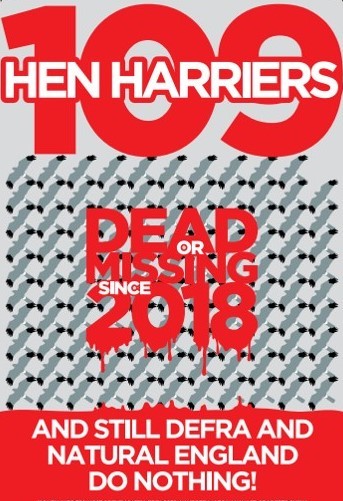
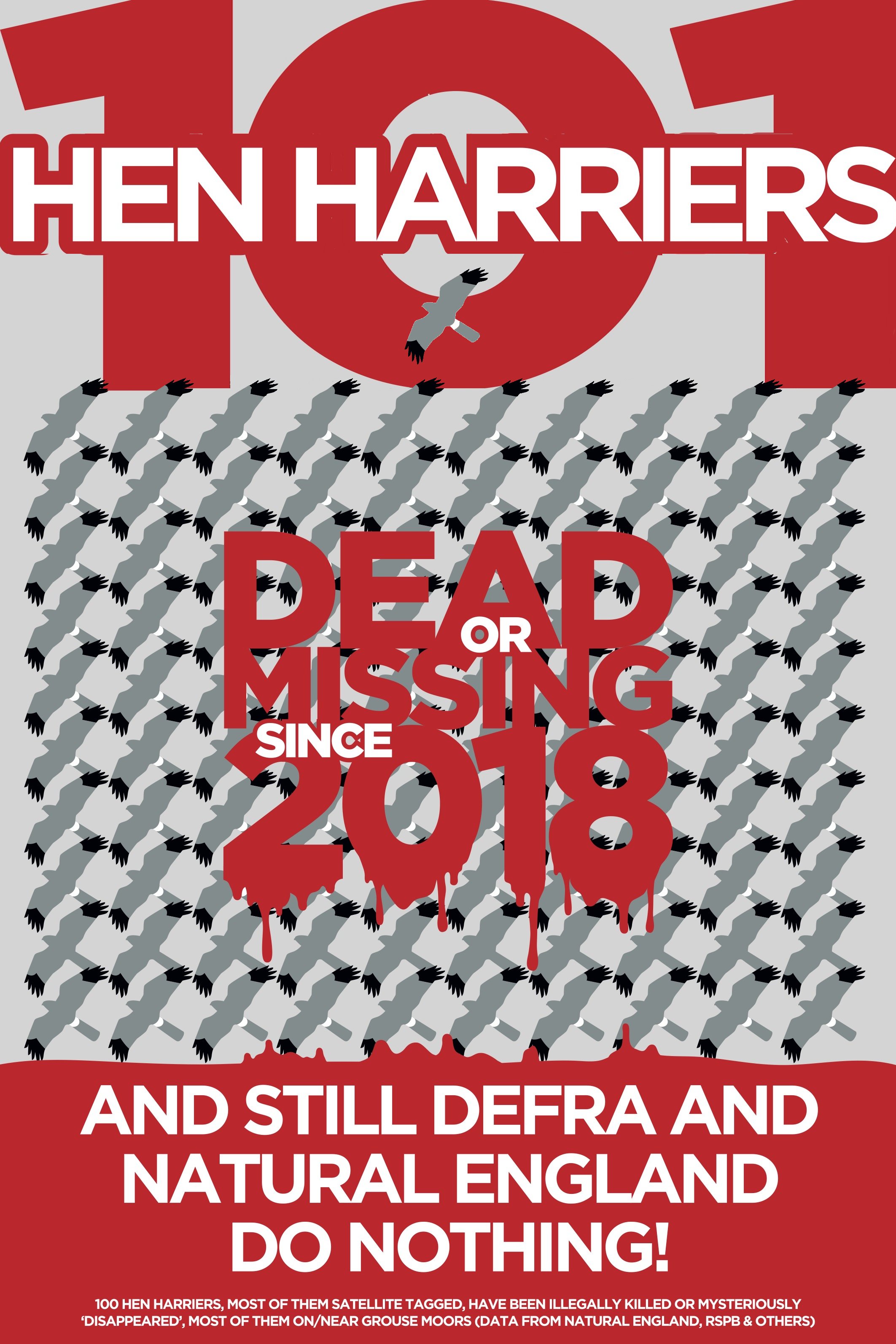
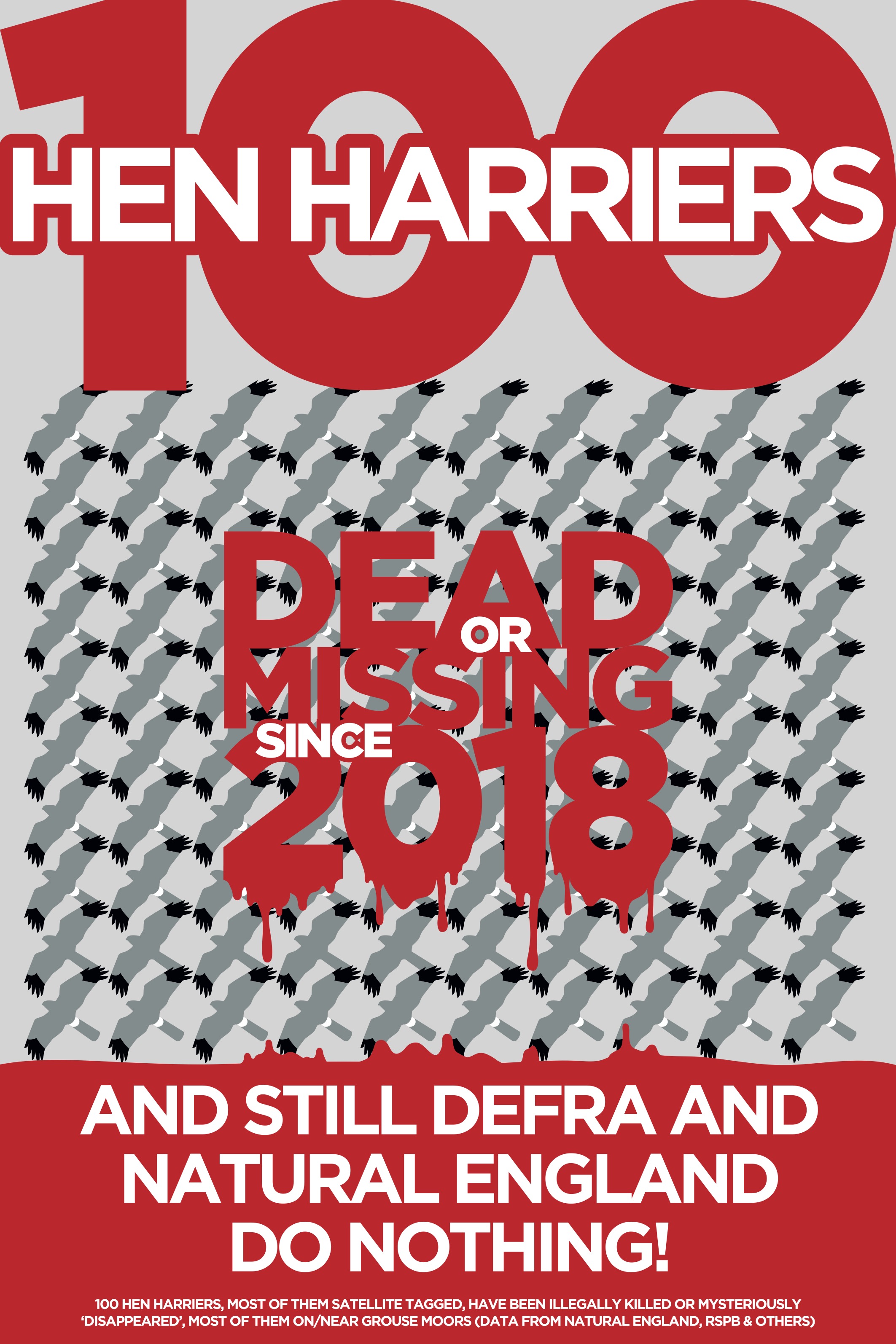
Wild Justice designed this poster in preparation for marking the 100th hen harrier to go ‘missing’/be killed since 2018. But the grouse shooting industry is killing harriers faster than we can make graphics….we’re now up to 101 hen harriers (actually we’re well past that figure but the other cases are yet to be publicised).

So here’s the latest gruesome list. Note that the majority of these birds (but not all) were fitted with satellite tags. How many more [untagged] harriers have been killed?

February 2018: Hen harrier Saorsa ‘disappeared’ in the Angus Glens in Scotland (here). The Scottish Gamekeepers Association later published wholly inaccurate information claiming the bird had been re-sighted. The RSPB dismissed this as “completely false” (here).

5 February 2018: Hen harrier Marc ‘disappeared’ on a grouse moor in Durham (here).

9 February 2018: Hen harrier Aalin ‘disappeared’ on a grouse moor in Wales (here).

March 2018: Hen harrier Blue ‘disappeared’ in the Lake District National Park (here).

March 2018: Hen harrier Finn ‘disappeared’ near Moffat in Scotland (here).

18 April 2018: Hen harrier Lia ‘disappeared’ in Wales and her corpse was retrieved in a field in May 2018. Cause of death was unconfirmed but police treating death as suspicious (here).

8 August 2018: Hen harrier Hilma ‘disappeared’ on a grouse moor in Northumberland (here).

16 August 2018: Hen harrier Athena ‘disappeared’ on a grouse moor in Scotland (here).

26 August 2018: Hen Harrier Octavia ‘disappeared’ on a grouse moor in the Peak District National Park (here).

29 August 2018: Hen harrier Margot ‘disappeared’ on a grouse moor in Scotland (here).

29 August 2018: Hen Harrier Heulwen ‘disappeared’ on a grouse moor in Wales (here).

3 September 2018: Hen harrier Stelmaria ‘disappeared’ on a grouse moor in Scotland (here).

24 September 2018: Hen harrier Heather ‘disappeared’ on a grouse moor in Scotland (here).

2 October 2018: Hen harrier Mabel ‘disappeared’ on a grouse moor on the edge of the Yorkshire Dales National Park (here).

3 October 2018: Hen Harrier Thor ‘disappeared’ next to a grouse moor in Bowland, Lanacashire (here).

23 October 2018: Hen harrier Tom ‘disappeared’ in South Wales (here).

26 October 2018: Hen harrier Arthur ‘disappeared’ on a grouse moor in the North York Moors National Park (here).

1 November 2018: Hen harrier Barney ‘disappeared’ on Bodmin Moor (here).

10 November 2018: Hen harrier Rannoch ‘disappeared’ on a grouse moor in Scotland (here). Her corpse was found nearby in May 2019 – she’d been killed in an illegally-set spring trap (here).

14 November 2018: Hen harrier River ‘disappeared’ on a grouse moor in the Nidderdale AONB (here). Her corpse was found nearby in April 2019 – she’d been illegally shot (here).

16 January 2019: Hen harrier Vulcan ‘disappeared’ in Wiltshire close to Natural England’s proposed reintroduction site (here).

28 January 2019: Hen harrier DeeCee ‘disappeared’ in Glen Esk, a grouse moor area of the Angus Glens (see here).

7 February 2019: Hen harrier Skylar ‘disappeared’ next to a grouse moor in South Lanarkshire (here).

22 April 2019: Hen harrier Marci ‘disappeared’ on a grouse moor in the Cairngorms National Park (here).

26 April 2019: Hen harrier Rain ‘disappeared’ on a grouse moor in Nairnshire (here).

11 May 2019: An untagged male hen harrier was caught in an illegally-set trap next to his nest on a grouse moor in South Lanarkshire. He didn’t survive (here).

7 June 2019: An untagged hen harrier was found dead on a grouse moor in Scotland. A post mortem stated the bird had died as a result of ‘penetrating trauma’ injuries and that this bird had previously been shot (here).

5 September 2019: Wildland Hen Harrier 1 ‘disappeared’ on a grouse moor nr Dalnaspidal on the edge of the Cairngorms National Park (here).

11 September 2019: Hen harrier Romario ‘disappeared’ on a grouse moor in the Cairngorms National Park (here).

14 September 2019: Hen harrier (Brood meddled in 2019, #183704) ‘disappeared’ in the North Pennines (here).

23 September 2019: Hen harrier (Brood meddled in 2019, #55149) ‘disappeared’ in North Pennines (here).

24 September 2019: Wildland Hen Harrier 2 ‘disappeared’ on a grouse moor at Invercauld in the Cairngorms National Park (here).

24 September 2019: Hen harrier Bronwyn ‘disappeared’ near a grouse moor in North Wales (here).

10 October 2019: Hen harrier Ada ‘disappeared’ on a grouse moor in the North Pennines AONB (here).

12 October 2019: Hen harrier Thistle ‘disappeared’ on a grouse moor in Sutherland (here).

18 October 2019: Member of the public reports the witnessed shooting of an untagged male hen harrier on White Syke Hill in North Yorkshire (here).

November 2019: Hen harrier Mary found illegally poisoned on a pheasant shoot in Ireland (here).

November 2019: Hen harrier Artemis ‘disappeared’ near Long Formacus in south Scotland (RSPB pers comm).

14 December 2019: Hen harrier Oscar ‘disappeared’ in Eskdalemuir, south Scotland (here).

December 2019: Hen harrier Ingmar ‘disappeared’ in the Strathbraan grouse moor area of Perthshire (RSPB pers comm).

January 2020: Members of the public report the witnessed shooting of a male hen harrier on Threshfield Moor in the Yorkshire Dales National Park (here).

23 March 2020: Hen harrier Rosie ‘disappeared’ at an undisclosed roost site in Northumberland (here).

1 April 2020: Hen harrier (Brood meddled in 2019, #183703) ‘disappeared’ in unnamed location, tag intermittent (here).

5 April 2020: Hen harrier Hoolie ‘disappeared’ on a grouse moor in the Cairngorms National Park (here)

8 April 2020: Hen harrier Marlin ‘disappeared’ on a grouse moor in the Cairngorms National Park (here).

19 May 2020: Hen harrier Fingal ‘disappeared’ on a grouse moor in the Lowther Hills, Scotland (here).

21 May 2020: Hen harrier (Brood meddled in 2019, #183701) ‘disappeared’ on a grouse moor in Cumbria shortly after returning from wintering in France (here).

27 May 2020: Hen harrier Silver ‘disappeared’ on a grouse moor on Leadhills Estate, Scotland (here).

2020: day/month unknown: Unnamed male hen harrier breeding on RSPB Geltsdale Reserve, Cumbria ‘disappeared’ while away hunting (here).

9 July 2020: Unnamed female hen harrier (#201118) ‘disappeared’ from an undisclosed site in Northumberland (here).

25 July 2020: Hen harrier Harriet ‘disappeared’ on a grouse moor in the Yorkshire Dales National Park (here).

14 August 2020: Hen harrier Solo ‘disappeared’ in confidential nest area in Lancashire (here).

7 September 2020: Hen harrier Dryad ‘disappeared’ on a grouse moor in the Yorkshire Dales National Park (here).

16 September 2020: Hen harrier Fortune ‘disappeared’ from an undisclosed roost site in Northumberland (here).

19 September 2020: Hen harrier Harold ‘disappeared’ on a grouse moor in the Yorkshire Dales National Park (here).

20 September 2020: Hen harrier (Brood meddled in 2020, #55152) ‘disappeared’ next to a grouse moor in North Yorkshire (here).

24 February 2021: Hen harrier Tarras ‘disappeared’ next to a grouse moor in Northumberland (here)

12th April 2021: Hen harrier Yarrow ‘disappeared’ near Stockton, County Durham (here).

18 May 2021: Adult male hen harrier ‘disappeared’ from its breeding attempt on RSPB Geltsdale Reserve, Cumbria whilst away hunting (here).

18 May 2021: Another adult male hen harrier ‘disappeared’ from its breeding attempt on RSPB Geltsdale Reserve, Cumbria whilst away hunting (here).

24 July 2021: Hen harrier Asta ‘disappeared’ at a ‘confidential site’ in the North Pennines (here). We learned 18 months later that her wings had been ripped off so her tag could be fitted to a crow in an attempt to cover up her death (here).

14th August 2021: Hen harrier Josephine ‘disappeared’ at a ‘confidential site’ in Northumberland (here).

17 September 2021: Hen harrier Reiver ‘disappeared’ in a grouse moor dominated region of Northumberland (here)

24 September 2021: Hen harrier (Brood meddled in 2021, R2-F-1-21) ‘disappeared’ in Northumberland (here).

15 November 2021: Hen harrier (brood meddled in 2020, #R2-F1-20) ‘disappeared’ at the edge of a grouse moor on Arkengarthdale Estate in the Yorkshire Dales National Park (here).

19 November 2021: Hen harrier Val ‘disappeared’ in the Lake District National Park in Cumbria (here).

19 November 2021: Hen harrier Percy ‘disappeared’ in Lothian, Scotland (here).

12 December 2021: Hen harrier Jasmine ‘disappeared’ on a grouse moor (High Rigg Moor on the Middlesmoor Estate) in the Nidderdale AONB in North Yorkshire (here).

9 January 2022: Hen harrier Ethel ‘disappeared’ in Northumberland (here).

26 January 2022: Hen harrier Amelia ‘disappeared’ in Bowland (here).

10 February 2022: An unnamed satellite-tagged hen harrier ‘disappeared’ in a grouse moor dominated area of the Peak District National Park (here). One year later it was revealed that the satellite tag/harness of this young male called ‘Anu’ had been deliberately cut off (see here).

12 April 2022: Hen harrier ‘Free’ (Tag ID 201121) ‘disappeared’ at a ‘confidential site’ in Cumbria (here). It later emerged he hadn’t disappeared, but his mutilated corpse was found on moorland in the Yorkshire Dales National Park. A post mortem revealed the cause of death was having his head twisted and pulled off. One leg had also been torn off whilst he was still alive (here).

April 2022: Hen harrier ‘Pegasus’ (tagged by the RSPB) ‘disappeared’ on a grouse moor at Birkdale in the Yorkshire Dales National Park (here).

May 2022: A male breeding hen harrier ‘disappeared’ from a National Trust-owned grouse moor in the Peak District National Park (here).

May 2022: Another breeding male hen harrier ‘disappeared’ from a National Trust-owned grouse moor in the Peak District National Park (here).

14 May 2022: Hen harrier ‘Harvey’ (Tag ID 213844) ‘disappeared’ from a ‘confidential site’ in the North Pennines (here).

20 June 2022: Hen harrier chick #1 stamped to death in nest on a grouse moor in the Yorkshire Dales National Park (here).

20 June 2022: Hen harrier chick #2 stamped to death in nest on a grouse moor in the Yorkshire Dales National Park (here).

20 June 2022: Hen harrier chick #3 stamped to death in nest on a grouse moor in the Yorkshire Dales National Park (here).

20 June 2022: Hen harrier chick #4 stamped to death in nest on a grouse moor in the Yorkshire Dales National Park (here).

17 August 2022: Hen harrier (brood meddled in 2022, #R1-M1-22) ‘disappeared’ on moorland in the Yorkshire Dales National Park (here).

September 2022: Hen harrier ‘Sullis’ (tagged by the RSPB) ‘disappeared’ on a grouse moor in Cumbria (here).

5 October 2022: Hen harrier (brood meddled in 2022, #R3-M2-22) ‘disappeared’ on moorland in the Yorkshire Dales National Park (here).

10 October 2022: Hen harrier ‘Sia’ ‘disappeared’ near Hamsterley Forest in the North Pennines (here).

October 2022: Hen harrier (brood meddled in 2021, #R1-F1-21) ‘disappeared’ in the North Sea off the North York Moors National Park (here).

December 2022: Hen harrier female (brood meddled in 2020, #R2-F2-20) ‘disappeared’ on moorland in Cumbria (here).

1 December 2022: Hen harrier male (brood meddled in 2021, #R1-M1-21) ‘disappeared’ on moorland in the Yorkshire Dales National Park (here).

14 December 2022: Hen harrier female (brood meddled in 2022, #R3-F1-22) ‘disappeared’ on moorland in the North Pennines AONB (here).

15 December 2022: Hen harrier female (brood meddled in 2022, #R2-F1-22) ‘disappeared’ on moorland in the Yorkshire Dales National Park (here).

30 March 2023: Hen harrier female (brood meddled in 2022, #R1-F3-22) ‘disappeared’ in Yorkshire (here). Notes from NE Sept 2023 spreadsheet update: “Final transmission location temporarily withheld at police request“.

1 April 2023: Hen harrier male (brood meddled in 2022, #R2-M1-22) ‘disappeared’ in Yorkshire (here). Notes from NE Sept 2023 spreadsheet update: “Final transmission location temporarily withheld at police request“.

April 2023: Hen harrier ‘Lagertha’ (tagged by RSPB) ‘disappeared’ in North Yorkshire (here).

April 2023: Hen harrier ‘Nicola’ (Tag ID 234078) ”disappeared’ in North Yorkshire (here).

April 2023: Untagged male hen harrier ‘disappeared’ from an active nest on RSPB Geltsdale Reserve in Cumbria (here).

April 2023: Another untagged male hen harrier ‘disappeared’ from an active nest on RSPB Geltsdale Reserve in Cumbria (here).

April 2023: Untagged male hen harrier ‘disappeared’ from an active nest in Durham (here).

4/5 May 2023: Satellite-tagged male hen harrier called ‘Rush’ ‘disappeared’ from a grouse moor in Bowland AONB in Lancashire (here).

17 May 2023: Satellite-tagged hen harrier called ‘Wayland’ ‘disappeared’ in the Clapham area of North Yorkshire, just north of the Bowland AONB (here).

9 August 2023: Satellite-tagged hen harrier called ‘Martha’ ‘disappeared’ on a grouse moor (Westburnhope Moor) near Hexham in the North Pennines (here).

11 August 2023: Satellite-tagged hen harrier called ‘Selena’ ‘disappeared’ on a grouse moor (Mossdale Moor) in the Yorkshire Dales National Park (here).

15 August 2023: Satellite-tagged hen harrier called ‘Hepit’ ‘disappeared’ on a grouse moor (Birkdale Common) near Kirkby Stephen in the Yorkshire Dales National Park (here).

To be continued…….

Not one of these 101 incidents has resulted in an arrest, let alone a prosecution. I had thought that when we reached 30 dead/missing hen harriers then the authorities might pretend to be interested and at least say a few words about this national scandal. We’ve now reached ONE HUNDRED AND ONE hen harriers, and still Govt ministers remain silent. They appear not to give a monkey’s. And yes, there are other things going on in the world, as always. That is not reason enough to ignore this blatant, brazen and systematic destruction of a supposedly protected species, being undertaken to satisfy the greed and bloodlust of a minority of society.

UPDATE 18.30hrs: Moorland Association Chair claims: “Clearly any illegal [hen harrier] persecution is not happening” (here).

Three more satellite-tagged hen harriers ‘vanish’ on driven grouse moors, all within 6 days of the start of the grouse-shooting season

Press release from RSPB (18th August 2023)

THREE MORE SATELLITE-TAGGED HEN HARRIERS VANISH ON DRIVEN GROUSE MOORS, ALL WITHIN DAYS OF THE ‘GLORIOUS 12TH’

  • Three satellite tagged Hen Harriers have disappeared on private driven grouse moors in Northern England between August 9th and August 15th.
  • All three birds were fitted with a satellite tag, which regularly transmit data, allowing their movements to be monitored.
  • Two birds had fledged recently on the United Utilities Bowland Estate, and the third was a one-year-old female from the National Trust for Scotland Estate at Mar Lodge.

Three satellite-tracked Hen Harriers have suddenly disappeared over land managed for driven grouse shooting. All three disappearances have happened within days of the Glorious Twelfth, the official start of the shooting season for Red Grouse, and a time where grouse numbers are managed to be at their peak level to ensure a successful shooting season.

Hen Harriers are a rare, protected species, known for their acrobatic ‘skydancing’ courtship display over the uplands. The Hen Harrier is categorised as a red listed species in the UK, due to its low population levels.

Hen harrier. Photo: Ian Poxton

Martha was a one-year-old female Hen Harrier. She was tagged as a chick at Mar Lodge, a National Trust for Scotland estate in Aberdeenshire in the spring of 2022. The satellite tracking data shows that Martha moved into Northumberland in early August 2023 and gave her last transmission from Westburnhope Moor near Hexham, in the North Pennines on 9 August 2023.

Selena was a juvenile female tagged on United Utilities land in Bowland in the spring of this year. Her satellite tag showed that she had just moved to the Yorkshire Dales before her last transmission from Mossdale Moor near Hawes, in the Yorkshire Dales on 11August 2023.

Hepit was another young female Hen Harrier. She had also been tagged as a chick on United Utilities land in Bowland this year, before moving to the Yorkshire Dales last month. Hepit’s last transmission came from moorland at Birkdale Common near Kirkby Stephen, on 15 August 2023 – an area where 9 other satellite-tagged Hen Harriers have vanished or been found dead with injuries consistent with persecution since September 2020.

Despite being legally protected, multiple studies and reports confirm that illegal killing is the main factor limiting the recovery of Hen Harrier in the UK, causing a reduction in nesting success, annual productivity and survival of breeding females. A recent RSPB Centre for Conservation Science study which investigated the illegal killing of satelite-tagged Hen Harriers in association with gamebird management (Ewing, et al 2023) has shown that the survival rates of Hen Harriers in the UK is “unusually low” with birds surviving for just 121 days after fledging. Human persecution accounted for 27-41% of deaths on Hen Harriers aged under one year and 75% of deaths in birds aged between one and two years.  It also highlighted a strong overlap between Hen Harrier mortality and the extent of grouse moors.

Sadly, although this pattern of satellite tagged birds disappearing around the start of the Red Grouse shooting season has been seen before, the RSPB have never had a case of three satellite-tagged Hen Harriers going missing within six days.

Beccy Speight, RSPB Chief Executive said – “This is the first time so many hen harriers have gone missing in such a short space of time, all on driven grouse moors. This is on top of the 21 birds that we reported on in April, as having gone missing in the last twelve months. If these magnificent birds are ever going to have a sustainable population in England this has to stop, productivity from nests simply means nothing if the birds don’t survive.

We call on the UK Government to introduce a licencing system for grouse shooting in England similar to measures now being taken forward in Scotland, to act as a meaningful deterrent to raptor crime whilst also protecting the legitimate interests of those landowners who operate legally.”

All three incidents have been reported to the police and the NWCU (National Wildlife Crime Unit). Sadly, there are several other Hen Harrier persecution incidents that we cannot report on at this time.

If you notice a dead or injured bird of prey in suspicious circumstances, call the police on 101 and fill in the RSPB’s online reporting form: https://www.rspb.org.uk/birds-and-wildlife/advice/wild-bird-crime-report-form/

If you have information about anyone killing birds of prey which you wish to report anonymously, call the RSPB’s confidential Raptor Crime Hotline on 0300 999 0101.

ENDS

These latest three victims mean that at least 101 hen harriers have gone ‘missing’ / been killed illegally in the UK since 2018, most of them on or close to driven grouse moors. I’ll update the list shortly.

It’s clear from the statement in the RSPB press release, ‘Sadly, there are several other Hen Harrier persecution incidents that we cannot report on at this time‘, that there are multiple other cases of missing/killed hen harriers still to be publicised, no doubt delayed by certain police forces not doing their jobs.

It’s interesting to see the RSPB take the decision not to wait before publicising these latest three incidents. All three have been reported to the police, quite rightly, but given the appalling track record of both North Yorkshire Police and Northumbria Police in dealing with investigations into suspected raptor persecution crimes, there seems little point in waiting anymore. In fact I’d go as far to say that there should be independent inquiries into the mishandling of investigations into raptor persecution crimes by these two police forces. Some of their latest failures are yet to be reported but some are already in the public domain (e.g. here, here, here).

UPDATE 11.40hrs: 101 hen harriers confirmed ‘missing’ or illegally killed in UK since 2018, most of them on or close to grouse moors (here).

Moorland Association shows staggering indifference to ongoing hen harrier persecution on grouse moors

The news this week that at least 98 hen harriers are now known to have either ‘disappeared’ in suspicious circumstances or been found illegally killed, mostly on or close to grouse moors (here) is not something the Moorland Association wants anyone to highlight.

That’s hardly a surprise – this is the lobby group for grouse moor owners in England and it has a well-deserved reputation for distorting the truth when it comes to raptor persecution (e.g. see here, here, here, here, here, here, here etc etc).

What is a surprise, though, is the staggering indifference it has just demonstrated to the ongoing illegal persecution of hen harriers on grouse moors. The indifference isn’t staggering, but the decision to display it so publicly is astonishingly stupid.

It posted this tweet yesterday, in response to the news of the 98 ‘missing’/killed hen harriers since 2018:

The tweet has attracted a great deal of online criticism, and deservedly so.

I pointed out that it was like saying, ‘Allegations that 221 women have been killed in the UK since the murder of Sarah Everard wilfully ignores the increase in the human population, now at its highest for 100 years‘.

Mark Harris tweeted: ‘I robbed a bank yesterday and the police came to arrest me. They wilfully ignored the fact the bank’s profits are at an all time high‘.

There are others, but my favourite response so far is from Gavin Deane, who wrote to the Moorland Association: ‘Your post would only make sense if your position was that persecution is acceptable so long as there’s enough breeding success. Perhaps that is your position, but it shouldn’t be. Breeding success is irrelevant to RPUK’s point‘.

I think Gavin nails it. As I wrote the other day (here), one of the main concerns about DEFRA/Natural England’s decision to ‘reintroduce’ hen harriers to southern England is that it will provide a distraction to what’s going on on northern grouse moors. It’ll allow the grouse moor lobby to claim that hen harriers are doing ok in the south (assuming they survive) and so there’s no need to worry about focusing resources/time/attention to the ongoing criminality on the grouse moors.

In my view, the Moorland Association’s tweet has just demonstrated that very position.

Meanwhile, I asked the Moorland Association if they’d like to chat about the number of hen harriers that have suspiciously ‘disappeared’ on grouse moors, or been found illegally shot, since Natural England’s last update in May.

The Moorland Association’s response? They’ve blocked me.

Not to worry, the news will be out soon enough and it’ll be fascinating to see how they try to limit the negative press – they’re going to have one hell of a job on their hands, given the number that have disappeared / been killed in the last three months.

98 hen harriers confirmed ‘missing’ or illegally killed in UK since 2018, most of them on or close to grouse moors

Regular blog readers will know that I keep a running total of the number of hen harriers that ‘disappear’ in suspicious circumstances or have been found illegally killed, since 2018.

This morning the total was 95 (see here) but this number has just increased to 98 after it was pointed out to me that three more hen harriers that vanished in 2019 hadn’t been included on my list (many thanks to the person who alerted me to these omissions).

The three harriers (Ingmar, Artemis & DeeCee) were all tagged by the RSPB as part of the Hen Harrier LIFE Project.

I’ve now updated the list (below) and here is the blog I always write when more victims are added…

For anyone who still wants to pretend that the grouse shooting industry isn’t responsible for the systematic extermination of hen harriers on grouse moors across the UK, here’s the latest catalogue of crime that suggests otherwise.

[This male hen harrier died in 2019 after his leg was almost severed in an illegally set trap that had been placed next to his nest on a Scottish grouse moor (see here). Photo by Ruth Tingay]

This is the blog I now publish after every reported killing or suspicious disappearance.

They disappear in the same way political dissidents in authoritarian dictatorships have disappeared” (Stephen Barlow, 22 January 2021).

Today the list has been updated to include three more victims: a hen harrier named ‘DeeCee’ who disappeared in January 2019 in the notorious Glen Esk area of the Angus Glens; a hen harrier named ‘Artemis’ who disappeared near Long Formacus in south Scotland in November 2019; and a hen harrier named ‘Ingmar’ who vanished in December 2019 in the notorious Strathbraan grouse moor area of Perthshire.

I’ve been compiling this list only since 2018 because that is the year that the grouse shooting industry ‘leaders’ would have us believe that the criminal persecution of hen harriers had stopped and that these birds were being welcomed back on to the UK’s grouse moors (see here).

This assertion was made shortly before the publication of a devastating new scientific paper that demonstrated that 72% of satellite-tagged hen harriers were confirmed or considered likely to have been illegally killed, and this was ten times more likely to occur over areas of land managed for grouse shooting relative to other land uses (see here). Incidentally, a further scientific paper published in 2023 by scientists at the RSPB, utilising even more recent data, echoed these results – see here.

2018 was also the year that Natural England issued a licence to begin a hen harrier brood meddling trial on grouse moors in northern England. For new blog readers, hen harrier brood meddling is a conservation sham sanctioned by DEFRA as part of its ludicrous ‘Hen Harrier Action Plan‘ and carried out by Natural England (NE), in cahoots with the very industry responsible for the species’ catastrophic decline in England. For more background see here.

Brood meddling has been described as a sort of ‘gentleman’s agreement’ by commentator Stephen Welch:

I don’t get it, I thought the idea of that scheme was some kind of trade off – a gentleman’s agreement that the birds would be left in peace if they were moved from grouse moors at a certain density. It seems that one party is not keeping their side of the bargain“.

With at least 98 hen harriers gone since 2018, there is no question that the grouse shooting industry is simply taking the piss. Meanwhile, Natural England pretends that ‘partnership working’ is the way to go and DEFRA Ministers remain silent.

‘Partnership working’ according to Natural England appears to include authorising the removal of hen harrier chicks from a grouse moor already under investigation by the police for suspected raptor persecution (here) and accepting a £75k ‘donation’ from representatives of the grouse shooting industry that prevents Natural England from criticising them or the sham brood meddling trial (see here). This is in addition to a £10k ‘donation’ that Natural England accepted, under the same terms, in 2021 (here).

Cartoon by Gerard Hobley

So here’s the latest gruesome list. Note that the majority of these birds (but not all) were fitted with satellite tags. How many more [untagged] harriers have been killed?

February 2018: Hen harrier Saorsa ‘disappeared’ in the Angus Glens in Scotland (here). The Scottish Gamekeepers Association later published wholly inaccurate information claiming the bird had been re-sighted. The RSPB dismissed this as “completely false” (here).

5 February 2018: Hen harrier Marc ‘disappeared’ on a grouse moor in Durham (here).

9 February 2018: Hen harrier Aalin ‘disappeared’ on a grouse moor in Wales (here).

March 2018: Hen harrier Blue ‘disappeared’ in the Lake District National Park (here).

March 2018: Hen harrier Finn ‘disappeared’ near Moffat in Scotland (here).

18 April 2018: Hen harrier Lia ‘disappeared’ in Wales and her corpse was retrieved in a field in May 2018. Cause of death was unconfirmed but police treating death as suspicious (here).

8 August 2018: Hen harrier Hilma ‘disappeared’ on a grouse moor in Northumberland (here).

16 August 2018: Hen harrier Athena ‘disappeared’ on a grouse moor in Scotland (here).

26 August 2018: Hen Harrier Octavia ‘disappeared’ on a grouse moor in the Peak District National Park (here).

29 August 2018: Hen harrier Margot ‘disappeared’ on a grouse moor in Scotland (here).

29 August 2018: Hen Harrier Heulwen ‘disappeared’ on a grouse moor in Wales (here).

3 September 2018: Hen harrier Stelmaria ‘disappeared’ on a grouse moor in Scotland (here).

24 September 2018: Hen harrier Heather ‘disappeared’ on a grouse moor in Scotland (here).

2 October 2018: Hen harrier Mabel ‘disappeared’ on a grouse moor on the edge of the Yorkshire Dales National Park (here).

3 October 2018: Hen Harrier Thor ‘disappeared’ next to a grouse moor in Bowland, Lanacashire (here).

23 October 2018: Hen harrier Tom ‘disappeared’ in South Wales (here).

26 October 2018: Hen harrier Arthur ‘disappeared’ on a grouse moor in the North York Moors National Park (here).

1 November 2018: Hen harrier Barney ‘disappeared’ on Bodmin Moor (here).

10 November 2018: Hen harrier Rannoch ‘disappeared’ on a grouse moor in Scotland (here). Her corpse was found nearby in May 2019 – she’d been killed in an illegally-set spring trap (here).

14 November 2018: Hen harrier River ‘disappeared’ on a grouse moor in the Nidderdale AONB (here). Her corpse was found nearby in April 2019 – she’d been illegally shot (here).

16 January 2019: Hen harrier Vulcan ‘disappeared’ in Wiltshire close to Natural England’s proposed reintroduction site (here).

28 January 2019: Hen harrier DeeCee ‘disappeared’ in Glen Esk, a grouse moor area of the Angus Glens (see here).

7 February 2019: Hen harrier Skylar ‘disappeared’ next to a grouse moor in South Lanarkshire (here).

22 April 2019: Hen harrier Marci ‘disappeared’ on a grouse moor in the Cairngorms National Park (here).

26 April 2019: Hen harrier Rain ‘disappeared’ on a grouse moor in Nairnshire (here).

11 May 2019: An untagged male hen harrier was caught in an illegally-set trap next to his nest on a grouse moor in South Lanarkshire. He didn’t survive (here).

7 June 2019: An untagged hen harrier was found dead on a grouse moor in Scotland. A post mortem stated the bird had died as a result of ‘penetrating trauma’ injuries and that this bird had previously been shot (here).

5 September 2019: Wildland Hen Harrier 1 ‘disappeared’ on a grouse moor nr Dalnaspidal on the edge of the Cairngorms National Park (here).

11 September 2019: Hen harrier Romario ‘disappeared’ on a grouse moor in the Cairngorms National Park (here).

14 September 2019: Hen harrier (Brood meddled in 2019, #183704) ‘disappeared’ in the North Pennines (here).

23 September 2019: Hen harrier (Brood meddled in 2019, #55149) ‘disappeared’ in North Pennines (here).

24 September 2019: Wildland Hen Harrier 2 ‘disappeared’ on a grouse moor at Invercauld in the Cairngorms National Park (here).

24 September 2019: Hen harrier Bronwyn ‘disappeared’ near a grouse moor in North Wales (here).

10 October 2019: Hen harrier Ada ‘disappeared’ on a grouse moor in the North Pennines AONB (here).

12 October 2019: Hen harrier Thistle ‘disappeared’ on a grouse moor in Sutherland (here).

18 October 2019: Member of the public reports the witnessed shooting of an untagged male hen harrier on White Syke Hill in North Yorkshire (here).

November 2019: Hen harrier Mary found illegally poisoned on a pheasant shoot in Ireland (here).

November 2019: Hen harrier Artemis ‘disappeared’ near Long Formacus in south Scotland (RSPB pers comm).

14 December 2019: Hen harrier Oscar ‘disappeared’ in Eskdalemuir, south Scotland (here).

December 2019: Hen harrier Ingmar ‘disappeared’ in the Strathbraan grouse moor area of Perthshire (RSPB pers comm).

January 2020: Members of the public report the witnessed shooting of a male hen harrier on Threshfield Moor in the Yorkshire Dales National Park (here).

23 March 2020: Hen harrier Rosie ‘disappeared’ at an undisclosed roost site in Northumberland (here).

1 April 2020: Hen harrier (Brood meddled in 2019, #183703) ‘disappeared’ in unnamed location, tag intermittent (here).

5 April 2020: Hen harrier Hoolie ‘disappeared’ on a grouse moor in the Cairngorms National Park (here)

8 April 2020: Hen harrier Marlin ‘disappeared’ on a grouse moor in the Cairngorms National Park (here).

19 May 2020: Hen harrier Fingal ‘disappeared’ on a grouse moor in the Lowther Hills, Scotland (here).

21 May 2020: Hen harrier (Brood meddled in 2019, #183701) ‘disappeared’ on a grouse moor in Cumbria shortly after returning from wintering in France (here).

27 May 2020: Hen harrier Silver ‘disappeared’ on a grouse moor on Leadhills Estate, Scotland (here).

2020: day/month unknown: Unnamed male hen harrier breeding on RSPB Geltsdale Reserve, Cumbria ‘disappeared’ while away hunting (here).

9 July 2020: Unnamed female hen harrier (#201118) ‘disappeared’ from an undisclosed site in Northumberland (here).

25 July 2020: Hen harrier Harriet ‘disappeared’ on a grouse moor in the Yorkshire Dales National Park (here).

14 August 2020: Hen harrier Solo ‘disappeared’ in confidential nest area in Lancashire (here).

7 September 2020: Hen harrier Dryad ‘disappeared’ on a grouse moor in the Yorkshire Dales National Park (here).

16 September 2020: Hen harrier Fortune ‘disappeared’ from an undisclosed roost site in Northumberland (here).

19 September 2020: Hen harrier Harold ‘disappeared’ on a grouse moor in the Yorkshire Dales National Park (here).

20 September 2020: Hen harrier (Brood meddled in 2020, #55152) ‘disappeared’ next to a grouse moor in North Yorkshire (here).

24 February 2021: Hen harrier Tarras ‘disappeared’ next to a grouse moor in Northumberland (here)

12th April 2021: Hen harrier Yarrow ‘disappeared’ near Stockton, County Durham (here).

18 May 2021: Adult male hen harrier ‘disappeared’ from its breeding attempt on RSPB Geltsdale Reserve, Cumbria whilst away hunting (here).

18 May 2021: Another adult male hen harrier ‘disappeared’ from its breeding attempt on RSPB Geltsdale Reserve, Cumbria whilst away hunting (here).

24 July 2021: Hen harrier Asta ‘disappeared’ at a ‘confidential site’ in the North Pennines (here). We learned 18 months later that her wings had been ripped off so her tag could be fitted to a crow in an attempt to cover up her death (here).

14th August 2021: Hen harrier Josephine ‘disappeared’ at a ‘confidential site’ in Northumberland (here).

17 September 2021: Hen harrier Reiver ‘disappeared’ in a grouse moor dominated region of Northumberland (here)

24 September 2021: Hen harrier (Brood meddled in 2021, R2-F-1-21) ‘disappeared’ in Northumberland (here).

15 November 2021: Hen harrier (brood meddled in 2020, #R2-F1-20) ‘disappeared’ at the edge of a grouse moor on Arkengarthdale Estate in the Yorkshire Dales National Park (here).

19 November 2021: Hen harrier Val ‘disappeared’ in the Lake District National Park in Cumbria (here).

19 November 2021: Hen harrier Percy ‘disappeared’ in Lothian, Scotland (here).

12 December 2021: Hen harrier Jasmine ‘disappeared’ on a grouse moor (High Rigg Moor on the Middlesmoor Estate) in the Nidderdale AONB in North Yorkshire (here).

9 January 2022: Hen harrier Ethel ‘disappeared’ in Northumberland (here).

26 January 2022: Hen harrier Amelia ‘disappeared’ in Bowland (here).

10 February 2022: An unnamed satellite-tagged hen harrier ‘disappeared’ in a grouse moor dominated area of the Peak District National Park (here). One year later it was revealed that the satellite tag/harness of this young male called ‘Anu’ had been deliberately cut off (see here).

12 April 2022: Hen harrier ‘Free’ (Tag ID 201121) ‘disappeared’ at a ‘confidential site’ in Cumbria (here). It later emerged he hadn’t disappeared, but his mutilated corpse was found on moorland in the Yorkshire Dales National Park. A post mortem revealed the cause of death was having his head twisted and pulled off. One leg had also been torn off whilst he was still alive (here).

April 2022: Hen harrier ‘Pegasus’ (tagged by the RSPB) ‘disappeared’ on a grouse moor at Birkdale in the Yorkshire Dales National Park (here).

May 2022: A male breeding hen harrier ‘disappeared’ from a National Trust-owned grouse moor in the Peak District National Park (here).

May 2022: Another breeding male hen harrier ‘disappeared’ from a National Trust-owned grouse moor in the Peak District National Park (here).

14 May 2022: Hen harrier ‘Harvey’ (Tag ID 213844) ‘disappeared’ from a ‘confidential site’ in the North Pennines (here).

20 June 2022: Hen harrier chick #1 stamped to death in nest on a grouse moor in the Yorkshire Dales National Park (here).

20 June 2022: Hen harrier chick #2 stamped to death in nest on a grouse moor in the Yorkshire Dales National Park (here).

20 June 2022: Hen harrier chick #3 stamped to death in nest on a grouse moor in the Yorkshire Dales National Park (here).

20 June 2022: Hen harrier chick #4 stamped to death in nest on a grouse moor in the Yorkshire Dales National Park (here).

17 August 2022: Hen harrier (brood meddled in 2022, #R1-M1-22) ‘disappeared’ on moorland in the Yorkshire Dales National Park (here).

September 2022: Hen harrier ‘Sullis’ (tagged by the RSPB) ‘disappeared’ on a grouse moor in Cumbria (here).

5 October 2022: Hen harrier (brood meddled in 2022, #R3-M2-22) ‘disappeared’ on moorland in the Yorkshire Dales National Park (here).

10 October 2022: Hen harrier ‘Sia’ ‘disappeared’ near Hamsterley Forest in the North Pennines (here).

October 2022: Hen harrier (brood meddled in 2021, #R1-F1-21) ‘disappeared’ in the North Sea off the North York Moors National Park (here).

December 2022: Hen harrier female (brood meddled in 2020, #R2-F2-20) ‘disappeared’ on moorland in Cumbria (here).

1 December 2022: Hen harrier male (brood meddled in 2021, #R1-M1-21) ‘disappeared’ on moorland in the Yorkshire Dales National Park (here).

14 December 2022: Hen harrier female (brood meddled in 2022, #R3-F1-22) ‘disappeared’ on moorland in the North Pennines AONB (here).

15 December 2022: Hen harrier female (brood meddled in 2022, #R2-F1-22) ‘disappeared’ on moorland in the Yorkshire Dales National Park (here).

March 2023: Unnamed male hen harrier (tagged by Natural England – details not yet released) ‘disappeared’ in North Yorkshire (here).

April 2023: Unnamed female hen harrier (tagged by Natural England – details not yet released) ‘disappeared’ in North Yorkshire (here).

April 2023: Hen harrier ‘Lagertha’ (tagged by RSPB) ‘disappeared’ in North Yorkshire (here).

April 2023: Hen harrier ‘Nicola’ (Tag ID 234078) ”disappeared’ in North Yorkshire (here).

April 2023: Untagged male hen harrier ‘disappeared’ from an active nest on RSPB Geltsdale Reserve in Cumbria (here).

April 2023: Another untagged male hen harrier ‘disappeared’ from an active nest on RSPB Geltsdale Reserve in Cumbria (here).

April 2023: Untagged male hen harrier ‘disappeared’ from an active nest in Durham (here).

4/5 May 2023: Satellite-tagged male hen harrier called ‘Rush’ ‘disappeared’ from a grouse moor in Bowland AONB in Lancashire (here).

17 May 2023: Satellite-tagged hen harrier called ‘Wayland’ ‘disappeared’ in the Clapham area of North Yorkshire, just north of the Bowland AONB (here).

To be continued…….

Not one of these 98 incidents has resulted in an arrest, let alone a prosecution. I had thought that when we reached 30 dead/missing hen harriers then the authorities might pretend to be interested and at least say a few words about this national scandal. We’ve now reached NINETY EIGHT hen harriers, and still Govt ministers remain silent. They appear not to give a monkey’s. And yes, there are other things going on in the world, as always. That is not reason enough to ignore this blatant, brazen and systematic destruction of a supposedly protected species, being undertaken to satisfy the greed and bloodlust of a minority of society.

When will the tally pass 100 hen harriers? Watch this space…