Another red kite shot dead in Nidderdale, North Yorkshire

North Yorkshire Police are appealing for information after the discovery of a yet another shot red kite.

The latest victim was found near Greenhow, in Nidderdale, on the afternoon of Saturday 11 March 2017.

Anyone with information is asked to contact Police Wildlife Crime Officer David MacKay: david.mackay@northyorkshire.pnn.police.uk and quote reference number 12170047155.

Last year North Yorkshire Police investigated the deaths of 10 red kites that had been shot or poisoned in the county. The Nidderdale Area of Outstanding Natural Beauty and the neighbouring Yorkshire Dales National Park are notorious black spots for raptor persecution, particularly for red kites and hen harriers. This region is dominated by land managed for driven grouse shooting.

Photo of red kite by Claire Marshall

RSPB offers £1,000 reward for info on two shot buzzards in North Yorkshire

A week ago we blogged about the discovery of two dead buzzards found in North Yorkshire (see here).

One had been found shot near East Lutton and the other one had been found shot near Helmsley in the North York Moors National Park.

The Northern Echo has now run with an article about these shootings (here) and the RSPB is offering a £1,000 reward for any information which leads to a successful conviction.

Conversely, the Yorkshire Post has published an article about the ‘value’ of gamekeepers in North Yorkshire (see here). One of the gamekeepers, Michael Wearmouth from the Rosedale and Westerdale Estate, is quoted: “Mr Packham and others who don’t understand shooting at all are trying to make everybody hate us“.

Nope, sorry Michael, it’s not Chris Packham et al at whom who you need to be pointing the finger, it’s the criminals from within your own industry who are causing public outrage by continuing to kill birds of prey, over 60 years since it became an offence. Just last year an horrifically injured buzzard was discovered on a Westerdale grouse moor and it wasn’t an isolated crime. North Yorkshire continues to hold the record for the highest number of reported raptor crimes in the UK.

Update on illegally-set traps on Glendye grouse moor

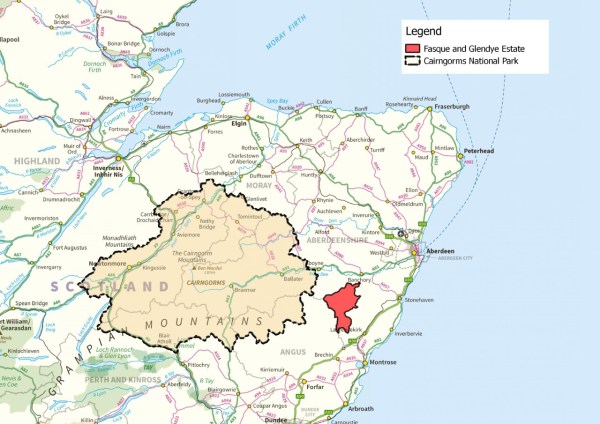
Two months ago we blogged about a series of illegally-set traps that had been photographed on the grouse moor of Glendye Estate in Aberdeenshire (see here).

We, and many of you (thank you) passed on the information to the local Police Wildlife Crime Liaison Officer, PC Doug Darling in the hope that an investigation might take place. We contacted him again a few days ago and asked if he was able to provide an update on this case.

He told us that an enquiry had been carried out in the area the day after the incident had been reported to the police, but no illegally-set traps had been found.

The person who had taken the photographs and published them on a blog was then contacted by the police, to learn as much as possible about the incident (how the traps were set, whether any baits had been seen etc).

The police then visited the Estate Factor and the gamekeeper, who were in possession of the traps as they had been informed of the incident by the original witness. PC Darling told us: “They took it upon themselves to remove the traps in case something were to become caught and denied knowing whose traps they were and how they came to be found on the estate set in an illegal manor [sic]”.

That’s interesting. What would you do if you were working in the land management sector and a member of the public told you they’d found illegally-set traps on your land? Wouldn’t you leave the evidence in place and immediately notify the police?

Anyway, PC Darling went on: “Given we have no physical evidence it would not be possible to report the incident to the Procurator Fiscal however Scottish Natural Heritage are aware of the incident and we will be discussing any other measures we could pursue given the circumstances“.

Presumably ‘any other measures’ would include SNH putting a General Licence restriction order on this Estate, because according to SNH guidelines, evidence which may be considered by SNH in any decision to impose a General Licence restriction includes:

Illegal placement, design or use of traps or methods that are not in compliance with the requirements of the General Licence‘.

We’ll see if that happens because of course much still depends on the findings of the judicial review, which examined the process SNH used to impose a General Licence restriction on Raeshaw Estate back in 2015. The court’s decision has not yet been announced, at least not in public.

This case highlights something we discussed yesterday when blogging about the pine marten that had been caught in a spring trap on another grouse shooting estate in Scotland (see here). If every trap had to carry a unique police-issued number identifying the registered trap-user, then this investigation might have ended with a better result. As happens over and over again, whoever set these traps has escaped being held to account for their criminal activities.

PC Darling deserves full credit here. Not only did he launch an investigation the day after being alerted to these traps, he then followed up with the witness and paid a visit to those responsible for managing the land, and he was also very quick and willing to explain what had happened when asked about this case. What a breath of fresh air. His actions will inspire confidence for anyone else thinking about reporting a suspected wildlife crime in this region, rather than the brick wall we’ve become accustomed to expect from Police Scotland. Let’s hope his senior officers take note and applaud his efforts as much as we do.

Two more buzzards shot dead in North Yorkshire

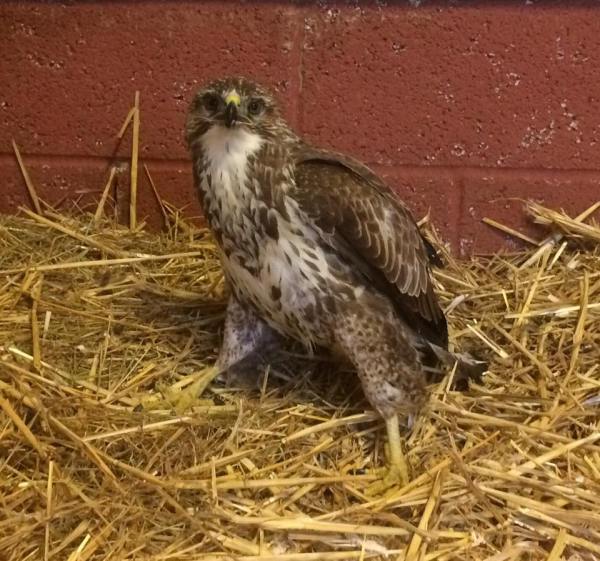
Two buzzards have been found shot dead in separate incidents in North Yorkshire.

One was found with shot gun injuries near East Lutton and the other one was found with shot gun injuries at Sutton Bank top near Helmsley in the North York Moors National Park.

Information and photos from Jean Thorpe (Ryedale Wildlife Rehabilitation Centre).

No further details available but hopefully North Yorkshire Police will issue a press release soon.

If you have any info please contact Police Wildlife Crime Officer Jez Walmsley: jeremy.walmsley@northyorkshire.pnn.police.uk 

Convicted shooting agent no longer listed on tourism website

Some of you may remember back in December 2016 and January 2017 we were blogging about an organisation called the Scottish Country Sports Tourism Group (SCSTG).

The SCSTG had been awarded funding from Scotland’s national tourism agency, VisitScotland, to help develop an initiative called ‘Game for Growth’, aimed at boosting the value of shooting, stalking and fishing to the Scottish rural economy.

This raised eyebrows, and even a parliamentary question, when we pointed out that a convicted wildlife criminal’s business (Dunmhor Sporting) was being promoted on the SCSTG website and yet this Game for Growth initiative had been launched at a parliamentary reception at Holyrood (see here, here, here).

We also noted that two sporting estates (Invercauld Estate & Glendye grouse moor) were being promoted on this website (here), despite the recent discovery of illegally-set traps on both landholdings, although nobody has been charged in relation to the Invercauld incident (here) and we understand the Glen Dye incident is still under police investigation. (Well done to the local police wildlife crime officer, by the way, who reacted quickly when he was alerted to the traps at Glen Dye and has been fast to respond to subsequent correspondence on this matter).

Some of our readers, and us, contacted Fiona Hyslop, Cabinet Secretary for Culture, Tourism & External Affairs, and Malcolm Roughead, Chief Exec of VisitScotland, to ask whether they were aware that tax payers’ money (via VisitScotland) was being used to promote the business of a convicted wildlife criminal and whether they thought this was an appropriate use of public funds.

So far, the responses from both have been unsatisfactory (e.g. see here) and further correspondence via a number of local MSPs is currently being undertaken.

However, after a quick look at the SCSTG website this morning, it would appear that Dunmhor Sporting is no longer listed. Whether the Minister and/or VisitScotland has had this listing removed, or whether Dunmhor Sporting has removed itself, remains to be seen.

However, Invercauld Estate and Glen Dye are both still listed.

We’ll be returning to this when we find out whether SNH intends to invoke General Licence restrictions on either of these two estates, assuming GL restrictions are still possible after the findings of the recent judicial review are made public – any day now.

Buzzard shot dead in Nidderdale, North Yorkshire

nyorks-policeNorth Yorkshire Police have issued the following press release:

Buzzard shot in Nidderdale Area of Outstanding Natural Beauty

North Yorkshire Police are investigating an incident in which a Buzzard was shot in the Nidderdale Area of Outstanding Natural Beauty.

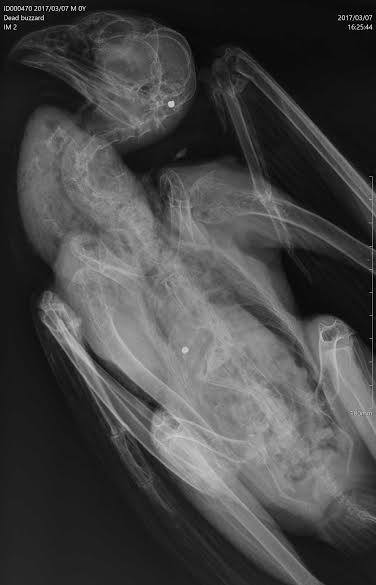
A dead buzzard was found on 1 February 2017 in an area called High Skelding, near the village of Grantley It was in a small coniferous plantation close to where the Ripon Rowel footpath crosses the upper River Skell.

The police arranged for an x-ray at a local vet and this shows that the bird had been shot. It is thought to have been shot between 31st January and 1st February.

Buzzards, along with all wild birds, are protected under the Wildlife and Countryside Act 1981 and it is a criminal offence to kill or injure any wild bird. The government has set persecution of birds of prey as one of their wildlife crime action priorities.

If you have any information about this crime please contact North Yorkshire Police on 101. After being connected to North Yorkshire Police select option 1 and quote reference number 12170018791 when passing on information. Alternatively contact the investigating officer PC820 Hickson by email: bill.hickson@northyorkshire.pnn.police.uk

ENDS

A good, detailed press release and appeal to the public that has only taken three weeks, not three years, to come out (take note Police Scotland).

North Yorkshire is consistently rated the worst county in the UK for the number of reported crimes against raptors, and a lot of it takes place in the Nidderdale Area of Outstanding Natural Beauty and the neighbouring Yorkshire Dales National Park. We were only talking about this region two weeks ago in relation to the poisoning of red kites.

Buzzard shot in Essex

The following images and text have been posted on the South Essex Wildlife Hospital facebook page:

‘A very weak buzzard found at the side of a road was assumed to have been a road traffic casualty. Having x-rayed the bird, the reason it wasn’t flying was obvious. Several shot gun pellets were lodged in its body, wing and leg. Vet Tom removed as many as he could once the bird was strong enough for surgery. It is recovering and does seem much stronger now. We hope to release it soon but must be sure it is able to survive in the wild’.

This case has been reported to the police.

Mystery hen harrier ‘John’ from the class of 2016

Yesterday Mark Avery wrote a blog about DEFRA’s ridiculous hen harrier brood meddling plan, due to start this year.

In his blog, Mark reminded us that in 2016 there were four young hen harriers that were satellite-tagged at two nests on Forestry Commission land in Northumberland, as mentioned in this local newspaper article last summer.

Since the summer of 2016, we’ve been able to follow the movements of two of those birds because their sat tags were fitted by the RSPB, who have posted fortnightly updates on the RSPB Hen Harrier Life Project website. One of those birds (Finn) is still alive, and the other one (Carroll) is dead.

So what of the other two birds, tagged in Northumberland by Natural England?

Well, one of them was called Mick, and we were told nothing about this bird until a few days ago when we learned he’d ‘disappeared’ in the Yorkshire Dales National Park just before Xmas 2016.

The other one, we’ve learned on the grapevine, is/was called ‘John’. Again, we’ve been told nothing of this bird’s movements since he fledged last summer – we don’t even know if he’s still alive.

Nothing like a bit of public engagement, eh Natural England?

We’ll need to update our record on the fate of the class of 2016, now we know about Mick & John. So here it is:

Hen harrier Elwood – ‘disappeared’ in the Monadhliaths just a few weeks after fledging (Aug ’16).

Hen harrier Brian – ‘disappeared’ in the Cairngorms National Park just a few weeks after fledging (Aug ’16).

Hen harrier Donald – missing in northern France, presumed dead (Autumn ’16).

Hen harrier Hermione – found dead on Mull, believed to have died from natural causes (Sep ’16).

Hen harrier Rowan – found dead in Yorkshire Dales National Park. He’d been shot (Oct ’16).

Hen harrier Tarras – ‘disappeared’ in the Peak District National Park (Oct ’16).

Hen harrier Beater – missing in Scottish Borders, presumed dead (Nov ’16).

Hen harrier Bonny – ‘disappeared’ in the North Pennines, presumed dead (Dec ’16)

Hen harrier Mick – ‘disappeared’ in the Yorkshire Dales National Park, presumed dead (Dec ’16).

Hen harrier Carroll – found dead in Northumberland, PM revealed a parasitic disease & two shotgun pellets (Jan ’17).

Ten down, seven to go (Aalin, DeeCee, Finn, Harriet, Wendy, Sorrel, John).

Satellite-tagged hen harrier Mick ‘disappears’ in Yorkshire Dales National Park

mickNatural England has today issued the following press statement:

North Yorkshire Police is appealing for information following the loss of a hen harrier in Upper Swaledale.

Mick, a young male, fledged in Northumberland last summer. He was fitted with a satellite tag in July by a hen harrier expert from Natural England. His tag stopped transmitting on 21 December 2016 in the Thwaite area of North Yorkshire. A search of the area has been carried out but no trace of the bird or equipment has been found.

Natural England reported Mick’s disappearance to North Yorkshire Police and is working closely with wildlife crime officers, local landowners, the Moorland Association and the Yorkshire Dales National Park Authority.

The loss of another juvenile hen harrier brings the total to five within four months across northern England – and is a serious blow to the small English hen harrier population. Interference with hen harriers is a criminal offence.

Rob Cooke, a Director at Natural England, said:

The disappearance of a hen harrier is deeply concerning to all who appreciate these rare and impressive birds. Any information that can shed light on what has happened to Mick will be gratefully received by North Yorkshire Police“.

David Butterworth, Chief Executive at the Yorkshire Dales National Park Authority said:

It’s incredibly disappointing that the Yorkshire Dales’ reputation as a wonderful place to visit is being damaged by incidents like this. We have pledged to provide whatever support we can to help the Police and Natural England find out what happened in this particular case“.

Anyone with any information which could help police with their enquiries should contact North Yorkshire Police on 101, or Crimestoppers anonymously on 0800 555 111. Please quote reference number 12170014975 when passing information.

END
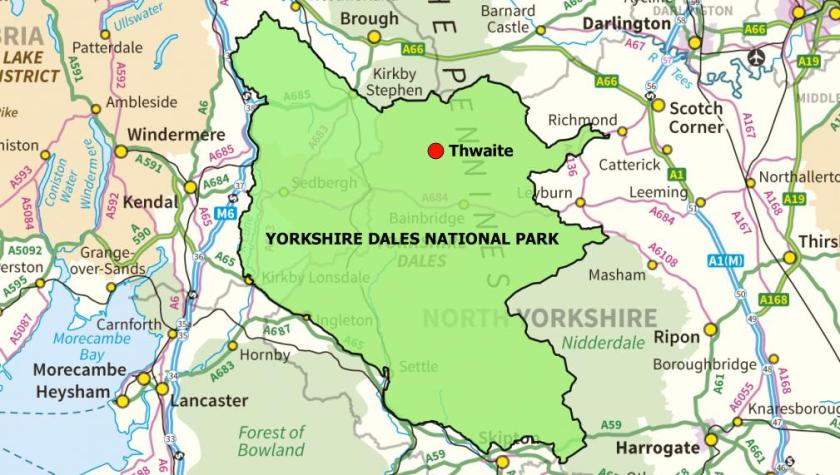
ydnp2

Thwaite is an interesting area, dominated by driven grouse moors (the dark brown areas with the patchwork of rectangular burnt heather strips on this map):
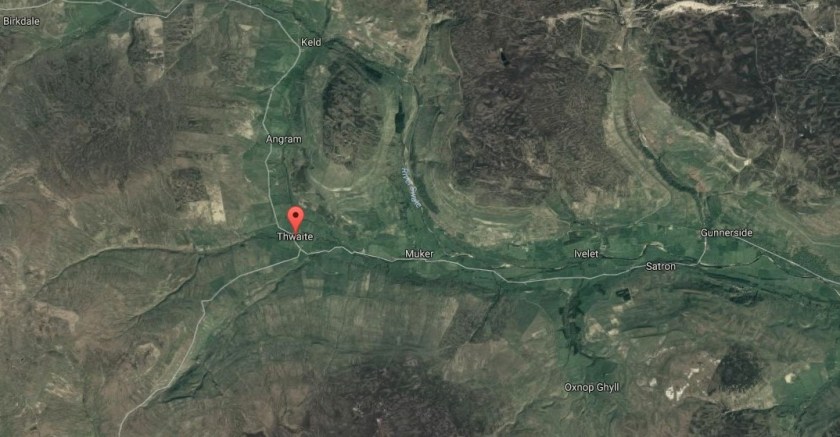
thwaite2

The Yorkshire Dales National Park and the neighbouring Nidderdale Area of Outstanding Natural Beauty are well-known blackspots for hen harriers (and many other raptors). Hen harriers have not bred successfully in the Yorkshire Dales National Park since 2007. According to 2007-2014 hen harrier satellite data, published by Natural England in 2014, at least nine young sat tagged hen harriers (11 if we include Rowan & Mick) have ‘disappeared’ or been killed within the National Park / AONB area:

Female, tagged N England 26/6/07: last tag signal 5/10/07. Status: missing.

Female, tagged N England 16/7/09: last tag signal 27/9/09. Status: missing.

Male, tagged Bowland 29/6/09: last tag signal 17/8/09. Status: missing.

Female, tagged N England 29/6/10: last tag signal 25/11/10. Status: missing.

Female (Bowland Betty), tagged Bowland 22/6/11: found dead 5/7/12. Status: shot dead.

Female (Kristina), tagged N England 25/6/12: last tag signal 9/10/12. Status: missing.

Male (Thomas), tagged N England 4/9/12: last tag signal 4/9/12. Status: missing.

Male (Sid), tagged Langholm 21/9/14: last tag signal 21/9/14. Status: missing.

Female (Imogen), tagged N England 26/6/14: last tag signal 1/9/14. Status: missing.

Male (Rowan), tagged Langholm 2016: found dead 22/10/16. Status: shot dead.

Male (Mick), tagged Northumberland 2016: last tag signal 21/12/16. Status: missing.

Mick was a Natural England-tagged bird, so he doesn’t appear on the RSPB’s Hen Harrier Life Project website. He does, though, now appear on our ever-lengthening list of 2016-fledged hen harriers that have died and / or ‘disappeared’:

Hen harrier Elwood – ‘disappeared’ in the Monadhliaths just a few weeks after fledging.

Hen harrier Brian – ‘disappeared’ in the Cairngorms National Park just a few weeks after fledging.

Hen harrier Donald – missing in northern France, presumed dead.

Hen harrier Hermione – found dead on Mull, believed to have died from natural causes.

Hen harrier Rowan – found dead in Yorkshire Dales National Park. He’d been shot.

Hen harrier Tarras – ‘disappeared’ in the Peak District National Park.

Hen harrier Beater – missing in Scottish Borders, presumed dead.

Hen harrier Bonny – ‘disappeared’ in the North Pennines, presumed dead.

Hen harrier Carroll – found dead in Northumberland, PM revealed a parasitic disease & two shotgun pellets.

Hen harrier Mick – ‘disappeared’ in the Yorkshire Dales National Park, presumed dead.

Ten down, six to go (Aalin, DeeCee, Finn, Harriet, Wendy, Sorrel).
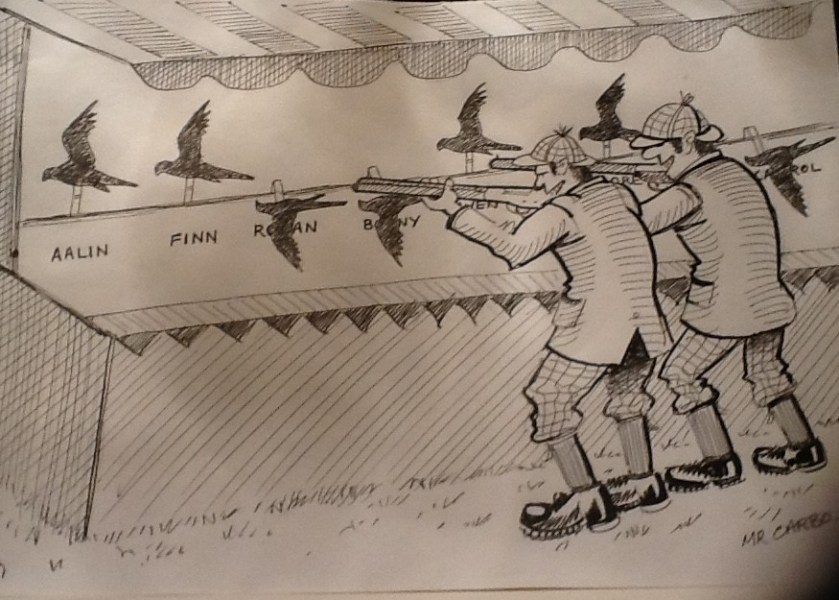
Mick’s last tag signal was received on 21 December 2016. So he ‘disappeared’ before Xmas and yet it’s taken Natural England / North Yorkshire Police almost seven weeks to issue this appeal for information. That’s pretty poor. If you’d prefer not to have to rely upon Government agencies releasing information way too late to help, you might want to consider donating to BAWC’s new raptor satellite-tagging project, where information about tagged birds will be publicised with greater speed and accuracy, and not delayed by wasting time ‘working closely’ with the likes of the Moorland Association. Please visit BAWC’s crowdfunding/donations page HERE

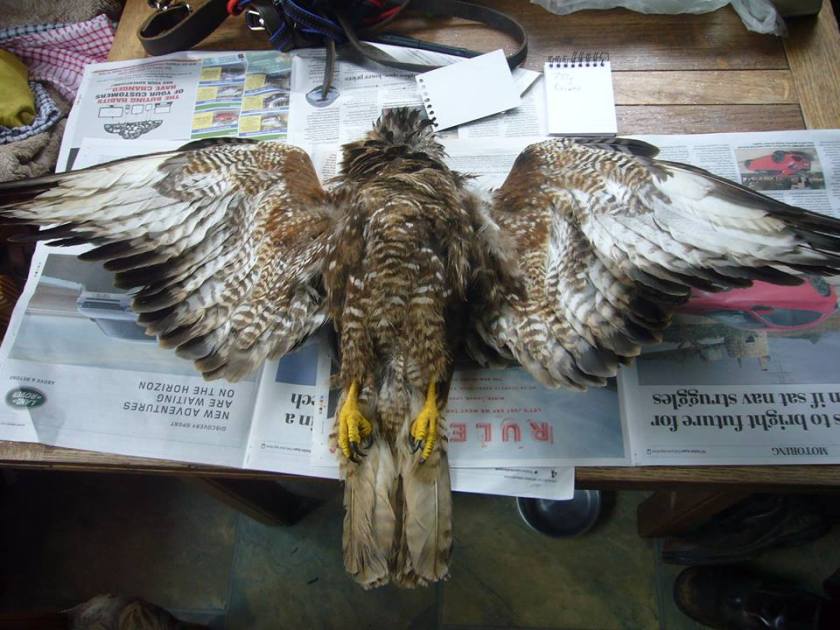
Satellite-tagged Hen Harrier ‘Carroll’ is dead

With depressing predictability, another of the 2016 cohort of young hen harriers has been found dead.

‘Carroll’ hatched in a nest on Forestry Commission land in Northumberland – one of only three nests in England last year. Named after the late raptor worker Mick Carroll, this bird was satellite-tagged as part of the RSPB’s Hen Harrier LIFE Project.

Her satellite tag revealed that she didn’t wander very far during her short life, spending much of her time within the boundary of the Northumberland National Park. This map of her movements has been provided by the RSPB’s Hen Harrier Life Project:

On 26 January 2017 a local landowner found Carroll’s body and immediately reported it to the authorities. A post mortem revealed she had died with a parasitic infection, but it also revealed two shotgun pellets lodged under healed wounds, one in the leg and one in the throat. Thankfully, the RSPB is handling this case, not Natural England, so the x-ray showing the shotgun pellets in her body has been published. There’s no attempt at obfuscation, no suggestion Carroll was ‘likely to have been shot’, no attempted cover up – the message is clear –  at some point, Carroll had been shot, perhaps when she was in the supposed ‘safety’ of the Northumberland National Park. The RSPB knows very well that publishing this x-ray will not ‘affect the course of justice’ as Natural England has claimed for shot hen harrier Rowan, whose corpse was found in the ‘safety’ of the Yorkshire Dales National Park. The RSPB knows it won’t affect the course of justice because they know justice won’t be served – nobody will be prosecuted for shooting this precious, threatened species.

Carroll’s name can now be added to the growing list of young hen harriers that have died or ‘disappeared’ since fledging in 2016:

Hen harrier Elwood – ‘disappeared’ in the Monadhliaths just a few weeks after fledging.

Hen harrier Brian – ‘disappeared’ in the Cairngorms National Park just a few weeks after fledging.

Hen harrier Donald – missing in northern France, presumed dead.

Hen harrier Hermione – found dead on Mull, believed to have died from natural causes.

Hen harrier Rowan – found dead in Yorkshire Dales National Park. He’d been shot.

Hen harrier Tarras – ‘disappeared’ in the Peak District National Park.

Hen harrier Beater – missing in Scottish Borders, presumed dead.

Hen harrier Bonny – ‘disappeared’ in the North Pennines, presumed dead.

Nine down, six to go (Aalin, DeeCee, Finn, Harriet, Wendy, Sorrel).

What an appalling situation. Does anybody (apart from the Hawk & Owl Trust) still believe that the grouse shooting industry has cleaned up its act?

UPDATE 07.30hrs: There’s a very good RSPB Skydancer blog about Carroll’s demise here