
The RSPB’s Hen Harrier team has today announced the ‘disappearance’ of yet another satellite-tagged hen harrier.
This time it’s a two-year old female called ‘Chance’, whose last sat tag signal came from a grouse moor in South Lanarkshire at the end of May. The RSPB’s Investigations team conducted a search for the body/tag but nothing was found.
Incidentally, this is the same area, dominated by grouse moors, where another sat-tagged hen harrier (Annie) was found shot last year (see here).
As always, this ‘disappearance’ leads to two standpoints. Without conclusive evidence of a carcass or a dropped satellite tag, the grouse-shooting industry can, and will, suggest that the bird hasn’t been killed but rather it’s just a sat tag failure and that Chance is probably still alive, and that it was just pure coincidence that the last sat tag signal came from a grouse moor.
Now that explanation might be plausible if it was the first or second time it had occurred, but the thing is, it isn’t the first or second time this has happened to a sat-tagged hen harrier. We know from past experience that an awful lot of young, sat-tagged hen harriers mysteriously ‘disappear’ when those birds have been visiting grouse moors. In fact, the majority ‘disappear’. According to Natural England data, we know that of 47 young hen harriers that were fitted with sat tags between 2007-2014, a staggering 78.7% of them ‘disappeared’.
And only a couple of weeks ago we were told of another sat-tagged harrier that had ‘disappeared’ – that was a bird named Highlander whose signal vanished when she was visiting a grouse moor in Durham earlier this spring (see here).
We’ve also learned, in recent weeks, that some of the methods employed to ‘help’ hen harriers ‘disappear’ on grouse moors are still very much in use (see here and here), even though the grouse-shooting industry is supposed to be signed up to DEFRA’s Hen Harrier Inaction Plan.
It has been blatantly obvious for some time what has been going on, and with the familiar, predictable news of yet another ‘disappearing’ harrier on a grouse moor, the picture becomes ever clearer. The Untouchables are still getting away with it.
In the same RSPB blog (here), it has been announced that there is currently a hen harrier breeding attempt at Geltsdale, bringing the total number of known, active hen harrier nests in England this year to three. You might think that’s good news, and indeed the RSPB are painting it as such, but let’s be honest, three hen harrier nests in the whole of England, where there’s suitable habitat for an estimated 330 nests, is appalling by anyone’s standard. It’s a less than 1% success rate and we don’t yet know whether these three nests are even going to be successful.
You might think that the hen harriers have made a safe choice by attempting to breed at Geltsdale – it’s an RSPB Reserve and so the birds can expect a very warm welcome from the wardens and volunteers who look after this site. But remember, there was a breeding attempt at Geltsdale last year but it failed after the adult male ‘disappeared’ while he was off hunting, away from the safety of the Reserve. He was one of five adult males that ‘disppeared’ from active nests in England last year (see here). And over the years there has been a catalogue of raptor persecution incidents, both on Geltsdale and on the neighbouring grouse moor estates. These incidents, dating back over the last 20 years, include shot hen harriers, shot peregrines, poisoned ravens, poisoned buzzards, poisoned peregrines, poisoned baits, and a poisoned hen harrier.
And even if, against all odds, these three active nests in England ARE successful this year, what chance do the young fledged birds have once they leave these heavily protected sites? Not a chance in hell while driven grouse shooting is allowed to continue and while the authorities continue to turn a blind eye to the criminal activities of the grouse-shooting industry.
If you want to put an end to this carnage, please join 46,000 concerned members of the public and sign this e-petition to ban driven grouse shooting: HERE
Photo of a hen harrier by Gordon Langsbury.
 Last week the Moorland Association (MA) went in to full damage limitation mode and sent around an e-newsletter to its members about recent events (e.g.
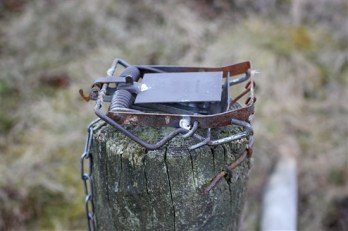 It’s been two weeks since the news emerged that a gamekeeper on the Mossdale Estate in the Yorkshire Dales National Park had been filmed setting three illegal pole traps on a grouse moor where a female hen harrier had been observed hunting (see
  North Yorkshire Police are investigating the suspicious death of yet another red kite – the tenth red kite to have been either shot or found dead in suspicious circumstances in North Yorkshire in the last few months.
 Police Scotland has issued an appeal for information following the discovery of disturbed and abandoned buzzard and goshawk nests in the Moy Forest near Tomatin in the Scottish Highlands.
 Following this morning’s news (see
  This won’t come as any surprise to anyone, but it has now been confirmed that
  What this press release doesn’t say is that this goshawk site is a historical one (i.e. goshawks have attempted to breed here in the past) although strangely the site has never been successful, with breeding attempts always failing by the incubation stage. Perhaps not so strange when you realise that the site is adjacent to a driven grouse moor.
 Raptor Persecution UK