Peregrine found shot next to grouse moor in Peak District National Park

On Tuesday 6 September 2016, a critically-injured peregrine was found by walkers on a road in the Goyt Valley in Derbyshire. It was in shock and unable to fly.

perg-goyt-copy

The juvenile peregrine was collected by volunteers from Raptor Rescue and held overnight. The following day it was taken to a vets in Ashbourne where it died from its injuries. An x-ray revealed the bird’s wing bones had been smashed to pieces with lead shot. The extent of its injuries suggest this bird wouldn’t have been able to fly far from where it had been shot.

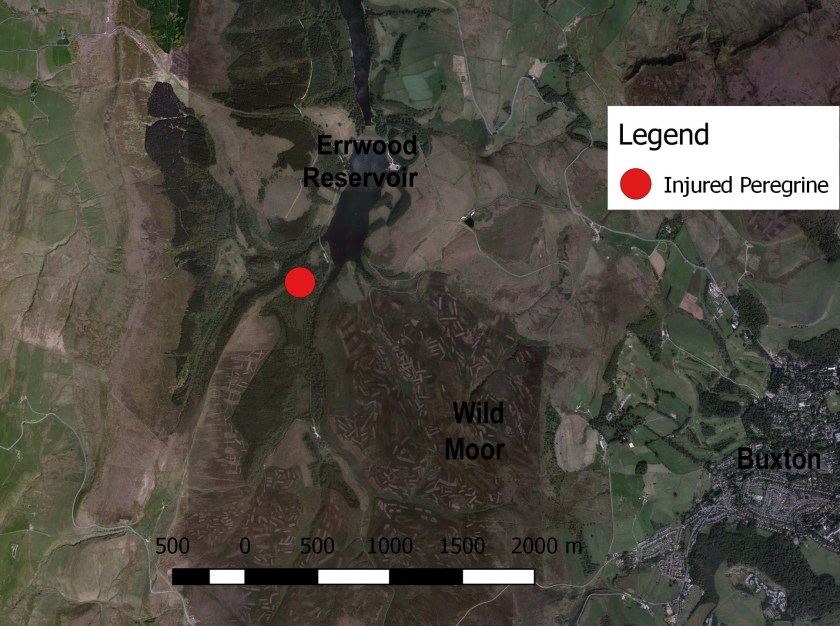
The Goyt Valley lies to the west of Buxton, within the Peak District National Park.

peregrine-goyt-overview-map

The Goyt Valley will be familiar to some blog readers as this was the venue for the Peak District’s 2015 Hen Harrier Day gathering, just half a mile to the south of where this peregrine was found near Errwood Reservoir. It’s interesting to note that the injured peregrine was found on the border of the Special Protection Area (SPA) boundary and also within the Site of Special Scientific Interest (SSSI) boundary. Oh, and look at the burnt strips of heather moorland to the south east of where the shot bird was found: Wild Moor is managed as a driven grouse moor. What an amazing coincidence.
goyt-peregrine-habitat-map-1

So here we are again, yet another raptor illegally killed within a National Park. And this National Park, the Peak District National Park, has, since 2011, been hosting a long-running Bird of Prey Initiative where ‘partners’ are supposed to have been ‘collaborating’ to increase bird of prey numbers. Five years in to the project we learned that none of the project targets had been met (see here) but that the Initiative was going to continue and extend from the Dark Peak to the South West Peak (which is where this bird was shot).

As Mark Avery commented at the time (here), “The response of the consortium is to keep pretending that everyone is on the same side and that chatting about things will bring an end to crime. It won’t“.

He was right. Raptor persecution within the Peak District National Park has continued, including the recent discovery of a spring-trapped osprey and a shot buzzard (see here), an armed man filmed sitting next to a decoy hen harrier (see here) and a suspected shot goshawk (see here).

Ironic, isn’t it, that while we were all sitting in a conference room in Sheffield at the weekend, at the edge of the Peak District National Park, listening to various speakers bleating on about ‘consensus’, ‘partnership working’ and ‘cooperation’ being the way forward, a few miles down the road the corpse of the latest victim was being shoved in a freezer, shot to pieces.

It is pitiful that this charade of ‘conflict resolution’ is allowed to continue when it is quite clear that some of the so-called ‘partners’ have no intention whatsoever of changing their criminal behaviour. They are out of control and the authorities seem unwilling, or unable, to stop them. Meaningful action against these criminals is being delayed by keeping everyone tied to the table in endless rounds of pointless talks. Enough.

The e-petition to ban driven grouse shooting has now amassed over 121,000 signatures and will result in a Westminster evidence session followed by a parliamentary debate. The petition closes in one week – if you haven’t already signed, please do so now and let your MP know that this issue is important to you. PLEASE SIGN HERE

UPDATE 14 Sept: Derbyshire Constabulary issues appeal for information here

UPDATE 15 Sept: BBC News runs the story here
Philip Merricks moves his “immoveable conditions”

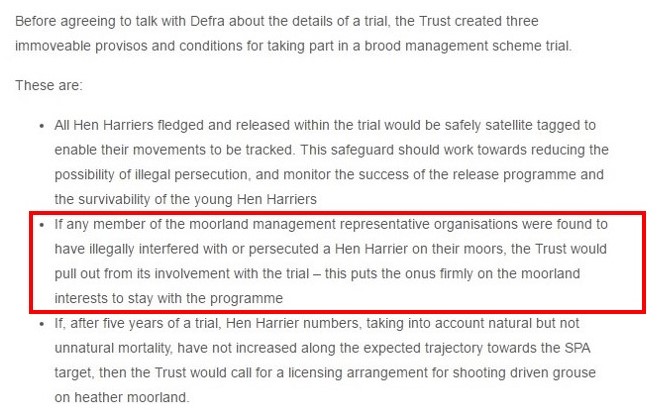
Back in June, we blogged about the Hawk & Owl Trust’s supposed “immoveable provisos and conditions” that had been set, by them, as part of their agreement for taking part in DEFRA’s brood meddling plan (see here).

Here they are, as a reminder:

HOT2

We were interested to hear whether the setting of three illegal pole traps on the Mossdale Estate grouse moor would cause the Hawk & Owl Trust to pull out of the brood meddling scheme because it seemed that one of their “immoveable provisos and conditions” had been broken. The Hawk & Owl Trust didn’t respond.

But now they have, in a comment written by Philip Merricks (Hawk & Owl Trust Chair) on Mark Avery’s blog today (see here), and the response is astonishing.

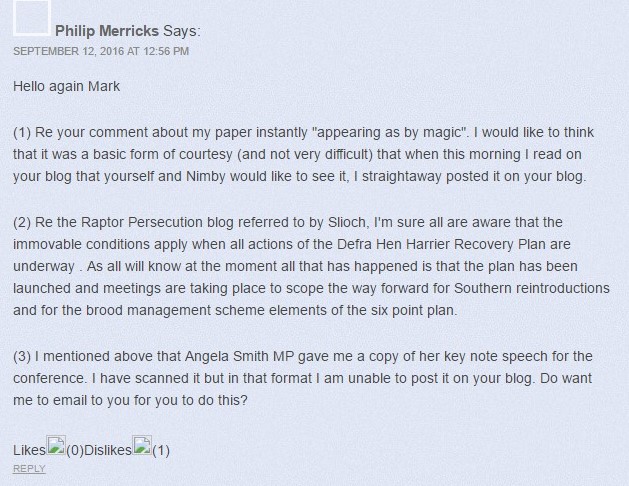
merricks-response

According to Philip, those “immovable conditions” only apply “when all actions of the DEFRA Hen Harrier Recovery Plan are underway“. As two elements of the Plan have yet to begin (brood meddling and the southern reintroduction), apparently the “immovable conditions” are not yet applicable.

But that’s not what the Hawk & Owl Trust said in their original statement about those “immoveable conditions“. Have another look at the Hawk & Owl Trust’s original statement (top image above). The first line reads:

‘Before agreeing to talk with DEFRA about the details of a trial, the Trust created three immoveable provisos and conditions for taking part in a brood management scheme trial’.

What a total bloody cop out! Philip has demonstrated that the Hawk & Owl Trust’s intentions are just as disingenuous as those claimed by the grouse-shooting industry at the beginning of the year when they professed tolerance to a limited number of hen harriers on their moors. Philip knows and accepts that since the DEFRA plan was launched in January 2016 (here), illegal hen harrier persecution has taken place – he acknowledged this throughout his presentation in Sheffield at the weekend (see here), and yet here he is, suggesting that this year’s persecution incidents ‘don’t count’ because the full plan has yet to be launched.

This isn’t conflict resolution, this is the Hawk & Owl Trust acting as apologists for an industry which relies upon the illegal killing of birds of prey. It’s shameful.

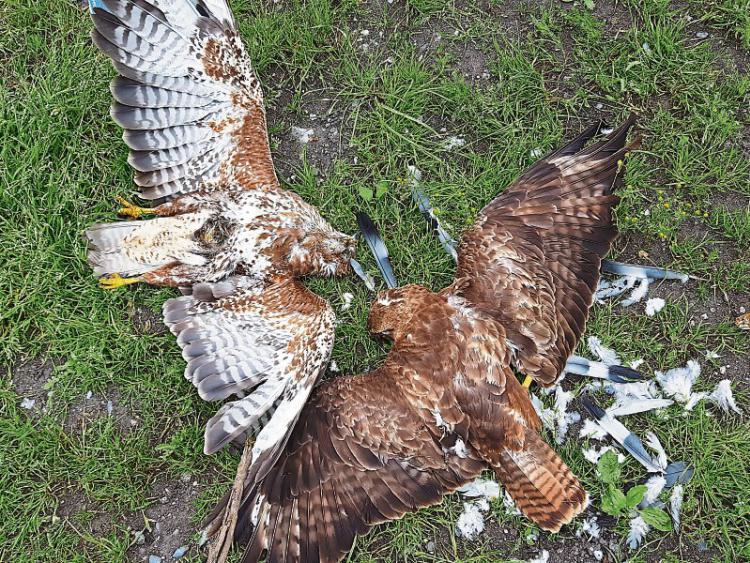
Three poisoned buzzards found in Co Laois, Ireland

The National Parks and Wildlife Service in Ireland is appealing for information after the discovery of three poisoned buzzards.

The buzzards were discovered in a field in Cappakeel, Emo, County Laois over the August Bank Holiday weekend. Toxicology tests have revealed they’d been poisoned with Carbofuran.

Full details from the Leinster Express here

poisoned-buzzards-laois

An interesting letter from Invercauld Estate

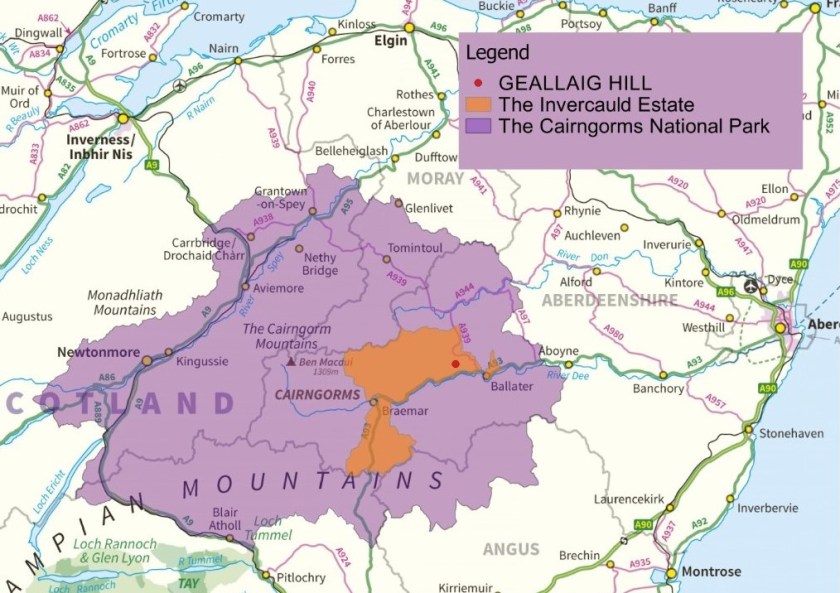
In July we blogged about the discovery in June of a critically-injured Common gull that had been found caught in two illegally-set spring traps on Invercauld Estate in the Cairngorms National Park (see here).

Cairngorms Invercauld - Copy

We also blogged about a bizarre press statement from Invercauld Estate (issued via the GWCT’s twitter feed) in which they denied any illegal activity had taken place or if it had, it was perhaps a set-up ‘intended to discredit the grouse industry‘ (see here).

We also blogged about the Scottish Gamekeepers’ Association’s press statement, which said the SGA was conducting its own enquiry (see here).

We also blogged about Police Scotland’s view that a Common gull had been found caught in an illegally-set trap but ‘despite a thorough investigation‘, Police enquiries had failed to find further evidence to proceed with a potential prosecution and ‘there are at present no further investigative opportunities available‘ (see here).

So that looked like the end of it. Until, through a series of FoIs to the Scottish Government and the Cairngorms National Park Authority, a very interesting letter has emerged.

The letter, dated 27 July 2016 (so a week after the original story had broken) was written by Angus McNicol, who identifies himself as the Estate Manager for Invercauld Estate, and was addressed to the Cabinet Secretary for the Environment, Roseanna Cunningham. A copy of the letter was also sent to the Cairngorms National Park Authority. It’s a fascinating read.

Here is a copy of the letter: Invercauld Estate letter

Having read it, our first question was, ‘Why was this letter written?’ That’s a hard question to answer because we can’t get inside Mr McNicol’s head to read his thought processes. We can, though, speculate about the intentions. In our opinion, this letter was written to reassure the Cabinet Secretary that Invercauld Estate takes wildlife crime seriously and they’ve done something about it.

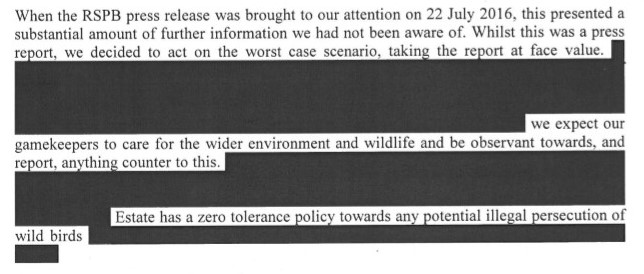
You’ll see that one paragraph in this letter has been partially redacted (by the Scottish Government – and, incidentally, the copy of the letter received from the Cairngorms National Park Authority was redacted in exactly the same place). It’s this partial paragraph that interests us the most. Here it is:

Invercauld redacted

Let’s focus on the sentence immediately before the redaction begins. “Whilst this was a press report, we decided to act on the worst case scenario, taking the report at face value“. Assuming that the ‘worst case scenario‘ might have been that an Estate employee was responsible for illegally setting the traps, the Estate ‘decided to act‘. What action they took is unknown, because that bit has been redacted. But interestingly, the word ‘gamekeepers’ appears later in the same paragraph.

Later in the letter, Mr McNicol reiterates that ‘action‘ had been taken:

Invercauldredacted2

So, was the ‘action’ to which Mr McNicol refers, disciplinary action against one or more Invercauld Estate gamekeepers in relation to this crime? Has somebody been sacked?

If that’s actually what happened, and if Mr McNicol has admitted this in writing, wouldn’t that trigger an investigation in to a potential vicarious liability prosecution?

Is that why, later in the letter, Mr McNicol goes to great lengths to explain the measures that Invercauld Estate has put in place to ensure its staff do not commit wildlife crimes? These measures, explained in such detail, might form the defence of ‘due diligence’ – remember, if an estate is accused of being vicariously liable for certain wildlife crimes, a defence of due diligence is permitted (see here).

Whether an estate’s attempts at due diligence are a sufficient defence to an accusation of vicarious liability is for a court to decide. We presume, if our interpretation of what happened is accurate, that both the Scottish Government and the Cairngorms National Park Authority have notified Police Scotland about the content of Mr McNicol’s letter and Police Scotland will now be following this up with an investigation? Time will tell.

The content of Mr McNicol’s letter raises some other interesting points.

Why, if Invercauld Estate has taken action against an employee, did the Estate deny in their original press statement that the offence had even taken place or claim that if it had, it had been a set-up ‘intended to discredit the grouse industry‘?

Who is the person/organisation that conducted “independent searches of hill ground and of buildings on the Estate to check for illegal traps, snares and illegal pesticides“? Presumably it wasn’t the GWCT – they can hardly be classed as being ‘independent’ if they’re publishing press statements on their twitter feed on behalf of Invercauld Estate. And presumably it wasn’t anybody from Scottish Land & Estates – they can hardly be classed as ‘independent’ as Mr McNicol states Invercauld Estate is a member of SLE. And presumably it wasn’t anybody from the SGA – they can hardly be classed as ‘independent’ as Mr McNicol states that ‘all the relevant staff are members of the SGA‘. So who was it?

When did these ‘independent searches of hill ground and of buildings on the Estate to check for illegal traps, snares and illegal pesticides” take place, and how often have they been conducted?

Why did Police Scotland, as part of what they described as a ‘thorough investigation‘, only speak to a representative of Invercauld Estate (Mr McNicol)? Why didn’t officers question, under caution, the gamekeepers who work on the part of the Estate where the illegally-set traps were found?

It’s all very interesting.

Perhaps we’ll get some answers once the SGA has finished its enquiry in to what happened. Presumably they’ll be publishing their findings in due course….

Gamekeeper accusing ‘bird activists’ of killing raptors was on TV last night

Following yesterday’s blog about that Scottish gamekeeper who was interviewed on BBC Scotland radio, accusing “bird activists” of killing satellite-tagged golden eagles and hen harriers (see here), he was also on the telly last night.

The TV piece was a shortened version of the radio interview. Here’s the transcript they left out:

I now have very strong reason to believe that we’ve got some bird activists in the area. I now have strong suspicions it’s a bird activist. They’re so close to winning this case against the grouse moors. I don’t know if any of the gamekeeper lads over this side of the hill would like to be responsible for going down in history for getting the grouse shooting banned but I certainly would imagine there’d be a few activists who’d take a chance of doing something and I wouldn’t put it past them“.

The TV version focuses on him denying any gamekeeper involvement because there’s ‘no evidence’. Unfortunately, the presenter didn’t do a very good job as he failed to challenge Mr McBeath’s views. He could have discussed the 30+ years worth of overwhelming evidence that all points to the grouse shooting industry, but he didn’t. Or if he did it was edited out.

Ah well, the video is still very funny. Here’s the clip from BBC Reporting Scotland (evening news, 30 Aug 2016).

Enjoy!

“Bird activists” killing satellite-tagged raptors, says gamekeeper

It’s ok everybody, the mystery of the vanishing satellite-tagged raptors has finally been solved. It wasn’t the (non-existent) wind farms (see here). And it wasn’t the unreliable satellite tags with a dodgy salt water switch attached to Olive Ridley Turtles off the coast of India (see here).

No, the real reason, according to a Scottish gamekeeper, is that “bird activists” have been killing off the raptors as part of a smear campaign against those who manage grouse moors.

Phew. Glad that’s all been cleared up.

Have a listen to gamekeeper Donald McBeath, interviewed on Good Morning Scotland earlier today (here – starts at 02:51:37, available for 29 days).

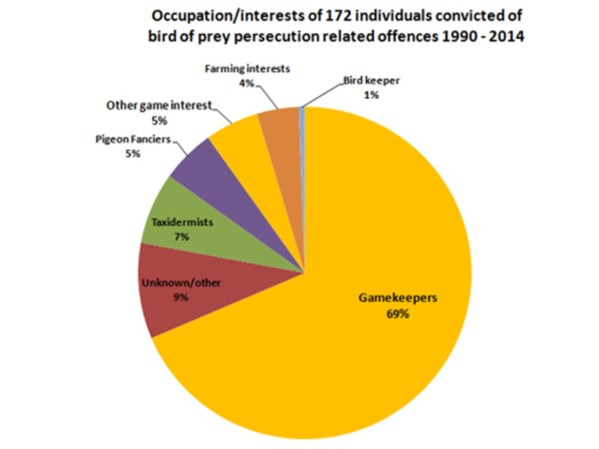
gamekeepers prosecuted - Copy

UPDATE 31 Aug 2016: The name of this gamekeeper is Donald McBeath, not Donald Macbeth.

UPDATE 31 Aug 2016: Mr McBeath was on the telly last night. Watch the video here

UPDATE 1 September 2016: PAW Scotland dismisses gamekeeper’s claims as ridiculous here

Review of Scottish raptor satellite-tag data widened to three species

A couple of weeks ago we blogged about the Cabinet Secretary for the Environment’s call for a review of golden eagle satellite tag data (see here). This was in response to the news that eight young satellite-tagged golden eagles had ‘disappeared’ on grouse moors in the Monadhliaths over a five year period, with three of them vanishing this year alone (see here). Cabinet Secretary Roseanna Cunningham called for the review “to discover if there is a pattern of suspicious activity“.

Shortly afterwards, the news broke that a young satellite-tagged hen harrier (‘Elwood’) had also ‘disappeared’ on a grouse moor in the Monadhliaths (see here). We wondered how Roseanna Cunningham would react to this news and hoped her response would be more substantial than the usual Ministerial expression of “disappointment“.

It seems she has taken note. Here is her response:

The news that a juvenile hen harrier has disappeared in the Monadhliaths, complete with its satellite tag, only weeks after it fledged, strengthens my determination to get to the truth about how, where and why raptors with functioning satellite tags seem to be regularly disappearing. I have asked for a review of all the evidence and I intend to ensure that data from hen harriers and red kites, as well as data from golden eagles will be considered as part of this. We are continuing to collect evidence in relation to raptors in Scotland, which will be a significant factor in deciding the next steps for tackling wildlife crime.”

So, the review has been widened from just looking at golden eagle satellite tag data to now including hen harrier and red kite satellite tag data. We are pleased about this (with certain caveats, see below), although we still maintain that the review is superfluous to understanding and acknowledging what’s happening to these species on driven grouse moors. The scientific evidence is already clear, and has been available to the decision makers for many, many years. Let’s not pretend we don’t know what’s going on. Looking for, and finding, ‘patterns of suspicious activity‘ has been done to death and the findings have been conclusive, over and over again.

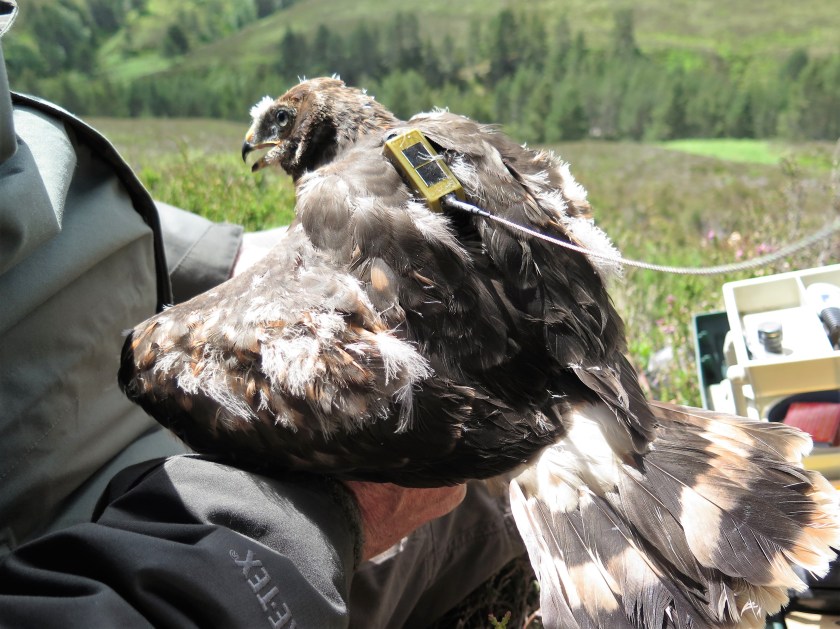
Elwood 2 - Adam Fraser

The reason we welcome the widening of this review is because we can already predict the results for each of the three species, and we predict they will all point to the same problem: the majority of young, satellite-tagged golden eagles, hen harriers and red kites that ‘disappear’ do so on driven grouse moors. Seeing the evidence from one species (golden eagles) would be pretty powerful, but having virtually identical results from two further species should be devastatingly compelling.

The caveat to welcoming this widened review is that the Scottish Government MUST push on with this review without delay and then MUST respond to the findings in a timely manner. This Government (and notably its statutory conservation advisory agency, SNH) has a long track record of prevarication when it comes to publishing results and then acting on the evidence provided. Here are some examples:

The Golden Eagle Conservation Framework (an holistic approach to assessing raptor conservation, trying to find out what’s going on regionally and nationally and trying to look at what’s limiting numbers and influencing productivity). This impressive and substantial review was submitted in 2003. It wasn’t published until 2008. The report identified illegal persecution as a significant constraint on the population.

The Hen Harrier Conservation Framework. Another impressive and substantial review that was submitted in 2008. It wasn’t published until 2011. The report identified illegal persecution as a significant constraint on the population.

The Hen Harrier Conservation Framework Update. This update was required after land managers criticised the 2011 report because it excluded results from the 2010 National Hen Harrier Survey. The update report was submitted in 2013. It has still not been published (and is likely to be further criticised because it won’t include results from the 2016 National Hen Harrier Survey!). We know (because we’ve attended several presentations given by one of the authors) that this report identifies illegal persecution as a significant on-going constraint on the population.

The Peregrine Conservation Framework. This review began in 2003 (or thereabouts – we’re not certain of the exact start date). An interm progress report was published in 2007 but nothing further since then.

The consultation on increased investigatory powers for the SSPCA. This consultation was first suggested in 2011. The consultation was finally launched in March 2014. The consultation closed on 1 September 2014. In May 2016, Cabinet Secretary Roseanna Cunningham said a decision “would be announced in due course“. This coming Thursday will mark two years since the consultation period ended.

Population modelling of red kites in northern Scotland. This review aimed to update the findings of a paper published in 2010 which showed illegal persecution was responsible for the slow population growth in this region. The review was submitted in 2015. It has yet to be published. We know (through informal discussions with colleagues) that this report identifies illegal persecution as a significant on-going constraint on this population.

Wildlife Crime Penalties Review. This review was commissioned in July 2013 and it finally reported in November 2015. In February 2016 the then Environment Minister Dr Aileen McLeod accepted the report’s recommendations. We have yet to hear how the Scottish Government intends to progress those recommendations.

Review of gamebird licensing and legislation in other countries. This report was commissioned in January 2016 and the final report was submitted in late spring 2016. The report has yet to be published. Claudia Beamish MSP has lodged a parliamentary question (dated 18 August 2016) to find out when the Government intends to publish.

Decision on the fate of the Tay beavers. In March 2012 the then Environment Minister Stewart Stevenson delayed a decision on the fate of the Tay beavers for three years, until the end of 2015. In May 2016, the current Cabinet Secretary Roseanna Cunningham announced a further delay ‘until later in 2016’. That decision is still pending.

These examples do not inspire great confidence in the Scottish Government’s willingness to act quickly on issues of wildlife conservation, and particularly those issues relating to the illegal persecution of raptors. These long delays only inspire frustration and increasing anger. Let’s hope that with this latest review of raptor satellite tag data, Roseanna Cunningham encourages a fast review process, doesn’t delay the publication of the findings, and acts quickly and robustly to implement measures against those who continue to flout the law.

Photograph shows young hen harrier ‘Elwood’ with his satellite tag, just a few weeks before he ‘disappeared’ on a grouse moor in the Monadhliaths. Photo by Adam Fraser.

Flawed Natural England policies assume gamekeepers don’t illegally kill raptors

We’ve been blogging for over a year about the use of propane gas guns on grouse moors and about our concerns that these booming bird scaring devices are being used to discourage raptors (and particularly hen harriers) from settling to breed (e.g. see here, here, here, here).

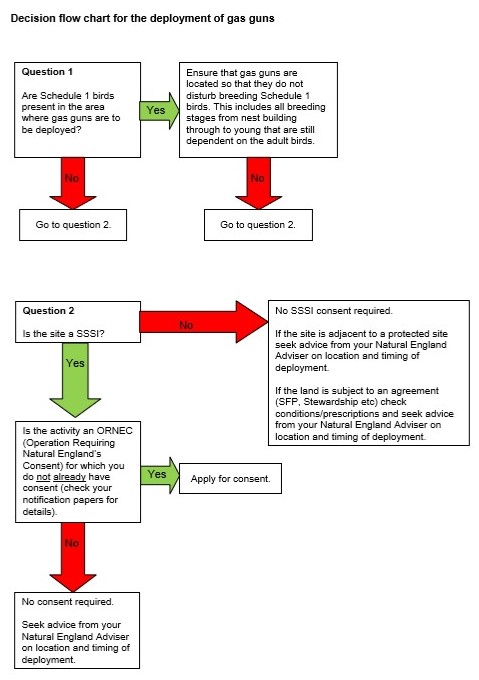
In June this year, Natural England finally produced what they called ‘guidance’ for those wishing to deploy gas guns and published a decision flow chart. It looked like this:

Gas gun guidance NE - Copy

A spokesperson for Natural England said he hoped the guidance was helpful (it wasn’t, see here) and welcomed further questions if clarification was needed.

One of our blog readers did want further clarification and he asked Natural England to explain how ‘ensuring that gas guns are located so that they do not disturb breeding Schedule 1 birds’ would work in practice?

Here’s Natural England’s response:

In response to your query the onus is on the land manager or their representative not to cause disturbance as that would be unlawful. The use of gas guns aims to dissuade species such as corvids from causing damage to ground nesting birds or livestock. On large expanses of open moorland they should be able to be deployed away from Schedule 1 species. Most managers should know where these species are present but it would be best practice for Natural England and other interested groups, for example raptor study group members, to pass on information over the location of Schedule 1 species to the land manager so they are in a more informed position and then able to ensure that gas guns are deployed appropriately“.

Ah, of course. Because telling the grouse moor manager/gamekeeper where you’ve seen hen harriers will undoubtedly lead to those birds being protected and left undisturbed, right? Have you got that, raptor study group workers?

And here’s another ingenious policy strategy from Natural England. In response to the news that Natural England had issued a licence to a gamekeeper allowing him to kill up to ten buzzards in order to ‘protect his pheasants’ (see here), another blog reader (@exPWCO) asked Natural England how they would check that just ten buzzards had been killed? Here’s Natural England’s response:

NEbuzzLicence

Ah, of course. Because asking a gamekeeper to fill in a form stating how many buzzards he’d killed under licence is bound to result in a truthful response, right?

Both of these policy statements just beggar belief. They are both based on the assumption that gamekeepers don’t illegally kill raptors, which, as we all know (and so should Natural England), is a flawed assumption.

gamekeepers prosecuted - Copy

Buzzard shot dead in Richmondshire, North Yorkshire

shot bz nyorksAug16North Yorkshire Police are appealing for information after the discovery of a buzzard that had been shot dead.

On 4th August 2016 a member of the public reported that a buzzard had been found dead near Manfield, North Yorkshire. The buzzard was recovered by the RSPB and taken to a vet in Leeds. An x-ray showed ten fragments inside the bird, consistent with being shot. It is not known how long the buzzard had been dead before it was found.

PC Rob Davies, of North Yorkshire Police’s Rural Taskforce, said: “Buzzards are fully protected under the Wildlife and Countryside Act 1981, making it a criminal offence to kill or injure them. The extent to which raptors are persecuted is completely unacceptable, so I am urging anyone with any information about this incident to get in touch with me without delay.”

Anyone who is aware of suspicious activity in the area, or has any information that could assist the investigation, is asked to contact PC Rob Davies at North Yorkshire Police by dialing 101 and selecting option 2, or via email rob.davies@northyorkshire.pnn.police.uk. Alternatively, contact Crimestoppers anonymously on 0800 555 111. Please quote reference number 12160140036.

North Yorkshire maintains its status as one of the worst places in the UK for the illegal killing of birds of prey. It’s a county where much of the landscape is dominated by grouse moors, particularly in the two National Parks: the North York Moors NP and the Yorkshire Dales NP, as well as a large number of pheasant and partridge shoots.

This year, other raptor persecution crimes uncovered in North Yorkshire have included several illegally spring-trapped buzzards, several shot buzzards, at least ten shot red kites, and a gamekeeper filmed setting three illegal pole traps in the vicinity of a hen harrier.

There’s still time to sign the e-petition calling for a ban on driven grouse shooting. Over 116,000 people have had enough – have you? Please sign here.

Young satellite-tagged hen harrier ‘Elwood’ disappears on Monadhliath grouse moor just weeks after fledging

ElwoodWith depressing predictability, news has emerged that one of this year’s young satellite-tagged hen harriers (a male called ‘Elwood’) has ‘disappeared’ on a grouse moor in the Monadhliath mountains just a few weeks after he fledged from his nest in Banffshire.

RSPB press release:

Another satellite-tagged bird of prey disappears in the Monadhliath Mountains

RSPB Scotland has today announced that a young male hen harrier, fitted with a satellite transmitter as part of the charity’s part EU funded Hen Harrier LIFE+ Project, has gone missing on a grouse moor in the Monadhliath Mountains, south-east of Inverness.

The bird, named Elwood, was the only chick to fledge from a nest in Banffshire, which was being monitored under the Partnership for Action against Wildlife Crime Scotland (PAW Scotland) ‘Heads-up for Harriers scheme’.

The transmitter’s data, being monitored by RSPB Scotland staff, indicated that the young bird fledged from its nest in the first week of July, but stayed close to the site in the hills above the River Spey until the 20th, when he began to travel more widely. By the 27th, he had moved 20 miles to the south west, and had settled in the hills around Tomatin.

The bird remained in this area, with the transmitter providing detailed information about his daily travels until suddenly, transmissions ceased abruptly on August 3rd. The bird’s last recorded position was on an area of managed moorland a few miles from the Slochd summit on the A9.

Last week, news emerged that eight satellite-tagged golden eagles had also disappeared in the northern Monadhliaths in the last five years, with three of these birds, whose transmitters were also functioning normally, going ‘off the radar’ this spring [see here].

Ian Thomson, RSPB Scotland’s Head of Investigations, said: “This latest disappearance of a satellite-tagged bird is deeply concerning, and joins the long list of protected birds of prey that have been confirmed to have been illegally killed or disappeared suddenly in this area. The transmitters being fitted to these birds are exceedingly reliable, and illegal persecution is therefore the most likely explanation of the disappearance of these birds of prey. The absence of typical breeding raptor species from areas of suitable habitat, or at traditional nesting sites, in large parts of the Monadhliaths is further supporting evidence of a major problem with wildlife crime in this general area.

This case is all the more depressing as the nest from which Elwood successfully fledged was monitored as part of a partnership project between PAW Scotland and the local landowner. It proves, yet again, that despite there being a good number of enlightened estates who are happy to host and protect nesting birds of prey – as soon as they move away from these areas they are being illegally killed.

The denials and obfuscation from representatives of the land management sector, and their consistent failure to acknowledge and address this problem, is one of the main reasons why our bird of prey populations are struggling in the central and eastern Highlands. We repeat our call to the Scottish Government to introduce a robust system of licensing of game bird hunting, where the right to shoot is dependent on legal and sustainable management of the land, in line with approaches adopted in most other European countries.”

END

So what now, Roseanna Cunningham, Cabinet Secretary for the Environment? How are you going to react to this one? Are you going to tell us how ‘disappointed’ you are? Are you going to tell us that more research needs to be done to understand why driven grouse moors in Scotland are almost devoid of breeding hen harriers (and golden eagles and peregrines)? Are you going to tell us that the Partnership for Action against Wildlife Crime is effectively addressing this problem? Are you going to believe the lies of the organisations within the grouse-shooting industry that there is ‘no evidence’ that raptors are routinely and systematically killed on driven grouse moors? Are you going to tell us you’re still looking for ‘a pattern of suspicious activity’? Are you going to tell us that you will ‘not hesitate to take further action if deemed necessary’? Are you going to tell us we need to wait to see whether previous anti-persecution measures are working?

How about you tell us that you’ve had enough, that you believe that further action IS necessary and that you’ll be using your powers as Cabinet Secretary for the Environment to put an end to this shameful slaughter?

You could support the call for an introduction of licensing for all gamebird hunting in Scotland, so that these grouse-shooting estates can finally be held to account for their criminal acts. Well, assuming any licensing system is actually properly enforced, but that’s another matter.

And you really should pay attention to the strength of feeling against driven grouse shooting that has emerged south of the border (with considerable support from Scottish voters, too), which will now result in a parliamentary debate in Westminster later this autumn on the subject of banning driven grouse shooting.

Whatever you do, plenty of people here, and around the world, are watching.