Environment Minister misses the point

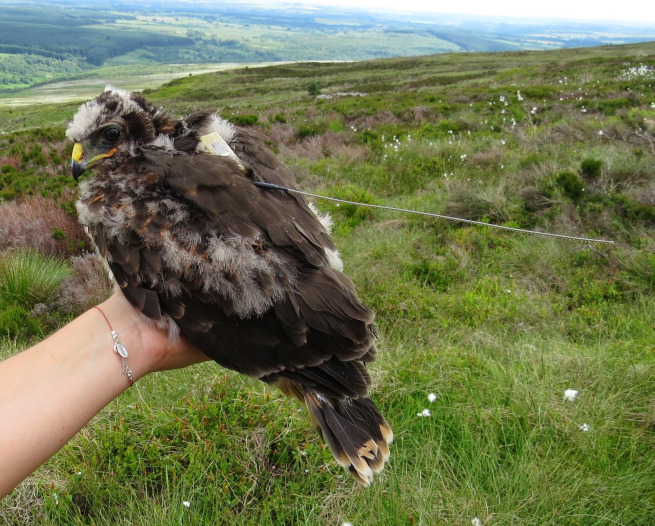
annie-with-her-sat-tagIn August this year, over 300 blog readers emailed Environment Minister Dr Aileen McLeod in response to the news that Langholm hen harrier ‘Annie’ had been found shot dead on a Scottish grouse moor (see here). Well done to all of you who took the time to write.

The Minister issued a press statement within a few hours. The response time was impressive, the content wasn’t (see here).

Now a month later, the Minister has been responding to the individual emails that she received (well, one of her civil servants has been responding on her behalf). We’ve been sent a number of these responses and they’re all identical. Here’s what the response says:

Thank you for your letter of 11 August 2015 to the Minister for Environment, Climate Change and Land Reform, Dr Aileen McLeod. I have been asked to respond on her behalf. Please accept my apologies for the delayed response.

Let me reassure you that the Scottish Government has been and remains committed to tackling wildlife crime. Since 2007 we have built a strong and broad-based Partnership for Action against Wildlife Crime in Scotland (PAW Scotland) involving conservationists, land managers and law enforcement.

We also have a group dedicated to tackling raptor persecution – the PAW Scotland Raptor Group – which is made up of representatives from law enforcement and government agencies, RSPB, Scottish Raptor Study Groups, Scottish Land & Estates, Scottish Gamekeepers Association, British Association for Shooting and Conservation, Game & Wildlife Conservation Trust and the Cairngorms National Park Authority.

We have pursued a number of initiatives since 2007, including for example

  • the first restrictions on the use of General licences by those convicted of wildlife crimes
  • tightening up of law relating to trapping and snaring, including the introduction of training and registration requirements for operators
  • new provisions in the Wildlife and Countryside Act relating to the protection of the nests of birds such as white-tailed eagles and protection against harassment for birds such hen harrier
  • the introduction of vicarious liability provisions for offences related to wild birds

Some of these initiatives were ground-breaking in the UK and have now also been adopted by England and Wales.

There are also a number of pieces of current work which are underway, which I will take this opportunity to update you on.

Pesticides Disposal Scheme – this Scottish Government funded scheme ran from 23 February to 29 May 2015. The scheme has removed over 720kg of highly dangerous toxic chemicals from Scotland’s environment and ensured they cannot be used to poison wild birds. Details about what was removed from Scotland’s environment were published on 9 September. There remains no good reason for people to retain these substances.

Wildlife Crime Penalties Review – this review has taken a comprehensive look at whether the penalties available to the courts in wildlife crime cases are adequate and appropriate. The review has been submitted to Ministers and will be published shortly.

Further restriction of General Licences – this new procedure which has been recently introduced will see restrictions being imposed on the use of general licences over land where it is believed the wildlife crime has taken place. A number of cases have been under consideration and I expect further news to be made public imminently. SNH will publish details of imposed restrictions when it is appropriate to do so.

Law enforcement obviously has a key role to play. Since being established, Police Scotland has ensured that there is a wildlife crime liaison officer (WCLO) in each police division and has also already delivered and made significant commitment to ongoing training not only for existing WCOs, but also to other officers force wide. Police Scotland aim to bring a consistent and professional approach to wildlife crime investigations, including the use of modern forensic techniques.

The Crown Office and Procurator Fiscal Service has a dedicated Wildlife and Environmental Crime Unit with four specialist Procurators Fiscal who have developed an extensive knowledge in this area, and have now secured the first prosecution in relation to vicarious liability. There has also been the first custodial sentence for a gamekeeper found guilty of killing wild birds.

The Scottish Government has previously stated that it would be prepared to consider the licensing of shooting businesses to further regulate this sector, however it is important that we are able to assess the impact of the measures that have been recently implemented, or are still to be fully implemented, before consideration is given to the introduction of any further regulatory measures. We do not consider it is appropriate to react to every instance of criminal activity with further changes to the law. Scotland already has some of the strongest laws to deal with wildlife crime. Appropriate action by the law enforcement agencies is the correct response to wildlife crime, as with any other criminal activity.

I hope that this response demonstrates the breadth of work that is ongoing in this area.

Yours faithfully,

Karen Hunter

Wildlife Crime Policy Officer

END

As you can see, it’s full of the usual guff about ‘commitment’ and ‘partnership-working’ yada yada. But there are a couple of things that particularly interested us –

First:

We have pursued a number of initiatives since 2007, including for example

  • the first restrictions on the use of General licences by those convicted of wildlife crimes
  • tightening up of law relating to trapping and snaring, including the introduction of training and registration requirements for operators
  • new provisions in the Wildlife and Countryside Act relating to the protection of the nests of birds such as white-tailed eagles and protection against harassment for birds such hen harrier
  • the introduction of vicarious liability provisions for offences related to wild birds

Some of these initiatives were ground-breaking in the UK and have now also been adopted by England and Wales“.

Hmm. As far as we’re aware, only one of these “ground-breaking initiatives” has been adopted elsewhere, not “some of them”. The one that has been adopted is the restriction on the use of General Licences by those convicted of wildlife crimes. Although this can hardly be called a “ground-breaking initiative” when the person who is no longer permitted to use a General Licence on account of a relevant conviction can simply apply to the statutory agency (SNH or Natural England) for an individual licence to enable them to continue their trapping and killing activities as if they hadn’t been convicted at all!

The introduction of training and registration requirements for snare operators has not “also been adopted by England and Wales“. And how’s that going in Scotland, by the way? Ooops, looks like Police Scotland has cocked up big time by issuing duplicate tag numbers to 60 individuals, due to ‘an administrative error’ – see here. Brilliant.

The new provisions of the WCA relating to extra protection for white-tailed eagles and hen harriers  has not “also been adopted by England and Wales” because the enabling legislation is Scotland-specific (see here).

The introduction of vicarious liability provisions for offences related to wild birds has not “also been adopted by England and Wales“. Indeed, the Westminster Government has thus far refused to consider it as a serious option (see here and here).

Aileen McLeod MSP3The other statement in the Minister’s response that interests us greatly is this:

The Scottish Government has previously stated that it would be prepared to consider the licensing of shooting businesses to further regulate this sector, however it is important that we are able to assess the impact of the measures that have been recently implemented, or are still to be fully implemented, before consideration is given to the introduction of any further regulatory measures. We do not consider it is appropriate to react to every instance of criminal activity with further changes to the law“.

In our opinion, the last sentence indicates that the Minister has completely missed the point. Nobody is asking, or expecting, further changes to the law in response to every instance of criminal activity. That would be ludicrous. The point that we, and everyone else who sends her emails is making, is that every criminal raptor persecution incident is yet further evidence that the current measures are clearly not working!

Since the latest ‘new measures’ were first announced by former Environment Minister Paul Wheelhouse in July 2013 (see here), many of which are still to be implemented over two years later, we have seen a continuous number of reported crimes (which undoubtedly will be the very tip of a very large iceberg). Here are some of them, all detailed on this blog, and we expect there to be many more that haven’t yet made it in to the public domain:

June 2013: Shot buzzard found close to a grouse moor in the Borders, later revealed to have also been poisoned.

July 2013:  Buzzard shot in the throat in North Ayrshire.

August 2013: Red kite found shot close to a grouse moor in Leadhills.

September 2013: Poisoned buzzard found in Stirlingshire.

October 2013: Langholm hen harrier ‘Blue’ disappears.

October 2013: Half-made raptor trap discovered on a sporting estate in Angus.

December 2013: Buzzard died of ‘unnatural causes’ close to a grouse moor ‘near Tomatin’ [we now know it had been shot].

December 2013: Golden eagle ‘Fearnan’ found poisoned on Angus grouse moor.

January 2014: Man reported for hen harrier death in Aberdeenshire.

January 2014: Dead bird (species unknown) & suspected poisoned bait found in South Lanarkshire.

February 2014: Poisoned peregrine found close to a grouse moor in Leadhills.

March 2014: 22 poisoned raptors (16 red kites + 6 buzzards) found on farmland in Ross-shire.

April 2014: Man arrested for alleged attempted raptor trapping in Aberdeenshire.

April 2014: ‘Illegally-killed’ peregrine found near Stirling [we now know it had been shot].

April 2014: East Scotland sea eagle chick ‘disappears’ on Aberdeenshire grouse moor.

April 2014: Gamekeeper charged with allegedly bludgeoning & stamping on buzzard on a sporting estate in Dumfriesshire.

April 2014: Poisoned buzzard found in Fife.

May 2014: Masked gunmen caught on camera shooting at active goshawk nest in Cairngorms National Park.

June 2014: Allegations emerge of ‘coordinated hunt & shooting’ of a hen harrier on a grouse moor in Aberdeenshire last year.

June 2014: Hen harrier died on a grouse moor near Muirkirk “as result of criminal act”. We later discover it had been shot.

June 2014: Red kite found on railway line, shot in the head.

July 2014: Red kite found poisoned on a grouse moor in Stirlingshire.

September 2014: Red kite found poisoned on a grouse moor in Morayshire.

November 2014: Buzzard fatally injured after being shot & stamped on in the Borders.

December 2014: Tawny owl shot dead in East Lothian.

February 2015: Peregrine found poisoned on a grouse moor in Stirlingshire.

March 2015: Kitten found poisoned (Carbofuran) close to a grouse moor in the Borders.

March 2015: Hen Harrier ‘Annie’ found shot dead on a South Lanarkshire grouse moor.

May 2015: Red kite fatally injured after caught in illegal spring trap on a grouse moor in Stirlingshire.

July 2015: Buzzard fatally injured after found shot close to a grouse moor in the Borders.

August 2015: Buzzard shot dead in Loch Lomond & the Trossachs National Park.

August 2015: Red kite fatally injured close to a grouse moor ‘near Tomatin’ – cause of death “not due to natural causes”. [Was probably shot].

The Minister points to two recent notable successes – the vicarious liability conviction and the custodial sentence given to a raptor-killing gamekeeper. They were indeed huge results and were warmly welcomed at the time. However, they are still the exceptions to the rule and we have since seen a number of convictions this year that have resulted in the usual derisory sentences (e.g. Michael Johnston fined £400 for possession of banned poison Strychnine; Gamekeeper James O’Reilly given a 240 hours Community Payback Order for four offences including the use of a banned gin trap; Poultry farmer Michael Harrison fined £600 for shooting and stamping on a buzzard; Gamekeeper William Dick fined £2,000 for bludgeoning and stamping on a buzzard). We have only seen one vicarious liability conviction in three and half years since the new legislation was enacted.

We keep being told that ‘we need more time to assess the impact of the new measures’. Why do we? Isn’t it bleedin’ obvious that raptor persecution is continuing despite all the so-called partnership-working, new measures and deterrents? The Minister may well be irritated that her inbox gets bombarded after each raptor crime but she can expect more of the same each and every time we hear of yet another crime. And there will be more, mark our words.

She should also know that if and when she decides to make a stand with something forceful and tangible, she’ll be deluged with emails of appreciation and support.
Three more poisoned red kites

WT J 1 as I foundThe following press release has been issued today by FoRK (Friends of Red Kites) –

POISONING OF RED KITES CONDEMNED

Three red kites have been found illegally poisoned in a blow to efforts to re-establish a thriving population across north east England.

One found near a grouse moor died from Carbofuran poisoning despite the use of the chemical being banned in Britain since 2002. The two others were found together and died as a result of poisoning by Aldicarb, a widely-used pesticide which has been implicated in deliberate poisonings elsewhere in Britain.

The bodies of all three were recovered and sent for post-mortem examination after tip-offs from the public.

The three deaths, revealed by Friends of Red Kites (FoRK), the voluntary group set up to protect and monitor the population, brings the region’s total number of known kite casualties from illegal poisoning to ten in recent years.

FoRK has condemned the killings but fears that the known deaths are just the tip of the iceberg and that many more dead birds are never found. It believes that persistent persecution, mainly through illegal poisoned baits, is among factors preventing the birds from spreading from their core Derwent Valley sites.

The bird killed by Carbofuran was found near Edmundbyers, Co Durham. The two others were found at High Spen, Gateshead, and included a wing-tagged female from a nearby breeding site which had produced young for the previous four years.

Previous poisoning involved two kites found dead in Hexhamshire and a breeding pair killed near Whittonstall whose chicks then perished in the nest. Other local kites were found poisoned in Teesdale and Wharfedale, Yorkshire. Another bird, which moved to Scotland, was found poisoned in the Cairngorms. Other kites have been found in suspicious circumstances but have been dead too long for scientific examination.

Allan Withrington, FoRK Kite Welfare Officer, said: “These poisonings are appalling and totally unacceptable. Carbofuran has been illegal in this country for many years but is still apparently the poison of choice of those who illegally put out poisoned baits to target raptors, crows and foxes. 

Leaving poisoned baits in the open is not only illegal but completely indiscriminate as the deaths of many bird and animals, including dogs and cats, has shown over the years.

We will be continuing to do everything possible to expose those responsible and work with the police, farmers, landowners and other conservation organisations to protect the red kites and other species.”

The most recent available figures from the RSPB show that there were 76 confirmed cases of illegal poisoning in Britain in 2013, including 19 from Carbofuran and 5 from Albicarb. Twenty-one red kites were among the victims which also included buzzard, white-tailed eagle, golden eagle and marsh harrier. Raven, magpie, sparrowhawk and even a collared dove also died along with two dogs and two cats.

Britain’s single worst recorded wildlife poisoning incident occurred in April 2014 with red kites being the main victims. 16 kites and six buzzards were found dead near Inverness. Despite a major investigation by Police Scotland and rewards totalling £32,000 being offered no-one has been charged.

ENDS

There are a number of interesting facets to this press release. Firstly, no dates are given for when these birds were found poisoned. We can’t be certain, but the press release may refer to three poisoned kites that were discovered in Co Durham in 2014: two in November 2014 and one in December 2014, according to government statistics. It’s possible that the three kites mentioned in the above press release were poisoned this year, but the published government stats only cover the first quarter of 2015 (up until March) and no poisoned kites in Co Durham are present in those figures. These days we have to wait more than six months to find out what’s actually been going on more recently so if they were poisoned after March 2015 we might find out about it ‘officially’ sometime after Christmas.

The second interesting point about this press release is it has come from FoRK. Here’s how FoRK describe themselves:

The Friends of Red Kites (FoRK) is a constituted, membership-based, community organisation which was formed by volunteers in 2009 to continue to encourage an active interest in the conservation of the red kite population in Gateshead’s Lower Derwent Valley and to continue to monitor their health & welfare.

FoRK is the successor to the funded Northern Kites Project which was responsible for the re-introduction of 94 young red kites in the core area between 2004 – 2009. In 2006 red kites began to breed in the region for the first time after an absence of 170 years.

Interesting then that a voluntary, community-based organisation has issued this press statement, and not the police and not Natural England. Has FoRK issued this press statement because they’re tired of waiting for action by the authorities? Was there a police follow up? Was there a follow up by Natural England? If these three birds were poisoned in November and December 2014, why haven’t the police or Natural England said anything? Could their (apparent) silence / inaction have anything to do with the localities of the poisoned carcasses? Check out the village of Edmundbyers on a Google Earth map – see all those weird rectangular shapes on the hills surrounding the village? They’re the tell-tale muirburn strips (burnt heather) that indicate that this area is dominated by driven grouse moors.

Say no more.

Petition to ban driven grouse shooting – PLEASE SIGN HERE

Friends of Red Kites (FoRK) website here

Edmundbyers


Red kite dies after persecution incident ‘near Tomatin’

Reports have emerged this afternoon that a red kite has died after it was found injured ‘near Tomatin’ on 30 August 2015.

According to a BBC news article (here), ‘Police said its injuries did not appear to have been as a result of natural causes’.

According to an article in the P&J (here), ‘Early examinations of the bird have found its death is not due to natural causes’.

In other words, this kite has been illegally killed but apparently Police Scotland is ‘unable to disclose the nature of the bird’s injuries’ (according to the P&J). So the cause of death has not been revealed, and neither has the location where the injured kite was picked up, other than ‘near Tomatin’. Tomatin is in the heart of driven grouse moor country – just put it in to google maps and look at the amount of muirburn strips that surround the village – this region also has a long track record of raptor persecution on a par with other grouse moor regions such as the Angus Glens.

So, another example of an embarrassingly vague Police Scotland statement in relation to the illegal killing of yet another raptor. It’s the latest in a series of similar cryptic police statements relating to the illegal persecution of raptors:

In September 2010 the police issued a vague appeal for information following the discovery of an osprey in the Highlands that died from what they described as “deliberately inflicted injuries“. It was later reported that the bird had been shot (see here).

In June 2013 a similarly cryptic press release followed the discovery of a dead red kite in Aberdeenshire: “After recovery of the carcass, a post mortem was carried out. This revealed that the bird’s death was not by natural causes“. It was later reported the kite had been shot (see here).

In January 2014, we got more of the same after the discovery of a dead buzzard ‘near the village of Tomatin’. Ooh, that sounds familiar, doesn’t it? The press statement said: “Police said an examination of the buzzard suggested it had not died of natural causes” (see here). We still don’t know how it was killed.

In June 2014 there was another one, this time a hen harrier found dead near it’s nest in Muirkirk. The police said: “Whilst at this time we cannot divulge how the bird was killed, we do believe it was the result of a criminal act and we need to establish why this has happened” (see here and here). Guess, what? Turns out it had been shot (see here).

Police Scotland will claim that withholding information about the cause of the death is part of their investigative strategy, because it is ‘specialist knowledge’ that only the perpetrator and any potential witness will know. That’s a legitimate strategy, of course, but given the low likelihood of actually catching anyone for this type of offence it seems like a fairly pointless exercise. It will, though, allow the game shooting lobby to deny all knowledge and refute any suggestion that the bird was killed by anyone associated with that industry.

Marvellous.

So what do you reckon? Is the illegal killing of this red kite going to be the crime that finally jolts the Scottish Government in to taking the oft-promised ‘further action if necessary’? Probably not. We’re still waiting to hear the Minister’s response to a question we posed three weeks ago following the discovery of a shot buzzard in the Borders. We asked her how she defined ‘if necessary’? (see here). Her response should make for an interesting read.

Whatever she says, she really does need to start delivering something tangible, and fast.

Red kite photo by David Tomlinson

SGA attacks RSPB on false premise

Annie Langholm harrier shot April 2015Never ones to miss an opportunity to stick the boot in on the RSPB, those wildlife crime-fighting heroes at the Scottish Gamekeepers’ Association have mis-kicked, again.
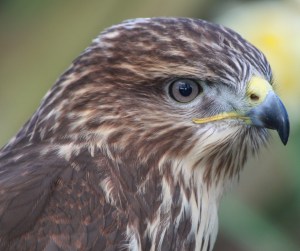
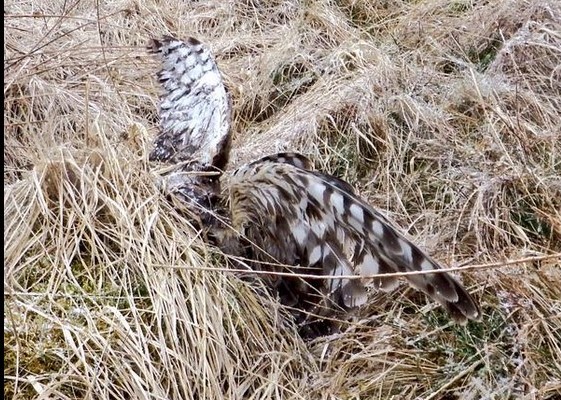
They’ve been whining in the media (Scottish Farmer, see here) about the timing of the RSPB’s press release relating to the discovery of a shot hen harrier called ‘Annie’ (see here).

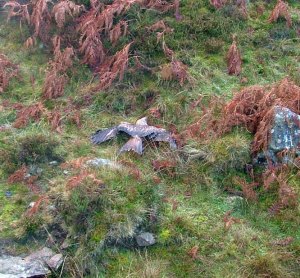
As you’ll recall, Annie was a young satellite-tagged hen harrier from the Langholm project whose tag indicated she’d stopped moving in March this year (see here). Her corpse was discovered on a grouse moor in late April after several weeks of intensive moorland searches (by the RSPB) and the news of her death was published on 11th August, the day before the start of the grouse-shooting season, when everyone associated with driven grouse shooting is doing their level best to promote it as a sustainable, conservation-friendly tradition (ahem).

How inconsiderate of the RSPB to break this news on the day before the Inglorious 12th. How dare they inconvenience the grouse-shooting lobby like that. Shame on the RSPB for telling the world about another illegally killed raptor found on a grouse moor.

The thing is, the RSPB wasn’t in control of when the news was released.

When Annie’s body had been found (late April), it was submitted the very next day to the SAC Veterinary lab for post mortem. The post mortem results were not released to the RSPB until early August. The RSPB passed on the results to Police Scotland on 5th August. It was then Police Scotland’s call as to when the news was released. According to the article in Scottish Farmer (see here), the police asked the RSPB to sit on the news so that they (Police Scotland) could “crime” the incident, whatever that means. It was then decided, apparently after discussion with the Scottish Government (since when do they get involved with when crime details are released?!) that the news would be published on 11th August.

Instead of trying to smear and discredit the RSPB for publicising this crime, surely the SGA, as a co- member of the Partnership for Action Against Wildlife Crime, should be (a) praising the RSPB for putting in the time and effort, at their own expense, in extreme weather conditions, to retrieve Annie’s corpse; (b) asking the SAC vet lab why it took over three months for the post mortem results to be made available; (c) praising the RSPB for preparing and publishing the press release; (d) focusing their condemnation on the criminal(s) responsible for killing this bird, who, with all probability, are members of the game-shooting industry; and (e) asking the RSPB and other members of PAW Scotland how they (SGA) can usefully contribute to help stop these killings?

Is that really too much to ask?

Gas guns on grouse moors: urgent guidance required

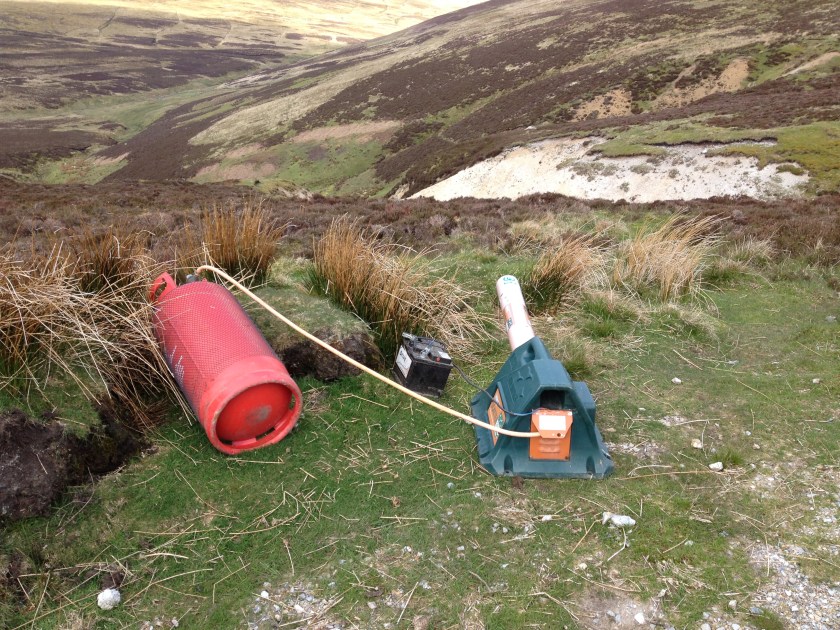
You may remember back in May this year we blogged about the deployment of propane gas gun bird scarers on the Leadhills (Hopetoun) Estate in South Lanarkshire (see here).

Bird scarer 1 - Copy

A month later, Mark Avery blogged about the deployment of propane gas guns on an unnamed grouse moor in the Scottish Borders and on another unnamed site in the Peak District National Park (see here).

It seemed they were being used with regularity across the uplands.

For those who don’t know, propane gas guns are routinely used for scaring birds (e.g. pigeons, geese) from agricultural crops – they are set up to deliver an intermittent booming noise and the audible bangs can apparently reach volumes in excess of 150 decibels. According to the Purdue University website, 150 decibels is the equivalent noise produced by a jet taking off from 25 metres away and can result in eardrum rupture. That’s quite loud!

We were interested in the deployment of these bird scarers in relation to (a) their proximity to Schedule 1 and 1A bird species [and thus any potential disturbance to these specially protected species] and (b) their use in designated Special Protection Areas [and thus any potential disturbance caused].

We assumed that the deployment of these gas guns would be subject to guidance and rigorous licensing controls by SNH (as they are the licensing authority for the Wildlife & Countryside Act (as amended)), particularly in relation to the hen harrier, which, as a Schedule 1A species, is “protected from harassment [including disturbance] at any time“, not just when it’s trying to breed (see here).

So an FoI was sent to SNH in June to ask for copies of all correspondence (during the last two years) between SNH and Scottish Land & Estates, and/or GWCT, and/or BASC, and/or Scottish Gamekeepers’ Association regarding the deployment of propane gas guns on grouse moors. As gas guns were clearly being deployed this year, we expected to receive a considerable amount of paperwork relating to SNH guidance on gas gun use.

How wrong were we!

In July, SNH responded by saying there had been “no direct correspondence” with any of the listed organisations in relation to the deployment of propane gas guns on grouse moors.

Hmm.

So it seems that SNH hasn’t issued any guidance on the deployment of these gas guns in sensitive areas where they may directly disturb breeding birds. Isn’t that a bit odd? Isn’t it obvious that the deployment of a gas gun bird scarer in proximity to specially protected birds is likely to, er, scare those specially protected birds? Surely this should be subject to a strict licensing regime?

To be fair to SNH, perhaps they had been unaware that these gas guns were being routinely deployed on grouse moors, and so they wouldn’t have thought that there was a necessity to provide guidance? However, that excuse can’t be used any longer because SNH are now well aware that these gas guns are being deployed. As part of their response to the FoI, they sent a copy of an email chain from members of the PAW Scotland Raptor Group (of which SNH is a member) discussing the deployment of these gas guns in Scotland. It really is worth a read – according to SLE CEO Doug McAdam, these guns ‘have been used for a number of years’ and are used to scare away juvenile ravens. Apparently (according to McAdam) this ‘isn’t a raptor issue’ and gas guns are ‘targeted and proportional’ and they ‘seem to have relatively little impact on other species’, although he fails to provide any shred of evidence to support these claims. He then goes on to say there should be an experimental removal of ravens – a suggestion ably slammed by Ian Thomson, Head of RSPB Scotland Investigations.

Read the correspondence here: FoI July 2015 SNH correspondence gas guns on grouse moors last two years

We would argue that SNH, as a matter of urgency, needs to provide official guidance on the deployment of propane gas guns in proximity to Schedule 1 and Schedule 1A birds, as well as their use in SPAs. Without official guidance, it would probably be difficult to secure a successful prosecution [for gas gun related disturbance offences]. This guidance should be relatively easy for SNH to produce – they recently published similar guidance on the use of helicopters and aircraft in relation to disturbance risks to Schedule 1 and Schedule 1A raptors and wider Schedule 1 species (see here). This guidance (which is very informative – well worth a read) indicates that a licence is required for any aerial work in the vicinity of a protected species. When you look at the noise comparison table produced by Purdue University (here), a Bell J-2A helicopter at 100ft is said to emit 100dB of noise; this is considerably less than the 150dB noise of a propane gas gun and so it follows that a licence would also be required for the deployment of a gas gun in the vicinity of a protected species and/or in a protected area.

We’d also argue that Natural England should also produce guidance on the deployment of gas guns, again as a matter of urgency. As evidenced in Mark Avery’s blog, these devices are also being used on the uplands of northern England.

Here are the contact details for SNH and NE, if anyone feels like writing to them to ask when we might expect the publication of such guidance:

Andrew Bachell, Director of Policy & Advice, SNH: Andrew.Bachell@snh.gov.uk

Alan Law, Chief Strategy & Reform Officer, Natural England: alan.law@naturalengland.org.uk

UPDATE 13th September 2015: SNH commits to investigating the deployment of gas guns on grouse moors (see here)

UPDATE 23rd September 2015: Natural England to issue guidance on deployment of gas guns on grouse moors (see here).

Buzzard shot & fatally injured in Borders

buzzard 3A buzzard that was found badly injured in the Borders in July had been hit by shotgun pellets in its head and wing. Its injuries were so severe the bird had to be euthanised.

The bird was found by a member of the public on 24th July by the side of the road between Heriot and Innerleithen. This is driven grouse moor country and the area has a long history of raptor persecution – if you’re unfamiliar with the region, check out google maps.

The SSPCA is appealing for information.

SSPCA press statement here

BBC News article here

Environment Minister Dr Aileen McLeod has made the following statement:

The illegal persecution of birds of prey is always unacceptable, but this case – with the pain and suffering caused to the buzzard – is particularly abhorrent. Anyone with information on this incident should contact the relevant authorities as soon as possible.

 “I am resolute in my determination to do all I can to put a stop to crimes such as this, with the Scottish Government working with law enforcement and others through the Partnership Against Wildlife Crime in Scotland (PAWS). I expect all right-minded people involved in the countryside, including with shooting, to support our efforts.

 “The Scottish Government has already put in place new and strengthened measures to crack down on wildlife crime, including vicarious liability prosecutions and general licence restrictions, for example. But let me be absolutely clear – I will consider taking further action if necessary and the licencing of shooting businesses in Scotland remains an option.

How many more times are we going to hear this now seemingly empty threat about ‘taking further action if necessary’? What does ‘if necessary‘ actually mean if it doesn’t mean that this latest incident is worthy of further action? Each time we’re told about another raptor that has been illegally killed we ask the Government when further action will be taken. Each time, we’re fobbed off with this line: “I will consider taking further action if necessary“. In the last few days alone we’ve learned of a shot hen harrier and two shot buzzards. Are none of these crimes worthy of ‘taking further action’?

Don’t know about you but we’d be really interested to find out exactly how Dr McLeod defines ‘if necessary‘. Does she have a target number of raptor killings in mind that will trigger further action? If so, what is that figure? Let’s ask her. Emails to: ministerforenvironment@scotland.gsi.gov.uk

High risk plan to boost golden eagle population in southern Scotland

Peebles August 2007There’s an article on the BBC News website today about a proposal to take golden eagle chicks from the Highlands and release them in southern Scotland in an attempt to boost the tiny, depleted population currently clinging on by its talons (BBC report here).
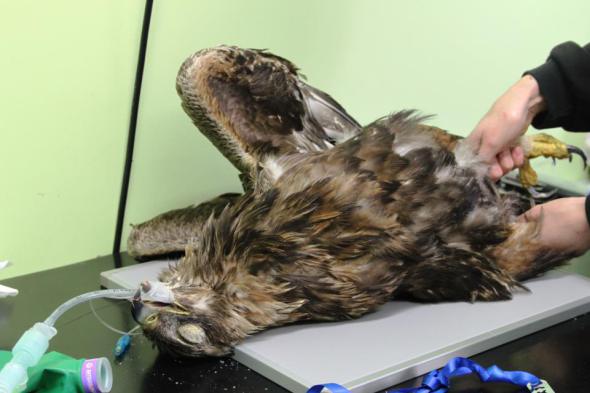
The timing of this news is suspicious, especially when you learn that the project hasn’t yet been formally approved and thus may or may not happen. The cynical amongst us might view it as yet another piece of spin aimed at portraying the grouse-shooting industry in a favourable light so close to the start of the Inglorious 12th, especially when you see who is involved with the project – more on that later.

There’s no doubt that the southern Scotland golden eagle population is in serious trouble, and has been for many years. We’ve blogged about this previously (here, here). On the face of it then, any attempt to increase the population to its former status should be welcome news. But…..

A basic tenet of any restocking / translocation / restoration / reinforcement / reintroduction (whatever they choose to call this project) is that there should be strong evidence that the threat(s) that caused any previous decline has been identified and removed or sufficiently reduced. This is a standard guideline issued by the IUCN and is part of the criteria used to assess whether such projects can proceed.

One of the biggest constraints on golden eagle population recovery in southern Scotland is persecution. Raptor persecution in southern Scotland has definitely not been removed, nor sufficiently reduced. In the last ten years alone there have been more than 150 confirmed persecution incidents (that figure doesn’t include the ‘probable’ or ‘possible’ cases, nor those that went undiscovered). Just three days ago we were given a sharp reminder of just how current this problem still is when it was announced that a young hen harrier had been found shot dead on a grouse moor in South Lanarkshire (see here). The 2014 SNH-commissioned report on the status of golden eagles in southern Scotland also identified several areas where persecution is an ongoing concern, including the Lowther Hills, the Lammermuirs and the Moorfoots (all driven grouse moor areas – what a surprise), and stated that persecution needed to be brought under control in those regions if golden eagles were to thrive in southern Scotland once again (see SNH report here).

Environment Minister Dr Aileen McLeod acknowledges the persecution issue and in an earlier version of the BBC article this morning she said she will “work hard” to ensure the project is a success. In the latest version of the article, this has been updated with her saying that the persecution of raptors would “not be tolerated under any circumstances“. We’re sure she has good intentions but to be frank, this is just more rhetoric. She (and her predecessors) has been unable to bring persecution under control in other parts of the golden eagle’s range (notably the driven grouse moor regions of central and eastern Scotland – see report here from 2011 and report here from 2014) so why should we think she’ll be able to bring it under control in southern Scotland without bringing in new sanctions?

Having said all that, other high risk projects of a similar nature have been very successful on the whole (think reintroduction of red kites and white-tailed eagles). It’s also abundantly clear that if we wait for the southern Scotland golden eagle population to rebound of its own accord (by natural recruitment of individuals from the more northerly populations) then we’re likely to see the demise of the southern Scotland golden eagle population within a few years. It’s a definite trade off situation.

The one big thing in the project’s favour is that, if it does go ahead, it is likely to be a high profile project. There will be plenty of public interest and, assuming the released birds will be satellite-tracked (and their movements made publicly available and not kept secret), the unlawful killing or ‘mysterious disappearance’ of any of those birds will cause public uproar. This will put a lot of pressure on landowners and their gamekeepers to behave themselves and leave those eagles alone. If they don’t, it may well be the final nail in the coffin for their industry. There have been two very high profile killings of golden eagles in southern Scotland in recent years: an adult female was poisoned in 2007 (see here) and an adult male was shot in 2012 (see here). Ironically, that shot golden eagle was found on Buccleuch Estate, one of the listed project supporters. This is also where hen harrier Annie’s corpse was found.

As well as Buccleuch Estates, another project supporter is Scottish Land and Estates. Their CEO Doug McAdam is quoted as follows in the BBC article:

Landowners value golden eagles, they are one of our most iconic birds and I think people will work hard with us to make this project a success. Often landowners are portrayed as the villain here and against golden eagles and nothing could be further from the truth“.

It’s actually very close to the truth. Yes, there are a handful of landowners who cherish having breeding golden eagles on their land (not least the landowner who provides a home for the one remaining pair in the Borders) but that handful is greatly outnumbered by the vast majority of driven grouse moor owners who employ a zero tolerance policy for golden eagles (and many other raptor species) on their ground. Why else does McAdam think there is a need for conservation intervention to rescue the southern Scotland golden eagle population? How else does McAdam explain the large number of vacant golden eagle territories on grouse moors in central and eastern Scotland? How else can McAdam explain the disproportionate number of satellite-tagged eagles that ‘vanish’ on driven grouse moors? How else does McAdam explain the disproportionate number of poisoned, shot and trapped golden eagles that are found on driven grouse moors?

Let’s hope this restoration project does go ahead and we see an increasingly viable golden eagle population in southern Scotland. We’ll be watching with interest and McAdam and his industry mates can rest assured that if any of those young eagles are illegally killed, we and others will go to town on exposing it to the public.

The image above is of the poisoned golden eagle found underneath her nest tree in the Borders in 2007. Nobody has ever been prosecuted for this.

The image below is of the shot golden eagle found on Buccleuch Estate in 2012. He didn’t survive. Nobody has ever been prosecuted for this.

 Wanlock Head GE Oct 2012

Buzzard found shot dead in Loch Lomond & Trossachs National Park

Police are appealing for information following the discovery of a shot dead buzzard in the Loch Lomond and the Trossachs National Park.

The corpse was discovered by a member of the public about half a kilometre east of Ward’s Cottage, Gartocharn at around 2.15pm on Wednesday 5th August. It was found with a bullet wound in its chest.

Anyone with information is asked to contact the police on 101.

Environment Minister responds to shooting of hen harrier ‘Annie’

Yesterday we blogged about the illegal shooting of Langholm hen harrier ‘Annie’, whose wretched corpse had been found, inevitably, on a Scottish grouse moor in South Lanarkshire (here).

Annie Langholm harrier shot April 2015

We asked blog readers to contact Environment Minister Dr Aileen McLeod to demand further action against the seemingly untouchable raptor killers. The response to that request was overwhelming – many thanks to all of you who took the time to email her and send her tweets. Within a few hours, an official statement was posted on the Scot Gov website: that’s testament to the bombardment of correspondence sent to the Minister: usually it’s met with silence for the maximum 20 working days in which the Gov has to respond.

So what did the Minister have to say? Here’s the statement in full:

Minister comments on bird of prey shooting.

Commenting on the shooting of a satellite tagged hen harrier, Minister for Environment, Climate Change and Land Reform Dr Aileen McLeod said:

“It is extremely disappointing to hear the news that Annie, one of the satellite tagged hen harriers from the Langholm Moor Demonstration Project, has been shot.

“The Scottish Government remains absolutely committed to working with law enforcement and others to bring an end to this outdated criminal activity. I expect all right minded people involved in the countryside, including with shooting, to agree that wildlife crime has no place in a modern Scotland. I would urge anyone with any information on the latest incident to contact Police Scotland as soon as possible.

“We have been taking action, including seeing the first successful vicarious liability prosecution, and the review of penalties will be reporting in the near future. We have committed to an examination of the regulation of the game shooting industry sector elsewhere and have made clear that, though it would be complex and require primary legislation, the licensing of shooting businesses in Scotland remains one of the options that could be adopted.

“The news about Annie is in stark contrast to recent examples of successful PAW Scotland partnership working to actively improve the chances of this magnificent bird which has been in decline in Scotland.”

END

Now, to those who are new to this game, her response might seem satisfactory. For those of us who are not so new to this game, it was anything but. Here’s why…..

Over two years ago (July 2013), the then Environment Minister, Paul Wheelhouse, announced a series of new measures to tackle raptor persecution (see here).

One of those measures was to conduct a review of wildlife crime penalties. Two years on, that review is yet to be completed.

Another measure was to introduce a system of General Licence restriction orders on estates where raptor persecution was suspected (civil burden of proof as opposed to the more difficult-to-achieve criminal burden of proof). Two years on, SNH has yet to announce the implementation of any restriction order, despite there being a number of suitable candidate estates.

Three and a half years ago (1 January 2012), the new law on vicarious liability came in to force. Three and a half years later, there has only been one prosecution (although a second one is due to begin this month – even so, two prosecutions in 3.5 years is hardly impressive).

Four and a half years ago (February 2011), the now former MSP Peter Peacock suggested a public consultation on whether the SSPCA should be given increased investigatory powers. It took just over three years for the Government to actually launch the consultation (March 2014). The consultation closed on 1st September 2014. Almost one year later, we’re still waiting for the Environment Minister to comment, let alone implement any changes.

Meanwhile, the raptor killing continues.

So, sorry, Minister, if we’re not bowled over by your claim that you ‘have been taking action’. Yes, action is being taken, and that is most welcome, but it’s not nearly enough and it’s not being taken nearly fast enough. Yesterday’s news, of yet another illegally persecuted raptor, is clear testimony to that.

You’re the Environment Minister. It’s your job to deal with this issue. If you can’t handle it, then step aside and let someone else have a go.

Langholm hen harrier ‘Annie’ found shot dead on Scottish grouse moor

annie-with-her-sat-tag

A young hen harrier called ‘Annie’ from the 2014 Langholm cohort has been found shot dead on a Scottish grouse moor.

You may recall we blogged about her satellite tag going off the radar in March this year in an area of South Lanarkshire (see here).

Her corpse was retrieved at the end of April after an intensive search by RSPB Scotland Investigations staff and her remains were sent to the SAC Veterinary Lab for post mortem.

The post mortem results have now confirmed that she had been shot.

Stuart Housden, RSPB Scotland Director said: “This case shows very clearly what happens to some of our hen harriers when they leave protected nesting areas and move around the UK’s uplands. This is just the latest incident of criminal persecution of this species, following the confirmed shooting of birds in Aberdeenshire, Moray and Ayrshire in the last two years. It is little wonder these magnificent raptors continue to be absent from large areas of our uplands“.

This news won’t be a surprise to anybody. The chances of bringing anyone to justice for shooting her are nil. She’s yet another victim of the disgusting, vile driven grouse shooting industry. And they will get away with it. Again.

If you share our anger, then turn that anger in to action. Here are two positive things you can do in response:

  1. Send an email to Environment Minister Dr Aileen McLeod, demanding immediate Government action to address the on-going raptor persecution crisis. Don’t be fobbed off by inane platitudes. This Government has repeatedly said that if raptor persecution continues, they would take further action. We want to know what that action will be and when we can expect to see it implemented. Email: ministerforenvironment@scotland.gsi.gov.uk
  2. Sign this e-petition to ban driven grouse shooting and ask others to do the same – HERE

Annie Langholm harrier shot April 2015

UPDATE 13.30hrs: Police Scotland has issued a press statement that identifies the location as ‘remote moorland near to Daer Reservior’ (see here). Where’s Daer Reservoir? Why, it’s right here