Newlands Estate, where buzzard bludgeoned & stamped to death, is member of SLE & WES

2nd June 2015 CopyWell, well, well.

Following the sentencing today of Newlands Estate gamekeeper William (Billy) Dick for bludgeoning a buzzard with rocks and then repeatedly stamping on it (see here), we wondered whether the Newlands Estate was a member of Scottish Land & Estates (SLE).

Actually, we wondered this back in early August when Dick was convicted (see here), but SLE refused to answer at that time. It’s now clear why.

It turns out that the Newlands Estate is indeed a member of SLE. And not only that, it’s also an accredited member of SLE’s ‘Wildlife Estates Scotland’ (WES) initiative. You know the one, the much-lauded (by the game-shooting lobby) initiative ‘that aims to promote the best game and wildlife management practices, build recognition and raise standards through the introduction of an objective accreditation system’ (see here).

Oops.

SLE has issued a short statement this evening, as follows:

A spokesman for Scottish Land and Estates said: “Scottish Land & Estates has a clear and long -established policy of condemning all forms of wildlife crime. Those who engage in such activity should feel the full force of the law. Newlands Estate is a member of Scottish Land & Estates but that membership has been suspended voluntarily pending further inquiries and ongoing legal proceedings“.

It’s interesting that the estate’s membership has been suspended ‘voluntarily’ and only after the Estate’s gamekeeper had been sentenced. Why was the suspension ‘voluntary’? And why wasn’t suspension invoked in June 2014 when gamekeeper Dick made his first court appearance to answer the charges? And if not then, why wasn’t it invoked last month when Dick was convicted? Why wait until now? Nothing to do with pressure from blogs like this, surely?

WILDLIFE ESTATES SCOTLAND LOGOIt’s also interesting that SLE don’t mention the Newlands Estate’s membership of the Wildlife Estates Scotland initiative in their press statement. Not a word. That news has been gleaned from ITV (see here) and reads as follows:
Conditions of membership of Wildlife Estates Scotland include the requirements to maintain best practice standards of animal welfare and comply with all legal requirements and relevant Scottish codes of practice.

Wildlife Estates Scotland’s position is that it will suspend membership if it is notified of a prosecution or of a breach of relevant legislation.

The case of William Dick has been discussed with Newlands Estate, whose membership and accreditation under WES has been voluntarily suspended and will remain so until after further enquiries and any other legal proceedings have concluded.”

– WILDLIFE ESTATES SCOTLAND SPOKESPERSON

Scottish gamekeeper fined £2000 for killing buzzard

A Scottish gamekeeper who was recently convicted of killing a buzzard has been sentenced this morning.

William (Billy) Dick, 25, was convicted on 4th August 2015 of illegally killing the buzzard on the Newlands Estate in Dumfriesshire (see here). Two witnesses, alerted to the scene by the sound of gunshot, had observed him throwing rocks at a buzzard which was flailing on the ground, and then they observed him repeatedly stamping on the bird. They observed Dick wrapping something inside a coat and placing it inside his vehicle and then driving away. The carcass was never recovered but a dead hare, feathers and a blood-stained rock were found at the scene. DNA evidence from the feathers confirmed they came from a buzzard.

At Dumfries Sheriff Court this morning the sheriff told Dick that he believed Dick had killed the buzzard “to further the interests of your employer“.

Dick was fined £1,500 for killing the buzzard and a further £500 for possession of the dead buzzard.

Dick’s firearms certificate had been revoked but we understand this is being appealed tomorrow.

So, a £2,000 fine for offences that merit a maximum £5,000 fine and/or a six month custodial sentence. Had Dick pleaded not guilty this fine would have been even smaller (a reward for an early plea). It’s about time the Scottish Government published its commissioned report on wildlife crime penalties, which is already nine months overdue.

Well done to the SSPCA and Police Scotland for an effective investigation and congratulations to Procurator Fiscal Kate Fleming for a successful prosecution. Particularly well done to the two witnesses who reported their observations and were prepared to testify in court.

There is an on-going vicarious liability case relating to this crime (see here) and it’ll be interesting to see what happens in light of the sheriff’s comments in court this morning.

When we blogged about Dick’s conviction in August we asked the SGA whether Dick was one of their members. They refused to answer at the time, saying it would be inappropriate to comment until the case had concluded. Well, now it has concluded so let’s ask them again.

Emails to SGA: info@scottishgamekeepers.co.uk

Dear SGA, Is/was convicted gamekeeper William (Billy) Dick one of your members?

We also asked Scottish Land & Estates whether the Newlands Estate was one of their members. They didn’t respond. Let’s ask them again: info@scottishlandandestates.co.uk

Dear SLE, Is/was the Newlands Estate one of your members?

UPDATE 12.30hrs: COPFS press release here, with disturbing details of Dick’s actions.

UPDATE 13.30hrs: RSPB statement here

UPDATE 13.35hrs: BBC news article here, which indicates Dick may appeal his conviction. There’s also a quote from the SGA, once again refusing to comment on the membership status of Dick “until the legal process has concluded”. Why so coy?

UPDATE 18.50hrs: Turns out the Newlands Estate is a member of Scottish Land & Estates and the Wildlife Estates Scotland initiative – see here for blog post

Two Red kites poisoned & shot in Highlands: get your act together, Police Scotland

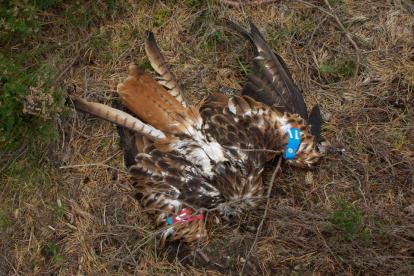
RK Cawdor poisoned 2014RSPB Scotland has issued a press release about the discovery of two illegally killed red kites in the Highlands. One was found shot on a railway line and the other one was found poisoned on Cawdor Estate (see photo).

The press release is interesting (read it here) but what’s more interesting is what is revealed by reading in between the lines.

Both birds were discovered in 2014. The shot red kite was found near Beauly in June 2014 (probably this one we blogged about in October 2014) and the poisoned red kite was found in September 2014.

The RSPB statement says, “Both of these incidents took place in 2014 and are now being made public as the Police have concluded their enquiries”.

So it takes Police Scotland over a year to disclose an illegally shot red kite and almost a year to disclose an illegally poisoned red kite. They’ve now ‘concluded their enquiries’ without appealing for information from the public and without executing a search under warrant on Cawdor Estate. What exactly did their ‘enquiries’ entail? Sitting around a table, scratching their heads, before deciding to keep both crimes under wraps?

Of course, an investigation in to the circumstances of the shot red kite would be a hide in to nothing – the bird was most probably shot elsewhere and dumped on the railway line to make it look like it had collided with a train. That’s a very difficult crime to detect, although had the Police made an appeal for information at the time the bird was found, there was always a slim chance that someone might have seen something. But no, far easier just to keep quiet and not attract any more embarrassing media coverage so soon after the mass poisoning of 22 kites and buzzards at nearby Conon Bridge (which is still undetected….more on that soon).

However, the ‘investigation’ in to the circumstances of the poisoned red kite that was found on Cawdor Estate just beggars belief. Cawdor Estate is well known as it has been at the centre of alleged wildlife crimes for over two decades. Here are just some of the incidents recorded either on the estate or close to the estate (for which nobody has ever been prosecuted) –

1992: Dead buzzard, magpie and sheep (laced with Strychnine)

1993:  Dead buzzard (poisoned with Alphachloralose) found on Forestry Commission land 100 metres from the boundary of Cawdor Estate.

1994: Three dead buzzards (poisoned with Alphachloralose) and a poisoned rabbit bait

1996: Three poisoned baits found: a hare laced with Alphachloralose, a goat laced with Aldicarb and a widgeon laced with Strychnine.

1996: A hidden pit containing a suspected bird of prey poisoning kit uncovered by investigators three miles from the estate.

1999: A report sent to the Procurator Fiscal alleging that mountain hares were illegally persecuted in snares on the estate.

2000: A second report submitted to the Fiscal claiming mistreatment of hares on the estate.

2001: A dead golden eagle (poisoned with Carbofuran)

2004: A number of illegal gin traps found set around rabbit baits

2004: A dead buzzard (poisoned with Carbofuran)

2005: A dead red kite (poisoned with Carbofuran)

2007: A dead red kite (poisoned with Carbofuran)

2010: Two red kites found poisoned on neighbouring ground close to estate boundary

With a record like this, wouldn’t you expect Police Scotland, on discovery of the latest poisoned red kite, to request a search warrant and head straight for the estate? Wouldn’t that be a logical first step? Why didn’t that happen?

Did the Police actually talk to anybody on Cawdor Estate about this poisoned kite? If you read a quote attributed to Alex Hogg of the SGA (on the BBC news website here), you’d think not. Hogg says:

“This is the first we have heard of any such incidents….”.

Really? Cawdor Estate has very close links to the SGA. Cawdor’s former Head Gamekeeper and later Sporting Manager Roddy Forbes was the inaugural Chairman of the SGA. And further, the SGA’s 2010 Young Gamekeeper of the Year was an employee on Cawdor Estate. That’s indicative of pretty close ties between the estate and the SGA, and yet the SGA claim not to have heard about this crime?

As an aside, Hogg is further quoted: “….We do not know the possible causes [of the birds’ deaths] which makes it difficult to comment further”.

Eh? The causes of death have been established. One kite was shot, the other was poisoned. Why is it ‘difficult to comment further’? A little bit too embarrassing, Alex?

A Police Scotland spokesperson is also quoted in the BBC article:

“Investigating wildlife crime is challenging because of its nature, and the vast areas covered. Police Scotland works closely with partners including the RSPB to tackle wildlife crime, and brings to bear the full range of investigative techniques at its disposal. Our detection rate is increasing. Our aim is to reduce wildlife crime and earlier this year we launched a campaign raising awareness”.

Yes, of course investigating wildlife crime is challenging, nobody disputes that. But sitting on enquiries, hiding them from the public, and not undertaking searches on estates where poisoned birds are discovered is not ‘bringing to bear the full range of investigative techniques’ at their disposal. It’s anything but that.

And what’s this about ‘our detection rate is increasing’? Are there any data to support this claim or are we supposed to just accept the word of a police force under increasing pressure to get its act together?

So what now for Cawdor Estate, almost one year on from the discovery of this poisoned kite? Might it be too much to hope that SNH will issue a General Licence restriction order? Guess we’ll have to wait and see, although that might be a bit embarrassing for SNH given that they have chucked thousands of pounds (of our money!) at Cawdor Estate to help fund their ranger service.

Vicarious liability prosecution: Andrew Walter Bryce Duncan

A prosecution is underway against Andrew Walter Bryce Duncan, who is alleged to be vicariously liable for the criminal actions of gamekeeper William (Billy) Dick, who was recently convicted of killing a buzzard in April 2014 (see here).

Duncan, 71, of Kirkton, Dumfriesshire, is understood to manage the pheasant shoot on the Newlands Estate where Dick committed his crimes. Dick is due to be sentenced in September.

At a hearing in Dumfries Sheriff Court on Tuesday 18th August 2015, a trial date was set for Duncan (23rd November 2015) with an intermediate diet due to be heard on 20th October 2015.

Great to see the Crown Office pursuing this prosecution. We’ll follow proceedings with interest.

Vicarious liability in relation to the persecution of raptors in Scotland (where one person may potentially be legally responsible for the criminal actions of another person) came in to force on 1st January 2012. To date there has only been one conviction – landowner Ninian Robert Hathorn Johnston Stewart was convicted in December 2014 of being vicariously liable for the criminal actions of Glasserton & Physgill Estates gamekeeper Peter Bell (see here).

Scottish gamekeeper convicted of killing buzzard

The long-running case against Scottish gamekeeper William (Billy) Dick concluded today with a conviction for illegally killing a buzzard.

Dick, 25, of Whitehill Cottages, Kirkmahoe, Dumfries, had been observed by two witnesses on the Newlands Estate striking a buzzard with rocks and then repeatedly stamping on it, in April last year. The observers were alerted to the scene by the sound of a gun shot. Dick had denied the charges (in addition to two alleged firearms offences, which were subsequently dropped) but was convicted today at Dumfries Sheriff Court.

He will be sentenced in early September.

Well done to the SSPCA and Police Scotland for their investigation and to the Crown Office for a successful prosecution.

We understand that a vicarious liability prosecution will get underway at Dumfries Sheriff Court later this month.

The Newlands Estate offers driven partridge and driven pheasant shooting. This estate has previously donated to the GWCT’s Scottish Auction (see here – page 23).

While we wait for the sentencing hearing, here are some questions you might like to ask:

1. Is/was Dick a member of the Scottish Gamekeepers’ Association? Emails to: info@scottishgamekeepers.co.uk

2. Is Dick still employed on the Newlands Estate? Emails to: awbd@newlandsestate.co.uk

3. Is the Newlands Estate a member of Scottish Land & Estates? They get a mention in the SLE’s 2013 newsletter (here – page 10). Emails to: info@scottishlandandestates.co.uk

The photograph of Billy Dick was sourced from his Facebook page.

Previous blogs on this case here, here, here, here, here, here, here, here, here

Scottish farmer convicted of shooting buzzard

A poultry farmer in the Borders who shot a buzzard, claiming he had mistaken it for a carrion crow, has been fined £600.

Michael Harrison, 70, of West Linton, Peebleshire, who runs an egg production facility, told Sheriff Jamie Gilmour at Edinburgh Sheriff Court on Wednesday, “I just made a mistake. I shot at this crow and it came down, but when I saw it was a buzzard, I was mortified. I was born in the countryside and brought up on a farm. All my life I have been a wildlife supporter”.

Harrison had pled guilty under the Wildlife & Countryside Act to ‘intentionally or recklessly’ shooting the buzzard in November 2014. He also pled guilty to injuring the buzzard by standing on its wing – presumably in an attempt to ‘control’ it when he realised the bird was still alive. The buzzard’s injuries were too severe for it to survive and it had to be euthanised.

Sheriff Gilmour said he would reduce the fine from £900 to £600 because of Harrison’s early guilty plea and allowed seven days for payment. He told Harrison: “It is important you identify your quarry. That is an important part of shooting”.

It’s farcical that a buzzard could be mistaken for a carrion crow, especially if it’s in close enough range for it to be shot and especially if the person pulling the trigger claims to have been born and brought up in the countryside and should therefore be capable of basic bird identification skills. In light of this conviction, presumably Police Scotland will not renew Harrison’s shotgun certificate? Yeah, right.

Well done to the SSPCA for their prompt investigation of this crime, which was crucial to gather evidence, and to the Crown Office for a successful & speedy prosecution, leading to a rare conviction for the actual shooting of a protected species. The penalty, as usual, is at the low end of the scale (max penalty of £5,000 and/or six month custodial sentence).

Trial against gamekeeper Neil Wainwright gets underway

The trial against Shropshire gamekeeper Neil Wainwright got underway on Tuesday.

Wainwright, 55, of Norbury, Bishop’s Castle, is accused of baiting a Larsen trap with live quail to catch birds of prey. The offences are alleged to have taken place at Birch Hill Wood in Gatten, Stipperstones, in July 2014. Wainwright has denied these charges, but at an earlier hearing pled guilty to three other charges relating the storage of firearms, ammunition and poison (see here and here).

According to an article published yesterday in the Shropshire Star (see below), Wainwright’s defence is that he was using the Larsen to trap a mink, not birds of prey.

We always enjoy reading the far-fetched explanations of gamekeepers who have been accused of alleged wildlife crimes. Rarely plausible, they often push the boundaries of credibility. Recently-convicted Kildrummy Estate gamekeeper George Mutch’s explanation was a classic – he claimed he’d killed the goshawk he’d caught in his Larsen trap as a mercy mission because it was injured. The Sheriff in that case called it “a convenient lie”. Recently-convicted Swinton Estate gamekeeper Ryan Waite claimed the two illegal pole traps he’d set were for targeting squirrels, not raptors. Recently-convicted Stody Estate gamekeeper Allen Lambert claimed the 11 poisoned raptors found on his estate had been dumped there by someone with a vendetta against him.

It’s not just gamekeepers, either.

Following the discovery last month of 16 fox cubs found inside a barn in North Yorkshire in suspicious circumstances, Lord Middleton, a local landowner and hunstman reportedly suggested that the cubs ‘were being cared for by the Hunt for kind reasons’ (see here).

Wainwright’s trial will continue on 29th June 2015.

The Shropshire Star published an article yesterday about the first day of the trial although the article has now vanished from their website. Here’s a copy:

From Shropshire Star 17 June 2015

Neil Gordon Wainwright a gamekeeper used a metal Larsen trap designed to catch magpies, crows and jays he had baited with two live white quail to catch birds of prey at Birch Hill Wood in Gatten, near the Stiperstones, Shrewsbury, Magistrates Court were told by the RSPB. An inspector for the Royal Society for the Protection of Birds noticed the trap while walking on a public way and set up two covert cameras to record who came to attend to it.

Wainwright, 55, of Norbury, near Bishop’s Castle, denies charges of using a trap to kill or take a wild bird, possessing an article capable of being used to commit an offence, and failing to take steps to ensure that the needs of an animal were met.

The offences are said to have taken place between July 21 and 31 last year.

District judge Kevin Grego heard yesterday that an RSPB inspector had visited Birch Hill Wood on July 23 and believed that an offence was being committed.

Mr Richard Davenport, prosecuting, told the court that the inspector noticed that a Larsen trap had been baited with two white quails and set close to a pheasant release pen.

Howard Jones, RSPB inspector, said he had been walking on a public right of way when he saw the pheasant pen. He found the Larsen trap and then returned a day later to install the cameras.

Mr Jones said he and another inspector had checked the footage and over the course of several days the defendant was seen going to the trap.

At one point Wainwright was seen with a dead buzzard in his hands. The incidents were reported to the police and a warrant to search Wainwright’s home and outbuildings was carried out on August 5. Expert witness Dr Rodney Calvert, from Natural England and a specialist on trapping, said he had never known of a Larsen trap being used to catch anything other than crows or magpies.

Wainwright’s defence is that he was using the trap to catch mink and stoats which had been taking his game birds.

Dr Calvert said that using live quail as bait would not attract such animals but would be likely to attract wild birds.

Wainwright, who has several captive peregrine falcons and an owl at his home, said he had used the quail as bait “as an act of desperation”. He said he had been targeted by a mink and had decided to bait the trap to try and catch it.

The trial was adjourned until June 29 and will be heard at Telford Magistrates Court.

Police launch raptor crime awareness campaigns in Scotland, England & Wales

Police forces in England, Wales and Scotland have recently launched poster campaigns to raise awareness of crimes against birds of prey.

A couple of days ago, North Yorkshire Police announced their campaign against the illegal poisoning of raptors. They’ve produced a poster that will be distributed in rural areas including the Yorkshire Dales and the North York Moors; both of these areas are dominated by driven grouse moors and both areas are well known as raptor persecution hotspots. The posters will be displayed in National Park Centres and on parish council notice boards.

North York Police poisoning poster May 2015

Earlier this month, North Wales Police launched a campaign called Operation Raptor, aimed at targeting raptor poisoners in their region. This follows the poisoning of five peregrines last year and a suspected buzzard poisoning incident this year. The main peregrine poisoning suspects in the region are usually pigeon fanciers/racers.

Police Scotland launched their wildlife crime campaign in March (in collaboration with PAW Scotland), which involves raising awareness of all six national wildlife crime priorities, including raptor persecution.

These publicity campaigns are good to see. Excellent, in fact. However, the most important facet of tackling wildlife crime is not raising awareness (as important as that is), but what the police actually do in response to a reported wildlife crime. A recently published report on wildlife crime enforcement in Scotland revealed a catalogue of failures, including poor follow-up investigations and sometimes no follow-up at all (see here).

We’re watching with interest to see just how long it takes Police Scotland to publicise a number of raptor persecution crimes that have taken place within the last 12 months, especially those involving the use of banned poisons that have killed raptors on or very close to sporting estates with long histories of such crimes.

New trial date set for gamekeeper Neil Wainwright

A trial date has been set in the case against gamekeeper Neil Wainwright, accused of the alleged mis-use of a trap last year.

Wainwright, 54, of Norbury, near Bishop’s Castle in Shropshire, has denied charges relating to the use of live quail inside a trap in Birch Hill Wood in Gatten, Stiperstones on 22 and 28 July 2014.

At a hearing in February he pleaded guilty to three other charges relating to the storage of firearms, ammunition and poison.

The trial will begin on 16th June 2015.

Previous blog on this case here.

‘Wildlife crime cannot be tolerated in modern day Scotland’, says Environment Minister

Environment Minister Dr Aileen McLeod has written an article on wildlife crime that has been published in the Holyrood magazine:

WILDLIFE CRIME CANNOT BE TOLERATED IN MODERN DAY SCOTLAND

In the past year, between April 2014 and February 2015, almost 250 wildlife crimes were recorded by Police Scotland.

That’s 250 too many.

The crimes included persecuting badgers, poisoning birds of prey and trading in some of the world’s most endangered species.

There is no room for complacency – last year saw one of the worst ever bird of prey poisoning cases, with the discovery of 12 dead red kites and four buzzards in Ross-shire, which were confirmed by SASA as having been poisoned.

I want to make it abundantly clear that the illegal poisoning of wildlife cannot – and will not – be tolerated in a modern Scotland.

This is one of our priorities which the Scottish Government is continuing to tackle head-on. I recently launched a scheme, with the support of PAW Scotland partners, to get rid of illegal pesticides which could be used to poison wildlife.

The scheme allows those who know, or suspect, they are in possession of certain pesticides which are illegal, to dispose of them safely and confidentially. Arrangements are also in place for SNH to restrict the use of general licences where there is evidence of wildlife crime.

Here in Scotland we have the strongest wildlife legislation in the UK, and in the last few months we have seen the first ever custodial sentence for the killing of birds of prey and the first conviction of a land owner under the vicarious liability provisions, for crimes committed in 2012.

I believe this sends out a clear message to those who continue to illegally target Scotland’s wildlife that their actions will not be tolerated.

Recently I helped Police Scotland launch its new awareness campaign to tackle wildlife crime in Scottish cities, towns and rural areas.

Figures reported by Police Scotland indicated that the detection rate for wildlife crime has increased from the previous year by almost 13 per cent to a 77 per cent detection rate and I’m pleased to see that more is being done to catch those offenders.

As the Chair of the Partnership for Action Against Wildlife Crime in Scotland I am delighted to support this campaign. In Scotland we have long recognised the value of our wildlife and the importance of protecting it.

Police Scotland’s campaign will play a key role in raising awareness about wildlife crime and what people should do if they encounter it.

Investigations into wildlife crime can be difficult so it is essential that we work closely with our partners to get the message out there and raise public awareness to help us prevent it from happening in the first place.

Last year, the Scottish Government’s second annual wildlife crime report was published in a bid to develop the bigger picture of what offences are occurring in Scotland. Figures in the report showed that the largest volume of wildlife crime in Scotland is poaching related – fish, deer and coursing offences.

While poaching is the most commonly recorded offence, crimes against our rare birds of prey and vulnerable freshwater pearl mussel populations are of most serious concern in terms of damage to Scotland’s ecosystems and our reputation.

We must continue to work with stakeholders to raise awareness and therefore ensure prevention, so that these crimes decrease and stop. We are not there yet but with the help of the PAW Scotland partners and the actions of the public I am confident that we are moving in the right direction.

Dr Aileen McLeod, Minister for the Environment, Climate Change and Land Reform

END

It’s good to hear from the Environment Minister on this issue. Five months in to her tenure as Environment Minister, she’s been relatively quiet. Perhaps that’s a bit unfair, as we’re comparing her perceived (public) involvement on this issue with that of her predecessor, Paul Wheelhouse, who clearly was very engaged with the subject. She also has a wider portfolio of responsibilities than Wheelhouse had, so of course her time is going to be squeezed. Nevertheless, we haven’t yet seen much evidence that Dr McLeod is coming in with all guns blazing.

Whilst the above article, and sentiment, is to be welcomed, what does it actually amount to? Not very much, to be honest. It’s the same old rhetoric that we’ve been fed for years: ‘it’s a priority’; ‘it won’t be tolerated’; ‘there’s no room for complacency’, yada yada.

Meanwhile, raptor persecution continues and Police Scotland are doing their level best to keep the details from the public domain. We’re aware of several crimes against raptors that have taken place within the last 12 months that still have not been publicised – and we probably don’t know the half of it. It’s interesting to compare this policy of secrecy with the policy of openness being displayed by North Wales Police. One of their wildlife crime officers, Sgt. Rob Taylor, is frequently telling his Twitter followers what wildlife crimes he’s currently investigating. More power to him. His openness doesn’t seem to be affecting the investigation of those offences so what’s the real reason for Police Scotland hiding the facts about the crimes they’re supposedly investigating?

There have been a couple of big success stories in Scotland – the first vicarious liability conviction of a landowner and the first custodial sentence for a raptor-killing gamekeeper. These were both excellent results, there’s no doubt about that, but they were both a long, long time coming and, so far, have proved the exception rather than the rule.

How about the Environment Minister telling us whether the SSPCA will be granted increased investigatory powers? The public consultation closed almost 8 months ago! What’s the decision?

How about the Environment Minister giving us an update on the Govt-commissioned report from Professor Poustie on his review of wildlife crime penalties? That was due ‘early in the New Year’. Where is it?

How about the Environment Minister telling us why SNH haven’t yet publicised any General Licence Restriction Orders for estates where raptor persecution is believed to be taking place? They’ve had the power to enforce such restriction orders since September 2014, for incidents that have taken place since 1st January 2014. What have they been doing for the last seven months? Have they imposed any restriction orders or not? If not, why not?

And please, Minister, will you stop implying that the Ross-shire Massacre only claimed 16 victims. Twenty two raptors were found dead in that one incident. Sure, only 16 have been confirmed as victims of poisoning but the remaining six birds did not all just die of natural causes at the same time, in the same fields where the confirmed poisoned corpses were found. And by the way, can you tell us why Police Scotland has not yet released the name of the poison(s) used to kill those protected species?
