Ireland publishes its first persecution report, with interesting results

94f6f996ec3a866ce6d587d28bd5b809_LThe Irish National Parks and Wildlife Service (NPWS) has published its first national raptor persecution report, relating to reported incidents in 2011.

The NPWS issued the following press release:

“33 poisoning or persecution incidents affecting birds of prey were recorded in Ireland in 2011, according to a report published today by the Department of Arts, Heritage and the Gaeltacht. 

15 birds of prey were confirmed poisoned, and four more suspected cases were recorded. 8 birds of prey were shot.

Some of the deaths were accidental, but many were deliberate. The most frequent casualty was the red kite, a native species that was recently re-introduced to Ireland. It is believed that seven of the ten kites found dead were poisoned by eating rats that had themselves been poisoned. As well as red kite, other raptor species that were deliberately targeted included peregrine falcon, buzzard, sparrowhawk, and kestrel.

The report is the result of cooperation between the National Parks and Wildlife Service, the Department of Agriculture, Food & the Marine’s Regional Veterinary Laboratories and the State Laboratory, and also involves An Garda Síochána, the Golden Eagle Trust and BirdWatch Ireland. 

The report notes that the use of tracking devices on birds has enabled dead birds to be found, but this also means that the true levels of mortality are likely to be significantly higher.

The use of poison has been greatly restricted under EU law in recent years. It is illegal to poison any animal or birds other than rats, mice or rabbits in Ireland and only then using certain registered products. The Campaign for Responsible Rodenticide Use has recently been set up with funding from industry. This campaign aims to promote best practice so that rat poison in particular should not get into the wildlife food chain where it harms owls, kites and other birds of prey.

The poisoning of golden and white-tailed sea eagles has been a particular problem in recent years, but fortunately in 2011, no poisonings were recorded. Records of poisoning and persecution in 2012 are currently being analysed and the second annual report is due for release shortly.

The Minister for Arts, Heritage and the Gaeltacht, Mr Jimmy Deenihan, T.D., welcomed the report. ”This gives us at least a partial view of the scale of the problem in Ireland”, he said. ”It is simply not acceptable for majestic birds of prey and other wildlife to be persecuted or poisoned. First it is illegal, but just as important it harms our reputation as a clean, green country. I would urge anyone to report such incidents to the National Parks and Wildlife Service in my Department. There are alternatives to poison which can be successfully used when control is essential ” he said.”

Here is a copy of the report: Persecution Report Ireland 2011

The publication of this report, and the anticipated future annual reports, demonstrates a basic but very important step forward, allowing the authorities and NGOs to monitor and record raptor persecution incidents in a coordinated effort, to help tackle the issue as well as to improve public awareness and education.

The report includes the usual list of victims and the substances that were used to kill them (Alphachloralose, Carbofuran etc) although we did notice one particular substance that was less familiar – Nitroxynil (also called Nitroxinil). As far as we understand, Nitroxynil is an active ingredient in the veterinary treatment of cattle and sheep, for example in sheep dips. According to this report, Nitroxynil  was detected in the carcases of three poisoned white-tailed eagles and one golden eagle, as well as in several recovered baits, including an egg and two lagomorphs (rabbit or hare).

It would appear, given that it was detected in different baits, that Nitroxynil has been used deliberately in Ireland to target any animal that might scavenge from a bait. It’s also possible that some of the deaths were from accidental poisoning, although fallen stock should not be left out on the hill.

We’re not certain, but we don’t recall seeing Nitroxynil listed in any recent toxicology reports published in Scotland by SASA. We don’t know if SASA tests for this substance when they’re presented with a potentially poisoned animal – it would be fair to say that SASA can’t test for every known poison due to resource constraints, and it’s reasonable for them just to test for the more commonly-used poisons. However, we have noticed in recent SASA reports that there are quite a number of birds for which SASA have been unable to establish the cause of death (i.e. the poisons they regularly screen for have not been detected) even though the circumstances of the bird’s death may have been suspicious. If SASA are not already testing for Nitroxynil, we hope that they pay attention to the frequency of detection in Irish cases and consider including it in the list of poisons for which they routinely screen.

Well done to the Irish NPWS and their project partners for getting this report published.

In Scotland we’re still waiting for the promised 2012 wildlife crime report from the Scottish Government. Environment Minister Paul Wheelhouse told the Police Wildlife Crime Conference in March 2013 that his staff were working on the report. Earlier this month, we asked him if he could tell us when we might expect to see it published (see here). According to our calendar (he has to respond within 20 working days), Mr Wheelhouse is due to provide a response to that question, and the other questions we posed, by this coming Wednesday…..

UPDATE 29th July: SASA are on the ball – they’ve recently started to test for Nitroxynil – see here.

Going to the Scottish Birdfair? Read this first

PrintThere’s an article today in the Sunday Herald about the RSPB’s controversial choice of venue for next month’s Scottish Birdfair. For the second year running, the RSPB has chosen to hold this event at Hopetoun House, the stately home of Lord Hopetoun whose family also owns the Leadhills (Hopetoun) Estate in South Lanarkshire, a grouse moor that has been at the centre of raptor persecution allegations for years. Sunday Herald article here.
Regular blog readers will know we’ve commented on this issue at length: see here, here, here, here, here and especially here.

In today’s article, veteran Scottish Raptor Study Group member Ronnie Graham urges potential Birdfair attendees to “make an informed decision” about going.

The following information might help. This is a list of confirmed persecution incidents listed at Leadhills/Abington between 2003-2011. This information has been sourced from the RSPB’s own annual persecution reports, in addition to Scottish Government data. The list does not include other ‘unconfirmed’ or ‘probable’ incidents, such as the discovery of skeletal raptor bodies found buried in forestry or dead raptors found shoved inside rabbit holes. Data are only available up to 2011, so any incidents that might have occured in 2012 or the first quarter of 2013 are not included. There are 41 confirmed incidents on this list; of these, only a couple have been successfully prosecuted (see here for a good example of why prosecutions fail). The list is a good example of why conviction rates should not be used to indicate the extent of criminal activity.

2003 April: hen harrier shot

2003 April: hen harrier eggs destroyed

2004 May: buzzard shot

2004 May: short-eared owl shot

2004 June: buzzard poisoned (Carbofuran)

2004 June: 4 x poisoned rabbit baits (Carbofuran)

2004 June: crow poisoned (Carbofuran)

2004 July: poisoned rabbit bait (Carbofuran)

2004 July: poisoned rabbit bait (Carbofuran)

2005 February: poisoned rabbit bait (Carbofuran)

2005 April: poisoned buzzard (Carbofuran)

2005 June: poisoned rabbit bait (Carbofuran)

2005 June: poisoned rabbit bait (Carbofuran)

2006 February: poisoned buzzard (Carbofuran)

2006 March: poisoned buzzard (Carbofuran)

2006 March: poisoned pigeon bait (Carbofuran)

2006 April: dead buzzard (persecution method unknown)

2006 May: poisoned rabbit bait (Carbofuran)

2006 May: poisoned rabbit bait (Carbofuran)

2006 May: poisoned egg baits (Carbofuran)

2006 June: poisoned buzzard (Carbofuran)

2006 June: poisoned raven (Carbofuran)

2006 June: 6 x poisoned rabbit baits (Carbofuran)

2006 June: poisoned egg bait (Carbofuran)

2006 September: 5 x poisoned buzzards (Carbofuran)

2006 September: poisoned rabbit bait (Carbofuran)

2006 September: poisoned rabbit bait (Carbofuran)

2007 March: poisoned buzzard (Carbofuran)

2007 April: poisoned red kite (Carbofuran)

2007 May: poisoned buzzard (Carbofuran)

2008 October: poisoned buzzard (Carbofuran) [listed as ‘Nr Leadhills’]

2008 October: poisoned rabbit bait (Carbofuran) [listed as ‘Nr Leadhills’]

2008 November: 3 x poisoned ravens (Carbofuran) [listed as ‘Nr Leadhills’]

2009 March: poisoned rabbit bait (Carbofuran)

2009 March: poisoned raven (Carbofuran)

2009 April: poisoned rabbit bait (Carbofuran)

2009 April: poisoned magpie (Carbofuran)

2009 April: poisoned raven (Carbofuran)

2010 October: short-eared owl shot

2011 March: illegally-set clam trap

2011 December: buzzard shot

The importance of the “vicious” gamekeeper’s conviction

Hebblewhite carbofuranFollowing on from yesterday’s blog about the conviction of “vicious” gamekeeper Robert William Hebblewhite (see here), more information has emerged about what happened in court.
We mentioned yesterday how unusual it was for a gamekeeper to be convicted of actually killing the dead raptor(s) found on their land; typically, in case after case, the gamekeeper is convicted for the lesser offence of “possession” (e.g. of poison) and the charge for the actual killing is dropped. This has caused an immense amount of frustration, not only for those investigators who often spend months working on getting a case to court, but also for us, the members of the public, who feel a massive sense of injustice every time it happens.

Well, not so in this case. If you read the article published here, you’ll notice that the judge (in this case District Judge John Stobard) was having none of it.

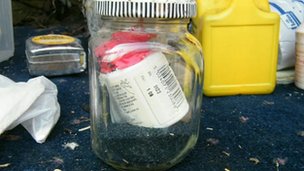
The prosecutor (Mark Holmes) contended that Hebblewhite’s motive was clear. He was the gamekeeper on this shoot, with responsibilities for pest control. The shoot had been losing birds because buzzards were in the area (his words, not ours!). Pheasant carcasses laced with Carbofuran had been found next to the Carbofuran-poisoned buzzards. A jar of Carbofuran was found in Hebblewhite’s van (see photo). Hebbelewhite’s van had been seen going to the scene on several occasions.

Hebblewhite had pleaded guilty to possession of Carbofuran (the lesser offence) but not for poisoning the buzzards.

The defence argued that the poisoner could have been anyone.

District Judge John Stobard wasn’t fooled. He is reported to have said this:

The birds died from Carbofuran and here in a van is the very stuff  that killed them. The defence says it could have been anyone. Well, could it? I’m not here to discuss the case as a philosophical argument. What is the reality of the matter?

This defendant is here to secure the presence of the shoots that take place by the way of being a gamekeeper. He must look after the pheasants and protect them from other animals.

I think he has done so in an old fashioned and particularly nasty way by lacing the pheasant with Carbofuran in the full knowledge the buzzards would be killed.

It can only point to one conclusion – he did it“.

So finally, here’s a judge who put two and two together and didn’t make five. It’s quite telling though, that this is such an unusual result that we need to highlight it here. What does that say about how our justice system deals with raptor persecution crimes? What does it tell us about our low expectations for these court cases?

In Scotland we’re so used to seeing ridiculous legal obstacles placed in the way of justice that we now expect the poisoner/trapper/killer to get off. “Did you see the defendant place the poison? Did you see the eagle/buzzard/goshawk/red kite actually eat from that very poisoned bait? Was it filmed? Did you have permission to film on that land? Can you forensically match the poison on the bait/inside the dead raptor with the big stash of illegal poison found in the defendant’s house /shed /garage /vehicle /porch /gamebag /jacket pocket? No? Well then he can’t be convicted”.

Well done again to the RSPB Investigations Team, to the CPS, and particularly to District Judge John Stobard for seeing the bleedin’ obvious and acting upon it.

UPDATE: There’s an excellent news piece on this conviction from BBC Look North. Decent coverage and explains that raptor poisoning is a national issue. Great stuff. Available on BBC iPlayer here for limited period (starts at 11.58 – ends at 14.40).

“Vicious” gamekeeper convicted of killing buzzards

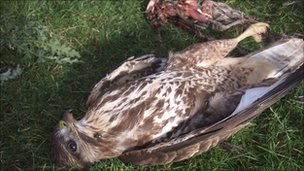
A poisoned buzzard
A poisoned buzzard

The RSPB Investigations Team scored another victory today as a Lincolnshire gamekeeper was convicted of killing two buzzards and possessing the banned poison Carbofuran.

Robert William Hebblewhite, 71, of Appleby, Scunthorpe, was fined £1,950 at Lincoln Magistrates Court.

The two buzzards were found dead in Sept 2011 on land at Bonsall Lane in Blyton, near Gainsborough, where he works as a gamekeeper. Toxicology tests revealed the birds had died from Carbofuran poisoning from poison-laced pheasant carcasses. The RSPB said Hebblewhite was in possession of enough Carbofuran to destroy all the raptors in Lincolnshire.

It’s not known whether Hebblewhite is a member of the National Gamekeepers Organisation. Hopefully they will put out a statement to clarify his membership status and to condemn this disgusting, persistent practice.

Congratulations to the RSPB guys for a successful prosecution. Importantly, he was convicted for actually killing the birds and not just for the lesser offence of possession of poison, which is the result we usually see. Well done indeed.

RSPB press release here

RSPB Scotland: 2011 persecution report published

RSPB Scotland has just published its latest report, The Illegal Killing of Birds of Prey in Scotland in 2011. You probably won’t be surprised or shocked by the content, especially if you’ve read the previous 17 annual reviews. In fact, when you read this 18th review, you might get a strong sense of déjà vu.

It opens with a Foreword by Stuart Housden, Director of RSPB Scotland. Apart from the new photo, this foreword looks like a cut and paste job from the 2010 report, with a few words or sentences added or adjusted. To be fair, not much has changed since the 2010 report was published so perhaps he felt justified in repeating what he’d written the previous year.

Then there are RSPB Scotland’s strategic recommendations for addressing raptor persecution. Again, these show a remarkable similarity to the recommendations made in the 2010 report, and also in the 2009 report. The recommendations were / are still good and to see them repeated again is a useful indicator of how little progress has been made by those with the power to push them forward.

Next come the tables showing the confirmed and probable persecution incidents recorded by the RSPB during 2011. It’s these tables that the game-shooting lobby usually object too – they’re especially reluctant to accept the ‘probable’ incidents although to date, they’ve failed to provide a convincing argument to account for any of them.

The data in the 2011 tables demonstrate once again that illegal raptor persecution is widespread, with incidents reported in Perthshire, Angus, South Lanarkshire, Aberdeenshire, Dumfries-shire, East Ayrshire, Borders and Inverness-shire. We counted 15 very familiar-sounding locations within these regions, although there are a few notable absentees this time. Have they stopped their criminal activities or have they just got better at covering up? Time will tell.

Just focusing on the confirmed incidents, in total 17 incidents of deliberate poison abuse were confirmed during 2011, involving 20 victims: 7 buzzards, 4 red kites, 1 golden eagle, 2 peregrines, 2 ravens and 4 other bird species. Sixteen other illegal incidents relating to shooting, nest destruction, and the use of uncovered spring traps or cage traps were confirmed. The victims included 8 buzzards, 2 peregrines, 1 goshawk, 1 sparrowhawk, 2 kestrels and 1 short-eared owl. As in previous years, not all of these incidents were publicised at the time they occurred. It’s a continual disappointment that several years have to pass before the public learns of these appalling crimes.

Once again the occupations and interests of those convicted for illegal raptor persecution crime have been analysed (data from 2003-2011 inclusive). 87% of them were gamekeepers (7% pigeon racers, 3% pest controllers, 3% farmers).
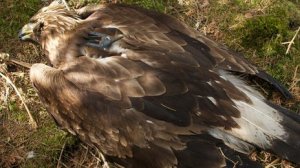
The report includes an interesting case study of poisoned raptors that have been found in recent years on the Glen Kyllachy and Farr Estate near Inverness. Very little of this information has been previously published and certainly this is the first time these photographs have been published. It’s a shame it’s taken several years for the info and images to reach the public domain but nevertheless it’s very encouraging to see RSPB Scotland highlight these cases, especially as Northern Constabulary hasn’t bothered.

All in all the report makes for grim reading, but nobody should be surprised by that. We all owe a large debt of gratitude to the RSPB’s Investigations Team for meticulously collecting these data and especially for making them publically available.

TO DOWNLOAD A COPY OF THE REPORT CLICK HERE

Here’s some media coverage:

RSPB Scotland press release here

BBC news article here

STV news article here

Herald Scotland article here

Scottish Gamekeepers Association: statement here

Scottish Land and Estates: nothing yet

@SNHMedia: “SNH report finds vast majority of gamekeepers highly qualified”. Link to this.

PAW Scotland: nothing yet

New motion lodged in Scottish Parliament: “Death of golden eagle”

A new motion was lodged in the Scottish Parliament on Monday 22nd October 2012 concerning the death of the Glen Esk golden eagle:
Motion S4M-04516: Nigel Don, Angus North and Mearns, Scottish National Party.

Death of Golden Eagle

That the Parliament condemns what it sees as the recent brutal killing of a golden eagle in Glen Esk, Angus; considers that the golden eagle is one of Scotland’s most iconic species and understands that 11 golden eagles have been illegally killed since 2007; notes also that 2013 will be the Year of Natural Scotland; urges the Police Service of Scotland to ensure that police officers have the training and resources required to tackle wildlife crime effectively; considers that golden eagles more than earn their keep by attracting tourism to rural Scotland, and asks the Scottish Government to assess what further measures it might take to protect what are considered these magnificent birds.

Here is a desciption of what a Scottish parliamentary motion is.

Here is the full text of this particular motion.

While very welcome (and probably a direct result of all the letters of complaint and media coverage) this motion raises some interesting questions:

It was proposed by 1 MSP (whose constituency includes Brechin) and was supported by 26 others. There are 129 MSPs in the Scottish Parliament. Where’s the support of the other 122? Did your MSP support it? If not, why not?

Note the phrase, “….what it sees as the recent brutal killing of a golden eagle in Glen Esk, Angus” and then compare it with the official line given by Environment Minister Paul Wheelhouse MSP:

The reports may suggest that the circumstances of this incident were suggestive of an offence however there is no hard evidence and it remains possible that there is an alternative explanation“.

It seems Nigel Don MSP and the 26 MSPs who supported his motion do not share the Environment Minister’s view on what happened to that eagle. Apparently nor do the police (see here). We would encourage you to write again to Mr Wheelhouse and ask him to provide the evidence that leads him to suggest that this eagle’s death was not the result of criminal activity. Email: ministerforenvironment@scotland.gsi.gov.uk. It’s important that this issue is clarified; any doubt that this eagle did not die as a direct result of criminal activity will be used by the Dark Side to support their continual denial about the extent of illegal raptor persecution.

Another interesting question concerns the number of known illegal deaths of golden eagles. The motion says 11 golden eagles have been illegally killed since 2007. Our figures suggest that ten have been discovered (see here):

Peebles (2007); Glen Orchy (2009); Alma (2009); Skibo 1 (2010); Skibo 2 (2010); Skibo 3 (2010); Farr (2010); Glenbuchat (2011); Lochaber (2012); Glen Esk (2012).

 So where’s the information about the 11th one? And why limit the figure to golden eagles? What about white-tailed eagles? If they’re included during this time frame, then the number of eagles known to have been illegally killed is at least 14:

GlenQuoich (2007); Glenogil (2009); Farr (2010); Skye (2011).

If the time frame was increased one year further, to 2006, then at least 16 eagles are known to have been illegally killed:

Dinnet & Kinord (2006); Glen Feshie (2006).

And then there’s all the known ‘missing’  eagles, which brings the total to at least 25:

WTE radio-tagged Bird ‘N’ disappeared in Angus Glens (2007); WTE carcass removed in suspicious circumstances from Lochindorb (2010); 4 x golden eagle leg rings found in gamekeeper’s possession on Moy Estate (2010); sat-tagged golden eagle ‘disappeared’ in Monadhliaths (2011); sat-tagged golden eagle ‘disappeared’ in eastern glens (2012); sat-tagged golden eagle ‘disappeared’ NE of Cairngorms (2012).

And then the most recent one, the shot golden eagle found on the border of Buccleuch Estate (2012) – that brings the total to 26.

And we haven’t included any other of the known persecuted raptor species in this list!

So, well done Nigel Don MSP for highlighting a significant and on-going problem – we look forward to seeing a response from the Scottish Government.

RSPB 2011 Birdcrime Report published

The RSPB has published its annual report ‘Birdcrime’, detailing offences against wild bird legislation throughout the UK in 2011.
We’ll comment on the report once we’ve had time to read and digest.

The report can be downloaded here

Court case updates

Two court case updates for you:

David Campbell, head gamekeeper at Edradynate Estate, Perthshire: an intermediate diet took place yesterday at Perth Sheriff Court at which the trial date was set for 31 August. See here and here for previous posts on this case.

David Taylor and Kevin Begg, gamekeepers at Lochindorb Estate, Morayshire: their trial, which began in March, continues at Inverness Sheriff Court next Tuesday (31 July). See here and here for previous posts on this case. This is one to watch for several reasons, which will become apparent in due course.

Gamekeeper convicted after trapped buzzard starved to death

Following the post we wrote on 31 May 2012 (see here), another Scottish gamekeeper has been convicted of a wildlife crime offence, this time for allowing a buzzard to starve to death inside a crow cage trap.

Jonathan Smith Graham (30), a gamekeeper on Glen Lyon Estate in Perthshire (see here), pleaded guilty to using a crow cage trap in which a buzzard was trapped and then starved to death. He has been fined £450 which is pretty pathetic when you consider the scope of available penalties (up to £5,000 &/or 6 months in prison), but perhaps more importantly he has now been banned from operating a crow cage trap for five years. Sheriff McCreadie’s comments about Graham’s actions (and in-actions) were also greatly encouraging and are welcomed. Credit to Tayside Police for undertaking the investigation on their own initiative and to wildlife fiscal Shona McJannett for a successful prosecution.

For the details of this case see here, here and here.

Some questions:

1. Will Jonathan Smith Graham be sacked from his gamekeeper job at Glen Lyon Estate now he has a wildlife crime conviction? Ask them directly: sally@glenlyonestate.co.uk

2. Was he/is he a member of the Scottish Gamekeepers’ Association? (His defence lawyer was David McKie – the SGA’s solicitor – just coincidence?). If he is a member, will he be expelled now he has a wildlife crime conviction? Ask them directly: info@scottishgamekeepers.co.uk and while you’re there, ask them if they’re ready to say yet whether convicted gamekeeper Robert Christie (Lindertis Estate) is/was a member (see here).

3. Why hasn’t the SGA issued a public statement condemning the actions of this gamekeeper? Ask them directly: info@scottishgamekeepers.co.uk

4. Is Glen Lyon Estate a member of Scottish Land and Estates? Ask them directly: info@scottishlandandestates@co.uk

Gonshaw: banned from Scotland for life (during breeding season)

Top, top, top news! Serial egg collector, Matthew Simon Gonshaw, has today been jailed for his latest egg-theft crimes but more importantly, he has been banned from entering Scotland during the bird breeding season, FOR LIFE!

Gonshaw, recently the recipient of an ASBO giving him a ten-year ban from Scotland, was also sentenced to six months in jail (his 5th jail term!) after he was caught nicking bird eggs off the Isle of Rum last year.

BBC news release here

COPFS press release here

Well done to everyone involved and massive kudos to Sheriff Margaret Neilson at Inverness Sheriff Court for finally delivering a decent sentence for a persistent wildlife crime offender. Now let’s see if other Sheriffs can start to follow suit…

Previous Gonshaw posts here, here and here.