Why Scottish grouse moors will have to stop slaughtering golden eagles – opinion piece in The Scotsman

The Scotsman has published my opinion piece today about the potential impact of the new licensing scheme for grouse shooting in Scotland.

You can read it on The Scotsman website (here) and it’s reproduced below:

I call them ‘The Untouchables’. Those within the grouse-shooting industry who have been getting away with illegally killing golden eagles, and other raptor species such as hen harriers, buzzards and red kites, for decades.

They don’t fear prosecution because there are few people around those remote, privately owned glens to witness the ruthless and systematic poisoning, trapping and shooting of these iconic birds. If the police do come looking, more often than not they’re met with an Omertá-esque wall of silence from those who, with an archaic Victorian mindset, still perceive birds of prey to be a threat to their lucrative red grouse shooting interests.

For a successful prosecution, Police Scotland and the Crown Office must be able to demonstrate “beyond reasonable doubt” that a named individual committed the crime. As an example of how difficult this is, in 2010 a jar full of golden eagle leg rings was found on a mantelpiece during a police raid of a gamekeeper’s house in the Highlands. Each of those unique leg ring numbers could be traced back to an individual eagle.

The gamekeeper couldn’t account for how he came to be in possession of those rings, but the police couldn’t prove that he had killed those eagles and cut off their legs to remove the rings as trophies.

Despite the remains of two red kites, six illegal traps, an illegally trapped hen harrier and poisoned bait also being found on the estate, the gamekeeper was fined a mere £1,500 for being in possession of one dead red kite, that was found mutilated in the back of his estate vehicle.

In another case in 2010, three golden eagles were found poisoned on a grouse-shooting estate in the Highlands over just a few weeks. Even though the police found an enormous cache of the lethal poison – carbofuran – locked in a shed to which the head gamekeeper held a key, they couldn’t demonstrate that he was the person who had laid the poisoned baits that had killed the eagles. This meant he was fined £3,300 for the possession of the banned poison, but wasn’t prosecuted for killing the eagles.

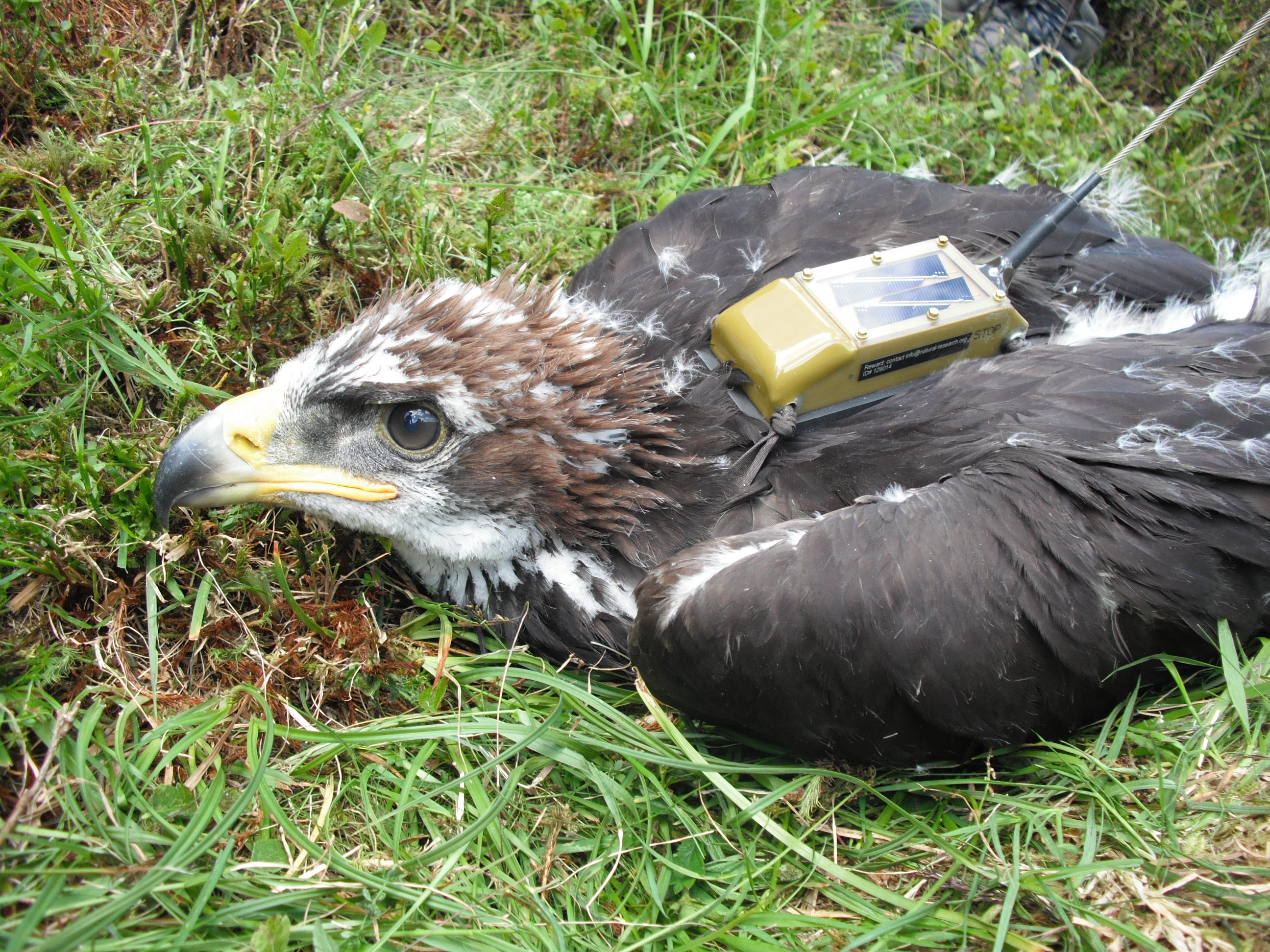
In recent years, researchers have been fitting small satellite tags to young golden eagles which allows us to track their movements across Scotland, minute by minute. Analysis has shown that between 2004 and 2016, almost one third of tagged eagles (41 of 131 birds) ‘disappeared’ in suspicious circumstances, mostly on or next to grouse moors. 

Satellite-tagged golden eagle prior to fledging. This eagle was tagged in 2014, ‘disappeared’ on a Strathbraan grouse moor in 2016 and it’s satellite tag was found wrapped in heavy lead sheeting in the River Braan in 2020. Photo by Duncan Orr-Ewing

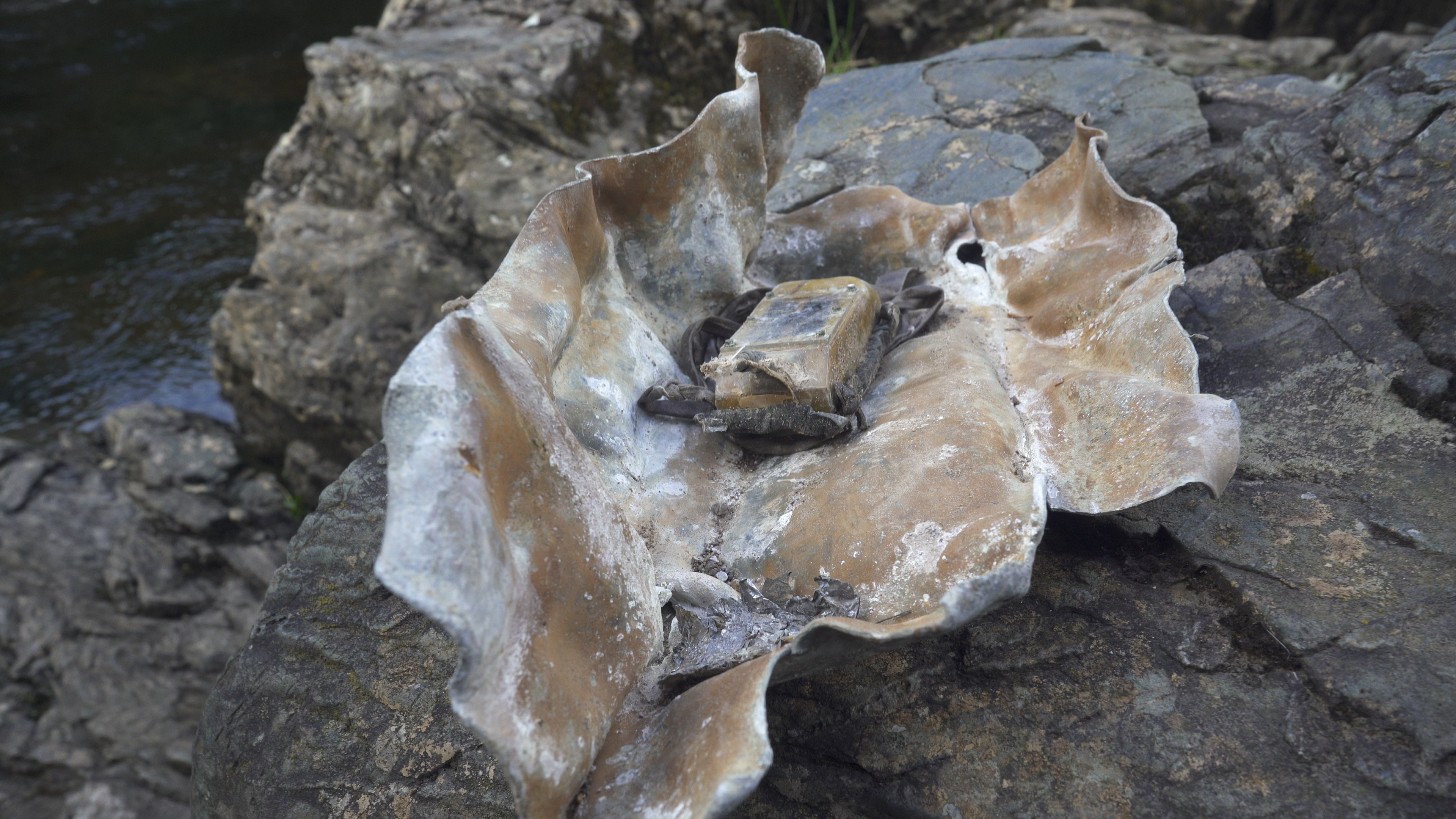
The lengths the criminals will go to avoid detection were exposed in 2020 when a walker found a satellite tag that had been cut off an eagle, wrapped in heavy lead sheeting – presumably to block the signal – and dumped in the River Braan. The tag’s unique identification number told us it belonged to a young eagle tagged in the Trossachs in 2014. This eagle had disappeared without trace from a Perthshire grouse moor in 2016, in an area where eight other tagged eagles had vanished in similar suspicious circumstances. Nobody has been prosecuted.

The remains of the satellite tag that had been cut off the eagle, wrapped in lead sheeting and dumped in a river. Photo by Ian Thomson, RSPB Scotland

The most recent disappearance of a tagged eagle happened just before Christmas 2023, close to the boundary of a grouse moor in the Moorfoot Hills. ‘Merrick’ was translocated to the area in 2022 as part of the South of Scotland Golden Eagle Project. Her tag data told us she was asleep in a tree immediately before she disappeared. Police found her blood and a few feathers at the scene and concluded she’d been shot. Who shoots a sleeping eagle? Again, no one has been prosecuted.

This situation has persisted for decades because although golden eagles have been afforded legal protection for the last 70 years, to date there hasn’t been a single successful prosecution for killing one. The chances of getting caught and prosecuted have been so low that the risk of committing the crime has been worth taking, over and over again. Until now. 

Earlier this year, the Scottish Parliament passed new legislation, the Wildlife Management and Muirburn (Scotland) Act 2024, which introduces a licensing scheme for grouse shooting. For the first time in 170 years, red grouse shooting can now only take place on estates that have been granted a licence to shoot. 

How will this stop the slaughtering of golden eagles and other birds of prey on Scotland’s grouse moors? Well, the licence can be revoked for up to five years if there is evidence of wildlife crime on the estate. Significantly, this will be based on the civil burden of proof which has a lower evidential threshold than the criminal burden of proof. 

This means that instead of the police having to prove ‘beyond reasonable doubt’ that a named individual was responsible, they now have to prove that it’s based only on the ‘balance of probability’. This is a real game-changer because instead of being perpetually ‘untouchable’, now there are real, tangible consequences for the grouse shooting industry if these crimes continue. Estates will no longer be able to rely on the implausible protestation that ‘a big boy did it and ran away’.

As with any legislation, it will only be effective if it is strongly enforced. The jury’s out on that and we’ll be keeping a close eye on performance, but as the licensing scheme is based on a policy of mistrust, the Scottish Government has sent an unequivocal message to the grouse shooting industry. We all know what’s been going on and the public will no longer tolerate it.

ENDS

General Licence restriction imposed on Moy, a grouse-shooting estate, after discovery of poisoned red kite

Press release from NatureScot, 21st June 2022:

General Licence restricted on Highland estate

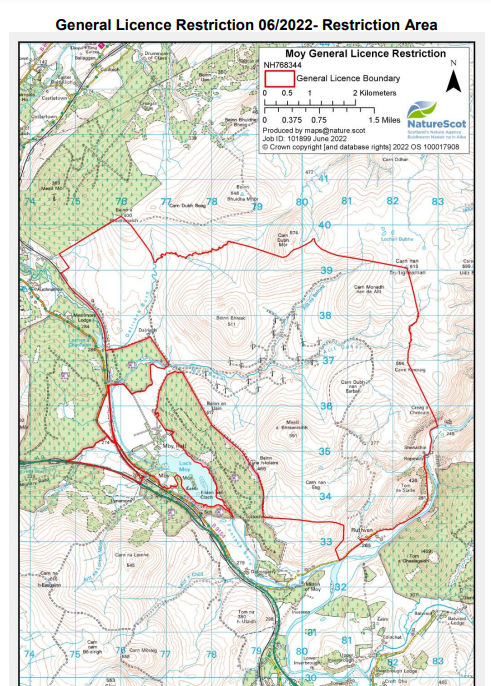
NatureScot has restricted the use of General Licences on Moy Estate for three years

The decision was made on the basis of evidence provided by Police Scotland of wildlife crime against birds.

This evidence included a poisoned red kite found on the estate in 2020, and incidents in relation to trapping offences.

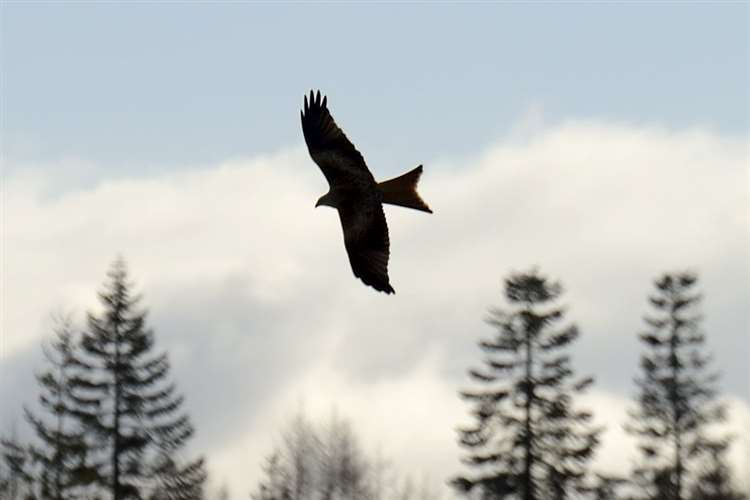
[Red kite. Photographer unknown]

Donald Fraser, NatureScot’s Head of Wildlife Management, said: “We consider the information from Police Scotland provides robust evidence that wild birds have been killed or taken or there has been intention to do so illegally on this land.

“Because of this, and the risk of more wildlife crimes taking place, we have suspended the use of general licences on this property for three years until June 2025. They may still apply for individual licences, but these will be closely monitored.

“NatureScot is committed to using all the tools we have available to tackle wildlife crime. This measure will help to protect wild birds in the area, while still allowing necessary land management activities to take place, although under tighter supervision.

“We believe this is a proportionate response to protect wild birds in the area and prevent further wildlife crime. We will continue to work closely with Police Scotland and consider information they provide on cases which may warrant restricting general licences.”

General licences allow landowners or land managers to carry out control of common species of wild birds, such as crows and magpies, to protect crops or livestock, without the need to apply for an individual licence.

In addition to this restriction, there are currently three other restrictions in place on Invercauld Estate in the Cairngorms National Park, Lochan Estate in Perthshire and Leadhills Estate in South Lanarkshire.

ENDS

The restriction notice reads as follows:

In line with NatureScot’s published General Licence restrictions: Framework for Implementing Restrictions we hereby give notice that a restriction has been applied to the land outlined in red overleaf. This restriction prohibits the use of General Licences 01, 02 and 03 on that land between 21st June 2022 and 21st June 2025.

Please note that this restriction does not imply responsibility for the commission of crimes on any individuals.

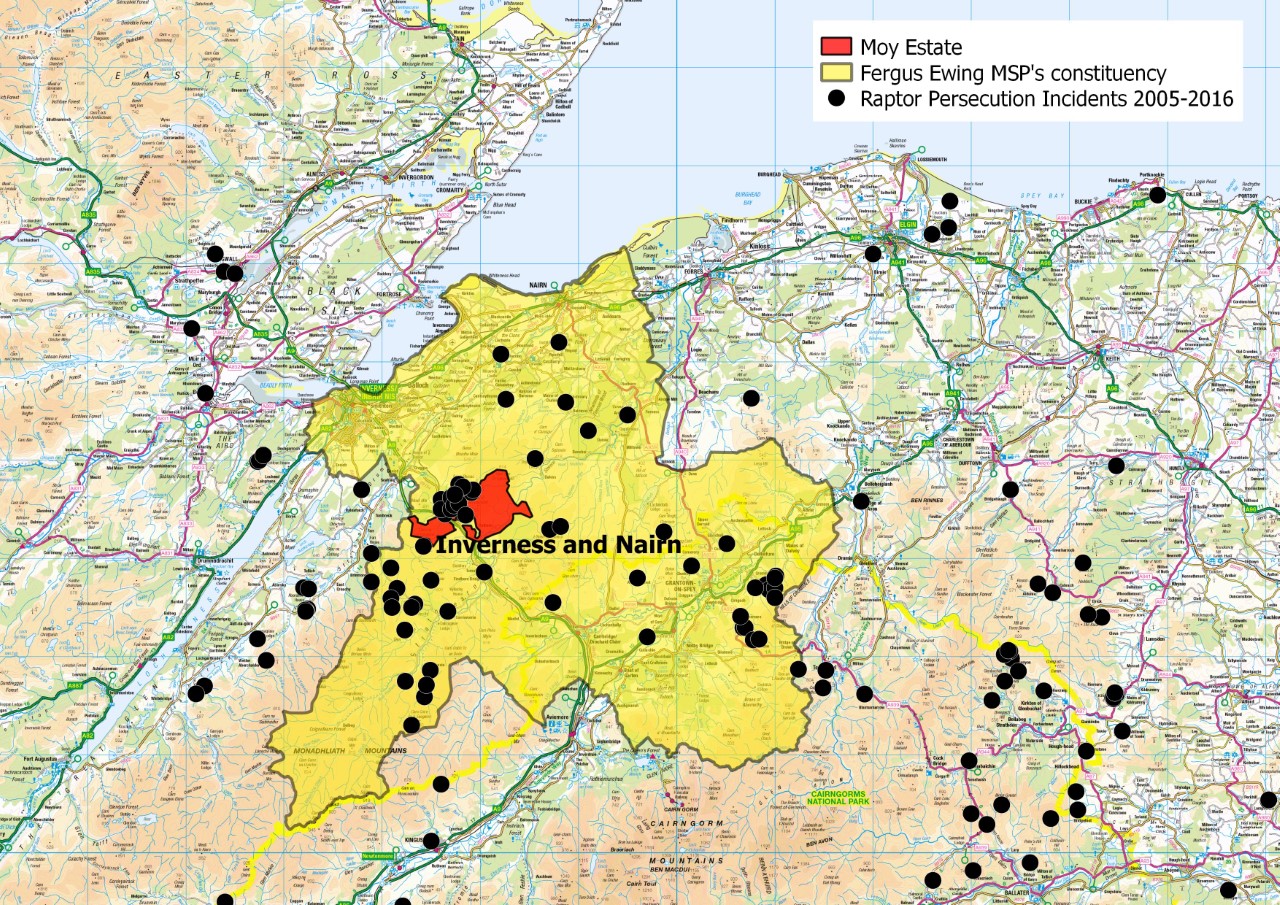
This one has been a long time coming. Moy is one of those estates where if its name comes up in conversation amongst raptor conservationists in Scotland, eyes tend to roll and knowing looks are exchanged. It has been identified as a raptor persecution hotspot for many, many years.

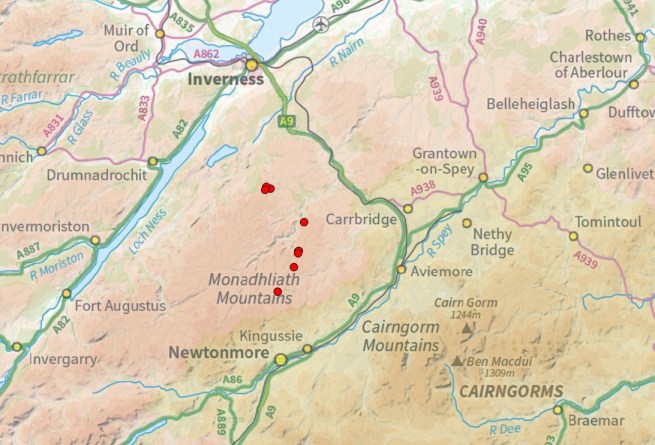
Here is a map we created way back in 2016 to highlight the extent of raptor persecution crimes in former Cabinet Secretary Fergus Ewing’s constituency (given his strong support of the Scottish Gamekeepers Association) and this shows the concentration of incidents on and close to Moy Estate:

Here is a selection of examples, but this is by no means an exhaustive list:

Moy Estate was raided by police in 2010 after the discovery of poisoned bait and dead raptors and illegally set traps. A gamekeeper was later convicted of possession of a red kite after its bloodied corpse was found in the back of his vehicle. It had two broken legs, consistent with being caught in spring traps, and a head injury. A bloodied shinty stick was also found in the back of the vehicle. Notably, the gamekeeper wasn’t convicted for killing the kite, just for having possession of it. Nobody was charged with killing this kite.

These baited traps were discovered on the moor (the illegally-set spring traps were originally disguised under moss, removed here for evidential purposes). No charges were brought.

The remains of two further red kites were discovered on the moor, including a severed red kite leg and some wing tags that had previously been fitted to a kite, all found buried in holes under some moss. No charges were brought.

A jar in one of the gamekeeper’s houses contained the leg rings of four young golden eagles – nobody could account for how they had ended up inside that jar. Perhaps he’d found them whilst ‘metal detecting at his uncle’s farm’ like gamekeeper Archie Watson, who recently gave this implausible explanation to the court for how he’d come to possess BTO leg rings from a buzzard and a red kite attached to his keyring.

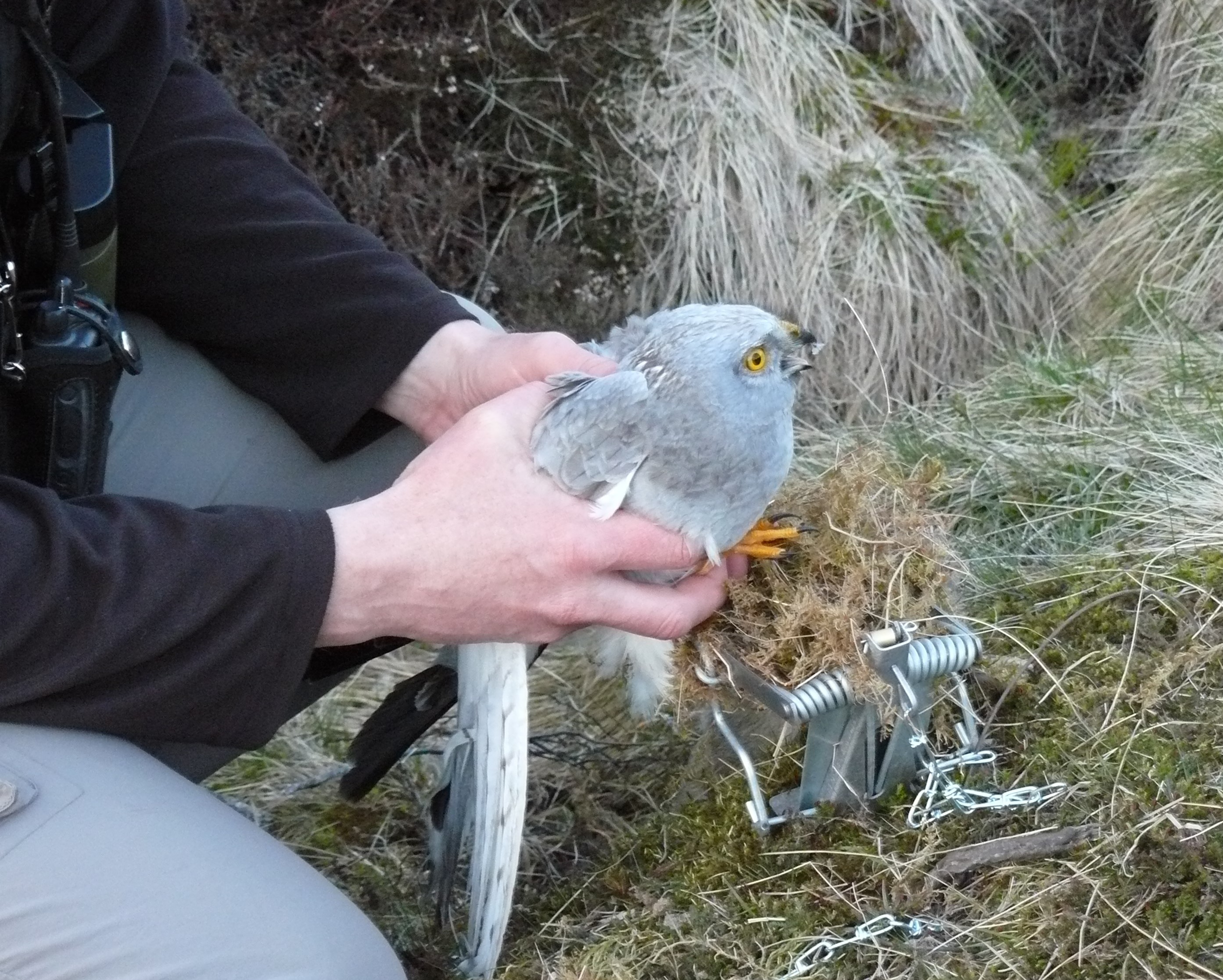
This male hen harrier was found caught by its leg in an illegally-set spring trap on Moy Estate in 2010. No charges were brought. It survived after being rescued by raptor workers from the Scottish Raptor Study Group.

In May 2011 a satellite-tracked red kite ‘disappeared’ on Moy, and another one ‘disappeared’ in August 2011.

In 2016 Police Scotland issued an appeal for information following the discovery of disturbed and abandoned buzzard and goshawk nests in the Moy Forest. One goshawk and four buzzard nests were abandoned in suspicious circumstances, with some evidence of illegal disturbance. These nests were being monitored by staff from Forestry Enterprise Scotland (see here). No charges were brought.

In 2017 masked gunmen were caught on camera at a goshawk nest in Moy Forest. A few days later the nest and a clutch of four eggs was found abandoned (see here). No charges were brought.

In 2018 Police Scotland issued an appeal for information after a buzzard was found caught in an illegal pole trap in the Moy area (see here). No charges were brought.

In 2020 a poisoned red kite was found dead, containing traces of a banned pesticide, leading to a police appeal for information (here).

In 2021 an individual was charged with the alleged killing of a bird of prey in this area. This case is believed to be progressing through the courts so I can’t comment further at this stage.

Of course, a General Licence restriction doesn’t amount to much of a sanction in real terms, as I’ve discussed on this blog endless times before (e.g. see here). However, it’s currently the only tool available to the authorities until we finally see the introduction of the promised grouse moor licensing scheme by the Scottish Government. Had that scheme been in place already, we’d hopefully have seen the removal of Moy Estate’s licence to shoot for a number of years, if not permanently.

Meanwhile, what will be really interesting to see is whether the Moy Game Fair goes ahead this year, given that the shooting organisations have all claimed to have a ‘zero tolerance’ approach to raptor persecution. I don’t think the likes of Scottish Land & Estates, Fergus Ewing MSP and the Scottish Gamekeepers Association can expect anything other than high-level criticism if they attend this event on an estate that has now been sanctioned for wildlife crimes by the statutory nature conservation advisor, based on evidence provided by Police Scotland. Mind you, the conviction of a gamekeeper on Moy Estate in 2011 didn’t stop them attending (see here and here).

UPDATE 14th July 2022: Scottish Gamekeepers Association plans award ceremony at disgraced Moy Estate (here)

UPDATE 6th August 2022: Fergus Ewing MSP & his shooting industry pals disregard sanctions imposed on Moy Estate for wildlife crime (here)

UPDATE 22nd August 2022: Moy Estate loses appeal against General Licence restriction imposed for wildlife crime (here)

“They all know what is going on, and they cover it up” – police inspector’s view on gamekeepers & raptor killing

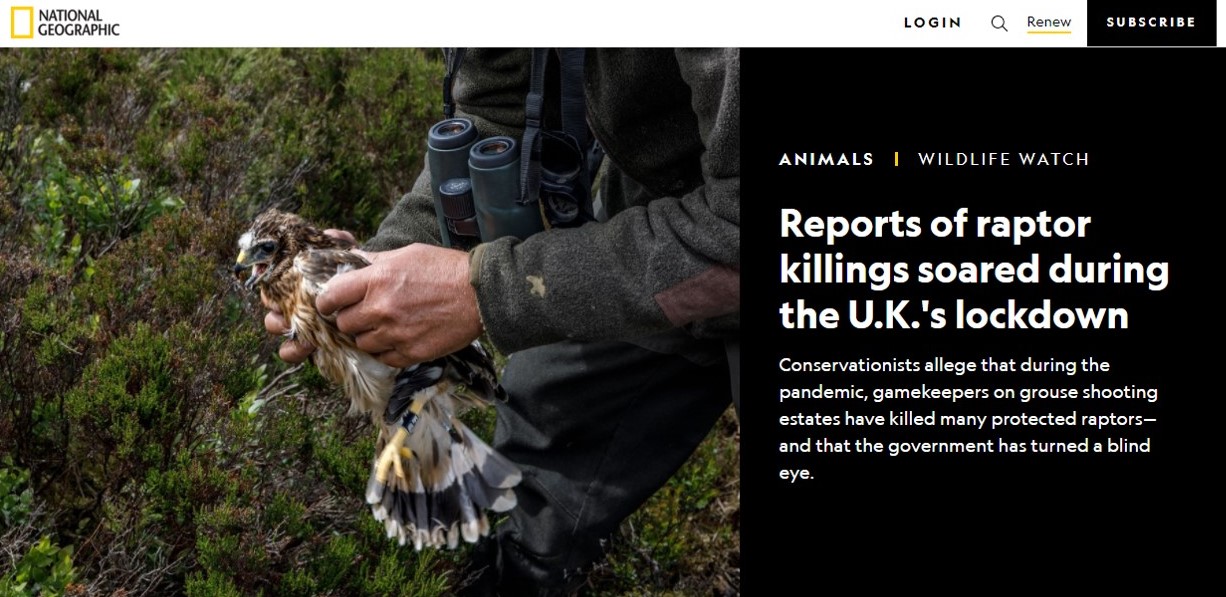
Timed to publish on the same day as the RSPB’s Birdcrime report, documenting how 2020 was the ‘worst year on record’ for crimes against birds of prey in the UK (see here), National Geographic has just published a lengthy article, written by journalist Rene Ebersole who visited the UK earlier this year specifically to research the subject of raptor persecution on grouse moors.

Rene visited quite a few field sites and interviewed a lot of people for this piece, including Mark Thomas (RSPB Investigations), Mark Avery (Wild Justice), Caroline Middleton Gordon (Moorland Association), Matt Hagen (North Yorkshire Police and RPPDG), Mark Cunliffe-Lister (Swinton Estate & Moorland Association), Steve Downing (Northern England Raptor Forum), the witness who saw ‘gamekeepers’ shooting buzzards on the Bransdale Estate last year, and some others.

I could spend a long time analysing the contributions from these people but unfortunately I don’t have the time today. I will try and come back to it at some point though, because some of it, especially Cunliffe-Lister’s comments, deserve ripping to shreds. If you’re going to read the article, and I’d urge you to because it’s very, very good, I’d recommend you don’t have a hot drink anywhere nearby when you read Cunliffe-Lister’s predictable denials and diversions. For example:

Grouse shooting had some bad times when raptors were being controlled illegally historically, but now we’re all being responsible and working a way forward, so we can still keep somebody living in this house and working up here, rather than giving up“.

What a prat. It’s these constant denials from senior figures in the shooting industry, in the face of decades worth of overwhelming science and evidence, that provide the raptor killers with the confidence to continue their crimes on the shooting estates, safe in the knowledge they’re probably going to be protected.

North Yorkshire Police Inspector Matt Hagen deserves a medal simply for being prepared to stand up and say it how he sees it, at great risk to his personal and professional life knowing how the nasty brigade has turned on previous officers who’ve dared to form and express an opinion based on evidence and experience.

He talks about knowing the identity of the Nidderdale poisoner, of how the Bransdale gamekeepers all gave ‘no comment’ interviews when questioned about the five shot buzzards found buried on the estate, how ‘shocked and disgusted’ he is about the high level of raptor persecution in the UK, how it’s ‘more likely than not‘ that hen harrier River was shot on the Swinton Estate, despite the ridiculous and largely implausible explanations of estate owner Cunliffe-Lister, and how gamekeepers “all know what is going on, and they cover it up“.

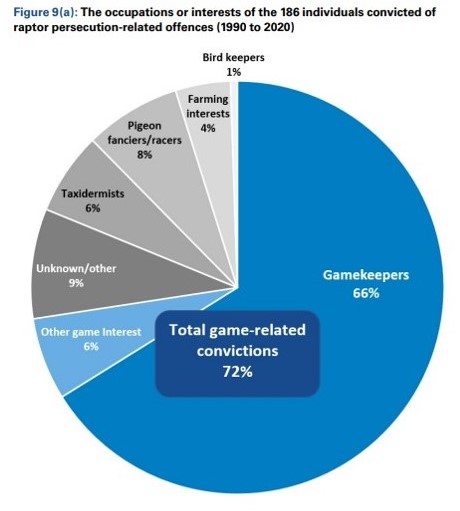
He’s not wrong. This pie chart from the latest RSPB Birdcrime report shows that almost three-quarters of those convicted of raptor persecution crimes in the last 30 years worked in, or had connections to, the game-shooting industry.

The National Geographic article is free and open access. You can read it HERE

Well done, journalist Rene Ebersole and her photographer Anastasia Taylor-Lind – it’s a very good piece and it’s excellent that these disgraceful crimes are being featured by a highly respected organisation such as National Geographic, being exposed to a much wider international audience.

UPDATE: A PDF of the article can now be downloaded here:

Notorious egg thief on the run

jeffrey-lendrumJeffrey Lendrum, a notorious international falcon egg thief, has gone on the run in Brazil and there are fears he may well turn up back in the UK this year to go after peregrine eggs.

In January 2016 Lendrum, 55, was sentenced to four and a half years in jail after being convicted of being in possession of rare falcon eggs at Sao Paulo airport, enroute from Chile to Dubai (see here). However, he had recently appealed his sentence and the Brazilian authorities released him on bail pending his appeal.

He has since disappeared.

Lendrum has a string of previous convictions for falcon egg smuggling, dating back as far as 1984 in Zimbabwe. In 2002 he was arrested in Canada for stealing peregrine and gyrfalcon eggs. In 2010 he was sentenced to 30 months imprisonment in the UK (reduced to 18 months on appeal) after being caught with 14 peregrine eggs at Birmingham Airport. He’d stolen them from nests in south Wales and was enroute to Dubai (see here).

If you’re involved with monitoring peregrine sites in the UK, keep an eye out for this face.

Ministerial reaction to ‘missing’ golden eagles

Following yesterday’s news that eight young satellite-tagged golden eagles have ‘disappeared’ in the Monadhliaths in the last five years (see here), we were interested to read the response from Roseanna Cunningham MSP, the Cabinet Secretary for the Environment.

Here’s the statement that appeared on the Scottish Government’s website:

The Scottish Government has ordered a review of satellite tracking data, following reports from RSPB Scotland that a number of golden eagles have disappeared in the Monadhliath mountains.

Roseanna Cunningham, Cabinet Secretary for Environment, Climate Change and Land Reform, said: “The latest reports of satellite-tagged golden eagles disappearing on or near grouse moors are very disturbing and disappointing. That is why I have instructed officials to analyse the evidence from around 90 surviving and missing satellite-tagged eagles, to discover if there is a pattern of suspicious activity.

Grouse moor management does help species such as curlew and golden plover as well as generating much needed rural employment and income but this cannot be at any price. The public rightly expects all businesses in Scotland to obey the law. Let me be clear: grouse shooting is no exception.

As previously stated, the Scottish Government is prepared to introduce further regulation of shooting businesses if necessary. It will be unfortunate if the activities of a few bring further regulation on the whole sector, but that is the risk those why defy the law and defy public opinion are running“.

END

Yesterday we described her call for a review of satellite-tag data as ‘fatuous’ (see here). Not because such a review is unwelcome; it isn’t. But because the reason given for the review – ‘to discover if there is a pattern of suspicious activity’ – suggests that the pattern of activity is currently unknown. That’s as ridiculous as it gets. Of course the pattern of illegal persecution is already known, and has been for decades. Endless peer-reviewed scientific papers and government reports on golden eagles, hen harriers, red kites and peregrines have unequivocally linked the illegal killing of these raptors with intensively-managed driven grouse moors. Why pretend that this is all news? Why pretend nobody knows what’s been going on?

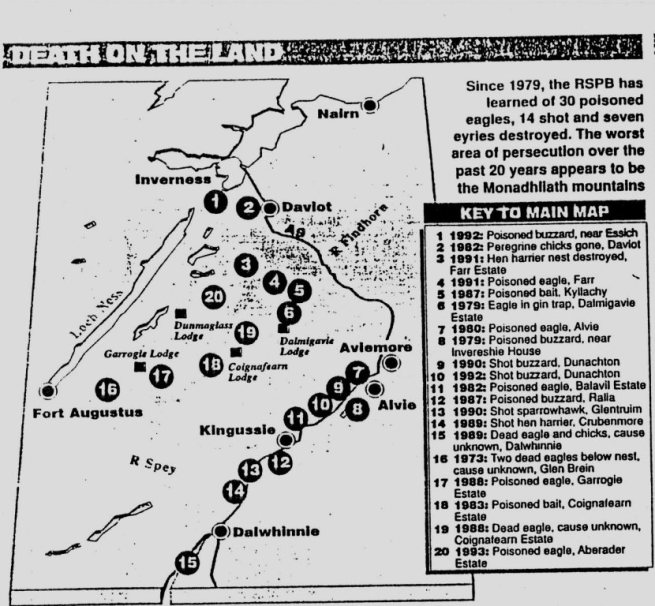
Taking the example of the Monadhliaths, this area has been a known eagle persecution blackspot since the 1970s! Have a look at this article that was published in the Scotsman on 11 March 1993 (we blogged about it here):

the_mountains_where_eagles_die_map-compressed2

To be fair, in recent years a number of more enlightened landowners in this area have been working closely with conservationists, resulting in a small increase in golden eagle survival on a few local estates, but as clearly seen from yesterday’s news, there are still other estates in the Monadhliaths that have yet to drag their sorry backsides away from the (now illegal) ‘management’ practices of the 19th Century.

Nevertheless, we do welcome the news that the Cabinet Secretary is actually doing something this time, instead of just churning out the same tired old Government rhetoric of ‘We will not hesitate to take further action if necessary’. It is necessary and we do expect to see ‘further action’ without any more stalling or prevarication. If you hear hooves, Cabinet Secretary, look for horses, not zebras.

But it’s not just the reaction of the Environment Cabinet Secretary that interests us. It turns out that another Cabinet Secretary should be taking more of an interest than most. Fergus Ewing MSP is the Cabinet Secretary for Rural Economy and Connectivity. He also happens to be the Member of the Scottish Parliament representing the constituency of Inverness and Nairn.

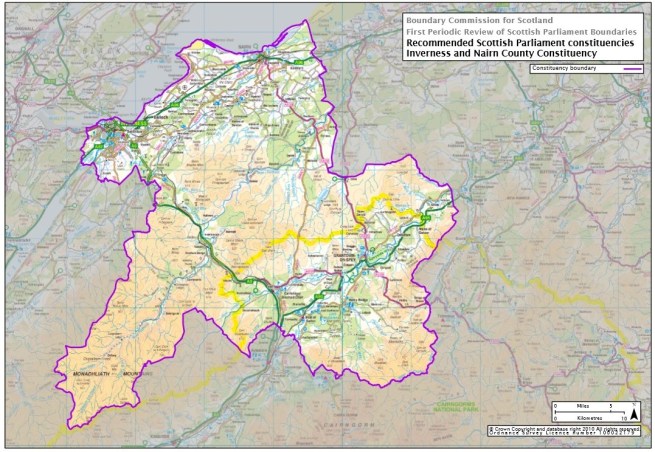
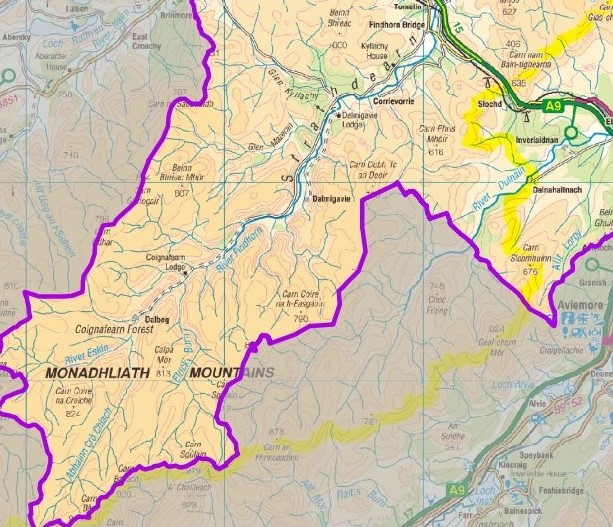
If you look at the map of Fergus’s constituency, and then look at the map showing the last known locations of those eight satellite-tagged golden eagles, you’ll see that a good few of the points where the eagles were last recorded lie within Fergus’s constituency boundary.

Inverness Nairn constituency map

FergusEwing Constituency Monadhliaths

ge disappeared

Now, we know that Fergus’s job is to represent the interests of ALL his constituents (estimated at 66,619 voters, according to his website). We know he does a good job of representing the interests of a tiny fraction of those constituents who are involved with the game-shooting industry – there’s a picture floating around of him attending the Moy Game Fair last weekend – wearing a Scottish Gamekeepers’ Association tie.

But what about the interests of the tens of thousands of his other constituents? We’re pretty sure that most, if not all, will be appalled to discover what’s still going on in their area. What will Fergus be doing about that?

Will he be encouraging his constituents to sign this petition calling for the Scottish Government to introduce a licensing scheme for all gamebird hunting?

A good many of his constituents have already signed this other petition, calling for an outright ban on driven grouse shooting (which has just smashed through 90,000 signatures, on it’s way to 100,000 and a parliamentary debate in Westminster).

We’ll watch with interest to see what both these Cabinet Secretaries do next.

40 eagles, 10 years, 0 prosecutions

In April 2012, we wrote an article called ’21 eagles, 6 years, 0 prosecutions’ (see here).

In September 2012, we updated it and called it ’26 eagles, 6 years, 0 prosecutions’ (see here).

In July 2013 we updated it again. This time, ’27 eagles, 7 years, 0 prosecutions’ (see here).

In December 2013 we had to do another update: ‘31 eagles, 7 years, 0 prosecutions’ (see here).

In April 2014 we had to do another update: ’32 eagles, 8 years, 0 prosecutions’ (see here).

Fearnan Angus Glens Dec 2013 - Copy

After this morning’s news (here) that eight young satellite-tagged golden eagles have ‘disappeared’ on grouse moors in the Monadhliath Mountains over the last five years, we thought it was time for another update. This time it’s called: ’40 eagles, 10 years, 0 prosecutions’.

36 of these 40 eagles have either been found dead on, or have ‘disappeared’ on, Scottish grouse moors. (The other 4 have either died or have ‘disappeared’ in other habitat types).

Three of these 40 eagles have ‘disappeared’ in 2016. So much for the grouse-shooting industry claiming that they’ve cleaned up their act and that persecution is a thing of the past. The tactics of how to kill an eagle have clearly changed (see here) but the persecution continues.

As before, a number of eagles included in this list (16 of them, to be precise) may not be dead. However, they are included here because their satellite tags unexpectedly stopped functioning (i.e. they’d been transmitting perfectly well up until the eagles’ last known location, often a known persecution hotspot). Two further satellite-tagged eagles (‘Angus’ and ‘Tom’) are not included in this list as although their transmitters stopped functioning, there had been recognisable problems with their tags prior to the final transmissions and so the benefit of the doubt has been applied.

Many of these listed eagles from recent years have only been discovered because the eagles were being satellite-tracked. Much kudos to the dedicated teams of fieldworkers who have put in hours and hours of skilled hard work to allow this to happen. Obviously there are many other eagles out there that have not been sat-tagged and on the balance of probability will have been killed at the hands of the game-shooting industry. 40 eagles in the last 10 years is the bare minimum. The number of prosecutions (zero) is indisputable.

MAY 2006: A dead adult golden eagle was found on the Dinnet & Kinord Estate, near Ballater, Aberdeenshire. Tests revealed it had been poisoned by the illegal pesticide Carbofuran. Grampian Police launched an investigation. No prosecution.

JUNE 2006: A dead golden eagle was found on Glen Feshie Estate in the Cairngorms. Tests revealed it had been poisoned by the illegal pesticide Carbofuran. Northern Constabulary launched an investigation. No prosecution.

AUGUST 2007: A dead adult female golden eagle was found on an estate near Peebles in the Borders. She was half of the last known breeding pair of golden eagles in the region. Tests revealed she had been poisoned by the illegal pesticide Carbofuran. Lothian & Borders Police launched an investigation. No prosecution.

NOVEMBER 2007: Tayside Police received a detailed tip-off that a young male white-tailed eagle (known as ‘Bird N’) had allegedly been shot on a grouse moor estate in the Angus Glens. The timing and location included in the tip-off coincided with the timing and location of the last-known radio signal of this bird. The eagle has not been seen again. With no carcass, an investigation isn’t possible.

MAY 2008: A one year old male white-tailed eagle hatched on Mull in 2007 and known as ‘White G’ was found dead on the Glenquoich Estate in the Angus Glens. Tests revealed he had been poisoned by an unusual concoction of pesticides that included Carbofuran, Bendiocarb and Isofenphos. A police search in the area also revealed a poisoned buzzard, a baited mountain hare and 32 pieces of poisoned venison baits placed on top of fence posts on the neighbouring Glenogil Estate. Laboratory tests revealed the baited mountain hare and the 32 poisoned venison baits contained the same unusual concoction of highly toxic chemicals that had killed the white-tailed eagle, ‘White G’. No prosecution.

JUNE 2009: An adult golden eagle was found dead at Glen Orchy, Argyll, close to the West Highland Way. Tests revealed it had been poisoned by the illegal pesticide Carbofuran. Strathclyde Police launched a multi-agency investigation. Three years and 3 months later, estate employee Tom McKellar pled guilty to possession of Carbofuran stored in premises at Auch Estate, Bridge of Orchy and he was fined £1,200. No prosecution for poisoning the golden eagle.

JULY 2009: A two year old female golden eagle known as ‘Alma’ was found dead on the Millden Estate in the Angus Glens. Tests revealed she had been poisoned by the illegal pesticide Carbofuran. Alma was a well-known eagle  – born on the Glen Feshie Estate in 2007, she was being satellite-tracked and her movements followed by the general public on the internet. Tayside Police launched an investigation. No prosecution.

AUGUST 2009: A young white-tailed eagle was found dead on Glenogil Estate in the Angus Glens. Tests revealed it had been poisoned by the illegal pesticide Carbofuran. Tayside Police was criticized in the national press for not releasing a press statement about this incident until January 2010. No prosecution.

MAY 2010: #1 of three dead golden eagles found on or close to Skibo Estate, Sutherland. Tests revealed they had been poisoned; two with Carbofuran and one with Aldicarb. Northern Constabulary launched a multi-agency investigation. One year later (May 2011), Sporting Manager Dean Barr pled guilty to possession of 10.5 kg of Carbofuran stored in premises at Skibo Estate. No prosecution for poisoning the golden eagle.

MAY 2010: #2 of three dead golden eagles found on or close to Skibo Estate, Sutherland. Tests revealed they had been poisoned; two with Carbofuran and one with Aldicarb. Northern Constabulary launched a multi-agency investigation. One year later (May 2011), Sporting Manager Dean Barr pled guilty to possession of 10.5 kg of Carbofuran stored in premises at Skibo Estate. No prosecution for poisoning the golden eagle.

MAY 2010: #3 of three dead golden eagles found on or close to Skibo Estate, Sutherland. Tests revealed they had been poisoned; two with Carbofuran and one with Aldicarb. Northern Constabulary launched a multi-agency investigation. One year later (May 2011), Sporting Manager Dean Barr pled guilty to possession of 10.5 kg of Carbofuran stored in premises at Skibo Estate. No prosecution for poisoning the golden eagle.

JUNE 2010: #1: Leg rings with unique identification numbers that had previously been fitted to the legs of four young golden eagles in nests across Scotland were found in the possession of gamekeeper James Rolfe, during a multi-agency investigation into alleged raptor persecution at Moy Estate, near Inverness. It is not clear how he came to be in possession of the rings. The bodies of the eagles from which the rings had been removed were not found. No further action was taken in relation to the discovery.

JUNE 2010: #2: Leg rings with unique identification numbers that had previously been fitted to the legs of four young golden eagles in nests across Scotland were found in the possession of gamekeeper James Rolfe, during a multi-agency investigation into alleged raptor persecution at Moy Estate, near Inverness. It is not clear how he came to be in possession of the rings. The bodies of the eagles from which the rings had been removed were not found. No further action was taken in relation to the discovery.

JUNE 2010: #3: Leg rings with unique identification numbers that had previously been fitted to the legs of four young golden eagles in nests across Scotland were found in the possession of gamekeeper James Rolfe, during a multi-agency investigation into alleged raptor persecution at Moy Estate, near Inverness. It is not clear how he came to be in possession of the rings. The bodies of the eagles from which the rings had been removed were not found. No further action was taken in relation to the discovery.

JUNE 2010: #4: Leg rings with unique identification numbers that had previously been fitted to the legs of four young golden eagles in nests across Scotland were found in the possession of gamekeeper James Rolfe, during a multi-agency investigation into alleged raptor persecution at Moy Estate, near Inverness. It is not clear how he came to be in possession of the rings. The bodies of the eagles from which the rings had been removed were not found. No further action was taken in relation to the discovery.

JUNE 2010: A golden eagle was found dead on Farr & Kyllachy Estate, Inverness-shire. Tests revealed it had been poisoned by the illegal pesticide Carbofuran. Northern Constabulary apparently did not search the property until July 2011. No prosecution.

JUNE 2010: A white-tailed eagle was found dead on Farr & Kyllachy Estate, Inverness-shire. Tests revealed it had been poisoned by the illegal pesticide Carbofuran. Northern Constabulary apparently did not search the property until July 2011. No prosecution.

DECEMBER 2010: A decomposing carcass of a white-tailed eagle was found and photographed on Logie (Lochindorb) Estate, Morayshire. It was reported to Northern Constabulary. By the time the police arrived to collect it, the carcass had disappeared. The police said they couldn’t investigate further without the body.

FEBRUARY 2011: The signal from a young satellite-tracked golden eagle ( ‘Lee’, hatched in 2010) unexpectedly stopped transmitting after a final signal from the North Angus Glens. A technical malfunction or another mysterious ‘disappearance’?

MARCH 2011: The body of a young golden eagle was discovered on North Glenbuchat Estate, Aberdeenshire. Tests revealed it had been poisoned by the illegal pesticide Carbofuran. Grampian Police launched an investigation and raided the property in May 2011. A poisoned buzzard, a poisoned bait and a shot short-eared owl were found. No prosecution.

APRIL 2011: The body of a white-tailed eagle was found at the base of cliffs on Skye. The person who discovered it (a professional medic) considered it to have been freshly shot with a rifle, decapitated with a sharp implement and thrown from the cliff top. He took photographs and alerted Northern Constabulary and RSPB. There was a delay of two weeks before the now probably decomposed carcass was collected. A post-mortem was inconclusive. This incident was not made public until one year later after a tip off to this blog. No prosecution.

SEPTEMBER 2011: The signal from a satellite-tracked young golden eagle (‘Strathy’, hatched in 2010) unexpectedly stopped transmitting after a final signal from an Aberdeenshire grouse moor. A technical malfunction or another mysterious ‘disappearance’?

NOVEMBER 2011: The signal from a one-year-old satellite-tracked golden eagle (#57124) unexpectedly stopped transmitting after a final signal from a grouse moor in the Monadhliaths. A technical malfunction or another mysterious ‘disappearance’?

MARCH 2012: The body of a young golden eagle being tracked by satellite was discovered in Lochaber. Tests revealed it had been poisoned with the banned pesticides Aldicarb and Bendiocarb. Information about this incident was not made public until three months later. No prosecution.

MARCH 2012: The signal from a satellite-tracked young golden eagle (‘Angus 26′, hatched in 2011) unexpectedly stopped transmitting after a final signal from a grouse moor in the Angus Glens. This bird’s suspiciously damaged sat tag was found in the area. No prosecution.

MAY 2012: The signal from a young satellite-tracked golden eagle (#32857) unexpectedly stopped transmitting when the bird was north-east of the Cairngorms National Park. A technical malfunction or another mysterious ‘disappearance’?

MAY 2012: The dead body of a young satellite-tracked golden eagle (hatched in 2011) was discovered near a lay-by in Aboyne, Aberdeenshire. The data from its satellite tag & the injuries the bird had when found (2 broken legs) suggested it had been caught in an illegal trap on a grouse moor in the Angus Glens and then removed, under cover of darkness, to be dumped in another area where it was left to die, probably a slow and agonising death. Information on this incident was not released until almost five months later, by the RSPB. It appears the police failed to properly investigate this incident as we understand that no search warrants were issued and no vehicles were searched. No prosecution.

JULY 2012: The signal from a one-year-old satellite-tracked golden eagle (‘Foinaven’) unexpectedly stopped transmitting after a final signal from a grouse moor in the Monadhliaths. A technical malfunction or another mysterious ‘disappearance’?

OCTOBER 2012: An adult golden eagle was found shot and critically injured on grouse moor at Buccleuch Estate, near Wanlockhead, South Lanarkshire. The bird was rescued by the SSPCA and underwent surgery but it eventually succumbed to its injuries in April 2013. No prosecution.

MAY 2013: The signal from a two-year-old satellite tracked golden eagle (‘Angus 33′, hatched in 2011) unexpectedly stopped transmitting after its last signal from North Glenbuchat Estate in Aberdeenshire. A technical malfunction or another mysterious ‘disappearance’?

JUNE 2013: A dead golden eagle was found under power lines on an RSPB reserve on Oronsay. This bird had been shot although it is not known whether this was the cause of death or an historical injury.

JULY 2013: The signal from a young satellite tracked golden eagle (‘Cullen’, hatched 2010) unexpectedly stopped transmitting after its last signal in Aberdeenshire. A technical malfunction or another mysterious ‘disappearance’?

DECEMBER 2013: A two year old satellite tracked golden eagle (‘Fearnan’) was found dead on a grouse moor in the Angus Glens. Tests revealed he had been poisoned with the banned pesticide Carbofuran. No prosecution.

MARCH 2014: The signal from a one-year-old satellite-tagged golden eagle (#129002) unexpectedly stopped transmitting after a final signal from a grouse moor in the Monadhliaths. A technical malfunction or another mysterious ‘disappearance’?

APRIL 2014: The signal from a young satellite tracked white-tailed eagle (the first fledged sea eagle chick in East Scotland in ~200 years) unexpectedly stopped transmitting after its last signal from the North Glenbuchat Estate in Aberdeenshire. Police raided the property a couple of weeks later. No prosecution.

OCTOBER 2014: The signal from a one-year-old satellite-tagged golden eagle (#107133) unexpectedly stopped transmitting after a final signal from a grouse moor in the Monadhliaths. A technical malfunction or another mysterious ‘disappearance’?

OCTOBER 2014: The signal from a two-year-old satellite-tagged golden eagle (#119886) unexpectedly stopped transmitting after a final signal from a grouse moor in the Monadhliaths. A technical malfunction or another mysterious ‘disappearance’?

MAY 2016: The signal from a less-than-one-year-old satellite-tagged golden eagle (#00000583) unexpectedly stopped transmitting after a final signal from a grouse moor in the Monadhliaths. A technical malfunction or another mysterious ‘disappearance’?

JUNE 2016: The signal from a two-year-old satellite-tagged golden eagle (#129010) unexpectedly stopped transmitting after a final signal from a grouse moor in the Monadhliaths. A technical malfunction or another mysterious ‘disappearance’?

JULY 2016: The signal from a two-year-old satellite-tagged golden eagle (#129015 ‘Brodie’) unexpectedly stopped transmitting after a final signal from a grouse moor in the Monadhliaths. A technical malfunction or another mysterious ‘disappearance’?

THE UNTOUCHABLES: 40; JUSTICE: 0

Cabinet Secretary for the Environment Roseanna Cunningham has responded to this morning’s news (read her statement here) by calling for an analysis of the satellite tag data from around 90 surviving and missing eagles “to discover if there is a pattern of suspicious activity“. It just beggars belief. We’ll shortly be blogging in more detail about her response and that of the Scottish Moorland Group, which is equally as fatuous.

In the meantime, please sign this petition (here) calling on the Scottish Government to introduce a licensing scheme for gamebird shooting.

And then please sign this petition (here) calling on the Westminster Government to ban driven grouse shooting.

ALMD

Crown Office drops prosecution against Glenogil Estate gamekeeper

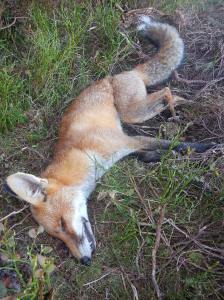
Snared fox dead alt, Glenogil Estate, Credit OneKindRegular blog readers will know we’ve been following the case of Scottish gamekeeper William Curr, who had been charged last year with alleged snaring offences on Glenogil Estate in the Angus Glens, said to have occurred in September 2014 (see here, here, here and here).
The charges related to allegations that several snares had not been checked (as they are required to be) within a 24-hour period of being set, after a field officer from the charity OneKind had discovered a dead snared deer, a dead snared fox and another snared fox that was still alive but had to be euthanised at the scene due to the extent of its horrific injuries (see OneKind photo).

For a harrowing description of what was found on Glenogil Estate, including a confrontation with the Head Gamekeeper, read this blog on the OneKind website.

Curr’s trial was due to start on 9th May but last week (10 March) the Crown Office informed the court that it was not going to proceed. OneKind has not yet been able to ascertain the reason for this decision, and in fact may never find out because the Crown Office is under no obligation to explain.

Accountability and transparency, anybody?

To quote from the OneKind blog:

OneKind is mystified by the dropping of this case, given the eye witness evidence, the horrific video footage and the detailed follow-up investigation carried out by the Scottish SPCA. This was a shocking incident where at least six people, including gamekeepers, witnessed the terror and pain of a live fox as the wire noose of a snare sliced into its abdomen. Had our research officer not been on the estate on that particular day, who knows how much longer the fox would have continued to suffer?

To put this dreadful story in the wider context: snares are still legal in Scotland and the rest of the UK. It is simply intolerable that the suffering this fox endured should be considered legally acceptable. The video footage is utterly harrowing and illustrates an animal which is clearly distressed, both physically and mentally. OneKind has long called for an outright ban on all snares and sadly we feel these calls have been justified by this case.

OneKind will seek an explanation for the failure of the Scottish justice system to bring this animal welfare case to court“.

The reason we’ve been so interested in this case is because the alleged offences occurred on the Glenogil Estate, one of several grouse shooting estates in the Angus Glens where wildlife crime incidents keep cropping up but have never resulted in a successful prosecution. For example, here are some incidents reported from in and around Glenogil over the last ten years:

2006 March: poisoned rabbit bait (Carbofuran). Listed as ‘Glenogil’ in RSPB annual report. No prosecution.

2006 April: poisoned buzzard (Alphachloralose). Listed as ‘Glenogil’ in RSPB annual report. No prosecution.

2006 April: poisoned tawny owl (Alphachloralose). Listed as ‘Glenogil’ in RSPB annual report. No prosecution.

2006 May: poisoned rabbit bait (Carbofuran). Listed as ‘Glenogil’ in RSPB annual report. No prosecution.

2006 June: poisoned woodpigeon bait (Carbofuran). Listed as ‘Glenogil’ in RSPB annual report. No prosecution.

2006 June: Traces of Carbofuran found in estate vehicles & on equipment during police search. Not listed in 2006 RSPB annual report but reported here. (Now former) estate owner John Dodd had £107k withdrawn from his farm subsidy payments as a result. This was being appealed but it is not known how this was resolved. Also a write up in RSPB 2007 annual report. No prosecution.

2007 November, Glenogil Estate: Disappearance of radio-tagged white-tailed eagle ‘Bird N’ coincides with tip off to police that bird been shot. No further transmissions or sightings of the bird. Not listed in RSPB annual report but reported here. No prosecution.

2008 May: poisoned white-tailed eagle ‘White G’ (Carbofuran, Isophenfos, Bendiocarb). Listed as ‘Nr Noranside’ in RSPB annual report. No prosecution.

2008 May: poisoned buzzard (Bendiocarb). Listed as ‘Nr Noranside’ in RSPB annual report. No prosecution.

2008 May: poisoned mountain hare bait (Carbofuran, Isophenfos, Bendiocarb). Listed as ‘Nr Noranside’ in RSPB annual report. No prosecution.

2008 May: 32 x poisoned meat baits on fenceposts (Carbofuran, Isophenfos, Bendiocarb). Listed as ‘Nr Noranside’ in RSPB annual report. No prosecution.

2008 October: poisoned meat bait on fencepost (Carbofuran). Listed as ‘Nr Noranside’ in RSPB annual report. No prosecution.

2009 March: poisoned buzzard (Carbofuran). Listed as ‘Glenogil’ in RSPB annual report. No prosecution.

2009 March: poisoned buzzard (Carbofuran). Listed as ‘Glenogil’ in RSPB annual report. No prosecution.

2009 August: poisoned white-tailed eagle “89” (Carbofuran). Listed as ‘Glenogil’ in RSPB annual report. No prosecution.

2010 May: poisoned red kite (Carbofuran). Listed as ‘Nr Noranside’ in RSPB annual report. No prosecution.

2010 September: poisoned buzzard (Chloralose). Listed as ‘Glenogil’ in RSPB annual report. No prosecution.

2010 October: poisoned buzzard (Carbofuran). Listed as ‘Glenogil’ in RSPB annual report. No prosecution.

2010 October: poisoned pigeon bait (Carbofuran). Listed as ‘Glenogil’ in RSPB annual report. No prosecution.

2010 October: poisoned pigeon bait (Carbofuran). Listed as ‘Glenogil’ in RSPB annual report. No prosecution.

2012 April: Remains of buzzard found beside pheasant pen. Listed as ‘Nr Noranside’ in RSPB annual report. No prosecution.

2014 June: shot buzzard. Listed as ‘Glenogil’ in RSPB annual report. No prosecution.

More raptor persecution uncovered in the Scottish Borders

We’re still working our way through RSPB Scotland’s recently published twenty-year review (see here) and what a fascinating read it’s proving to be. We’ve already blogged about two things that caught our eye (see here and here), and now here’s the third.

On page 14 of the report, the following has been written:

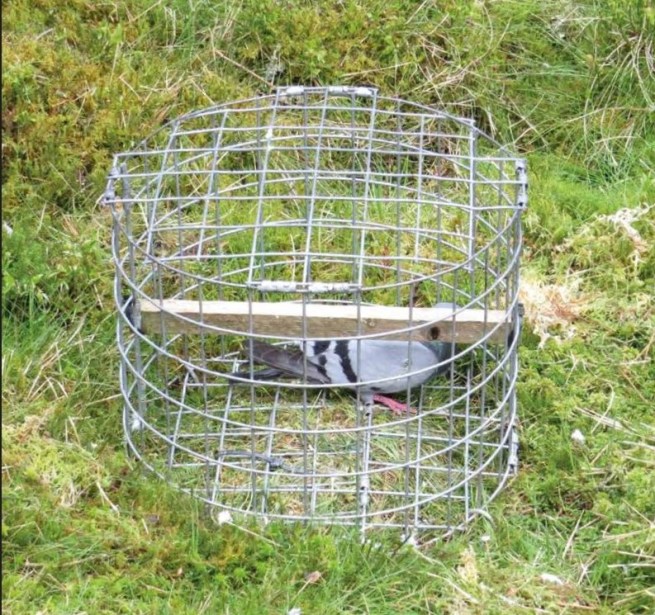
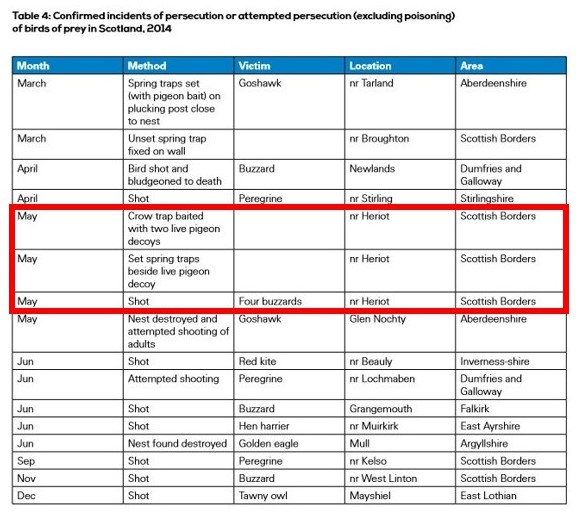
Lines 5, 6 and 7 of Table 4 describe the finding at one site, in an area intensively managed for driven grouse shooting, of a set crow trap, hidden within a small area of woodland, which was found to contain two feral pigeons indubitably being used as illegal lures to attract birds of prey. Under a tree, only a few metres away, were found the decomposed carcasses of four buzzards that had been shot, while a short distance from the crow trap a pigeon was found in a small circular cage, with four set spring traps set on the ground, hidden under moss, attached to the trap“.

Here’s a copy of Table 4, with lines 5, 6 and 7 highlighted:

Nr Heriot 2014

Also included in the report is a photograph of the pigeon inside a small cage with the four set spring traps hidden under moss:

Pigeon in trap Heriot 2014

So, according to the RSPB report, these offences were uncovered in May 2014 on a driven grouse moor in the Borders, with the location given as “nr Heriot“. Funny, we don’t remember seeing anything in the press about these crimes.

Hmm. Could these wildlife crimes be in any way related to SNH’s recent decision to serve a General Licence restriction order on parts of the Raeshaw Estate and Corsehope Estate (see here)? Both Raeshaw Estate and neighbouring Corsehope Estate can be described as being ‘nr Heriot’; indeed, the recorded property address for Raeshaw Estate is given as ‘Raeshaw House, Heriot, EH38 5YE’ (although the owner is only listed as Raeshaw Holdings Ltd., registered in the Channel Islands, natch), according to Andy Wightman’s excellent Who Owns Scotland website. And according to SNH, the General Licence restriction order on these two estates was served due to “issues about the illegal placement of traps” (see here). It’s possible that they’re connected, but it’s also possible that these crimes are unconnected with SNH’s General Licence restriction order on these two estates because Raeshaw isn’t the only grouse moor that could be described as being ‘nr Heriot’. Unfortunately, the (lack of) detail available in the public domain doesn’t allow us to be conclusive. Perhaps there’ll be some transparency once the legal arguments (see here) about the General Licence restrictions have concluded (which should happen fairly soon). Then again, perhaps there won’t.

If these crimes were not uncovered on either the Raeshaw or Corsehope Estates, we hope there’ll at least be a General Licence restriction order served on whichever grouse moor these traps were found because there’s been a clear breach of the General Licence rules – pigeons are not permitted as decoy birds in crow cage traps; set spring traps are not permitted out in the open; oh, and shooting buzzards is also illegal. There should also be a prosecution of course, but that’s highly improbable given the track record of non-prosecutions for raptor crimes uncovered in this part of the Borders.

There’s been a long history of raptor persecution “nr Heriot“, dating back to at least 2001. Here’s a list we’ve compiled of confirmed raptor persecution crimes, all listed within RSPB annual reports:

2001 May: poisoned buzzard (Carbofuran) “Heriot Dale”. No prosecution

2003 Feb: poisoned buzzard (Carbofuran) “Heriot”. No prosecution

2003 Mar: poisoned buzzard (Carbofuran) “Heriot”. No prosecution

2003 Apr: poisoned buzzard (Carbofuran) “Heriot”. No prosecution

2003 Nov: poisoned buzzard (Carbofuran) “Heriot”. No prosecution

2004 Feb: Carbofuran (possession for use) “Heriot”. No prosecution

2004 Feb: two poisoned buzzards (Carbofuran) “Heriot”. No prosecution

2004 Oct: poisoned buzzard (Carbofuran) “Heriot”. No prosecution

2005 Dec: poisoned buzzard & raven (Carbofuran) “Heriot”. No prosecution

2006 Sep: poisoned buzzard (Carbofuran) “Heriot”. No prosecution

2006 Oct: poisoned buzzard (Carbofuran) “Heriot”. No prosecution

2009 Mar: two poisoned buzzards (Carbofuran) “nr Heriot”. No prosecution

2009 Jun: poisoned red kite (Carbofuran) “nr Heriot”. No prosecution

2009 Jun: 4 x poisoned baits (2 x rabbits; 2 x pigeons) (Carbofuran) “nr Heriot”. No prosecution

2010 Nov: poisoned buzzard (Carbofuran) “nr Heriot”. No prosecution

2011 Jan: poisoned buzzard (Carbofuran) “nr Heriot” No prosecution

2013 Jun: shot + poisoned buzzard (Carbofuran) “nr Heriot”. No prosecution

2014 May: crow trap baited with two live pigeon decoys “nr Heriot”. Prosecution?

2014 May: four set spring traps beside live pigeon decoy “nr Heriot”. Prosecution?

2014 May: four shot buzzards “nr Heriot” Prosecution?

Not included in an RSPB annual report (because it happened this year): 2015 Jul: shot buzzard “found by side of road between Heriot and Innerleithen” according to media reports (see here). Prosecution?

Interestingly, also not included in the RSPB’s annual reports but reported by the Southern Reporter (here) and the Guardian (here), a police raid on Raeshaw Estate in 2004 uncovered nine dead birds of prey, including five barn owls, two buzzards, a kestrel and a tawny owl, described as being “poisoned or shot“. In addition, “a number of illegal poisons were discovered but no-one was ever prosecuted“. According to both these articles, during a further police raid on Raeshaw in 2009 ‘three injured hunting dogs were seized by the SSPCA on suspicion of involvement with badger baiting’. We don’t know whether that resulted in a prosecution.

Also not included in the above list is the sudden ‘disappearance’ of a young satellite-tagged hen harrier in October 2011. This bird had fledged from Langholm and it’s last known signal came from Raeshaw Estate. A search failed to find the body or the tag.

Fascinating stuff.

New report highlights raptor persecution in Northern Ireland

PAWNI Report 2009-2013The first ever ‘official’ report on raptor persecution in Northern Ireland has been published.
The report was prepared by the Raptor Subgroup of the Partnership for Action Against Wildlife Crime in Northern Ireland (PAWNI) – group members include the Northern Ireland Raptor Study Group (NIRSG), Police Service of Northern Ireland (PSNI), Northern Ireland Environment Agency (NIEA), Royal Society for the Protection of Birds (RSPB) and the National Wildlife Crime Unit (NWCU).

The report details confirmed raptor persecution crimes between 2009-2013, including location maps. A total of 33 raptors were confirmed to have been illegally killed during this five-year period, with buzzards, red kites and peregrines the most frequent victims but other species included golden eagle, white-tailed eagle, merlin and sparrowhawk.

The report serves a useful purpose to focus attention on the extent of raptor persecution in Northern Ireland and to encourage members of the public to report suspicious activity in their areas. It is anticipated that an annual persecution report will be published in future years.

NIRSG press release here

Read the report here

Buzzard with bait NI

Henry’s tour day 39: Moy Estate

Mon 8 June 2015 - Copy

Henry paid a visit to Moy Estate in the Monadliaths.

Regular blog readers will probably remember what was found on Moy Estate in 2010:

  • A dead red kite in the back of a gamekeeper’s vehicle. It had two broken legs and had died as a result of a blow to the head.
  • The remains of a further two dead red kites.
  • A red kite’s severed leg, along with wing tags that had been fitted to a sateliite-tracked red kite, hidden in holes covered with moss.
  • Six illegal baited spring traps set in the open.
  • A trapped hen harrier (still alive) caught in an illegally set spring trap.
  • A poisoned bait.
  • Four leg rings previously fitted to golden eagle chicks found in the possession of a gamekeeper.

A 20-year-old gamekeeper (James Rolfe – straight out of game-keeping college) was charged with possession of the dead red kite and was fined £1,500. No charges were ever brought against anyone for any of the other offences.

Previous blogs on Moy: see here, herehere and here. It’s particularly worth having a look at this, especially in light of recent hen harrier ‘disappearances’ in England. They weren’t necessarily shot (as the grouse-shooting industry keeps telling us) – they could just as easily have been trapped like this (as the grouse-shooting industry keeps forgetting to mention).

The gamekeeper on Moy was convicted four years ago in 2011. Since then, several more satellite-tracked red kites have ‘disappeared’ since their last signals emitted from Moy, and several buzzard and goshawk nests seem to fail each year. It’s quite windy at Moy. It was probably the wind that blew off those rings from the young golden eagles’ legs and blew them straight in to a jar inside the gamekeeper’s house. It was probably the wind that severed the leg of the red kite and then blew it in to a hole on the moor and then blew moss over the hole to cover it. It was probably the wind that blew away the more recent ‘missing’ red kites. It was probably the same wind that blew holes in those buzzard and goshawk nests, too. Still no breeding hen harriers on this estate – yep, must have been blown away.

Word has it that the game management on Moy Estate is being taken over by a sporting agent with whom we’re very familiar. Cue hundreds of thousands of pounds worth of night vision equipment to carry out his particular style of grouse moor management.

Henry left the estate before darkness fell. He lives another day, although he’s still single.