More on convicted gamekeeper Petrie

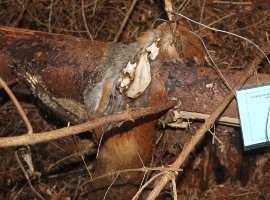
Petrie's middenFollowing on from yesterday’s blog entry about the conviction of ‘qualified’ gamekeeper Brian Petrie (here), more information has emerged.

The estate where Petrie committed his crimes has been reported by the Herald (see here) as Logie Estate, near Forres. The Herald article says: “The estate was not aware of Petrie’s actions and had cooperated fully  in the SSPCA’s investigation“. We’ve been told by a local informant who wishes to remain anonymous that Petrie had previously operated a sporting lease (for pheasant shooting) on Logie Estate but apparently did not have the lease at the time his offences were commited. In other words, it seems he had no permission to be setting snares on Logie Estate at that time.

We asked yesterday whether Petrie was a member of the Scottish Gamekeepers’ Association. A statement on the SGA website this morning suggests he was not (see here) and the SGA has strongly condemned his criminal activities (good). They also go on to try and justify the use of snares but clearly miss the point – yes of course if you remove predators then their prey will increase, probably to artificially-high levels – that’s primary school stuff – but the debate is not whether predators should be removed (that’s a whole other argument!) but it’s the way in which they’re removed, and the welfare implications, that are key. For those interested in the snaring debate we recommend OneKind’s SnareWatch web page here. This site includes some useful reports about the use of snares and also provides a facility for the public to report the illegal use of snares. We’d also point readers to our earlier blog entry about how to recognise an illegally-set snare here.

The next case against gamekeepers accused of alleged snare crimes will be heard at Dornoch Sheriff Court next Monday, which is another hearing in the case against three gamekeepers from the Morvich Estate in Sutherland (see here and here for previous blog entries).

‘Qualified’ gamekeeper convicted of snaring offences

petrie_web_2_full_widthA 66-year-old gamekeeper has today been convicted of snaring offences in Scotland.

Brian Petrie, of Woodhead, Dunphail, pled guilty to three charges including setting snares likely to cause unnecessary suffering by partially or wholly suspending animals, setting snares in a manner likely to be dragged, and failing to release or remove an animal from a snare, all contrary to the Wildlife & Countryside Act.

Petrie was fined £500 for each offence, totalling £1,500. Most importantly, his conviction should now preclude him from using a General Licence for five years (unless of course he uses the convenient get-out clause offered by SNH, in which someone convicted of a wildlife crime may still apply to use an individual licence!).

For the gruesome details of the case, read the SSPCA press release here. Congratulations to the SSPCA for yet another successful wildlife crime investigation and prosecution. Isn’t it about time the Scottish Government opened their consultation on increasing SSPCA powers – you know, the consultation that was promised back in 2010 during the WANE bill debates? Three years on and we’re still waiting…

What’s particularly interesting about this case is that it’s reported that Petrie had completed the new snaring training course one year prior to the offences. It’s a good example of how some gamekeepers continue to commit wildlife crime, even though they’re often portrayed as ‘professionals’ and in this case, ‘qualified’ to set snares. Is this snare training course simply a box-ticking exercise that provides an air of respectability to a practice that, on welfare grounds alone, should have been outlawed decades ago? It really doesn’t seem to matter what legislation is put in place, whether it be for snaring or other types of trapping, poisoning, shooting etc – a lot of gamekeepers continue to stick two fingers up to the law and to all of us.

The press release doesn’t reveal the location of Petrie’s crimes, although we have a fairly good idea that he was working on a particular estate. We’ll do some more digging on that and report back if we can verify our suspicions.

It would also be fascinating to know if Petrie was/is a member of the SGA. Shall we ask them? Emails to: info@scottishgamekeepers.co.uk

UPDATE 8th May: see here

Scottish Birdfair critic ‘misguided’, says RSPB

The controversy over the Scottish Birdfair venue (Hopetoun House) continues. If you’re new to this saga, click here and here for background.

Following the results of our research last year where we uncovered some interesting links between Hopetoun and Leadhills Estates (see here, here and here), it seems one of our blog readers has been sharing our results with the wider public, and by all accounts to good effect. In response, earlier this week RSPB Scotland sent the following letter to Birdfair exhibitors [thanks to the contributors who sent us copies of this letter] –

Dear Scottish Birdfair 2013 exhibitor,

We understand that some of you may have recently been contacted on social media channels about the 2013 Scottish Birdfair by a private individual who is concerned about our choice of venue at Hopetoun House. This individual, a Mr Ronnie Graham, believes that there is a link between the venue and Leadhills estate –  alleged to be involved in illegal crime against birds of prey.

We wanted to write to reassure you that contrary to this individual’s assertions, holding the Scottish Birdfair at Hopetoun House on 11-12th May does not give cover to alleged and convicted lawbreakers, nor does it signal any lacking of our commitment to tackle wrongdoing against birds without fear or favour.

In essence the Hopetoun House site is owned by an independent charity-and has been for many years. The farms beyond the house and grounds, together with land in Dumfries known as Leadhills is owned by the Earl of Hopetoun. The Earl has apparently let the sporting on the Leadhills (ie the shooting) to a third party on quite a long lease. This sporting group manage the ground and employ the keepers. The Leadhills has been a wildlife crime blackspot – and the RSPB has been at the forefront of exposing this, and continues to press for action to tackle this criminality.

We do not doubt for a minute that Ronnie Graham has strongly held and genuine views – views we share. But we think he is misguided in his target – which should be the sporting tenant at Leadhills and the enforcement of the law by the responsible authorities. We have discussed this with him several times but he is not open to persuasion. His current activities could even jeopardise what will be the biggest Scottish gathering of bird and wildlife enthusiasts which we need to harness to pressure Scottish Government to take more action for raptors. The forces ranged against birds of prey are no doubt laughing as we squabble amongst ourselves.

RSPB Scotland has been at the vanguard of trying to stop such crimes over the past century, and we are committed to continuing our resolute opposition to the despicable perpetrators of raptor crime. The director of RSPB Scotland, Stuart Housden OBE, expresses exactly this sentiment in a recent blog here.

If you have any concerns about the event in light of any contact that you have received from a such third party on this, or any other, issue, please do not hesitate to contact us.

With kind regards, The Scottish Birdfair Team.

James Reynolds

Head of Media and Communications

RSPB Scotland

An interesting letter, although the author doesn’t seem to know where Leadhills is (it’s in South Lanarkshire, not Dumfries) and he also appears to have forgotten to include one significant (inconvenient?) detail:  the letter says, “In essence, the Hopetoun House site is owned by an independent charity – and has been for many years“. Yes, but what teensy weensy yet crucial detail is missing from this statement? Could it be that the Earl of Hopetoun is the Deputy Chairman of that ‘independent’ charity (Hopetoun House Preservation Trust)? Look, it even says so on his Director’s biography on the Scottish Land and Estates page here. Isn’t it a bit disingenuous of RSPB to omit that detail?

We’ve been through the Hopetoun/Leadhills arguments many times before (see links above) and don’t intend to repeat them. We’ve laid out the evidence from our research and people can read it and make up their own minds about whether they think Hopetoun Estate is involved or not involved with the management of Leadhills Estate. The Earl is on record as saying Hopetoun Estate has ‘no role whatsoever’; we think differently and so it follows that we also think that the RSPB’s decision to hold the Scottish Birdfair at Hopetoun House is baffling, not least when you consider it’s the RSPB’s own Investigations Team who have spent years documenting dead birds and poisoned baits at Leadhills (see here); they’re probably as astonished as anyone about the venue choice.

The RSPB’s letter suggests that Ronnie Graham’s efforts are ‘misguided’. Rubbish! On the contrary, in our view it’s the RSPB decision-makers who have been misguided by choosing Hopetoun House as their Scottish Birdfair venue, not just once, but twice!

We’ll be blogging about Leadhills again in the not too distant future….prepare to be shocked, although you probably won’t be.

UPDATE 11th May 2013: Here is more information about the ‘independent’ charity to which the RSPB refer. It wouldn’t be our definition of ‘independent’.

Dead buzzard found with beak bound closed with twine

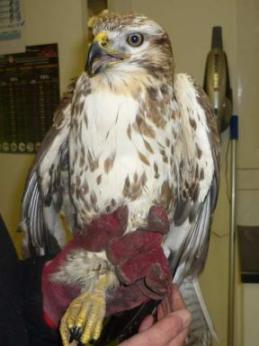
buzzard beak boundDerbyshire Constabulary are appealing for information about a dead buzzard that was found with twine forced through a hole in its beak to bind it shut.

The bird was found by a member of the public on April 11th on land near Turnditch. Police wildlife crime officers are working with the RSPB to investigate the circumstances of this bird’s death.

Wildlife Crime Officer PC Emerson Buckingham said: “This bird was most probably alive when it was attacked and may have starved to death as it would have been unable to eat or drink with its beak bound“.

Interestingly, Turnditch is just down the road from Idriedgehay and Kirk Ireton where a total of six buzzards were found poisoned in 2010 (see here).

Anyone with information is asked to contact PC Buckingham on (Tel: 101) or the RSPB (Tel: 0845 466 3636).

Well done to Derbyshire Constabulary for the publicity on this disgraceful crime. Press release here.

Thanks to @HowardJones88 for passing on the link to us.

A highly unusual gamekeeper

There’s a fascinating entry on Jon Snow’s blog today (he of Channel 4 News fame) where he describes a visit to a pheasant and partridge shooting estate in west Berkshire. According to the gamekeeper, James, the estate’s policy is ‘to shoot nothing beyond the reared pheasants and patridges‘.

Snow writes, ‘No rabbit, hare, squirrel, pigeon or rat is ever shot. For as James explained: “You violate the food chain at nature’s peril”. Break the food chain and a whole species can disappear. Rabbits, stoats and weasels need to be left for hawks to kill and red kites to eat. Indeed some of the reared pheasants augment the food chain’.

Blimey! Is this estate for real? It’s hard to believe but it’d be pretty exceptional if it was.

Snow, though, understands that this estate’s policy is certainly not the norm. He says that on 8th and 9th May, Channel 4 News will be devoting ‘a serious portion of the programme to the rapid decline of the UK countryside and wildlife’, including a report by ’40 prominent scientists’ that documents this. Should be interesting.

Jon Snow’s blog here

Shot buzzard in North Yorks – 4th in 4 months

Buzzard shot Farndale 2013A press release in the Northern Echo reports that a buzzard has been found shot just north of Kirbymoorside in Farndale, North Yorkshire. Gunshot was found in the bird’s wing and bone fragments were sticking out of the injury. It is believed to have been in that state for ten days before it was picked up. Unfortunately its injuries were so severe it had to be euthanised.

The press release doesn’t provide any details about when this buzzard was discovered, other than sometime in the last four months, although we know from another source that it was 14 April.

Interestingly, PC Stewart Ashton of North Yorks Police is quoted as saying: “This is the fourth buzzard to have been shot in Ryedale over the past four months“.

So where was the publicity for the other three shot buzzards? We don’t recall seeing any media about those incidents. A quick look on the North Yorks Police website shows their last reported shot buzzard dated 4 November 2011 (see here).

It’s not the first time we’ve wondered about delayed or vague press releases from this police force, for example, see here, here and here.

At least the press release about this latest shot buzzard is timely. The RSPB has also put up a £1,000 reward for information leading to a conviction. Article in the Northern Echo here.

Golden eagle protection discussed in parliament

Great to see more MSPs raising questions about golden eagles in the Scottish Parliament….

Joan McAlpine (South Scotland) (SNP): To ask the Scottish Government what steps it is taking to protect golden eagles. (S4O-02010).

The Minister for Environment and Climate Change (Paul Wheelhouse): All wild birds are protected in Scotland under the Wildlife and Countryside Act 1981. Golden eagles are listed in schedule 1 to the 1981 act, which provides further protection measures to prevent disturbance to nesting birds. Last month, we added golden eagles to schedules A1 and 1A to the 1981 act, to provide year-round protection for nest sites and protect birds from harassment.

Since 2008, we have broadened and developed the partnership for action against wildlife crime in Scotland—PAW Scotland; strengthened the legal framework by introducing vicarious liability; provided funding for the national wildlife crime unit; and supported initiatives to tag and satellite track golden eagles. Recent police reform has increased the number of specialist wildlife crime officers.

We have been active in the fight against raptor persecution, and poisoning has reduced significantly. However, we are in no way complacent and we are actively considering whether other methods of persecution are being deployed. Some of the new wildlife crime measures that we have put in place are yet to be tested, but we know that there is still a problem in some parts of Scotland, and I reiterate to people outside the Parliament that we stand ready to introduce further measures, should that be necessary.

May2012 GE tayside grampianJoan McAlpine: As the minister acknowledged, there have been a number of shocking incidents across Scotland during the past year. Earlier this month, a golden eagle was shot on the southern upland way. In light of that, will the minister reassure the Parliament that investigations into the illegal killing of eagles are carried out quickly and effectively? Is he willing to update the Parliament on the investigation into the killing of the golden eagle that was found on Deeside in May 2012?

Paul Wheelhouse: As I said, police reform has resulted in a revised structure for wildlife crime, which will improve co-ordination and support for wildlife crime officers. I have every confidence in Assistant Chief Constable Graham, who has been appointed to lead the work. We also have a specialist unit in the Crown Office, which ensures that there is greater understanding of the complexities of this area of the law, in and out of the courtroom. That is a major development, which should not be underestimated and which will increase the focus on wildlife crime.

I assure the member and the Parliament that such measures, along with robust working in the partnership for action against wildlife crime in Scotland, will ensure that investigations are carried out as quickly and effectively as possible. PAW Scotland is looking at making the evidential trail on issues such as raptor persecution more robust, if it is possible to do so, which involves working closely with the Scottish raptor persecution priority delivery group.

I am not in a position to update the Parliament on the 2012 Deeside eagle case. There is an on-going police investigation and it would be entirely inappropriate for me to comment at this point.

[Ed: this issue about when is a case still ‘live’ is of great interest to us. How do you define when a case is still live/on-going? We would expect the definition to mean that active leads are still being followed up and/or a court case is pending. However, we are suspicious that the regularly-heard phrase ‘it’s an on-going police investigation and therefore can’t be discussed’ is a convenient excuse for the police/government to avoid answering serious questions about the effectiveness of these investigations. Take the Deeside eagle case as an example. That golden eagle was found dead almost one year ago. Are we expected to believe that the police are still following up active leads? Come on, let’s be realistic here. How about some of the other 26 cases of either dead or ‘missing’ eagles in the past seven years (see here), for which no-one has been prosecuted? Are they still ‘on-going’ investigations as well? Are the police still investigating the death of Alma, the golden eagle found poisoned on Millden Estate in 2009? How about the poisoning of the last remaining breeding golden eagle in the Borders in 2007? We would like to see much more transparency about these cases – obviously not while they’re genuinely on-going – but when a case is clearly going nowhere shouldn’t there be a point when questions can be asked, and answered, no? We would be very interested to hear from anyone who can tell us the official definition of how an ‘active case’ is defined and at what point, if any, can the police/government be questioned about an incident?]

Graeme Pearson (South Scotland) (Lab): I am sure that members welcome the drop in reported poisonings of birds of prey, but I am concerned that there has been no decline in other forms of raptor persecution. The Wildlife and Natural Environment (Scotland) Act 2011 introduced vicarious liability, to combat raptor persecution. Will the minister indicate what the next steps will be? Now that Police Scotland has been established, what new approaches will be introduced?

Paul Wheelhouse: Graeme Pearson is right to say that vicarious liability is a significant development in the law on wildlife crime. The provisions came into force on 1 January 2012 and the legislation has not yet been tested in court, as he is aware. I believe, however, that the legislation has had the welcome effect of encouraging responsible land managers to examine the training of and procedures for their staff. I have no doubt that, if a land manager or owner is prosecuted under the provisions, it will have a salutary effect on others who have been content to turn a blind eye to unlawful practices that are carried out on their land.

More generally, the Government is doing everything that it can to encourage good practice. Recently, Scottish Land & Estates launched the wildlife estates Scotland initiative, which I hope will gather arms and legs and cover an ever-greater share of landowners. In theory, that will enable the promotion of the most proactive and progressive conservation measures by land managers. However, I reassure the member that, if the measures under vicarious liability prove to be ineffective, I will take further action.

Jamie McGrigor (Highlands and Islands) (Con): The RSPB states that one of the key problems for the survival of golden eagles is the lack of live prey that is available to the species. Does the minister agree that a healthy supply of food species in golden eagle areas, such as rabbits and mountain hares, is a factor in the maintenance of healthy numbers of golden eagles? Is he, through the appropriate agencies, doing something about the decline of those species in some areas?

Paul Wheelhouse: The member raises an important point about the need for golden eagles to have adequate food supplies. It is not as simple as saying that it is all about raptor persecution; we know that there are multiple influences on the sad decline in the populations of a number of our key, iconic species of birds. Clearly, mountain hares are a species that we want to protect. If there was any persecution of those animals by land managers, we would be concerned about it. If the member has constructive proposals that he would like me to consider, I would be happy to meet him to discuss the issues.

New hen harrier ‘initiative’ is outrageous

A new ‘initiative’ has been launched today aimed at ‘conserving’ the hen harrier in Scotland. Having read the press release, we’re almost at a loss for words.

This ‘initiative’ (pathetic window dressing designed to disguise the real issue) calls on members of the public to report sightings of hen harriers to ‘help PAW Scotland to build valuable information on these birds’.

According to Ron Macdonald, Head of Policy and Advice at SNH:

The public can be of great help by reporting sightings and helping us build a picture of the reasons why these birds aren’t doing as well as we would expect. Using sightings from the public, we can assess whether to use some of the new technology at our disposal such as satellite-tagging or camera monitoring, or even where neccessary share information with the National Wildlife Crime Unit“.

This ‘initiative’ then, suggests that all will be well for hen harriers if only we knew where they were so we could put satellite tags on them and work out what’s going wrong for them. It’s an astonishing inference! The location of hen harrier breeding sites have been known and watched for decades by raptor fieldworkers – there’s no mystery about where they’re trying to breed or why they’re failing. “Helping us build a picture of the reasons why these birds aren’t doing as well as we would expect“?! For god’s sake man, try reading the Hen Harrier Conservation Framework published in 2011 (see below for link) – you know, that report that, er, SNH commissioned. That report sets out very clearly what the main issue is: Illegal persecution is the biggest single factor affecting hen harriers and it is having a dramatic impact on the population in northern England and in Scotland:

  • The potential national hen harrier population in Scotland is estimated (conservatively) to be within the range 1467-1790 pairs.
  • The current national hen harrier population in Scotland as recorded during the most recent (2010) national survey is 505 pairs, more than a 20% decline from the numbers recorded during the 2004 national survey.
  • In Scotland, the hen harrier has a favourable conservation status in only five of 20 regions.
  • Two main constraints were identified: illegal persecution, and in one region, prey shortages.
  • The species is particularly unsuccessful in the Central Highlands, Cairngorm Massif, Northeast Glens, Western Southern Uplands and the Border Hills. There is strong evidence in these grouse moor regions that illegal persecution is causing the failure of a majority of breeding attempts.
  • A study published by Redpath et al (2010) found only five successful hen harrier nests on the estimated 3,696km2 of driven grouse moors in the UK in 2008; an area of habitat estimated to have the potential to support approx 500 pairs.
  • In 2012, only one breeding pair was recorded in England (estimated potential for over 300 pairs).

For SNH to pretend they don’t know why hen harriers are in trouble is simply outrageous. They know exactly why – the studies have been done, the birds have already been sat-tagged, we all know what happens to them.

And why on earth is this ‘initiative’ being launched by PAW Scotland? PAW is the Partnership for Action against Wildlife crime. Where’s the action on wildlife crime in this initiative? It has all the hallmarks of being the handiwork of the game-shooting ‘partners’ in PAW Scotland.

In our opinion this is a cynical attempt to persuade the general public that measures are being taken to address the hen harrier issue while deliberately ignoring the widely-known central problem: illegal persecution on driven grouse moors.

PAW Scotland press release here

Hen Harrier Conservation Framework 2011

UPDATE 2pm: Environment Minister Paul Wheelhouse gets a grilling on BBC Radio Scotland’s Good Morning Scotland programme (listen here, starts at 1.43.45). Well done journalist David Miller for asking exactly the right questions. The Minister does not cover himself in glory and seems to think this latest initiative is a novel approach to working out why hen harriers are in decline. He’s clearly unaware that there have been several national surveys (dating back to 1988!!) that have previously documented exactly the areas where hen harriers are missing and exactly why they’re missing. The Minister may not know it but his government advisors (SNH) certainly understand that this latest ‘inititative’ is nothing more than a scandalous time-wasting ploy to delay tackling the hen harrier killers.

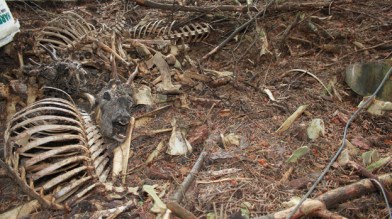
Hen harrier caught in an illegal trap on a grouse moor

False accusations levelled at our blog

A letter written by a bloke from the landowner’s group Scottish Land & Estates (SLE) has been brought to our attention and its content deserves a response.

It was written to one of our readers, identified as ‘HK’, who had written to Environment Minister Paul Wheelhouse earlier this month following our report that the shot golden eagle found on a grouse moor last October had finally succumbed to its injuries (see here). HK, along with more than 100 of you, asked the Environment Minister to make good his earlier promise to introduce stronger measures to bring raptor killers to justice. (Incidentally we understand the Environment Minister has yet to respond to his bulging inbox on this subject but remember he has 21 working days in which to respond, which would be by 7th May). HK also sent a copy of the letter he wrote to the Minister, to SLE. His letter can be read here: HK letter to SLE

In response to HK, SLE wrote a letter and published it on their website. It is this letter that we’re interested in.

Written by Tim Baynes, Director of the Scottish Moorland Group (of which more later), the letter contains some interesting statements about this blog. Let’s take them each in turn:

This is an anonymous blog which does not have to take any responsibility for the allegations it can freely make”.

This is utter rubbish. Anybody who publishes anything in the public domain, whether that be in a book, a newspaper, on Facebook, on Twitter or on an anonymous blog, has to take full responsibility for their material. There are plenty of criminal and civil sanctions that can be applied if the material is found to be unacceptable (e.g. contempt of court or defamation) and there are plenty of examples where these sanctions have been used – indeed there are several high-profile cases currently proceeding through criminal and civil courts.

We take our responsibilities very seriously indeed and we take great care when choosing the words we write. A good example of this is when we blog about the discovery of a poisoned bird. It would be careless to write ‘Golden eagle poisoned on X Estate’ because while this statement may be true it would be unfair and potentially defamatory to use it until a conviction had been secured (= never). So instead we would write ‘Golden eagle found poisoned on X Estate’. The use of the word ‘found’ is crucial – the statement is factual (a poisoned golden eagle has been found and it was discovered on X Estate) but does not explicitly implicate anyone associated with X Estate with the crime. We consider this to be fair and responsible reporting.

We also regularly make use of the Rehabilitation of Offenders Act 1974 and we also routinely moderate our readers’ comments prior to publication and do not allow comments that we consider to be potentially defamatory.

We are responsive to any complaints that anyone might have about the words we’ve chosen – we even provide an email address where we can be contacted – and we would be happy to discuss any text that anyone considered to be defamatory or criminally unlawful, and revise it if appropriate. We invite Mr Baynes, or anyone else for that matter, to identify any unfounded allegations that have been made on our blog. In three years we have only ever received one complaint; we were asked to make a minor edit, which we did, and the complainant was satisfied.

One complaint in three years (over 700 blog entries) does not indicate to us that we’re making wild and unfounded allegations. ‘Ah but you’re anonymous and so the lawyers can’t get you’ might be an argument Mr Baynes would use. It would be an ignorant statement to make as anonymity does not prevent legal action being taken. Anybody closely following the badger cull controversy in south-west England will be familiar with a certain anonymous campaign blog that published the personal contact details of individuals allegedly involved with the cull. Publishing these details was contrary to several pieces of legislation and within hours the bloggers had been served with a letter from the government’s Treasury Solicitor demanding that the material be immediately removed or face a potential High Court injunction. We blog a lot about powerful and influential people who have the financial resources to hire the best lawyers (some of whom subscribe to this blog so we know we’re constantly being scrutinised) – does Mr Baynes seriously think we’d get away with libelling these people? Not that it would be in our interests to libel them anyway – to do so would result in the closure of the blog.

The fact that our blog is run anonymously is clearly irritating to Tim Baynes but it is not illegal to do so. It is our right, our choice and it is legitimate, so get over it. Perhaps if Tim wants to live in a country where news and information is controlled and internet censorship reigns he should change his name to Kim and move to North Korea.

It has a clear anti-landowner and anti-sporting agenda and seeks out any story which it can use to engender criticism – for example last week it took the issue of uncontrolled grassland fires in the West of Scotland crofting areas, and tried to infer that “landowners” of grouse moors were responsible”.

Utter rubbish again. If Kim had bothered to read our two posts on this subject carefully, he would have noticed that we didn’t use the term ‘grouse moors” anywhere in either article (see here and here). We did use the term Highland “landowners” because that’s to whom the Scottish Fire and Rescue Service had directed their warning about muir-burning in ‘clearly unsuitable conditions’. A touch of the old paranoia, Kim?

And as for us being anti-landowner and anti-[field] sports, er, sorry, wrong again. We’ve previously praised landowners who manage their estates sustainably and within the law and particularly those who encourage raptors (e.g. see here, here, here, here); sure, there aren’t that many of our posts that applaud the efforts of landowners but that sort of tells its own story, doesn’t it? Oh and by the way, two of our group go shooting, just not on intensively-managed driven grouse moors where criminal activity is rife.

This one website has done more to undermine the efforts of PAW partners to find a final resolution this problem”.

Really? And do all the PAW partners think that or just those involved with gamebird management? We’re sure some of the PAW partners will be less than thrilled that Kim is speaking on their behalf. And let’s just look at that statement again – “undermine the efforts of PAW partners to find a final resolution to this problem”. There is only one resolution, and that’s for the gamebird-shooting community to stop illegally killing raptors. It’s quite straightforward but seemingly impossible for them to accomplish.

It [this blog] is entirely unaccountable and risks prejudicing investigations because the information is leaked by those closely involved. In any other area of criminal justice, this would not be tolerated”.

You know what we’re going to say, Kim – utter rubbish. ‘Entirely unaccountable’ – see above. ‘Risks prejudicing investigations’ – you could say that of any media outlet reporting on crimes. We invite Kim to identify a single investigation that has been prejudiced by our blog. Kim would probably prefer that we adopt the practice of certain Police forces and not release any information for, ooh, say five months after an incident has occurred, if at all? Well, sorry Kim, that ain’t going to happen. Its in the public interest that people know what’s taking place, although you’d be surprised at just how restrained we are. For example, if we were irresponsible fools wanting to jeopardise a criminal investigation we’d already have blogged about two currently on-going investigations that would be of great interest to many people. We’ve deliberately chosen not to because of course we don’t want to put the investigations into jeopardy – that would be self-defeating. Instead we’ve decided to sit and wait to see how long it takes Police Scotland to inform the public about what’s happened. They’ve already had over a month….

The rest of Kim’s letter contains the usual misleading guff, such as inferring that we should all measure the extent of persecution by the number of successful convictions (yes, that old chestnut again) and how there is ‘a very strong set of disincentives to breaking the law’ – clearly not strong enough! But we can’t be arsed to go through each statement and counter it – you can read his letter for yourselves and make up your own minds: SLE reponse to HK letter

One final thing though, it’s worth knowing that Kim used to work for the Countryside Alliance and now directs the Scottish Moorland Group. What is the Scottish Moorland Group? It’s managed by Scottish Land and Estates and its chair is….er, Lord Hopetoun (see here). We’ve only ever mentioned Kim once before on our blog – here. Enough said.

Pathetic fine for convicted poisoner

poisonsignlPaul Unsworth, a 48-year-old pigeon fancier from Sunderland has pleaded guilty to three charges of illegally using and storing the highly toxic and banned pesticide, Carbofuran.

His sentence? A £200 fine for each offence. Seriously, it’s got to be time to bring in mandatory and hard-hitting sentences for these offences, hasn’t it? What deterrent is a £200 quid fine?

Well done to Northumbria Police, Natural England and RSPB Investigations Team for at least securing the conviction today at Newcastle Crown Court, despite an astonishingly pathetic fine from the judge.

Full details of what poisoner Paul Unsworth (of Newbold Avenue, Monkwearworth) got up to can be read here.

 It had previously been reported that he was initially charged with four offences relating to the alleged possession of Carbofuran between December 2006 and February 2012 (see here).