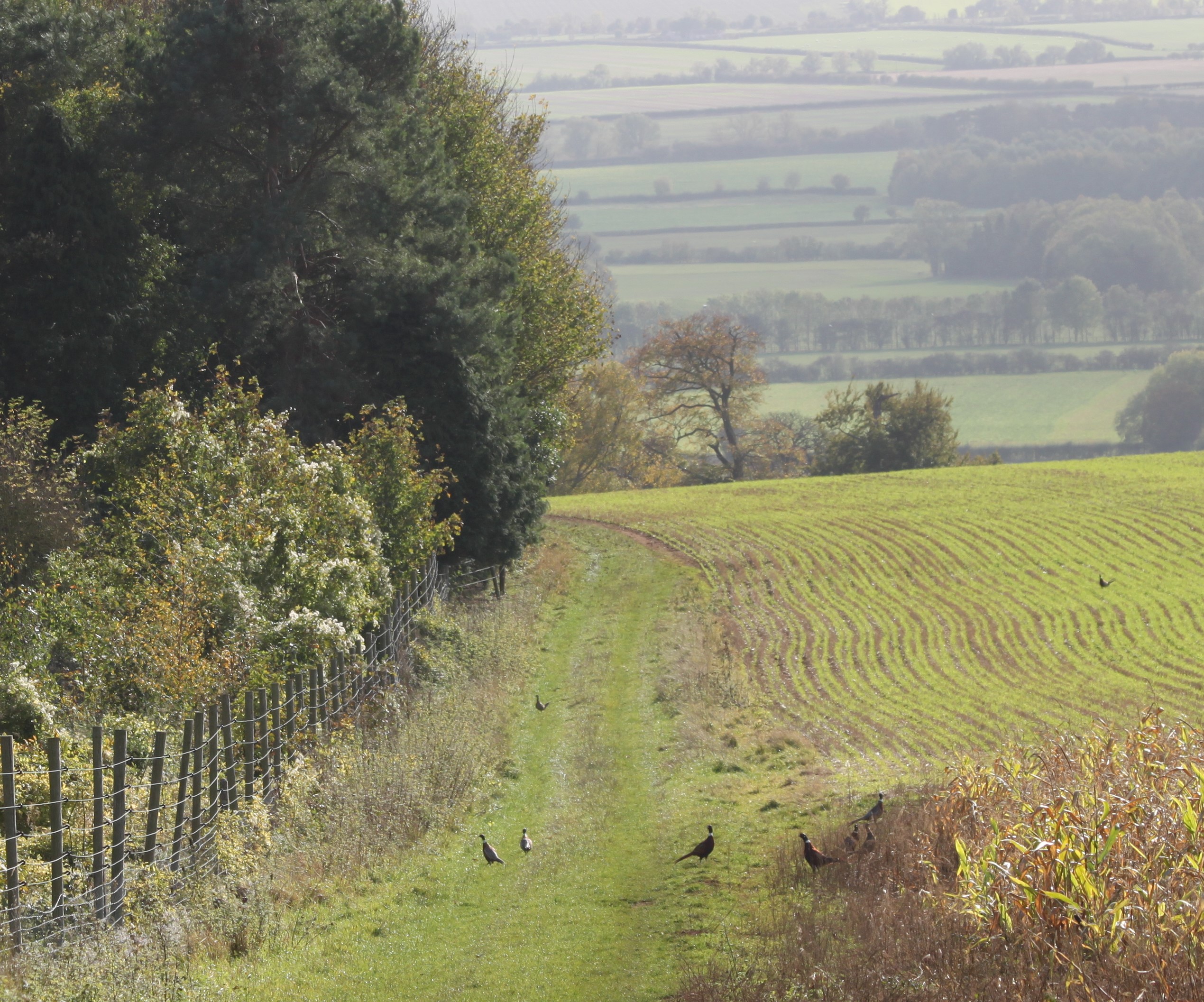
Lincolnshire gamekeeper John Bryant sentenced for crimes relating to raptor persecution – police statement

Earlier this month, following a trial at Lincolnshire Magistrates Court, gamekeeper John Bryant, 40, of West Ashby, Horncastle was found guilty of multiple offences following a police investigation into the illegal killing of a red kite and two buzzards over a five year period (see here).

Sentencing was deferred until this morning.

Lincolnshire Police have just issued the following statement:

MAN SENTENCED FOR POSSESSING DANGEROUS CHEMICALS AND BIRD TRAPS

A farmer and game keeper who used illegal traps and stored dangerous chemicals has been sentenced.

Police officers found the items after an investigation into the deaths of three birds of prey led them to the property of John Bryant from West Ashby in Horncastle.

The 40-year-old pleaded guilty to two charges and was found guilty of two more under the Wildlife and Countryside Act and Healthy and Safety Regulations when he appeared at Lincoln Magistrates’ Court earlier this month.

Investigators found the dead birds – a red kite and two buzzards – just north of West Ashby; forensic analysis determined they had been poisoned.

The findings led officers to execute a warrant and search Bryant’s land on 4 October 2022 where items were found which suggested he was targeting birds of prey using poison and traps.

Lincolnshire’s Rural Crime Action Team was joined by the Royal Society for the Protection of Birds, the National Wildlife Crime Unit, and Inspectors from Natural England to carry out the warrant.

A chemical identified as Alphachloralose – typically used to kill rodents and which is also one of the most common substances known to poison birds of prey – was discovered in a vehicle being used by Bryant with a second tub containing the same product later being found in his garage.

The chemical was highly concentrated with levels found to be over 80% meaning it is a banned and highly dangerous substance.

Illegal traps were also found in the search. 

Two pole traps, which are specifically used to kill birds of prey, were recovered at the property at two pheasant release pens and found to contain tawny owl and pigeon DNA.

One of the illegal pole traps found at Bryant’s pheasant pen. These barbaric traps have been banned in the UK since 1904! Photo via Lincolnshire Police

Bryant pleaded guilty to two charges of storing Alpha Chloralose at his home and was found guilty of two charges of possessing a spring trap tethered to a pole. These relate to contravening Health and Safety Regulations and the Wildlife Countryside Act.

He was found not guilty of a further two counts of possessing Alpha Chloralose; two counts of using a spring trap tethered to a pole; and two counts of possessing gin traps.

Bryant was sentenced today and must pay fines of £2112, he must pay costs of £4492 and a victim surcharge of £845.

Due to his conviction, Bryant can no longer use a General Licence to carry out vermin control.

The sentence concludes a lengthy investigation that took years to bring to court and saw Lincolnshire Police work with a variety of partners to bring Bryant to justice.

It showcases the hard work, determination and tenacity of our Rural Crime Action Team and our commitment to protecting the county’s animals, not just its people.

DC Aaron Flint, Force Wildlife Crime Officer, Rural Crime Action Team, said:

Unfortunately, this case is just one of many birds of prey poisonings reported in Lincolnshire in recent years. However, the outcome demonstrates that we and other agencies will take raptor persecution very seriously.

We thoroughly investigate any reports that relate to criminal activity around birds of prey. Our message to anyone who unlawfully harms or kills our iconic wildlife is this; If you commit crimes against wildlife in Lincolnshire, we will identify you and you will be put before the courts where the evidence allows.

This investigation was made possible through close collaboration with multiple agencies, and I want to express my gratitude to the National Wildlife Crime Unit, the Royal Society for the Protection of Birds, Natural England, and the Wildlife DNA Forensic unit at SASA for their invaluable support.

The Forensic Analysis Fund also played a vital role in advancing this investigation and the Wildlife Specialist at the Crown Prosecution Service.”

Chief Inspector Kevin Lacks-Kelly, Head of the UK National Wildlife Crime Unit said:

Thanks to the work of police and partners we have seen justice delivered. This conviction sends a strong message that bird of prey crime will not be tolerated, and you will feel the full force of the national policing capability.

These offences are not only cruel, they undermine the conservation of our vulnerable wildlife. These birds should be free for us all to enjoy, not consigned to police evidence bags.”

Notes

Charges could not be brought under Section 1 of the Wildlife and Countryside Act 1981 in respect of the original three birds of prey as these are time-limited offences.

The Forensic Analysis Fund (FAF) offers financial support to police and customs officers seeking to carry out forensic analysis during a wildlife crime investigation -using funds donated from government departments and non-government organisations. For amounts up to £300 the scheme will cover full forensic costs. For amounts in excess of £300, the scheme will cover the initial £300 plus 50% of the remainder. The fund has been established to encourage the use of forensic techniques to help solve wildlife crimes and comes under the banner of the Partnership for Action against Wildlife Crime (PAW). Many wildlife cases which make use of forensic analysis would otherwise have failed to reach prosecution stage or be eliminated at an early stage. Founded in 2008, the scheme has already provided money to help support over 60 cases.

ENDS

UPDATE 18.20hrs: RSPB statement on conviction of Lincolnshire gamekeeper John Bryant (here)

Private Eye readers learn about the absurd release of 50+ million alien pheasants into UK countryside every year

Conservation campaign group Wild Justice has taken out a full page ad in the latest edition of Private Eye, the UK’s number one best-selling news and current affairs magazine, to draw readers’ attention to the absurd release of over 50 million non-native pheasants into the countryside every year.

This startling fact is not widely known beyond conservation/environmental circles, I guess because it’s not something the gamebird shooting industry has ever really wanted to highlight to the general public.

The annual release of this many non-native pheasants into the UK countryside, plus another 10 million non-native red-legged partridges, just to be used as live targets for people with shotguns, doesn’t quite fit the shooting industry’s narrative of wanting to be seen as the so-called ‘custodians of the countryside’.

Thanks to Wild Justice’s advert, a lot more people are now going to be aware, and probably, appalled.

UPDATE 4 April 2025: Private Eye pulls Wild Justice adverts, causing ‘Streisand Effect’ (here)

UPDATE 27 April 2025: Private Eye ‘explains’ (sort of) its reasons for pulling Wild Justice adverts (here)

Former Scottish gamekeeper receives pathetic sentence for digging Badger sett

A former gamekeeper has been sentenced after being found guilty of two wildlife crime offences relating to the digging and blocking of a badger sett in Fife.

Dylan Boyle, 52, from Avonbridge, Falkirk, had been filmed on 10 January 2023 by a field officer from the League Against Cruel Sports who was monitoring the activities of the Fife Fox Hunt on farmland near Cupar, which terrier man Boyle was operating alongside that day.

Footage showed Boyle digging in to an active badger sett with a spade and deliberately blocking entrances to the sett with rocks, nets and earth using a spade. A fox that bolted from the sett was shot and killed.

Screen grab from LACS video footage of Boyle taking photos whilst a dog savages a fox that had bolted from the badger sett that Boyle had been digging up

Boyle had pleaded not guilty to a number of wildlife crime offences and faced trial at Kirkaldy Sheriff Court in September 2024. Boyle’s defence team relied on testimony from an expert witness who happened to be the ‘chief’ of the Scottish Gamekeepers Association’s ‘training centre’. That expert witness reportedly told the court that he’d viewed the footage of Boyle and had ‘not seen anything wrong’ in Boyle’s actions of deliberately interfering with an active badger sett, contrary to the Protection of Badgers Act 1992.

That is deeply concerning given the SGA’s positioning to be a training provider for those operating under the new Wildlife Management & Muirburn (Scotland) Act 2024.

Boyle told the court that it wasn’t an active badger sett and that badgers ‘must have moved in overnight’ the evening after Boyle had been filmed.

Boyle’s implausible explanation was not accepted by the court and he was found guilty of two offences but sentencing was deferred for six months for Boyle ‘to be on good behaviour’ (see here).

Appearing for sentencing at Kirkaldy Sheriff Court last week, Sheriff Mark Allen fined Boyle a pathetic £400 after hearing he had ‘been of good behaviour’ since his conviction.

Penalties for interfering with a badger sett include a maximum of 12 months imprisonment and / or a £40,000 fine.

Robbie Marsland, Director of the League Against Cruel Sports in Scotland said:

Despite Scotland having some of the strongest animal welfare legislation in the UK, the courts too often issue modest penalties for wildlife crimes.

Mr. Boyle’s actions demonstrated wanton cruelty and a disregard for the law but sentences like this provide little deterrent to those who harm wildlife.

If we are serious about protecting Scotland’s wildlife, meaningful penalties that reflect the severity of these crimes are required to serve as a deterrent.

While this case should remind those who harm wildlife that our cameras are everywhere, it should also prompt a serious reconsideration of how our justice system responds to animal cruelty“.

UK Governments miss deadline for responding to recommendations for restrictions on use of toxic lead ammunition

It probably won’t come as a surprise to anyone to learn that the UK Government, along with the Welsh and Scottish Governments, have missed the deadline (13 March 2025) to respond to the Health & Safety Executive’s recommendations for restrictions on the use of toxic lead ammunition, including a ban on the use of lead shot for live quarry shooting (see here for background).

Here is a press release from a consortium of campaigners who have been working on this issue for many years:

‘DELAYS MEAN DEATHS – BAN TOXIC LEAD AMMUNITION NOW’, EXPERTS URGE GOVERNMENT

Environmental charities and campaigners insist there is still time for the government to save thousands of waterbirds from needless and painful deaths despite another delay on the decision to ban toxic lead ammunition.

Steve Reed, Secretary of State for the Environment, Food and Rural Affairs, was expected to announce a decision on the future of lead ammunition on Thursday 13 March, but this deadline has been missed.

It follows a three-month review of long-delayed recommendations on the use of lead ammunition published by the Health and Safety Executive (HSE) in December 2024.

Dr Julia Newth, an expert on the impact of lead on birds at WWT, said: “In what has been a string of endless delays, this was the government’s chance to stand on the side of wildlife and choose a lead-free future – and yet, we’re still waiting for a decision.

More delays will mean more unnecessary deaths. Ending the era of lead is in all of our interests and there’s still time for the government to show it is prepared to take this historic opportunity to rid society of toxic lead ammunition once and for all.” 

Just last month, research by Cambridge University revealed five years of promises to phase out the toxic lead shot had failed spectacularly, despite industry pledges to comply (see here).

WWT, the charity for wetlands and wildlife, has been leading a coalition of charities and parliamentarians urging the government to bring in a full and swift ban of lead ammunition.

Earlier this year WWT, RSPB, Wildlife and Countryside Link, CHEM Trust and Wild Justice penned an open letter to Steve Reed calling for a transition period towards a full ban of lead shot of no more than 18 months.

Separate letters were sent to the respective Welsh and Scottish environment secretaries, who will play a key role in the final decision.

Following this, more than 14,000 people wrote to the Secretary of State calling for a swift and full ban on lead ammunition.

Golden eagles are particularly susceptible to lead poisoning. Photo by Pete Walkden

Richard Benwell, CEO of Wildlife and Countryside Link, said: “Toxic lead has been poisoning our environment and wildlife for far too long, so it’s disappointing that Government has missed the deadline to respond to recommendations to ban it in ammunition. “This would have been the first chemical ban or restriction the UK implemented since leaving the EU, compared to ten implemented on the continent. As the gap between the UK and EU on chemical safety gets ever bigger, we hope that ministers will get back on track, with a rapid ban on lead ammunition and alignment with the EU on the other toxic chemicals polluting UK waters, communities and wildlife.

The RSPB’s Director of Conservation, Katie-Jo Luxton, said: “The case for ending toxic lead ammunition is clear. Shooting organisations themselves committed to phasing it out by 2025, so now is the time to act. We need swift action to ban lead, ensuring regulation follows urgently. With a legally binding target to halt species decline by 2030, the UK Government has a chance to eliminate a major threat with immediate effect.”

Dr Anna Watson, Director of Policy and Advocacy at CHEM Trust said: “This gives an alarming picture of how difficult it is to regulate harmful substances in the UK, now we have left the EU. The Government should ban toxic lead in ammunition to prevent the needless poisoning of tens of thousands of waterbirds.

Our chemical regulatory system needs to get back on track to protect people and wildlife from harmful chemicals. The UK should adopt a strategic policy of matching or exceeding EU bans and other controls on harmful chemicals. This is the pragmatic way to prevent the long-term harm that will be caused by continuing with the current sluggish and inadequate approach.”

Dr Ruth Tingay, Co-Director of Wild Justice said: “The Secretary of State has many difficult decisions to make. This isn’t one of them. Does he want to protect wildlife, the environment and people from the poisonous effects of toxic lead ammunition, knowing that there are suitable alternatives readily available? The answer should be a quick, easy and resounding “YES”. How hard can it be?”

Lead is toxic and has been poisoning our countryside for decades, as a result of lead ammunition pellets discarded from shooting. Every year, 7,000 tonnes – about the weight of the Eiffel Tower – of poisonous lead is scattered into our environment.

ENDS

DEFRA has previously argued, whilst waiting for the recommendations from the HSE: “The use of lead shot in England and Wales is already legally prohibited in specific circumstances – including on all foreshores, and in or over specified sites of special scientific interest, predominantly wetlands“.

It’s accurate to say toxic lead shot ‘is already legally prohibited in specific circumstances’ but that statement needs to be put into context by including the phrase, “but we’re aware that compliance is very poor and so further legislation is obviously required urgently“.

Poor compliance has been evidenced by a number of scientific papers showing that the shooting industry is consistently failing to comply with current regulations on using lead ammunition in sensitive environments in England (here and here) and in Scotland (here).

And UK governments are consistently failing to act, even when they’ve been handed a golden opportunity to do so, as with the HSE recommendations.

This decision should be an absolute no-brainer and I can’t think of a single legitimate excuse for further delay.

Chris Packham talks driven grouse shooting with gamekeeper Glenn Massacre

For those of you on social media you may recently have been introduced to gamekeeper* Glenn Massacre.

For those of you not on social media, here’s your introduction, via a recently filmed conversation between Chris Packham and Glenn.

They have a nice chat about driven grouse shooting and Glenn provides some fascinating insights from a gamekeeper’s perspective.

There’ll be more to come from Glenn Massacre over the coming weeks.

You can watch this first conversation here:

If you’d like to support the petition to ban driven grouse shooting, PLEASE CLICK HERE. The petition currently has 78,000 signatures. It requires 100,000 signatures before 22 May 2025 to trigger a debate in Westminster.

*For the avoidance of doubt, Glenn Massacre is obviously a parody, created by the evil genius Henry Morris.

Natural England closes the hen harrier brood meddling trial & delays decision on wider roll-out of licences

Further to this morning’s blog about Natural England’s farcical interim evaluation of whether, as a result of brood meddling, attitudes within the grouse shooting industry had changed towards a greater tolerance of hen harriers (see here – spoiler alert, no, they obviously haven’t!), Natural England has today made an announcement about the status of the hen harrier brood meddling sham trial.

For new blog readers, the hen harrier brood meddling trial was a conservation sham sanctioned by DEFRA as part of its ludicrous ‘Hen Harrier Action Plan‘ and carried out by Natural England between 2018 – 2024, in cahoots with the very industry responsible for the species’ catastrophic decline in England. In general terms, the plan involved the removal of hen harrier chicks from grouse moors, they were reared in captivity, then released back into the uplands just in time for the start of the grouse-shooting season where many were illegally killed. It was plainly bonkers. For more background see here and here.

Skydancing hen harriers. Photo by Pete Walkden

Natural England’s announcement, attributed to John Holmes, NE Strategy Director, and published here, announces that the seven-year brood meddling sham trial has concluded and the ‘partnership’ has now closed.

The announcement also states that no decision has yet been taken about whether NE will issue licences for hen harrier brood meddling to be rolled-out on a wider, annual basis – we know that there is currently a live licence application outstanding from the Moorland Association (grouse moor owners’ lobby group in England) for brood meddling, which apparently (see here and here) includes the following condition requests:

  • That there should be a single release site [for the brood meddled HHs] irrespective of the location from where they’d been removed from their nests; and
  • That the requirement for the brood meddled HHs to be satellite-tagged should be dropped.

Natural England states that it has commissioned four research reports about the brood meddling trial, covering population modelling, social science, and evaluation, and that any decision on the future of brood meddling licences will be based on an assessment of those reports. Only one report has been published so far (population modelling) and there is no indication about when the others will be published.

Natural England’s general review of the brood meddling trial has concluded that during the initial stages of the trial there was a significant increase in the number of hen harriers nesting in some grouse moor areas, mostly where brood meddling was being undertaken. However, towards the later stages of the trial this figure dropped substantially.

Natural England’s review has also concluded that illegal persecution has continued throughout the trial period in some grouse moor areas.

The NE-commissioned report on recent hen harrier population trends was undertaken by the British Trust for Ornithology (BTO) and was published this morning (see below for report). The study used a population modelling approach to try to determine the mechanism behind the sudden increase in the hen harrier population and whether that was attributable to the brood meddling trial or to other factors.

The authors used modelling techniques to look at changes in the rates of hen harrier productivity, survival and settlement but there were obvious constraints in the limited data available. They concluded that it was not possible to determine definitively whether the population increase was solely related to brood meddling or whether it was a response to wider environmental drivers (e.g. high prey availability).

The study was unable to determine whether hen harrier survival had increased in England during the trial period, and if it had, to what extent.

In total, 15 hen harrier nests were brood meddled during the trial period and 58 chicks were released back into the uplands. We know that at least 30 of those brood meddled chicks were either brutally killed or ‘disappeared’ in suspicious circumstances, mostly on or close to driven grouse moors. Some of them did manage to survive long enough to breed but many of them were killed within a few weeks/months of being released.

In addition to those 30 young birds, we know there were at least another 104 hen harriers that were killed or ‘disappeared’ during the brood meddling trial period (and actually this figure will definitely rise – we’re waiting for the police to publicise more cases).

*n/a – no hen harriers were brood meddled in 2018. **Post mortem reports on a further six hen harriers found dead in 2024 are awaited.

So what have we learnt? That despite over 70 years of supposed legal protection, and over £1 million (at least) of public money being wasted on years of facilitating pantomime ‘partnerships’ and a sham brood meddling trial, hen harriers are STILL being killed illegally by many within the grouse shooting industry.

I’m pleased that Natural England has finally seen sense and closed the brood meddling trial – it should never have even started – but we still need to see whether NE will issue further brood meddling licences to the very industry that’s responsible for bringing the hen harrier to its knees.

Natural England’s statement this morning included this:

It follows that a range of approaches may be required to reduce illegal killing on grouse moors and increase hen harrier numbers in future, potentially ranging from co-operative approaches to mitigate the impacts of hen harriers on grouse and support responsible grouse moor management, to monitoring and enforcement activities designed to tackle illegal killing and disturbance, depending on location and situation‘.   

No, Natural England. Forget ‘co-operative approaches to mitigate the impacts of hen harriers on grouse‘. If these businesses are not sustainable because they cannot function without illegally killing protected species then the industry should be consigned to the dustbin. Enough, now. This charade of sustainability and respectability has gone on for far too long.

For those who want to see an end to driven grouse shooting, please sign this petition calling for a ban. It currently has 77,000 signatures – it needs 100,000 signatures before 22nd May 2025 to trigger a parliamentary debate in Westminster.

For those interested in reading the Natural England-commissioned report on recent hen harrier population trends in England, undertaken by the BTO, it’s available to read/download here:

UPDATE 14 April 2025: Natural England / DEFRA turns down licence application for hen harrier brood meddling in 2025 (here)

Hen harrier brood meddling: Natural England’s hilariously bad ‘interim social science’ review about whether grouse moor owners’ attitudes towards hen harriers have changed

This is a blog I’ve been meaning to write for some time but for various reasons it kept dropping down the list. However, given hen harrier brood meddling is back on the agenda (we’re awaiting the imminent publication by Natural England of its review of the hen harrier brood meddling trial and a decision about whether brood meddling will be allowed to continue now the 7-year trial has ended) it’s probably timely to write it now.

For new blog readers, the hen harrier brood meddling trial was a conservation sham sanctioned by DEFRA as part of its ludicrous ‘Hen Harrier Action Plan‘ and carried out by Natural England between 2018 – 2024, in cahoots with the very industry responsible for the species’ catastrophic decline in England. In general terms, the plan involved the removal of hen harrier chicks from grouse moors, they were reared in captivity, then released back into the uplands just in time for the start of the grouse-shooting season where many were illegally killed. It was plainly bonkers. For more background see here and here.

Hen harrier photo by Laurie Campbell

One of the objectives of running the brood meddling ‘trial’ was to test whether the availability of brood meddling would change the attitudes of grouse moor owners/managers towards hen harriers (i.e. would they have more tolerance of harriers), which could be judged by, for example, reduced levels of illegal persecution.

The brood meddling trial began in 2018 and three years in, Natural England conducted an ‘interim’ social science study in 2021, ‘to evaluate any changes in social attitudes by those involved in upland management‘.

This interim social science evaluation was completed in 2022 but I couldn’t find a copy in the public domain so I eventually received a (heavily redacted) copy via FoI in 2023. It’s this report that is the focus of this blog and the report is available to read/download at the bottom of this page.

I’ve read a lot of nonsense from Natural England over the years about hen harrier brood meddling but I’ve got to say, this report is right up there as being hilariously bad.

The evaluation was flawed right from the start. Given the tiny number of grouse moors directly involved in the brood meddling trial, it meant that there weren’t that many grouse moor owners and/or gamekeepers available to participate in Natural England’s evaluation interviews to measure if/how attitudes had changed.

There were so few relevant interviewees, in fact, that to make up the numbers for a semi-decent sample size it was decided to extend the list of participants to include seven Natural England staff (who were directly involved in the trial) as well as 12 non-Natural England participants who were directly involved in the brood meddling trial including a few grouse moor owners, gamekeepers and a bunch of people who weren’t from the grouse shooting industry at all but who had participated directly in the brood meddling trial, either by helping to apply for licences or those physically undertaking the brood meddling. The actual breakdown of who these people were and what their roles/affiliations were have been redacted from the report.

So, the opinions of 19 interviewees, seven of whom were Natural England staff and 12 others, some of whom were not directly associated with grouse moor management but were being paid what is believed to have been a large sum of money by the Moorland Association to undertake brood meddling, were used to assess whether attitudes had changed towards hen harriers within the grouse shooting industry as a result of brood meddling being available.

You couldn’t make it up!

Of course they’re going to say that brood meddling is a brilliant wheeze and is a positive course of action and how it’s promoted changed attitudes towards hen harriers; for some of them, their jobs/income relied upon brood meddling continuing!

To be fair to the authors of the interim evaluation report, some of the limitations were acknowledged:

It is important to recognise a number of potential limitations of this study. First, although the [report’s social science] researchers are not part of the project delivery team, their affiliation with Natural England may have limited respondents’ willingness to be open and honest about their experiences of the trial. Second, in order to provide evidence for the process evaluation, the sample is limited only to those who are delivering or participating in the trial. There have only been a limited number of grouse moors where the density threshold for using brood management has been met as well as receptor sites assessed as suitable for harrier release within the same SPA. This has resulted in the comparatively small sample size of this research compared to the total number of grouse moors and people involved in grouse shooting. As such, participants are likely to be among those members of the moorland management community who are most receptive to the idea of brood management and who recognise the need to change attitudes and behaviours. Caution must therefore be taken in extrapolating the potential effects of rolling the trial out more widely“.

To be honest, as soon as it was known that there were too few relevant participants available this social science ‘study’ should have been scrapped. How much public money was wasted on it?

I won’t go in to detail about the study’s findings – you can read them for yourselves in the report below – but there are some hilarious assertions made by the interviewees.

These include a suggestion that ‘within the last five years [up to 2021] there has been a wider change in attitude toward harriers among the grouse shooting community due to recognition that the future of grouse shooting is intrinsically linked with the future of hen harriers. Brood management was perceived to have tapped in to this change and helped harness it in a practical way

and

Brood management enabled moors to hold each other to account for any persecution through greater self-policing‘.

Of course, we all have the benefit of hindsight several years later and we know that attitudes by the majority of grouse moor owners/managers towards hen harriers has not changed one bit, as evidenced by the continued illegal killing throughout the duration of the brood meddling trial:

*n/a – no hen harriers were brood meddled in 2018. **Post mortem reports on a further six hen harriers found dead in 2024 are awaited.

I haven’t seen any evidence of ‘greater self-policing’ by grouse moor owners/managers, have you? How many cases have there been where someone from within the grouse shooting industry has reported another for illegal persecution?

What we’ve seen instead is at least 134 hen harriers confirmed illegally killed or ‘missing’ in suspicious circumstances on or close to grouse moors (here), complete denial by the then Chair of the Moorland Association, Mark Cunliffe-Lister, that persecution was even happening (here), the current CEO of the Moorland Association, Andrew Gilruth, being booted off the national priority delivery group (RPPDG) set up to tackle illegal raptor persecution and being accused by the police of “wasting time and distracting from the real work” of the police’s new Hen Harrier Taskforce (here), and a police investigation into alleged raptor persecution on a grouse moor that was directly involved in brood meddling (here). Oh, and what should have been a police investigation into the illegal poisoning of a red kite found dead on another grouse moor that was also directly involved in brood meddling (here).

Changed attitudes? Not by any stretch of imagination.

Although, thinking about it, it probably IS fair to say that attitudes have changed, but not in the way Natural England intended. They’ve changed in as much as more recently, gamekeepers are deliberately NOT targeting hen harriers that are carrying satellite tags because they know that will attract unwanted attention and instead they’re aiming their guns at untagged harriers, simply because those untagged victims are less likely to be detected by researchers or the authorities.

We saw and heard a vivid example of this change of tactics in the Channel 4 News programme that aired last October, which showed RSPB covertly-captured audio and video footage of three gamekeepers on a Yorkshire grouse moor discussing this very issue, deciding not to shoot a tagged hen harrier but then apparently shooting and killing an untagged one. If you haven’t seen this programme I strongly encourage you to watch it – it’s astounding:

I’ve no idea whether Natural England’s interim social science evaluation of the hen harrier brood meddling trial served any useful purpose in NE’s overall review of the trial, but hopefully we won’t need to wait for much longer before the final review is published and we learn whether the Moorland Association’s current licence application for brood meddling has been granted.

In the meantime, if you want a good laugh, here’s the interim report:

Lincolnshire gamekeeper guilty of multiple offences in relation to deaths of red kite and buzzards

Another trial and yet another gamekeeper convicted of offences relating to the illegal killing of birds of prey.

The trial of gamekeeper John Bryant, in relation to the illegal killing of a red kite and two buzzards, concluded at Lincolnshire Magistrates Court last week where he was convicted of four of ten alleged offences.

Gamekeeper Bryant, 40, of West Ashby, Horncastle, Lincolnshire had been summonsed to court last September following a police investigation into reports of three birds of prey, a red kite and two buzzards, being poisoned and killed over a five year period between 2017 and 2022.

Buzzard photo by Ruth Tingay

Bryant had pleaded not guilty to ten charges (two charges of using a trap to kill or take a wild bird, six charges of possessing an article capable of being used to commit a summary offence, and two charges of contravening health & safety regulations) so he faced trial starting 6th March 2025.

He will be sentenced for the four offences next week when full details of the case and convictions will be published.

UPDATE 20 March 2025: Lincolnshire gamekeeper John Bryant sentenced for crimes relating to raptor persecution – police statement (here).

Aim to Sustain’s Game Assurance Scheme collapses in industry’s latest self-regulation failure

The UK gamebird shooting industry’s flagship ‘Game Assurance Scheme’, which was set up to demonstrate to politicians and the public the supposed high standards of gamebird shoots and game meat through audit and certification (a bit like farming’s Red Tractor Scheme), has collapsed.

Shot red grouse ready for cooking. Photo by Ruth Tingay

The Game Assurance Scheme was first launched in 2018 under the branding ‘British Game Alliance’ although it was immediately apparent that not all was as it should be. I pointed out that its list of supposedly ‘assured members’ included estates that had recently been at the centre of police investigations into alleged, and confirmed, wildlife crime (see here and here). The published list of ‘assured members’ was soon removed from the BGA website, never to return. Not much assurance there, then.

In October 2021 the British Game Alliance changed its named to ‘British Game Assurance’. It kept this name until December 2023 when it changed to ‘Eat Wild Ltd‘ and stopped being an ‘assurance scheme’ and instead focused on promoting game meat to the public.

In October 2023 the role of the ‘assurance scheme’ was instead transferred from the British Game Alliance to a recently formed ‘partnership’ calling itself Aim To Sustain, and the Aim to Sustain Game Assurance Scheme was born.

The Aim to Sustain partnership was formed in July 2021 and was apparently designed ‘to highlight the crucial role that sustainable game shooting plays in delivering biodiversity net gain through preserving and protecting cherished rural landscapes and a tremendous array of wildlife‘. I described it at the time as a ‘propaganda supergroup’.

The partnership included most of the usual suspects: Countryside Alliance, British Game Alliance, British Association for Shooting and Conservation, Country Land & Business Association, Game Farmers’ Association, Moorland Association, National Gamekeepers’ Organisation and Scottish Land and Estates. The Game & Wildlife Conservation Trust were acting as ‘scientific advisors’. The Scottish Gamekeepers Association was noticeably absent.

Amidst great fanfare (e.g. here) in October 2023, it was announced that the Game Assurance Scheme was being transferred to Aim to Sustain and by December 2023 it was up and running.

Aim to Sustain launched a website and set out the details of its Game Assurance Scheme. Here are some screenshots and associated files – posted here for posterity because they’ve recently all been removed from Aim to Sustain’s website.

I think it’s worth clicking on that link from the launch of the new Game Assurance Scheme in October 2023 and reading some of the quotes given at the time by the Aim to Sustain directors, because they all emphasised the political and public significance of having a Game Assurance Scheme in place to demonstrate effective self-regulation and high standards.

The Countryside Alliance later re-emphasised the ‘urgency of self-regulation‘ ahead of the general election in June 2024:

In this political climate, the shooting sector needs to show those in power that through responsible and independently audited self-regulation, any new government-imposed regulation is unnecessary“.

The game shooting industry was under scrutiny like never before and it thought that Aim To Sustain’s Game Assurance Scheme would act as an effective firewall against the growing number of magnifying glasses being wielded by pesky campaigners who were daring to question the status quo and were rattling a few Government-building doors and windows to seek urgent and radical policy change on gamebird shooting.

Unfortunately for the industry, Aim to Sustain’s firewall might as well have been made from kerosene because the whole lost has just combusted.

Aim to Sustain’s Game Assurance Scheme lasted for just over one year. This last weekend, a blog reader sent me the following letter that the Aim to Sustain partnership had just sent out:

So it would seem the Game Assurance Scheme has collapsed because Aim to Sustain couldn’t attract sufficient numbers of estates, shoots and game farms to join and keep it financially viable.

Is that because there aren’t sufficient numbers of estates, shoots and game farms that can meet the standards needed for certification?

Are the sustainable shoots so few in number that they’re dwarfed by the number of unsustainable, irresponsible cowboys/criminals that wouldn’t stand a hope in hell’s chance of gaining accreditation?

I don’t know how many estates, shoots and game farms were audited and accredited within the 14 months the assurance scheme was being run by Aim To Sustain (total lack of transparency) but it can’t have been that many if the scheme has already collapsed. I heard there might have been around 150 but I have no way of verifying that figure. Either way, it’s obviously a teeny tiny proportion of the thousands of established shoots across the UK.

Whatever the reason for failure, it is yet another example of the game shooting industry’s inability to self-regulate, coming hot on the heels of last week’s news that the industry’s purported five-year voluntary transition away from using toxic lead ammunition has also failed spectacularly.

And it’s not just the Game Assurance Scheme that’s collapsed. If you look at the Aim to Sustain Ltd entry on Companies House there appears to have been a sudden and fascinating exit of seven Directors since January:

Rats and sinking ships comes to mind.

DEFRA endorses Natural England’s recommendations for a presumption AGAINST the issuing of licences for taking wild birds of prey for falconry

Some good news for birds of prey! DEFRA has endorsed Natural England’s recommendations for a presumption AGAINST the issuing of licences for taking birds of prey from the wild for falconry and aviculture.

A licensing policy review was undertaken by Natural England following the furore in 2020 when NE issued licenses for the removal of young peregrines from the wild for a purported captive-breeding programme.

That news had generated heated arguments both for and against the licences, as reported on Mark Avery’s blog (e.g. see herehere and here). In 2022 NE said that although licences had been issued in 2020, ‘the licenses expired earlier this year with no chicks having been taken‘. It’s not clear why the licences weren’t used.

Young peregrines on a nest ledge. Photo by Ruth Tingay (taken under licence)

In 2022, licences to take birds of prey from the wild were temporarily suspended whilst NE began a fairly comprehensive licensing policy review which included a public consultation with wide stakeholder engagement from the falconry and non-falconry communities. Natural England has published links to various reports resulting from the consultation process, here.

The species most frequently mentioned by those wanting to take birds from the wild for falconry purposes were peregrine (58%), sparrowhawk (58%), merlin (22%) and goshawk (10%). One individual falconer respondent mentioned buzzard and golden eagle. However, many falconer and non-falconer respondents considered the latter two species to be unsuitable for inclusion in a future wild take licensing regime. In the case of golden eagles, it was stated that this was due to their rarity in England. Many falconers also considered merlin to be unsuitable for inclusion due to their rarity.

The consultation process included detailed evidence from the National Wildlife Crime Unit (NWCU) about the increase in the legal and illegal trade in peregrines, both for the domestic and international market, and how licensed ‘wild take’ may add to the problem.

Many of you will be familiar with Operation Tantallon, the recent successful multi-agency investigation leading to the subsequent prosecution and conviction of two peregrine launderers in south Scotland who were selling wild Scottish peregrines to wealthy falconers in the Middle East (see here).

The scale of their offending was considerable and I heard at a wildlife crime conference earlier this week that many more cases are currently under investigation as a result of Operation Tantallon.

In October 2023 Natural England’s ‘wild-take’ licensing review came to an end and drew the following conclusions:

  • Wild take is not integral to the present-day practice of falconry or aviculture in England. Few modern falconry texts define falconry as involving the use of ‘wild’ birds of prey and there are limited historical references to the cultural importance of wild take or of  wild-taken birds to British falconers. No clear consensus exists within the falconry community or in the available falconry literature regarding the cultural importance of wild take as a core aspect of falconry practice.
  • Despite rapid growth in the popularity of falconry in recent decades, the available evidence suggests that there are sufficient birds of the relevant species readily available – via captive populations – to meet current demand. There is no evidence of significant inbreeding risks in these captive populations and captive-bred birds are generally considered to perform to a similar standard as wild birds when used for falconry purposes.
  • Most non-falconers are opposed to licenced wild take on ethical grounds and have concerns regarding the potential impacts of falconry and wild take on the conservation and welfare of the species affected. Both falconers and non-falconers are supportive of additional measures to ensure that individuals keeping birds of prey have suitable experience in caring for such birds.
  • Few respondents to the public call for evidence expressed a desire to gain commercially from wild take. However, risks identified relating to the illegal trade in birds of prey nevertheless suggest a need for strict controls on commercial use of such birds alongside improved traceability and other measures to be taken forwards by the responsible agencies. Difficulties in tracing individual birds under current arrangements mean there is a credible risk that the offspring of a wild bird taken under licence could be illegally laundered via commercial breeding operations into the domestic and international trade.

On the basis of the above conclusions, Natural England put forward the following recommendations to DEFRA in late 2023 and advised that a clear policy statement should be published for England setting out the following:

  • That licences permitting the wild take of native birds of prey for falconry or avicultural purposes should not be issued other than in exceptional circumstances;
  • That the commercial use of native birds of prey taken from the wild under a licence issued for falconry or avicultural purposes – and any offspring of such birds –should not be permitted other than in exceptional circumstances; and,
  • That the power to grant licences remains on statute, with the adopted policy (as above) subject to future evidence-based review as required.

These are the recommendations that DEFRA has now endorsed and has implemented the policy of a presumption AGAINST issuing licences to take wild birds of prey for falconry and aviculture.

Natural England has stated that, ‘Whilst the power to grant licences will remain on statute, Defra ministers support the view that licences should not be issued, other than in exceptional circumstances. No evidence was provided during the review process that would support the issuing of licences for any specific exceptional circumstances at the present time‘.

There’s a useful Natural England blog on the subject, here.

For those interested in Natural England’s policy review, it can be read/downloaded here:

From my personal point of view, this is an excellent decision and is good news for birds of prey in England.

I’ve previously outlined my reasons, here.