
Somebody has finally switched the lights on at Defra.
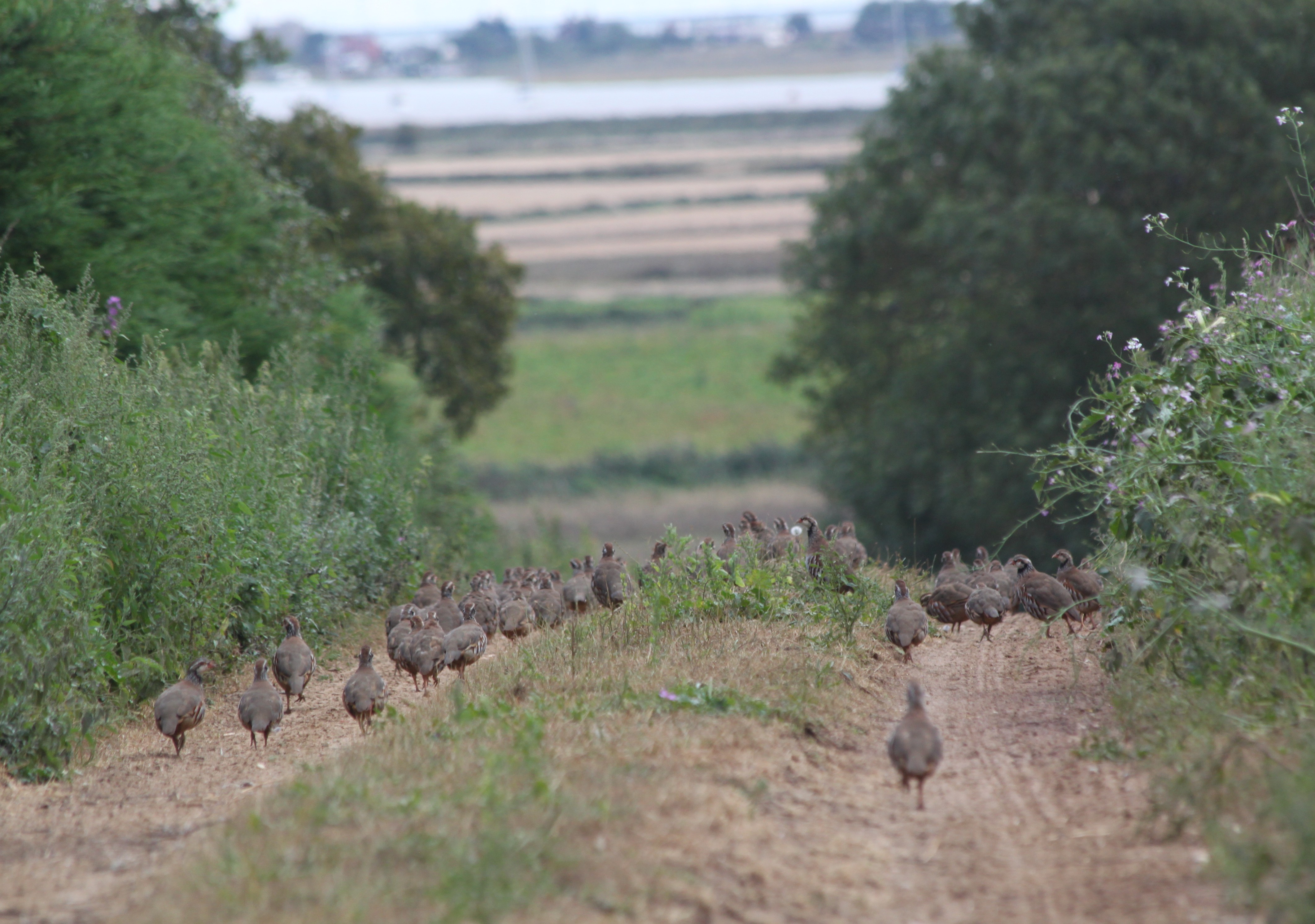
It’s been a very long time coming – too long in my opinion – but last week an announcement was made in the new Land Use Framework for England that the Westminster Government intends to explore options for the licensing of gamebird shooting and releases. This will cover gamebird shooting in both the uplands and the lowlands – in other words, Red Grouse, Pheasant and Red-legged Partridge shooting.
According to Defra, this policy paper sets out ‘How we can use our land more effectively to increase the resilience of our homes, communities, infrastructure, and food systems, while speeding up development and restoring nature‘ and comes after a public consultation last year.
There’s a good summary of some of the Framework measures, written by land reform campaigner and author Guy Shrubsole (see here), but of particular interest to this blog is the Framework section on gamebird shooting.
It says this:
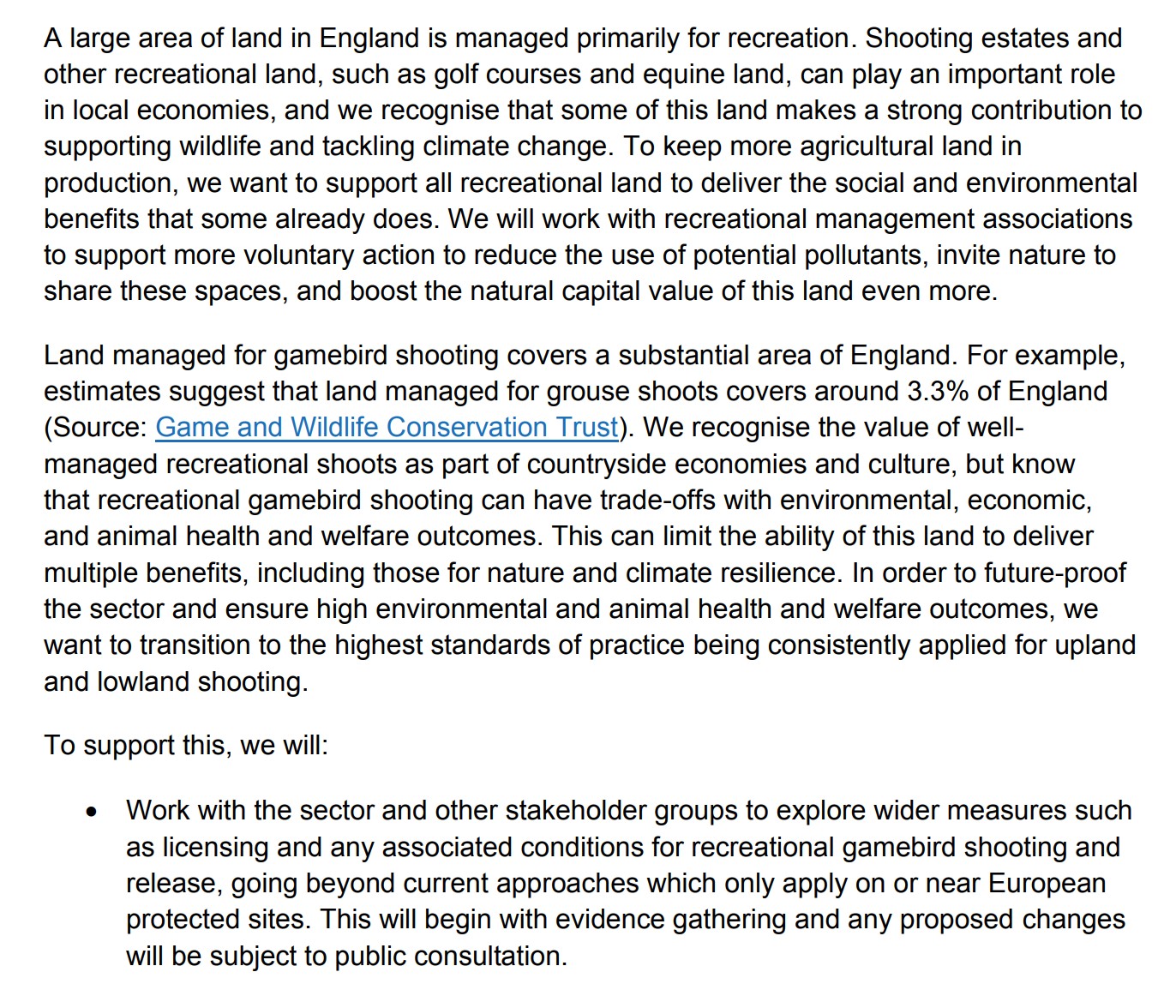
It looks like the Framework is distinguishing fairly between the different types of gamebird shooting and the cost/benefit differences between them. For example, the environmental impacts of small, walked-up shoots where the emphasis is usually on the ‘experience’ of the day, is quite different to the impacts of the large, intensively managed commercial driven shoots where the emphasis (and value of the estate in the case of grouse shooting) is measured by the number of gamebirds shot each season.
But there’s no getting away from the fact that an estimated 60 million non-native gamebirds are released into the countryside every year for recreational shooting, and that is simply unacceptable and unsustainable. As is the widespread illegal killing of birds of prey on many gamebird shooting estates, both in the uplands and the lowlands.
The Government clearly recognises that the industry is incapable of self-regulation, hence a commitment to explore licensing as a form of regulation and restrictions on gamebird releases beyond those already in place on protected areas. Although we all know that the gamebird shooting industry as a whole is not celebrated for its adherence to the law, on so many levels (raptor persecution, lead ammunition, poisons caches, muirburn, tracks, rodenticides, releases on protected areas, biosecurity, illegally-set traps etc etc) so it’d be a surprise if it embraced any kind of governance, in whatever form that might take.
Indeed, the shooting industry’s response to the Framework announcement has been entirely predictable in its level of hysteria.
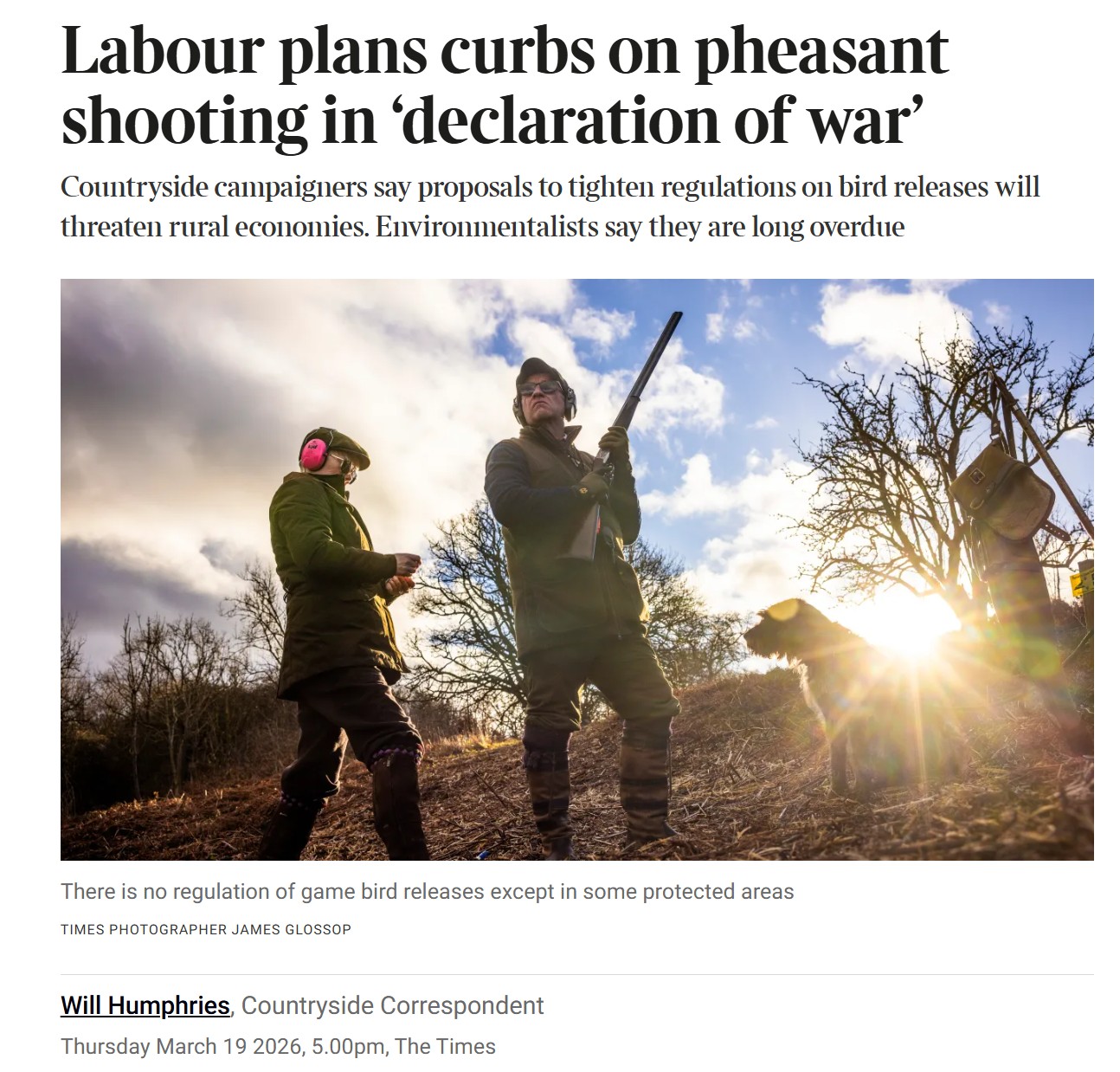
For example, Tim Bonner, CEO of the Countryside Alliance, is quoted in The Times saying the proposed regulation was “a declaration of war on game shooting“.
It’s not just gamebird shooting and releases on which Defra seems to have woken up.
Earlier this week there was a welcome announcement of a public consultation on greater protection for Woodcock and other protected bird species (see here) and yesterday another public consultation was announced, this time for how to implement a ban on so-called trail hunting.
Trail hunting is supposed to be a substitute for Fox hunting (which was banned under the Hunting Act 2004 by the previous Labour government) where hounds follow an artificial scent trail laid by humans. However, there has been significant evidence that trail hunting has been used by many hunts to conceal or provide plausible deniability for Fox hunting, leading to Labour’s election manifesto commitment to ban it.
Given the Government’s overall pathetic response to the continued call for a ban on driven grouse shooting last year (here), and its appalling attitude towards reducing environmental protections in its Planning & Infrastructure Act 2025 (here), it’s good to finally see some progressive thinking.
 Raptor Persecution UK