
RSPB press release:
RSPB ASKS FOR EVIDENCE OF BURNING ON PEATLANDS
- The RSPB is asking members of the public to report incidents of moorland burning on peatlands using their burning reporting app or through the RSPB’s website.
- The data collected will be passed on to the relevant authorities in England, Scotland, Wales and Northern Ireland to help them to tackle illegal and unsustainable burning.
- Peatlands account for 12% of the UK’s land area and contain more carbon than the forests of the UK, France and Germany combined – an estimated 3.2 billion tonnes. 80% of our peatlands are in degraded condition and emitting, not sequestering carbon, as needed to help combat climate change due to historic, damaging land management including repeated burning.
UK uplands are home to some of our most at-risk wildlife including Hen Harriers, Ring Ouzel, Winchat and Large Heath butterfly and globally important upland habitats, such as blanket bogs, which have developed over millennia and store large amounts of carbon.
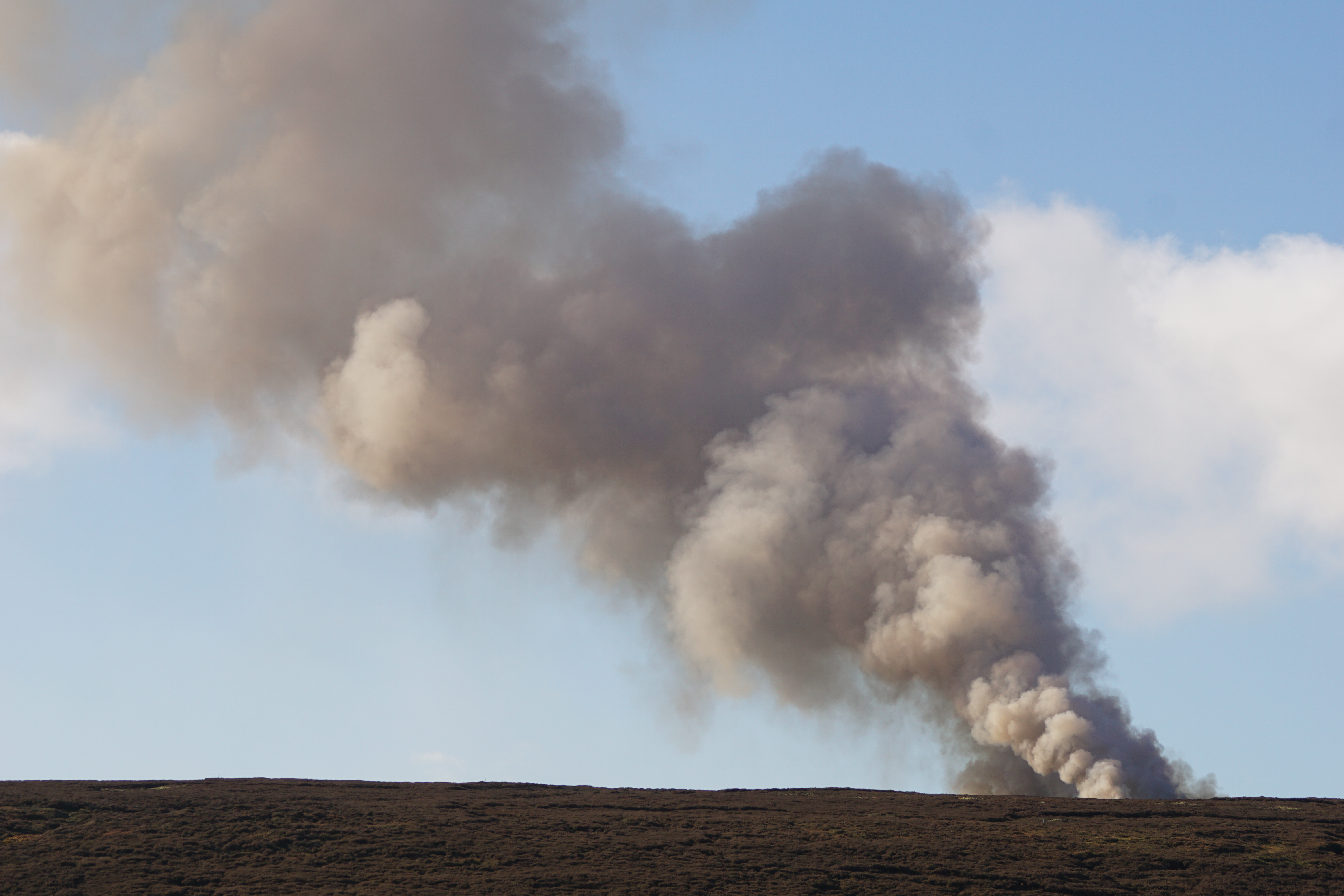
Every year from October until April across the UK, upland vegetation is systematically burned in many places, and our peatlands are often damaged as a result. ‘Rotational burning’ is a practice used by shooting estates, deer managers and farmers to encourage the growth of young heather shoots and grass to provide food and grazing for red grouse, wild deer and livestock.
However, scientific evidence reviews show that regular burning has numerous harmful environmental impacts and has caused our peatlands to become a source of emissions.

Tom Aspinall for RSPB England said: “Defra extending the protection from burning to all peat over 30cms in 2025 has been a great step forward for nature, especially now it’s applied across all ‘Less Favoured Areas’ rather than just protected sites. This approach should better protect thousands of years’ worth of accumulated carbon.
“In support of keeping England on the right track, the RSPB burning app has been a great ‘citizen approach’ to assessing how well Land Managers are following these vital new rules – and it’s already been making a difference. We encourage as many people as possible to send in reports via the RSPB app, providing important evidence to pass forward to Defra, and helping to make sure action is taken to keep the English Uplands in better health.”
Duncan Orr-Ewing for RSPB Scotland said: “Welcome new legislation to licence all muirburn in Scotland will be introduced from autumn 2026 following a couple of delays. This legislation restricts burning on deep peatlands over 40cm, however, still makes provision for prescribed burning in some circumstances to reduce the risk of wildfires. Better information on the distribution and timing of burning activities is critical to make informed decisions around muirburn and to reduce wildfire risk”.
Arfon Williams for RSPB Cymru said:“The large number of uncontrolled fires across Wales in 2025 severely impacted important wildlife and habitats including our precious peatlands. Many of these fires were started deliberately. To understand the extent of this threat to nature we urge the Welsh public to report upland fires via the RSPB app. This information will be invaluable in supporting our calls to Welsh Government to do more to protect nature and especially peatlands. This includes ensuring greater compliance with the Heather and Grass Burning Code for Wales.”
Claire Barnett, Area Manager for RSPB NI said: “Peatlands are a vital habitat in Northern Ireland but each year, we see the devastating impact of fires here. Fires that pose a risk to nature, wildlife and local communities. At RSPB NI we will continue to call for a legal ban on peatland burning and you can play a vital role in showing how widespread the issue is by downloading our app and reporting evidence of burning across our uplands.”
To anonymously report a burn, members of the public can visit the RSPB Burning website or download the My Survey123 app (available on iOS and Android).
By downloading our app and reporting evidence of burning you can play a vital role in helping to show our governments how much burning continues across our uplands and providing them with the evidence they need to act against those who are not following regulations and may be damaging peatlands and also risking wildfires. Ending burning on peatlands will be a key step in ensuring we can turn round the fate of this globally important habitat in the UK.
ENDS
 Raptor Persecution UK
I am sure that the Moorland Association, Scotland Landowners Association, Countryside Alliance, BASC and GWCT will be rushing to provide appropriate information.
Yep this is what they are likely to provide 0.