
Press release from RSPB (29 July 2025)
BRITAIN’S RAREST BREEDING BIRD RAISED FOUR YOUNGSTERS AT SECRET LOCATION
- A pair of Montagu’s Harriers, Britain’s rarest breeding bird, have successfully raised four youngsters at a secret location in England
- The pair of birds which arrived in May have been closely monitored by the RSPB who, working closely with a farmer, installed a protection fence around the nest in early July
- This week the four chicks have made their first flights, delighting all involved
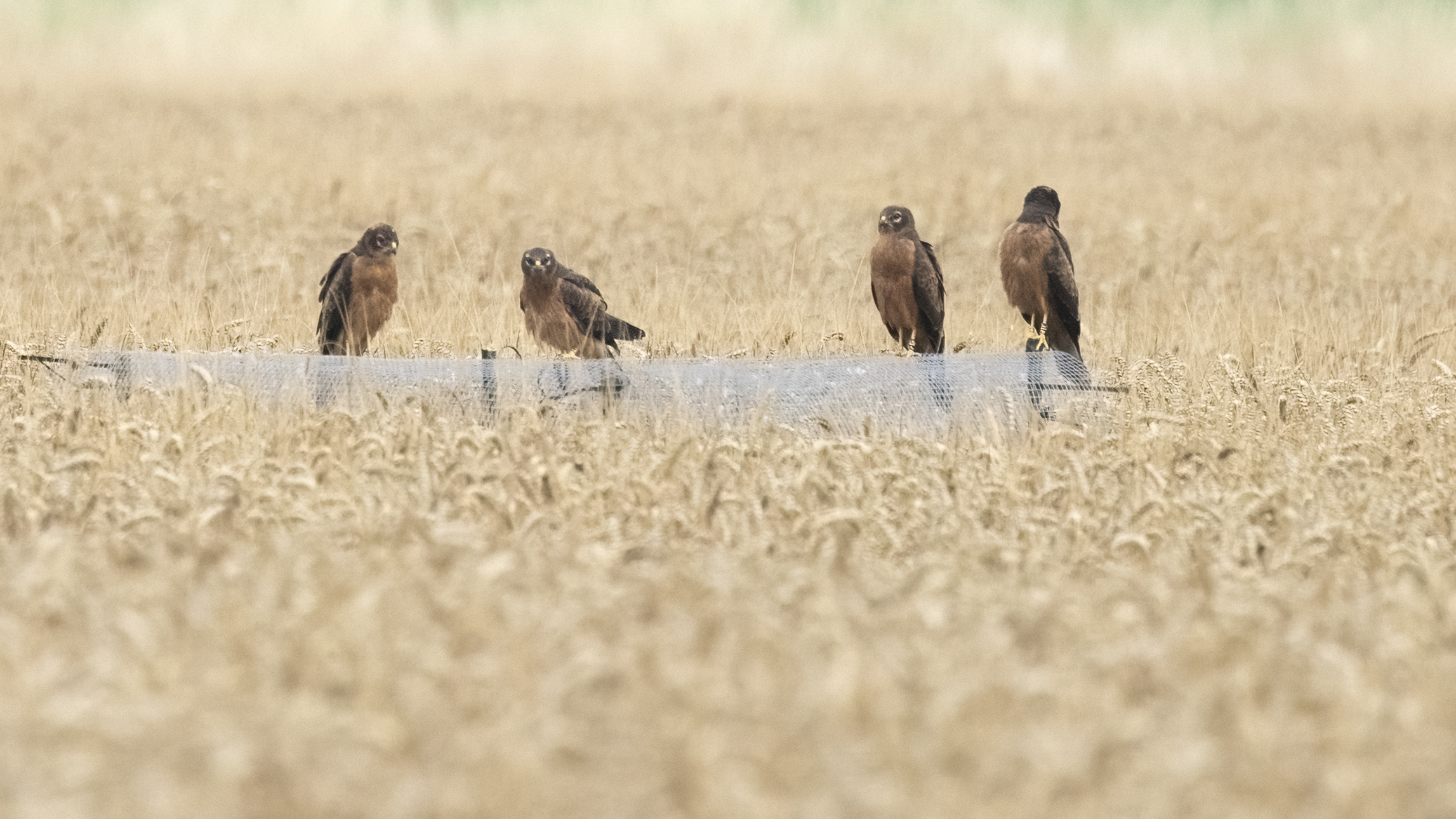
The Montagu’s Harrier is Britain’s rarest breeding bird species and hasn’t successfully nested in the UK since 2019. After a high of nine successful nests in 2011, its population has sadly dwindled – with it being officially placed on the Red List in 2021. But this year a pair arrived in the UK and have gone on to delight conservationists by raising four healthy youngsters.
Montagu’s Harriers winter in Africa and return to Europe to nest, often in agricultural fields, in particular winter sown cereals in the UK, and can return to the same nesting areas each year. Their previous strongholds in Spain and France are diminishing due to intensification of agriculture and earlier harvest dates, as well as wetter summers. Many nests across Europe are protected from predators by the installation of small metal fences by conservationists, volunteers and farmers.
The birds were first seen at the now secret location in May, raising hopes they would breed. Their nest was located in June by the licensed use of a drone and then closely monitored by a volunteer birdwatcher and the RSPB. Photographs indicated that both adult birds were ringed, remarkably the male being a chick from a UK nest in 2015 and the female from a nest in France in 2023.

As soon as their behaviour indicated that youngsters had hatched, the RSPB entered the field under licence and installed a small protective fence to safeguard the nest from ground predators. The chicks were then ringed in mid-July and last week made their first flights, delighting all involved.
Mark Thomas, Montagu’s Harrier species lead at RSPB, said: “We are overjoyed that a pair have returned, they managed to find each other and through the close protection of a dedicated farmer and the RSPB have managed to raise four youngsters. What’s even more remarkable is that we have been able to work out that the male was colour-ringed by the RSPB as a chick in a UK nest in 2015 and that his partner is wearing a ring indicating she is from France. This Anglo-French alliance could just be the springboard needed to save this species in Britain.”
The farmer, who cannot be named in order to protect the location, said: “It’s fantastic to have these amazing birds on the farm and a just reward for the extensive conservation work we have been undertaking for decades.”
It is now hoped the birds will all migrate safely, and the adults will return in 2026.
ENDS
Channel 4 News has also covered this story with an article and a video, here.
What excellent news this is – kudos to the farmer and the RSPB for protecting the nest. Let’s hope the adults and four juveniles manage to get out of England successfully, unlike some of their predecessors (e.g. see here, here and here).
 Raptor Persecution UK
Amazing news , let us hope they remain safe
well done all involved and a special thanks to the farmer.
Wonderful news to start a wet day. Congratulations RSPB my donations well spent and big praise to the farmer who should be rewarded as this will have cost him land and time. Why can’t the other so called country lovers loose their guns completely and just appreciate the beauty and perfection of raptors?
I agree with those who have thanked the farmer for his co-operation; it sounds like he has been a rare breed himself for the conservation work he has done. Well done to the RSPB and any volunteers too.
And well done to Alex Thompson for covering this story and others relating to raptor persecution.
Wonderful news – well done to everyone involved indeed!
Let’s hope this success will encourage more farmers/landowners to do likewise.
Huge congratulations to all involved. I am especially impressed with the farmer, who doesn’t earn his or her living doing this kind of thing.
This is wonderful news, and well done to the farmer and all who kept these birds safe.
Excellent great news well done farmer keep up the good work.Safe guarding these birds .