
A couple of weeks ago I blogged about the Scottish Government’s and NatureScot’s decision to delay the introduction of muirburn licensing, which was due to begin on 15 September 2025 but now won’t start until 1 January 2026 thanks to lobbying by the grouse shooting industry (see here).
I wrote that as a result of this delay, we can expect to see an increase in the intensification of muirburn between 1 October – 31 December 2025 as grouse moor managers take full advantage of the opportunity to burn on deep peat until restrictions begin.
Intensification of grouse moor management looks like it’s already begun on some grouse moors.
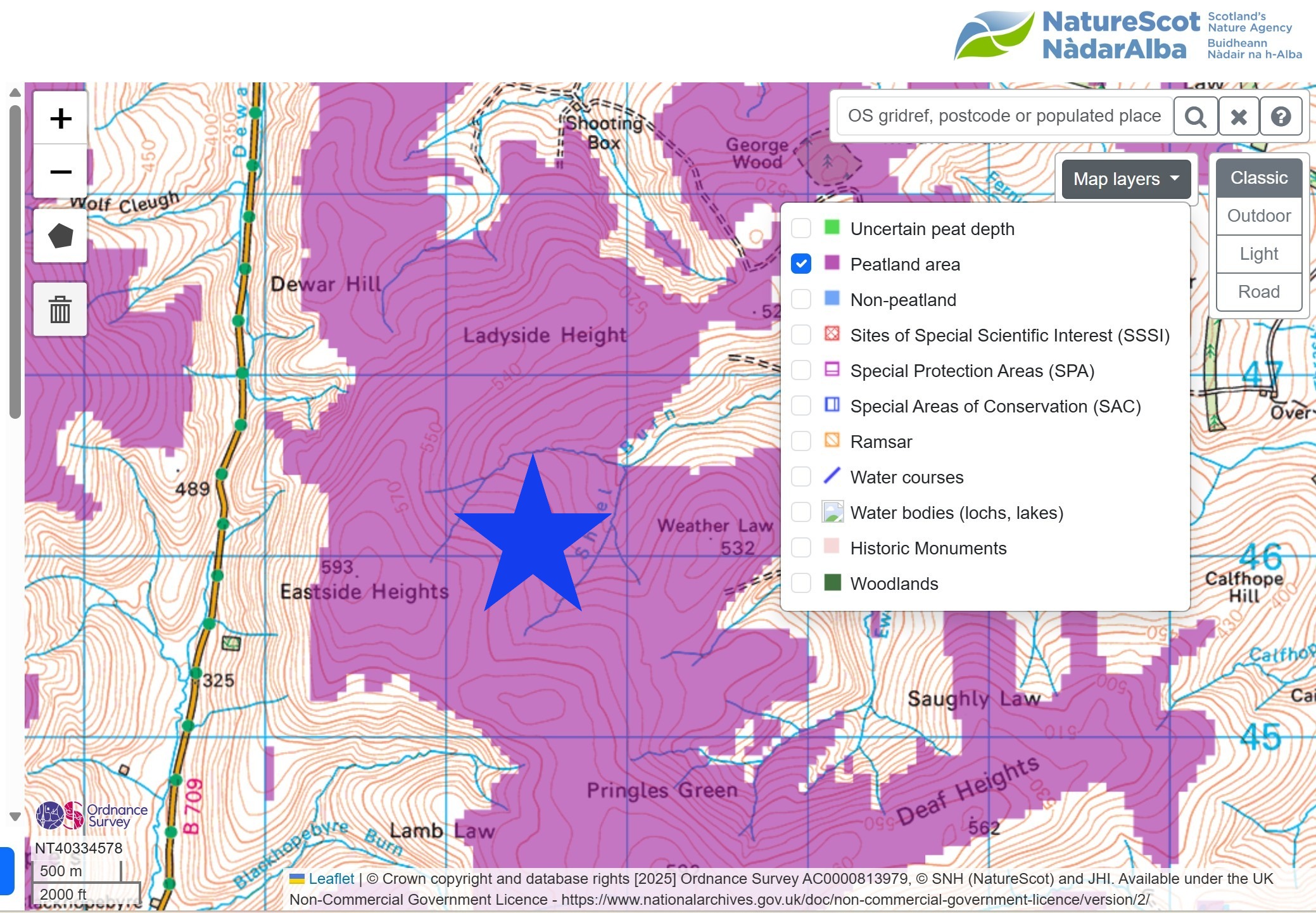
Have a look at this satellite imagery from part of the moorland on the Raeshaw Estate in the Scottish Borders (image captured 13 May 2025, after the close of the 2024/25 muirburn season).
Look at the state of this!

According to the peat depth map that NatureScot has provided to help grouse moor managers determine peat depth for licensing purposes, this area is bang in the middle of an area defined in Scottish legislation as ‘deep peat’ (peat depth of 40cm+).
Using the timelapse function on Google Earth, it’s possible to look back at the ‘management’ of this area over the years:

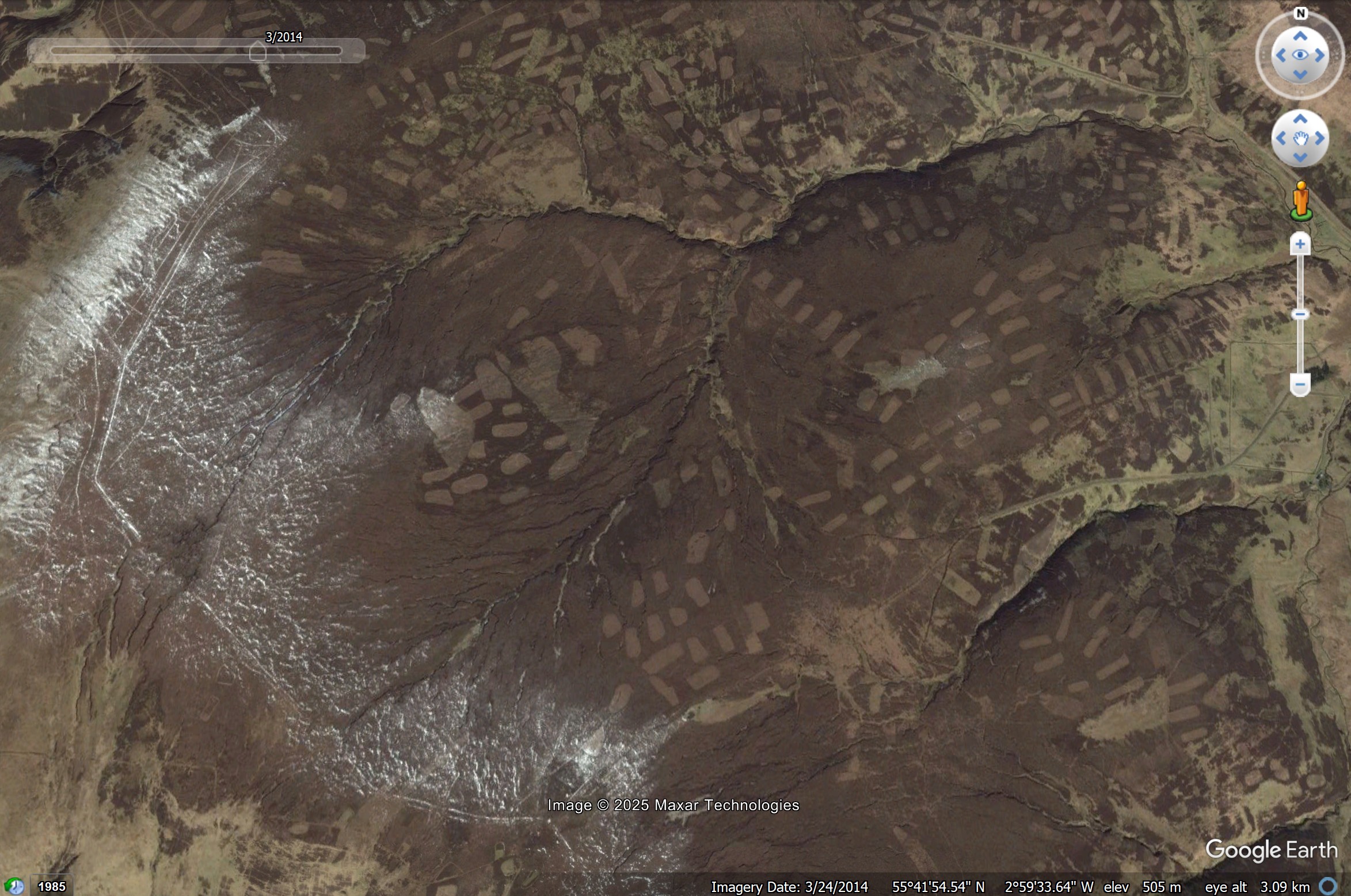
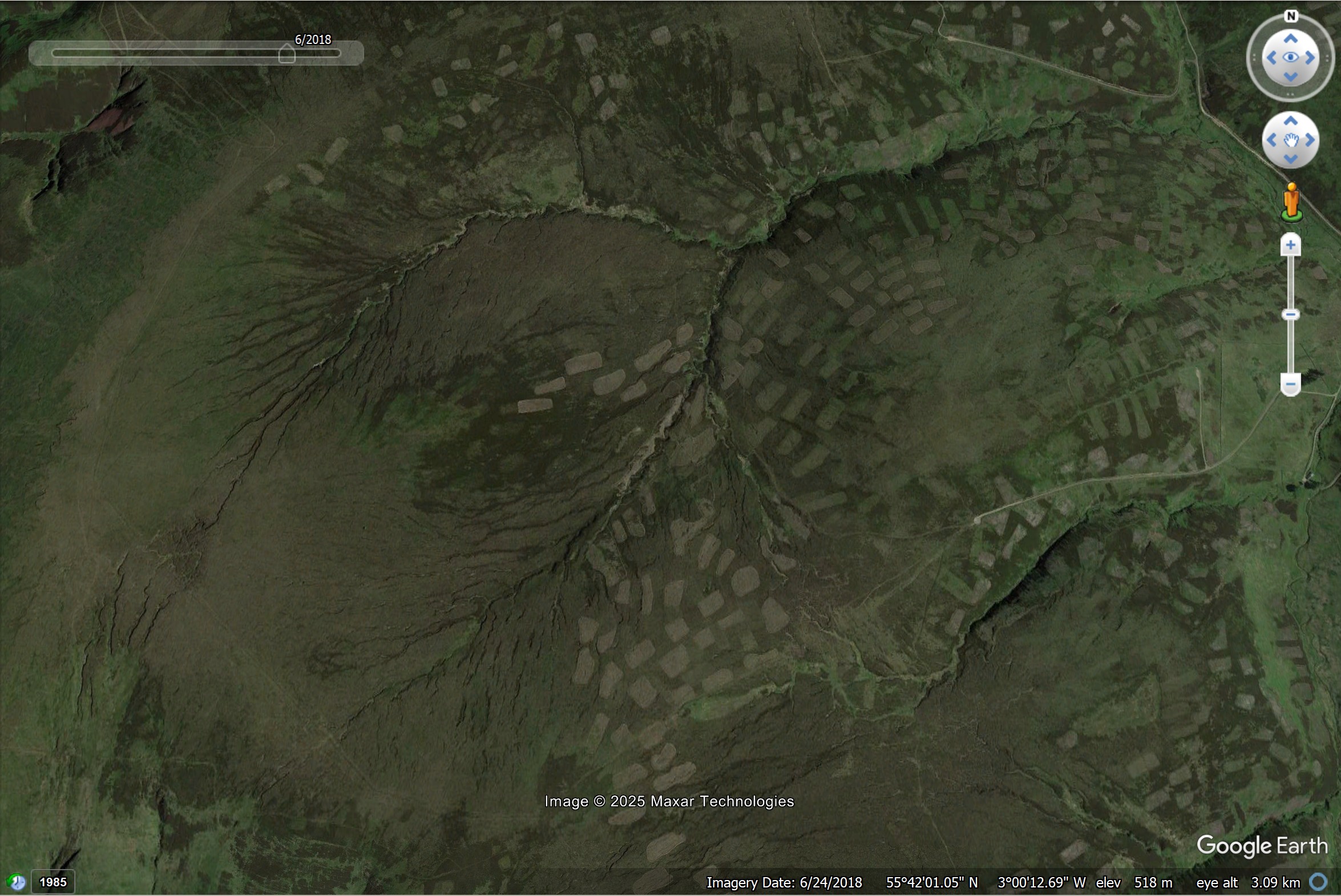
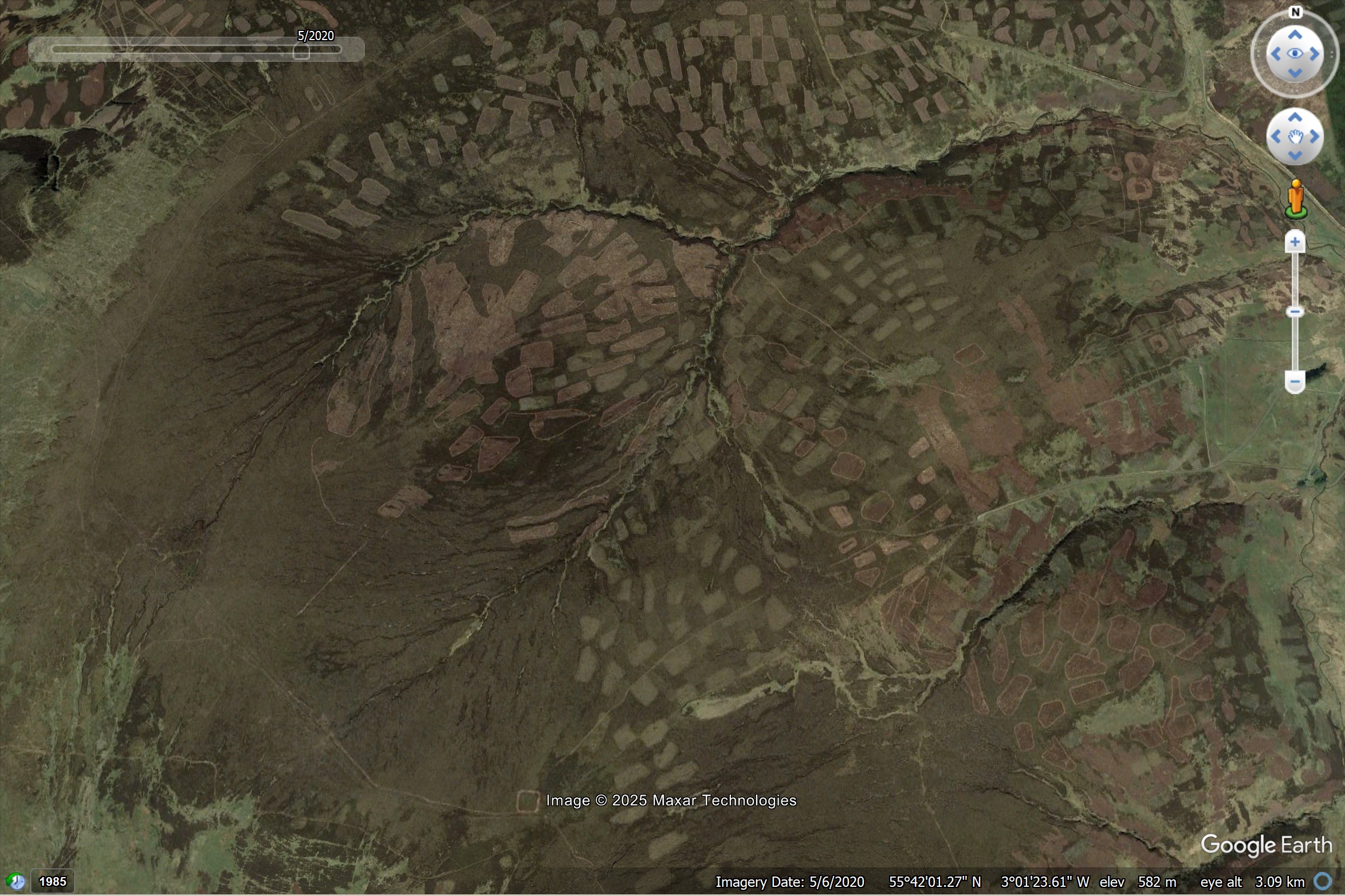
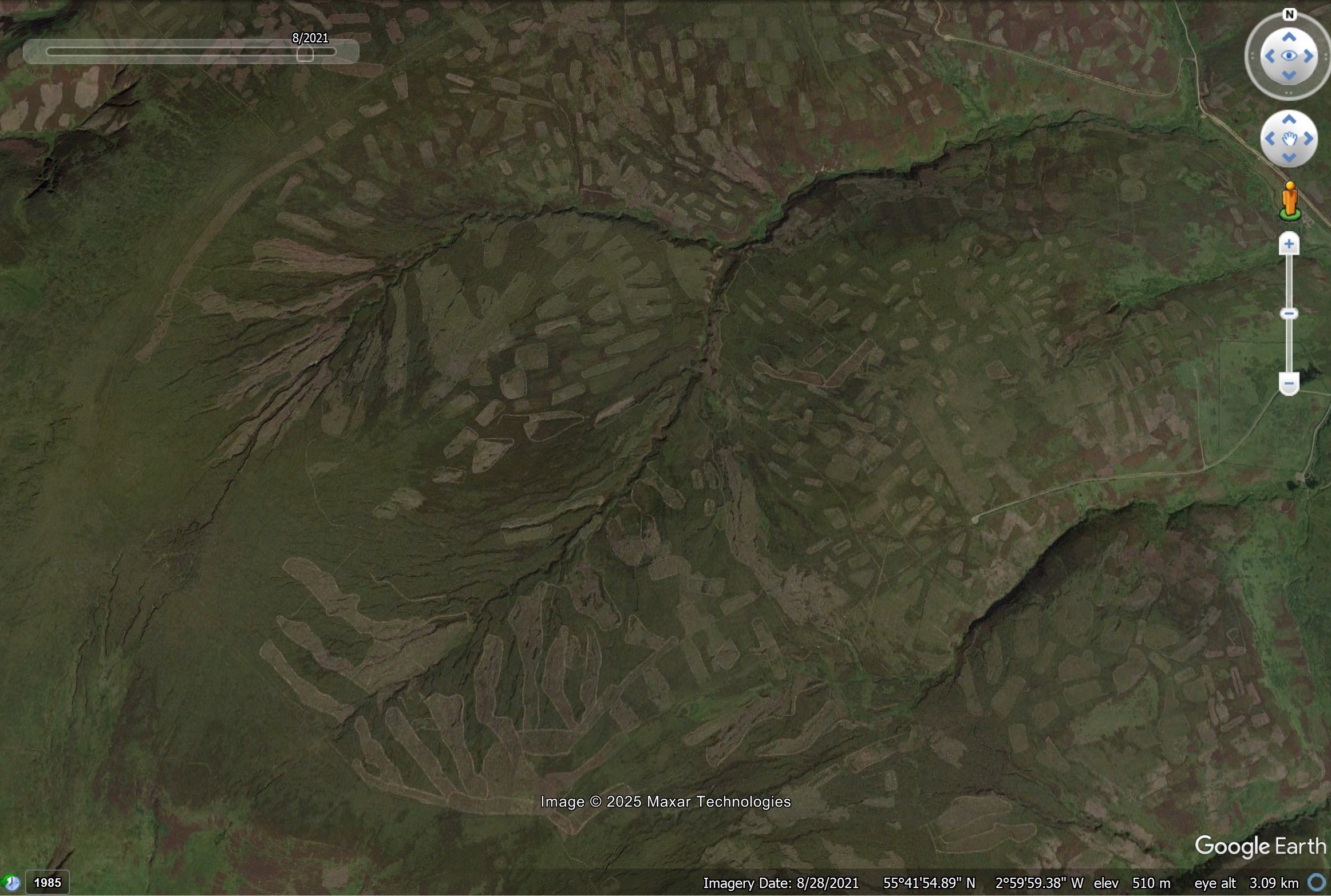
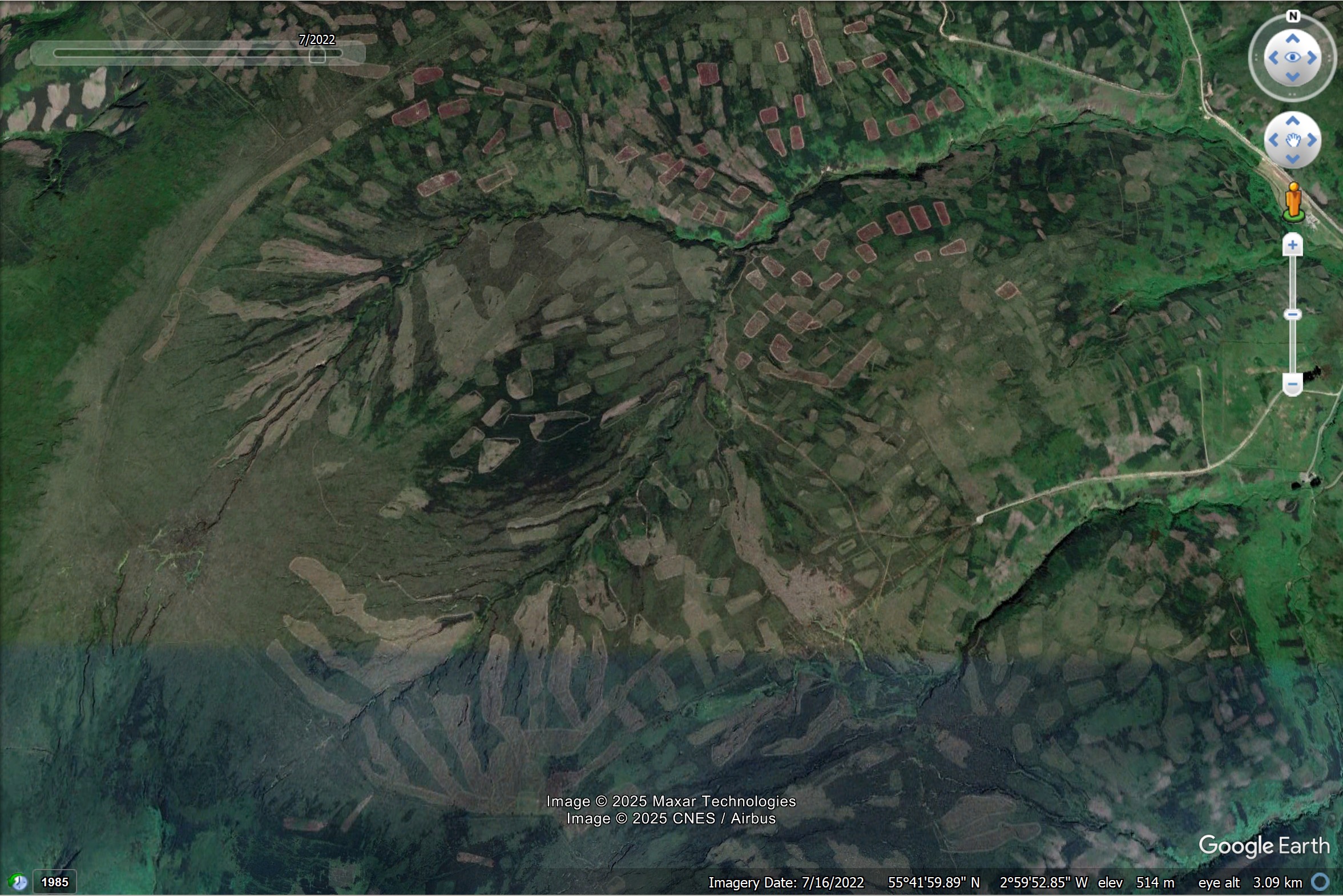
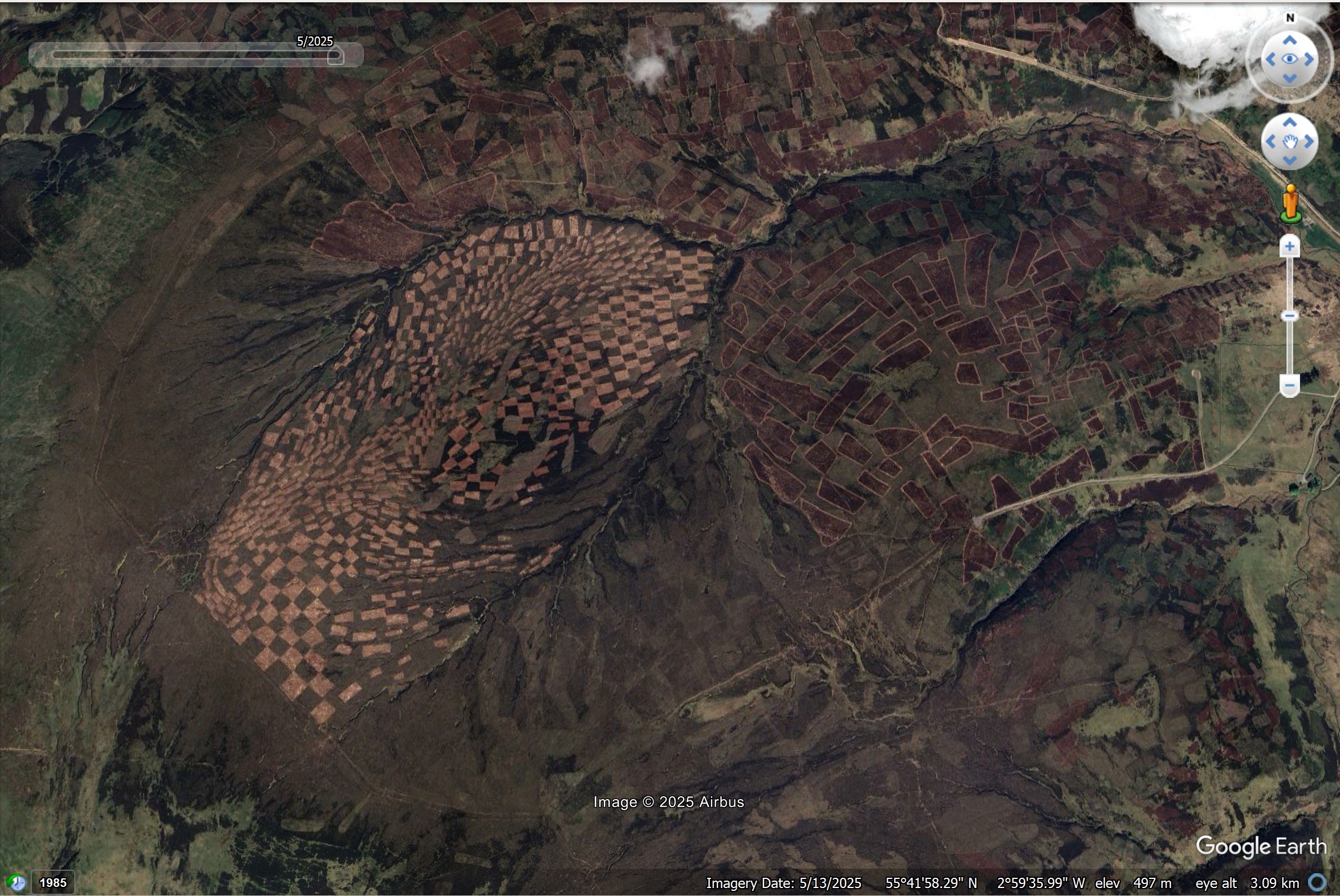
Given the driven grouse shooting industry’s general rejection of cutting instead of burning (they claim it’s labour intensive, logistically difficult and doesn’t get rid of the ‘fuel load’ because it’s just dropped where it’s been cut), I’m guessing that this is muirburn. But it’s hard to differentiate between muirburn and cutting from satellite imagery so it really needs ground-truthing to know for sure. If any blog readers fancy a walk over to ‘The Sole’ on Raeshaw Estate to check, I’d be interested in seeing photographs.
But whether it’s cutting or burning, there’s no denying the intensification of grouse moor management here.
 Raptor Persecution UK
I really despair: these governments, both north and south of the border, say loads of positive things about the actions they will take to bring shooting and hunting (and the badger cull) under control and then they either pass legislation that they know has more holes in it than a sieve or they delay and delay implementation, and then they hand it over to an agency that looks as though it is running scared of the people they are supposed to be policing and who implement it in the weakest way possible, while uttering nonsensically positive statements that RPUK always show up to be shallow and false.
When will we get governments that are prepared to carry through on their promises? Who cares if it upsets King Charles and the rest of the unelected rich and powerful whatnames? When are they going to challenge the lies about jobs and income generated? When are they going to stop these estates hiding their ownership overseas? When are they going to stop them funnelling the profits they claim go back into the community from being shipped overseas to tax havens?
Whether mowing or burning (I actually think this is mowing) it tells the familiar story of cranking up the management for grouse to maximise numbers and the continuing development of the new* type of industrial landscape across British uplands – wherever there is potential for a DGS business to be viable. This has nothing to do with wildfire prevention, I am sure that this was a reasonabley wildfire resistant area in the earlier photographs. And the place will have produced a fair number of grouse back then too. Just not the correct amount – which is (in the owner / sporting tenants world) always the maximum amount that it can generate.
*new – yes, burning with priority for driven grouse may have started in some places in the 1890’s but the fad of management models as focussed and intense as is shown here only started in the 1990’s – partly because of the revival of the stock market producing rich playboys in search of an elite hobby.