
Following on from Monday’s news that Hertfordshire Police and the National Wildlife Crime Unit are continuing to investigate what looked to be the deliberate trampling of Peregrine eggs at St Albans Cathedral on 7th April 2025 (see here), the good news is that the Peregrines have re-laid and are now incubating their second clutch of eggs.
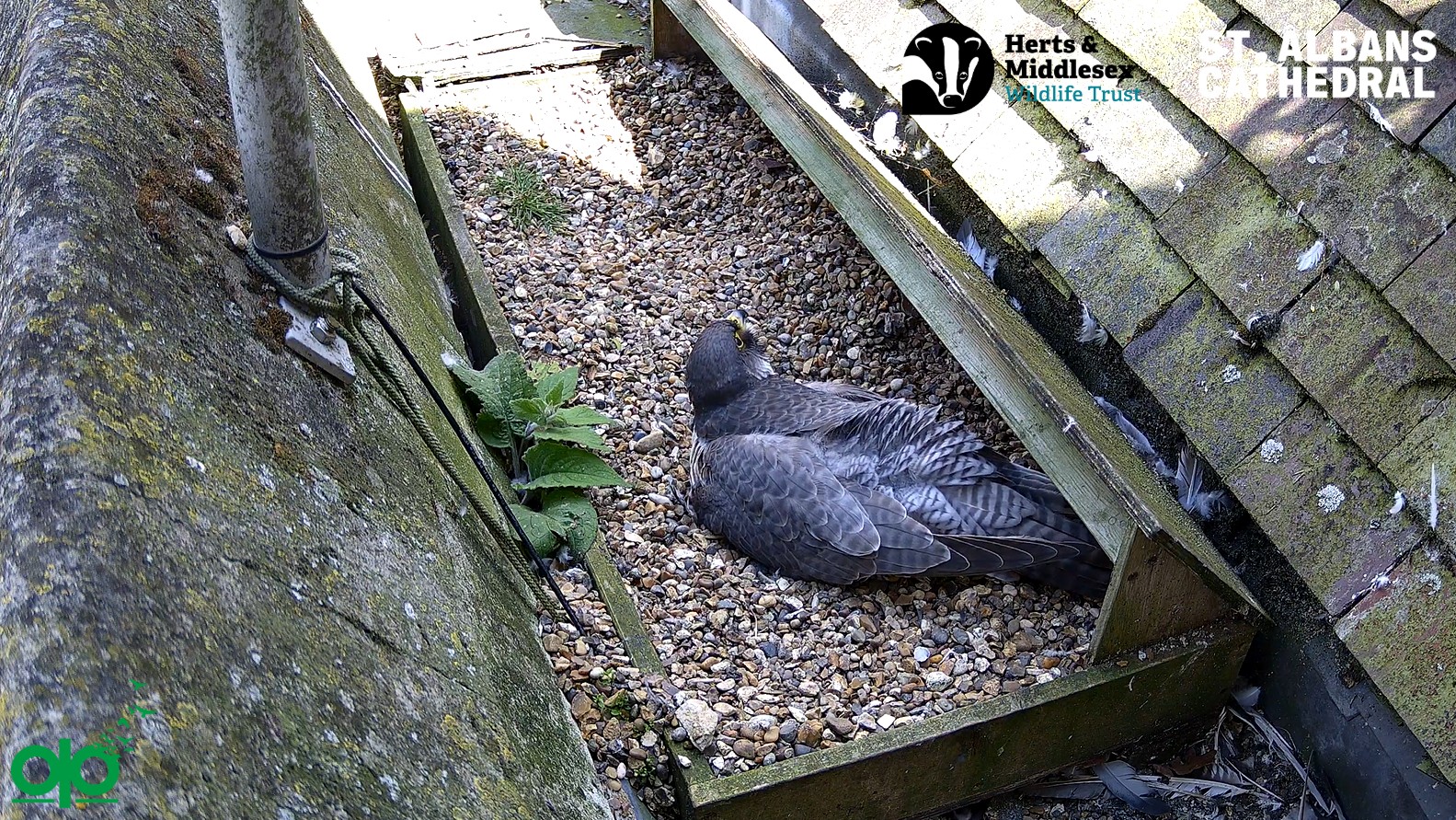
St Albans Cathedral published a statement earlier this week to say the peregrines had re-laid two eggs (egg 1 on 4th May, egg 2 on 7th May) and this morning there are now three eggs.
The statement also confirms that security has been reviewed and updated at the Cathedral with new protective measures in place to prevent a repeat of the incident on 7th April.
The livestream camera has also been reactivated.
The statement and the link to the nest camera can be found here.
 Raptor Persecution UK
Oh that is wonderful news, I really hope that this time they all hatch and safely fledge. Nice to have something positive and good come from this wilful and disgraceful sabatage. I wish all the hen harriers and others birds of prey could also be given the same protection and watchful eyes though :(
that’s fabulous news, it’s really made my day. The church needs to make sure that they are kept very safe u til they fledge
It had seemed to me likely that this female would lay a second clutch, given the date on which the first one was lost and the likelihood of there being a plentiful food supply in the local area to keep her in good breeding condition. I recalled however the old adage “Don’t count one’s chickens until they are hatched.” The interval of around three weeks from loss of clutch 1 to start of lay of clutch 2 endorses what is known of this typical time lag of three weeks found from a good many other studies.
While it is indeed encouraging to see now so much nesting of Peregrines in lowland situations (not least cathedrals but also other man-made structures and quarries) we should not lose sight of the increasingly apparent decline of the species in much of the uplands. Of course it appears more than a little obvious that some of that decline has been due to over-enthusiastic grouse moor management in a number of places. On the other hand there is the more insidious problem of decreasing Peregrine prey species in substantial areas of hill country, a feature that has been flagged up over a good many years now.
Patrick Stirling-Aird
One person’s ‘over-enthusiastic grouse moor management’ is another’s illegal slaughter of raptors. I know which seems correct to me.
Gorgeous fantastic news so chuffed for the birds and some positive happy news for us all . Yes country born n bred I wish we could protect all birds wildlife everything is precious and the older I get I’m more emotional.
As remarked upon above, peregrine numbers in upland areas have declined. However this is not just a move to the lower ground but a move to urban areas where there is more food. Coastal numbers of peregrines have declined, a 15 mile length of coastline in West Wales that I have monitored for over 20 years and has fledged up to 9 youngsters from 3 eyries failed to produce any young 2 years ago. In these areas domestic (racing) pigeons have been the dietary mainstay during breeding, to my mind a change and a decline in pigeon racing has been the cause of this decline in successful peregrine breeding, with a lack of other prey to maintain the once high breeding numbers.
Peregrine numbers have indeed declined in upland areas, some of course have moved or died out naturally. however for the majority of upland England this is patently untrue, they are dead. The vast majority of sites on , adjacent or close to grouse moor estates are as they say “vacant”. The question only the criminals can answer is how many Peregrines die at such sites when they attempt to reoccupy them, many I would suggest. Many of these sites may well be occupied in late winter but come the breeding season they are gone or the site occupied by a lone male. A now ex-keeper explained it to me thus ” you go on a dull, windy and wet weekday evening when nobody else will be around” and either with a shotgun or more likely these days a rifle with a night scope “and everybody knows to shoot the big one. ” There are fewer Peregrines now to reoccupy sites in the same season and to the general public this is now the norm. Peregrines are in low ground and urban sites not because most have moved there but to put it simply they are where persecution is less vigorously pursued.
Good to see a clutch of three. Sometimes second clutches can have fewer eggs than the original.