
Press release from the University of Cambridge (6th March 2025)
Pledge to phase out toxic lead ammunition in UK hunting by 2025 has failed
A voluntary pledge made by UK shooting organisations in 2020 to replace lead shot with non-toxic alternatives by 2025 has failed, analysis by Cambridge researchers finds.
The pledge, made in February 2020 by the UK’s nine leading game shooting and rural organisations, aimed to benefit wildlife and the environment and ensure a market for the healthiest game meat food products.
But a Cambridge team, working with the University of the Highlands and Islands, has consistently shown that lead shot was not being phased out quickly enough to achieve a complete voluntary transition to non-toxic ammunition by 2025. In a final study, published today in the journal Conservation Evidence, the team concludes that the intended transition has failed.
The team has closely monitored the impact of the pledge every year since its introduction, recruiting expert volunteers to buy whole pheasants from butchers, game dealers and supermarkets across Britain and recover embedded shotgun pellets for analysis.
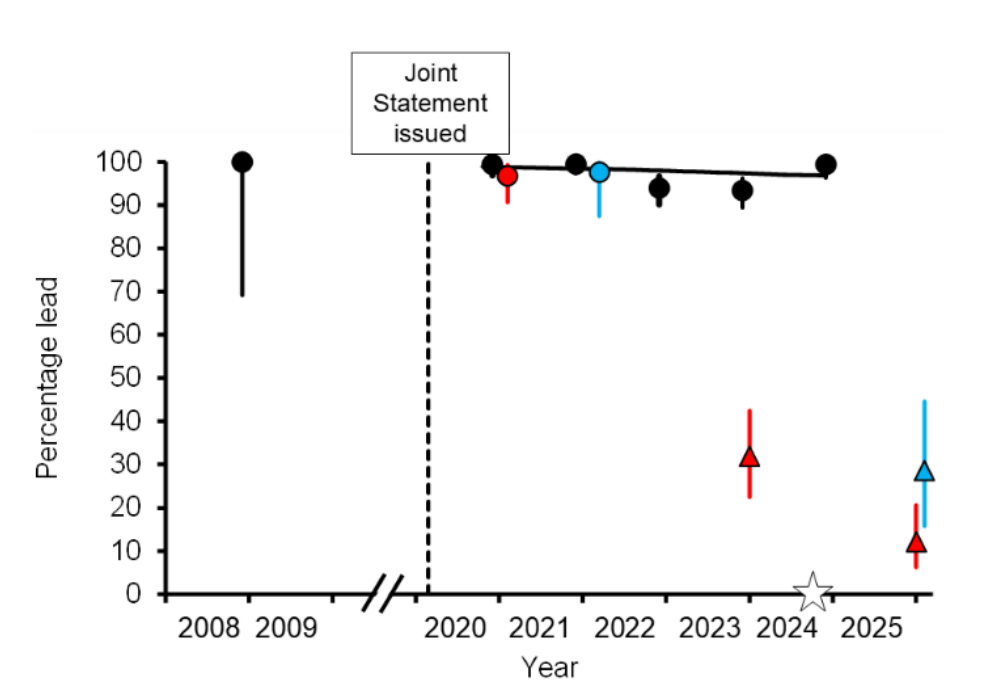
In 2025, the study – called SHOT-SWITCH – found that of 171 pheasants found to contain shot, 99% had been killed with lead ammunition.
This year, for the first time, the team also analysed shotgun pellets found in red grouse carcasses shot in the 2024/25 shooting season and on sale through butchers’ shops and online retailers. In all 78 grouse carcasses from which any shot was recovered, the shot was lead.
“Many members of the shooting community had hoped that the voluntary pledge away from lead ammunition would avert the need for regulation. But the voluntary route has now been tested – with efforts made by many people – and it has not been successful,” said Professor Rhys Green in the University of Cambridge’s Department of Zoology and lead author of the report.
Eating game meat killed using lead shot will expose people unnecessarily to additional dietary lead. Lead is toxic to humans even in very small concentrations; the development of the nervous system in young and unborn children is especially sensitive to its effects. As a result, many food safety agencies now advise that young children and pregnant women should avoid, or minimise, eating game meat from animals killed using lead ammunition.
Discarded shot from hunting also poisons and kills many tens of thousands of the UK’s wild birds each year.
Despite proposing the voluntary change, many shooting organisations and some individual shooters do not support proposed regulatory restrictions on lead ammunition.
Green said: “Private individuals pay a lot of money to shoot pheasants on some private estates – and people don’t like to change their habits. It’s a bit like wearing car seatbelts, or not smoking in pubs. Despite the good reasons for doing these things, some people were strongly against using regulation to achieve those changes, which are now widely accepted as beneficial. The parallel with shooting game with lead shotgun ammunition is striking.”
Danish shooters now say that the legal ban on lead introduced in Denmark around 30 years ago was justified. They say it has not reduced the practicality or popularity of their sport, and has increased its acceptability to wider society.
“Although a few large UK estates have managed to enforce non-lead ammunition on pheasant shoots, some have had to be quite draconian in order to do it, with the estate gamekeepers insisting on loading the guns for the shooters,” added Green.
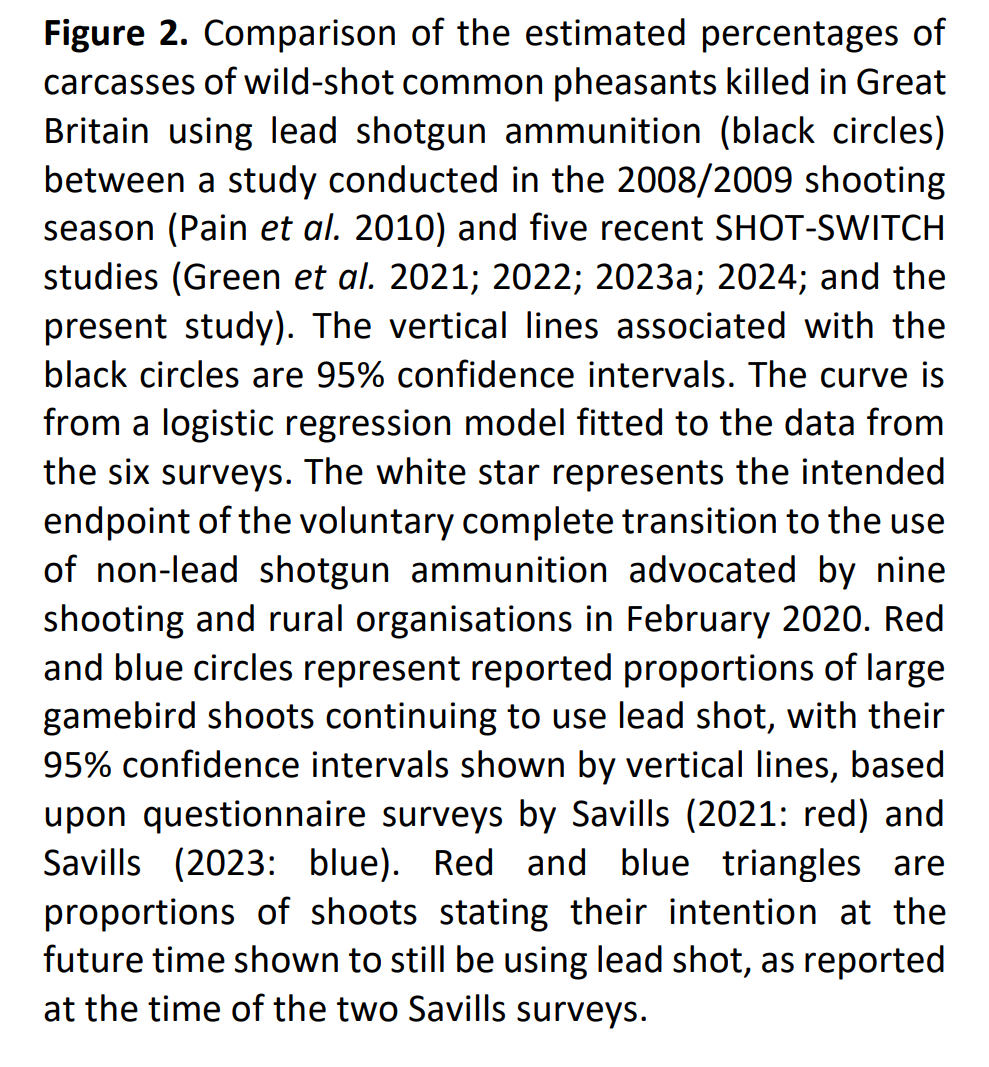
In the 2020/21 and 2021/22 shooting seasons, over 99% of the pheasants studied were shot using lead ammunition. This figure dropped slightly to 94% in 2022/23 and 93% in 2023/24, with the remaining pheasants killed by ammunition made of steel or a metal called bismuth, before rising to 99% again in 2024/25.
Retail pressure
The researchers also checked up on a pledge made by Waitrose in 2019 to stop selling game killed with lead ammunition.
They found that the retailer had been largely let down by suppliers, and that some of their shooters continued to shoot using lead despite making assurances to the contrary. As a result, Waitrose did not sell oven-ready pheasants at all between 2021 and 2023. It sold pheasants again in January 2024 and the 2024/25 season, but the researchers showed that the majority had been killed using lead shot.
In 2022 the National Game Dealers Association (NGDA), which buys game and sells it to the public and food retailers, also announced it would no longer sell game of any kind that had been shot using lead ammunition. But this pledge has since been withdrawn. The researchers bought 2024/25 season pheasants from three NGDA member businesses and found that all had been shot with lead ammunition.
Inside influence
The researchers also analysed all articles relating to the voluntary transition published in the magazine of the UK’s largest shooting organisation, the British Association for Shooting and Conservation. They found that articles near the beginning of the five-year pledge communicated clear, frequent and positive messages about the effectiveness and practicality of non-lead shotgun ammunition.
But by 2023, mentions of the transition and encouragement to follow it had dropped dramatically.
The upshot
At the request of the Defra Secretary of State, the UK Health & Safety Executive (HSE) has assessed the risks to the environment and human health posed by lead in shot and bullets. Its report, published in December 2024, proposes that the UK Government bans the use of lead shot and large calibre bullets for game shooting because of the risks they pose to the environment and health. This recommendation is currently under review by Defra ministers, with a response due in March 2025.
Steel shotgun pellets are a practical alternative to lead and can be used in the vast majority of shotguns, as can other safe lead-free alternatives. But the results of this study indicate UK hunters remain unwilling to make the switch voluntarily.
Since 2010, UK governments have preferred voluntary controls over regulation in many areas of environment and food policy and have suggested that regulation be used only as a last resort.
“Shooting organisations did a lot of questionnaire surveys when the pledge was introduced in 2020, and the results suggested many shooters thought the time had come to switch away from lead ammunition. Those responses stand in contrast to what we’ve actually measured for both pheasant and grouse,” said study co-author Dr Mark Taggart at the University of the Highlands and Islands.
Toxic lead
A previous study led by Green and colleagues found that pheasants killed by lead shot contained many fragments of lead too small to detect by eye or touch, and too distant from the shot to be removed without throwing away a large proportion of otherwise useable meat. This means that eating pheasant killed using lead shot is likely to expose consumers to raised levels of lead in their diet, even if the meat is carefully prepared to remove whole shotgun pellets and the most damaged tissue.
Lead has been banned from use in paint and petrol for decades. It is toxic to humans when absorbed by the body and there is no known safe level of exposure. Lead accumulates in the body over time and can cause long-term harm, including increased risk of cardiovascular disease and kidney disease in adults. Lead is known to lower IQ in young children and affect the neurological development of unborn babies.
The studies were part-funded by the RSPB, Waitrose & Partners, and an anonymous donor. They were supported by a group of unpaid volunteers, who are co-authors of the reports.
ENDS
The new paper, published today in the journal Conservation Evidence, can be read/downloaded here:
UPDATE 6th March 2025: Shooting industry hilariously claims ‘significant progress’ made on the failed voluntary transition away from toxic lead ammunition (here)
 Raptor Persecution UK
The public is loosing patience with this. The evidence has been growing for years. This report is very damming of voluntary efforts. Possession or use of lead shot or bullets, or sale of carcases or food stuffs containing above the legal maximum of lead contamination, for human or animal consumption, should be a criminal offence with deterant fines. It’s now high time for this action and responsible shoots should take action to enforce it, along side Environmental Health, Police and HSE Officers.
With respect, the “public” doesn’t give a damn. What percentage of the man in the street eats shot game compared with his desire for an endless diet of chicken nuggets? However, I don’t dispute that lead shot should be banned.
I volunteer for a wildlife trust. One location is on a ridge, with a shoot in the vale below, about a half-mile away. On a winter day we found four dead pheasants*, presumably injured and able to fly that far before crashing. Perhaps they were heading for cover? Red Kites and other carnivores are present, so it is reasonable to assume they were at risk of eating lead shot. Volunteers may or may not eat pheasant, but they have opinions, which they express to friends.
*This was on a small part of the reserve, which is part of the ridge.
Can you imagine the public outrage if any other food product than game meat was found to be ” toxic to humans when absorbed by the body and where there is no known safe level of exposure. It accumulates in the body over time and can cause long-term harm, including increased risk of cardiovascular disease and kidney disease in adults. Lead is known to lower IQ in young children and affect the neurological development of unborn babies”.
Sainsbury’s, Marks and Spencer and Waitrose have been happy to flog this stuff on and off with no proper labelling to their customers for years now. The warnings about children’s IQ and damage to unborn babies means that gamebird products should be pulled from sale.
Given the shooting industry’s past claims of voluntary changes such as a move away from Raptor persecution, as a zero tolerance issue to it I am hardly surprised that any change in the use of lead shot as a voluntary action has failed. Given this abject failure any ban in the use of lead should come quickly and have a short grace period before all lead ammunition becomes unavailable. In Scotland the use of non-toxic shot should be one of the conditions of the grouse shooting licence.
I think the five years since 2020 has been a long enough grace period.
So voluntary restraint does not work! Has it ever?
I think governments and other bodies support this because it seems they have taken some action and might shut some of us up.
But it won’t.
As a diver, we stopped using lead in lead pouches a long time ago, it’s probably more expensive to use lead than any other form of shot… Would be cheaper if they just stopped shooting everything…
Imagine walking into a new job trying to create a market for the 90% of the 45 million shot pheasants that neither the human nor the pet food chain wants because their is no appetite (literally) for it. And on day-two you are told “Oh yes, and of course, almost all of our products contain lead, and this is unlikely to change…Now be a good chap and you run along and conjure up a market for it for us.” From where? You would have to be crazy to think it is even possible.
I’ve repeatedly tried to explain, why there is so much reluctance to phase out lead shot in the UK. I’ve never seen anyone else acknowledge this, and there has been a reluctance to accept what I say. The reason, lead shot have been phased out in other countries, but not the UK, is down to one simple thing. In the UK, driven game bird shooting, is the chosen hobble of the senior members of the establishment, royalty, the aristocracy, and others that copy and ape them. They shoot with fine, old and often vintage English made shotguns, passed down as family heirlooms. They can only use lead shot. Where they lead, others follow.
Other countries don’t have the same traditions. They are not led by an establishment, that insists on driven game shooting, with old vintage English shotguns, that can only fire lead shot. We now know, that the monarchy, are allowed to secretly object to and insist on modifications to any legislation, which might affect them. I can 100% guarantee, that the monarchy/the Royal Family, would stenuously object, to any attempt to phase out lead shot, because they are the epitome of the driven game shooting, with old vintage shotguns, that can only fire lead shot tradition.
The whole establishment in the UK, is very reluctant to go against the wishes of its most senior members. If you have any doubts about what I say, then read this.
https://www.purdey.com/blogs/the-purdey-post/the-purdey-royal-legacy
“They shoot with fine, old and often vintage English made shotguns, passed down as family heirlooms. They can only use lead shot.”
I agree that ‘the great resistance‘ is all about the Royal Family and the Establishment, but my understanding is that ‘vintage’ shotguns with a full choke can still use bismuth, but that costs more than lead (hence much opposition from other users – there are some cracking comments in the shooters’ fora… ).
More modern shotguns with screw-in chokes can be easily adapted to use steel, I believe.
Hi Keith, the technical objections can all be overcome easily if the will is there, albeit some old guns will have to be put aside – tough shit. At heart it is the fact that it requires a slightly different and more accomplished skill set to replicate the success (kill) rate with steel that they are accustomed to with lead. And the attitude of “why should we change now because of a few bleating anti’s / townies” etc, etc prevails.
I agree that the high-end Guns like to use their cherished heirloom Holland & Hollands, Purdey’s, etc, etc and consider it their inalienable right to continue to do so. But I think it’s a different scenario for the Average Joe (including the tranche of newcomers who can afford driven shooting nowadays days due to farmed pheasants being cheap in historical terms). This category of Gun, which account for tens of millions of pheasants, redlegs, mallards are using relatively newly made and / or buying brand new mid-market guns. But all prefer lead. This is in part because of (as you say) the peculiarity of the “English driven game style” that the shooting world are very fetishicist about – i.e. shooting at a flow of birds driven to you in a standing position. One big reason these once-in-while Guns don’t like steel is this: To get the same “stopping power” with steel as you get with lead, you have to use larger shot sizes. But do this and you consequently get less pellets per cartridge and your “pattern” or spread of pellets becomes necessarily either thinner in number of pellets or tighter in diameter. In other words if you are just not a particularly good shot and lazily tend to just get overexcited and fill the sky with barrages of shot at the unfortunate farmed poultry that is driven towards you – the results of trying steel will displease you. The chap on the next peg who is either using steel and is a genuinely good shot (or is using lead!) will kill more than you. And consequently you will feel less of a real man and will be disinclined to persevere with steel (or learn to shoot/take up a different hobby). You will opt to use lead next time to feel like Billy-Big-Bollocks again, and stand proudly with the Team at end of the day for the group photo of the dead stuff – knowing that you got a good share of them.