Stobo Hope – NatureScot refuses licence application by Pryor & Rickett Silviculture to hunt foxes with 19 dogs (Guest Blog)

The following is a guest blog by someone who wishes to remain anonymous, although I know their identity.

STOBO HOPE – NATURESCOT REFUSES LICENCE APPLICATION BY PRYOR & RICKETT SILVICLUTURE TO HUNT FOXES WITH 19 DOGS
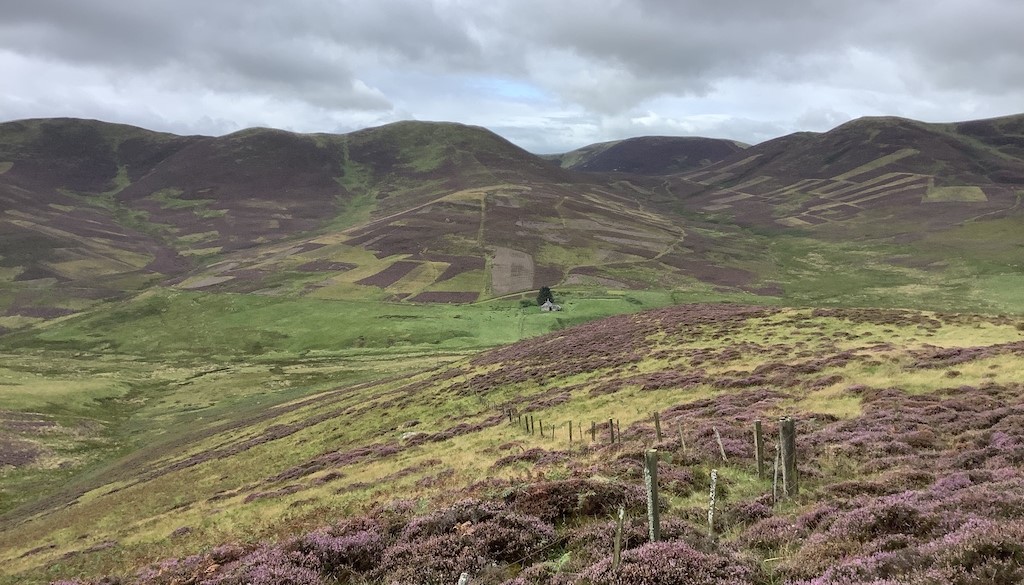
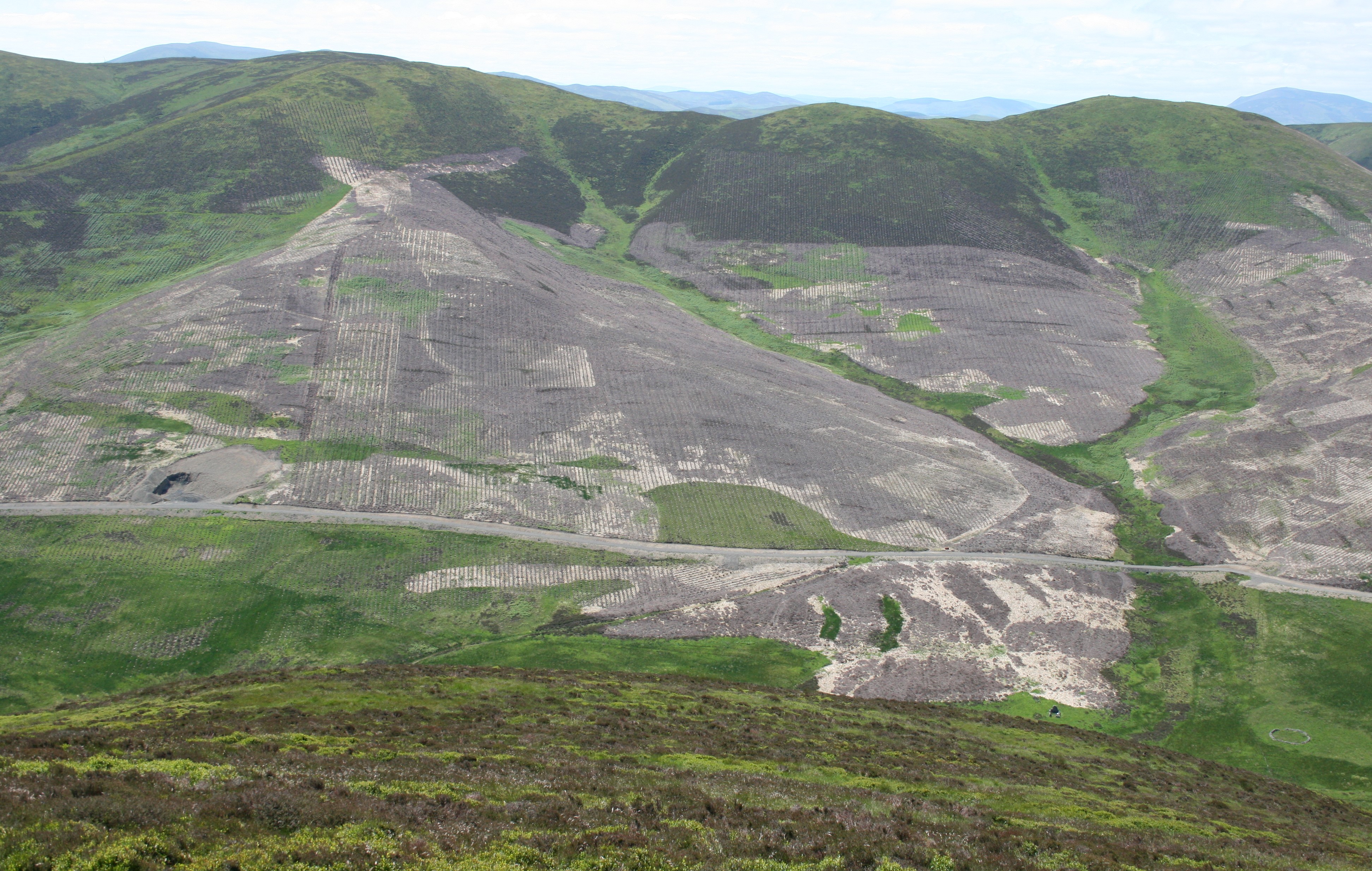
Stobo Hopehead and Hammer Head, 2020

Many of you may have read about Stobo Hope in the Scottish Borders, with government body Scottish Forestry awarding a contract worth £2 million of taxpayers’ money to the Guernsey-registered Forestry Carbon Sequestration Fund, managed by True North Real Asset Partners Ltd with CEO Harry Humble (see here), to plant a giant Sitka spruce plantation.

Stobo Hope appears to be another questionable forestry project approved by Scottish Forestry – the excellent Parkswatch Scotland blog has exposed many, one of the latest being Muckrach (see here and here).

A crowdfunder campaign by the Stobo Residents Action Group, with support from Wild Justice, Raptor Persecution UK and Parkswatch readers, helped raise nearly £30,000 for a judicial review. The decision by Scottish Forestry to approve the plantation without an Environmental Impact Assessment (EIA) was challenged (see here).

Many people are grateful for your support in opposing this scheme, which seems to typify destruction of valuable upland habitats in Scotland. The judicial review was successful, with the Scottish Government eventually conceding before going to court – cancelling the £2 million contract, grant of consent and all associated funding (see here). The forestry work has apparently been halted by a court order since early September 2024 and Scottish Forestry have stated they will decide again if an EIA is needed (see here). [Ed: update, since this guest blog was written, news has emerged that the investment company behind the development work at Stobo Hope has lodged its own legal challenge against Scottish Forestry’s decision to halt all groundwork – see here].

Were dubious claims by Scottish Forestry about black grouse intended to help avoid an EIA?

After decades of claiming intensive grouse shooting is beneficial for the local economy and wildlife, some landowners and managers are now claiming to be ‘mitigating climate change’ by planting Sitka spruce. Instead of having a mixture of open moorland with some native woodland, where grouse, waders, raptors and other wildlife can co-exist, moorlands across the Southern Uplands and elsewhere are being destroyed by conifer plantations in the wrong place. This is reaching the point that black grouse are now facing extinction in the Southern Uplands, as explained in a report by the Southern Upland Partnership (see here).
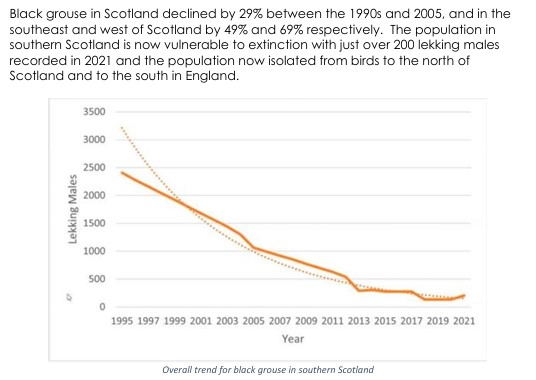
Source: Southern Upland Partnership report – ‘Undoing the Silence of the Southern Uplands’

Following advice on 9 January 2024 from Mabbett and Associates Ltd, now called Arthian Ltd (see here), the ecological consultancy engaged and paid for by forestry agents Pryor and Rickett Silviculture to undertake the ecological surveys for Stobo, Scottish Forestry decided on 18 January 2024 that ‘this project is not likely to cause a significant negative effect to black grouse’, helping avoid an EIA.

This begs the question of whether Scottish Forestry employ their own ecologists to review and check such claims in applicants’ reports or do they just take these claims as read? Mabbett claimed ‘that whilst the scheme will have localised ecological impacts, it will not have a significant impact on the features identified withing [sic] previous habitat and ornithological surveys’:
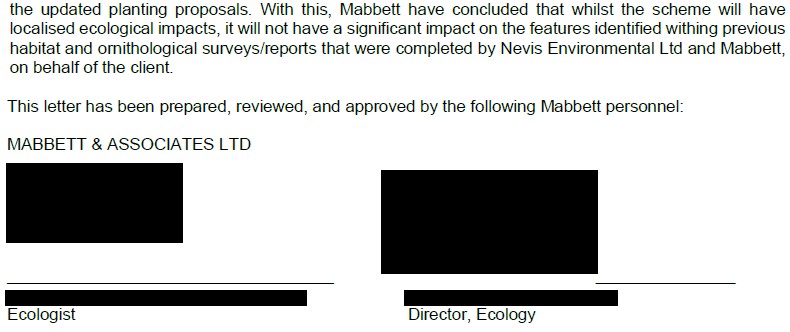
Extract from 9 January 2024 letter from Mabbett to Pryor and Rickett Silviculture

Research has shown black grouse require several hundred of hectares of contiguous moorland habitat at a minimum for breeding. Due to the sedentary nature of black grouse, their breeding areas need to be close to other suitable moorlands for viable populations. Stobo and neighbouring woodland creation schemes, if approved, would together amount to losing nearly ten square kilometres of moorland.

Scottish Forestry claimed that there would be 246.4 ha of open ground within 1.5km of the lek as part of several so-called mitigation measures. Scottish Forestry failed to explain most of these open areas were fragments of relatively unsuitable habitat on exposed hilltops and ridgelines (with deer fences) further away from the lek and there would be 463.6 ha of trees replacing the areas of suitable habitat, so there is no longer any contiguous moorland.

Scottish Forestry stated that ‘the applicant has provided a Predator Control Management Plan to target particular species which could adversely impact upon black grouse’.

Scottish Forestry ignored the RSPB’s earlier prediction in September 2023 that the Stobo lek would become extinct:

In addition to all the damage on site by the forestry managers from groundworks, drains, forest tracks and planting Sitka spruce, herbicide was applied across vast areas of heather moorland in August 2023, five months before a contract was approved by Scottish Forestry (see here), who claimed they didn’t notice this herbicide damage for a whole year.

Herbicide damage at Stobo Hope, July 2024

The Stobo Residents Action Group explained that this herbicide would have ‘wiped out important plant communities including heather, blaeberry and many species of wildflowers, grasses, ferns, lichens and mosses’ thus ‘destroying the food supply for mammals, birds, reptiles and invertebrates including the red-listed black grouse’. It is understood up to 400 hectares could have been sprayed with herbicide.

Pryor and Rickett Silviculture applied to NatureScot for a licence to hunt foxes at Stobo with 19 dogs

Many readers may be aware that the new Hunting with Dogs (Scotland) Act 2023 (see here) prohibits fox hunting with more than two dogs without a licence. This legislation was intended to close loopholes in the now repealed Protection of Wild Mammals (Scotland) Act 2002, which effectively allowed fox hunting to continue for sporting purposes.

NatureScot has authority to grant licences for hunting with more than two dogs under certain ‘exceptions’; (i) the management of wild mammals above ground and (ii) environmental benefit (see here). Campaigners have argued that this new licensing system still has loopholes, allowing fox hunting to continue under these ‘exceptions’ (see here and here).

A FoI from NatureScot has revealed that forestry agents Pryor and Rickett Silviculture Ltd (see here) applied to NatureScot for a licence in March 2024 to use 19 foxhounds to hunt foxes for ‘environmental benefit’ at Stobo. It was claimed this would help protect black grouse from predation from foxes as part of its ‘Predator Control Management Plan’ also targeting corvids and stoats, using Larsen and Perdix spring traps.

The applicant claimed that black grouse were ‘present across the site, with multiple areas identified as Lek’s [sic] and Breeding sites’ (but is unclear what constitutes ‘breeding sites’), also claiming ‘the site is also understood to be a significant movement corridor for Black Grouse between neighbouring glens’:

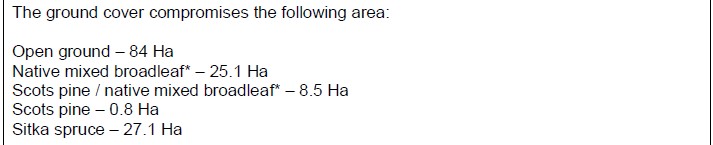
It was claimed management proposals ‘have been designed to increase the quality of the habitat available for black grouse within the site’. However, it claims that of the 1080 ha Stobo site ‘800 ha +/- is in the plans to be planted as a woodland creation project’ with a ‘Black Grouse Habitat Management Area’ of 145 hectares, of which just 84 hectares is open ground:

The applicants claimed to be ‘partnering with the University of Edinburgh to establish a long-term study of the black grouse management area’:

This claim was also made in the Stobo Woodland Creation Operational Plan submitted to Scottish Forestry by Pryor and Rickett Silviculture on behalf of True North Real Asset Partners Ltd:

A FoI response from the University of Edinburgh contradicted this claim, stating they had ‘not been engaged to put in place long-term research on black grouse’. True North Real Asset Partners Ltd had approached the University for discussions but no research collaboration resulted.


Did the applicants approach Edinburgh Napier University as an alternative organisation for a research study as the applicants also made several references to Edinburgh Napier University?

A FoI response from Edinburgh Napier University explained there were no plans for Edinburgh Napier University researchers using Stobo as a long-term research site:

Access for walkers on Hammer Head blocked by new deer fence, a major cause of mortality for grouse species. The metal batons supposed to deter bird strikes are too short and too far apart, contravening guidance by the Forestry Commission (see here).

Applicants attempt to justify reasons for licence application

NatureScot require applicants to justify the proposed number of guns and dogs. Five guns and nineteen dogs were proposed, with the applicant claiming if only two dogs were allowed the ‘guns’ (people with the guns) would become ‘very cold and bored and unwilling to partake in future fox control work’:

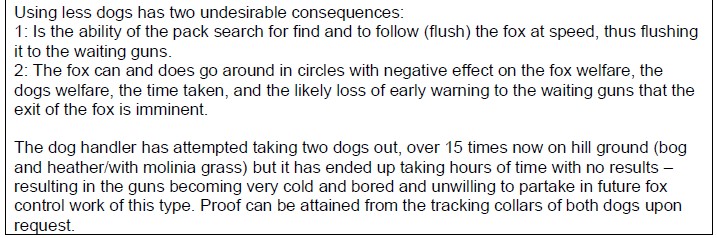
NatureScot also asks applicants to demonstrate all alternative options to achieving the licensable purpose, explaining that applicants cannot use the presence of ‘dense cover’ to justify the use of dogs. The applicant appears to rule out alternatives such as cage traps, diversionary feeding and fencing, claiming it was unsafe to increase the number of guns ‘without the use of a pack of dogs’:

The ‘high level of ground cover’ mentioned sounds rather like ‘dense cover’. The picture of a spruce plantation below gives an idea of the ‘high level of ground cover’ or ‘dense cover’ that would occur in the long-term, which also hardly looks like suitable black grouse habitat.

Dense spruce plantation

Reasons for refusal of the licence application by NatureScot

A licence can only be granted if NatureScot considers three tests have been met; (i) Licensable purpose, (ii) No alternative solutions to achieve purpose, and (iii) Contribution to long-term environmental benefit.

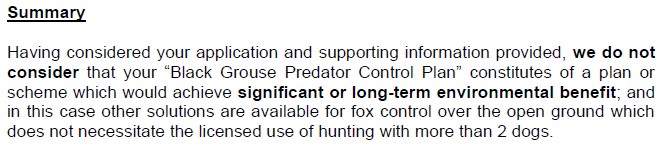
The first test was passed as NatureScot were satisfied there was a purpose in controlling foxes, potentially reducing black grouse predation. The second test was not passed as the applicants had not fully demonstrated that there were no alternative solutions to controlling the fox population without increasing dog numbers. The third test was also not passed as NatureScot were not satisfied a long-term environmental benefit would be achieved:
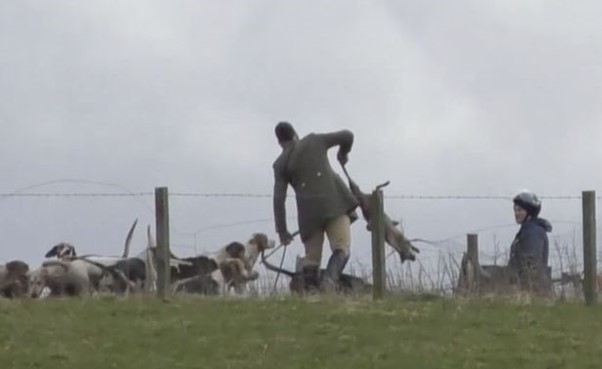
Previous footage from the League Against Cruel Sports, showing a fox being thrown to a pack of hounds. This footage is unrelated to the Stobo estate.

Criticisms by NatureScot

NatureScot said that the loss, fragmentation and deterioration of suitable habitats in the uplands from commercial forests was leading to a decline in black grouse. NatureScot stated the proposed mitigation measure in the plan ‘to plant commercial plantations with edges of mixed broadleaves will still unlikely sufficiently limit the impacts of the planting of the large conifer plantations on the open moorland that black grouse prefer’.

NatureScot quoted the applicants (who had given reasons for declines in black grouse to justify predator control), stating ‘Black grouse like the ground cover in young plantations, but as these develop into solid conifer thickets they tend to leave’. The loss of suitable habitat for black grouse and absence of ‘a wider-scale and longer-term environmental plan for addressing black grouse conservation’ under the proposed scheme was mentioned. NatureScot explained that the applicant ‘had not provided sufficient detail or explanation to demonstrate how the activity will be monitored and therefore how it will achieve long-term or significant environmental benefit’.

NatureScot also questioned why it was not possible to use two dogs to flush foxes to waiting guns.

The scale of the commercial plantations at Stobo

For the Stobo plantation, of the planted area, 72% is Sitka spruce, with a further 10% of commercial Scots pine and Douglas fir, so commercial coniferous forestry amounts to 82% of the planted area. The map below does not show three new plantations to the north, west, south or a proposed plantation to the east, creating a giant spruce plantation across what was previously contiguous moorland. Nearly ten square kilometres could be cumulatively planted, affecting fourteen square kilometres:

Supposed final planting plan for Stobo. Blue indicates Sitka spruce, green Douglas fir and orange Scots pine. Native broadleaves are indicated by brown while light grey indicates open areas.

Why did the application fail to declare if the dog handler didn’t have wildlife crime convictions?

Although the completed licence application stated ‘no’ in response to a question asking if the applicant or anyone working under the licence being applied for had been ‘convicted of a wildlife crime or disqualified from keeping dogs’, when the same question was put for the dog handler (whose details were redacted), this was unanswered. Perhaps this was missed out by accident or the applicant was uncertain about the background of the dog handler?

‘Greenwashing’ to try and create a loophole in foxhunting legislation?

After reading this licence application, one cannot help thinking that the applicants were trying to take advantage of current black grouse presence to have fox hunting with nineteen foxhounds for sporting purposes. At the time of writing, no licences for hunting with more than two dogs for ‘environmental benefit’ have been granted anywhere – only for preventing serious damage to livestock, woodland or crops (see here).

A FoI response from July 2024 showed that of eight licence applications for the ‘environmental benefit’ option, seven were refused and one was frozen, pending further information, suggesting that NatureScot are restricting applicants from exploiting possible loopholes in the new legislation.

Are Scottish Forestry ignoring ecological impacts of new woodlands becoming sporting estates?

It is understood many organisations involved with conservation of golden eagles, black grouse and other projects in the Southern Uplands may be reluctant to publicly object to, or criticise forestry proposals because this could jeopardise future funding from the Scottish Government and Scottish Forestry.

It appears Scottish Forestry are exploiting those lack of objections, to help avoid EIAs. Scottish Forestry have also been publicly funding new woodland creation schemes that subsequently become overrun with released pheasants, red-legged partridges and even mallard ducks for recreational shooting, with significant negative ecological impacts (see here), even in Scotland’s so-called National Parks as explained on Parkswatch (see here).

These game bird releases have multiple detrimental impacts, such as on native woodland vegetation and remaining open areas of grassland. This occurs through factors such as eutrophication of soil, losing herb rich vegetation and birds eating invertebrates and even reptiles.

Scottish Forestry do not appear to account for the significant negative future environmental impacts of intensive recreational game shooting in their assessment of woodland grant scheme applications. It would be interesting if the Stobo scheme was being considered for future game shooting by the landowners and managers, in addition to its now foiled plans for foxhunting.

Scottish Forestry have said that they will ‘now screen the project again’, to see if an EIA is required, taking into account ‘all other new relevant information’ (see here).

Will Scottish Forestry again be selective in choosing information and sources, continuing to incorrectly maintain ‘this project is not likely to cause a significant negative effect to black grouse’?

Will Scottish Forestry continue to align its claims with those of True North Real Asset Partners Ltd, whose CEO Harry Humble asserted in the Scotsman (see here) that ‘the scheme has been designed specifically to favour black grouse, with an enhanced mix of species and open space provision in line with best practice derived from decades of research’.

Will Scottish Forestry continue to disregard warnings by reputable ecologists and the RSPB that the black grouse lek at Stobo will disappear, with NatureScot confirming black grouse ‘tend to leave’ (plantations of the kind at Stobo), as corroborated by peer-reviewed research?

ENDS

Raven found shot dead next to grouse moor in notorious Peak District raptor persecution hotspot

South Yorkshire Police have issued the following press release (dated 9 December 2024):

WITNESS APPEAL AFTER BIRD SHOT IN PEAK DISTRICT

We are appealing for information after a protected bird was reportedly shot in Bradfield, near Sheffield.

On 25 August, a dead raven was found in a field near Agden Side Road, Bradfield, in the Peak District.

The incident was reported to the RSPB who collected the bird. An x-ray of the bird showed that it had been shot.

It is believed the bird was shot between 24 August and 25 August.

Since the incident, officers have been following several lines of enquiry and we are now appealing for anybody who may have any information about the incident to contact us.

You can report information to us online via live chat or by calling 101, quoting incident number 662 of 9 September 2024.

You can access our online portal here: www.southyorkshire.police.uk/ro/report/ocr/af/how-to-report-a-crime/. Alternatively, you can provide information anonymously via independent charity Crimestoppers by calling 0800 555 111 or online at www.crimestoppers-uk.org.

ENDS

The Agden Side Road lies just beyond the boundary of two grouse moors (Strines and Broomhead) in the Peak District National Park.

This part of the Peak District National Park, dominated by land managed for driven grouse shooting, has a long and sordid history of raptor persecution incidents (e.g. see here, here, here, here, here etc).

Prosecutions are rare, largely due to the difficulty of identifying a named individual to link to a crime that has taken place in a relatively remote landscape with few witnesses.

This is certainly not helped by South Yorkshire Police, who rarely cover themselves in glory with timely investigations, although to be fair unless the shooting of this raven was witnessed and recorded, the police have little to go on.

Yes, the usual suspects will be in the frame but for a prosecution the police need evidence – they can’t just prosecute on the basis of recurrent past criminal behaviour in the area. Although waiting three and a half months to issue an appeal for witnesses, as they’ve done in this case, won’t help.

This scenario happens over and over again in areas managed for driven grouse shooting, even inside our National Parks, and has been happening for decades. Raptors are routinely shot, trapped and poisoned and the criminals get away with their crimes time after time after time.

This is one (of several) reasons why Wild Justice is currently running a petition calling for a ban on driven grouse shooting. The petition currently stands at 30,000 signatures but it needs 100,000 to trigger a parliamentary debate. If you’d like to sign it, please click HERE.

UPDATE 9 June 2025: Another Raven found shot dead next to grouse moor in notorious persecution hotspot in Peak District National Park (here)

Investment firm applies for judicial review against decision to halt commercial forestry plantation at Stobo Hope, Scottish Borders

The saga at Stobo Hope in the Scottish Borders continues…

In July this year many of you supported a crowdfunder set up by the Stobo Residents Action Group who were taking a judicial review against the Scottish Government agency Scottish Forestry’s decision to approve a commercial woodland project, including a large sitka spruce plantation, on valuable moorland habitat in the Scottish Borders, a site important for many species but particularly for black grouse and golden eagles. The main premise of the legal challenge was that Scottish Forestry approved the work application after wrongly determining that an Environmental Impact Assessment was not required (see here).

That legal challenge was successful and in September, the £2 million tax payer forestry grant, and all related groundwork, was cancelled until a new decision is made (see here).

Widespread application of herbicide on site. Photo via Stobo Residents Action Group

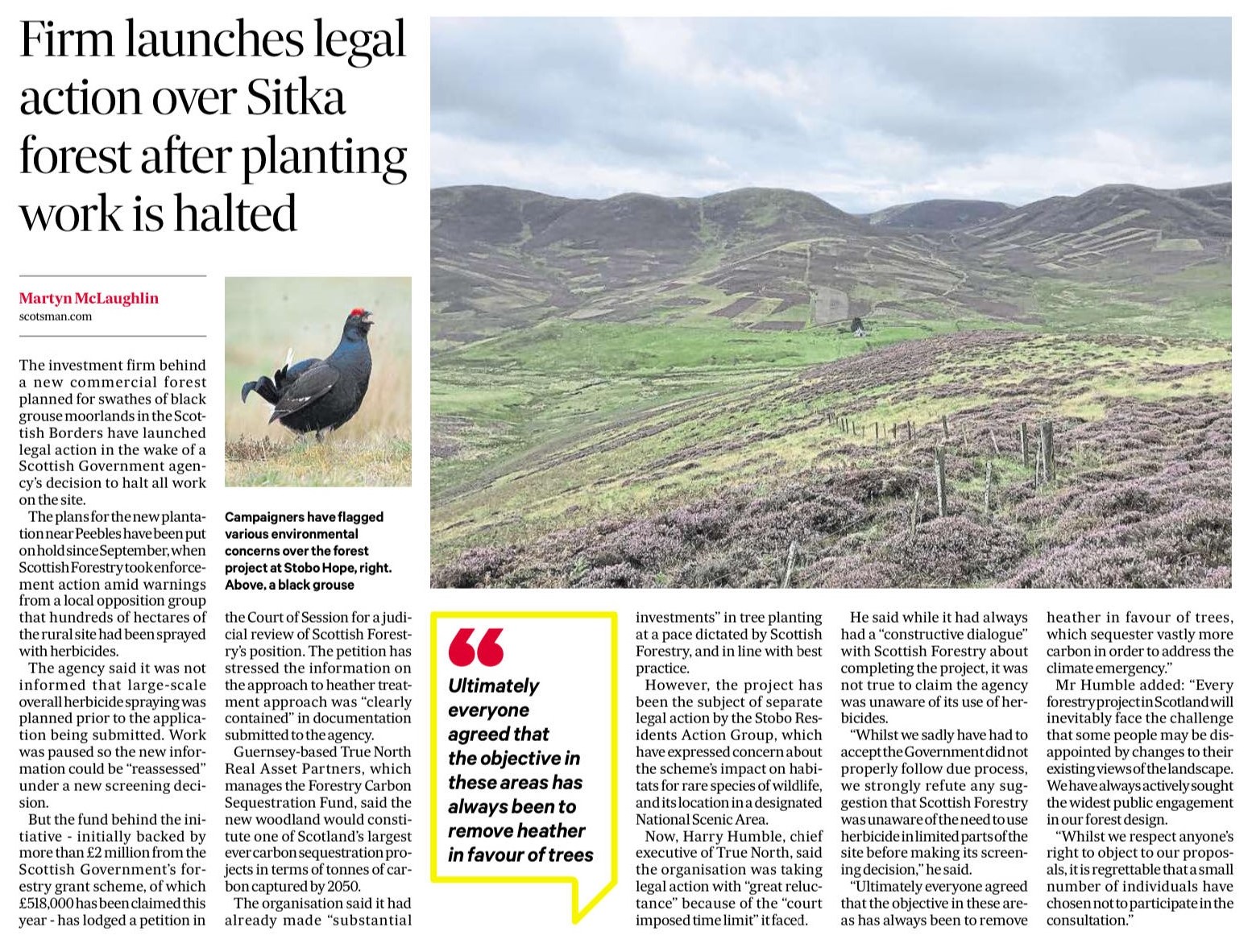
Today, in an exclusive article published in The Scotsman, it was revealed that the investment company behind the development of Stobo Hope, Guernsey-based True North Real Asset Partners, has lodged an application for judicial review against Scottish Forestry’s decision to halt the work.

Scottish Forestry had previously claimed that it was unaware of the company’s intention to undertake large-scale herbicide spraying prior to the original planning application. Now True North Real Asset Partners say the information was “clearly contained” in documents submitted to the agency.

It’ll now be up to the Court of Session in Edinburgh to determine whether True North Asset Partners has a legitimate claim for judicial review and if permission is granted, we can expect a full court hearing later in 2025, unless Scottish Forestry decides to settle.

This application for judicial review isn’t the only news from the Stobo Hope project. I’ll soon be publishing a guest blog on a licence application earlier this year for fox hunting across the site, apparently for ‘environmental benefit’.

UPDATE 13 December 2024: Stobo Hope – NatureScot refuses licence application by Pryor & Rickett Silviculture to hunt foxes with 19 dogs (guest blog) here

Inadequate response by Scottish Minister Jim Fairlie to parliamentary question on use & abuse of rodenticides

Last month conservation campaign group Wild Justice published a detailed report on the impact of the mis-use and abuse of second generation rodenticides (SGARs) on red kites and buzzards in England and the failure of the Government’s Rodenticide Stewardship Scheme, which had been set up in 2016 to reduce the amount of rodenticides in wildlife (see here for press release and a copy of the Wild Justice report, ‘Collateral Damage‘).

Brodifacoum bait station illegally set on the edge of a grouse moor in the Yorkshire Dales National Park. Photo by Ruth Tingay
Brodifacoum. Photo by Ruth Tingay

On the back of the publication of Wild Justice’s report, Scottish Greens MSP Ariane Burgess lodged the following parliamentary question on 19th November 2024:

Question reference S6W-31459

To ask the Scottish Government, in light of the latest report, Collateral Damage, by the UK campaign group, Wild Justice, which states that the Rodenticide Stewardship Scheme in England “is a failed scheme”, and other reports that have indicated increased exposure to anticoagulant rodenticides in common buzzards in Scotland, whether it has assessed the effectiveness of the rodenticide scheme in Scotland.

The question was answered by Agricultural Minister Jim Fairlie on 3rd December 2024:

The Scottish Government continues to contribute to UK-wide monitoring of rodenticide use and exposure in wildlife. There is evidence that many users of rodenticides are complying with the Campaign for Responsible Rodenticide Use’s (CRRU) Rodenticide Stewardship Scheme (RSS), and that in Scotland rodenticide use in agriculture has substantially declined since the introduction of the scheme. But, despite this, recent environmental data for Scotland indicate that it has not yet achieved the aim of significantly reducing wildlife exposure.

Both the UK Government Oversight Group, which includes Scottish Government representation, and CRRU have acknowledged that rodenticide residues in UK wildlife have not declined as hoped. The RSS is being updated firstly to ban the use of second generation anticoagulant rodenticides (SGARs) bromadiolone and difenacoum for open area use from the end of this year. This means no SGARs will be available for open area use; this is also intended to reduce accidental or deliberate misuse of other products in open areas. Secondly, training requirements for the farming sector are also being brought in line with other sectors from end 2025 to ensure a consistent level of professional training across all sectors and reduce the risk of poor practice.

Whilst it’s true that legal authorisation is being rescinded for the use of the SGARs Bromadiolone and Difenacoum in open areas (see press release on this from June 2023, here), it is very clear from the Wild Justice report that the total increase of SGAR exposure in red kites and buzzards in England is being driven by a dramatic increase in the use/mis-use of Brodifacoum, not by Bromadiolone or Difenacoum.

Fig 3 from Wild Justice’s Collateral Damage report (p8) showing the percentage of buzzards and red kites analysed by the WIIS that contained different concentrations of Brodifacoum, Bromadiolone and Difenacoum.

Brodifacoum is the dominant SGAR being found in birds of prey and is more toxic than Bromadiolone and Difenacoum. It used to be restricted to internal use only, until the Government decided to relax that regulation and permit its use ‘in and around buildings’ – a regulation that is obviously being breached routinely given the high levels of exposure in birds of prey (e.g. here).

From January 2025, Bromadiolone and Difenacoum will also be permitted for use ‘in and around buildings’, but there are no proposed tighter rules on the use of Brodifacoum.

Minister Fairlie suggests that a restriction against any use in open areas of any SGAR is intended to reduce accidental or deliberate mis-use of other products in open areas and that new training requirements for all users (not just professional pest controllers) will ‘reduce the risk of poor practice’.

I suppose he’s thinking that this standardisation will remove any supposed ‘confusion’ between the use of different products. However, given that Brodifacoum is already supposedly restricted to use only ‘in and around buildings’, yet has been used with increasing frequency by gamekeepers for targeting birds of prey, Wild Justice argues that the new legal restrictions are unlikely to improve things significantly.

The Wild Justice report suggests that a better option is to return Brodifacoum to its pre-April 2016 approval status, so that it can be used in strict ‘internal areas’ within buildings, and to limit its use to professional pest control companies.

For those who might have missed it, Wild Justice’s Collateral Damage report can be read/downloaded here:

Grouse shooting industry under pressure in Scotland

The Financial Times ran a story yesterday discussing how the grouse shooting industry in Scotland is under pressure and feels ‘encircled’.

It features quotes from the gamekeeper and estate manager on Lochan Estate in Strathbraan – which is currently serving a three-year General Licence restriction after the discovery of a dead hen harrier found in an illegally-set trap (see here). The gamekeeper, Colin McGregor, blames wind farms for the high number of satellite-tagged golden eagles that routinely ‘disappear’ in suspicious circumstances or are found poisoned, trapped & shot on grouse moors.

There are also quotes from Ross McEwing of Scottish Land & Estates, who argues that the recent rise in offences against birds of prey relates to the illegal laundering of peregrines rather than moorland management.

Really, Ross? That’s disingenuous posturing if ever I saw it. The peregrine laundering offences took place in spring 2021. Since then, there has been the shooting of a golden eagle (here), the suspicious disappearance of a satellite-tagged hen harrier (here), the shooting of a buzzard (here),the poisoning of a red kite (here), the shooting of a peregrine (here), the shooting of an osprey (here), the suspicious disappearance of a satellite-tagged golden eagle (here), the discovery of a mutilated golden eagle in a carrier bag (here), the suspicious disappearance of another satellite-tagged hen harrier (here), a pole-trapped peregrine (here), the discovery of poisoned baits (here), the shooting of a sparrowhawk (here), the shooting of a red kite (here), the poisoning of another red kite (here), a shotgun attack on a goshawk nest (here), the shooting of another red kite (here), the shooting of ravens and the stamping on one of them (here)…there are probably more incidents, these are just off the top of my head. A considerable number of these offences were linked to grouse moor management.

As I told the Financial Times journalist, “Pretending the extent of these crimes is negligible is the mark of an industry desperately trying to ‘greenwash’ its shameful reputation“.

The article, written by Simeon Kerr, is reproduced below:

Scotland’s ‘sport of kings’ hit by extreme weather and land reform

Plumes of smoke roll along the brown patchwork of upland moors on Lochan Estate as its gamekeepers burn heather to regenerate leaves for the red grouse. The hut, where guests break from shooting for lunch, stands eerily empty.

Clients, who come from as far as the US and pay £216 per brace, or pair of birds, bagged a record 5,400 grouse over 22 days at the estate in Perthshire, central Scotland in 2017. This year, a late cold snap and fewer insects cut the population, meaning no shooting.

“We could tell in the summer that there weren’t enough brooding pairs; you could see grouse that had lost their young,” said Colin McGregor, who has worked as the estate’s gamekeeper for 37 years. “This business is up and down.”

With just four days left of the season, the same story has echoed around nearby estates and beyond as low stock combines with growing calls for land reform and resistance to shooting to put pressure on the traditional “sport of kings”.

Since the “glorious 12th” that kicked off the season as usual in August, Scottish estates had held about 30 days of driven grouse shooting, said Ross Ewing, moorland director at business group Scottish Land & Estates — a “pitiful” amount compared with the 2,000-3,000 during a good year across the 100-plus estates that host driven shoots.

Extreme, unpredictable weather associated with climate change was creating challenges across the rural landscape, including hitting the breeding success of ground-nesting birds, he said.

Stretching across 10,000 acres of high ground, Lochan’s sporting interests are underpinned by other revenue streams including a wind farm and agriculture.

But McGregor said the lack of business was putting the livelihoods of three families at risk, affecting dozens of casual staff employed as loaders, pickers-up and caterers, and dampening demand for local hotels.

The shooting industry says its activity sustains rural life, but mounting opposition to blood sport and demands to reform national land ownership have left it feeling encircled.

Research published by the British Association of Shooting and Conservation in July showed shooting in Scotland added 14,100 jobs and £760mn to the economy, which is estimated at £218bn including oil and gas.

But Revive, which campaigns for grouse moor reform, cited a Scottish Land & Estates report that found country sports provided little more than 1,000 direct jobs, despite estates taking up 57 per cent of rural Scotland.

“A transition away from grouse shooting is urgently needed — the sooner the better for our people, wildlife and environment, said Max Wiszniewski, Revive campaign director. He called for community-led ownership driven by nature-based industries such as peatland restoration, wildlife tourism and forestry.

The polarised debate around land use in Scotland, where fewer than 500 people own half of private land, is no more vigorous than around the vast tracts of grouse moorland.

Bordering Lochan Estate are large plots owned by Guy Hands, the private equity investor who is developing sustainable forestry, and Oxford university’s endowment fund, where the moorland is left to grow wild.

The arrival of “natural capital” investors pursuing rewilding projects for philanthropy or forestry and peatland restoration to sell carbon credits has lifted land valuations, making grouse shooting increasingly uneconomic.

As McGregor oversaw the burning of heather, known as muirburn, a golden eagle circled high above the ashen moor. The fate of raptors is another subject dividing Scots, with many pushing for tighter regulation to protect birds of prey from illegal killing.

Research by the Scottish government in 2017 found that one-third of satellite-tagged golden eagles had died in suspicious circumstances around grouse moors.

McGregor said the prevalence of birds of prey countered such concerns, blaming wind farms for deaths. Pointing to historically low levels of wildlife crime, Ewing said the recent rise in raptor offences related to illegal laundering of peregrine falcons, rather than moorland management.

Criticism “suits a narrative — many are opposed to hunting and, particularly, driven game bird shooting”, he added.

But Ruth Tingay, a conservation campaigner, said reported crimes were the “tip of the iceberg”, citing continuous reports of shot, trapped and poisoned raptors as well as the rarity of wind turbine strikes.

“Pretending the extent of these crimes is negligible is the mark of an industry desperately trying to ‘greenwash’ its shameful reputation,” she said. “There are huge gaps in the distribution of breeding species like golden eagles and hen harriers in areas intensively managed for driven grouse shooting.”

In early 2022, Lochan was hit by a three-year loss of its general license to control wild birds after allegations of wildlife crime. McGregor, who denies any wrongdoing, called for a neutral ombudsman to hear appeals against sanctions relating to the growing number of regulations.

“There should also be some recognition of the good we do for curlews and lapwings — all critically endangered. Grouse moors are one of the few places they are thriving,” he said.

The Scottish National party government has been legislating for land reform and tighter regulation of estate management as it balances tradition with advocacy for nature and climate policy.

It is implementing muirburn licensing, in recognition of how burning heather cuts wildfire risk by managing the fuel load on moorland while seeking to protect peatlands crucial for carbon storage.

A separate government licensing scheme this year threatened the removal of shooting rights if raptor persecution occurred anywhere on an estate’s boundaries, but was watered down within months.

Tingay said it was a “middle ground step” that, if found not fit for purpose, would fuel demand for an outright ban.

Back on the Lochan estate, in the absence of shooting parties, the team engaged in the daily tasks of maintaining infrastructure and managing the moor.

Richard Stewart, estate manager, was philosophical about the poor season.

“You just have to suck it up and keep going in the hope you can hit a good year to reimburse the investment,” he said.

ENDS

Wild Justice’s latest petition calling for a ban on driven grouse shooting currently has 28,000 signatures. It needs 100,000 to trigger a parliamentary debate in Westminster. If you’d like to sign it, please click HERE.

Scottish Government ‘aware’ of issues with new grouse moor licences

Further to the news that Scotland’s new grouse moor licences have already been significantly weakened thanks to legal threats from the grouse shooting industry (see here, here, here and here for background), a blog reader wrote to the Scottish Government to express concern about the restriction in the area now covered by the licence.

This has changed from covering an entire grouse-shooting estate (as initially and reasonably interpreted by NatureScot) to just an unaccetably small part of an estate where red grouse are ‘shot or taken’, which effectively on a driven grouse moor could mean an area around a row of shooting butts.

Grouse moor photo by Richard Cross. Annotation by RPUK

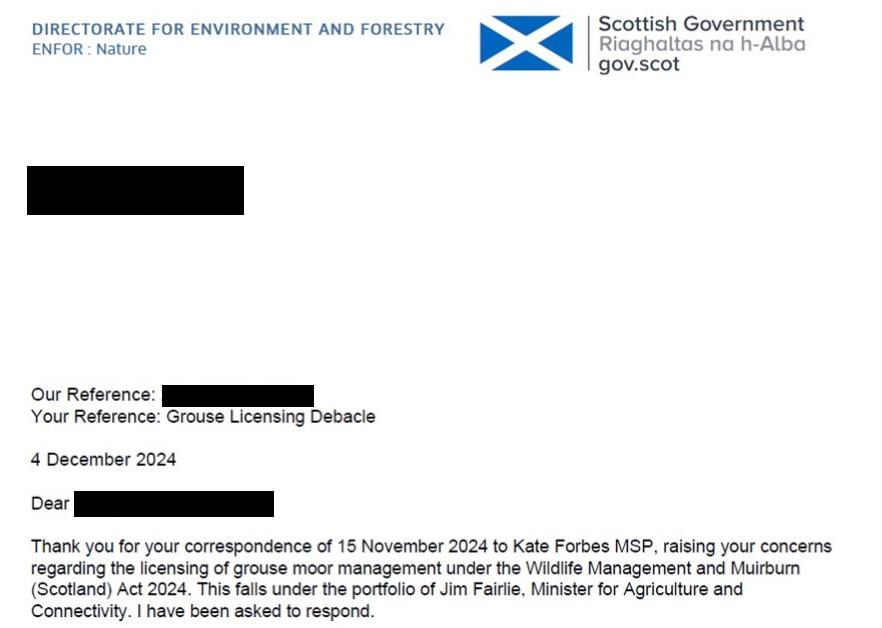
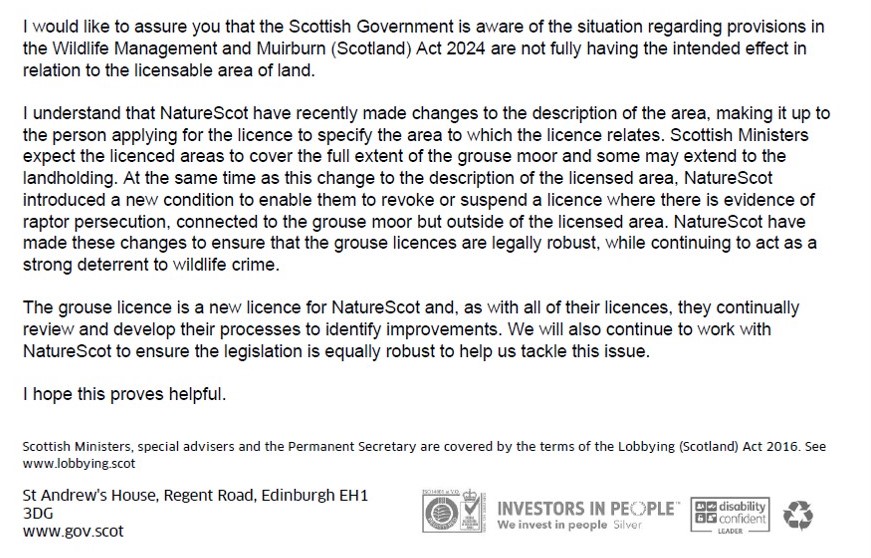
That blog reader has kindly given permission to publish the response received from the Scottish Government’s Wildlife Management Unit:

It’s good to see a formal, public response from the Scottish Government who, up until now, has kept quiet since the news broke about the shambolic new licence condition a few weeks ago.

In its response, the Government uses the same phrasing that NatureScot did in terms of having an ‘expectation’ that the new licensed area would cover the full extent of the grouse moor. As I mentioned previously when NatureScot expressed the same ‘expectation’, I don’t believe this has any legal weight whatsoever because what matters here is the wording of the legislation, not what NatureScot or the Government ‘expects’ to happen.

The Government’s response also doubles down on NatureScot’s claim that the new condition is ‘legally robust‘ and acts as ‘a strong deterrent to wildlife crime‘.

The new condition may well be legally robust (although we don’t know that for sure because NatureScot is yet to release the legal advice it received prior to making this change to the licence) but what it most certainly isn’t is ‘a strong deterrent to wildlife crime‘. It’s nothing of the sort, for all the reasons I discussed here.

What is good about this response though is that the Government understands that the licensing scheme is not having ‘the intended effect‘ of the Scottish Parliament when the legislation was passed in March. That’s a start.

There’s a lot happening behind the scenes to address the ‘vast loophole‘ that’s been left by NatureScot’s flawed attempt at plugging the chasm. I can’t say anything further at the moment but rest assured this issue is receiving close attention from a number of influential and knowledgeable people.

UPDATE 24 January 2025: NatureScot capitulated on grouse moor licensing after legal threats by game-shooting industry (here)

UPDATE 10 February 2025: Parliamentary questions lodged on grouse moor licensing shambles in Scotland (here)

UPDATE 3 November 2025: Breaking news – Scottish Government commits to closing loophole on sabotaged grouse moor licences (here)

Glen Turret Estate under new management – ecological restoration is in, grouse shooting is out

Some good news to start the week!

At the recent REVIVE conference in Perthshire I met a couple of people from a relatively new Scottish-based charity called the KITH Trust, who, along with the University of Edinburgh, had earlier this year bought the Glen Turret Estate in Strathbraan, Perthshire.

Approximate location of Glen Turret Estate in Perthshire

Regular blog readers will know that Strathbraan is dominated by a number of estates with driven grouse moors and the area has been identified in a Government-commissioned report as being a hotspot for raptor persecution. It’s also the area where NatureScot (formerly SNH) licensed a controversial raven cull in 2018 (see here) but then came under fire from its own scientific advisory committee who stated the scientific rigour of the licence was “completely inadequate“.

Glen Turret Estate has been at the centre of police investigations into alleged wildlife crime over a period of many years (no prosecutions or General Licence restrictions, natch) so the news that it is under new management and no longer operating as a driven grouse moor is very welcome indeed.

This should mean an end to the use of things like crow-cage traps, commonly deployed [legally!] on grouse moors in all seasons, where non-target species like this Long-eared owl can no longer be caught and held for over 24 hrs in appalling weather conditions (photo by RSPB).

This screengrab shows the new ownership details, from Andy Wightman’s brilliant website, Who Owns Scotland:

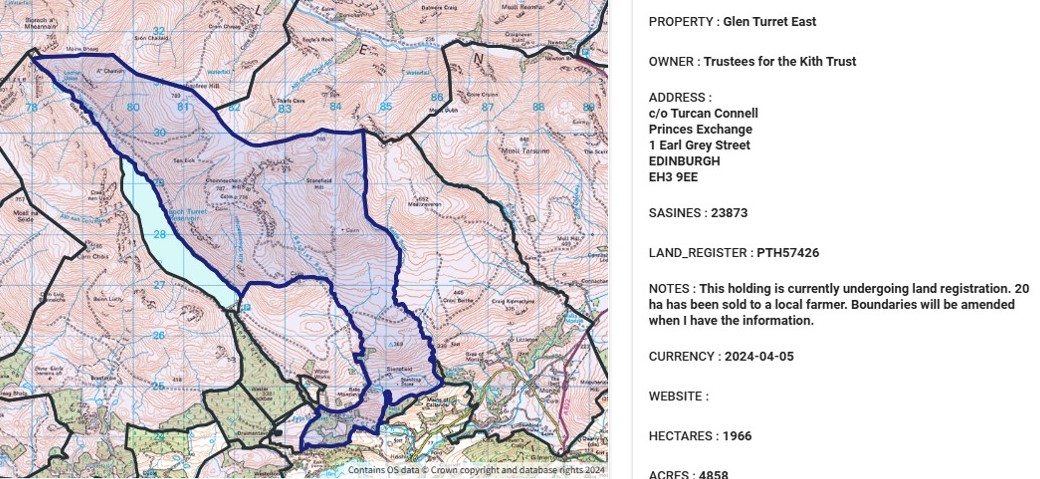
This map shows the boundary of the area under Kith Trust management, in addition to the Barvick Burn Wood, now under the management of the University of Edinburgh:

The Kith Trust has kindly provided some information about its plans, for publication on this blog:

The KITH Trust (SC049902), a small Scottish family run charity, took on stewardship of Glenturret Estate in January 2024 in partnership with the Department for Social Responsibility and Sustainability at The University of Edinburgh to facilitate their similar goals of ecological restoration.

KITH Trust is dedicated to restoring and protecting natural ecosystems and supporting biodiversity as well as supporting local community activities and enterprise.

The University intends to fence off part of the estate for a mixed tree planting scheme. They have carried out a community engagement project, archaeological surveys and ecological surveys to ensure any activities are undertaken to work with the natural environment and local communities.

KITH Trust has stewardship of the remainder, mainly hill ground. This land has historically been dedicated to the preservation of red grouse. This practice is no longer a primary aim of Glenturret Estate and it no longer operates as a driven grouse moor. There is a farming enterprise on Glenturret that has been in operation for many years. One of the aims of KITH is to reduce, over time, grazing pressure through farming practices that look after both agriculture and the environment. Another is to restore peatland areas. As a result natural regeneration is supported. Active deer management will be undertaken in collaboration with other members of the South Perthshire Deer Management Group and in conjunction with Nature Scot.

ENDS

The University of Edinburgh has a useful website outlining its plans for the restoration of Barvick Burn Wood here.

No doubt certain organisations from the grouse shooting sector will be very unhappy at the loss of another driven grouse moor and over the coming months/years will be misrepresenting the ecological restoration work, just as they have done with other rewilding efforts (e.g. here).

Some of us don’t want to wait for the buy-out of individual driven grouse moors, we’d like to see a widespread ban on driven grouse shooting sooner rather than later. If you share that view, please sign the new petition from Wild Justice calling for a ban – HERE.

Another man arrested in coordinated police investigation into illegal trading of wild birds’ eggs

It turns out that the news last week that South Yorkshire Police had executed a search warrant and arrested a 57-year-old man in connection with the illegal trading of wild birds’ eggs (here) was only one small part of a much wider operation.

It has now become apparent that there were other warrants executed at addresses across the UK on the same day (21 November 2024) and the latest report comes from an Essex Police press release (dated 28 November) as follows:

BENFLEET: MAN ARRESTED AND WILD BIRDS EGGS SEIZED

A man has been arrested and thousands of wild birds eggs seized during a warrant carried out by our Wildlife Crime specialists within our Rural Engagement Team in Benfleet.

Officers attended an address on Thursday 21 November as part of co-ordinated activity across the UK to tackle the illegal trade in wild bird eggs, with similar warrants taking place elsewhere.

Thousands of eggs were seized and a 62 year-old man was arrested on suspicion of possessing wild bird eggs illegally in contravention of Section One of the Wildlife and Countryside Act 1981.

He has since been released on bail until 25 January.

Drawers full of wild birds’ eggs seized during the raid in Essex. Photo: Essex Police

Our investigation has fallen out from an investigation into the theft and sale of bird eggs which originated in Norway in June 2023.

Since then, more than a dozen warrants have been carried out, more than 56,000 bird eggs seized, and more than a dozen arrests and charges in Norway.

ENDS

I’m aware of other warrants that were executed on the same day in other UK counties, as part of the same police operation, but unfortunately the police’s media teams are not as coordinated as their raid teams so we’ll have to wait to find out the details, when/if further news is released by individual police forces.

Nevertheless, this looks to have been a well-resourced operation and was obviously based on good intelligence, judging by the results released so far. Well done to the National Wildlife Crime Unit (NWCU) for taking the lead.