
Blog readers may recall a press release in April 2024 from North Yorkshire Police detailing the execution of a search warrant on an unnamed grouse moor in the Yorkshire Dales National Park, in relation to the illegal persecution of hen harriers (see here).

The very first line of that press release said this:
“On Wednesday, (17 April 2024), a National Harrier Task Force operation was held at an undisclosed location in the Yorkshire Dales“.
That was the first time I’d heard of the ‘National Harrier Task Force’ but I’ve since learned much more about it.
I’ll begin this blog with the reproduction of a press article about the new Taskforce that appeared on a relatively obscure website (CandoFM) in May 2024, then I’ll provide some of my own commentary on this new initiative.
Here’s the press article:
Hen Harrier Task Force Launched To Tackle Illegal Persecution
A new task force has been launched to tackle the illegal persecution of hen harriers, one of the rarest bird of prey species in the UK.
The National Wildlife Crime Unit (NWCU) will use innovative technology and strategic partnerships to detect, deter and disrupt offenders.
Given the rarity of hen harriers, significant resource is invested in their conservation. Satellite tags are fitted to the birds to research their ecology, but these tags have also revealed a concerning amount of illegal killing.
Criminals are intent on targeting this vulnerable species and operate with impunity. There have been no successful prosecutions in recent years despite the efforts of the police and partners.
In response, the launch of the Hen Harrier Task Force, led by Detective Inspector Mark Harrison of the NWCU, represents a pivotal shift in combating wildlife crime.
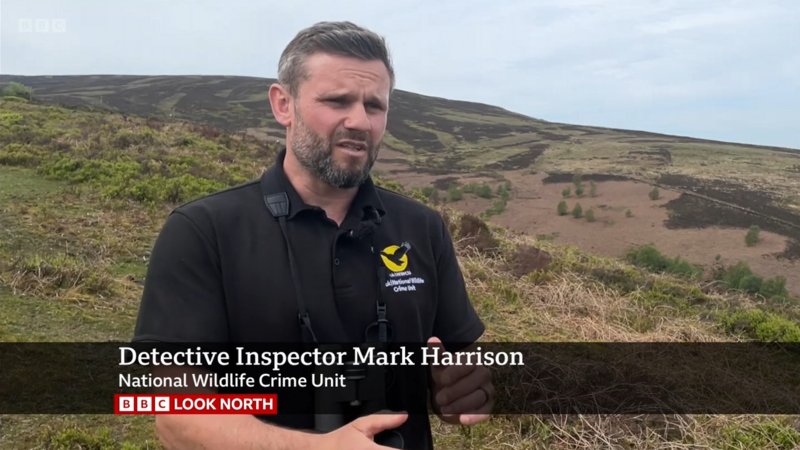
“The persecution of birds of prey is not just a wildlife issue; it’s serious crime blighting our countryside,” said DI Harrison. “With the launch of the Hen Harrier Task Force, we are determined to disrupt illegal activity and protect this vulnerable species.”
Central to the bird of prey task force’s approach is standardising reporting practices and improving the police response to incidents. Police and partners will work together to ensure resources are deployed swiftly and investigative opportunities are maximised. The task force will also bring together partners to engage with local communities and raise the profile of hen harrier persecution in a unified effort against wildlife crime.
“We cannot tackle this problem alone,” emphasised DI Harrison. “Through proactive partnerships and community engagement, we can strengthen our response and hold perpetrators to account.”
The task force will tackle crimes involving satellite tagged birds of prey. It is data-led, relying on analysis of police data and hotspot mapping. The NWCU has identified crime hot spots where they can focus enforcement efforts, as well as other areas of historic vulnerabilities where they will be seeking to revisit and raise their presence with landowners and land users. These meetings are an opportunity to highlight the issues/risks and identify ways to prevent further incidents from occurring.
Rather than purely focusing on the wildlife aspect of the crime, DI Harrison has tasked his team with taking a holistic view of the criminality and considering all types of offences. Criminals will often steal and destroy the satellite tags to conceal their offending. This could constitute criminal damage, theft and fraud. In the last few years alone, £100,000 worth of satellite tags have been lost in circumstances suspected to be criminal. The apparent use of firearms adds a further level of seriousness to these cases.
Recent examples of this include Anu, a hen harrier in South Yorkshire, which had its satellite tag deliberately cut off by someone possibly using scissors or a knife. Asta, a hen harrier in North Yorkshire, is another example. Although the dead bird was not found, its tag was recovered from a dead crow. The NWCU suspect that fitting the tag to a crow was an attempt to make it look like the hen harrier was still alive and hide the fact that it had been illegally killed. Unfortunately, the crow also died from unknown causes.
The task force’s multifaceted approach includes:
- Improved incident response: Standardised reporting processes enable rapid response to suspicious incidents, ensuring investigative opportunities are maximised.
- Innovative technology: From tracking drones to specialised detection dogs, the task force uses innovative tools to overcome logistical challenges and enhance evidence collection in remote areas.
- Strategic partnerships: The taskforce brings together law enforcement, government agencies, non-governmental organisations, landowners and communities to tackle crime in hotspot areas.
- Community awareness Initiatives: Building on successful models like Operation Owl, the task force seeks to boost public support and encourage vigilance against wildlife crime.
As the task force gains momentum, the team will be dedicated to protecting the UK’s hen harriers. Through collaboration and innovation, it is set to make a lasting impact in the fight against wildlife crime.
About the Hen Harrier Task Force
The Hen Harrier Task Force is an initiative led by the UK National Wildlife Crime Unit and supported by seven police forces (Cumbria, Derbyshire, Durham, Northumbria, North Yorkshire, South Yorkshire and West Yorkshire), DEFRA, the RSPB, National Gamekeepers’ Organisation, British Association for Shooting and Conservation (BASC), The Wildlife Trusts, GWCT, national parks, Country Land and Business Association (CLA), Natural England and The Moorland Association to combat the persecution of hen harriers in the UK. The taskforce aims to detect, deter, and disrupt offenders involved in wildlife crime by using technology and improving partnership working.
ENDS
My initial reaction to this new Taskforce was one of deep cynicism. Given some of the organisations involved, it just looks like yet another pseudo-‘partnership’ that will achieve nothing other than providing a convenient vehicle for DEFRA and its raptor-killing mates within the grouse shooting industry to be able to pretend that they have a zero tolerance approach to the illegal killing of hen harriers because they are all ‘cooperating’ on this Taskforce.
It’s a ploy that’s been utilised many times before and has simply facilitated the continued illegal killing of hen harriers (and other raptor species) without anyone being held to account. The RPPDG (Raptor Persecution Priority Delivery Group) is a prime example – established thirteen years ago in 2011 and has served no useful purpose in terms of tackling raptor persecution, but has provided numerous Government Ministers with an opportunity to appear to be dealing with it. Utter greenwashing.
Those of you with long memories will remember Operation Artemis, another police-led initiative launched twenty years ago in 2004 designed to work in ‘partnership’ with grouse moor owners to tackle the illegal killing of hen harriers. Here’s some info about it from the RSPB’s 2004 Birdcrime Report:

As described by the RSPB, Op Artemis was not well-received by the shooting industry, even resulting in an article published in The Times where the then Chief Executive of the Countryside Alliance, Simon Hart (who later became Chief Whip for the Conservatives) said the police operation was “part of a wider witch-hunt against gamekeepers“.

Operation Artemis stumbled along until 2007 when it was closed down after achieving nothing at all. Here are two more write-ups about it from the RSPB’s Birdcrime Reports in 2006 and 2007 respectively:


Given the complete failure of Operation Artemis to effectively tackle the illegal killing of hen harriers on driven grouse moors, how will this latest initiative, the National Hen Harrier Taskforce, rolled out some 20 years later, be any different?
Well, there are some positive differences.
This time around, the police have the benefit of access to hen harrier satellite-tracking data (provided by Natural England and the RSPB) which has allowed the National Wildlife Crime Unit (NWCU) to identify clear persecution hotspots, i.e. the estates where a disproportionate number of hen harriers are killed / ‘go missing’ in comparison to the rest of the species’ range.
These wildlife crime hotspots have been known for years but this time the NWCU has done its own analysis on the tag data and, even though it has drawn the same conclusions as the RSPB previously, because the hotspots have been identified by the Police it cuts off any opportunity for estate owners to claim that the data are ‘biased’ or ‘fabricated’ simply because the data belonged to the RSPB. In other words, the estate owners/managers can’t so easily dismiss the data as not being credible.
Another major difference this time around is that the police officer leading the Taskforce, Detective Inspector Mark Harrison, is taking a much more strategic approach. He’s not only looking at the offence of killing a hen harrier – he’s looking at the wider, associated offences such as theft (of very expensive satellite tags) and firearms offences. In combination, these crimes amount to a considerable and serious level of offending and can open the door to the police receiving permission to undertake covert tactics, including surveillance and communications monitoring.
To reach that stage, certain steps have be taken first as part of a longer-term strategy. These include police visits to the known hotspot estates (and I understand that there have now been several of these visits in addition to the one in the Yorkshire Dales National Park that was reported in April). If, after these visits, hen harrier persecution continues to be suspected at those hotspots, the police will then be in a position to demonstrate to senior officers that the ‘nicely nicely’ approach has been tried but hasn’t worked and so permission to begin more covert tactics is more likely to be granted.
Permission should be granted just on the basis of suspected firearms offences taking place. If the estate owners / managers / gamekeepers are denying any knowledge of the offences (which is what they’ve been doing for 30+ years) then the police can legitimately conclude that ‘someone’ [apparently unidentified] is running around an estate committing firearms offences and is clearly a threat to the public. As the fundamental role of the police is a duty to protect the public then I can’t see how permission to deploy more covert tactics can legitimately be withheld under these circumstances.
Of course none of these ideas are anything new – we’ve all been saying for years that if estate owners / managers / gamekeepers claim not to know who’s committing firearms offences on their land then there’s a serious concern that armed individuals are running amok and those estate owners / managers / gamekeepers should be fully supportive of the police doing everything they can to find them, just as any of us would if armed criminals were operating on our property.
However, the difference this time is that here we have a senior police officer, with a background specialism in covert surveillance (and thus a deep understanding of what hoops need to be jumped through to get permission for covert ops), prepared to push the envelope and take a more radical approach and actually implement this strategy instead of just talking about it, and I applaud him for that. Whether he’ll be allowed to stay in post for long enough to carry through with this strategy remains to be seen.
Another new initiative with this Hen Harrier Taskforce is a ‘mutual aid agreement’ between a number of police forces. One of the big issues in tackling wildlife crime, and particularly raptor persecution, has always been the availability of a wildlife crime officer to attend the scene promptly to secure evidence. We all know that the police are stretched, budgets are stretched, and it’s not always possible to get an officer on scene quickly – sometimes delays run into days and weeks, which is ridiculous. The mutual aid agreement means that a number of regional police forces have committed to making officers available at short notice for cross-border searches if the local officers can’t attend in time. If that works in practice, it should be good.
Once on scene, the Taskforce is also utilising a wide array of new techniques and equipment to aid any searches. These include the use of drones working within the range of satellite tag signals and the use of specialised detection dogs trained to search for bird corpses, amongst other things.
This all sounds very promising, on paper. Although to be fair, the Taskforce has already started the strategic plan by paying visits to those known persecution hotspots and has given fair warning to the estates about what they can expect if the persecution continues.
The only issue I have with that approach at the moment is that those crime hotspot estates have not been publicly named. The police say this is because they’re trying to build relationships of trust. I say they’re shielding the criminals. I have been told that the decision not to name hotspot estates is ‘not set in stone’ and may be revisited.
Let’s see.
I wish the Taskforce well and, given the current rate of ongoing hen harrier persecution on grouse moors, I’ll expect to see results in the not-too distant future.
UPDATE 17 July 2024: Is the Moorland Association already trying to sabotage the police’s new National Hen Harrier Taskforce? (here)
 Raptor Persecution UK
Yes,it all sounds good in theory,just like Operation Artemis did as you say,I really wish this Task force Well .But the Proof will be in the pudding !!
Good critique. To me, the elephant in the room not being acknowledged, was always this strangers with firearms, running around the estates of the powerful and the aristocracy, shooting protected raptors, and the indifference of the estates to this situation. Like when some stranger with a firearm, shot 2 Hen Harriers, when Prince Harry and his mate were strolling around the Sandringham Estate, and the police seemed indifferent to the threat. The only possible explanation of this indifference, was that these estates, and the police, never actually believed that this illegal raptor killing, was being perpetrated by unknown strangers with firearms, but rather people with firearms, known to these estates.
[Ed: Comment deleted as off topic, libellous and abusive. And please stop sending me similar via email]
Sadly if there are results, it will mean more raptors have died. Based on current statistics, it is likely that more raptors will be killed. I am pretty sure the NWCU know this already, and the visits will be part of the intelligence gathering process. Police officers frequently know when they are being lied to from the reactions they get at each estate, as well as getting to know the local players, sorry estate staff. This will allow the police to target their resources at specific suspected criminals. Hopefully that will result a in a couple of high profile convictions with strong penalties for accused.
If the current approach does not yield convictions due to the level of proof required, bearing in mind there is a general election shortly, hopefully either through a government or private member’s bill, increase penalties for wildlife crime, a licencing scheme and serious financial penalties can be introduced to target the estates that harbour these criminals.
Being a natural cynic, I wonder what the NGO and BASC will bring to the table, and what they will report back to their supporters, objectively or otherwise.
Perhaps in time one estate may be named, with an effect on the others.
I suspect, going on recent experience, BASC and the NGO will be preparing letters of complaint about DI Harrison, if they haven’t already written and sent them.
Midgies have done more practical work (just by being midgies) than the NGO, BASC & GWCT combined in inhibiting or disrupting raptor persecution – merely by annoying the keepers who are at it early & late.
one of the best comments I have read, thank you Spaghnum!
Cheers Bowland Bruce, the fact is those organisations “know their place” especially in relation to the principal “unnamed estate” and it’s powerful friends. There is no substitute for the enforcement of the rule of law in this battle to stop Harriers being persecuted. The quangos, the brood-meddling, the quiet little words from local police and all the rest is just wishful thinking / delaying for time / appeasement and really just pure fluff!
Thanks, yet again, to Ruth for all this work!
In the press article, it says “The apparent use of firearms adds a further level of seriousness to these cases.”
Yes it does. So, why aren’t wildlife crimes involving firearms apparently required to be officially logged by the Police in England and Wales?
Firearm Crime Statistics: England and Wales does not list crimes against wildlife:
https://commonslibrary.parliament.uk/research-briefings/cbp-7654/
The Office of National Statistics explains why:https://www.ons.gov.uk/peoplepopulationandcommunity/crimeandjustice/datasets/offencesinvolvingtheuseofweaponsdatatables
“Police recorded crime statistics based on data from 43 forces in England and Wales:
An offence is reported to have involved a firearm if the firearm has been fired, used as a blunt instrument against a person or used as a threat”If the Police were serious (or about to become more serious) about the use of firearms in wildlife crime, why not begin by logging such offences? Parliament would be better informed and any new ‘hotspots’ of firearm crime would attract both additional resources and local political attention.
The dead bodies of raptors riddled with shotgun pellets constitutes firearms offences.
Why is it left to the RSPB alone to collate this evidence? Where it is ignored by officialdom.
Would it upset the status quo in certain rural areas to have an official spotlight turned onto this type of firearm offence?
I welcome this change of tactic.
The hot spots of raptor persecution are well known, the number of people with the motive to kill birds of prey, local knowledge and access to firearms and poisons is very small. I don’t buy this idea that a person or persons unknown have entered an estate to kill birds of prey.
The police should be able to deploy all forms of covert surveillance.
The day we will have made progress is when a gamekeeper gives evidence against a colleague in the interests of maintaining the highest standards of probity and professionalism.
Don’t hold your breath!
I wish D.I. Mark Harrison and his team well.
For me it’s similar to allowing suspects to be a part of the discussions of new methods focused on nominally attempting to catch them.
If my comments are libellous, why do you not take me to court instead of deleting them? I want the truth, and I put my money where my mouth is. I don’t delete comments, but you do. That is because you would lose the argument. I challenge you to show my comments, and let your supporters see the truth of it. Set your lawyers, Leigh Day on me, and let’s see where we get to.
Rick Smith, 27 years self-employed conservationist.
infof1c0d4eb3f3 (Rick),
Your previous comment was deleted because it was off-topic, libellous of a number of my friends and colleagues, and abusive.
As far as I can tell, it was your first comment here, but out of the blue you’d sent a similar (although considerably longer) email to me a few days ago, to which I didn’t respond so I guess you thought you’d try your luck on here.
You’ve demonstrated a concerningly high level of hatred and anger towards my colleagues, both in that email and in the earlier comment you tried to post on here. I don’t know what’s suddenly triggered your malevolence and I’m really not interested in finding out.
If you think I’m going to provide you with a platform to amplify your personal attacks you are sadly mistaken.
Morning Ruth,
Thanks for this. It’s extremely helpful to me, though less so to you.
I’ll be in touch.
Rick.
Rick,
I thought I’d been clear but I’ll spell it out for you.
I am not interested in your malevolent posturing, threats or indeed any communication from you. I’m blocking you from this site. If you send any further emails to me, whether to my personal email address or to Wild Justice’s email address, I WILL report you to Dorset Police for harassment.
I would prefer it if they called it the “driven grouse shooting task force”, as it’s not just hen harriers that are severely impacted by crime linked to dgs, but that might still be a bit too provocative. Give it time though.
Here’s hoping DI Harrison lasts longer in his job than incumbents of previous similar work, and that some serious results come out of this task force. I’ll cross my fingers!
Why are GWCT BASC and NGO even mentioned FFS like you all say . See what happens I don’t have much faith this country is ran by corruption and people not in touch with normal people. On a lighter note the shooting hut on our moor has been painted with ban driven grouse shooting massive letters someone has attempted to clean it off XXXXX XXXXX XXXXX XXXXX XXXXX XXXXX XXXXX XXXXX
It all looked very promising until I saw the names of some of the participants in the Task Force. You know who I mean……
Would it be fair to suggest, that if the police have been compelled to set up a dedicated task force to look at the issue of Hen Harrier persecution on grouse moors, then could this be an indication that the policy of Hen Harrier Brood management isn’t working as we we were told it would to tackle this issue?
However, perhaps one positive from the Hen Harrier brood management program has been the fitting of satellite tags to released Hen Harriers, which has then allowed accurate data to be be collected, which is showing when and where these birds are disappearing. As it is now transpiring that these hotspot areas are often in close proximity to grouse moors, this should hopefully provide the much needed evidence for the new UK government to at least take another look at how the nation tackles raptor persecution, which I believe is still a national wildlife priority.
I hope this new police task force is successful in identifying and prosecuting the criminals responsible for Hen Harrier (and wider raptor persecution), but the fact that they are operating in areas where their presence will most likely soon be noticed and the criminals alerted, I suspect they will have a very difficult task indeed.
As has been identified in Scotland success is more likely to come through the route of legislation and licensing of shooting estates. I really hope the new Labour government take the issue of raptor persecution far more seriously than their predecessors and at least consider the implementation of legislation to licence and regulate all aspects of game bird shooting, so that there are meaningful measures available to rid the game shooting industry of the rogue estates and criminals who are causing so much damage to the nations wildlife, without the need for criminal convictions which are proving so difficult to secure.
If this initiative has any true support within the Police hierarchy, then I would suggest that DI Harrison tries to obtain permission for the following:
1.Many noted hotspots be considered on basis of previous cases & ongoing intelligence as having high chance of ongoing crime.
2.Officers on the taskforce be permitted to set up unmanned hidden covert cameras at their discretion in the above, and certainly without telling anybody else.
3.Cameras to be high quality and cover a wide area of open moor at distance (think what can be done with the basic everyday birder set-up of spotting scope & digiscoped mobile phone?). Police and/ or Military equipment will surely be better still. Cameras to record video operate on a timer, especially early and late.
4 The above to be continued indefinitely in any given area at discretion of the Taskforce until (a) people are caught, (b) by honest independent measurement the persecution stops occurring in that area.
Will it ever happen? – I doubt it. The Landowners will raise hell, bleeting about invasion of privacy in the corridors of power, and we would probably here the old chestnut of “you wouldn’t like it if the Police put a camera in your back garden” type of bullsh*t.
“Will it ever happen? – I doubt it. “
There are several laws which cover the legality of covert surveillance in the UK.
See https://ableinvestigations.com/what-laws-are-there-on-surveillance-in-the-uk/#:~:text=The%20Regulation%20of%20Investigatory%20Powers%20Act%202000%20(RIPA)%20is%20one,communications%20data%20by%20public%20bodies.
To me the laws are left deliberately vague. Looking back at the history of keepers caught 100% red-handed on camera – there is no consistency that I can fathom re admissibility of the video in court or not. Cases and expert commentary from those at the frontline abound. I’ve read a lot of them, and I don’t think the current situation exists to serve justice, just the opposite in fact.
But just so I’m not misunderstood, I’m not talking about pointing cameras at people’s houses or following people. Rather, pointing cameras at areas of remote hillsides where ongoing intelligence or recent history suggests raptors are at high risk. Whether it needs some change to the law or not, it is necessary and it ought to be possible for a truly determined police force to either jump through the legal hoops to make it happen, or openly back the need for urgent changes to the law.
“I’m not talking about pointing cameras at people’s houses or following people. Rather, pointing cameras at areas of remote hillsides where ongoing intelligence or recent history suggests raptors are at high risk. Whether it needs some change to the law or not…”
Personally, I think it is both possible and necessary, but I believe the current law would require some form of formal permission from the Home Secretary/Judge or whatever in each case…
And my guess is that, currently, the crime would not be considered sufficiently serious to warrant such permission (I would be delighted to be wrong about that).
My reason for thinking that is based on the dismal fact that wildlife crime involving firearms is, currently, not considered serious enough to be even officially recorded in national firearm offence statistics…
Firearm offence statistics are taken very seriously: they get politicians, journalists, and voters worked-up. The shooting industry have clearly persuaded the powers-that-be that it is ‘best’ to ‘ignore’ such offences involving wildlife… and we all suspect we know why.