Wild Justice on BBC Radio 4’s Farming Today programme discussing DEFRA’s unlawful gamebird release licences

I was on BBC Radio 4’s Farming Today programme this morning, discussing Wild Justice’s successful legal challenge against DEFRA’s unlawful gamebird release licences.

DEFRA conceded that Ministers Therese Coffey and Richard Benyon had unlawfully authorised gamebird release licences for the Deben Estuary and Breckland Special Protection Areas but refutes Wild Justice’s claim that those decisions were tainted by the appearance of bias.

The thing is, it wasn’t just Wild Justice that had those suspicions of bias – the Ministers’ own civil servants had warned of the perception of bias and had urged the Ministers to take additional advice from organisations such as the RSPB and the British Trust for Ornithology (BTO) instead of just relying on the advice of the pro-game-shooting Game & Wildlife Conservation Trust (GWCT).

The Ministers chose to ignore that advice.

You can listen to the interview here (starts at 08.29 mins), available on BBC Sounds for 29 days.

Wild Justice will be releasing some of the documents released in this case over the coming weeks. Keep an eye on the Wild Justice blog or better still, sign up to their free newsletter (here) delivered straight to your inbox.

DEFRA Ministers Coffey & Benyon’s backroom dealing with GWCT on gamebird licensing was unlawful – Wild Justice wins latest legal challenge

Conservation campaign group Wild Justice is celebrating another successful legal challenge this morning, this time over the backroom dealings of former Environment Secretary Dr Thérèse Coffey and her minister Lord Richard Benyon with pro-shooting organisation Game & Wildlife Conservation Trust (GWCT), resulting in the unlawful release of gamebirds on sites of high conservation value in eastern England last year.

Young captive-bred gamebirds about to be released into the wild to be shot at. Photo by Ruth Tingay

Press release from Wild Justice’s legal team at Leigh Day (16th April 2024):

Government concedes that former Environment Secretary unlawfully granted gamebird release licences for protected areas against Natural England advice 

The Government has conceded a claim by environmental group Wild Justice alleging the unlawful grant of licences for the release of gamebirds in and around two protected habitats. 

Documents disclosed to Wild Justice showed that the licences had been granted against the advice of Natural England and the Department for Environment, Food and Rural Affairs’ expert panel. 

Between July and October 2023, the former Secretary of State for Environment, Food and Rural Affairs, Thérèse Coffey, along with Lord Richard Benyon, who at the time was Minister of State for Biosecurity, Marine and Rural Affairs, unlawfully granted 28 gamebird release licences in and around the Breckland and Deben Estuary Special Protection Areas (SPAs).

They allowed the release of gamebirds such as pheasant and red-legged partridge into areas specially selected to protect rare or threatened species of wild birds. 

Wild Justice applied for a judicial review of the decision to grant the licences, arguing:

  • The decisions were taken in breach of the Habitats Regulations in that there were no cogent reasons given to depart from the judgement of Natural England, the Government’s statutory adviser on nature conservation under the regulations, that licences should not be granted.
  • Regulation 63 of the Habitats Regulations was not complied with, which requires an “appropriate assessment” by a competent authority to be carried out. 
  • The decisions appeared to be tainted by bias.

This week the Department for Environment, Food and Rural Affairs (DEFRA) conceded it had acted unlawfully in failing to provide cogent reasons for departing from Natural England’s advice and failing to undertake an appropriate assessment that complied with the Habitats Regulations.

Its disclosures to Wild Justice and the court revealed that advice was given by civil servants to Dr Coffey and Lord Benyon which said that the grant of the licences might be unlawful. 

Natural England’s advice was that, in order to prevent any adverse impacts on rare wild birds as a result of the spread of bird flu from the release of the gamebirds, licences for one of the SPAs should not be issued at all and that licences could only be issued for the other SPA under strict conditions. However, licences were granted for releases in and around both SPAs without complying with Natural England’s advice.

Instead, the Secretary of State and Lord Benyon took advice from the Game and Wildlife Conservation Trust (GWCT), which has strong links with the shooting industry and promotes game management as a key part of nature conservation. Lord Benyon had also previously been a GWCT trustee until 2021.

In light of this, the Secretary of State was advised by her civil servants to request information from other groups such as the Royal Society for the Protection of Birds (RSPB) and the British Trust for Ornithology (BTO) in order to avoid the perception of bias. This advice from DEFRA was not followed. 

A number of the licencing applicants were also personally known to Lord Benyon and civil servants advised that an alternative minister should make the licensing decisions in those cases. That also did not happen. 

A spokesperson from Wild Justice said:

Defra had ‘No cogent reasons’ to disregard Natural England’s expert advice. So to find out that Therese Coffey and Richard Benyon have licensed releases of pheasants and partridges into what are supposed to be some of our most precious places, against that advice – and during a catastrophic outbreak of bird flu – it frankly reeks of both recklessness and arrogance.

It seems to us they may have had more regard for the interests of the shooting industry than those of the environment in this matter. Natural England has faced legal challenges by Wild Justice in each of the past five years, but in this case we support them and have stood up for them. We challenged these decisions because government is bound by the law, just as the rest of us are. We shall expose more about this reprehensible behaviour over the next few weeks.”

Wild Justice is represented by Leigh Day solicitors Ricardo Gama and Carol Day, and barristers David Wolfe KC and Katy Sheridan of Matrix Chambers.

Carol Day said: 

We are pleased that the Government Legal Department has conceded that the decision to grant the licences was unlawful, with key documents in the claim revealing that the decision breached the Habitats Regulations and failed to explain why the Secretary of State went against Natural England’s advice. Our client maintains the view that these decisions were influenced by apparent bias.”

ENDS

Wild Justice has published a blog about its latest successful legal challenge (here). More detail about the Ministers’ unlawful shenanigans will be published in the coming weeks – to be the first to hear about it, sign up to receive WJ’s free newsletter (here), which is emailed roughly twice a month.

Wild Justice relies entirely on donations to function – its three Directors, Dr Mark Avery, Dr Ruth Tingay & Chris Packham CBE, are unpaid volunteers. Wild Justice was able to take on this legal challenge thanks to the generosity of supporters who donate to a central pot, allowing the Directors to move quickly on cases which are often time-sensitive. If you’d like to support Wild Justice in this way, please visit the WJ donation page to find out how.

Thank you.

UPDATE 18th April 2024: Wild Justice on BBC Radio 4’s Farming Today programme discussing DEFRA’s unlawful gamebird release licences (here)

Raptor champion standing for Mayor of North Yorkshire in 2nd May election

The election for the first York and North Yorkshire Mayor will take place on Thursday 2nd May 2024.

Whoever is elected will also take on the role of Police, Fire & Crime Commissioner in North Yorkshire. This is an important role, responsible for holding the Chief Constable to account for an efficient and effective local police service. The Commissioner also sets policing and crime priorities via their plan, and oversees the police budget.

Given the persistent volume of raptor persecution incidents in North Yorkshire, going back many, many years, whoever gets this role can have a significant influence on how these crimes are policed (or not, as in this recent case of a poisoned red kite found dead on Swinton Estate – here).

The list of candidates standing for the position can be viewed here:

There are two names that stand out.

One is Keith Tordoff, who I wrote about in 2021 when he was preparing to stand for the role of Police & Crime Commissioner – see here. Keith is an ardent raptor champion and has supported previous campaigns in Nidderdale to catch the notorious raptor (and dog) poisoners on the region’s grouse moors – and has suffered the consequences when his shop was targeted and he also received death threats.

Keith has pledged that if he is elected on 2nd May he intends to establish a steering group within the first 100 days to tackle these wildlife crimes and make sure that North Yorkshire Police are properly resourced to thoroughly investigate crime reports.

Screen grab from Keith Tordoff’s website

The other name that stands out on the list of candidates is Felicity Cunliffe-Lister, a co-Director of Swinton Estate, which has featured many times on this blog, and whose husband, the Earl of Swinton Mark Cunliffe-Lister is the current Chair of the Moorland Association (grouse moor owners’ lobby group) who had the brass neck to appear on Radio 4 last summer and say:

Clearly, any illegal [hen harrier] persecution is not happening” (unbelievable, but he did say it – see here).

Which of these two candidates do you think is going to address North Yorkshire’s awful reputation for being one of the worst raptor persecution hotspots in the country?

The election takes place on 2nd May 2024. Please ensure you’re eligible to vote – if you’re not already registered, the deadline to register online is midnight on Tues 16th April 2024 (tomorrow night). Register here.

Further details about this election and requirements for voters can be found here.

Police Scotland arrest & charge man from Jed Forest Hunt with alleged fox hunting offences under new wildlife crime legislation

Police Scotland have arrested and charged a 29 year old man from the Jed Forest Hunt with three alleged fox hunting offences after receiving video footage from the League Against Cruel Sports.

Another man, aged 55 and from a different hunt, has been arrested following allegations of a further three illegal hunting offences. He has been released pending further enquiries.

These arrests (and charges in the case of the 29 year old man) are highly significant as I believe they may be the first following the new Hunting with Dogs (Scotland) Act which came into force in October 2023 (see here).

They’ll be a good test of whether enforcement measures are sufficient for new legislation designed to tackle persistent wildlife crime – an issue we’ll all be monitoring closely when the Wildlife Management & Muirburn (Scotland) Act is enacted later this year on Scottish grouse moors.

Previous footage from the League Against Cruel Sports, showing a hunter throwing a fox to a pack of hounds, led to the enactment of the new legislation last year. NB: This footage is NOT related to the current arrests.

Penalties under the new fox hunting legislation include a custodial sentence of up to 12 months and/or a fine up to £40,000 (on summary conviction) or a custodial sentence of up to five years and/or a fine (on indictment, i.e. more serious cases).

Since the new legislation was enacted last autumn, investigators from the League Against Cruel Sports have been undertaking covert surveillance (via drone and on the ground) of five mounted hunts (The Berwickshire, Jed Forest, Lauderdale, Duke of Buccleuch, and Dumfries and Stewartry) and have submitted their findings to Police Scotland, resulting in the two arrests.

The League has published video footage from its observations (here) and an end of season report, which can be read/downloaded below:

Please note: As the 29 year old has now been charged with three alleged hunting offences, comments about his specific case will not be published until criminal proceedings against him have concluded. However, comments about the hunting legislation in general and the League’s findings are welcome, subject to the usual blog policy on libel, personal abuse etc.

Taxing Land in Scotland – new report published, commissioned by REVIVE

A new report commissioned by REVIVE, the coalition for grouse moor reform in Scotland, has been published this week.

Authored by Dr Craig Dalzell, Head of Policy & Research at Common Weal (one of the five partner organisations at REVIVE), the report examines the potential for a proportionate land tax which could cover land as well as domestic buildings.

The report can be read/downloaded here:

Sightings of Red Kites wanted from North-east England

The Friends of Red Kites (FoRK) group is appealing to the public to submit sightings of Red Kites in North-east England to help the group with its conservation monitoring efforts.

Some of the grouse moors in NE England have become notorious blackspots for raptor persecution, where reports of the shooting and poisoning of Red Kites are all too frequent, along with suspicious ‘disappearances’ of tagged birds (e.g. see here, here, here, here).

The efforts of the entirely voluntary FoRK team, not only monitoring the local kite population but also engaging the public to take ownership of ‘their’ kites, is commendable.

If you’re in the area and want to report a Red Kite sighting or get more involved with FoRK’s activities, please contact them via their website here.

Police interview second man in relation to dumped hares & raptors outside Broughton community shop

On March 15th 2024 around 50 dead hares and a dead kestrel and barn owl were found dumped outside Broughton community shop in Hampshire, causing widespread revulsion and condemnation across the media (see here).

The kestrel and barn owl had been impaled on the shop door handles and blood & guts had been smeared over the windows. Photo: Broughton Community Shop

Two weeks later Hampshire Constabulary arrested a man on suspicion of a number of offences in relation to this incident (see here).

Yesterday, Hampshire Constabulary issued another press statement, as follows:

MAN INTERVIEWED UNDER CAUTION AS PART OF BROUGHTON WILDLIFE CRIME INVESTIGATION

Officers have questioned a second man in connection with an incident in which dead animals were left outside a shop in Broughton.

On the morning of Friday 15 March, police received reports that around 50 dead hares, a kestrel and a barn owl were found outside Broughton Community Shop in High Street.

Officers from the Hampshire & Isle of Wight Country Watch Team have been following various lines of enquiry as part of the investigation.

As previously mentioned, officers arrested a 37-year-old man from Totton on Thursday 28 March on suspicion of a number of offences, including criminal damage, wildlife and firearms offences.

He was subsequently released on police bail with conditions until Friday 28 June, pending further enquiries.

Yesterday (Tuesday 9 April), a 27-year-old man from Hythe attended a police station on a voluntary basis and was interviewed under caution. He remains under investigation.

Officers continue to investigate the circumstances of this incident.

Anyone who has any further information that may help our enquiries is asked to contact us on 101, quoting the reference number 44240111410, or via our website.

ENDS

UPDATE 14 August 2024: Man charged in connection to dumped hares and raptors outside community shop in Hampshire (here)

Breeding Hen Harriers continue to decline on Scottish grouse moors

Further to yesterday’s blog which provided a broad overview of the status of the Hen Harrier in the UK and the Isle of Man after the 2022/2023 national survey, today’s blog focuses specifically on Scotland.

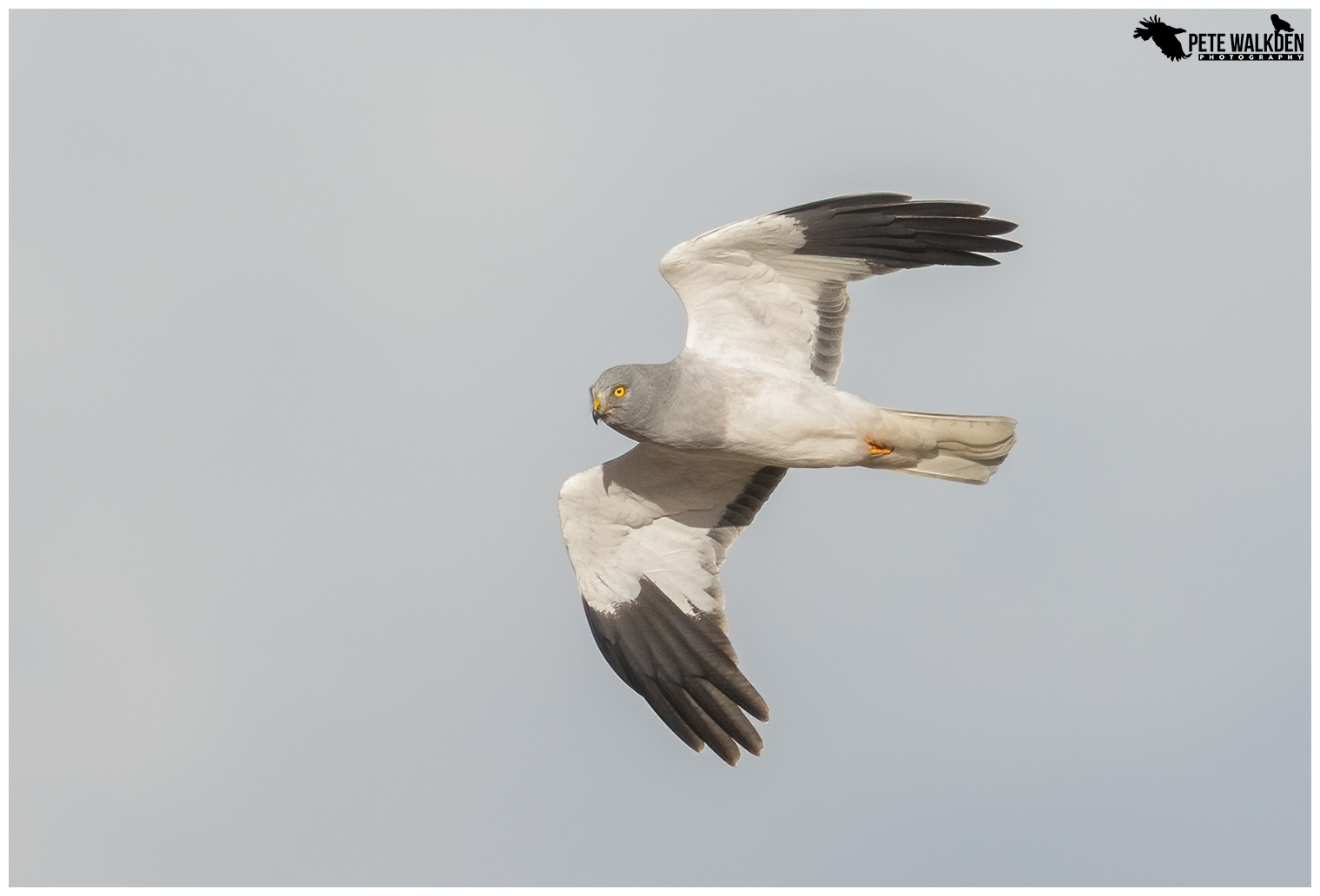
Hen Harrier photo by Pete Walkden

The RSPB published a Scotland-specific press release, as follows:

HEN HARRIER SURVEY GIVES CAUSE FOR OPTIMISM, BUT BIRD STILL FACING THREATS

Numbers of Hen Harrier, one of Scotland’s rarest birds of prey, are on the increase, but recovery still has some way to go according to a new survey.

Results of the 2023 Hen Harrier survey have been released, which show how populations of Hen Harriers are faring throughout the UK and Isle of Man, but it’s a mixed picture, with some populations doing better than in previous years, while others are in decline.

The results give some cause for optimism – the Scottish population is estimated to be 529 territorial pairs, up by 15 per cent since the last survey in 2016. Seventy-seven per cent of the UK and Isle of Man population of Hen Harriers breed in Scotland.

However, in 2023 Hen Harriers were still far less abundant or widespread than they should be. The population of Scottish Hen Harriers is currently less than a third of its potential, with 16 per cent fewer birds than twenty years ago, and numbers breeding on grouse moors continue to decline.

The west Highlands, Hebrides and Orkney continued to provide a home for the majority of Scotland’s breeding harriers. The population remains low on parts of the mainland, where human persecution continues to be a constraint on their numbers, as evidenced by satellite-tagged Hen Harriers continuing to disappear, mainly in areas managed for grouse shooting.

For the first time since national Hen Harrier surveys began, the Hebrides held the second largest population in Scotland, with an estimated 110 territorial pairs – a huge 125 per cent increase since 2016. Much of this is the result of an expanding population on Lewis since 2016.

There was also a significant increase of 69 per cent in the East Highlands, due to steady increases in two large areas where significant habitat restoration programmes are taking place and with benefits for all wildlife.

Orkney and the North Highlands showed increases of 15 per cent and 12 per cent respectively, while the West Highlands showed a modest decline of five per cent.

Sadly, the Southern Uplands saw a very steep 32 per cent decline. Four Special Protection Areas (SPAs) are designated by NatureScot for this species in the south of Scotland, and they now only breed on one, community-owned land at Langholm.

Duncan Orr-Ewing, Head of Species and Land Management for RSPB Scotland, said:

The results of the latest Hen Harrier survey show there is cause for optimism, and some encouraging signs of population recovery in parts of Scotland, particularly the Western Isles, which we hope to see continue.

Sadly, Hen Harrier persecution continues. Just last month, a satellite-tagged Hen Harrier disappeared in the Angus Glens. The illegal killing associated with intensive grouse moor management must stop. We are calling on Police Scotland to ensure all satellite tagged raptors disappearing in suspicious circumstances be recorded as a crime.

With the passing of the Wildlife Management and Muirburn Bill by the Scottish Parliament, all grouse shooting in Scotland will require a licence, which can be revoked if there is evidence of raptor persecution and other forms of wildlife crime, that is linked to a particular landholding.

In our view the passing of the Wildlife Management and Muirburn (Scotland) Bill should provide a significant deterrent to wildlife crime, and we should now expect now to see Hen Harrier populations on grouse moors increasing. The Bill also contains important changes to the law with regards burning on moorland which should improve nesting habitats for Hen Harriers.”

The Bill, which was recently passed by the Scottish Parliament, was the result of more than two decades of campaigning by RSPB Scotland and others to tackle wildlife crime.

Eileen Stuart, NatureScot’s Deputy Director of Nature and Climate Change, said:

It is encouraging to see an overall increase in the population of one of our most spectacular raptors, however we need this recovery to be sustained in the long-term to meet biodiversity goals.

We are pleased that Scotland remains a stronghold for Hen Harriers but persecution is still limiting populations in some areas and we anticipate that the Wildlife Management and Muirburn Bill recently passed by the Scottish Parliament will help address this.

We must also not lose sight of other factors which can affect the species, including changes in forestry and agricultural management and potentially climate change as unpredictable weather can affect breeding performance.”

The Hen Harrier survey was carried out across the UK in 2023 as a nationwide partnership between the RSPB, NatureScot, Natural Resource Wales, Natural England, Department of Agriculture, Environment and Rural Affairs-Northern Ireland, the Scottish Raptor Study Group, the Northern Ireland Raptor Study Group, Northern England Raptor Forum and Manx BirdLife, with the support of many volunteers, landowners, land managers and farmers.

ENDS

Superficially, the overall moderate increase in Scotland’s Hen Harrier population looks encouraging, but just as with the earlier Golden Eagle national survey (here), the overall results mask significant regional differences indicating that illegal persecution is still a major constraint on population expansion in some areas.

It’s very telling that the most significant increases for Hen Harriers, just like Golden Eagles, are in regions that are not dominated by intensive driven grouse shooting, especially the Hebrides. And in the Eastern Highlands, which is partly a grouse-moor dominated landscape, the increase is largely down to the rewilding management being undertaken by Wildland and the Mar Lodge Estate.

Wildland is a collection of estates in the Cairngorms and Sutherland, many of them former grouse moors, bought by the Polvsen family and being managed with an impressive vision for conservation. Wildland is also a pivotal partner in the wider conservation project called Cairngorms Connect (see website here) which ambitiously aims to restore ecological processes, habitats and species across an enormous area of the Cairngorms National Park.

The Mar Lodge Estate is managed by the National Trust for Scotland who bought the estate in 1996 and subsequently decided to stop muirburning. Hen Harriers began recolonising the estate in 2016 (see here). This is now a significant location for breeding Hen Harriers in the eastern Cairngorms – I’ve got more to say about it in the context of the wider Eastern Cairngorms Moorland Partnership but that’ll have to be in a separate blog.

It’s also worth noting that the former grouse moor at Langholm, now the community-owned Tarras Valley Nature Reserve, is the only SPA (Special Protection Area) of four in the Southern Uplands designated for Hen Harriers where Hen Harriers are breeding successfully.

The continuing absence of breeding Hen Harriers on many Scottish grouse moors shouldn’t be a surprise to anyone (e.g. see here) and it’ll be interesting to see whether the new Wildlife Management & Muirburn (Scotland) Bill will have an effect. Monitoring of Hen Harriers (as well as Golden Eagles, Peregrines and Merlins) will be used to assess the efficacy of this new legislation at five-yearly intervals. Given that the current national population of Hen Harriers in Scotland is still under a third of the country’s expected carrying capacity for this species, there is much scope for expansion into these grouse moor areas and that should happen if the threat of an estate losing its grouse moor licence is sufficient deterrent for gamekeepers to stop killing these birds.

The next national Hen Harrier survey, in approx 6-7 years time, will be very telling indeed.

UK Hen Harrier population at around a quarter of its estimated potential – results from 2023 national survey

Yesterday the RSPB published a press release (see below) about the status of the Hen Harrier across the UK and Isle of Man following the national Hen Harrier survey conducted in 2023 (UK-wide) and 2022 (Isle of Man).

This press release provides a UK-wide overview (as well as the Isle of Man). I’ll publish a Scotland-specific press release later today.

Unfortunately, the peer-reviewed scientific paper that provides a much more in depth analysis of the figures than a summarising press release, is not yet available.

Hen harrier photo by Ian Poxton

Here’s the RSPB press release summarising the survey results across the UK and Isle of Man:

HEN HARRIER SURVEY RESULTS2023: NUMBERS IMPROVE, BUT MUCH MORE TO BE DONE

Numbers of one of the UK’s rarest birds of prey, the Hen Harrier, are increasing across the UK, but their future still hangs in the balance according to a new survey.

Results of the 2023 Hen Harrier survey have been released, which show how populations of Hen Harriers are faring throughout the UK and Isle of Man, but it’s a mixed picture, with some populations doing better than in previous years, while others are in decline.

The results give some cause for optimism – the UK and Isle of Man population is estimated to be 691 territorial pairs, of which 653 are found in UK. This is a 20% increase from the 545 pairs recorded in the last survey in 2016 and also arrests the trend of decline shown since the 2004 survey, when 749 pairs were recorded.

However, Hen Harriers remain far less abundant or widespread than they should be, and the new population estimate represents only a quarter of the potential population their ideal habitat can support.

Across all four countries of the UK, there is huge variation between populations. England has seen the biggest increase since 2016. Natural England data shows there were 54 Hen Harrier breeding attempts by 50 territorial pairs in 2023 – a substantial 1,150% increase from just the four pairs recorded in 2016.

But while the 2023 figures may look encouraging, Hen Harriers remain absent from large parts of England, including the Peak District and North York Moors – where there are substantial areas of their ideal habitat per 100km sq.

Katie-Jo Luxton, the RSPB’s executive director of global conservation said:

While there have been encouraging signs since 2016 a closer look shows there’s much more to be done to address the differences across the UK. For example, England has seen the biggest increase, which is welcome news, but the starting point was shockingly low, and well below where we would expect healthy populations of these birds to be given the habitat available to them.

The work we and others have been doing to restore these populations is incredibly important, and we need to make sure it continues and that we step up our efforts to tackle the illegal killing of birds of prey.”

Disappearances and persecution of satellite-tagged birds shows illegal persecution continues to hamper population recovery. Combined Natural England and RSPB data shows a shocking 32 satellite-tagged Hen Harriers vanished or were confirmed as being illegally killed in England in 2023 – the highest recorded number of Hen Harriers killed or suspiciously disappeared in one year. [Ed: Actually it’s 33 satellite-tagged hen harriers, not 32 – the figure was updated in January 2024 after Natural England released more data: see here].

There was a mixed picture for Hen Harriers in Scotland. The overall population was estimated at 529 territorial pairs, up by 15% since 2016, giving Scotland 77% of the UK and Isle of Man population.

The west Highlands, Hebrides and Orkney continued to provide a home for the majority of Scotland’s breeding harriers. The population remains low on parts of the mainland, where persecution continues to be a likely constraint on their numbers, as evidenced by satellite-tagged Hen Harriers continuing to disappear, mainly in areas managed for grouse shooting.

Elsewhere, the 2023 survey recorded 40 territorial pairs in Wales, up from 35 in 2016. More than half of the Hen Harrier pairs were in the two Special Protected Areas (SPAs) designated for breeding harriers, Berwyn in Northeast Wales and Migneint-Arenig-Dduallt in the northwest.

Northern Ireland recorded only 34 territorial pairs in 2023, a decrease of about 26% which is linked to loss of habitat, increasingly poor habitat quality, and a range of disturbances, a decline which mirrors the 33% population decrease within the Republic of Ireland seen in 2022.

In the Isle of Man, a total of 38 territorial pairs were recorded last year, the highest count since 2004 when the Manx breeding population peaked at 57 pairs.

Simon Wotton, RSPB senior conservation scientist added:

As the results of the 2023 survey show, the UK has seen an increase in Hen Harriers, which is very welcome, but the overall population is still well below where it should be.

The reasons for Hen Harriers continuing to be far below their potential population are complex, but one of the primary causes is that continuing illegal killing, typically associated with intensive grouse moor management, is stifling their full recovery.

With the UK population at around a quarter of its estimated potential, there so much more to do to secure a meaningful recovery. The recent Wildlife Management and Muirburn Bill includes specific monitoring and reporting of Hen Harrier populations on grouse moors in Scotland to the Scottish Parliament and will be an important step in assessing progress with their recovery in these areas.”

The Scottish Government recently passed the Wildlife Management and Muirburn (Scotland) Bill which will introduce licencing for grouse shooting in Scotland, alongside measures to protect the habitats Hen Harriers need to thrive.

The RSPB hopes the success in Scotland will lead to similar legislation in England, and that and landscape restoration in Wales and Northern Ireland lead to a brighter future for Hen Harriers in the UK.

ENDS

A couple of blogs written in response to these findings are worth a read: Mark Avery (here) and Mike Shurmer, RSPB Head of Species (here).

More on the Scotland-specific results shortly…

UPDATE 10th April 2024: Breeding Hen Harriers continue to decline on Scottish grouse moors (here)

Goshawk shot & killed in Forest of Dean – Police appeal for information

Press release from Gloucestershire Constabulary (3 April 2024):

POLICE APPEAL FOR INFORMATION AFTER A GOSHAWK WAS SHOT AND KILLED NEAR THE FOREST OF DEAN

Police are appealing for information after a protected bird of prey was shot and killed in the Forest of Dean last month.

Officers were called by a member of public who found the body of a Goshawk near Kempley on the morning of Tuesday 27 February.

An X-ray of the Goshawk, which had been ringed, showed an air rifle pellet had broken the bird’s hip leading to its death.

The Rural crime team said: “Goshawks are protected under the Wildlife and Countryside Act 1981 which means it is an offence to intentionally kill, injure or take any wild bird.

This sort of offence is taken seriously and if anyone has any information we would be keen to hear from them.

If you have any information please Contact Gloucestershire Police Rural Crime Team on 101.”

Enquiries are ongoing and investigating officers are asking anyone with information on the incident to please get in contact.

Information can be submitted by completing the following form online: https://www.gloucestershire.police.uk/tua/tell-us-about/cor/tell-us-about-existing-case-report/    

Alternatively, you can call 101 and quote the same incident number or speak to Crimestoppers anonymously on 0800 555 111.

ENDS

UPDATE 4 March 2024 from Amanda Grey:

I’m the person who found this bird. This info isn’t actually correct. The air rifle pellet is in the right wing, however, the left leg was also found to be dislocated/calcified and according to the vet, probably happened at the same time due to impact. The bird was severely underweight and most likely starved to death due to its injuries. We know from the ringing data that this was a two year old male bird. As someone involved in wildlife rescue, I arranged the x-ray and then reported it when we saw the results. I monitor goshawks locally for BTO ringers and I also run Forest of Dean Wildlife Transport Volunteers. The bird was left in my garden, presumably by someone who knows what I do but who didn’t want to get involved. I am as frustrated as everyone else at how long it has taken for this press release to go out“.