The first hearing in the case against gamekeeper Stuart Hart was heard at Wrexham Magistrates, North Wales last Thursday (28 March 2024).
Hart, 47, faces two charges – Using a trap to kill or take a wild bird (in this case, a Goshawk) and possession of an article capable of being used to commit a summary offence (see here for earlier blog).
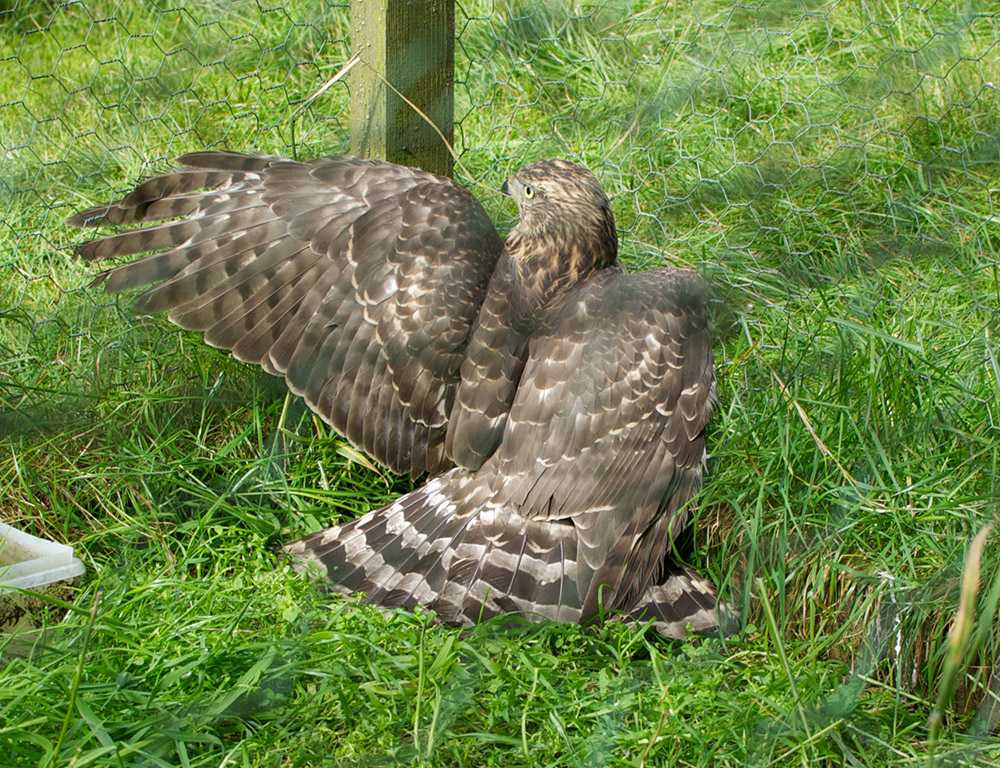
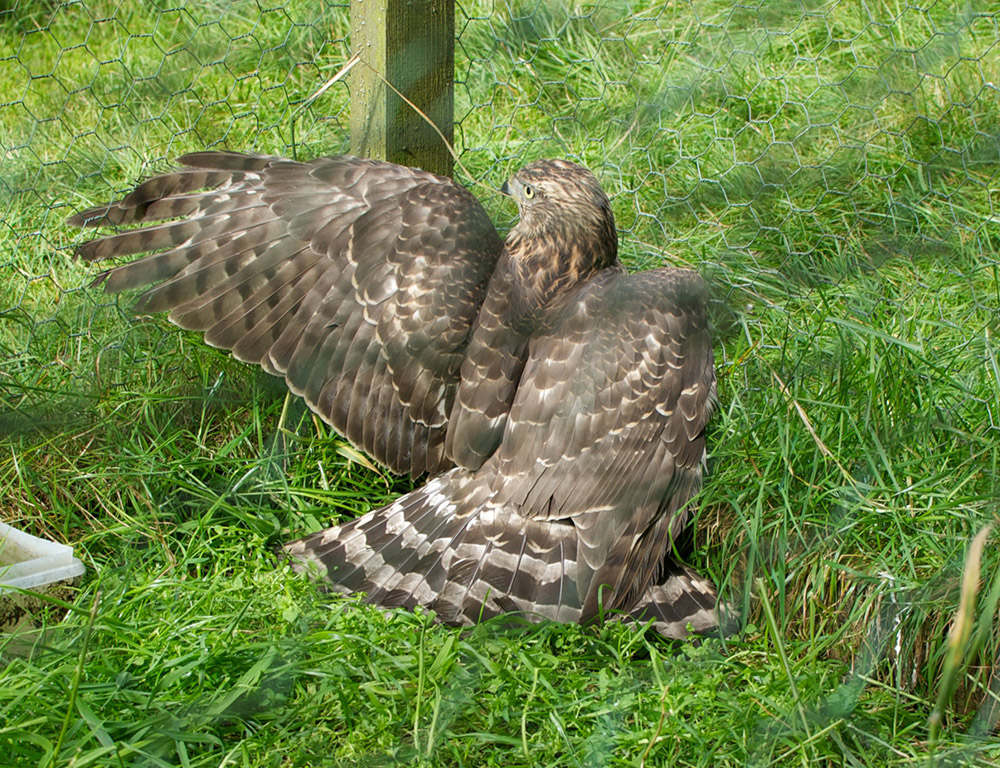
Young goshawk in a cage trap. Photo by RSPB (file photo, not linked to this case)
Hart’s defence solicitor, Michael Kenyon, told the court there were procedural errors in the way the case had been brought, and in addition he wanted to challenge the admissibility of the RSPB’s video evidence, so the case was adjourned to be heard by a District Judge. (A District Judge is legally-qualified, usually a former solicitor or barrister, whereas magistrates are non-legally-qualified volunteers who depend on a qualified legal advisor in the court to direct them on the relevant law).
Hart has not yet entered a plea.
Michael Kenyon will be a familiar name to those who follow raptor persecution prosecutions. He represented gamekeeper Timothy Cowin in 2018 who was accused of shooting dead two short-eared owls on Whernside, Cumbria after being caught on camera by RSPB Investigations staff. Kenyon challenged the procedural basis of that case (e.g. see here), resulting in an extraordinary series of hearings at five different courts across NW England (here). Eventually Cowin was convicted (here).
Hart’s case will next be heard on 30 April 2024.
NB: Comments are turned off for legal reasons until criminal proceedings have concluded.
UPDATE 30 April 2024: Case discontinued against Ruabon Moor gamekeeper Stuart Hart (here)
UPDATE 26 November 2024: Ruabon Moor gamekeeper prosecution – why the case was discontinued (here)
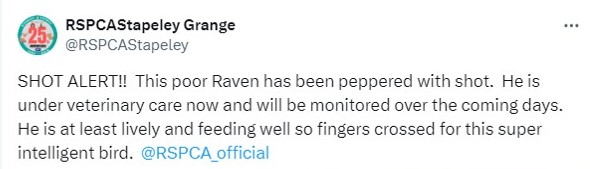
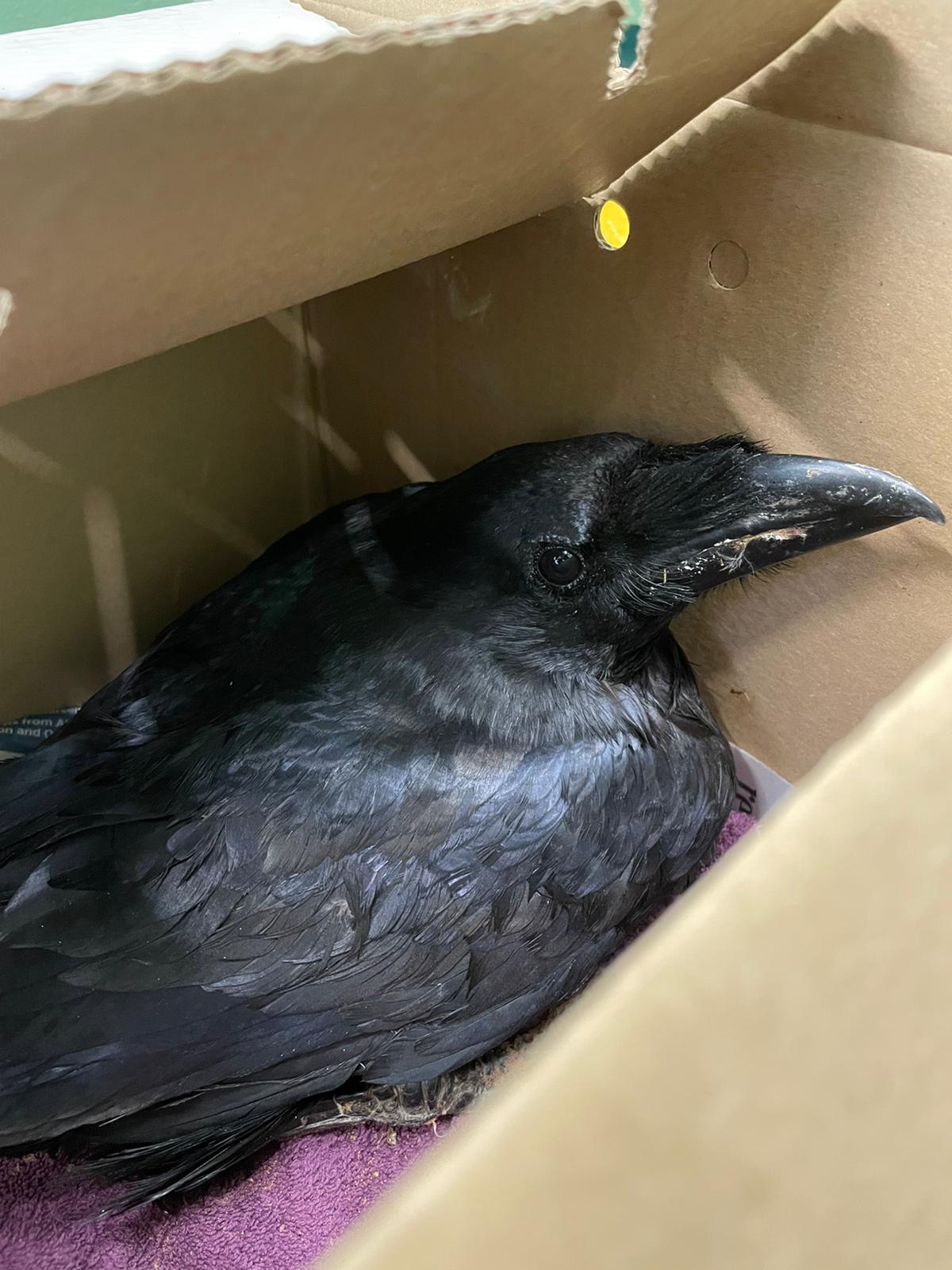
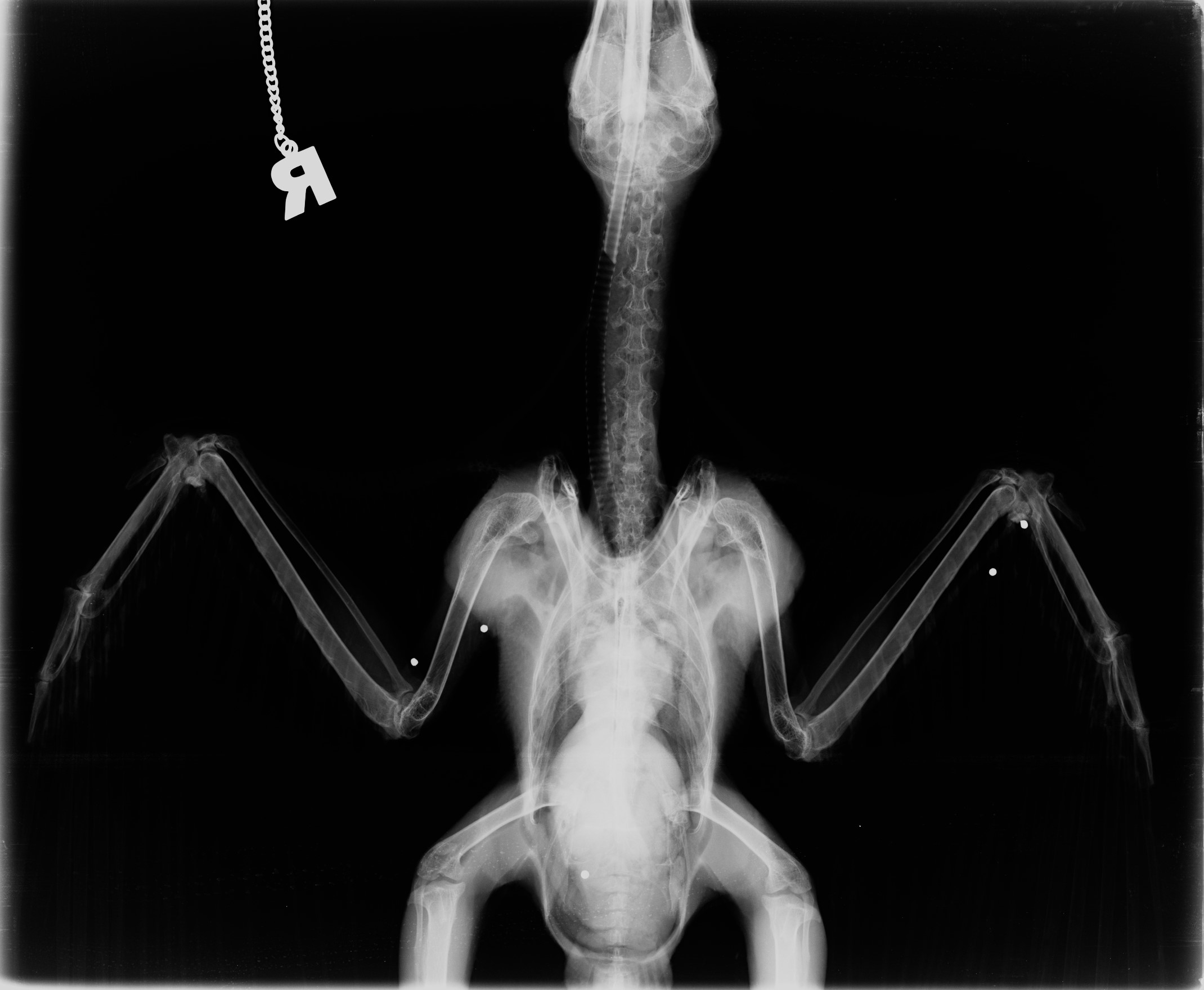
A raven with at least five shotgun pellets lodged in its body is currently receiving veterinary care at the RSPCA’s Stapeley Grange Wildlife Centre in Cheshire, according to this tweet posted yesterday evening:
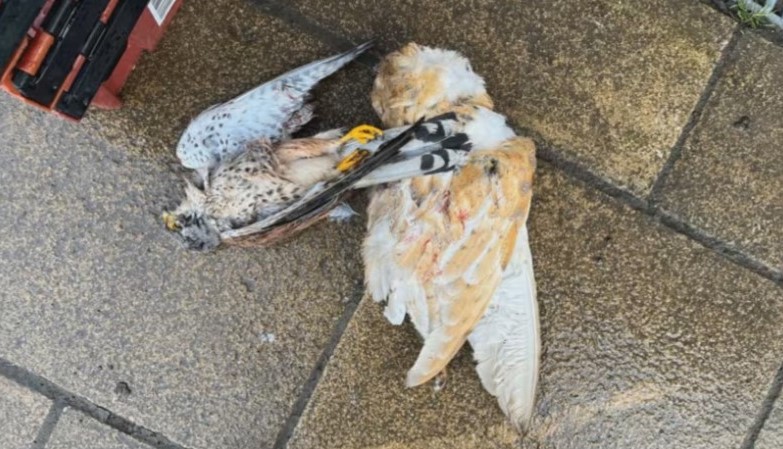
A couple of weeks ago around 50 dead hares and a dead kestrel and barn owl were found dumped outside Broughton community shop in Hampshire, causing widespread revulsion and condemnation across the media (see here).
The kestrel and barn owl had been impaled on the shop door handles and blood & guts had been smeared over the windows. Photo: Broughton Community Shop
Yesterday evening Hampshire Constabulary announced that a man had been arrested and was being held in custody in connection to this horrific incident.
Hampshire Constabulary press release (28 March 2024):
ARREST MADE IN BROUGHTON WILDLIFE CRIME INVESTIGATION
A man has been arrested in connection with an incident where a number of dead animals were left outside a shop in Broughton.
Police were called on the morning of Friday 15 March, after around 50 dead hares, a kestrel and a barn owl were found outside the Broughton Community Shop in High Street.
An investigation was launched and officers from Hampshire & Isle of Wight Country Watch team have been following various lines of enquiry.
Part of our enquiries have included examinations of the barn owl and kestrel. Those examinations revealed that both birds had been shot with a firearm. Both the kestrel and the barn owl are listed under Schedule 1 of the Wildlife and Countryside Act 1981, giving them legal protection.
Today (Thursday 28 March), officers have arrested a 37-year-old man from Totton on suspicion of the following offences:
Criminal Damage
Night Poaching
An offence under the Public Order Act
Killing of a Schedule 1 bird
An offence under the Animal Welfare Act
Killing of Brown Hare in the closed season
An offence under the Firearms Act
He remains in police custody while we carry out our enquiries.
Country Watch Sergeant Stuart Ross said: “Since this incident took place, we have been actively pursuing a number of lines of enquiry and working with partner agencies to establish the circumstances of what happened.
“We are grateful for the help we have received from the local community and we’d like to thank them for their patience while we investigate what happened.
“There may be some people with information who have not yet come forward, and if so, we would urge them to do so as soon as possible.”
Anyone with information can report it by calling 101, quoting the reference number 44240111410, or via our website.
ENDS
UPDATE: The man has been released on bail until 28 June 2024, pending further enquiries.
UPDATE 11 April 2024: Police interview second man in relation to dumped hares and raptors outside Broughton community shop (here)
UPDATE 14 August 2024: Man charged in connection to dumped hares and raptors outside community shop in Hampshire (here)
Press release from National Wildlife Crime Unit (28 March 2024):
OPERATION EASTER – 27 YEARS OF STOPPING EGG THIEVES
The national enforcement campaign to protect our nesting wild birds is underway for 2024.
The taking of wild bird eggs is a serious crime yet it remains an illicit hobby for some determined individuals. Whole clutches of eggs can be taken from some of the UK’s rarest birds and stored in secret collections. New risks to wild birds have also emerged in recent years with criminals taking eggs or chicks from bird of prey nests and trading them illegally across the world.
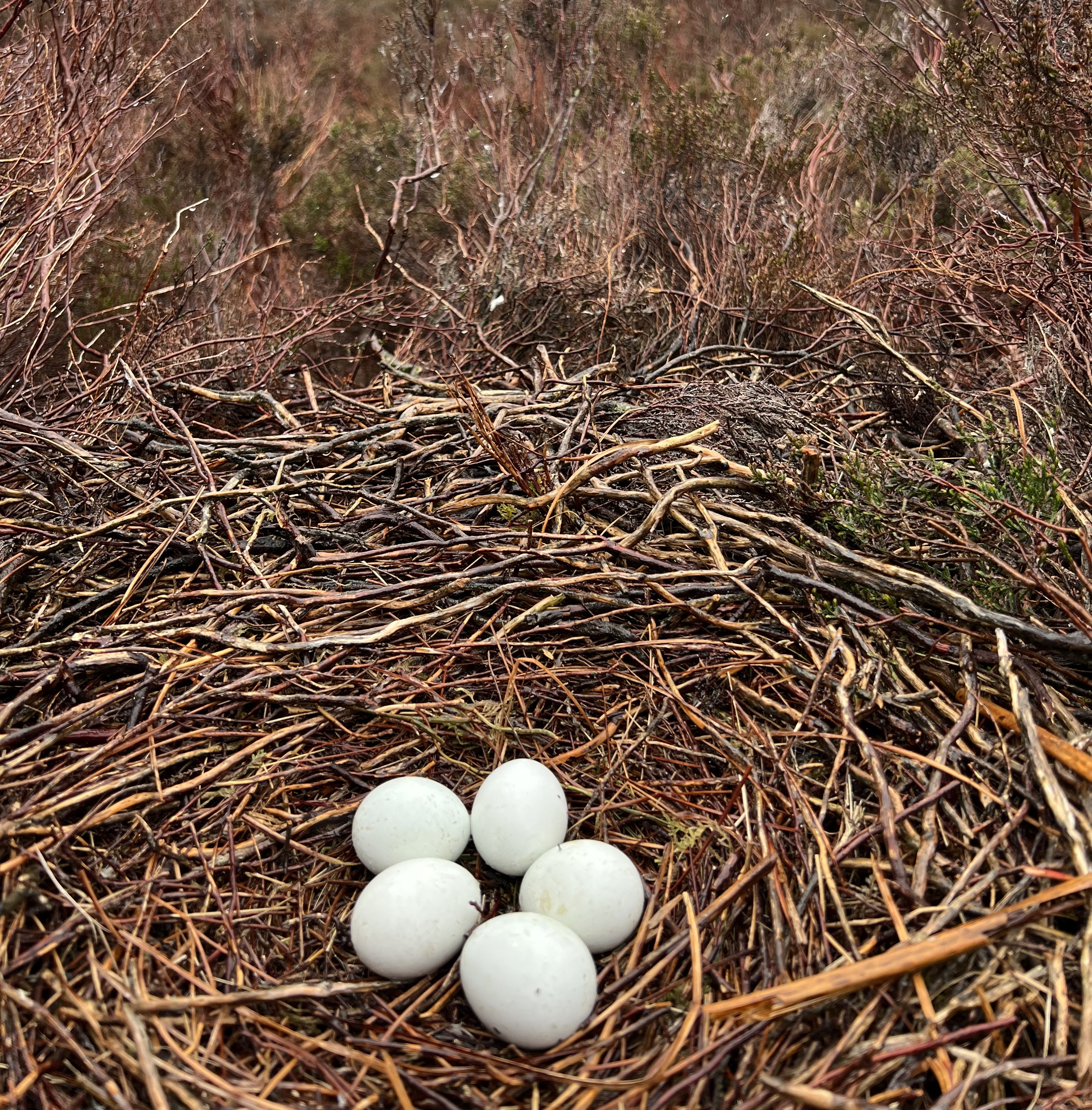
A clutch of hen harrier eggs. Photo by Peak District Bird of Prey Raptor Monitoring Group, taken under licence.
Detective Inspector Mark Harrison from the UK NWCU says: “Thankfully, egg collecting as a hobby has declined over recent years due to effective law enforcement and a change in attitude, particularly as younger generations realise the negative impact that this crime has on our wild birds and biodiversity. But, the problem still persists and new related risks have also emerged, including the increase in wild taken birds of prey, chicks and eggs that are being illegally laundered into the legitimate falconry industry.
“Recent examples of these crimes are the convictions of Daniel Lingham in Norfolk for prolific egg collecting and during Operation Tantallon, the father and son duo, Timothy and Lewis Hall who were stealing wild peregrine chicks from nests in Scotland, in order to sell them on.
“Operation Easter is one of the NWCUs longest standing operations for the protection of wild birds and at this crucial time of year when the birds are breeding we need to ensure that we are alive to the risks and ready to respond. The NWCU will continue to support all of the UKs police forces to prevent further crimes and pursue those criminals that commit offences.
“We will help to co-ordinate the policing response, ensuring dedicated Police Wildlife Crime Officers from the participating UK police forces receive up to date intelligence, operational support and access to specialist investigators from the NWCU. This year we will also be elevating Operation Owl with the support of key partners to ask the public to be our eyes and ears across the country to increase reporting of suspected incidents and intelligence. This will also help us to raise the profile of these wildlife crimes.”
If you have any information on egg thieves, or those who disturb rare nesting birds without a license, you should contact your local police by dialling 101 – ask to speak to a wildlife crime officer if possible. Get a description/photo and vehicle registration if safe to do so. Nesting will be in full swing in April so please contact the police if you see anyone acting suspiciously around nesting birds.
Information can also be passed in confidence to Crimestoppers via 0800 555 111.
This is a guest blog from Duncan Orr-Ewing, Convenor of the Scottish Environment LINK Deer Group.
LINK Deer Group comprises of RSPB Scotland, National Trust for Scotland, John Muir Trust, Scottish Wildlife Trust, Woodland Trust Scotland, Trees for Life, Ramblers Scotland, and Nature Foundation.
Duncan’s blog encourages readers to participate in the Scottish Government’s current consultation on Managing Deer for Climate and Nature (details at the foot of this blog). The consultation closes this Friday (29th March 2024).
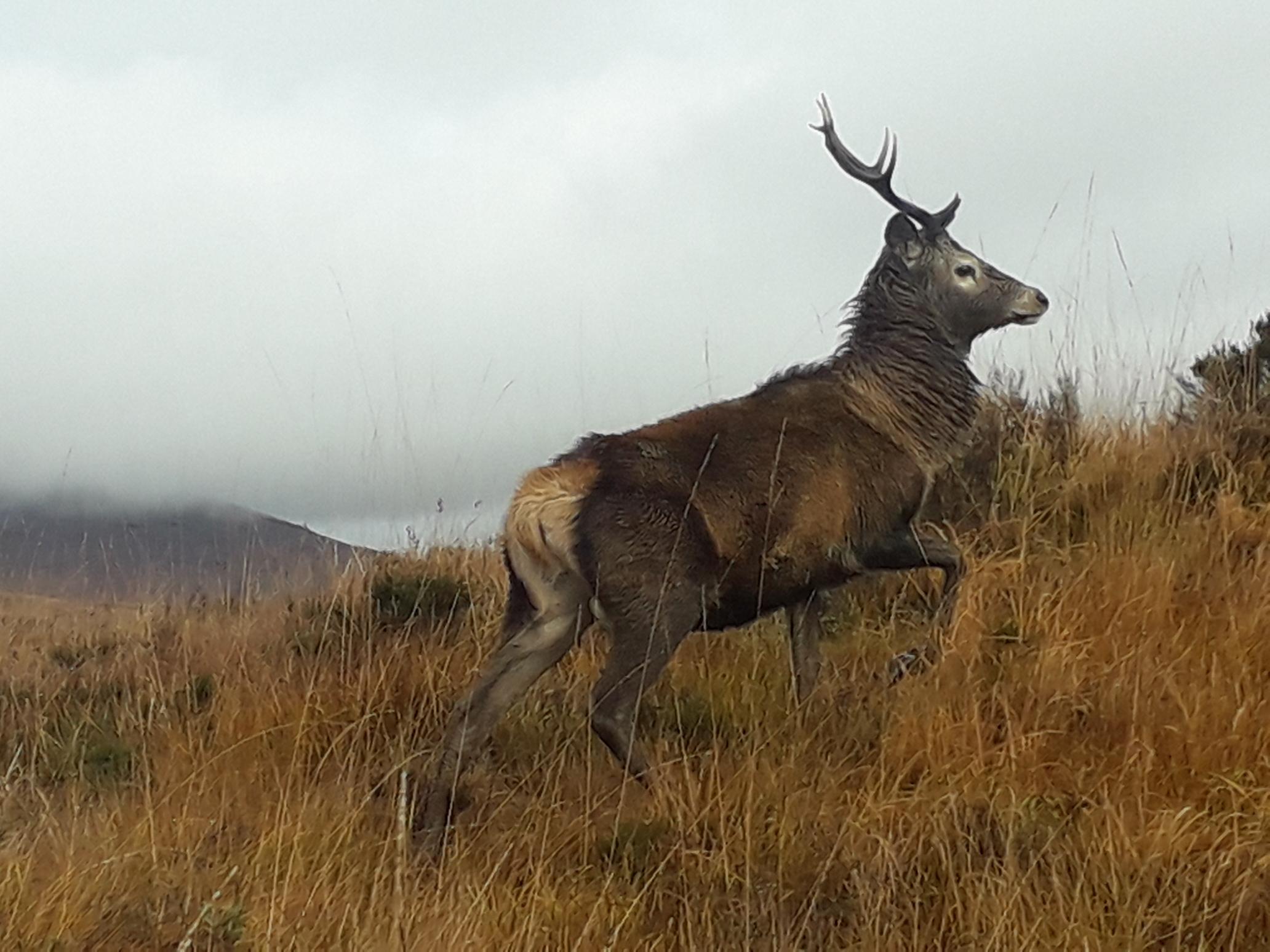
Photo by Duncan Orr-Ewing
A POSITIVE FUTURE FOR SUSTAINABLE DEER MANAGEMENT IN SCOTLAND
Alongside the progress of the Wildlife Management and Muirburn Bill, which was approved by the Scottish Parliament last week, reforms to deer management in Scotland are also being considered by Scottish Government.
Measures to update the Deer (Scotland) Act 1996, and to bring it into line with modern day expectations around the need to restore nature and to combat climate change are making steady progress, and are now out to public consultation. New deer legislation will be included in a Natural Environment Bill expected to be laid before the Scottish Parliament in late 2024.
In the absence of natural predators, such as lynx or wolf – both exterminated in Scotland several centuries ago – deer populations are managed by humans to prevent damage to a wide variety of public interests. Damage can be caused by high deer populations to the natural heritage; to agriculture; to forestry; and also to human health and safety (road traffic accidents and Lyme disease).
Deer management is carried out to high humane standards by expert stalkers following Deer Management Best Practice, and of course most of the end product – venison- then goes into the human food-chain, and is widely regarded as a healthy alternative to farmed meats.
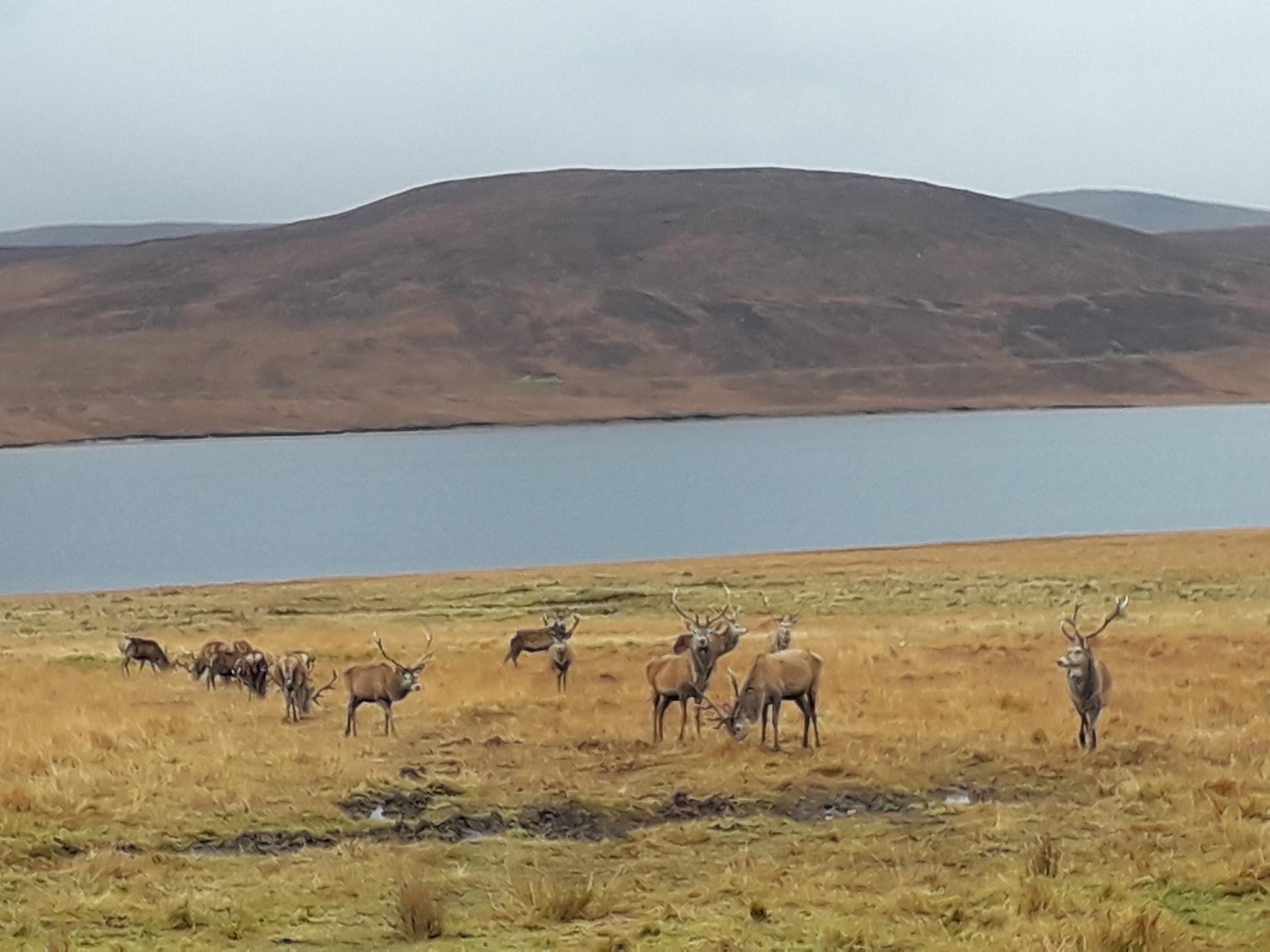
Photo by Duncan Orr-Ewing
Most of Scotland’s uplands are managed either as grouse moor or as deer forest, and therefore along with grouse moor management, the land management practices which occur in deer forests are hugely important for protecting and enhancing our native wildlife and their habitats in the uplands.
The latest population estimate for the combined four species of deer (two native and two non-native) that occur here is over 1 million animals. This represents a doubling of the deer population in the last twenty years. For further background and deer timelines see here.
As with grouse moor management and the independent Grouse Moor Management Review Group (“Werritty Review”), the Scottish Government commissioned an independent review of deer management in 2017 and which reported in 2020, here. It came up with 100 recommendations for improvements to current systems and processes, and to foster better sustainable deer management practices in Scotland. These recommendations were largely accepted by Scottish Government – see here.
These recommendations of the independent Deer Working Group now form the backbone of the deer legislative proposals for the Natural Environment Bill.
However, in addition the Scottish Government is proposing a few further, and we think largely beneficial measures. These include provision for what are being called Deer Management Nature Restoration Order powers to NatureScot, the competent deer authority, to take compulsory action to reduce deer numbers to enhance habitats and species in targeted areas. This is intended to help deliver the outcomes of the Scottish Biodiversity Strategy.
We encourage individuals to respond to the current public consultation on new deer legislation in Scotland which closes on Friday 29th March. This a relatively straightforward exercise and can be done quite quickly – here.
See also the LINK Deer Group response for further advice and suggestions on how you might respond – here.
Duncan Orr-Ewing
Convener, LINK Deer Group
ENDS
Editor writes: Some of you may have seen the Scottish Gamekeepers Association’s hysteria in response to the Government consultation, refusing to engage with it and claiming that their members may suffer a ‘mental health toll’ if they have to cull heavily pregnant hinds due to the proposed changes in the deer hunting season- see here.
As usual, the SGA hasn’t provided proper context. There are proposed changes to female deer seasons to essentially make them all the same for all species. It is still entirely discretionary when deer are shot within the proposed new seasons.
If folk are worried they can take their cull earlier in season. It’s the same with the now abolished season for male deer. It does not mean stalkers have to cull male deer all year round and some people may stick to the old male deer season.
The bottom line for conservation though is more deer need to be culled, especially hinds, to reduce burgeoning deer populations. It is the female deer that are critical in that respect.
If you’re able to complete the consultation by Friday (no specific deadline has been given on Friday) that would be great, thanks.The link is here.
A gamekeeper is due to appear before Wrexham Magistrates tomorrow (Thurs, 28 March 2024) after being charged with alleged wildlife crime offences.
According to court documents, Stuart Hart, 47, faces two charges – Using a trap to kill or take a wild bird (in this case, a Goshawk) and possession of an article capable of being used to commit a summary offence.
Young goshawk in a cage trap. Photo by RSPB (file photo, not linked to this case)
A press release about this case issued by North Wales Police earlier this month (here) was quite vague, with no details about the date of the alleged offences and no detail about the location other than ‘on the outskirts of Wrexham‘.
Hopefully more detail will be available after tomorrow’s hearing. This will be the defendant’s first court appearance and he’s yet to enter a plea.
NB: Comments are closed until criminal proceedings have concluded.
UPDATE 31 March 2024: Defence solicitor in prosecution against gamekeeper Stuart Hart wants to challenge admissibility of RSPB video evidence (here)
UPDATE 30 April 2024: Case discontinued against Ruabon Moor gamekeeper Stuart Hart (here)
Last week the Scottish Parliament voted through the Wildlife Management & Muirburn (Scotland) Bill, introducing new licensing schemes for grouse shooting, wildlife trapping and muirburn, the total banning of snares and the granting of additional investigatory powers for the Scottish SPCA.
A hen harrier celebrates the news. Photo by Ruth Tingay
I’ve already blogged about the reactions from REVIVE, OneKind and RSPB Scotland, contrasted with the reactions from the Scottish Gamekeepers Association, BASC and Scottish Land & Estates (here).
Here are a few more reactions and articles:
The Scottish Greens, whose Bute House Agreement with the SNP put this issue right at the top of the political agenda, reaction here.
Press statement from North Yorkshire Police (25th March 2024):
APPEAL AFTER SPARROWHAWK SHOT AT NOSTERFIELD NATURE RESERVE
We’re appealing for information following the shooting of a Sparrowhawk at Nosterfield Nature Reserve.
The Sparrowhawk is thought to have been shot dead with a pellet gun on either Wednesday 20 or Thursday 21 March. Sparrowhawks are classified in the UK as Amber under the Birds of Conservation Concern 5.
If you saw anyone in the area of the nature reserve with an air rifle or similar weapon please email colin.irvine@northyorkshire.police.uk or call North Yorkshire Police on 101, select option 2 and ask for PC Colin Irvine.
If you wish to remain anonymous you can contact Crimestoppers on 0800 555 111 or online at crimestoppers-uk.org
Please quote NYP reference 12240050719 when passing on information.
A fascinating new study has been published today in the peer-reviewed scientific journal Diversity, providing an in-depth analysis of the movements of young satellite-tagged golden eagles in Scotland and an examination of the physical barriers (water and unsuitable terrestrial habitat) that may restrict movement between different regions of Scotland.
Here’s the citation: Fielding, A.H. Anderson, D., Barlow, C., Benn, S., Reid, R., Tingay, R., Weston, E.D. and Whitfield, D.P. (2024). Golden Eagle Populations, Movements & Landscape Barriers. Diversity, 16(4), 195.
It is the latest in a long line of scientific papers produced by the Golden Eagle Satellite Tag Group (GESTG), a formal collaboration of scientists and researchers from several organisations that are involved with golden eagle research in Scotland who share tag data & other information for the purpose of furthering golden eagle research and conservation. I’ll try and blog about the other papers soon.
Golden eagle adult & nestling. Photo by Chris Packham
Using over 7 million dispersal records from satellite tags fitted to 152 golden eagle nestlings between 2007-2022, this research found that there were no movements by young golden eagles tagged in the Highlands to the southern uplands.
Similarly, there were no movements from eagles tagged in south Scotland to the Highlands, with the exception of one young eagle in 2015 which flew north to the Highlands in 2016 but was later probably illegally killed in the notorious Eastern Highlands in May 2016.
Fig.3 from the paper showing golden eagle flight lines during natal dispersal across Scotland & Northern England. Map copyright Fielding et al. 2024
These results provide justification for the bolstering of the vulnerable south Scotland golden eagle population by translocating chicks and juveniles from further north. Natural recolonisation by golden eagles from the Highlands is quite clearly unlikely.
The study also demonstrates the reluctance of golden eagles to undertake large sea crossings, as evidenced by the already-known genetic isolation of the golden eagle sub-population in the Outer Hebrides. No satellite-tracked eagles tagged as nestlings moved between the Outer Hebrides and the Inner Hebrides or mainland Highlands, in either direction. Three tagged eagles from the Outer Hebrides made several possible but apparently aborted attempts to fly towards the mainland Highlands.
Flights across smaller water bodies were less problematic with frequent movement of golden eagles between the Inner Hebrides and the Highland mainland. However, eagle flights between Lewis/Harris and the Uists in the Outer Hebrides were surprisingly rare.
The paper concludes that the Scottish golden eagle population appears to be composed of three relatively isolated sub-populations. The largest is in the Inner Hebrides and in the mainland (Highlands) north of the Highland Boundary Fault; the second is the large Outer Hebridean sub-population; and the third, and much smaller and more vulnerable, is the southern Scotland sub-population. The authors suggest that recolonisation of golden eagles in northern England is likely to occur from terrestrial flights from south Scotland as opposed to flights over water into NW England.
This study, along with all the others the GESTG has produced, highlights the importance of satellite-tagging golden eagles in Scotland and puts to bed the ridiculous claims made by the grouse shooting industry that ‘tag data serve no purpose other than to try and entrap gamekeepers‘ and there’s no need to satellite tag golden eagles because ‘we know all we need to know‘.
Of course we don’t know all there is to know about golden eagles in Scotland – indeed the research undertaken by the GESTG is revealing just how little we previously understood and how much more there is to learn. What is more certain is understanding why the grouse shooting industry is so against any form of raptor tracking (see here, here, here, here and here). Indeed, it was the result of satellite-tracking golden eagles and uncovering patterns of widespread illegal persecution on some driven grouse moors that played a significant part in the Scottish Parliament’s decision last week to introduce a grouse moor licensing scheme to tackle ongoing illegal persecution.
Thanks to generous funding from Natural Research, the paper is available free of charge and can be read/downloaded here:
The passing of the Wildlife Management & Muirburn (Scotland) Bill yesterday, voted for by almost everyone (except the Scottish Tories and the SNP’s Fergus Ewing MSP) has been the hot topic of conversation today.
For many, the Bill has been the focus of daily life for exactly one year, when it was first introduced on 21 March 2023. And of course, the issue of raptor persecution on grouse moors, which is what triggered this Bill in the first place, has been the focus of daily life for many of us for longer than we care to remember, well before the introduction of the Bill.
With such a long history of campaigning, the responses to the passing of the Bill yesterday were entirely predictable. Conservationists are very happy with it, recognising it as an important stride forward but fully cognisant that our work here is not yet done. You can read responses from REVIVE, the coalition for grouse moor reform here, from OneKind here, and from RSPB Scotland here.
The grouse shooting industry is furious with it, mainly, from what I can tell, because it feels humiliated. It’s an industry founded on privilege and self-entitlement and has done pretty much what it wants for about 150 years, unhindered by the societal rules by which the rest of us must abide. To have the Scottish Parliament vote to introduce legislation that will finally hold the industry to account is hugely embarrassing. Imagine having to listen to a Government Minister say this about you in the Parliament’s debating chamber:
“There were those who disagreed with the principles of the bill, but if the grouse-shooting community had shut down raptor persecution— stopped the killing of our most iconic birds of prey—we would not have had to legislate in this way. Sadly, that community did not shut it down, so it is now up to us to make sure that it does so. It is for that reason that the bill is before us today”. – Scottish Agriculture Minister Jim Fairlie, 21 March 2024.
I guess that’s why there wasn’t a single representative from the industry sitting in the public gallery at Holyrood yesterday.
Not that I have any sympathy. The grouse shooting industry has been given chance after chance after chance to rid itself of the criminals within. It has failed to do so, instead going on the offensive, repeatedly denying that raptor persecution even exists and conducting a disgusting campaign of hate, smear and abuse targeted against those who were prepared to call them out.
I don’t believe that every grouse shooting estate is ‘at it’, but I do believe that there are more ‘at it’ than are not. And even the ones that are not, they do know who is responsible – the entire industry knows – but the industry has refused to blacklist. Now they’re all going to suffer the consequences.
You can read the responses to the passing of the Bill from the Scottish Gamekeepers Association here, from Scottish Land & Estates here and from BASC here.
BASC’s response is particularly interesting as it claims the new legislation “is unworkable for gamekeepers and land managers” and “will beruinous to the rural economy“. Does that mean that BASC thinks that sustainable grouse moor management isn’t viable? That grouse moor management relies upon the illegal persecution of birds of prey, the use of inhumane snares to trap foxes and other wildlife and the routine setting alight of deep peat moorland? That would be an extraordinary admission!
So what happens next?
Now the details of the Bill have been finalised and passed, NatureScot can get on with finalising the details of the codes of practice for grouse shoot licensing and muirburn licensing that will be used to support the implementation of the new legislation. I’ll post details when they become available.
The timing of the ban on snares and wildlife trap licensing is yet to be determined.
It is fully expected that grouse shoot licensing will be in place for the start of the 2024 grouse shooting season on 12th August. The muirburn licence is more complicated and it is anticipated that won’t be in play until September 2025.
Here is a copy of the Wildlife Management & Muirburn (Scotland) Bill as passed:



 Raptor Persecution UK