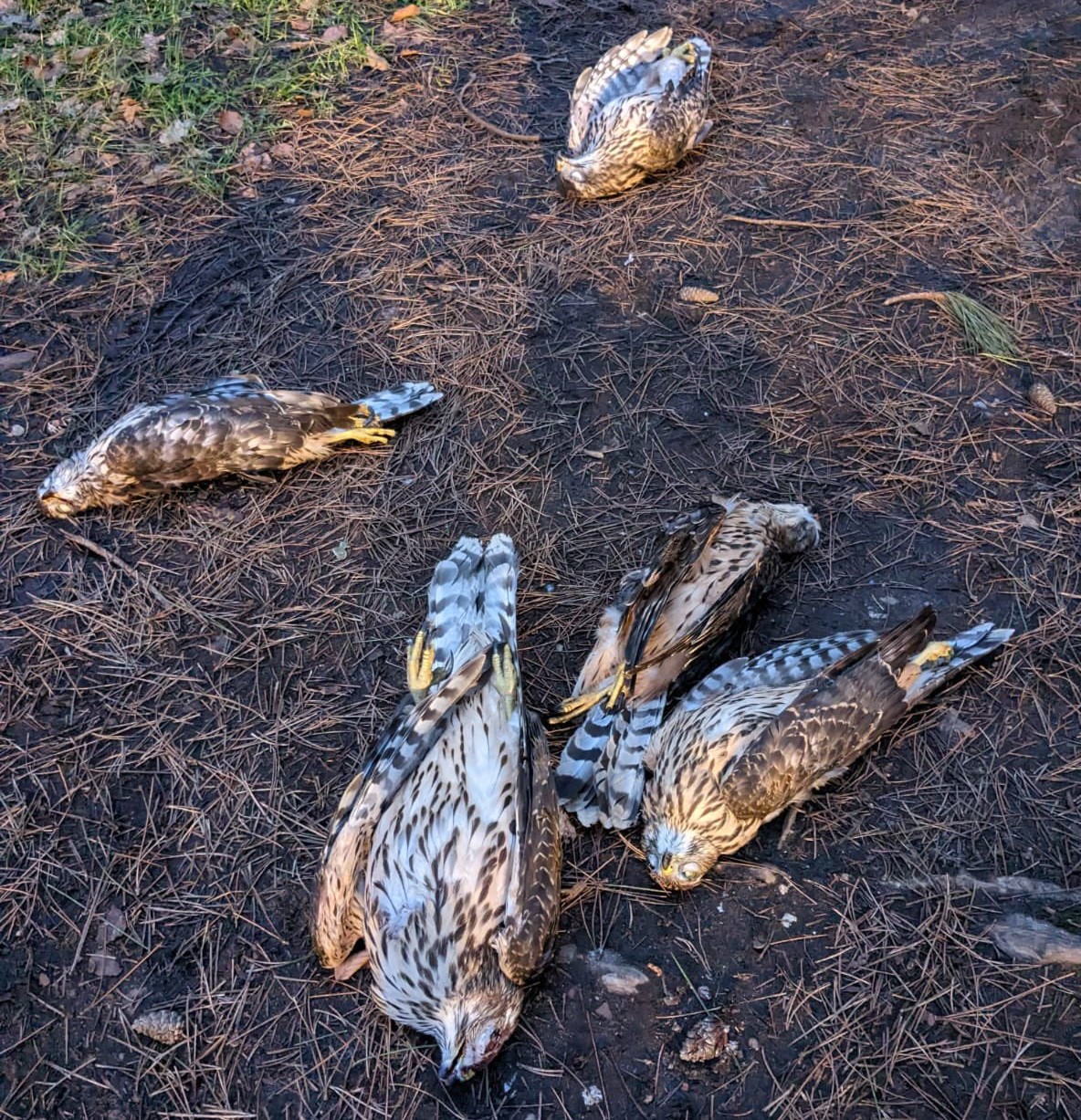
In January this year, Suffolk Police’s Rural, Wildlife & Heritage Unit appealed for information in relation to the discovery of five juvenile goshawks that had been shot and dumped in a car park at the King’s Forest, near Thetford (see here).
The five shot goshawks. Photo: Suffolk Police
This is the investigation that attracted a large reward for information (reward put up by RSPB, Wild Justice, and a crowd funder by Rare Bird Alert, see here).
This is also the investigation about which the shooting industry was ‘offended’ at being asked by the police to help identify the perpetrator (here).
In late March 2023, the police announced that a man had been arrested in relation to this investigation (see here).
A man has now been charged and the police have issued the following statement:
MAN CHARGED WITH OFFENCES IN RELATION TO BIRDS OF PREY FOUND DEAD IN WEST SUFFOLK
A man has been charged with offences in relation to the discovery of five goshawks that were found dead in the west of the county, as well as a number of other offences.
The five birds of prey were found on Monday 16 January, having been left in a parking area just off from the B1106 in Kings Forest, near Wordwell.
X-rays were undertaken which showed all five birds had suffered injuries from multiple pieces of shot.
Officers arrested a 72-year-old man on 27 March in relation to the discovery of the goshawks and on suspicion of breaching firearms license conditions. He was taken to Bury St Edmunds Police Investigation Centre for questioning, before being released under investigation.
Francis Addison, 72, from South Park, Weeting, was subsequently charged with five counts of possession of a dead schedule 1 wild bird (goshawk); one count of killing a non-schedule 1 wild bird (wood pigeon); one count of use of an animal trap in circumstance for which it is not approved; two counts of possession of an article capable of being used to commit a summary offence, namely two air rifles and six animal traps; six counts of failing to comply with the conditions of a firearm certificate; and four counts of failing to comply with the condition of a shotgun certificate.
Addison is due to appear at Norwich Magistrates’ Court on Thursday 29 June.
ENDS
Well done to Suffolk Police’s Rural, Wildlife & Heritage Unit for what has obviously been a detailed investigation, and also for keeping the public informed.
As Mr Addison has now been charged and criminal proceedings are live, I won’t be accepting any comments on this case until proceedings have concluded.
For anyone who still wants to pretend that the grouse shooting industry isn’t responsible for the systematic extermination of hen harriers on grouse moors across the UK, here’s the latest catalogue of crime that suggests otherwise.
[This male hen harrier died in 2019 after his leg was almost severed in an illegally set trap that had been placed next to his nest on a Scottish grouse moor (see here). Photo by Ruth Tingay]
This is the blog I now publish after every reported killing or suspicious disappearance.
“They disappear in the same way political dissidents in authoritarian dictatorships have disappeared” (Stephen Barlow, 22 January 2021).
Today the list has been updated to include the most recently reported victim, a hen harrier named ‘Wayland’ who vanished on 17th May 2023 in the Clapham area of North Yorkshire, just north of the Bowland AONB, where the land is a mix of farmland with gamebird shooting. Its tag had also been functioning normally until that point (see here).
I’ve been compiling this list only since 2018 because that is the year that the grouse shooting industry ‘leaders’ would have us believe that the criminal persecution of hen harriers had stopped and that these birds were being welcomed back on to the UK’s grouse moors (see here).
This assertion was made shortly before the publication of a devastating new scientific paper that demonstrated that 72% of satellite-tagged hen harriers were confirmed or considered likely to have been illegally killed, and this was ten times more likely to occur over areas of land managed for grouse shooting relative to other land uses (see here). Incidentally, a further scientific paper published in 2023 by scientists at the RSPB, utilising even more recent data, echoed these results – see here).
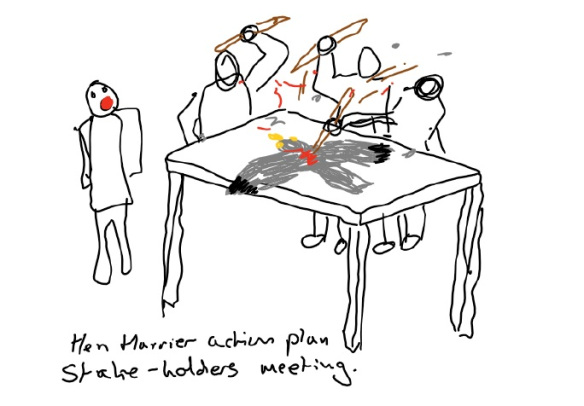
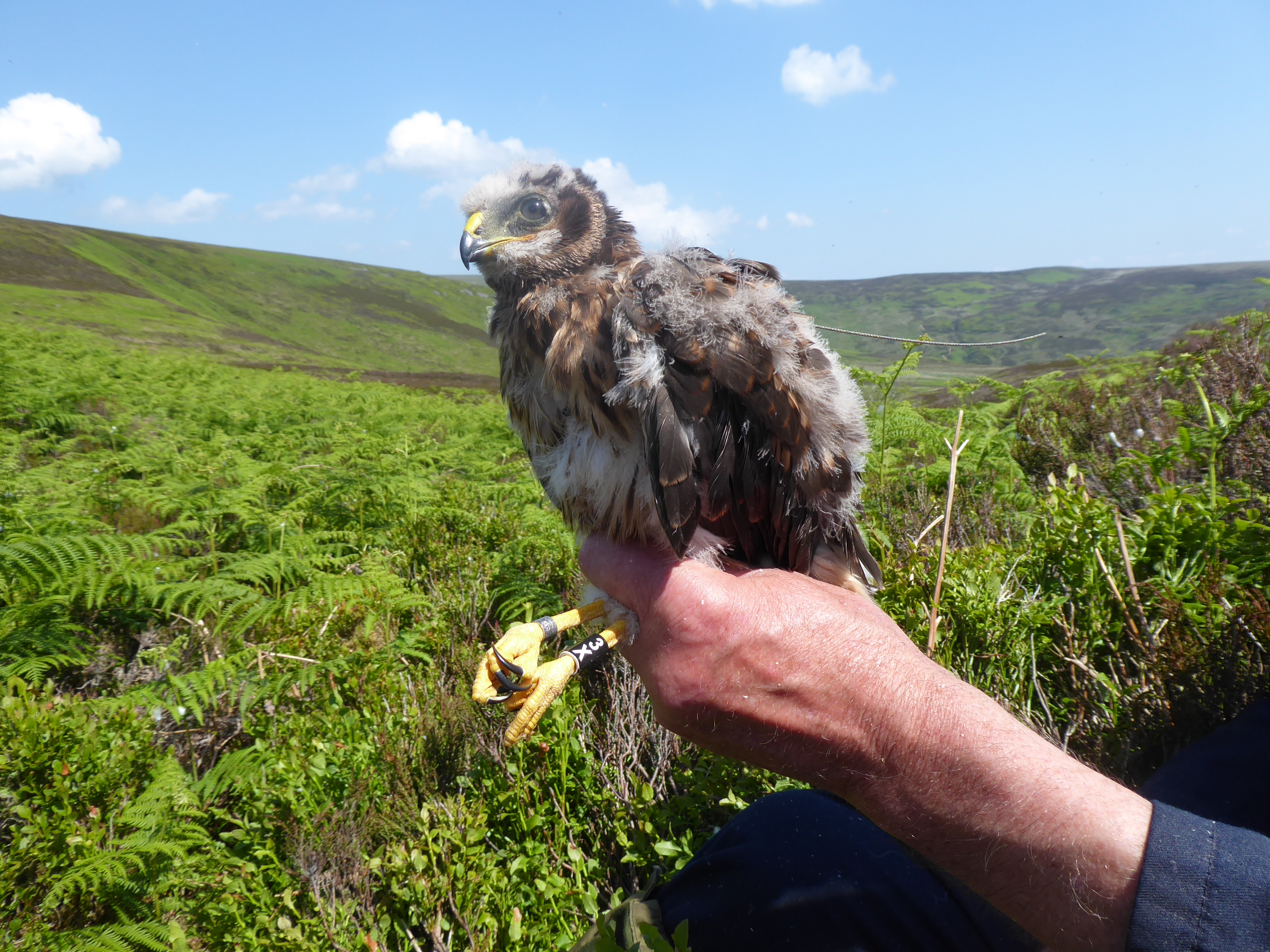
2018 was also the year that Natural England issued a licence to begin a hen harrier brood meddling trial on grouse moors in northern England. For new blog readers, hen harrier brood meddling is a conservation sham sanctioned by DEFRA as part of its ludicrous ‘Hen Harrier Action Plan‘ and carried out by Natural England (NE), in cahoots with the very industry responsible for the species’ catastrophic decline in England. For more background see here.
Brood meddling has been described as a sort of ‘gentleman’s agreement’ by commentator Stephen Welch:
“I don’t get it, I thought the idea of that scheme was some kind of trade off – a gentleman’s agreement that the birds would be left in peace if they were moved from grouse moors at a certain density. It seems that one party is not keeping their side of the bargain“.
With at least 95 hen harriers gone since 2018, there is no question that the grouse shooting industry is simply taking the piss. Meanwhile, Natural England pretends that ‘partnership working’ is the way to go and DEFRA Ministers remain silent.
‘Partnership working’ according to Natural England appears to include authorising the removal of hen harrier chicks from a grouse moor already under investigation by the police for suspected raptor persecution (here) and accepting a £75k ‘donation’ from representatives of the grouse shooting industry that prevents Natural England from criticising them or the sham brood meddling trial (see here). This is in addition to a £10k ‘donation’ that Natural England accepted, under the same terms, in 2021 (here).
Cartoon by Gerard Hobley
So here’s the latest gruesome list. Note that the majority of these birds (but not all) were fitted with satellite tags. How many more [untagged] harriers have been killed?
February 2018: Hen harrier Saorsa ‘disappeared’ in the Angus Glens in Scotland (here). The Scottish Gamekeepers Association later published wholly inaccurate information claiming the bird had been re-sighted. The RSPB dismissed this as “completely false” (here).
5 February 2018: Hen harrier Marc ‘disappeared’ on a grouse moor in Durham (here).
9 February 2018: Hen harrier Aalin ‘disappeared’ on a grouse moor in Wales (here).
March 2018: Hen harrier Blue ‘disappeared’ in the Lake District National Park (here).
March 2018: Hen harrier Finn ‘disappeared’ near Moffat in Scotland (here).
18 April 2018: Hen harrier Lia ‘disappeared’ in Wales and her corpse was retrieved in a field in May 2018. Cause of death was unconfirmed but police treating death as suspicious (here).
8 August 2018: Hen harrier Hilma ‘disappeared’ on a grouse moor in Northumberland (here).
16 August 2018: Hen harrier Athena ‘disappeared’ on a grouse moor in Scotland (here).
26 August 2018: Hen Harrier Octavia ‘disappeared’ on a grouse moor in the Peak District National Park (here).
29 August 2018: Hen harrier Margot ‘disappeared’ on a grouse moor in Scotland (here).
29 August 2018: Hen Harrier Heulwen ‘disappeared’ on a grouse moor in Wales (here).
3 September 2018: Hen harrier Stelmaria ‘disappeared’ on a grouse moor in Scotland (here).
24 September 2018: Hen harrier Heather ‘disappeared’ on a grouse moor in Scotland (here).
2 October 2018: Hen harrier Mabel ‘disappeared’ on a grouse moor on the edge of the Yorkshire Dales National Park (here).
3 October 2018: Hen Harrier Thor ‘disappeared’ next to a grouse moor in Bowland, Lanacashire (here).
23 October 2018: Hen harrier Tom ‘disappeared’ in South Wales (here).
26 October 2018: Hen harrier Arthur ‘disappeared’ on a grouse moor in the North York Moors National Park (here).
1 November 2018: Hen harrier Barney ‘disappeared’ on Bodmin Moor (here).
10 November 2018: Hen harrier Rannoch ‘disappeared’ on a grouse moor in Scotland (here). Her corpse was found nearby in May 2019 – she’d been killed in an illegally-set spring trap (here).
14 November 2018: Hen harrier River ‘disappeared’ on a grouse moor in the Nidderdale AONB (here). Her corpse was found nearby in April 2019 – she’d been illegally shot (here).
16 January 2019: Hen harrier Vulcan ‘disappeared’ in Wiltshire close to Natural England’s proposed reintroduction site (here).
7 February 2019: Hen harrier Skylar ‘disappeared’ next to a grouse moor in South Lanarkshire (here).
22 April 2019: Hen harrier Marci ‘disappeared’ on a grouse moor in the Cairngorms National Park (here).
26 April 2019: Hen harrier Rain ‘disappeared’ on a grouse moor in Nairnshire (here).
11 May 2019: An untagged male hen harrier was caught in an illegally-set trap next to his nest on a grouse moor in South Lanarkshire. He didn’t survive (here).
7 June 2019: An untagged hen harrier was found dead on a grouse moor in Scotland. A post mortem stated the bird had died as a result of ‘penetrating trauma’ injuries and that this bird had previously been shot (here).
5 September 2019: Wildland Hen Harrier 1 ‘disappeared’ on a grouse moor nr Dalnaspidal on the edge of the Cairngorms National Park (here).
11 September 2019: Hen harrier Romario ‘disappeared’ on a grouse moor in the Cairngorms National Park (here).
14 September 2019: Hen harrier (Brood meddled in 2019, #183704) ‘disappeared’ in the North Pennines (here).
23 September 2019: Hen harrier (Brood meddled in 2019, #55149) ‘disappeared’ in North Pennines (here).
24 September 2019: Wildland Hen Harrier 2 ‘disappeared’ on a grouse moor at Invercauld in the Cairngorms National Park (here).
24 September 2019: Hen harrier Bronwyn ‘disappeared’ near a grouse moor in North Wales (here).
10 October 2019: Hen harrier Ada ‘disappeared’ on a grouse moor in the North Pennines AONB (here).
12 October 2019: Hen harrier Thistle ‘disappeared’ on a grouse moor in Sutherland (here).
18 October 2019: Member of the public reports the witnessed shooting of an untagged male hen harrier on White Syke Hill in North Yorkshire (here).
November 2019: Hen harrier Mary found illegally poisoned on a pheasant shoot in Ireland (here).
14 December 2019: Hen harrier Oscar ‘disappeared’ in Eskdalemuir, south Scotland (here).
January 2020: Members of the public report the witnessed shooting of a male hen harrier on Threshfield Moor in the Yorkshire Dales National Park (here).
23 March 2020: Hen harrier Rosie ‘disappeared’ at an undisclosed roost site in Northumberland (here).
1 April 2020: Hen harrier (Brood meddled in 2019, #183703) ‘disappeared’ in unnamed location, tag intermittent (here).
5 April 2020: Hen harrier Hoolie ‘disappeared’ on a grouse moor in the Cairngorms National Park (here)
8 April 2020: Hen harrier Marlin ‘disappeared’ on a grouse moor in the Cairngorms National Park (here).
19 May 2020: Hen harrier Fingal ‘disappeared’ on a grouse moor in the Lowther Hills, Scotland (here).
21 May 2020: Hen harrier (Brood meddled in 2019, #183701) ‘disappeared’ on a grouse moor in Cumbria shortly after returning from wintering in France (here).
27 May 2020: Hen harrier Silver ‘disappeared’ on a grouse moor on Leadhills Estate, Scotland (here).
2020: day/month unknown: Unnamed male hen harrier breeding on RSPB Geltsdale Reserve, Cumbria ‘disappeared’ while away hunting (here).
9 July 2020: Unnamed female hen harrier (#201118) ‘disappeared’ from an undisclosed site in Northumberland (here).
25 July 2020: Hen harrier Harriet ‘disappeared’ on a grouse moor in the Yorkshire Dales National Park (here).
14 August 2020: Hen harrier Solo ‘disappeared’ in confidential nest area in Lancashire (here).
7 September 2020: Hen harrier Dryad ‘disappeared’ on a grouse moor in the Yorkshire Dales National Park (here).
16 September 2020: Hen harrier Fortune ‘disappeared’ from an undisclosed roost site in Northumberland (here).
19 September 2020: Hen harrier Harold ‘disappeared’ on a grouse moor in the Yorkshire Dales National Park (here).
20 September 2020: Hen harrier (Brood meddled in 2020, #55152) ‘disappeared’ next to a grouse moor in North Yorkshire (here).
24 February 2021: Hen harrier Tarras ‘disappeared’ next to a grouse moor in Northumberland (here)
12th April 2021: Hen harrier Yarrow ‘disappeared’ near Stockton, County Durham (here).
18 May 2021: Adult male hen harrier ‘disappeared’ from its breeding attempt on RSPB Geltsdale Reserve, Cumbria whilst away hunting (here).
18 May 2021: Another adult male hen harrier ‘disappeared’ from its breeding attempt on RSPB Geltsdale Reserve, Cumbria whilst away hunting (here).
24 July 2021: Hen harrier Asta ‘disappeared’ at a ‘confidential site’ in the North Pennines (here). We learned 18 months later that her wings had been ripped off so her tag could be fitted to a crow in an attempt to cover up her death (here).
14th August 2021: Hen harrier Josephine ‘disappeared’ at a ‘confidential site’ in Northumberland (here).
17 September 2021: Hen harrier Reiver ‘disappeared’ in a grouse moor dominated region of Northumberland (here)
24 September 2021: Hen harrier (Brood meddled in 2021, R2-F-1-21) ‘disappeared’ in Northumberland (here).
15 November 2021: Hen harrier (brood meddled in 2020, #R2-F1-20) ‘disappeared’ at the edge of a grouse moor on Arkengarthdale Estate in the Yorkshire Dales National Park (here).
19 November 2021: Hen harrier Val ‘disappeared’ in the Lake District National Park in Cumbria (here).
19 November 2021: Hen harrier Percy ‘disappeared’ in Lothian, Scotland (here).
12 December 2021: Hen harrier Jasmine ‘disappeared’ on a grouse moor (High Rigg Moor on the Middlesmoor Estate) in the Nidderdale AONB in North Yorkshire (here).
9 January 2022: Hen harrier Ethel ‘disappeared’ in Northumberland (here).
26 January 2022: Hen harrier Amelia ‘disappeared’ in Bowland (here).
10 February 2022: An unnamed satellite-tagged hen harrier ‘disappeared’ in a grouse moor dominated area of the Peak District National Park (here). One year later it was revealed that the satellite tag/harness of this young male called ‘Anu’ had been deliberately cut off (see here).
12 April 2022: Hen harrier ‘Free’ (Tag ID 201121) ‘disappeared’ at a ‘confidential site’ in Cumbria (here). It later emerged he hadn’t disappeared, but his mutilated corpse was found on moorland in the Yorkshire Dales National Park. A post mortem revealed the cause of death was having his head twisted and pulled off. One leg had also been torn off whilst he was still alive (here).
April 2022: Hen harrier ‘Pegasus’ (tagged by the RSPB) ‘disappeared’ on a grouse moor at Birkdale in the Yorkshire Dales National Park (here).
May 2022: A male breeding hen harrier ‘disappeared’ from a National Trust-owned grouse moor in the Peak District National Park (here).
May 2022: Another breeding male hen harrier ‘disappeared’ from a National Trust-owned grouse moor in the Peak District National Park (here).
14 May 2022: Hen harrier ‘Harvey’ (Tag ID 213844) ‘disappeared’ from a ‘confidential site’ in the North Pennines (here).
20 June 2022: Hen harrier chick #1 stamped to death in nest on a grouse moor in the Yorkshire Dales National Park (here).
20 June 2022: Hen harrier chick #2 stamped to death in nest on a grouse moor in the Yorkshire Dales National Park (here).
20 June 2022: Hen harrier chick #3 stamped to death in nest on a grouse moor in the Yorkshire Dales National Park (here).
20 June 2022: Hen harrier chick #4 stamped to death in nest on a grouse moor in the Yorkshire Dales National Park (here).
17 August 2022: Hen harrier (brood meddled in 2022, #R1-M1-22) ‘disappeared’ on moorland in the Yorkshire Dales National Park (here).
September 2022: Hen harrier ‘Sullis’ (tagged by the RSPB) ‘disappeared’ on a grouse moor in Cumbria (here).
5 October 2022: Hen harrier (brood meddled in 2022, #R3-M2-22) ‘disappeared’ on moorland in the Yorkshire Dales National Park (here).
10 October 2022: Hen harrier ‘Sia’ ‘disappeared’ near Hamsterley Forest in the North Pennines (here).
October 2022: Hen harrier (brood meddled in 2021, #R1-F1-21) ‘disappeared’ in the North Sea off the North York Moors National Park (here).
December 2022: Hen harrier female (brood meddled in 2020, #R2-F2-20) ‘disappeared’ on moorland in Cumbria (here).
1 December 2022: Hen harrier male (brood meddled in 2021, #R1-M1-21) ‘disappeared’ on moorland in the Yorkshire Dales National Park (here).
14 December 2022: Hen harrier female (brood meddled in 2022, #R3-F1-22) ‘disappeared’ on moorland in the North Pennines AONB (here).
15 December 2022: Hen harrier female (brood meddled in 2022, #R2-F1-22) ‘disappeared’ on moorland in the Yorkshire Dales National Park (here).
March 2023: Unnamed male hen harrier (tagged by Natural England – details not yet released) ‘disappeared’ in North Yorkshire (here).
April 2023: Unnamed female hen harrier (tagged by Natural England – details not yet released) ‘disappeared’ in North Yorkshire (here).
April 2023: Hen harrier ‘Lagertha’ (tagged by RSPB) ‘disappeared’ in North Yorkshire (here).
April 2023: Hen harrier ‘Nicola’ (Tag ID 234078) ”disappeared’ in North Yorkshire (here).
April 2023: Untagged male hen harrier ‘disappeared’ from an active nest on RSPB Geltsdale Reserve in Cumbria (here).
April 2023: Another untagged male hen harrier ‘disappeared’ from an active nest on RSPB Geltsdale Reserve in Cumbria (here).
April 2023: Untagged male hen harrier ‘disappeared’ from an active nest in Durham (here).
4/5 May 2023: Satellite-tagged male hen harrier called ‘Rush’ ‘disappeared’ from a grouse moor in Bowland AONB in Lancashire (here).
17 May 2023: Satellite-tagged hen harrier called ‘Wayland’ ‘disappeared’ in the Clapham area of North Yorkshire, just north of the Bowland AONB (here).
To be continued…….
Not one of these 95 incidents has resulted in an arrest, let alone a prosecution. I had thought that when we reached 30 dead/missing hen harriers then the authorities might pretend to be interested and at least say a few words about this national scandal. We’ve now reached NINETY FIVE hen harriers, and still Govt ministers remain silent. They appear not to give a monkey’s. And yes, there are other things going on in the world, as always. That is not reason enough to ignore this blatant, brazen and systematic destruction of a supposedly protected species, being undertaken to satisfy the greed and bloodlust of a minority of society.
The RSPB has issued a press release this morning announcing the suspicious disappearance of two more satellite-tagged hen harriers over a two week period in May.
One of them, called ‘Rush’, is the harrier whose suspicious disappearance Lancashire Police mentioned on their Facebook page a couple of weeks ago (here).
The suspicious disappearance of a second harrier, called ‘Wayland’, has not previously been reported.
Here is the RSPB’s press release:
MORE HEN HARRIERS DISAPPEAR IN SUSPICIOUS CIRCUMSTANCES
*Two satellite tagged birds disappeared over two weeks in May, in Lancashire and North Yorkshire: the latest in a succession of similar incidents.
*The RSPB recently reported that 21 Hen Harriers had been either killed or disappeared in the North of England in the past year.
*Hen Harriers are rare birds on the red list of conservation concern, with illegal killing the key factor limiting their recovery.
Two Hen Harriers have vanished in suspicious circumstances in just two weeks within the Bowland Area of Outstanding Natural Beauty (AONB) and nearby North Yorkshire.
The birds were fitted with satellite tags, which are fitted to gather information about this rare and persecuted species.
Rush, an adult male bird, had been spending time in Mallowdale, in the Forest of Bowland, throughout the spring until his tag unexpectedly stopped transmitting on 4 May. The tag’s last fix put him over a grouse moor. Lancashire Police and the National Wildlife Crime Unit carried out a search of the area but found no sign of the bird or its tag.
Hen harrier ‘Rush’. Photo: RSPB
On 17 May, another tagged bird, Wayland, vanished in the Clapham area of North Yorkshire, just north of the Bowland AONB, where the land is a mix of farmland with gamebird shooting. Its tag had also been functioning normally until that point.
Hen harrier ‘Wayland’. Photo: RSPB
These two birds are in addition to the 21 Hen Harriers that were reported as either killed or missing across Northern England in the last year, including one found dead in the Yorkshire Dales National Park with its head pulled off.
Hen Harriers are rare breeding birds in the UK, known for their acrobatic ‘skydancing’ courtship display which they perform above upland moors in spring. In England there were 34 successful nests in 2022, despite a previous independent government report finding that there is enough habitat and food to support over 300 pairs. Illegal killing continues to be the main factor limiting the recovery of the UK Hen Harrier population.
A scientific study published in the journal Biological Conservation found that survival rates of Hen Harriers were ‘unusually low’, and illegal killing was identified as a major cause. Using data from the largest GPS tracking programme for Hen Harriers globally, the authors discovered that individuals tracked by the project were typically living just 121 days after fledging. The risk of dying as a result of illegal killing increased significantly as Hen Harriers spent more time on areas managed for grouse shooting. Previously, a 2019 Government study concluded that Hen Harriers suffer elevated levels of mortality on grouse moors, most likely as a result of illegal killing.
The RSPB’s Birdcrime report found that, of the 108 confirmed incidents of bird of prey persecution in 2021, 71% were in connection with gamebird shooting and, since 1990, 67% of those convicted of raptor persecution offences were gamekeepers.
Howard Jones, RSPB Senior Investigations Officer, said:
“To have two more Hen Harriers disappear this spring is a huge blow for a struggling species where every nest counts. These latest disappearances are being treated as suspicious by the police. From Wayland’s tag data, it appears that the tag stopped mid-transmission – cutting out abruptly as it was sending data through to us – which strongly suggests human interference.
“We hope the otherwise tragic news of these birds sends a clear message that licensing of driven grouse shooting estates must be implemented to ensure all are operating within the law, and to protect birds like Hen Harriers from persistent persecution. Clearly self-regulation has failed, as evidenced by this spate of disappearances. How many more birds must vanish from the breeding population before action is taken?”
ENDS
Hen harrier ‘Wayland’ is the 9th hen harrier to ‘vanish’ this year and the 95th hen harrier to have been either illegally killed or gone ‘missing’ in suspicious circumstances since Natural England’s insane brood meddling trial began in 2018. I understand there are more, still to be publicised.
I’ll be updating and publishing the running tally of illegally killed / ‘missing’ hen harriers shortly…
Keep an eye out for BBC’s Springwatch programme this week.
Starting this evening, there’ll be a feature film from the RSPB’s Geltsdale Reserve in Cumbria introduced by the BBC’s Frank Gardner, who takes a closer look at hen harrier persecution on driven grouse moors.
You’ll recall that last month, the RSPB reported that two hen harrier nests on Geltsdale had yet again been abandoned after the breeding males ‘vanished’ whilst away hunting on nearby moors (see here).
Then on Tuesday evening Frank will introduce another film, this time from the RSPB’s Lakenheath Fen Reserve, where he’ll chat with Mark Thomas from the RSPB’s Investigations Team about the wider issue of raptor persecution.
Well done to the producers at Springwatch who made the decision to make these films. After years of carefully avoiding the raptor persecution scandal, it’ll be great to finally see it featured and discussed on the country’s premier TV nature programme, reaching millions of new viewers.
BBC 2, 8pm and available on iPlayer afterwards.
UPDATE: The episode is now available on iPlayer – well worth a watch here
Press release from REVIVE coalition partner League Against Cruel Sports (5th June 2023):
ANIMAL WELFARE CHARITY RELEASES FOOTAGE EXPOSING THE GRUESOME REALITY OF SNARING
Scottish Parliament urged to use Wildlife Management and Muirburn Bill to ban cruel traps
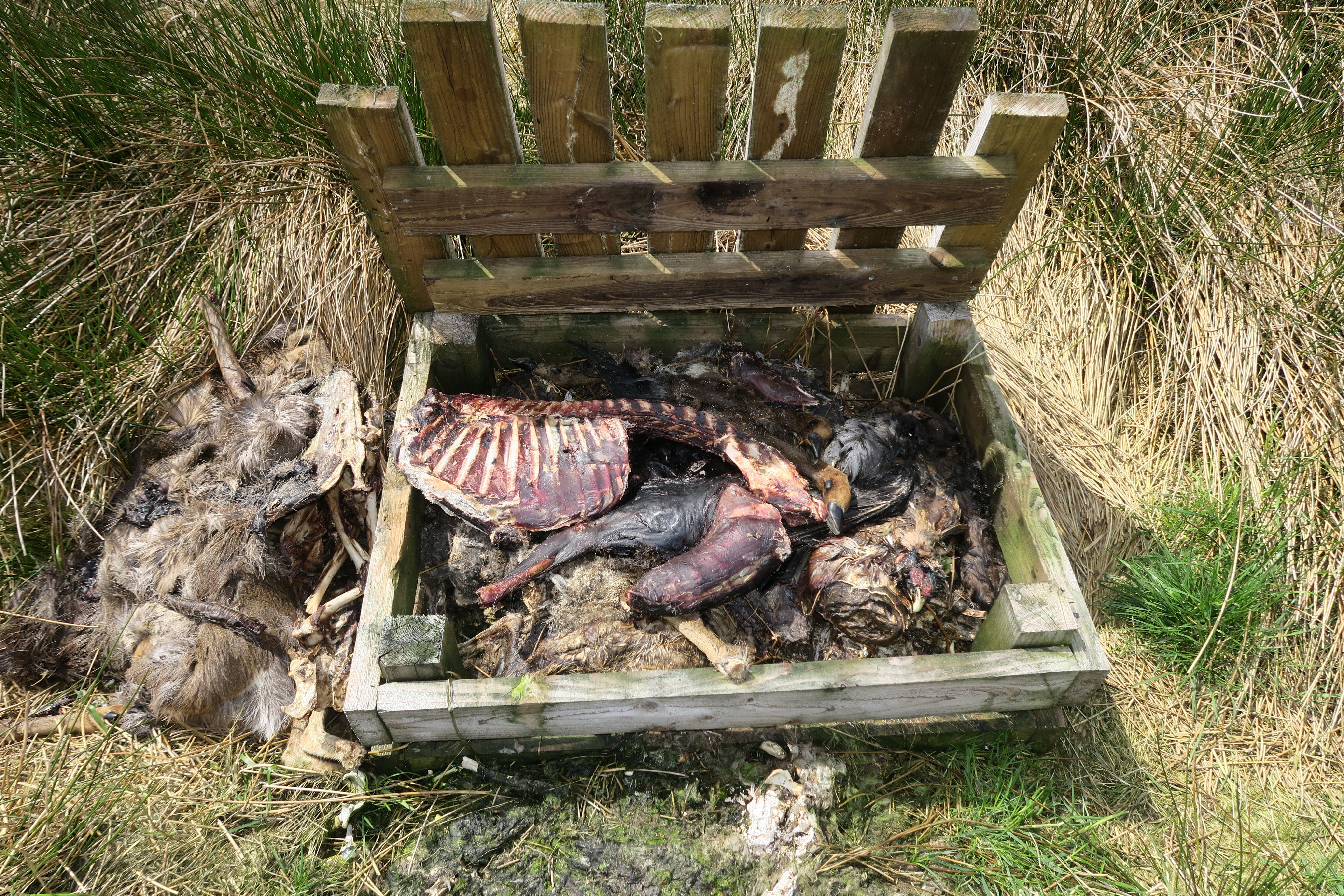
The League Against Cruel Sports Scotland has released footage exposing the grim reality of snaring. The footage shows a dead Badger with a snare around its abdomen just a short distance from a stink pit full of rotting animal carcasses surrounded by thin wire snares.
The snared Badger. Photo: League Against Cruel Sports
The charity says the footage highlights the urgent need for a ban on snaring under the new Wildlife Management and Muriburn (Scotland) Bill which last week began its stage 1 evidence sessions. Although perfectly legal, the footage illustrates that even when used lawfully, snares inflict severe cruelty and suffering.
The video footage was filmed just last week on moorland near Coulter, South Lanarkshire by the League’s field investigators. Commenting on what is seen in the film, Robbie Marsland, Director of the League Against Cruel Sports, Scotland said:
“Although we can’t be clear of the exact circumstances surrounding this Badger’s death, what is in absolutely no doubt is that this animal suffered a slow, painful and traumatic death.
“The last hours and possibly days of this creature’s life would have been spent in fear and agony as it tried to free itself from a primitive, indiscriminate trap before eventually succumbing to its injuries.
“No amount of regulation will stop snares from being cruel and indiscriminate traps which is why only a ban will stop animals suffering. This footage, which shows a scenario which is perfectly legal under the existing regulations, proves that regulating snares is simply regulating cruelty.”
The Scottish Parliament’s Rural Affairs and Islands Committee is currently taking evidence on the Scottish Government’s proposed wildlife management legislation. Robbie Marsland added:
“The Scottish Government’s Wildlife Management and Muirburn (Scotland) Bill is an opportunity to rid our countryside of these deadly traps once and for all. The Government has explored this issue several times in recent years but always stopped short of an outright ban. Now is the opportunity to be bold, and put animal welfare first.
“The scope of the Bill has the potential to end a number of unpalatable practices which go on in our countryside to sustain sport shooting such as the use of stink pits to lure unsuspecting animals into deadly traps. This type of activity has no place in modern society and we hope as the Bill progresses and undergoes further scrutiny these opportunities won’t be missed.”
The covered ‘stink pit’ contained rotting carcasses. The stench is used to draw in mammals to the site, which is surrounded by snares. Photo: League Against Cruel Sports
The inside of the stink pit. Photo: League Against Cruel Sports
Scotland currently has the most stringent regulations on snare use, but despite this, protected species such as Badgers are regularly caught and killed by snares. Dr Elspeth Srirling from Scottish Badgers said:
“Badgers are strong animals and fight to escape, resulting in severe injuries where the wire noose cuts through skin and muscle tissue and into the body cavity leaving the badger to endure prolonged agonies, pain and a lingering death. Scottish Badgers has attended several incidents in recent years where multiple snares were used year after year to trap Badgers.
“Snare-users have had decades to demonstrate a willingness to do the right thing by avoiding positioning snares where Badgers are present, but they stubbornly resist. Banning their use and manufacture outright is the only option.”
A recent field study of ground predator control by the League found that 57,000 killing devices are deployed each day in Scotland representing the equivalent of over 10,000,000 active trapping and snaring days per year, with nearly half of animals killed being non-target species such as Hedgehogs, Dippers and Mistle Thrush.
Blog reader Andy Amphlett went for a walk on Moy Estate last weekend.
Moy Estate will be familiar to regular blog readers as it’s featured here many times over the last 13 years. Most recently, the estate has been sanctioned with a three-year General Licence restriction, imposed by NatureScot after the discovery of a poisoned red kite and ‘incidents in relation to trapping offences‘ (see here). And in March this year, estate gamekeeper Rory Parker was convicted for shooting a sparrowhawk on Moy (see here).
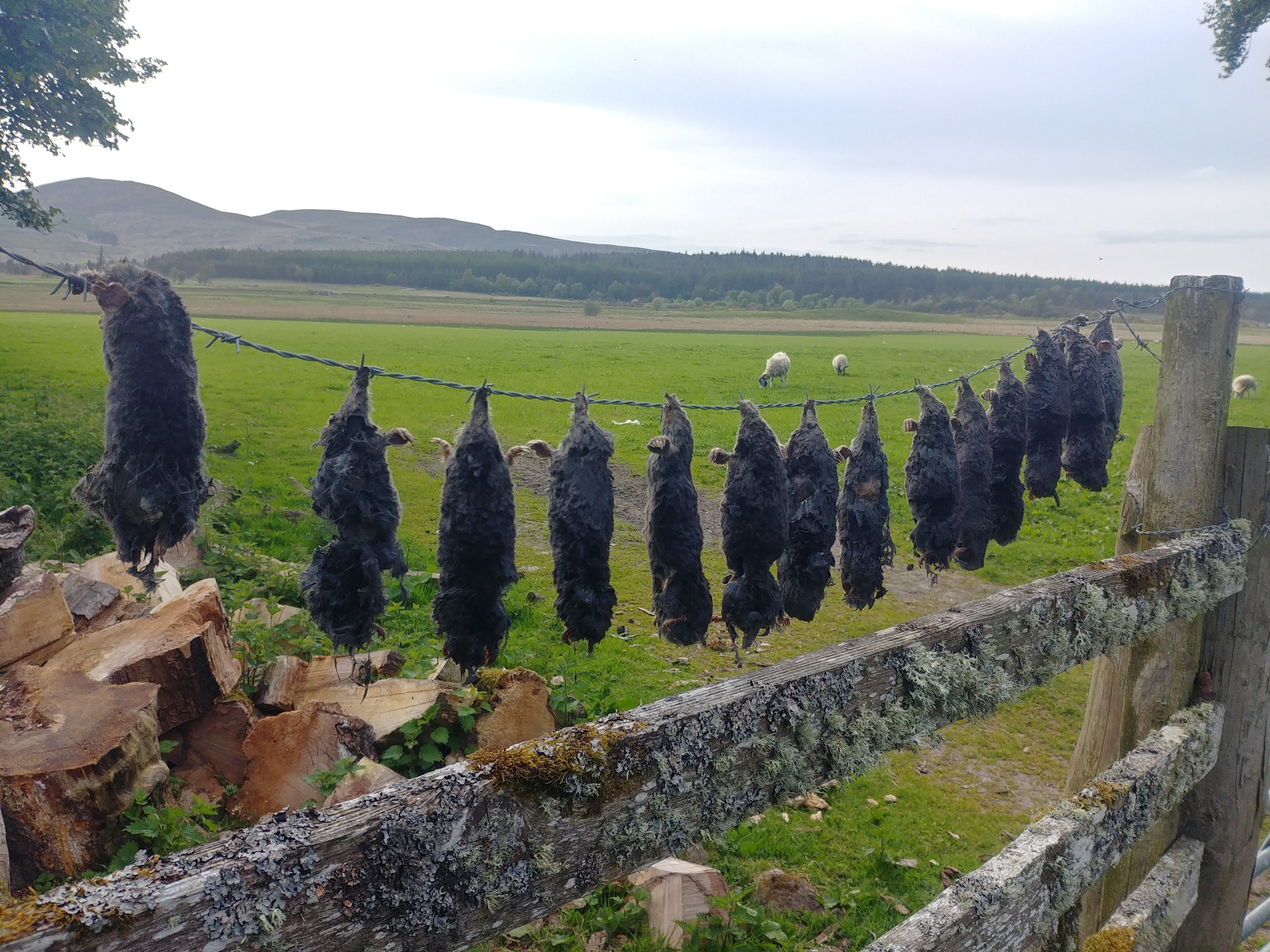
Victorian attitudes appear to persist at Moy Estate, as Andy discovered last Saturday when he found 14 dead moles hung by their snouts on a barbed wire fence:
Photo: Andy Amphlett
This disgusting activity isn’t illegal, and was once a common sight on UK shooting estates when victims would be hung on what was known as a ‘gamekeeper’s gibbet’ to demonstrate to the landowner that ‘vermin control’ was taking place.
It’s hard to believe though that anyone still thinks it’s appropriate or acceptable to brag about how much wildlife has been killed. What purpose does it serve? And why are moles still being killed anyway?
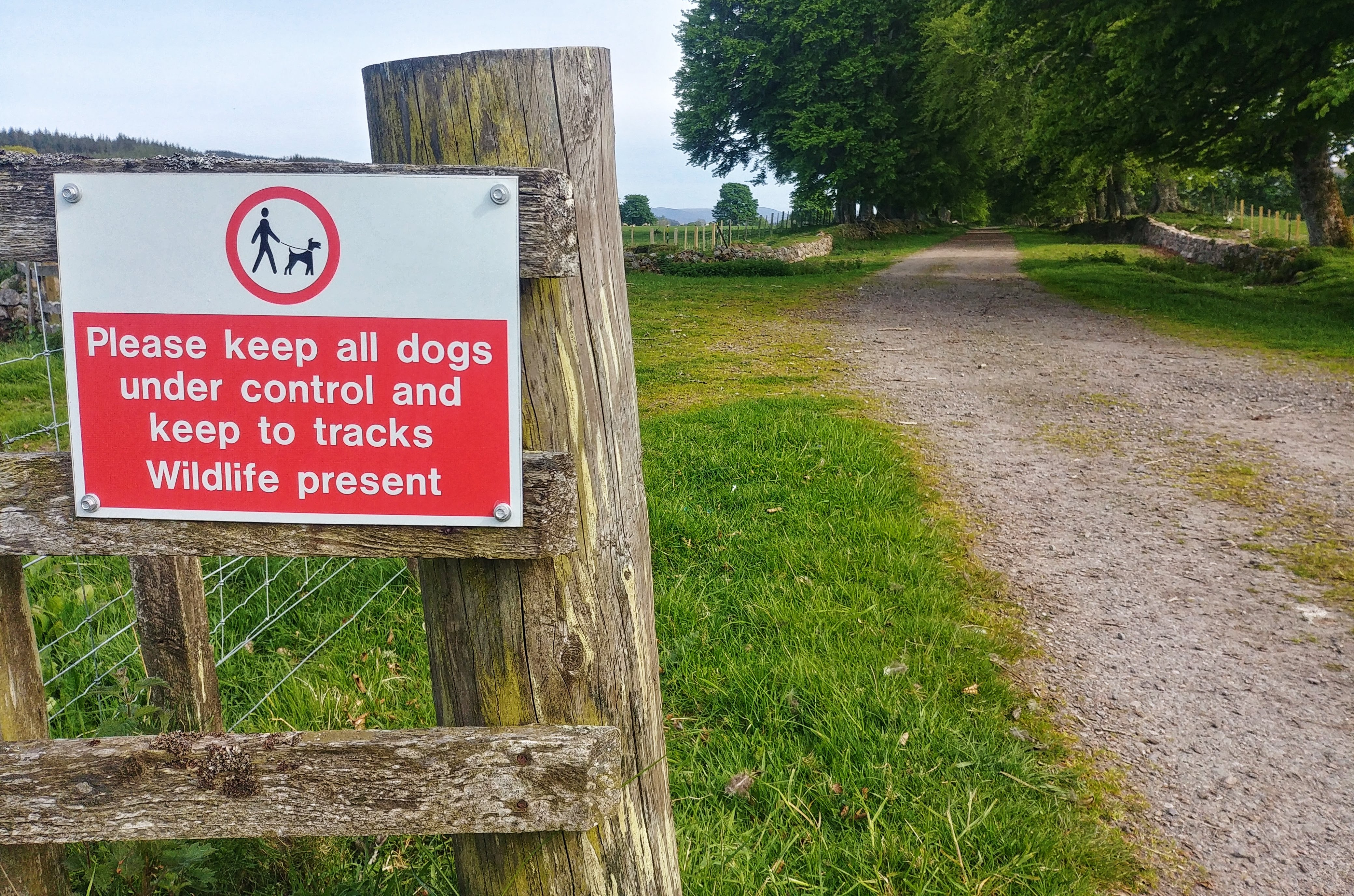
Without any sense of irony, this is the sign at the entrance to Moy Estate, just a few hundred metres away from the strung-up moles:
Photo: Andy Amphlett
Yeah, wildlife is present but a lot of it’s quite likely to have been killed.
And I’m pretty sure that this sign might be in contravention of the Scottish Outdoor Access Code, which does not insist that walkers ‘keep to tracks’ except in certain circumstances. It just makes me question what an estate might be wanting to keep from public view…
See here and here for two excellent blogs written by Nick Kempe about Scottish access signs and what is/isn’t permissible for those exercising their access rights and those controlling that access.
A report has been made to Highland Council about the Moy Estate sign.




 Raptor Persecution UK