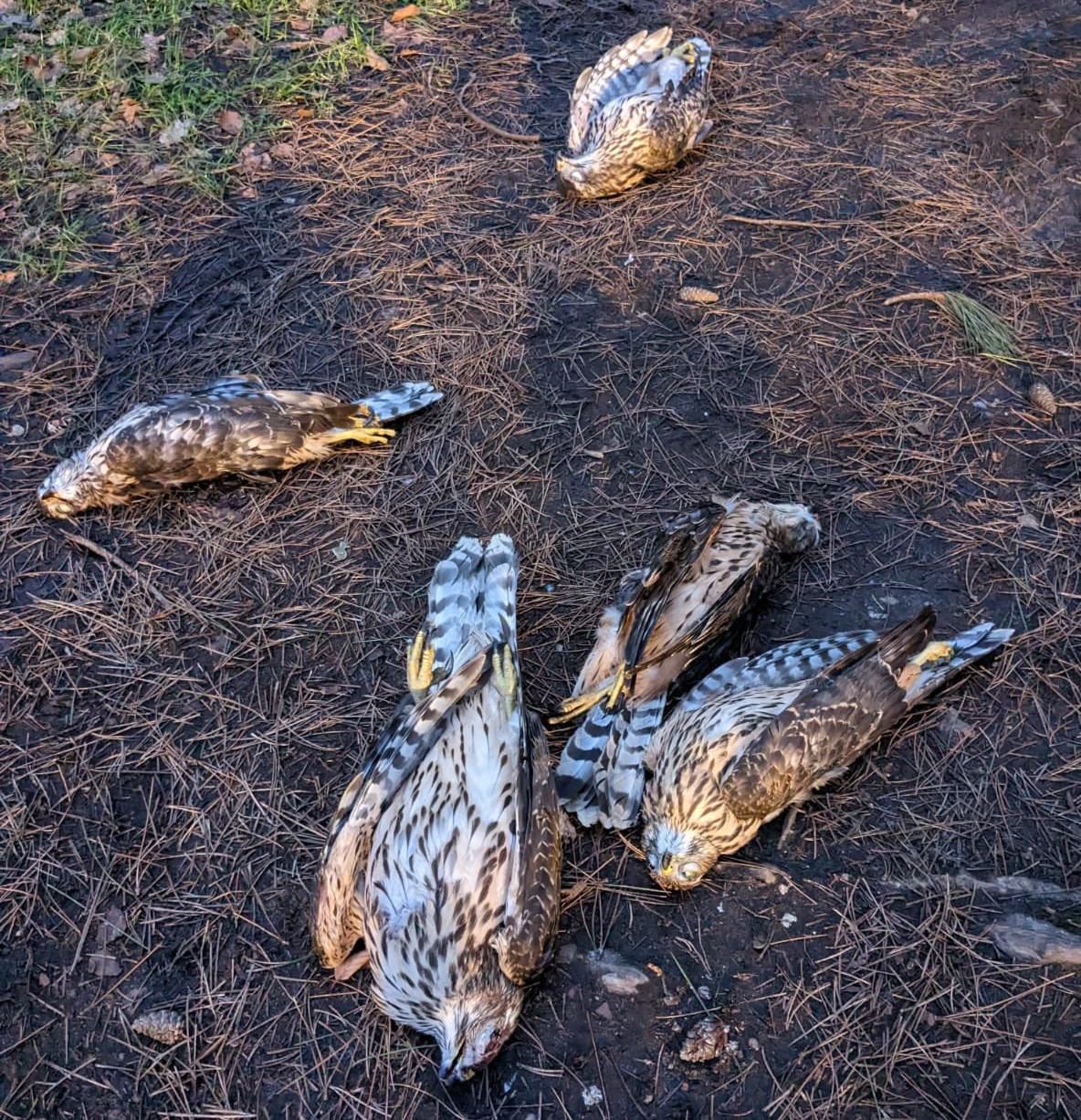
Yesterday, gamekeeper Francis Addison was convicted for multiple offences linked to the discovery of five shot goshawks that were found in a public carpark next to King’s Forest near Thetford in January this year (see here).
The five shot goshawks. Photo: Suffolk Police
Addison lives in the village of Weeting in Norfolk.
Weeting also just happens to be where another gamekeeper, Matthew Stroud, was convicted in October 2022 for multiple wildlife crimes on land he managed for pheasant shooting at Fengate Farm, including the killing of six buzzards and a goshawk and the laying of poisoned baits (see here and here).
Weeting is a small village. There are a few farms there, according to Google maps, some or all of which could be hosting pheasant shooting, but I was curious about whether Addison and Stroud were associated with the same pheasant shoot at Fengate Farm.
So I asked Suffolk Police this morning:
Interesting.
Fengate Farm is owned by Richard Norman Parrott, who also happens to be a director of Weeting Steam Engine Rally Ltd, according to Companies House (here).
The Weeting Steam Rally and Country Show is scheduled to take place at Fengate Farm on 14-16th July 2023 – see the rally website here – where overnight camping is offered (here) and the rally is described on the website as follows:
‘A fun family day out filled with nostalgia of steam. We have plenty for all the family to enjoy, from the large range of steam engines to the fairground, gundogs to chainsaw carving, there’s something for everyone, whatever your age – across our 170 acre site! Our large trade area has a vast array of stalls, we also have a craft tent and a food hall, along with many other things to see and do‘.
Now, I’m not suggesting for one minute that Mr Parrott had any involvement with, or knowledge of, the criminality associated with the Fengate Farm pheasant shoot. For all I know, he leases out the land used for the shoot and has nothing to do with it (it’s worth noting that criminal gamekeeper Stroud was described as ‘self-employed’ and criminal gamekeeper Addison has been described as being ‘part-time’ and ‘retired’ – there is no indication that either were employed by Mr Parrott).
But given the discovery of poisoned baits and poisoned birds of prey, shot birds of prey, unsecured poisons, the illegal use of animal traps, and the unlawful use and storage of shotguns associated with this pheasant shoot, I’d suggest that visitors to the steam rally and country show might want to consider the risks to their health and safety and that of their children and dogs.
Further to the criminal conviction yesterday of gamekeeper Francis Addison from Weeting, near Thetford in relation to the discovery of five shot goshawks in January this year (see here), there was excellent coverage on BBC’s Look East yesterday evening.
It’s available on iPlayer (here, starts 05.53 mins) but only until this evening, so here is a transcript of the two-minute piece:
A part-time gamekeeper who admitted dumping dead birds of prey in a parking area in Suffolk has been given a suspended prison sentence.
The five goshawk carcasses were found in January. Francis Addison who’s 72 and from Weeting, near Thetford, denied shooting them. Our Environment reporter Richard Daniels sent this report from Norwich Magistrates Court.
It was a shocking discovery. Five goshawks dumped in a public area near Wordwell in Suffolk. All had been shot. When police swabbed them for DNA it led them to the home of Francis Addison, an ex-military weapons instructor and part-time gamekeeper.
Today, Addison arrived at court facing 19 charges, including possession of the goshawks and various firearms offences.
Francis Addison arriving at court. Screen grab from BBC Look East
Addison’s defence told magistrates he found the five goshawk carcasses while out walking his dog. He put them in a bag and took them home. [Ed: according to this BBC article, Addison claimed he was intending to give them to the BTO]. But when a friend told him that it was illegal to have them, he took fright and returned them to the spot where he found them.
Once driven to extinction through persecution, goshawks are some of our most protected birds. The court was told there were believed to be as few as 33 living in Suffolk.
[Tom Grose, RSPB Investigations Officer]: “It’s illegal to possess these birds. However, we still don’t know who killed these goshawk and there is a reward available, still, for anybody that comes forward with information leading to the conviction of somebody for that offence”.
When the police searched Addison’s home they found his gun cabinet unlocked with ammunition stored in cupboards and in his car.
Screen grab from BBC Look East
[Sgt Brian Calver, Suffolk Police]: “If the house got burgled then they had access to a rifle, four shotguns, all the ammunition in the world. Gun ownership is a privilege, not a right, that’s one of the conditions on everyone’s licence to make sure that you keep those guns as secure as possible at all times”.
Addison was given a 12-week suspended prison sentence. He was told he’d shown a total disregard and disdain towards his licensing requirements. His firearm and shotgun certificates have been revoked.
Richard Daniel, BBC Look East, Norwich Magistrates Court.
ENDS
I’m so pleased to learn that Addison ‘found’ the five shot goshawks on his dog walk and that their deaths had nothing whatsoever to do with his cage traps, dead woodpigeon and guns. Phew! Seems he’s just an unlucky chap, not a raptor-killing bastard.
UPDATE 30th June 2023: Criminal gamekeepers Addison & Stroud both linked to Fengate Farm in Weeting, Norfolk (here)
At Norwich Magistrates’ court today, Frances Addison (72) a part-time gamekeeper of South Park, Weeting, pleaded guilty to 19 charges in connection with a multi-agency raptor persecution investigation led by Suffolk Police, including possession of five shot Goshawks.
The five birds were found dead together in Kings Forest, near Wordwell, Suffolk on 16 January 2023.
The five shot juvenile goshawks found dumped in car park. Photo: Suffolk Police
The incident was reported to Suffolk Police, who swabbed the birds at the scene for human DNA and then x-rayed them as part of their investigation. All five birds were found to contain multiple pieces of shot and remarkably a human DNA hit was registered from a swab of one of the bird’s legs.
The DNA findings led Suffolk and Norfolk Constabularies, assisted by RSPB Investigations and the National Wildlife Crime Unit, to search the suspect’s home in nearby Weeting, where a number of offences in relation to firearms and traps were uncovered. In interview, Addison claimed that he had found the Goshawks and then put them back and that all gamekeepers were killing birds of prey.
The court dealt with all the offences together and sentenced Addison to 12 weeks imprisonment – suspended for 12 months and ordered him to pay £1080 in compensation and £105 costs.
All birds of prey are protected by law, and to kill or injure one could result in jail and/or an unlimited fine. Yet the illegal killing of birds of prey remains a widespread national problem.
The RSPB’s annual Birdcrime report for 2021 revealed 108 confirmed incidents of birds of prey being shot, trapped or poisoned. However, the true number is likely to be far higher.
The report also found that Norfolk had the highest number of confirmed raptor persecution incidents than any other county in 2021.
It remains unknown who shot the Goshawks despite extensive rewards on offer from RSPB, Wild Justice, and Rare Bird Alert.
Mark Thomas, UK Head of Investigations at RSPB said:
“Goshawks are an exhilarating apex predator, so it was both shocking and appalling to see images of the five shot birds discarded in the Breckland Forest car park, we applaud the efforts and professionalism of Suffolk Police in deploying key forensic techniques that have led to court charges in this case. In 2021, two-thirds of all confirmed UK raptor persecution incidents happened in connection with land used for gamebird shooting, faced with huge public displeasure there is increasingly no place to hide for those who commit these crimes“.
Sergeant Brian Calver, of Suffolk Constabulary’s Rural and Wildlife Crime team, said:
“This is a particularly disturbing case. Bird of prey crime is a national wildlife crime priority, which is taken very seriously by police. We will leave no stone unturned in pursuing criminals that cause deliberate harm to wildlife. This incident has had a significant impact on the Goshawk population in the Brecks and in particular their ability to expand their territory. As well as possessing dead schedule 1 birds, Addison has shown a complete disregard for the security of his guns, which is equally concerning.”
He went on to say “We welcome today’s outcome and I hope the sentence imposed sends a strong message to others that are involved in this type of criminality. We’ll continue to work closely with partners to ensure such crimes become a thing of the past.”
The charges were:
· Five counts of possession of a dead schedule 1 wild bird (Goshawk)
· One count of killing a non-schedule 1 wild bird (Wood Pigeon)
· One count of use of an animal trap in circumstance for which it is not approved
· Two counts of possession of an article capable of being used to commit a summary offence, namely two air rifles and six animal traps
· Six counts of failing to comply with the conditions of a firearm certificate
· Four counts of failing to comply with the condition of a shotgun certificate.
ENDS
Brilliant multi-agency partnership work – very well done to everyone involved.
The sentence is, as usual, insignificant and no deterrent to others.
The Norfolk village of Weeting seems to be somewhat of a hotspot for raptor persecution – last year another gamekeeper, Matthew Stroud, was convicted of multiple wildlife crime offences in the area including the placing of poisonous baits and the killing of buzzards and a goshawk (see here).
I look forward to reading BASC’s condemnation of Addison and his crimes – given their faux outrage when Suffolk Police initially asking the shooting community to help progress the police investigation (see here).
UPDATE 30th June 2023: More on convicted Norfolk gamekeeper Francis Addison (here)
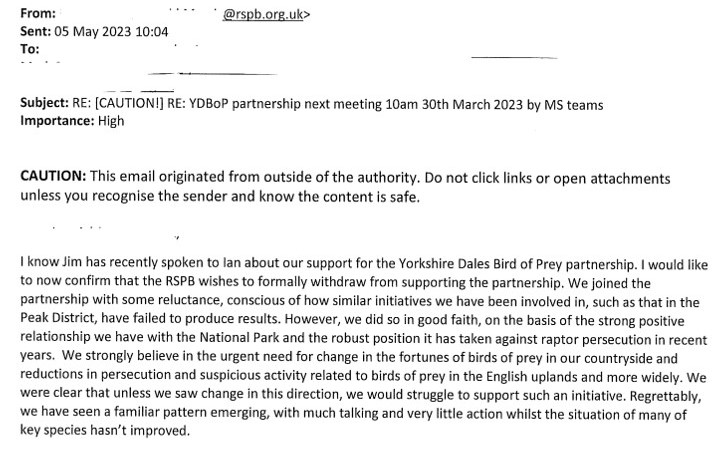
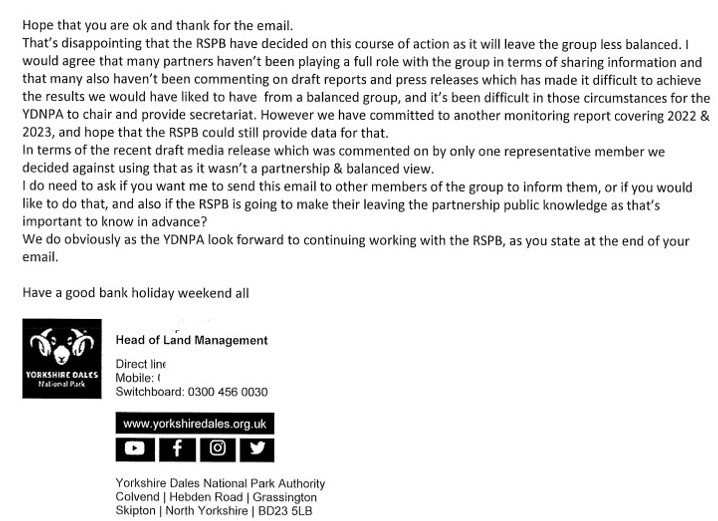
A Freedom of Information request I submitted recently to the Yorkshire Dales National Park Authority has revealed that the RSPB has walked out of the so-called Birds of Prey ‘Partnership’ after the Moorland Association engaged in what I would call its all too familiar propaganda techniques.
Photo: Ruth Tingay
You may recall this so-called ‘partnership’ in Yorkshire was established a couple of years ago, with representatives from the grouse-shooting industry, the raptor conservation community, Natural England, Police, the Yorkshire Dales National Park Authority and the Nidderdale AONB Authority.
I blogged about it here and predicted its demise as it was modelled on the similar (now disbanded) ‘bird of prey partnership’ in the Peak District National Park, which, unsurprisingly given the participants from the grouse-shooting industry, was an abject failure (see here).
Here is some interesting correspondence dated 5th May 2023 between the RSPB and the Yorkshire Dales National Park Authority, released under the FoI request, detailing why the RSPB has walked away from this latest fiasco. Personal details have been redacted:
The reasons for the RSPB’s withdrawal really shouldn’t come as a surprise to anyone who’s been following these tedious so-called ‘partnerships’, which all fail for the same reason. The Moorland Association (the grouse moor owners’ lobby group in England) has form for making ‘modifications’ to official partnership statements which appears to be intended to distort the reporting of on-going incidents of raptor persecution (e.g. see here).
Interestingly, ‘someone’ obviously got wind of my FoI request and has tried to shift the blame away from the Moorland Association. There’s an article in today’s Yorkshire Post, clearly timed to be released at the same time my FoI response was due, presumably in an attempt to influence the narrative as they knew I’d be writing about the RSPB’s withdrawal.
The Yorkshire Post article doesn’t mention anything about the RSPB’s dissatisfaction with the Moorland Association’s antics, but instead places the blame firmly on Natural England! Here are some excerpts:
The authority’s natural environment champion Mark Corner told members progress on tackling the wildlife crime was being overstated and the partnership was “ineffective” and “poorly led” by Natural England.
Mr Corner said while there had been modest improvement on fledging of birds, some 21 hen harriers had disappeared from North Yorkshire last year.
He said: “We have had some horrific cases of some chicks being trampled to death and birds being decapitated. We are fooling ourselves if we think this is some progress.
“I see an increase in public awareness and revulsion of the sickening stuff that’s happening inside the national park. I am personally ashamed of what is happening.”
These are strong and welcome words from the Park Authority, and although criticism of Natural England’s role is deserved (more on that soon), it’s a shame that the Moorland Association’s shenanigans weren’t called out.
The Chief Executive of the Yorkshire Dales National Park Authority, David Butterworth, has now issued the following statement:
I’ve got more to write about the Yorkshire Dales Bird of Prey ‘Partnership’… more soon.
Bookings are now open for the Northern England Raptor Forum’s (NERF) annual conference which will take place on Saturday 18th November 2023 at The Holiday Inn in Barnsley, South Yorkshire.
Co-hosted this year by the South Peak Raptor Study Group and the Peak District Raptor Monitoring Group, there’s a full programme of speakers and an extended lunch break to allow some time for catching up with friends and colleagues.
The NERF annual conference is usually well-attended and demand for places is high so early booking is advisable. Delegate fees are £35 (includes tea/coffee and lunch) and this year there are a number of places available for the under 25s at a concessionary rate (£20).
For further information and booking applications, please visit the NERF website here.
RED KITE SHOT AND POISONED IN DURHAM RAPTOR CRIME SPOT
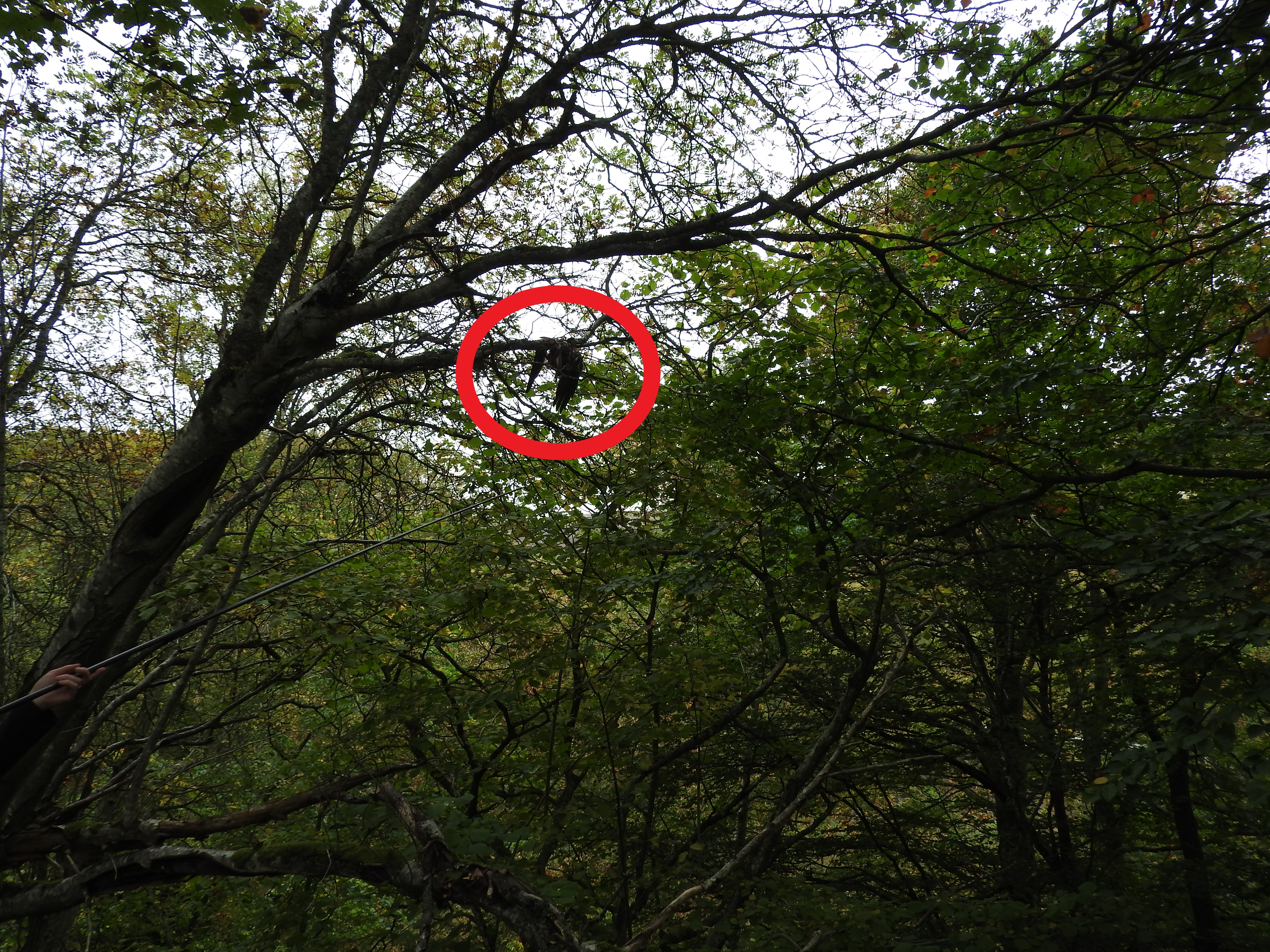
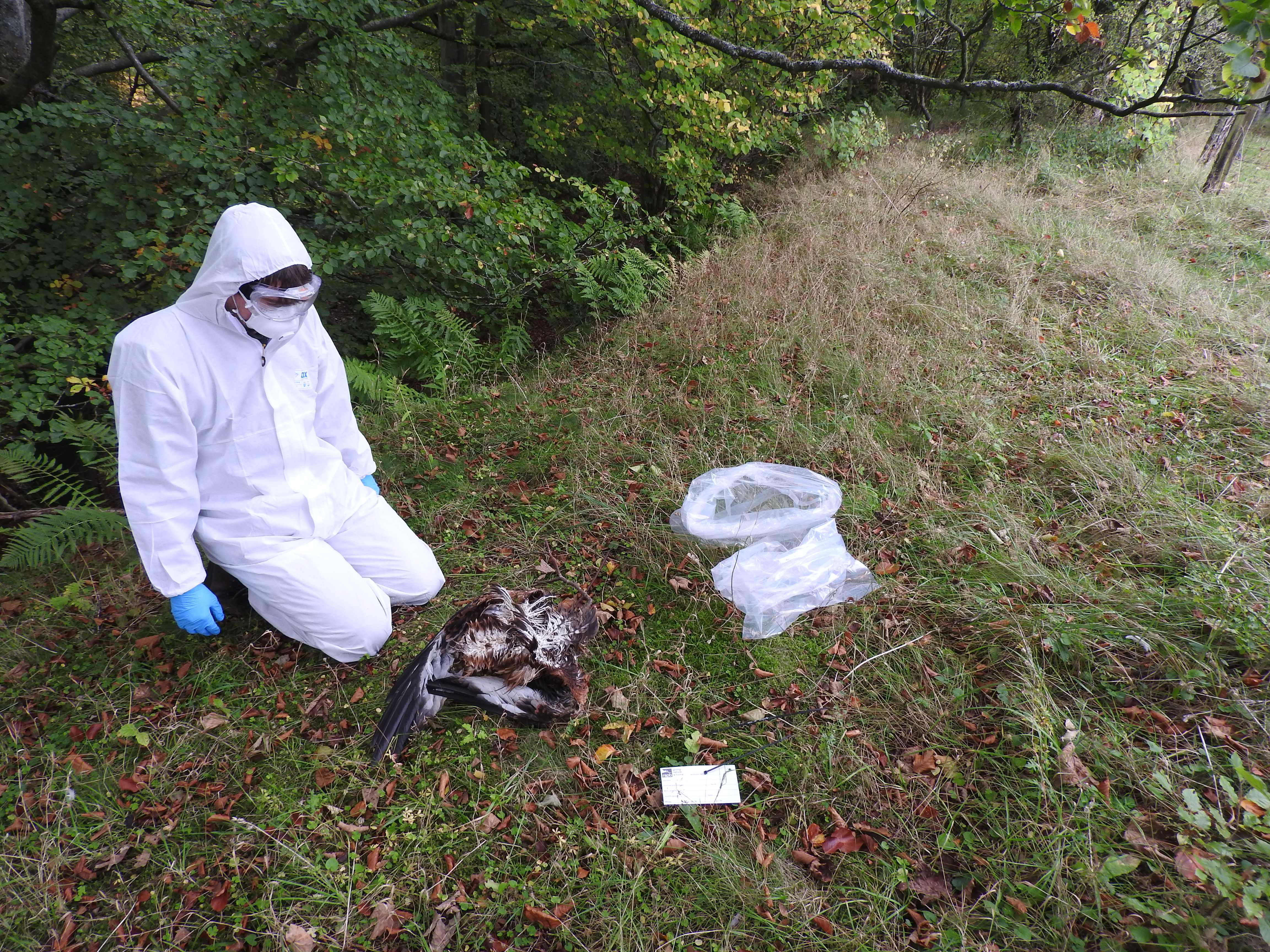
The protected bird of prey was found dead, hanging in a tree near Stanhope Burn, in the North Pennines Area of Outstanding Natural Beauty
The Weardale area has become a hotspot for raptor persecution
Police and partners want members of the public to report dead birds of prey and generate more information on raptor persecution in the area
A Red Kite found dead in Stanhope has been confirmed as having been both shot and poisoned, once again highlighting the area’s serious problem with bird of prey persecution.
The protected bird of prey was discovered hanging in a tree by a member of the public in October 2022. The bird’s body was x-rayed and found to contain pieces of shot revealing that the bird had been shot at some point in its life. But when the bird was sent for official toxicology examination, the body was found to contain the highly toxic pesticides carbofuran and bendiocarb – which were confirmed by testing to be the cause of death. Both these substances are frequently seen in bird of prey poisoning cases despite being banned for legal use in the UK for many years.
Illegally shot & poisoned red kite hanging in a tree near Stanhope in the North Pennines AONB, October 2022. Photo: RSPB
Investigator collecting the shot & poisoned red kite near Stanhope, Oct 2022. Photo: RSPB
Red Kites are graceful birds with long wings and a distinctive forked tail. Forty years ago their numbers were limited to a small population in Wales due to illegal persecution, until successful reintroduction programmes in the 1980s and 90s brought them back from the brink. However persecution remains a threat, even today. Like all birds of prey, they are legally protected in the UK, punishable by jail and/or an unlimited fine.
Last month (May 23), police and partners carried out searches of land and buildings the area, in connection with the incident.
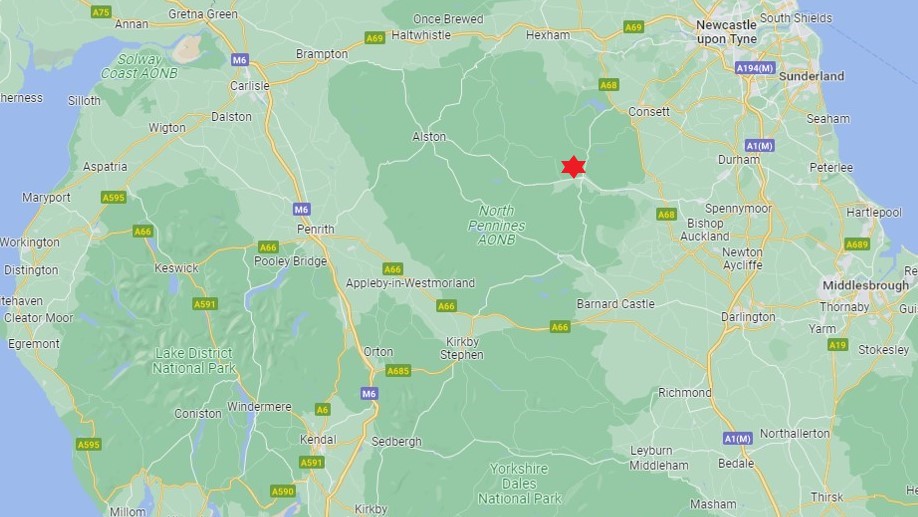
Red star indicates approximate location of latest crime in the North Pennines AONB
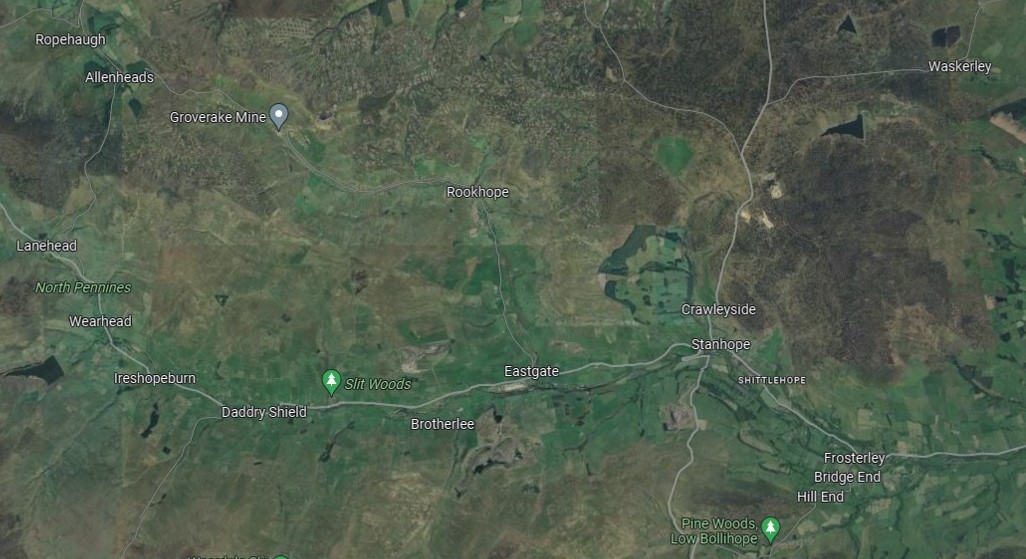
Stanhope Burn, to the NW of Stanhope, is next to moorland managed for driven grouse shooting
This is the latest of a series of crimes involving birds of prey being illegally killed in this part of the North Pennines Area of Outstanding Natural Beauty (AONB).
In 2020, two GPS satellite-tagged Red Kites disappeared in the Edmundbyers area in suspicious circumstances [Ed: see here]. Both tags – fitted as part of a species monitoring scheme by Friends of Red Kites, who monitor the red kite population in North-east England – had been transmitting as expected until they suddenly stopped. Neither bird, nor their usually very reliable tags, have been seen since.
In 2021, a Red Kite was found poisoned by carbofuran and bendiocarb, also in the Edmundbyers area.
The following year, police together with partner agencies conducted a raid on nearby grouse moor estates in Durham and Northumberland, following previous incidents and intelligence related to bird of prey killing in the area [Ed: see here].
And in March 2023, a Red Kite was found shot, but still alive, on a grouse moor in Edmundbyers [Ed: see here]. Luckily, after care by local vets and a specialist rehabilitator, the bird recovered and was released back into the wild [Ed: see here].
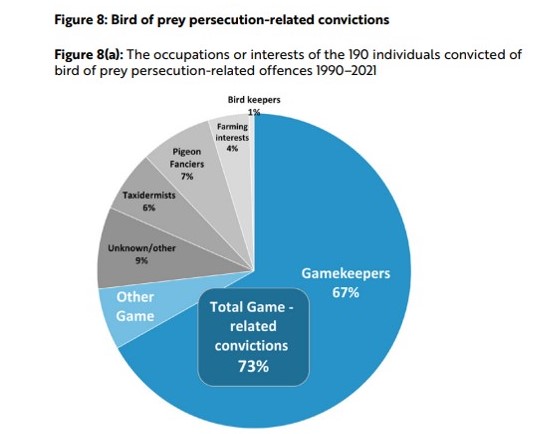
The RSPB’s Birdcrime report, published last autumn, revealed that over two-thirds (71%) of all confirmed raptor persecution incidents in 2021 related to land managed for gamebird shooting. And since 1990, 67% of those convicted of these crimes have been gamekeepers.
Data from RSPB’s Birdcrime Report (2021)
Mark Thomas, RSPB Head of Investigations, said: “We are concerned about a spate of concentrated raptor crimes which is rendering the Weardale grouse moors a hotspot for the illegal killing of birds of prey. As such, we are concentrating our efforts of detection on this area, in the hope of catching anyone targeting protected birds such as Red Kites, which should be breeding successfully in this area. But we critically need the public to be our eyes and ears and report potential crimes to ourselves and the police.
“The fact that bird of prey persecution continues against the public interest makes it clear that additional regulation for grouse moors is necessary. We believe all grouse moors and their owners or sporting tenants must be licensed, as is happening in Scotland, to provide a meaningful deterrent to the illegal killing birds of prey. Ultimately this could mean the loss the licence to shoot grouse, if the Police are satisfied that wildlife crimes against raptors are occurring on a particular landholding. Law-abiding estates should have nothing to fear from this approach”.
PC David Williamson of Durham Constabulary said: “The illegal killing of birds of prey unfortunately is continuing in our rural areas. It is unacceptable that anyone should think they can ignore the law and kill these birds by poisoning, shooting, trapping or nest destruction and disturbance. I am sure that people in our community will know who is committing these offences and I would urge anyone with any information to report this. Durham Constabulary will continue to work with our partners to tackle this criminal activity, investigate any reports and prosecute offenders”.
If you notice a dead or injured bird of prey in suspicious circumstances, call the police on 101 and fill in the RSPB’s online reporting form HERE.
If you have information about anyone killing birds of prey which you wish to report anonymously, call the RSPB’s confidential Raptor Crime Hotline on 0300 999 0101.
As many of you know, the Scottish Parliament’s Rural Affairs & Islands Committee is currently taking evidence from stakeholders as part of the Committee’s Stage 1 scrutiny of the Wildlife & Muirburn (Scotland) Bill.
For new blog readers, this is the Bill that has been introduced by the Scottish Government in response to the recommendations made in the 2019 Werritty Review and is designed to bring in licensing for grouse moor management and introduce measures to put an end to the illegal killing of birds of prey on grouse moors.
Screen grab from the 3rd evidence session held on 21 June 2023 (via Scottish Parliament TV)
The first evidence session took place on 31st May 2023 and the Committee heard from members of the Scottish Government Bill Team, led by senior civil servant Hugh Dignon.
The second evidence session took place on 14th June 2023 and the Committee heard from members of the Werritty Review Group as well as a range of stakeholders discussing traps & increased powers for the SSPCA. It was a fascinating session and I’ve quite a lot to say about it but I don’t intend to comment until later.
The third evidence session took place on 21st June and the Committee heard from a range of stakeholders discussing grouse moor licensing and muirburn. Another interesting session that I’ll comment on in due course.
You can watch the third evidence session on Scottish Parliament TV (archived video here) and you can read the transcript here:
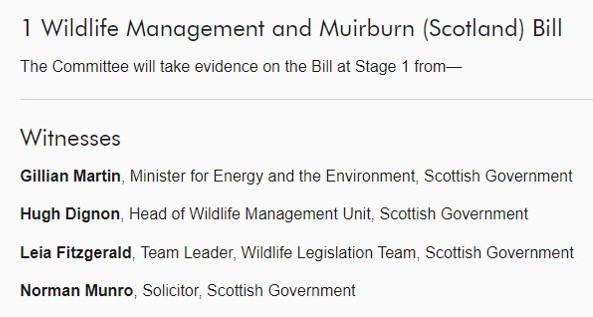
The fourth and final evidence session takes place today, starting at 08.30hrs in the Fairfax Somerville Room at Holyrood. The Rural Affairs Cabinet Secretary, Mairi Gougeon, was originally scheduled to give evidence but she has now been replaced by the newly-appointed Environment Minister, Gillian Martin. Talk about a baptism of fire!
As Gillian is relatively new (she’s only been in post for a few weeks) and this is a highly specialised and politicised issue that’s been raging for years, it’s no surprise to see her supported in this session by three civil servants who know this issue inside out (they drafted the Bill and appeared before the Committee in the first evidence session in May).
You can watch live on Scottish Parliament TV (here) or watch the video archive shortly afterwards via the same website. The official transcript will be available several days after the meeting and I’ll post it on this blog when it comes out.
UPDATE: You can watch the fourth evidence session on Scottish Parliament TV (archived video here) and you can read the transcript here:
Further to today’s excellent news (here) that the Scottish Government has (finally!) agreed to new proposed investigatory powers for the Scottish SPCA to help tackle wildlife crime, some of the early reactions are entirely predictable.
Those who are sick to the back teeth of the raptor killers getting away with it, as they have for decades, are delighted with the news. With more expert investigators on the ground, who knows, we may even finally see a conviction for those who continue to poison, trap and shoot the iconic golden eagle, which occurs disproportionately on land managed for driven grouse shooting.
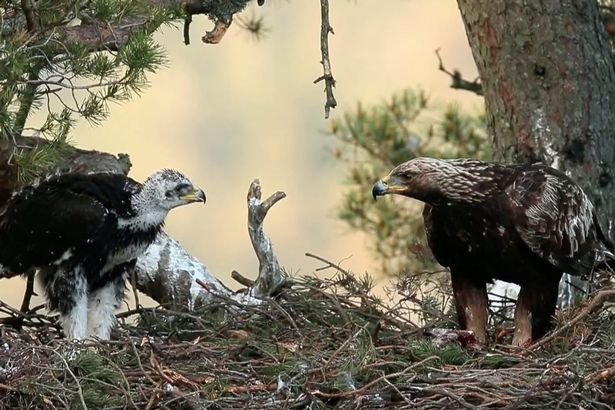
Golden eagles. Photo: Chris Packham
Here’s the reaction to today’s news from the Scottish Greens:
SCOTTISH GREENS HAIL VITAL NEW SCOTTISH SPCA POWERS TO TACKLE WILDLIFE CRIME
The announcement that the Scottish Government will legislate to give additional powers to the Scottish Society for Prevention of Cruelty to Animals (Scottish SPCA) to investigate wildlife crime has been hailed by the Scottish Greens.
The party’s nature spokesperson, Mark Ruskell MSP, called it “a massive step forward for animal welfare.”
The powers, which will be brought forward as part of the Wildlife Management and Muirburn (Scotland) Bill, will allow the Scottish SPCA to, in certain circumstances, search, examine and seize evidence in connection with specified wildlife crime offences.
Mr Ruskell said: “This is a massive step forward for animal welfare and the protection of the birds and animals that we all love. It is a change that the Scottish Greens and wildlife campaigners have long called for.
One of the main reasons wildlife crime is so rife is because the criminals know they can get away with it. These vital new powers will make them think again.
The Scottish SPCA does a fantastic job but, at present, it is not even allowed to gather evidence to prosecute wildlife crimes, even when they know about them. These powers will give them more bite and will greatly help the police in stopping those that would harm or kill our iconic species and wildlife. With these new powers, Scottish SPCA officers can help the police to build a case and catch perpetrators“.
ENDS
Here’s the reaction from RSPB Scotland:
We warmly welcome today’s announcement by the Scottish Government to extend the powers of Scottish SPCA Inspectors to allow them to search, examine and seize evidence in connection with specified wildlife crime offences as part of an investigation.
Our Head of Investigations in Scotland, Ian Thomson, had the following to say about the announcement: “We have been campaigning for this important measure for over a decade.
Until now, Scottish SPCA inspectors could investigate cases where animals were actively suffering, for example in an illegal trap, but they could not look for evidence of further identical traps where nothing had been caught, or where a victim had already been killed.
The closing of this loophole will be commended by all who want to see more resources devoted to tackling crimes against Scotland’s wildlife”.
ENDS
And in complete contrast, here’s the hilariously hysterical reaction from Scottish Land & Estates, the grouse moor owners’ lobby group, who must surely qualify for a Spitting the Dummy trophy by now:
Decision To Enhance SSPCA Powers Runs The Risk Of Hindering Wildlife Crime Prosecutions
A decision to extend the investigatory powers available to the SSPCA goes against the advice of an independent taskforce set up by the Scottish Government to examine the issue, Scottish Land & Estates said today.
The government said today that new powers will “allow the Scottish SPCA to in certain circumstances search, examine and seize evidence in connection with specified wildlife crime offences.”
The announcement comes just six days after a report from an independent taskforce examined three possible scenarios for future SSPCA powers and concluded that enhanced partnership working for the charity – rather than new investigatory powers – was the recommended route forward.
The taskforce recognised the difficulty in reconciling new investigatory powers with the SSPCA’s campaigning against legal land management practices including snaring and glue traps.
Crucially, the taskforce said that an extension of powers would be “fraught” and noted that Police Scotland raised extensive concerns about the proposals whilst the Crown Office highlighted the standards in evidence gathering, processing and reporting required.
Ross Ewing, Director of Moorland at Scottish Land & Estates, said:
“The Scottish Government, not for the first time, has appointed an expert taskforce to examine an issue and take evidence from key stakeholders – and then chosen to disregard its recommendations.
We firmly support measures to address all forms of wildlife crime. It’s vital that those investigated have full trust in the impartiality of investigators. Where any form of search, examination or seizing of evidence is required, that should be the sole remit of Police Scotland.
If additional resource is needed to tackle this priority area, Police Scotland should be provided with that resource by the Scottish Government instead of powers being granted to a charity.
As the taskforce made clear in its report, there are substantial problems in allowing a campaigning organisation to hold key powers in investigating alleged criminality. The opposition of the SSPCA to legal land management tools such as snares is well known and surely calls into question their objectivity in any investigation.
The Scottish Government also states that SSPCA Inspectors will be required to undertake specified training prior to exercising new powers – but does not assert who will pay for this training.
Ultimately, SSPCA involvement could damage the likelihood of successful prosecutions where a crime has been committed if due process is not adhered to. This is a concern which Police Scotland raised in its evidence to the taskforce but is one that has been taken no notice of by the Scottish Government.”
ENDS
I’d argue that it’s reactions like this that have led to the situation that the game-shooting industry finds itself in today. Everybody knows what goes on, everybody’s sick of it, and everybody (except those who might find themselves finally held to account) wants an end to it.
Essentially, the Scottish Government has, in my view, been forced to take this step due to a combination of (a) national (and international) embarrassment at its consistent failure to deal with the raptor-killing criminals, (b) constant denial of the bleedin’ obvious by the game-shooting industry leading to a complete loss of confidence by Govt Ministers, and (c) strong public opinion and pressure.
The so-called ‘concerns’ about the SSPCA’s professionalism are laughable, given that they’re already an official specialist reporting agency to the Crown Office so know all about ‘due process’, and through their skill, experience and expertise, routinely bring some of the most sadistic wildlife-abusers to justice, including badger baiters such as this depraved Millden Estate gamekeeper last year (here).
Increasing the SSPCA’s powers to enable them to investigate crimes relating to dead wildlife in addition to wildlife that’s still alive and suffering, should be such an obvious move that it should have happened years ago. The fact it’s taken this long to achieve even a small amount of progress is very telling indeed so kudos to Cabinet Secretary Mairi Gougeon, former Environment Minister Mairi McAllan, and current Environment Minister Gillian Martin for standing up to those who still think its 1898.
The Scottish Government has finally published its response to the recommendations made in its commissioned review of increasing investigatory powers for the Scottish SPCA to help tackle wildlife crime, including raptor persecution. It’s good news!
Here’s the Government statement:
Scottish Government Response to Taskforce Report on SSPCA Powers
In response to the independent Scottish Society for the Prevention of Cruelty to Animals (SSPCA) Taskforce report, the Scottish Government is proposing to bring forward provisions to allow for a limited extension of the Scottish SPCA’s current powers to investigate wildlife crime.
We are grateful to the SSPCA Taskforce for conducting the review and producing their final report and we agree with the recommendation that further partnership working between the SSPCA and Police Scotland should be taken forward. Having considered the report in detail, we also propose that further limited powers for SSPCA inspectors should be provided.
Our proposal is to provide SSPCA inspectors with additional powers to search, examine and seize evidence in connection with specified wildlife crime offences under Part 1 of the Wildlife and Countryside Act 1981 and certain offences in the Wildlife Management and Muirburn (Scotland) Bill 2023. These powers would only be given to an inspector appointed under section 49(2)(a) of the Animal Health and Welfare (Scotland) Act 2006 and each inspector would be separately and individually authorised by the Scottish Government in connection with the new powers. All inspectors would be required to undertake specified training prior to being given authorisation to exercise the new powers. Authorisations could be withdrawn at the discretion of the Scottish Government.
In addition to the additional training requirements, protocols will be established between the SSPCA and Police Scotland to ensure effective partnership working and that Police Scotland have primacy over cases and offences under the Wildlife and Countryside Act 1981 and the Wildlife Management and Muirburn (Scotland) Bill 2023.
It is intended that an important limitation would be placed on the exercise of these powers, namely that the additional powers could only be exercised when an inspector is already responding to a case using their existing powers under the 2006 Act.
This has been a long-running issue and we believe that the approach we are proposing represents a balanced compromise. It will allow SSPCA inspectors who are already on the spot, investigating potential animal welfare offences under their existing powers, to seize and secure evidence of related wildlife crimes without delay and potential loss of that evidence. The proposal would not however lead to SSPCA becoming an alternative wildlife crime enforcement agency. Police Scotland would retain primacy as the enforcement body for all wildlife crime and the public should continue to report those crimes to Police Scotland.
Following further consultation with stakeholders the proposed changes will be brought forward as an amendment at Stage 2 of the Wildlife Management and Muirburn (Scotland) Bill 2023. The Bill is currently before the Parliament and we welcome more evidence on this being provided at Stage 1.
ENDS
This is a surprisingly good outcome, given where we were the last time the Government made a decision on the issue back in May 2017, when increased investigatory powers were ‘ruled out’, apparently ‘on legal advice’ (see here).
I don’t know what that ‘legal advice’ was in 2017 – my own view is that this was just a convenient excuse at the time, because the law hasn’t changed since then but now increased powers are suddenly possible? Hmm.
The proposed new powers are limited, yes, but they’re a good starting point.
Had these powers been in place previously then I dare say we might have seen a better outcome in a number of wildlife crime cases where the SSPCA were already on scene investigating alleged animal welfare offences but were not permitted to collect evidence of further wildlife crimes that were staring them in the face – e.g. the illegally-set spring traps on a grouse moor on the Invercauld Estate in the Cairngorms National Park (see here) and the carcasses of nine shot raptors found in bags in and around the grouse moors of Millden Estate in the Angus Glens (see here).
I’m not sure whether the Scottish Government is proposing yet another consultation on this issue (‘Following further consultation with stakeholders the proposed changes will be brought forward as an amendment at Stage 2 of the Wildlife Management and Muirburn (Scotland) Bill 2023‘) – surely to God we don’t need another bloody consultation – I’ve lost track of the number of consultations on this issue – we know where every organisation stands and none of them have changed their minds, or are likely to do so now. The general position is that the game shooting lobby don’t want the SSPCA to have increased investigatory powers (gosh, can’t think why) and the conservation organisations do want them to have increased powers.
Let’s see what happens between now and Stage 2 of the Wildlife and Muirburn (Scotland) Bill when the Government’s proposals will be debated. Stage 2 is expected to begin in the autumn.
For now, well done and thanks to everyone who has campaigned on this issue for the last 13 years, and thanks especially to Mark Ruskell MSP (Scottish Greens) who has championed the cause for many years.
This is not everything we wanted but nevertheless it’s a big win.
UPDATE 21.30hrs: Reaction to proposed new investigatory powers for Scottish SPCA to help tackle wildlife crime (here)
Guest blog written by conservation campaigner Bob Berzins, who has featured previously on this bloghere, here, here and here.
The UK countryside is littered with thousands of animal traps and high concentrations are found around grouse moors and pheasant & partridge shoots, not surprising given the huge numbers of birds bred on moors or introduced in lowlands which inevitably attract predators.
Traps can be described in two categories: those that restrain and those that kill. This blog will examine lethal spring traps to see if they match up to claims of an instant humane kill.
WARNING: Graphic images of animals killed in traps and descriptions of animal testing
There’s no doubt the UK has been slow to improve animal welfare standards around the use of traps. The Agreement on International Humane Trapping Standards (AIHTS) was brokered in 1997 and it took over 20 years for improved standards to be partially implemented in the UK (here and here).
AIHTS is about fur trapping which is a huge industry in Canada and Russia but in the UK the only “fur” animal that can be killed without special licence is the stoat. You might have noticed all the ermine on display at the recent coronation.
Until recently grouse moors often had hundreds of Fenn traps set on logs across streams as run through or “rail” traps or in single entrance tunnels. GWCT provides the following information:
“Fenn traps, and all copycat designs such as those by Springer and Solway, were made illegal to catch stoats from 1 April 2020, because tests have shown that they fail to kill stoats reliably within the time-frame required by AIHTS (45 seconds). It remains legal to use them to catch other target species for which they are currently approved (e.g. weasels, rats, grey squirrels), even though they have not undergone humaneness testing for those species (because of cost constraints). But the AIHTS does not apply to those other species, and Defra is implementing AIHTS by means of the least possible change.”
So the UK has done the absolute minimum to implement humane standards of lethal trapping for the full range of UK mammals. Data shows Fenn traps kill stoats inhumanely but Fenn traps are still acceptable to kill grey squirrels which can be almost twice the weight of a stoat. More on this below.
I don’t know the current prevalence of Fenn trap use across the UK as a whole but they’ve been almost completely removed from the grouse moors where I live because stoats are found in these areas. Surely this must have resulted in improved animal welfare?
What I’ve actually seen is after a slow initial implementation of new approved spring traps from April 2020, there’s been increasing evidence that animals are suffering in the new traps. So I submitted an FOI to Defra (Animal & Plant Health Authority APHA) for detailed information about how the humaneness of traps has been determined.
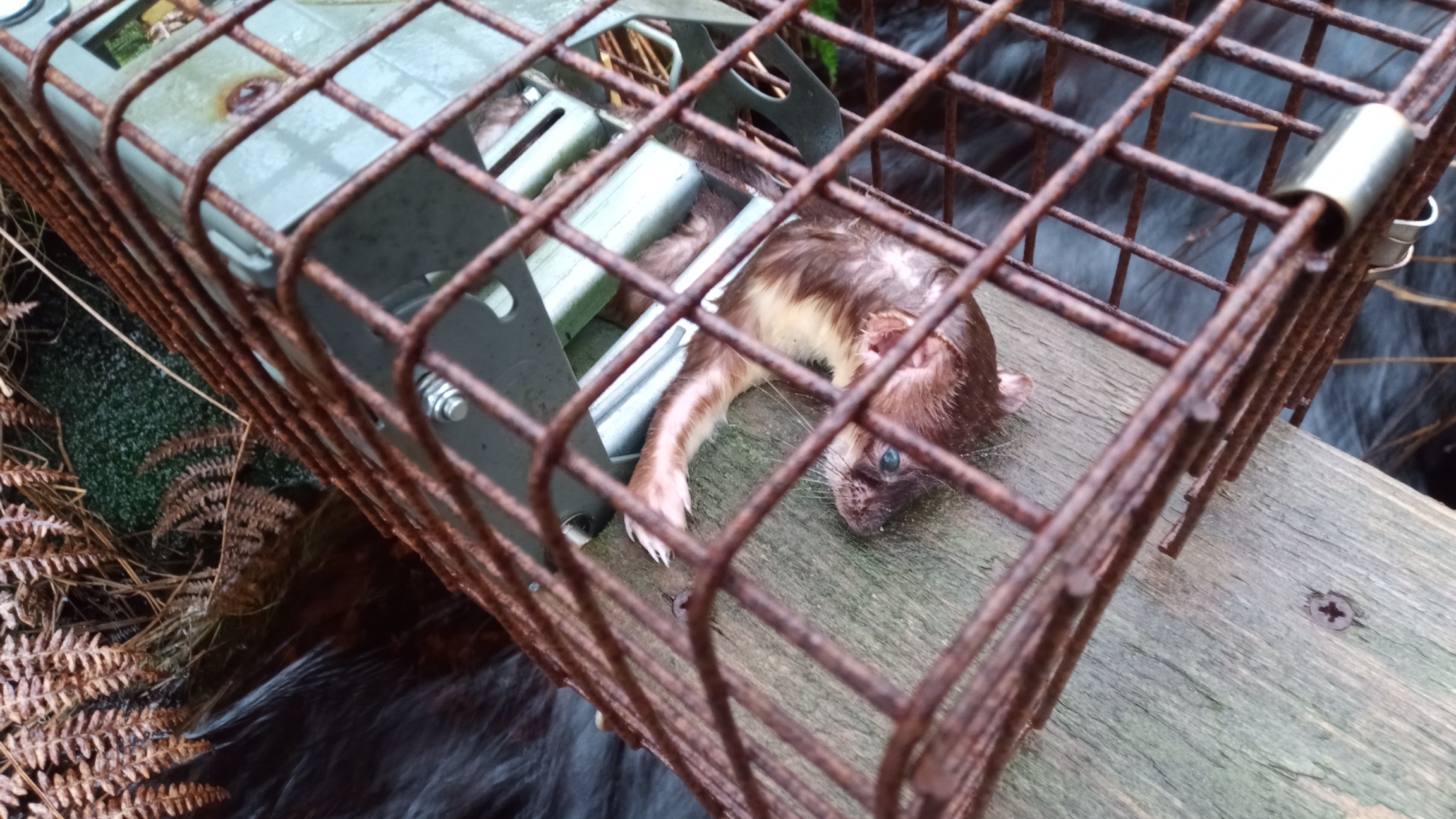
Stoat appears to escape from trap. Photo: Bob Berzins
This stoat appears to have tried to escape a head strike by the Tully trap or did the rear leg move by a death spasm or similar?
Data from laboratory tests on stoats and rats
The FOI revealed the AIHTS requirement is the trap induces irreversible removal of corneal and palpebral reflexes within 45 seconds (both these reflexes are tested by a stimulus to the eye). Removal of these reflexes indicates unconsciousness. APHA provided details of lethal tests on stoats and rats for DOC traps and tests on stoats for Tully traps. Overall the recorded time for cessation of heartbeat (death) ranged between 10 seconds and 7 minutes 35 seconds. So the humaneness standard is not for these traps to kill instantly but for these traps to induce unconsciousness within 45 seconds. This could provide plenty of time for the stoat above to try to escape from the trap.
When unconscious the brain is anything but silent
The rationale from APHA is that unconscious animals feel no pain so it doesn’t matter if an animal takes seven minutes to die – a trap is humane if the animal is unconscious within 45 seconds. We are not going to get any research or data on brain activity of unconscious animals and it’s important to note the brain of a stoat or rat is not as developed as a human brain. But it is worth considering what we know from human research, particularly that there are many levels of unconsciousness.
The NHS describes coma patients who can have awareness of what is happening around them and levels of unconsciousness can be measured using the Glasgow Coma Score (here). We don’t feel the pain of an operation when under general anaesthetic but anaesthetists aim to administer drugs to an optimal level, so we are neither too deeply nor too shallowly unconscious. And this paper (here) from the University of Basel shows synchronised activity of cells in the cerebral cortex (the part of the brain generally associated with consciousness) under general anaesthesia. All of this suggests unconsciousness has many factors and we simply don’t know under what circumstances an animal will feel pain.
APHA data showed successful laboratory tests on DOC traps always resulted in a strike to the head/neck and severe head trauma is most likely to result in rapid unconsciousness and death. But real life data shows a huge variation in which parts of the animal are crushed by these traps – that’s important because strikes away from the head introduce a lot of uncertainty about how long the animal remains alive, conscious and in pain.
Decomposed rat in the edge of a DOC trap – note the trap has not struck the head. Photo: Bob Berzins
Another rat also in the edge of a DOC trap which has struck the jaw and part of the chest. Photo: Bob Berzins
Successful and Unsuccessful laboratory tests
Sample sizes for DOC 150, Doc 200, Doc 250 and Tully trap were all aimed at achieving 10 successful tests. However a number of trap/configuration/species test failures were recorded as follows:
DOC 150 single entrance configuration (stoat) – one failure due to stoat being struck on the abdomen
DOC 150 single entrance configuration (rat) – one failure due to strike on the nose
DOC 200 single entrance configuration (stoat) – one failure due to unconsciousness not achieved within 45 seconds
DOC 250 configuration not specified (rat) – one failure due to strike on the nose
Tully Trap – one failure no details provided.
Taken as a whole these results are shocking because they show a failure rate of around 1 test in ten or 10%. This implies that 1 in 10 animals would not be killed humanely by these traps. Yet this is deemed acceptable by Defra and AIHTS.
In the real world the sample size now runs into thousands given the widespread use of these traps. Canadian researchers have calculated, given these test results on small samples, the real life probability of these traps being successful in a large population is 71% (here) which implies even more animals will die a painful inhumane death.
Tests using Tully traps recorded either head, neck, shoulder or chest strikes. The stoat in the photograph below was struck on the chest – a strike any further down the body would be regarded as a trap failure. Lab tests recorded stoats taking up to 3:04 minutes to die so it’s reasonable to question how much pain this animal suffered before dying?
Stoat in Tully trap strike on chest. Photo: Bob Berzins
Foul strikes
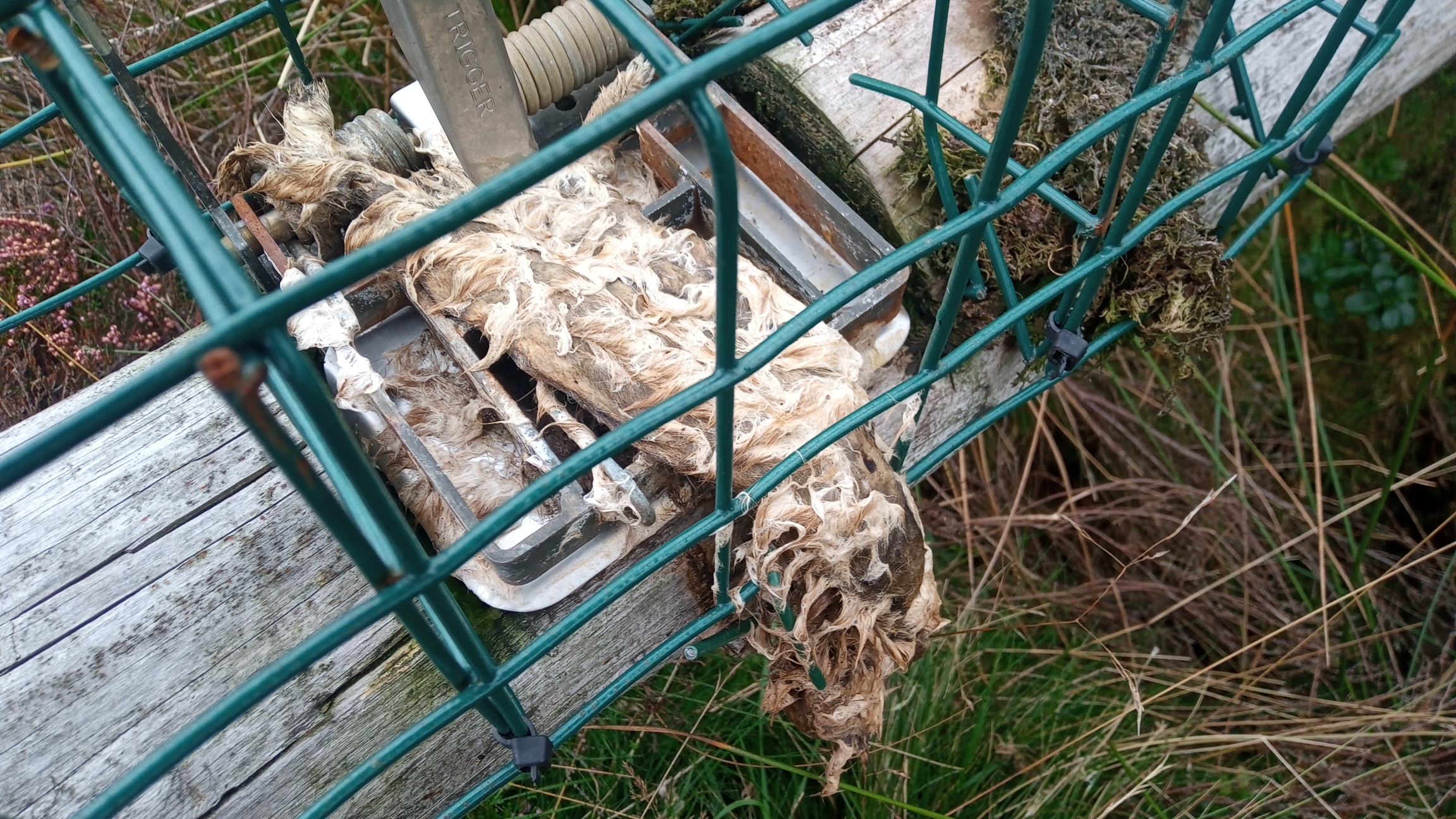
Police attended this trap and determined the (decomposed) stoat was caught by front paw only. This unfortunate animal must have suffered greatly before death:
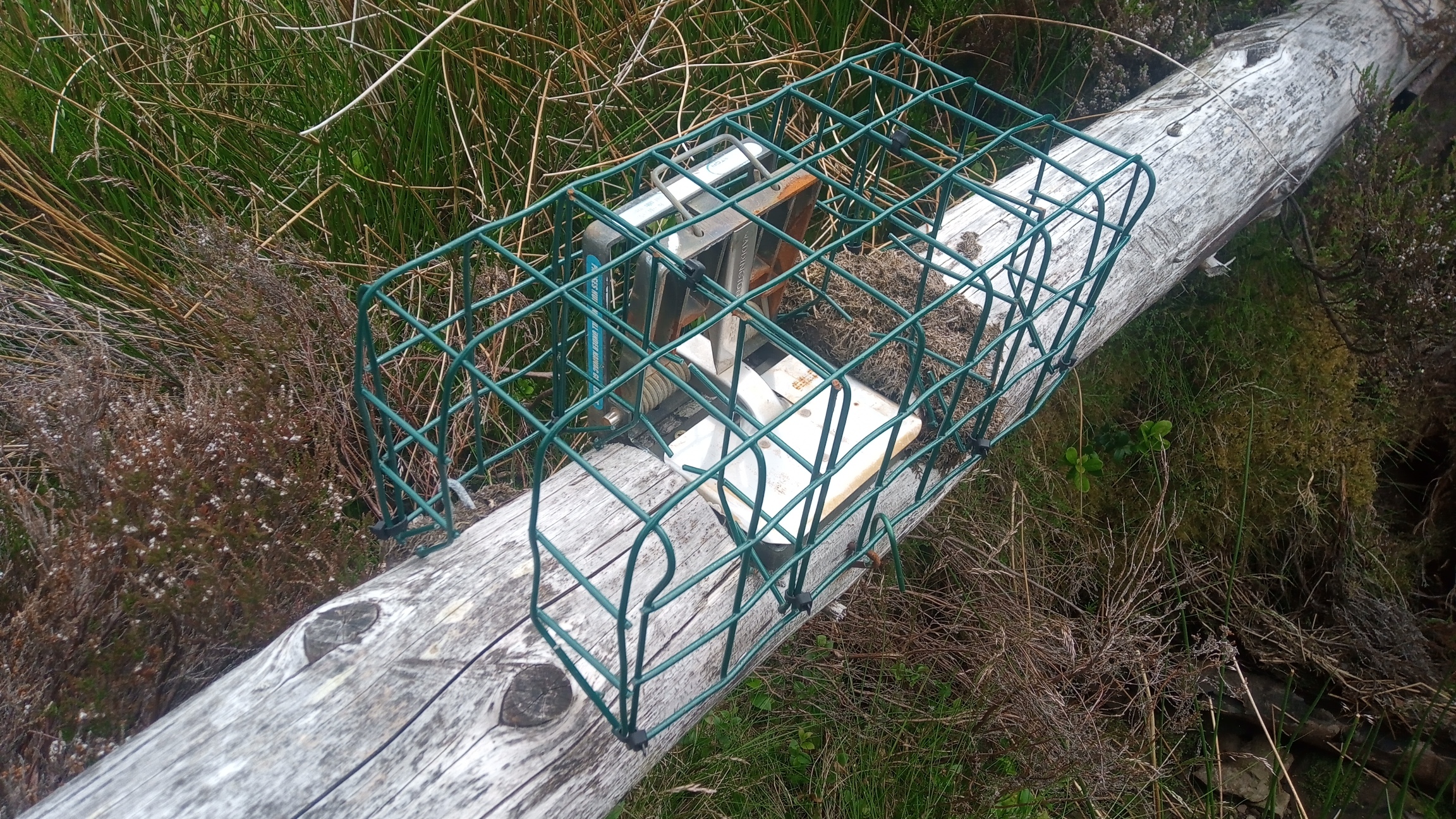
A photo of the same trap before the stoat entered, showing the entrance/access holes. These details are discussed below. Photo: Bob Berzins
In practice this trap became a leghold trap which is illegal under the following legislation:
The Leghold Trap and Pelt Imports (Amendment etc.) (EU Exit) Regulations 2019 implement a prohibition on the use of leghold traps in the UK,
Section 8 of the Pests Act 1954 prohibits the approval of any leghold trap, defined as “a device designed to restrain or capture an animal by means of jaws which close tightly upon one or more of the animal’s limbs, thereby preventing withdrawal of the limb or limbs from the trap” for use in England.
DEFRA also provided me with the following:
“For traps which may occasionally produce a foul strike and restrain or pin animals in their mechanism without providing a quick and irreversible unconsciousness, the Animal Welfare Act (2006) requires users of traps to ensure animals do not endure prolonged suffering. This should include regularly checking traps and euthanizing any animals which continue to suffer. An example of best practice guidance can be found at Pest Management Codes of Best Practice | pest control standards (bpca.org.uk).
Defra, by implementing the Spring Traps Approval (England) Order 2018 requires users to deploy traps in appropriate enclosures, and where specified follow the manufacturer’s instructions closely. As both enclosure design and mode of use help minimise the chance of a foul strike, this requirement in regulation helps ensure the humane management of wildlife.”
The trap above was set using 50mm mesh for the tunnel/enclosure which allows the target species to enter the trap from above or from the side. Manufacturer’s instructions only have a vague specification the tunnel must be “suitable for the purpose”. So it’s virtually impossible to prosecute a trap operator for a tunnel/enclosure like the one above. In addition there’s no statutory requirement to check spring traps. And to gain a prosecution under the Animal Welfare Act: it’s necessary to establish that the defendant knew or ought reasonably to have known both that his or her act or failure would cause a protected animal to suffer and that the suffering was unnecessary. This is not going to be established if DEFRA- approved traps are used in a vaguely “suitable” tunnel.
I suspect DEFRA are fully aware of the unlikeliness of prosecution so I regard their comments above as disingenuous to say the least. In reality there is little or no protection to stop or prevent animal suffering in traps like the one above.
Stoat on top bars of Tully trap. Photo: Bob Berzins
This Tully trap (photo above) has an enclosure of smaller gauge mesh but the stoat has still managed to end up on top of the bars of the trap with front paw only crushed in the trap. Once again this trap in reality has become an illegal leg hold trap.
Fenn Traps
As GWCT describe, killing a stoat in one of these traps is now unlawful because tests show it’s inhumane:
Stoat killed in Fenn trap (pre 2020). Photo: Bob Berzins
But killing a larger grey squirrel in a Fenn trap is still lawful:
Squirrel killed in Fenn trap. Photo: Bob Berzins
I asked DEFRA what testing had taken place to determine the humaneness of Fenn traps used for this species and the reply was: “The Fenn Vermin Trap Mark IV does not appear to have undergone any testing for grey squirrels. The approval for this trap was granted via the Spring Traps Approval (Amendment) Order 1970, prior to the implementation of the AIHTS.”
I fail to see how Fenn traps could pass any AIHTS level testing for humanely killing grey squirrels.
DEFRA claims “The UK is a world leader on animal welfare” (here). Yet even the traps which are approved to international standards have a shocking failure rate, no effective statutory requirements for tunnels/enclosures and in real life conditions strike, crush and hold a range of animal body parts. These traps are not working as intended resulting in animal suffering which is not prevented by the Animal Welfare Act and legal requirements for trap use.













 Raptor Persecution UK