
Press statement from Crown Prosecution Service (11th May 2023)
Landowning company fined in ground-breaking case
A landowning company in Yorkshire has been fined for allowing vegetation to be burnt without a licence in an area of Special Scientific Interest.
The Crown Prosecution Service (CPS) said that areas of land owned by Dunlin Ltd on Midhope Moors in Upper Midhope, Stocksbridge, near Sheffield, were burned illegally in October 2022.

The Midhope Estate is within a Dark Peak Site of Special Scientific Interest (SSI), the South Pennie Moors Special Area of Conservation (SAC) and the Peak District Moors Site of Protection Area (SPA).
Peatland areas store vast quantities of carbon and, if they are damaged, emit this carbon into the atmosphere. It also damages the habitat for birds, flora and fauna.
Landowners sometimes burn vegetation on peatland as part of land management and they can apply for a licence that allows them to burn limited areas.
Land agents acting for Dunlin, JM Osbourne Rural and Sporting, applied for a licence to the Peatland Protection Policy Team of the Department of the Environment, Food and Rural Affairs on 30 March 2022.
However, it was refused as they hadn’t given enough detail about the amount of land to be burned. Detailed feedback was given to help with any future applications. No further application was made.
On 18 October 2022, a conservation officer from the Royal Society for the Protection of Birds was visiting the area and noticed plumes of smoke coming from the land.
He took photographs and video footage and sent this and a report to the Peatland Protection Policy Team. Inspectors visited the land a few weeks later and found evidence of the offences.
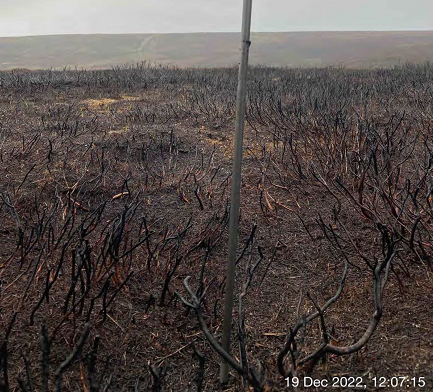
On 10 March 2023, one of the company directors, Julian Richmond-Watson was interviewed. He said he assumed the activity was allowed and apologised on behalf of his gamekeepers who carried it out. He said he didn’t realise that an application had been made for a licence for his company.
On 10 May 2023, at Sheffield Magistrates’ Court, guilty pleas were entered on behalf of the company to six offences in contravention of the Heather and Grass etc Burning Regulations 2021 and a fine of £1,800 was imposed on Dunlin Ltd. Costs of £125 and a surcharge of £720 were also imposed.
Sentencing, Judge Gould said the offending had a significant environmental impact and there was a reckless failure by the company.
Senior Crown Prosecutor Maqsood Khan, of CPS Mersey Cheshire’s Fraud and Rural Crime Unit said: “This is the first case of its kind to come to come to this unit of the Crown Prosecution Service. The legislation around this offending is relatively new.
“The company was clearly reckless as to the impact of their actions in burning this land.
“Land agents acting for them made an application to legally burn areas of vegetation so they were clearly aware that they needed one. When the licence was refused, they simply went ahead and did it anyway.
“The actions damaged an area of land that is already at risk and undermined the regulatory system in place to protect areas of special scientific interest.
“The company is now paying the price.”
ENDS
This is an excellent result, although the fine was pathetic and can’t possibly be seen as a deterrent. However, the publicity about this successful prosecution has been quite prominent.
I couldn’t help but notice the name of the land agent involved.
Here’s some of the interesting media coverage:
RSPB blog here
BBC News here
The Independent here
 Raptor Persecution UK
Good. Its about time. [Ed: rest of comment deleted as libellous]
Made a ‘ significant environmental impact’.?
The punishment did not seem to fit the crime…. few tankfulls of petrol and its all forgotten.
The bad publicity probably hurts them more than the fine does, and that’s not a great deal. Pathetic.
I agree, in terms of the fine if that is all it costs the Owner then burning wherever they deem necessary is worth doing to maintain the best habitat for the maximum yields of grouse. As you say it is only the bad PR that is any deterrent. Just like another aspect of intensive grouse moor management – “predator control”, the cold economic rationale means it is worth overdoing it irrespective of the law while the financial penalties remain totally insignificant to the big picture of investment / yield. To me all proven reckless / irresponsible management practices should be punished the same way i.e. losing rights to shoot grouse for a season.
This is the same company that [Ed: allegedly] have ignored a planning enforcement notice from the Peak District National Park Authority. This was issued because they were [alleged to be] in breach of a notice to remove a geotextile and log track over part of Midhope Moors called Cut Gate and Mickleden Beck. They were supposed to start to remove the track last autumn/winter, but have not done so. I enquired about what was to be done about this. On 21st March 2023 the PDNP Planning Service Monitoring and Enforcement team told me, “As you may be aware, failure to comply with the requirements of an enforcement notice is an offence. The National Park’s legal duty is to investigate whether an offence has been committed and, if so, by whom. The investigation is continuing but I cannot say what action will be taken, if any, until the investigation is complete.”
Let’s save everyone, incl our legal system, a lot of money, time & trouble – let’s just BAN driven grouse shooting completely. The sooner our RSPB, Wildlife Trusts, National Trust & National Parks get behind this campaign & take an unequivocal stance against this self-indulgent, sadistic bloodsport the better. Let’s rid our uplands of this barbarous anachronism NOW.
#BanDGS
thats a really great idea. lets finally give all our fellow creatures the respect that we think only we humans ought to be given. i could not believe my eyes reading about Natural England agreeing with a landowner that its ok to mess about with the breeding of Hen Harriers.!
It’s a start. Might the Prosecution suggest a more relevant fine for any subsequent case?
‘Dunlin Ltd’ ! These chaps certainly know how to take peat!
An online search suggests that the maximum fine for illegally burning deep peat is rated at Standard 3. The current Standard 3 rate appears to be £1000. There were 6 offences, so, on this basis, a maximum fine of £6000 could have been imposed. Given the Judge’s comments regarding the effects of the burning, together with the fact that they went ahead with it, notwithstanding a licence having been refused, it is disappointing that the maximum penalty was not applied. A 70% discount, presumably for having entered guilty pleas, appears overly generous and sends out the wrong message.
That fine will be seen as a nothing more than a business expense.
I’m with the landowners here,they have more experience in land management than all the others put together.
Who, exactly, are “all the others” Andrew? ‘land management’ should read: ‘land manipulation and destruction’.
Obviously not experienced enough to know what the law and regulations are though.
Indeed they were so experienced and well organised in such matters that the company representative who was interviewed about the case said he was unaware that a licence had been applied for!
UK approach to such crimes is real Banana Republic stuff
Good for you, finding out about these things for yourself isn’t for everybody. Potentially, there may be a modest amount of mental strain involved.
Read and shared. Will this ever end 😢 Been doing campaigns and direct action for 50years while living on a farm. Too old for Direct Action but will campaign on . Raptor Persecution UK Campaigners have been Excellent….kind regards to you all.
This highlights the very poor monitoring of environmental issues in the countryside.
I note it was a conservation officer from the RSPB who notified the authorities of this illegal burning, and not the authorities themselves who had discovered what had taken place.
Surely it should be agencies such as Natural England or the Environmental Agency, who should be actively monitoring and looking after the countryside?
Is it any wonder that nature is in such decline, and birds of prey appear to be so routinely persecuted when the government agencies charged with looking after the countryside and natural environment seem to be unable to do this without the support of so many various charities who go out and monitor just what is happening on the ground?
This doesn’t bode well for ELMS- who is going to monitor these schemes, or will it be reliant on the participants being totally truthful all the time about the environmental conservation and regeneration work they have undertaken?
During the Covid pandemic it is estimated that around £21 billion pounds were fraudulently claimed by businesses. (National Audit Office suggest levels of fraud rose almost fourfold from £5.5bn two years before the pandemic to £21bn in the following two years. )
It makes me wonder just how many will be claiming public money through ELMS when they really shouldn’t be entitled to this funding?
Should any industry which appears to routinely engage in criminal behaviour be trusted with public funding?
Seems a rather pathetic fine for anyone, let alone a company (or large estate). We’ll see more of this activity ….
There are some anomalies reported.
The RSPB reported 30 burns, but only 15 peat-depth samples – all of which were more than the regulated 40 cm.
But only six counts of breaching the Regulations were laid by Defra and the CPS. I wonder why that was?
The RSPB report that the fine was £300 x 6 plus costs of £120 and a surcharge of £720 (a total of £2645). It isn’t: that is a total of £2640.
Why not 15 counts, or 30 counts?
Meanwhile, the BBC report that the fine was £2645 and “as well as the fine, the firm was ordered to pay costs of £125 and a surcharge of £720.” The BBC agree, however, that only six counts were laid.
The Independent agree with the BBC that Dunlin Ltd “was fined £2,645 while incurring costs of £125 and a surcharge of £720 after pleading guilty to six charges of burning peat without a licence.”
(The report of the peat-depth samples being “more than 50cm” appears to be irrelevant regarding the current regulations…)
In reaching a sentence judges/magistrates will consider the maximum sentence set (and minimum, where appropriate), the age of the defendant(!), and whether they had a criminal record and pleaded guilty. As this is a new offence, there is no existing ‘case law’ for comparisons to be made.
The very best that can be said is that it is a start.
It’s on here Keith https://www.cps.gov.uk/mersey-cheshire/news/landowning-company-fined-ground-breaking-case