‘Killing to kill’ – new campaign from REVIVE, the coalition for grouse moor reform

REVIVE, the coalition for grouse moor reform in Scotland has launched a new campaign this week highlighting the ‘killing to kill’, where hundreds of thousands of animals are killed on grouse moors just so more red grouse can be killed for ‘sport’.

A short video can be viewed here:

REVIVE isn’t arguing that no animal should ever be killed – there are many situations where it is necessary – what REVIVE is arguing for is that when it is necessary, it should be based on the seven internationally-approved principles of ethical decision-making for wildlife management, as devised by a panel of experts in wildlife conservation, management and welfare (see here).

The seven principles can be summarised as follows:

  • Modifying human practices when possible
  • Justification for control required
  • Have clear and achievable outcome-based objectives
  • Cause the least harm to animals
  • Social acceptability
  • Systemic planning
  • Base control on the specifics of the situation rather than labels (like “pest species”)

REVIVE argues that the widespread killing of wildlife on grouse moors does not meet these principles.

As we await details of the Scottish Government’s plans for the introduction of a licencing scheme for grouse shooting, Environment Minister Mairi McAllan has indicated that the seven principles will be considered as the legislation is drafted.

REVIVE is now asking the public to urge the Government to commit to the seven principles – you can find out how to get involved here.

STV News covered this news here

There’s also a comment piece about grouse moor reform in general from Max Wiszniewski, REVIVE’s Campaign Manager, published in The National last week (here).

Red kite shot in Wiltshire: Police appeal for information

A public appeal for information from Wiltshire Police Rural Crime Team (14th June 2022):

Information appeal

A dead kite was recovered from a public footpath close to Hens wood, Axford, Wiltshire on the 20/04/2022 following a report from the public. Further forensic work into the cause of death has found that the bird had been shot.

We are appealing for any information around the shooting of the Red kite or any person who may have been in the area on the 16/04/2022 who saw anything suspicious to contact the Wiltshire Rural crime team via 101 – quote crime report 54220038890

Watch Dorset’s poisoned eagle fiasco on BBC’s Countryfile

Well done to the BBC’s Countryfile programme last Sunday for doing a 12-minute feature about the poisoning of the white-tailed eagle on an unnamed shooting estate in Dorset in January, and Dorset Police’s fiasco of an investigation which was brought to an abrupt halt when the police decided, astonishingly, that they ‘didn’t have sufficient evidence’ to execute a search warrant on the estate. This decision was made shortly after local MP Chris Loder argued on Twitter that the Police shouldn’t be investigating it and that eagles weren’t welcome in Dorset anyway.

Countryfile isn’t generally renowned for its hard-hitting investigations but I’ve got to say I was pleased with what they produced. Sure, a lot of material was left on the cutting room floor and they studiously removed all the discussion about the scale of illegal raptor persecution in the UK and the ingrained raptor-killing culture amongst some of the game-shooting industry, who still refer to these protected species as ‘vermin’, but I think for millions of viewers, who generally aren’t a specialised audience, this piece would still have been an eye-opener.

I’ve spoken to a few people since it aired who didn’t even know that eagles could now be found in southern England, let alone that they were being poisoned. They do now.

I was also impressed that they managed to get Chris Loder MP in front of a camera and the Assistant Chief Constable of Dorset Police, Rachel Farrell. Remember this is the police force that has repeatedly refused to respond to Freedom of Information requests on this matter. Personally, I don’t think either of them gave convincing explanations that there wasn’t any undue political pressure placed on the police to close down the investigation (asking a senior officer from the same force to effectively ‘mark the Police’s own homework’ doesn’t cut much ice with me), but you can draw your own conclusions.

I think a lot of credit needs to go to Countryfile’s researcher James Agyepong-Parsons, a former journalist from the ENDS Report and the instigator for Countryfile running this piece. He was meticulous in ensuring that the facts of this case were accurately presented, and Charlotte Smith did a brilliant job in pressing for answers.

It’s now available to watch on BBC iPlayer for the next 11 months (here – starts at 09.50 min).

There’s still much more to come out about this case, including the name of the estate where the eagle was found poisoned. It hasn’t yet been made public because there is another, separate, ongoing investigation into alleged raptor persecution that I understand is nearing a charging decision. Nobody wants to name the estate for fear of giving Dorset Police any excuse to drop this other case. We shouldn’t have to be concerned about that but such is the loss of confidence in Dorset Police that nobody is taking any chances.

Another gamekeeper convicted for poison offences on a pheasant shoot, but not charged for poisoned kite & shot buzzard

David Matthews, a gamekeeper with 50 years experience, has been convicted at Wrexham Magistrates Court for poison offences uncovered on the McAlpine Estate in Llanarmon Dyffryn Ceiriog, North Wales, where he has worked for 25 years.

In February 2021 a dead red kite was found on the estate by a member of the public and a later toxicology analysis revealed it had been poisoned with Bendiocarb.

[The poisoned red kite. Photo by RSPB]

When RSPB Investigations Officers subsequently visited the McAlpine Estate they found a dead buzzard inside a pheasant release pen. When the body was x-rayed, a piece of shot could be seen lodged in the bird’s skull.

[The shot buzzard found inside the pheasant release pen. Photo by RSPB]

A multi-agency search in October 2021 by North Wales Police, the Welsh Government, RSPB and the National Wildlife Crime Unit uncovered an unlocked barn containing 18 highly toxic products, including Cymag which has been banned since 2004. They also found the remains of a pheasant, inside a game bag on a bonfire site inside a pheasant release pen. The pheasant tested positive for Bendiocarb. Another dead buzzard was too badly decomposed to be tested.

Gamekeeper Matthews pleaded guilty to one charge relating to the possession of unauthorised pesticides. He received a total fine of £219.

You can read the full details of this case on the RSPB’s blog here.

In that blog, the RSPB state, ‘It remains unknown who killed the buzzard and the kite‘.

I’m pretty sure that the RSPB investigators, just like the rest of us, have a pretty good idea who might have been responsible but presumably there was insufficient evidence to charge anyone. Such is the nature of this game that it would be libellous to suggest a suspect.

It seems odd to me, though, that a gamekeeper who had worked on the estate for 25 years wouldn’t have noticed someone laying poisoned baits, placing the bait inside a game bag and leaving it on a bonfire site inside a pheasant release pen, and shooting dead a buzzard and leaving its corpse inside a pheasant release pen.

His £219 fine makes a total mockery of the system. Had this case been in Scotland, the fine for possessing an unauthorised poison would now be £40,000. That’s a serious deterrent.

£219 is not.

This is the reality and I’ll be reminding DEFRA Minister Lord Benyon of this the next time he repeats the Westminister Government’s tediously predictable claim that raptor-killing criminals face ‘significant sanctions…including an unlimited fine and/or a six month custodial sentence‘ (e.g. see this from Environment Minister Rebecca Pow in September 2021, and this from Richard Benyon in February 2022, and this from Rebecca Pow in February 2022, and this from Richard Benyon in April 2022).

Matthews is the 7th gamekeeper to be convicted in seven months across England, Scotland and Wales. There are still multiple cases pending court in the coming months. Clear evidence then that the game-shooting industry’s supposed ‘zero tolerance’ policy towards raptor persecution is simply just rhetoric and that the Government’s so-called ‘significant sanctions’ are complete bollocks.

The other convicted gamekeepers in recent months are:

Gamekeeper Shane Leech who was convicted in November 2021 for firearms and pesticides offences after the discovery of a poisoned buzzard found close to pheasant-rearing pens in Lakenheath, Suffolk (here);

Gamekeeper Peter Givens who was convicted in November 2021 for causing the death of a goshawk and a barn owl which starved to death in an illegally-operated trap on the Cathpair Estate in the Scottish Borders (here);

Gamekeeper Hilton Prest who was convicted in December 2021 for causing a sparrowhawk to starve to death in an illegally-operated trap in Cheshire (here);

Gamekeeper John Orrey who was convicted in January 2022 for battering to death two buzzards he’d caught in a cage trap on a pheasant shoot in Nottinghamshire (here);

Gamekeeper Rhys Davies from the Millden Estate in the Angus Glens, Scotland, who was convicted in May 2022 for animal cruelty relating to badger baiting (he’ll be sentenced at the end of June – here);

Gamekeeper Archie Watson who was convicted in June 2022 for raptor persecution and firearms offences after he was filmed throwing 8 dead raptors down a well on a pheasant-shoot in Wiltshire (here).

Well done to the multi-agency search team involved in bringing David Matthews to court.

Gloucestershire Police appeal for info after goshawk found shot in Forest of Dean

Press release from Gloucestershire Constabulary (13th June 2022)

Appeal for information after birds of prey are found dead in the Forest of Dean

Officers are appealing for information after two birds of prey were found dead in the Forest of Dean.

A Goshawk and Sparrowhawk were found next to a bus stop just south of Aylburton near Lydney on the A48 by a member of the public on Monday 25 April.

The male Goshawk was just under 17-years-old and X-rays show that the bird had been shot with a shotgun.

The cause of death has not yet been established for the male Sparrowhawk however post mortems will take place for both birds. 

[The shot goshawk. Photos via Gloucestershire Constabulary]

PC Cath McDay said: “This is an awful crime under the Countryside and Wildlife Act 1981, to truly special birds

The Goshawk had managed to live to an exceptional age only for his life to be ended like this.”

Enquiries are ongoing and investigating officers are asking anyone with information on the incident to please get in contact.

Information can be submitted by completing the following form online and quoting incident number 130 of 25 April: https://www.gloucestershire.police.uk/tua/tell-us-about/cor/tell-us-about-existing-case-report/    

Alternatively, you can call 101 and quote the same incident number or speak to Crimestoppers anonymously on 0800 555 111.

ENDS

Scottish Government’s grouse moor licensing scheme must also consider Red-legged partridges & pheasants

The Scottish Government is currently considering the details of its proposed grouse moor licensing scheme, to regulate the management practices associated with driven grouse shooting (e.g. predator removal, habitat manipulation [muirburn] and the use of veterinary medicine) and to sanction those grouse-shooting estates that can’t/won’t operate within the law.

Environment Minister Mairi McAllan has recently stated that the licensing scheme must be ‘robust’ (see here). In which case, I trust the Government will not limit its new regulations to just the shooting of red grouse on those moors, but will also take into account the recent upsurge in the release and subsequent shooting of red-legged partridges (RLPs) and to a lesser extent, pheasants, on the very same moors.

This seems to be a relatively new activity (as in years rather than decades), perhaps instigated in response to poor grouse numbers (got to have something to shoot at, right?) but it also seems like quite a good wheeze for grouse moor owners because there’s no need to invest in extensive habitat manipulation (muirburn) as the RLPs and pheasants aren’t reliant on fresh heather shoots for food. Although if you look at some of the upland RLP release sites you have to wonder what the hell they’re going to eat.

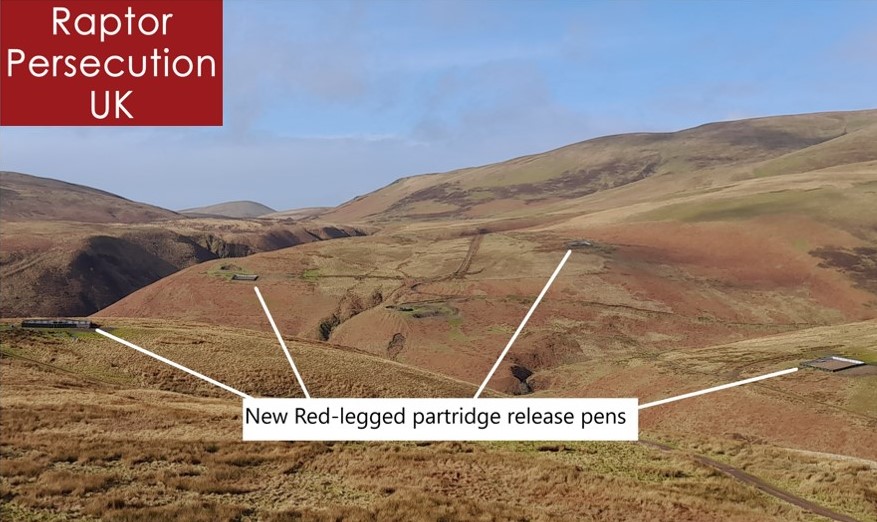
This photo was taken earlier this year on the Buccleuch Estate in the Southern Uplands – look at the absolute state of that habitat!

I guess there’d also be less need to dump tonnes of medicated grit onto the moor if you don’t have to worry about maintaining your shooting stock for the whole year. Just buy in some poults at the beginning of the summer, release them from their pens on the moors in late summer, kill as many as possible in the autumn and winter then start again with a new batch of imported poults the following summer.

The extensive removal/killing of native predators, however, would continue, which means that up to a quarter of a million native animals would still be killed on those grouse moors to enable the shooting of non-native gamebirds for ‘sport’. And of course the ruthless, relentless and illegal targeting of birds of prey wouldn’t stop either.

Mind you, it would also signal an end to the traditional and grotesquely-celebrated (in)glorious 12th, the start of the grouse-shooting season in August, as open season for RLPs doesn’t begin until 1st September, and it’s the 1st October for pheasants. But perhaps that’s a sacrifice the grouse shooters would consider making if it means they still have an opportunity to go and stand in a shooting butt high up on the side of a moor and take aim at whatever species is being flushed in their direction.

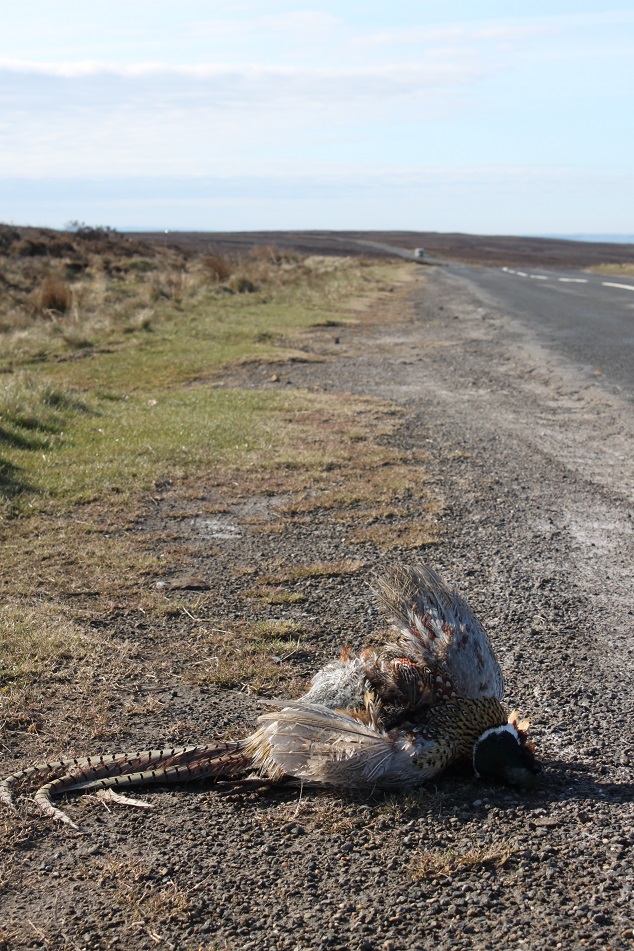
Until recently, RLPs and pheasants, both non-native species and released in their millions every year just to be shot, have mostly been associated with lowland shoots. A conservative estimate indicates that 61.2 million non-native gamebirds are released each year (49.5 million pheasants and 11.7 million RLPs, according to the GWCT (here). But even the casual observer can’t fail to have noticed the number of dead pheasants on the roads in the uplands, particularly in the Yorkshire Dales, Nidderdale and the North York Moors where I photographed this one a few years ago. It didn’t used to be a common sighting in this type of habitat:

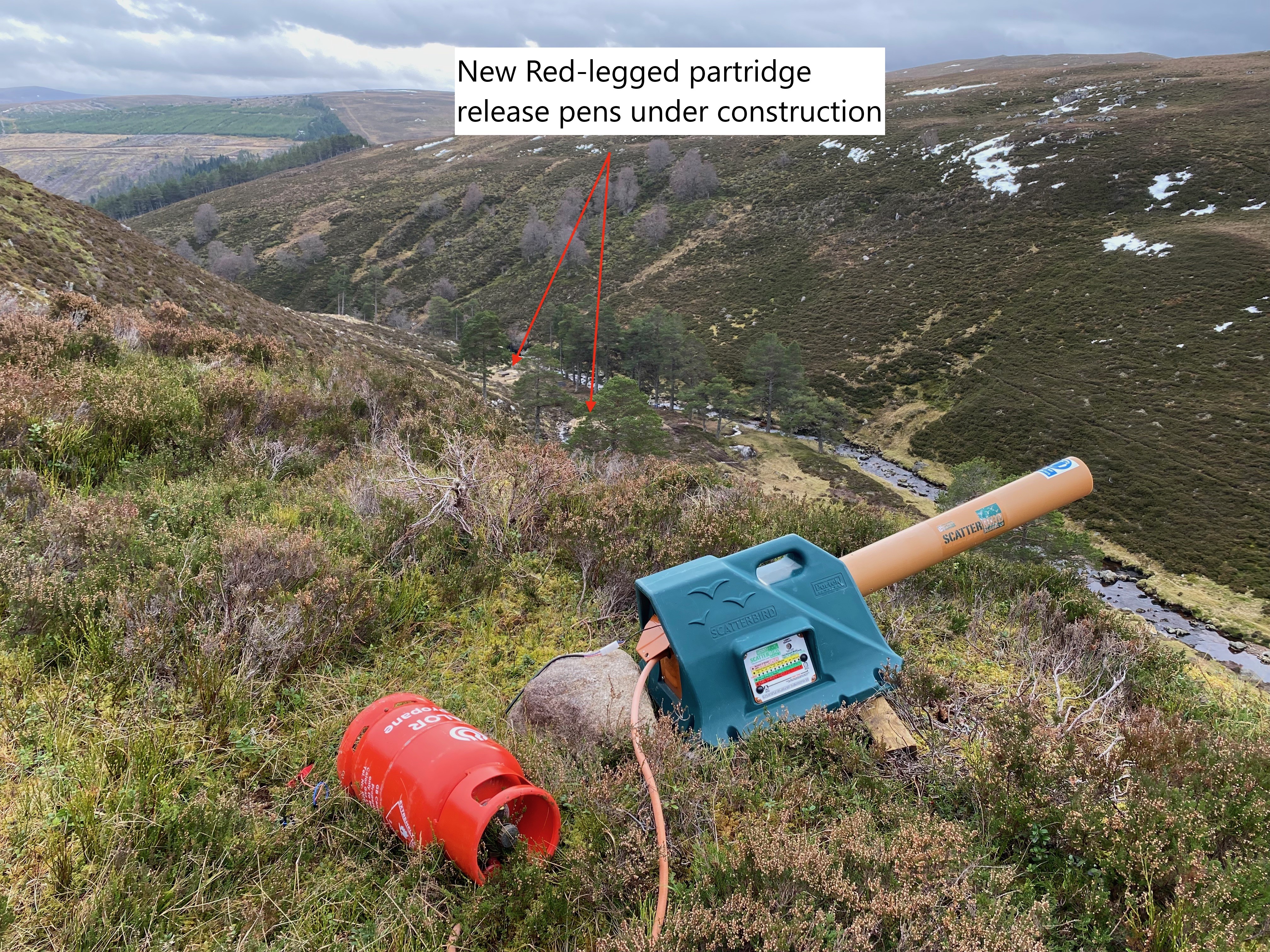
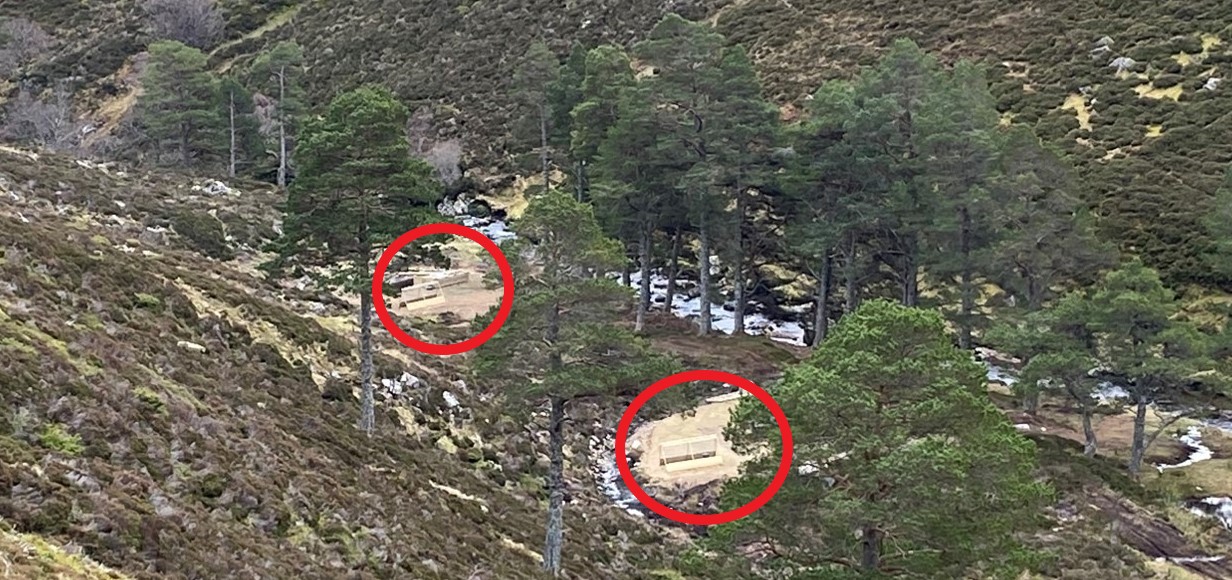
Of the two species, it seems the RLPs are ‘better suited’ to being released directly onto the open moor, and these photographs sent to me by a blog reader (thank you!) showing the construction of RLP pens on the Farr Estate in the Monadliaths earlier this year demonstrate that that is exactly what’s been going on.

The photo below is a zoomed-in image of the RLP release pens under construction. The blog reader also noted that there was a third pen a short distance away, not in view from this position, that had “definitely been used last season but had suffered major wind damage, probably in Storm Arwen“. He also said he’d seen “a large fenced off (chicken wire and green nylon netting) block of spruce forest that had also been used as a release pen“:

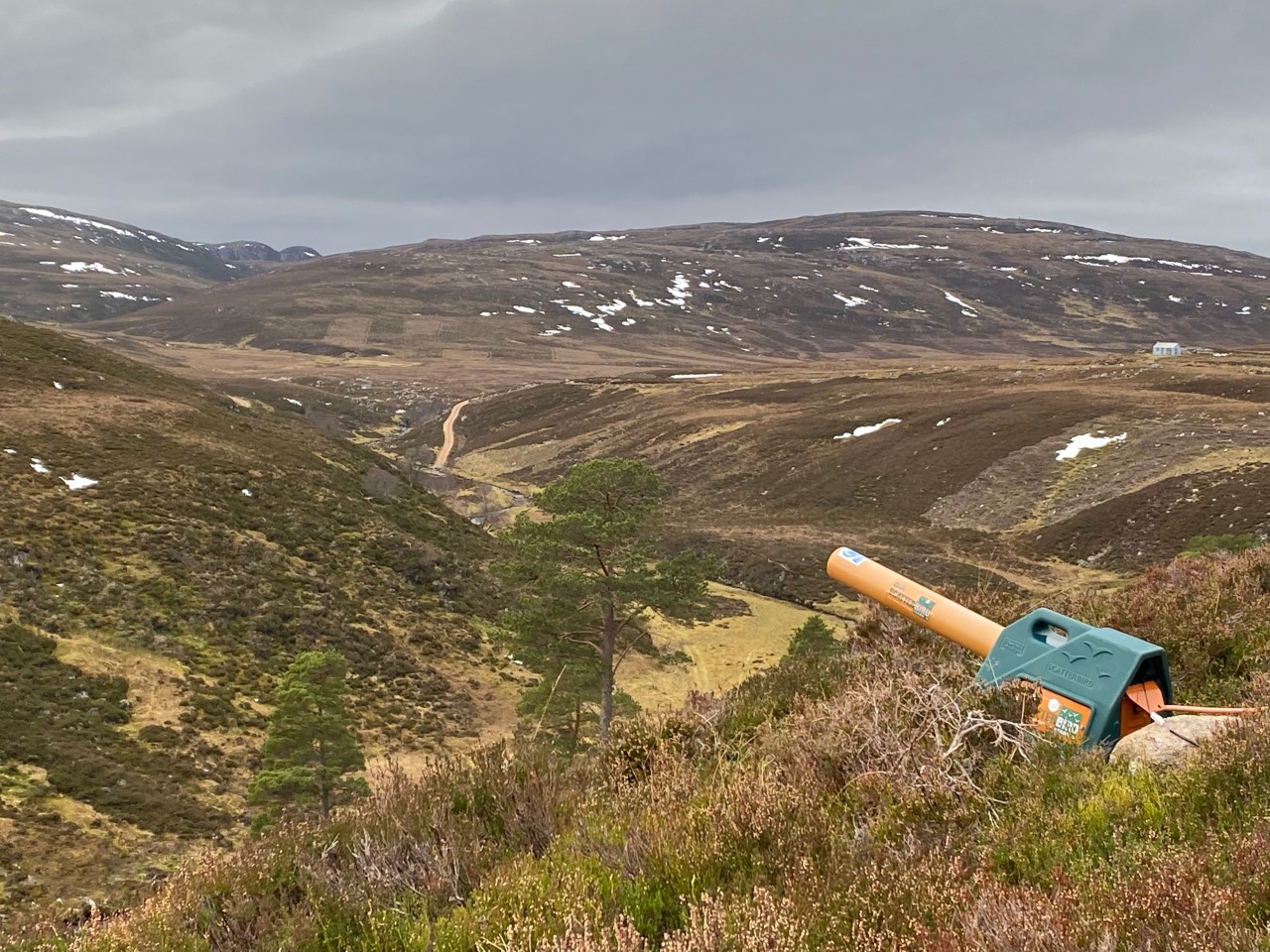
This photo is of the same gas gun but looking across the moor in a different direction showing the extent of the muirburn and a large access track:

I’m aware of many more RLP release pens on various grouse moors across Scotland so this does seem to be a growing trend.

The concern is that if the Scottish Government’s licensing scheme is deemed to be ‘too restrictive’ by driven grouse moor owners, particularly those that run intensively-managed moors where thousands of grouse are presented to the guns each shoot day, and that the new legislation is worded specifically for red grouse shooting only, the shooting industry will be quick to exploit the loopholes and just swap grouse-shooting for RLP and pheasant shooting instead and would thus be able to avoid having to comply with the new regulations.

I’m aware that this point has already been made to senior civil servants at Holyrood but I think it’s also worth making it here so the public can remain vigilant to it, out on the moors and also online as we await news of the Government’s plans.

UPDATE 12 August 2024: No red grouse to shoot at on Inglorious 12th? Grouse moor owners releasing non-native Red-legged Partridges as alternative quarry (here).

REVIVE Coalition for grouse moor reform: interview with Scottish Environment Minister Mairi McAllan

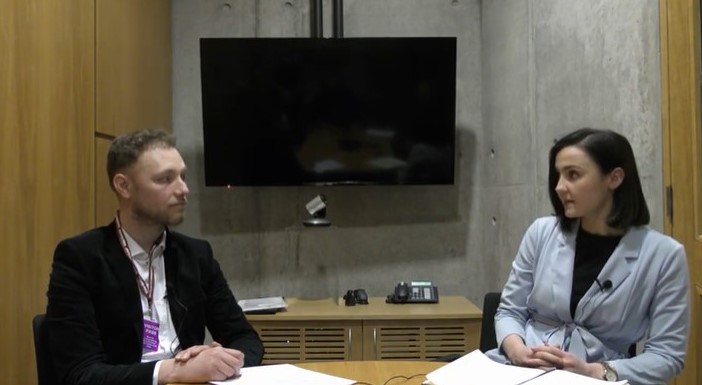
Last month, Max Wizniewski, Campaigns Manager for REVIVE, the coalition for grouse moor reform, met with Scottish Environment Minister Mairi McAllan to discuss the Government’s plans for grouse moor licensing.

Max opened the interview by asking the Minister about the well-evidenced link between driven grouse shooting and raptor persecution, and how she thought the Government’s forthcoming licencing scheme might work to bring that to an end.

The Minister’s response:

I come at this with a view that the vast majority of people living and working in our uplands and enjoying them do so with great respect for the land and for the wildlife that calls that home. However, there are a minority who would continue to persecute raptors, which is illegal, and abhorrent, and that despite what have been concerted efforts by the Government over a number of years to find ways to clamp down on that, so be that increased penalties brought forward in our Animals Bill last term, poisons amnesties, vicarious liability, it persists. And therefore we’re in a situation where self-regulation isn’t going to work anymore.

So I want to bring in, in response to Werritty and as part of the legislation we’ll bring in this term, time-line wise, I want a robust licensing scheme which will, in the face of any evidence of raptor persecution, be able to be removed, including permanently“.

The Minister’s opening sentence is at complete odds with everything else she talked about during this interview, so I don’t give it much credence. It’s part of a narrative clearly designed to appease some elements of the landowning/grouse-shooting set, lip-service if you like, but Governments don’t spend time & money introducing new legislation based on the criminal behaviour of a minority, so I don’t really mind the lip-service as long as it doesn’t interfere with the progression of the new legislation.

The rest of her commentary was well-informed and reassuringly considered, I thought. The interview ranged from the timings for the introduction of the new licensing system, to muirburn, medicated grit, animal welfare, snaring, and giving increased powers to the Scottish SPCA to enable them to take on more investigations into raptor persecution.

This last topic has been the subject of long-term dithering by the Scottish Government for a period of over 11 years. For example, and for the benefit of new blog readers, here’s a timeline:

February 2011: Increased powers for the SSPCA was first suggested by former MSP Peter Peacock as an amendment during the Wildlife & Natural Environment (Scotland) Bill debates. The then Environment Minister Roseanna Cunningham rejected it as an amendment but suggested a public consultation was in order.

September 2011: Seven months later Elaine Murray MSP (Scottish Labour) lodged a parliamentary motion that further powers for the SSPCA should be considered.

November 2011: Elaine Murray MSP (Scottish Labour) formalised the question in a P&Q session and the next Environment Minister, Stewart Stevenson MSP, then promised that the consultation would happen ‘in the first half of 2012’.

September 2012: Nine months later and nothing had happened so I asked Paul Wheelhouse MSP, as the new Environment Minister, when the consultation would take place. The response, in October 2012, was:

The consultation has been delayed by resource pressures but will be brought forward in the near future”.

July 2013: Ten months later and still no sign so I asked the Environment Minister (still Paul Wheelhouse) again. In August 2013, this was the response:

We regret that resource pressures did further delay the public consultation on the extension of SSPCA powers. However, I can confirm that the consultation document will be published later this year”.

September 2013: At a meeting of the PAW Executive Group, Minister Wheelhouse said this:

The consultation on new powers for the SSPCA will be published in October 2013“.

January 2014: In response to one of this blog’s readers who wrote to the Minister (still Paul Wheelhouse) to ask why the consultation had not yet been published:

We very much regret that resource pressures have caused further delays to the consultation to gain views on the extension of SSPCA powers. It will be published in the near future“.

31 March 2014: Public consultation launched.

1 September 2014: Consultation closed.

26 October 2014: I published my analysis of the consultation responses here.

22 January 2015: Analysis of consultation responses published by Scottish Government. 233 responses (although 7,256 responses if online petition included – see here).

I was told a decision would come from the new Environment Minister, Dr Aileen McLeod MSP, “in due course”.

1 September 2015: One year after the consultation closed and still nothing.

25 February 2016: In response to a question posed by the Rural Affairs, Climate Change & Environment Committee, Environment Minister Dr Aileen McLeod said: “I have some further matters to clarify with the SSPCA, however I do hope to be able to report on the Scottish Government’s position on this issue shortly“.

May 2016: Dr Aileen McLeod fails to get re-elected and loses her position as Environment Minister. Roseanna Cunningham is promoted to a newly-created position of Cabinet Secretary for the Environment.

12 May 2016: Mark Ruskell MSP (Scottish Greens) submits the following Parliamentary question:

Question S5W-00030 – To ask the Scottish Government when it will announce its decision regarding extending the powers of the Scottish SPCA to tackle wildlife crime.

26 May 2016: Cabinet Secretary Roseanna Cunningham responds with this:

A decision on whether to extend the investigatory powers of the Scottish SPCA will be announced in due course.

1 September 2016: Two years after the consultation closed and still nothing.

9 January 2017: Mark Ruskell MSP (Scottish Greens) submits the following Parliamentary question:

Question S5W-05982 – To ask the Scottish Government by what date it will publish its response to the consultation on the extension of wildlife crime investigative powers for inspectors in the Scottish SPCA.

17 January 2017: Cabinet Secretary Roseanna Cunningham responds:

A decision on whether to extend the investigatory powers of the Scottish Society for the Prevention of Cruelty to Animals will be announced in the first half of 2017.

31 May 2017: Cabinet Secretary Roseanna Cunningham rejects an extension of powers for the SSPCA ‘based on legal advice’ and instead announces, as an alternative, a pilot scheme of Special Constables for the Cairngorms National Park (here). It later emerged in 2018 that this pilot scheme was also an alternative to the Government’s 2016 manifesto pledge to establish a Wildlife Crime Investigation Unit as part of Police Scotland – a pledge on which it had now reneged (see here).

November 2019: The pilot scheme of Special Constables in the Cairngorms National Park was an absolute failure as a grand total of zero wildlife crimes were recorded by the Special Constables but plenty were reported by others (see here).

June 2020: Mark Ruskell (Scottish Greens) proposed further powers for the SSPCA at Stage 2 of the Animals and Wildlife Bill. The latest Environment Minister, Mairi Gougeon persuaded him to withdraw the proposed amendment on the basis that she’d consider establishing a taskforce to convene ‘this summer’ to consider increased powers (see here).

December 2020: Mark Ruskell (Scottish Greens) submits two Parliamentary questions asking about the status of the taskforce and who is serving on it (see here).

January 2021: New Environment Minister Ben Macpherson says the taskforce has not yet been appointed but that it is “expected to be established later this year“ (see here).

September 2021: In the 2021 to 2022 Programme for Government it was announced that the ‘independent taskforce [Ed: still to be appointed] will report before the end of 2022’ (see here).

Max asked the Minister if she could provide an update on the situation and she said this:

It’s imminent and I wish I could tell you today but we are just finalising the last few points for the membership but I’m hoping to be able to make an announcement about that in the next few weeks“.

Given that this interview was filmed on 3rd May 2022 and it’s now almost mid-June and still no announcement, this feels a lot like déjà vu so there seems little point in raising expectations. I hope an announcement is imminent and that Mairi McAllan’s name is not added to the long list of previous Environment Ministers and Cabinet Secretaries who have failed to deliver on their promises on this specific issue (I think she is the 8th successive Minister to be dealing with it!).

Well done to Max from REVIVE for a well-constructed interview and many thanks to Andrea Goddard who was responsible for organising this interview as one of the events for Hen Harrier Action’s Skydancer Day.

You can watch the 14.5 minute video here.

UPDATE 12th June 2022: Scottish Government’s grouse moor licensing scheme must also consider red-legged partridges and pheasants (here)

BBC’s Countryfile to feature #EagleGate

Tomorrow’s edition of Countryfile will include a feature on the continued illegal killing of birds of prey in the UK, focusing on the recent poisonings of at least two white-tailed eagles in southern England (the one in Dorset and the one in West Sussex).

Filming took place last week and lovely presenter Charlotte Smith interviewed a number of people including Paul Morton (representing Birds of Poole Harbour) and me (representing Wild Justice) as we enjoyed a boat trip along the Wareham Channel looking for eagles, ospreys, marsh harriers and peregrines.

They also managed to bag an interview with Chris Loder MP, the local politician who didn’t want Dorset Police to investigate the eagle poisoning and I believe there’ll be contributions (probably denials and abuse) from Tim Bonner (Countryside Alliance) and perhaps statements from Dorset Police and the Dorset Police & Crime Commissioner, David Sidwick.

I’m hoping they asked Chris Loder MP what he thought David Sidwick meant when he told Loder: ‘You and I need to get our ducks in the row on this one‘ while discussing the murky police investigation into the poisoned eagle in Dorset.

I’ve no idea how the final edit will be presented, this is the BBC after all and they’ll want to be seen as being scrupulously impartial, which is fair enough.

I’m just delighted that they’ve chosen to feature the raptor persecution issue at all, and that six million viewers will learn that even though this is the 21st Century, eagles and many other raptor species are still being deliberately poisoned/trapped/shot in this country, predominantly by members of the game-shooting industry. No matter which part of the interviews the editors choose to show in the final cut, that is the message that the viewers will remember and it’s the most important message of all.

Countryfile airs on Sunday 12th June 2022 on BBC 1 at 7pm and will be available on iPlayer for 12 months.

£1 million award ‘major game-changer’ for South Scotland’s biggest community buy-out at Langholm

Press release from the Langholm Initiative (9th June 2022):

£1 million award ‘major-game-changer’ for South Scotland’s biggest community buy-out

The Scottish Land Fund has awarded the Langholm Initiative charity £1 million in a “major game-changer” for South Scotland’s biggest ever community buyout.

The town of Langholm in Dumfries and Galloway aims to raise £2.2m by July to purchase 5,300 acres of Langholm Moor from Buccleuch, and so double the size of the new community-owned Tarras Valley Nature Reserve.

[Tarras Valley Nature Reserve. Photo by Ruth Tingay]

Success would allow the community to put into action ambitious plans for tackling the nature and climate emergencies while boosting community regeneration.

With the clock seriously ticking if we are to achieve this once-in-a-lifetime community purchase, this award from the Scottish Land Fund is a major game-changer. It has really turned the tide in our favour, and we are hugely grateful,” said Jenny Barlow, Tarras Valley Nature Reserve’s Estate Manager.

Thanks to other generous donations, including from thousands of people from all over the world to our public crowdfunder, we are now just £450,000 shy of reaching our overall target. We’re going to work tirelessly to make this happen.” 

A new stretch target of £200,000 for the buyout’s public crowdfunder has now been set, after donations recently surged past its initial target of raising £150,000 towards the purchase. The crowdfunder can be supported at bit.ly/LangholmMoorAppeal.

The ambitious scale of the buyout has meant that it has at times seemed at risk. Last month an agreement was reached between the community and Buccleuch to extend the purchase deadline by two months until 31 July, to allow more time to raise funds from major donors.

The Tarras Valley Nature Reserve was established last year, following the successful first stage of the community buyout. This saw the community defy the odds to raise £3.8 million to buy 5,200 acres and six residential properties from Buccleuchin March 2021.

On the reserve, globally important peatlands and ancient woods are being restored, native woodlands established, and a haven ensured for wildlife including hen harrier, short-eared owl and merlin.

[Short-eared owl photographed at Tarras Valley Nature Reserve by John Wright]

Community regeneration and creating new jobs through a nature-based approach is a central aim of the project. Langholm was once a thriving textile centre, but the industry has declined in recent years.

Leading charities backing the buyout include Borders Forest Trust, John Muir Trust, Rewilding Britain, RSPB Scotland, Scottish Wildlife Trust, Trees for Life, and the Woodland Trust.

ENDS

Gamekeepers in England try to ‘out dinosaur’ gamekeepers in Scotland over continued use of toxic lead ammunition

The ongoing use of toxic lead ammunition in the UK is no laughing matter. This stuff should have been banned years ago when Governments were first made aware of lead’s toxic effect on our environment, our wildlife, and our people.

But no, even though most of the previously significant sources of lead in the environment (e.g. lead-based paint and leaded petrol) were eliminated decades ago due to their known damaging effects, the use of toxic lead ammunition for gamebird shooting has been allowed to continue, largely thanks to selfish, idiotic shooting organisations campaigning for the right to use toxic lead and sod the consequences to the environment, wildlife and human health.

[US Fish & Wildlife Service researchers examining 58 dead Bald Eagles in 2012. 60% had detectable concentrations of lead. 38% had lethal lead concentrations. Photo by USFWS]

There are various restrictions/bans in Scotland, England and Wales introduced between 1999-2004 on the use of lead ammunition over wetlands, but research has demonstrated that that has largely been ignored by a significant number of shooters:

It’s also worth mentioning for new blog readers that UK gamebird meat is still exempt from testing for poisonous lead whereas every other type of meat destined for the human food chain is not. It’s scandalous. (E.g. see here).

In 2020, after seeing the writing on the wall in parts of the US and Europe where more progressive, enlightened Governments have made huge strides to get rid of toxic lead ammo, nine of the UK’s shooting organisations, including the National Gamekeepers Organisation, suddenly made a massive U-turn and announced they were introducing a ‘five year voluntary transition away from toxic lead shot’. Many of us believed it was simply a propaganda ploy to fool the Government and the public that the shooting industry was finally taking responsibility for its filthy, damaging activities.

So far, two years into the so-called ‘transition’ they’ve made no progress whatsoever in moving away from the use of toxic lead shot (see here and here).

Notably, the dinosaurs at the Scottish Gamekeepers Association refused to sign up because they didn’t think there was sufficient evidence to support a move away from the use of toxic lead ammunition (yes, really).

Earlier this year, the main shooting organisations’ fear became reality when the Westminster Government, with support from the Scottish and Welsh Governments, finally agreed to consider a lead ammunition ban in ALL environments (not just wetlands) (see here).

As part of this process, last month a dossier was published by the UK Health & Safety Executive showing that the damaging effects of toxic lead ammo ‘are not adequately controlled‘ [more like, are not controlled at all!] and the authors set out a framework for a ban. The dossier/report is lengthy and detailed but the evidence is clear:

A six-month public consultation on the terms of the proposed ban is now underway, due to close on 6th November 2022 (see here). The consultation is based on the recommendations of the review and covers issues such as:

  • a ban on the sale of lead shot
  • a ban on the use of all types of lead ammunition for live quarry shooting including lead shot, shotgun slugs, lead bullets and airgun pellets
  • a ban on the use of lead shot for outdoor target shooting with possible exemptions for licensed athletes at licensed ranges with appropriate environmental protection measures
  • a ban on the use of lead bullets for outdoor target shooting with possible exemptions for shooting at licensed ranges with appropriate environmental protection measures
  • mandatory labelling of the packaging of lead ammunition regarding the hazards and risks of lead.

Proposed transition periods for each of the restrictions vary, and range from 18 months to five years.

You’d think that shouldn’t cause the shooting organisations any concerns at all, especially as they’re already two and a half years in to their own five-year voluntary transition away from lead ammo, right?

But look at this full-page advert by the National Gamekeepers Organisation published in this week’s Shooting Times. It’s almost like they’re trying to ‘out dinosaur’ the Scottish Gamekeepers Association, and that takes some doing!