
The Cairngorms National Park Authority (CNPA) is targeting intensive gamebird management in its latest draft National Park Plan (2022-2027), much to the outrage of some of the CNPA Board members.
This focus isn’t just restricted to intensive driven grouse moor management either; this time the CNPA also has its eyes on the release of non-native gamebirds (pheasants and red-legged partridges) and what ecological impacts that might cause.
As far as I’m aware, this is the first time the CNPA has made any attempt to get this issue into the five-yearly National Park Plan. Questions about driven grouse shooting were inevitable after the Scottish Government’s decision to introduce a licencing scheme in an attempt to regulate the criminals still operating in plain sight (here) but the release of non-native gamebirds inside the National Park has, until now, largely been ignored.
Nick Kempe, author of the excellent ParkWatchScotland blog, has raised the issue a few times over the last few years (well worth a read, e.g. see here and here) and he’s pointed out that the CNPA has failed to even monitor how many birds are released inside the National Park, let alone how many are subsequently shot.
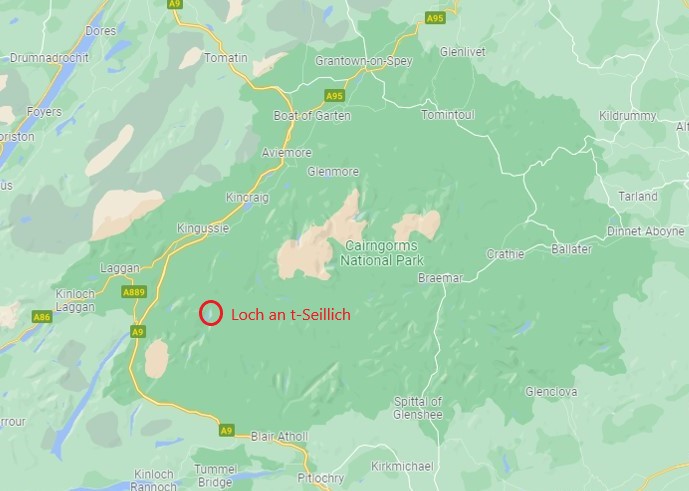
A quick look around on some of the shooting websites shows that these birds are not in short supply in the National Park. Ralia Estate, located on the western side of the Park, is apparently offering clients the opportunity to shoot between 200-500 red-legged partridge/pheasants per day during the season – that’s an obscene amount of killing. And not all their clients are even able to distinguish between a pheasant and a buzzard (here).

In addition to pressure on the CNPA from Nick Kempe, the issue of the impact of gamebird releases on biodiversity has also been gaining traction in England, with DEFRA being forced to review the potential impacts of releasing these alien species on protected areas and to develop a licensing scheme for gamebird release after a legal challenge last year from conservation campaign group Wild Justice (see here).
Whatever has led the CNPA to start looking at this issue inside the Cairngorms National Park, it’s a long overdue but nevertheless very welcome move, although not all the CNPA Board members agree if their responses to the draft Plan are anything to go by.
These responses can be watched in a fascinating video of the CNPA Board meeting held earlier this month which has now been put online. The point of the meeting was for CNPA staff, led by CEO Grant Moir, to present the draft National Park Plan for 2022-2027 to the Board for their ‘approval’ to put it out for a three-month public consultation.
This process for the Park Plan has been in motion for quite some time, but if you listen to some of the Board members’ comments you’d think it had been foisted on them out of nowhere.
To summarise the process, the Park Plan has been put together after an initial public consultation asking people to help shape the plan’s objectives, now it’s gone to public consultation (23rd Sept – 17th Dec), then the CNPA staff and Board will consider all the consultation responses and put together a final Plan in the spring, to put to Scottish Ministers next June.
This video of the Board meeting is well worth your time. It’s just over an hour and a half long, so it will take some commitment on your part, but honestly, it’s one of the funniest things I’ve watched in ages.
(CLICK HERE to watch).

It starts off with someone calling a register and you feel like you’re watching a classroom parody, and actually this theme is quite appropriate later on in the video as some of the participants have to be schooled repeatedly, not just about the consultation process but also about how to behave during the Board meeting.
Then for the first 25 minutes there’s a clear explanation about the process and about the draft consultation document from three CNPA staff, before the floor is opened to the Board members to ask questions / make comments etc, and for CEO Grant Moir to respond.
I won’t spoil the surprise but look out for some familiar names making fools of themselves as they question why gamebird management is part of the draft Plan (Doug McAdam, serial raptor persecution denier and former CEO of grouse moor lobby group Scottish Land & Estates; Geva Blackett, former parliamentary officer for the Scottish Gamekeepers Association & married to the now retired Factor of Invercauld Estate) and especially watch out for Deirdre Falconer and John Kirk – the latter for his views on peatland restoration (and while he’s talking, watch CNPA staff member Gavin Miles’s eyes – they say it all!).
I’ve got to say, CEO Grant Moir and Xander McDade (CNPA Convenor) gave a masterclass on how to provide a calm, measured and well-evidenced response to what at times were contributions verging on hysteria. You’ll be pleased to know that there are also some eminently sensible Board members, and at least two of them restored some faith in the ability of the Board (Fiona McLean and Peter Argyle).
On the Park Plan consultation itself, as mentioned above, it is now open until 17th December and anyone can contribute to it – whether you’re a Park resident or visitor – you can find the consultation online HERE.
I may come back to the Plan’s objectives in a later blog – I did notice that tackling raptor persecution, which has featured quite prominently in previous Plans, doesn’t seem to be included this time [NB: see update at foot of blog], probably because the CNPA has failed to get to grips with it, as evidenced by the latest poisoned eagle found earlier this year on a Cairngorms grouse moor (here) and the news last week that a Police Scotland dive team is searching a Cairngorms loch after the discovery of a dumped golden eagle satellite tag (here).
On gamebirds, the first step is to gather evidence on how many are released and how many are shot in the Park, before any assessment can be made on the impact of these alien species on biodiversity. It’ll be fascinating to see how the CNPA is going to define ‘sustainable pheasant and partridge shooting / releases’ inside a National Park. Surely that’d be zero releases of non-native species?

There’s also an objective to curtail muirburn, and there will be long arguments during the consultation period about what will constitute a legitimate reason to set fire to peatland vegetation during a climate emergency. Manipulating the habitat to support artificially-high numbers of red grouse for shooting is not a good enough reason, in my view.

UPDATE 08.20hrs: Tackling raptor persecution IS included in this latest draft Park Plan – see A14 in ‘Actions’ and A6 in ‘Policy’. Thanks to a blog reader for pointing this out.
UPDATE 6 April 2025: Pilot study to examine impact of releasing non-native gamebirds in Cairngorms National Park (here)
UPDATE 21 November 2025: New report on gamebird releases in Cairngorms National Park doesn’t tell even half the story (here)






 Raptor Persecution UK