Attack on Chris Packham put into wider context

Further to the terrifying arson attack at Chris Packham’s home last week, believed by many to be an act of intimidation / domestic terrorism in response to Chris’s environmental and animal welfare campaign work (see here), two journalists have written articles that attempt to put the escalating violence into a wider context.

[CCTV image of the firebombed vehicle at Chris Packham’s home]

Writing for Byline Times yesterday, Andrew Taylor-Dawson argues thoughtfully that the attacks on Chris are part of a wider global assault on environmental activists. He says:

What is clear – from the forests of South America to the grouse moors of Britain – is that some of those with a vested interest to oppose the defence of wildlife and habitats are prepared to go to extreme lengths to intimidate, silence or even get rid of their opponents‘. 

You can read Andrew’s full article here.

Also published yesterday was an eloquent piece from George Monbiot in The Guardian, who wrote about the escalating violence shown by some within the bloodsports community against objectors, aided by poor police enforcement and major legal deficiencies. He writes about the loopholes in the Hunting Act which allow so-called trail hunters to ‘accidentally’ kill foxes, and says this about the difficulties of prosecuting gamekeepers for the illegal killing of birds of prey:

Other bloodsports also enjoy remarkable legal exemptions. An attempt to introduce a provision for vicarious liability in England, ensuring that estate owners could be prosecuted when their gamekeepers illegally kill birds of prey, was struck down by an environment minister who happened to own a grouse moor and a pheasant shoot. The amazing legal contortions needed to allow pheasant shooting to continue create the impression that there is one law for the rich and quite another for the poor‘.

You can read George’s full article here.

Network Rail commended for safe-guarding hen harriers in Scotland

A good news story!

This article has been reproduced from Scottish Construction Now (7th October 2021).

Nesting hen harriers have been protected by Network Rail during its successfully completed tree and vegetation management work between Rogart and Lairg.

Urgent works needed for the safe operation of the railway coincided with breeding season and were in a location that was both a Site of Special Scientific Interest (SSSI) and Special Protection Area (SPA).

This had the potential to disturb breeding harriers and Network Rail’s ecology team worked with the Highland Raptor Study Group to conduct surveys for hen harrier within the vicinity of the line.

Once breeding harriers had been identified, Network Rail put in place special working practices to minimise disruption for the birds.

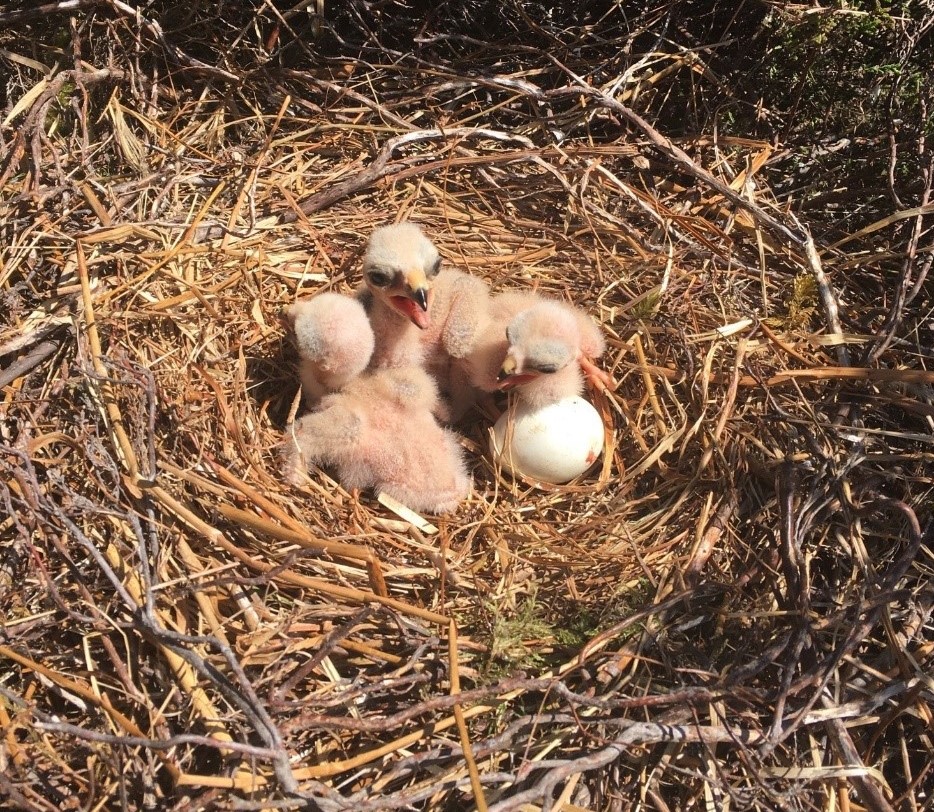
Happily, three hen harrier chicks successfully fledged from nests adjacent to the work site which is a real success story for these protected birds.

Jonathan Callis, senior asset engineer for Network Rail, said:We take our responsibility to the lineside environment and Scotland’s wildlife extremely seriously.

However, to protect the safety of the railway and those who travel on it, we sometimes need to carry out work during bird nesting season, in protected areas or in this case, both. It is then we seek the help of our ecologists and specialists to develop safe ways of working and best practice to minimise disruption and protect any species or habitats adjacent to the line.

We are delighted the care, professionalism and collaboration demonstrated by everyone who contributed to this project has resulted in such a successful outcome for the birds.

Brian Etheridge, from the Highland Raptor Study Group, said:It was a pleasure to work with Network Rail this spring and summer carrying out ornithological surveys in the vicinity of the track between Rogart and Lairg.

The priority was to look for breeding hen harriers, a scarce and threatened bird of prey for which this area has been designated as a Special Protection Area (SPA).

Two nesting pairs were found, with one nest in close proximity of the track. Network Rail were quick to suspend all track-side scrub clearance in a bid to prevent any disturbance to the nesting pair.

This resulted in three young harriers fledging successfully and is much to the credit of Network Rail and the company and staff should be proud of their contribution to safe-guarding this iconic species.”

As part of the mitigation measures put in place for the hen harriers, a ‘high-risk works area’ was established, which incorporated areas adjacent to the railway line that offered suitable nesting and foraging habitat as well as areas where hen harrier activity was noted.

Strict guidelines meant that no work was allowed in the area around the nests until all breeding attempts were concluded.

Measures were also put in place to reduce noise disturbance including the use of battery-operated chainsaws and time limited working in any single area to keep noise to a minimum.

Immediately before works commenced on site, a further survey was undertaken to check any nesting hen harriers and confirm that the works were safe to proceed.

A camera was also installed to monitor the nesting locations throughout the work and to check that there were no signs of disturbance.

The location of the work, between Rogart and Lairg, runs through the Strath Carnaig and Strath Fleet SSSI and SPA. Both are designated areas for supporting a population of breeding hen harrier which is of European importance.

ENDS

Calls to investigate possible illegal burning on Yorkshire grouse moor

Press release from RSPB (13th October 2021)

Outrage as peatlands burn ahead of UK hosting crucial climate talks

  • The RSPB calls on Defra and Natural England to urgently investigate possible illegal peatland burning on a grouse shooting estate in West Yorkshire.
  • The charity has also received other reports of burning over the weekend
  • The active burning of peatland is a major embarrassment in the run up to the UK hosting CoP26.

The RSPB has today called for Defra and Natural England to urgently investigate possible illegal peatland burning on open moorland on Walshaw Moor, a grouse shooting estate, near Hebden Bridge in West Yorkshire. The RSPB is also receiving reports of burning from other places from Yorkshire to the Peak District.

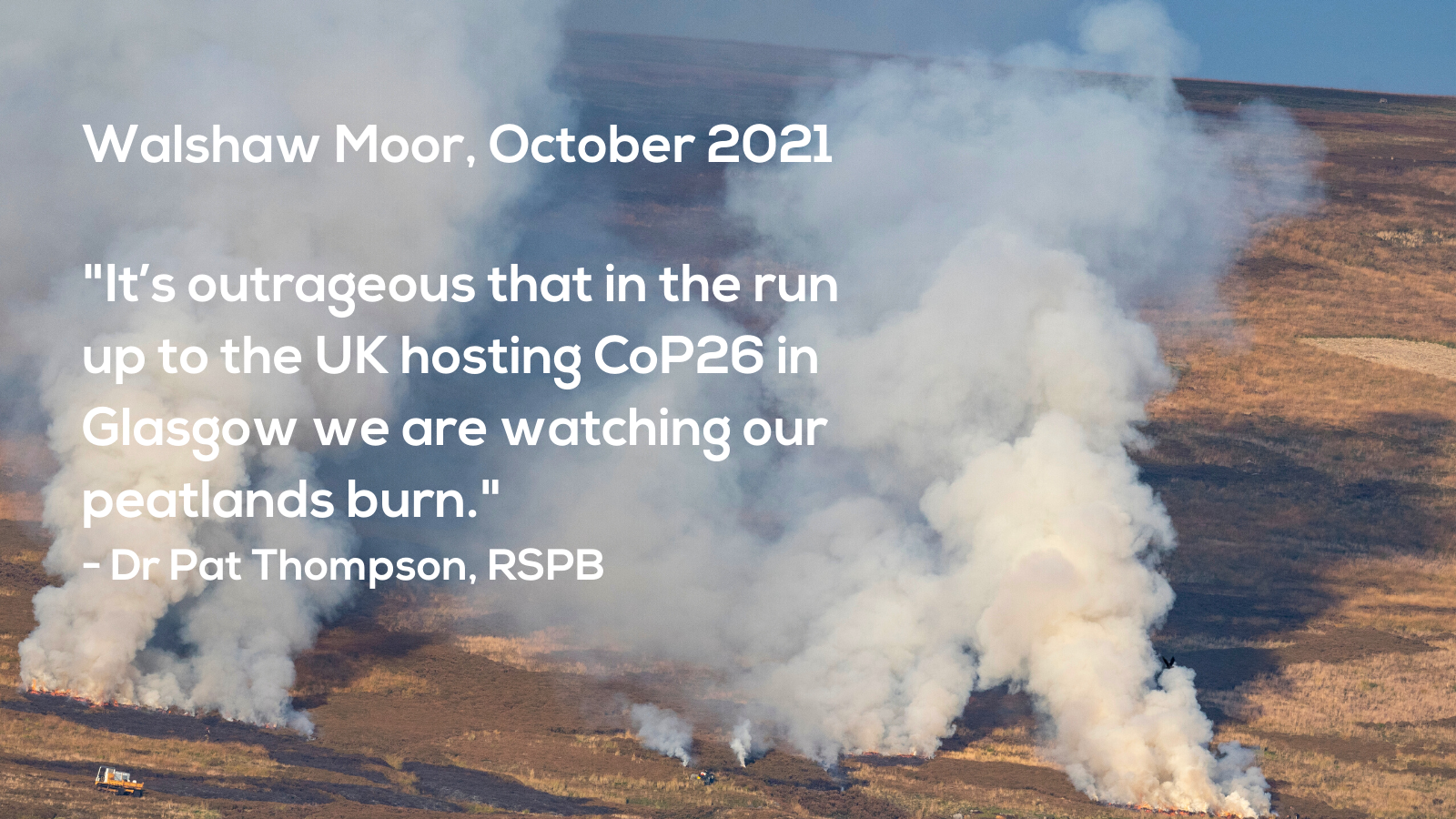
[Walshaw Moor, photo by Sarah Hanson]

Recent changes to the law mean that burning without a licence on peatland greater than 40cm in protected areas is illegal. On Walshaw Moor the RSPB has long maintained concerns about how the estate is managed given its location within a legally protected nature site (A Special Protection Area under the UK Habitats Regulations). The charity raised this with the European Commission in 2012 and is still awaiting resolution.

Dr Pat Thompson, Senior Policy Officer from RSPB said, “It’s outrageous that in the run up to the UK hosting CoP26 in Glasgow we are watching our peatlands burn. These are the UK’s equivalent of the rainforests in terms of both their nature and their storage of carbon.

“Each burn on peatland destroys crucial vegetation and exposes the surface of the peat itself. This leads to erosion both as the carbon in the peat is released into the atmosphere or is carried off into our rivers causing pollution. This process also reduces the ability of the peatland to slow the flow of water, which further compounds the problem. It also leads to problems of flooding in local communities further downstream, which we have seen in recent years. We are passing a tipping point in these places, and this practice needs to stop.

”The Westminster Government understands this, as Defra stated last year, ‘burning makes it more difficult or impossible to restore these habitats to their natural state”.  This is why it introduced the new laws this year. And for this reason, we are calling on Defra and Natural England to act urgently.”

Peatlands are burned in the North of England to encourage vigorous growth of heather which grouse can feed on. The RSPB is calling for driven grouse shooting to be licenced in order to better control what it sees as a form of intensive and damaging land management.

Dr Thompson added; “The grouse shooting industry in many places is essentially unsustainable and needs to change. In November, the UK will host CoP26 and we really don’t want the embarrassment of our peatlands on fire while delegates around the world discuss ways in which we can reduce our impact on climate and nature.”

While welcoming the added protection, the RSPB wants this urgently extended to protect other peatlands on shallower soils from burning.

On Thursday this week [14 October] the RSPB is launching a major new campaign to raise awareness of peatland issues in the UK in the run up to CoP26.

Dr Olly Watts, Senior Climate Change Policy Officer at RSPB said, “Our peat is precious, we need to keep it wet and keep it in the ground. Globally it is under threat. Burning here in the UK is one problem, but there are many others, not least because peat is still dug for the horticultural industry. For this reason, we will be asking people to pledge to give up using peat and write to their local elected representative to ask Governments to urgently ban the sales of peat products. We can all do our bit”.

The RSPB has also recently launched a special “app” for people to report burning on peatlands. Visit here to find out more: https://upland-burning-rspb.hub.arcgis.com/

ENDS

Reports of further burning on grouse moors across northern England, mostly in National Parks, were reported in the press yesterday via Unearthed, the investigative journalism arm of Greenpeace (see here).

Meanwhile, Wild Justice is taking a legal challenge against DEFRA’s approach on limiting burning of peatlands because the campaign group doesn’t believe DEFRA has gone anything like as far as it must. An application seeking permission for judicial review of this policy has been submitted to the court and a response is due any day.

To be kept informed of Wild Justice’s campaign, please sign up for the free newsletter HERE

Arson attack on Chris Packham’s home as intimidation campaign escalates against him

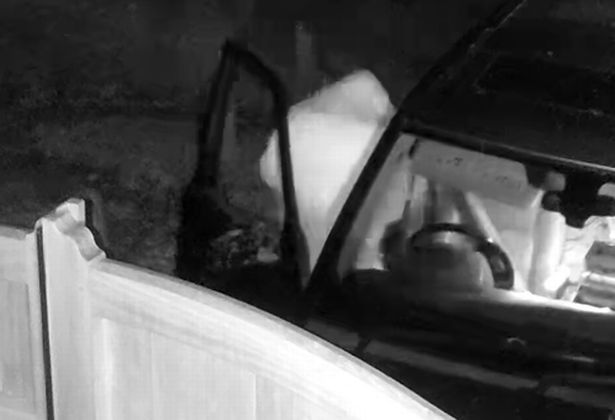
Just after midnight on Thursday night / Friday morning, in a remote part of the New Forest, two masked men were caught on CCTV driving a Land Rover up to the gates of Chris Packham’s home and setting it alight before escaping in a getaway vehicle.

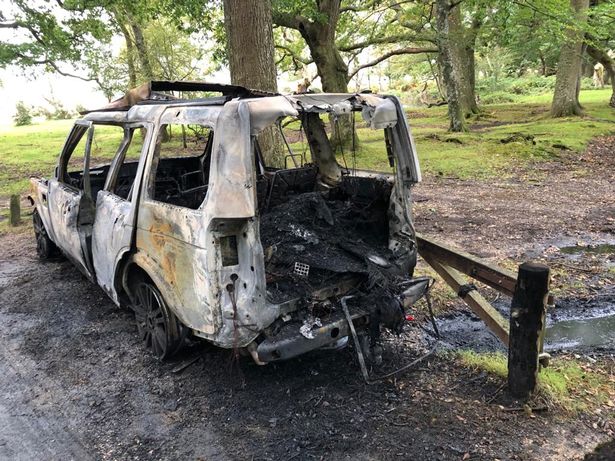
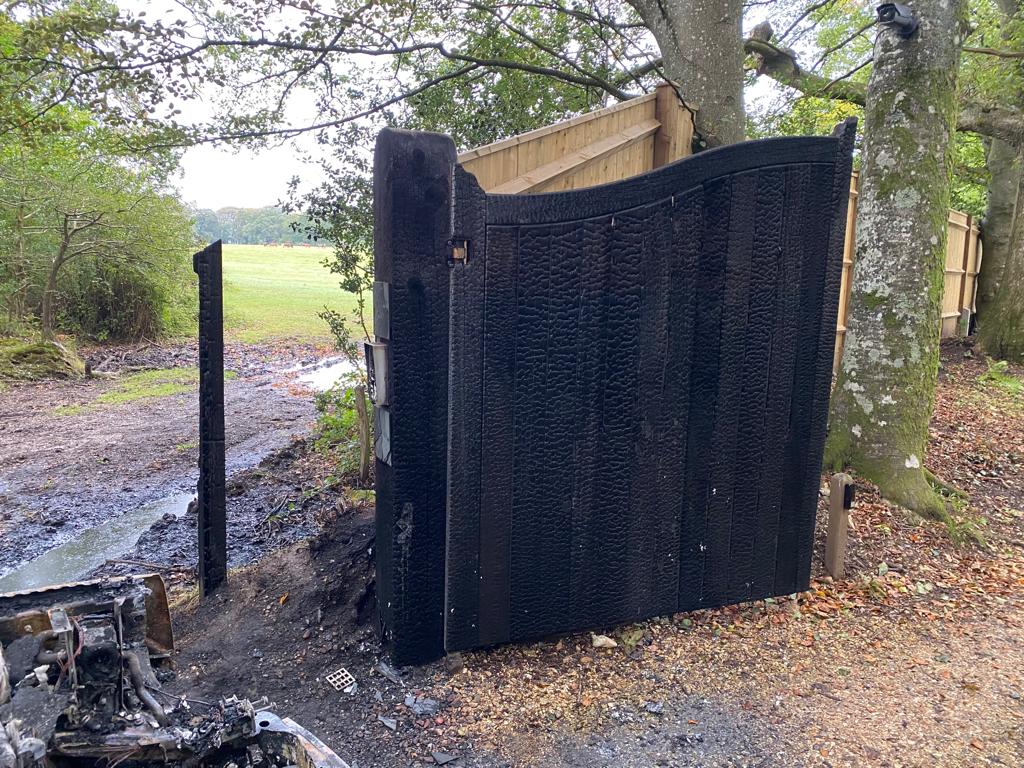
The Land Rover exploded and the flames spread to the gates and fenceposts, totally destroying them and all the electronics attached to them.

Chris was at home, alone, at the time.

[Footage from Chris’s CCTV showing one of the arsonists exiting the Land Rover and doing his best to avoid the camera]

[Footage of the inferno, caught on CCTV]

[What was left of the burned out wreckage after Hampshire Fire Service had attended the scene]

[The charred gates and electronics]

This is the latest attack in a long-running campaign of intimidation and harassment against my friend & colleague. Previous incidents have included dead crows being hung from his gate, a snared fox being dumped on his drive, a dead badger hung from his gate and excrement and death threats being sent to him in the post.

These events all sit alongside the daily offensive abuse and harassment he receives on social media, probably emboldened by a long-running campaign, led by some particularly vile and high profile individuals in the shooting industry, to have him sacked from the BBC just for speaking out on issues such as raptor persecution, unsustainable shooting and animal abuse.

This arson attack is a clear escalation in threat and is of serious concern.

I would hope that leading figures in the shooting industry will respond with leadership, integrity and decency, and ‘call off’ the thugs before this violence escalates even further.

Below is a video message from Chris:

Media coverage of this latest attack:

Daily Mirror here

BBC news here

Sky News here

Metro here

The Sun here

Express here

The Guardian here

The Times here

Independent here

ITV here

Telegraph here

Scotsman here

UPDATE 14th October 2021: Attack on Chris Packham put into wider context (here)

UPDATE 19th October 2021: With straight faces, shooting org BASC denies encouraging online abuse of Chris Packham, his step-daughter and others (here)

UPDATE 22nd December 2021: Police release CCTV image linked to arson attack at Chris Packham’s home (here)

UPDATE 15th March 2022: Firebomb at Chris Packham’s house – new evidence to be revealed on Crimewatch (here)

UPDATE 16th March 2022: Police describe arson attack at Chris Packham’s home as ‘absolutely terrifying’ & appeal for information (here)

Shotguns & dead bird of prey seized during multi-agency raid in Wales

Article from The Leader (8th October 2021)

MORE than a dozen shotguns and a dead bird of prey have been seized following an investigation into the illegal killing of raptors in the Ceiriog Valley.

The operation that took place this week was carried out by North Wales Police’s Rural Crime Team, in partnership with the RSPB Investigations Team, the National Wildlife Crime Unit and the Welsh Government, targeting those suspected of unlawfully poisoning birds of prey.

It came following an investigation launched in July into the poisoning of a red kite, found dead in the Ceiriog Valley on February 27 [Ed: see here].

Toxicology tests carried out on the bird by the Welsh Government earlier this year revealed it tested positive for Bendiocarb – a highly toxic pesticide.

Officers believe the incident was a deliberate act.

[Photo from North Wales Police Rural Crime Team]

Following this week’s searches, which included the recovery of 15 shotguns, the dead bird of prey was sent off for toxicology tests, while dangerous chemicals also discovered at one property are being dealt with.

Sergeant Dewi Evans of the Rural Crime Team said:

It’s time to stamp out persecution against our birds of prey. We are glad to have worked with Welsh Government, National Wildlife Crime Unit and RSPB Investigations on our operation targeting those suspected of criminally harming our wildlife. We look forward to working with our partners again in future.

RSPB Investigations officer Niall Owen said: “This was a well organised multi-agency operation and a positive step in the right direction for investigating raptor persecution in Wales.

“We, as a team, are committed to working alongside the police to safeguard the future for birds of prey and uncover these barbaric crimes against our birds.

“Laying poison baits in the countryside to target birds of prey is not only illegal but represents a huge danger to any person or animal unlucky enough to come across it.

“We would like the thank North Wales Police for their commitments to follow up these incidents.”

ENDS

Leadhills Estate’s reaction to extended General Licence restriction

Last week I blogged about how NatureScot has extended the General Licence restriction on the notorious Leadhills Estate after receiving more evidence of wildlife crime (see here). The extension was supposedly for a further three years for alleged offences that were uncovered in July 2020, but in effect is only for eight months because it is running concurrently with the original three year restriction imposed on the estate in November 2019 (see here).

A few days after news of the restriction extension emerged, an unnamed spokesperson for Leadhills Estate has told a journalist at The Herald that the estate is ‘actively considering’ an appeal against the extended restriction and claims not to have seen the evidence behind the restriction decision. The link to the article is here but I’ve cut and pasted it below for posterity:

A sporting estate whose ban from shooting or trapping wild birds has been extended for a further two years has said it is considering an appeal against the ruling

Scottish Government conservation body NatureScot has said that the restriction on “general licenses” at the Leadhills Estate in South Lanarkshire will now last until 2023 after additional evidence was uncovered.

However, a spokesman for Leadhills has questioned the justification for the extra two-year prohibition, saying that it has not been shown the evidence behind the decision. 

The killing of wild birds has been prohibited on the estate since 2019 in response to police evidence of crimes against wild birds occurring on the land.

This included signs of the illegal killing of raptors, chiefly three hen harriers, one short-eared owl and two buzzards, and the illegal disturbance of a wild bird nest.

Leadhills Estate encompasses approximately 19,500 acres, mixed between farming and grouse moors. It is owned by two Trusts, the Leadhills Trust and Glengeith Trust.

The estate’s spokesman said: “The estate is extremely disappointed by this decision and is actively considering an appeal against it.

We have yet to see the evidence leading to this decision and have been requesting this information from the relevant authorities.

Without that evidence, we question the justification for such a decision, which is likely to have an impact on wildlife on the estate.”

General licences are granted to landowners or land managers to carry out actions which would otherwise be illegal, including controlling common species of wild birds to protect crops or livestock.

The spokesman added: “There has been no commercial driven grouse shooting on the estate for several years and the moorland is managed on a care and maintenance basis.

“The estate has a zero tolerance approach to wildlife crime and has robust compliance systems in place.

“Employees are fully aware of their responsibilities with regard to the conservation of wildlife and we are confident that wildlife crimes have not been committed by anyone employed on the estate.”

ENDS

It seems very strange to me that Leadhills Estate claims to be ‘actively considering’ an appeal at this stage. If you read the protocol and process used by NatureScot when making restriction decisions (and decisions to extend the original extension), you’ll see that there are multiple opportunities for an estate to make appeals and challenge the decision, well before now (see here).

Indeed, Leadhills Estate will be very familiar with this appeal process, having gone through it when the original three-year restriction was imposed in November 2019 (and it’s well worth reading the Estate’s appeal letter for it’s comedic value – see here).

It also sounds strange that Leadhills Estate claims not to have been provided with the evidence to justify the restriction extension. Again, have a look at the decision-making process used by NatureScot, particularly this paragraph about notification:

The Head of Wildlife Management will notify the owners and occupiers of the land in respect of which a restriction is recommended (“the Affected Parties”), in writing (“the Notification”). The notification will include a summary of the evidence on which the recommendation is based and will set out the reasons, the land to which the recommended restriction would apply and the duration of the recommended restriction (“the Decision Notice”). The possibility of a restriction being imposed will also be discussed with Police Scotland to ensure there is no risk to any potential prosecutions‘.

Given how risk averse NatureScot is, and its conservative approach when it comes to dealing with General Licence restrictions, I find it very hard to believe that NatureScot staff wouldn’t have followed the protocol and process to the letter.

It couldn’t be that Leadhills Estate is just grandstanding for the press, could it?

Time will tell. I’ve requested details of the correspondence between Leadhills Estate and NatureScot via a freedom of information request.

Buzzard caught in primitive illegal trap set inside pheasant pen in Shropshire

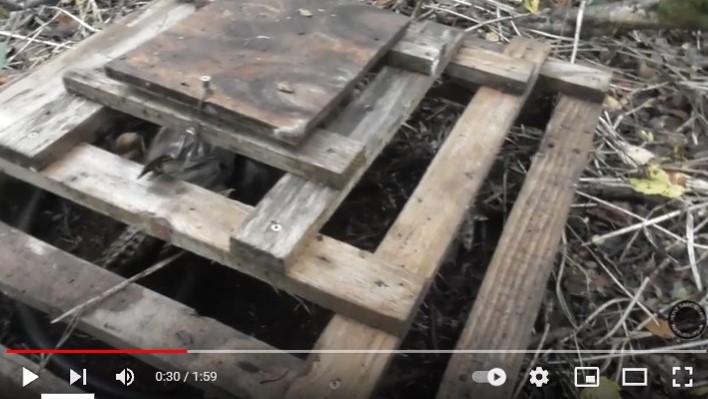
Video footage has emerged, filmed in mid-September, of two primitive and illegal traps that had been set inside a pheasant pen in woodland near the village of Chelmarsh, just south of Bridgnorth, Shropshire.

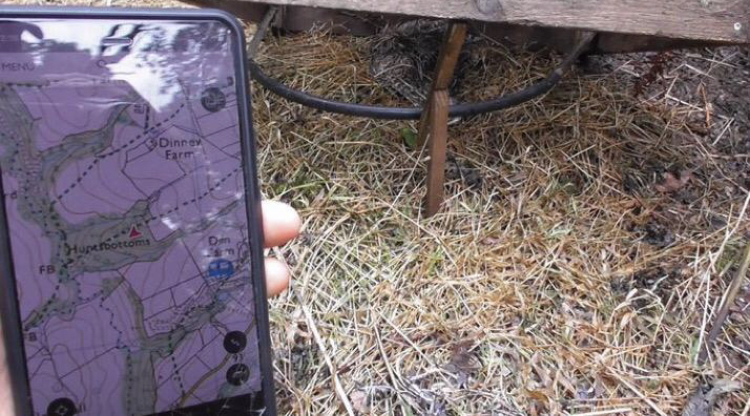
One of the traps had been triggered and had caught a buzzard. The other trap had been baited with a dead pheasant but had not been triggered.

[Screen grab from the video, showing the trapped buzzard inside the illegal trap]

[A photo of the second illegal trap, baited with the dead pheasant. The map shows the location:

The trapped buzzard was released by a member of the public and subsequent covert video evidence shows a man entering the pheasant pen, attending the trap and removing all evidence of it.

I understand that a report has been made to the police.

There is a write-up about this criminal activity on the Hunt Saboteurs Association website (here), where it is claimed the man attending the trap is a gamekeeper. I don’t have any information that can support or refute that claim.

The video can be watched here:

Grouse moor burning incompatible with Scottish Government’s net zero ambitions: new report

Press release from RSPB Scotland (1st October 2021)

Scotland’s climate targets are at risk of going up in smoke

Scotland’s hopes of meeting its Net Zero by 2045 goal to address the nature and climate emergency are at risk of failing unless the burning of grassland and heather moorland is more strictly regulated, and almost all burning on peat is banned.

A new report, published today by RSPB Scotland, warns that current muirburn practices are incompatible with Scotland’s net zero ambitions because of the importance of peatlands as carbon stores and provides evidence that the current voluntary Muirburn Code is not working.

Muirburn is the burning of heather and grass vegetation (usually to promote new growth) and is a land management practice typically associated with managing land for game, deer, and some agricultural purposes. It is currently “lightly regulated” with some outdated statutory regulations supported by a voluntary code of best practice – the Muirburn Code.

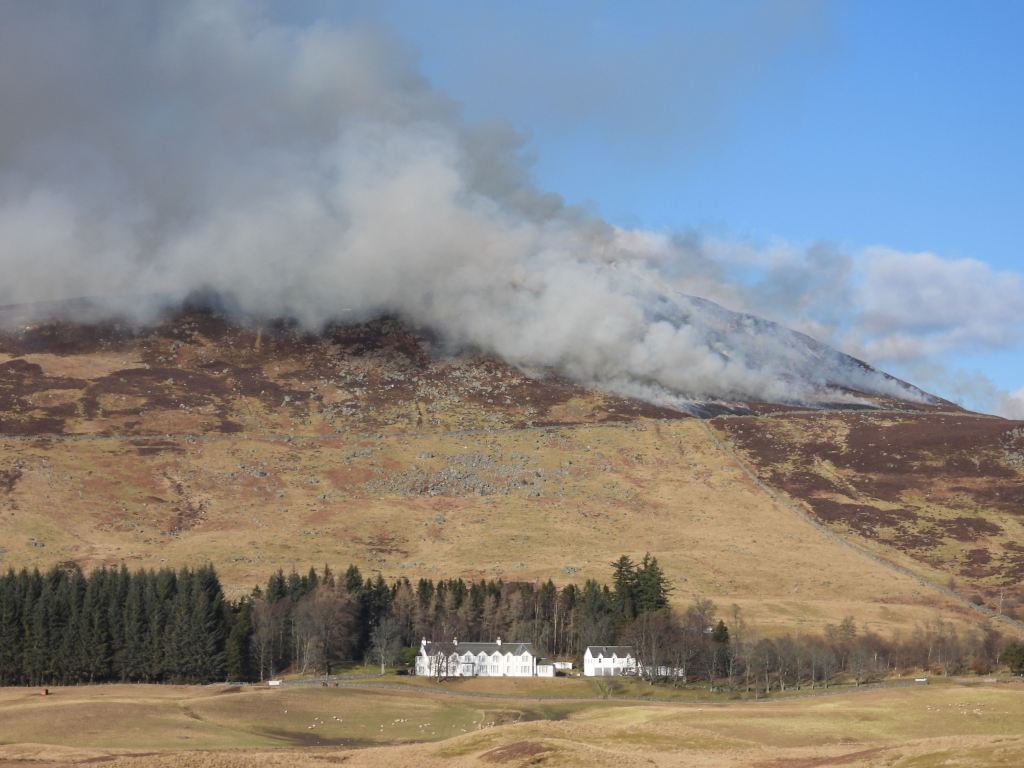
[Muirburn on a grouse shooting estate in Strathbraan earlier this year. Photo by a blog reader who wishes to remain anonymous]

The report calls on the Scottish Government to introduce licensing and regulate the practice to deliver on its 2020 pledge, and to implement this action before the start of the next muirburn season in October 2022. Without regulation the £250 million of public investment in peat restoration over the next decade is at risk of being seriously undermined and cancelled out.

With a month to go until the UN Climate Summit COP26 takes place in Glasgow, the report – How to prevent nature and carbon going up in smoke: Licensing Muirburn – highlights the changes to muirburn legislation and practices that are needed to help Scotland address the nature and climate emergency. It looks in detail at how a licensing system could work.

The report recommends that:

· new muirburn legislation should be implemented in time for the start of the next muirburn season on 1 October 2022.

· all muirburn, whether for gamebird and deer management or agricultural purposes, should be licensed by NatureScot.

· all licenses should be subject to full compliance with an updated Muirburn Code, which puts addressing climate change and nature loss at its heart, delivering Scottish Government priorities for native woodland expansion, peatland protection and biodiversity conservation. Any future breaches of the Code would invalidate licences.

· burning should be prohibited on deep peat soils, except in exceptional circumstances, and a 30 cm depth definition (rather than the current 50 cm) should be adopted for deep peat in line with recommendations from peatland experts.

· details of all muirburn licenses granted by NatureScot in future should be freely available.

In recent years, and increasingly because of the current nature and climate emergency, the costs and benefits of this land management method have been hotly debated. Burning on peatland can lead to a rapid release of stored carbon and a drying out of peatland soils, whereas healthy wet peatlands continually store carbon. Damaged peatlands can also contribute to flooding and affect water quality with significant public costs and can negatively impact wildlife and their habitats.

In November 2020, the (then) Rural Affairs and Natural Environment Minister, Mairi Gougeon MSP gave an official statement to the Scottish Parliament in response to the independent Grouse Moor Management Group Report. It said ‘In future muirburn will only be permitted under licence from NatureScot, regardless of the time of year it is undertaken. And there will be a statutory ban on burning on peatland, except under licence for strictly limited purposes such as habitat restoration.’

RSPB Scotland strongly supported this announcement but believes action to implement this commitment must be taken now and is calling for new legislation and an operational licensing scheme by this time next year.

The report released today reviews the effectiveness of current regulation as well as describing how a licensing scheme could be implemented and administered by NatureScot.

It concludes that unless swift action is taken to regulate muirburn then the public investment of £250 million over the next ten years in peatland restoration, announced by the Scottish Government this summer, is put at risk by allowing these, and other areas which should be restored, to be further burned and damaged. By preventing natural regeneration of trees and scrub, muirburn is also in direct contradiction of the Scottish Government’s ambitious targets to create more woodland cover.

The report also includes examples of muirburn, provided to RSPB Scotland in recent years by concerned members of the public, which appear to show burning on steep scree slops, burning of regenerating trees and juniper, and burning close to nests of protected birds such as golden eagles and peregrine falcons.

RSPB Scotland asserts that these are all likely examples of contraventions of the current voluntary Muirburn Code, providing evidence that self-regulation is failing and that the Scottish Government must urgently intervene in this area of land management practice.

Duncan Orr-Ewing, Head of Species and Land Management said: “In the current nature and climate emergency, it is now widely accepted that all land uses will need to change to play their part in addressing the climate challenge we are facing. In this context, and as part of a wider package of change in land use practices, we believe that muirburn must now be properly regulated. The Scottish Government proposes to licence muirburn and to ban burning on peatlands, which we strongly support. However, this should be done urgently and be in place before the muirburn season of October 2022”.

In this report, various recent cases are highlighted of what RSPB Scotland perceive to be contraventions of the existing voluntary Muirburn Code. Where self-regulation is failing, it is right that the Scottish Government should intervene. We hope that the Scottish Government will take heed of the recommendations in this report and move swiftly to implementing licensing for muirburn and a ban of burning on peat in line with their commitment last year. The upcoming COP in Glasgow next month will surely reinforce how urgently actions like this are now needed”.

ENDS

The report can be downloaded here:

The RSPB is also asking members of the public throughout the UK to collect information on any current moorland burning, or evidence of recent burning. Please click here for information. If you’re not into using a mobile phone app, there will also be a facility to report your sightings via a computer.

Meanwhile, Wild Justice is taking a legal challenge against DEFRA’s approach on limiting burning of peatlands because the campaign group doesn’t believe DEFRA has gone anything like as far as it must. An application seeking permission for judicial review of this policy has been submitted to the court and a response is due any day.

To be kept informed of Wild Justice’s campaign, please sign up for the free newsletter HERE

Extension of General Licence restriction at Leadhills Estate confirmed as pitiful 8 months

Yesterday I blogged (here) about the extended General Licence restriction that has been imposed on Leadhills Estate after further evidence of wildlife crime had come to light since an original three-year restriction was imposed (to run 26 Nov 2019 – 26 Nov 2022).

[The grouse moors of Leadhills Estate. Photo by Ruth Tingay]

However, there was some confusion from the licencing agency, NatureScot, as to just how long this extension was applicable.

Robbie Kernahan, NatureScot’s s Director of Sustainable Growth was quoted in a NatureScot announcement saying ‘…there is enough evidence to suspend the general licences on this property for a further three years‘, which should have taken the restriction to November 2025 but when I looked at the actual detail of the extension on another part of the NatureScot website, the expiry date of the extension was given as 8th July 2023.

I contacted NatureScot’s licensing team this morning and asked them to clarify the apparent discrepancy. I am grateful to Licensing Manager Liz McLachlan for a prompt and clear explanation, as follows:

We have amended the statement on our web-pages as we accept there was some ambiguity in the original wording which you have picked up on. To clarify, the 3 year extension to the restriction is from the date of the most recent (additional) offence, as recorded by Police Scotland, which takes the restriction to July 2023.

For completeness the restriction is from 8 July 2020 to 8 July 2023‘.

I have looked at the amended statement from Robbie Kernahan which now reads:

In this case we have concluded that there is enough evidence to suspend the general licences on this property until 2023‘.

So effectively, this ‘three year extension’ isn’t actually a three-year extension at all. Technically it might be, but in effect it’s actually only an eight month extension because the estate is already serving the original General Licence restriction up until 26 November 2022, so imposing another restriction for the period 8 July 2020 to 26 November 2022, on top of the one already being served, is utterly pointless.

The 8-month extension from 27 November 2022 to 8 July 2023 is the only part of this ‘extended’ restriction that will have any real effect.

And apparently the estate has already served 14 months of the extension, given that it began in July 2020! Why has it taken 14 months for NatureScot to publicise this extended restriction? When was the estate notified of this further restriction? And has it made any difference whatsoever to the estate’s activities, given that the original restriction was already underway (since November 2019)?

And if this extension was in place since July 2020, then why the hell did NatureScot give Leadhills Estate special privileges last year when it granted an out-of-season muirburn licence in September 2020??

What sort of idiotic ‘sanction’ is this? An eight month General Licence restriction for the shooting of a short-eared owl, which is the alleged offence that this extension is based upon. Well that’s really going to put the fear of God up other would-be raptor killers, isn’t it?

It’s a pitiful response.

I don’t know if it’s a result of legal limitations (e.g. can this legal sanction be lawfully applied several years after the original offence?) or if it’s a result of professional incompetence by NatureScot.

I have submitted an FoI to NatureScot to ask for details of the decision-making process in this case and will blog when I receive a response.

[Short-eared owl by Amy Lewis]

Leadhills Estate – General Licence restriction extended after police report more evidence of wildlife crime

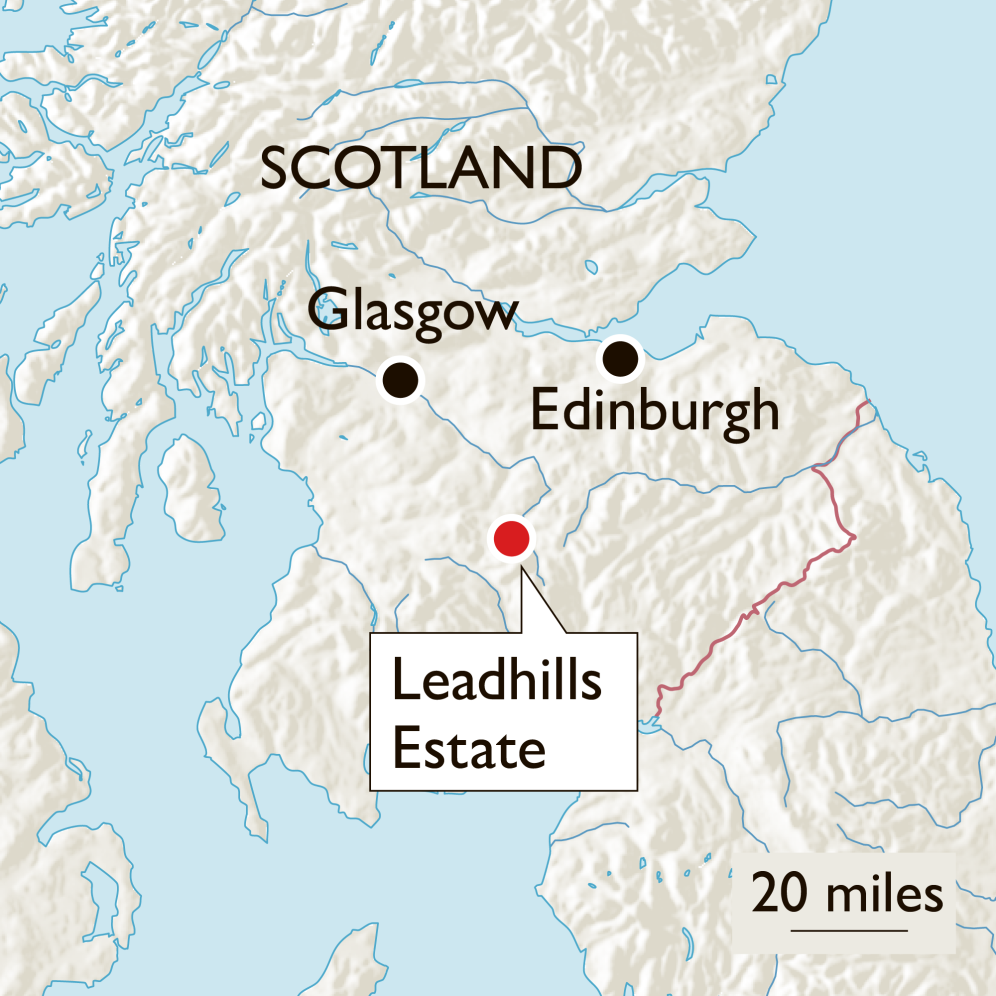
Regular blog readers will be well aware that the notorious Leadhills Estate, a grouse-shooting estate in South Lanarkshire that has been at the centre of police wildlife crime investigations at least 70 times since the early 2000s, is currently serving a three-year General Licence restriction based on ‘clear evidence’ of raptor persecution offences, including the illegal killing of a short-eared owl, two buzzards and three hen harriers that were ‘shot or caught in traps’ on Leadhills Estate since 1 January 2014 (see here) and the discovery of banned poisons on the estate in May 2019 (see here).

That original General Licence restriction was imposed on Leadhills Estate by NatureScot in November 2019 and is valid until November 2022.

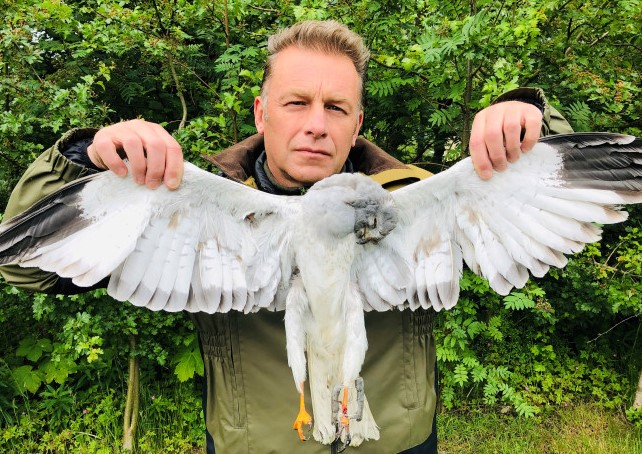
[Chris Packham holds a dead hen harrier. This bird was caught by the leg in an illegally-set trap on the Leadhills Estate grouse moor in May 2019. The trap had been set next to the harrier’s nest and was hidden by moss. The harrier’s leg was almost severed. Unfortunately, extensive surgery could not save this bird. Photo by Ruth Tingay]

However, since that original restriction was imposed on Leadhills Estate in November 2019, further alleged offences have been reported and are the subject of ongoing police investigations (see here) including the alleged shooting of a(nother) short-eared owl by a masked gunman on a quad bike as witnessed by a local resident and his eight year old son in July 2020 (see here) and the discovery of yet another batch of banned poisons, also in July 2020 (here). A satellite-tagged hen harrier (Silver) also vanished in suspicious circumstances on the estate in May 2020 (here), and although NatureScot don’t count missing satellite-tagged raptors as sufficient evidence for a General Licence restriction, the disappearance can be used as supportive evidence if further alleged offences are also being considered.

It’s been over a year since those further alleged offences were reported and we’ve all been waiting to see whether NatureScot would impose a further General Licence restriction on Leadhills Estate. Instead, the licensing team appears to have been focusing on helping out the estate by issuing it with an out-of-season muirburn licence last year (see here) and considering another application from the estate this year (see here). It really beggars belief.

Anyway, NatureScot has finally got its act together and has indeed imposed a further General Licence restriction on Leadhills Estate. Here is the statement on the NatureScot website:

29 September 2021

NatureScot has extended the restriction of the use of general licences on Leadhills Estate in South Lanarkshire until 2023. The decision was made on the basis of additional evidence provided by Police Scotland of wildlife crime against birds.

General licences allow landowners or land managers to carry out actions which would otherwise be illegal, including controlling common species of wild birds to protect crops or livestock.

A restriction of the use of general licences was implemented on Leadhills estate in November 2019, in response to police evidence of crimes against wild birds occurring on the land. This decision extends the period of the existing restriction.

Robbie Kernahan, NatureScot’s s Director of Sustainable Growth, said: “It is hugely disappointing to have to be considering further issues of wildlife crime against wild birds and we are committed to using the tools we have available to us in tackling this. In this case we have concluded that there is enough evidence to suspend the general licences on this property for a further three years. They may still apply for individual licences, but -if granted – these will be closely monitored.

We work closely with Police Scotland and will continue to consider information they provide us on cases which may warrant restriction of general licences. The detection of wildlife crime can be difficult but new and emerging technologies along with a commitment from a range of partners to take a collective approach to these issues will help us stop this from occurring in the future.”

ENDS

NatureScot’s Robbie Kernahan is quoted here as saying the General Licence restriction will apply “for a further three years“, which should take the restriction up to November 2025.

However, when you look at the actual restriction notice on NatureScot’s website, it says the restriction will extend to July 2023.

Eh? That’s not a three-year extension. That’s only an eight-month extension. I sincerely hope this is just a typo and the date should read November 2025.

It’s good to see NatureScot finally get on with this but I have to say that given there’s a need for an extension of the original General Licence restriction on Leadhills Estate, due to further evidence from Police Scotland about ongoing alleged wildlife crime there, doesn’t that demonstrate just how ineffective the General Licence restriction is as a tool for tackling wildlife crime??

I’ve written many times about the futility of this scheme, and have even presented evidence about it to a Parliamentary committee, not least because even when a General Licence restriction has been imposed, estate employees can simply apply to NatureScot for an individual licence to continue doing exactly what they were doing under the (now restricted) General Licence (e.g. see here)!

And although former Environment Minister Paul Wheelhouse, who was responsible for first introducing General Licence restrictions in 2014, considered that it would work as a ‘reputational driver’ (here), I’ve previously shown with several examples how this is simply not the case (e.g. see here) and that a General Licence restriction remains an ineffective sanction.

Nevertheless, it’s all we’ve got available at the moment and on that basis I would like to see NatureScot now get on with making decisions about restrictions on a number of other estates, such as Invercauld Estate in the Cairngorms National Park where a poisoned golden eagle was found dead next to a poisoned bait earlier this year (here).

And Invercauld isn’t the only estate that should be sanctioned, is it, NatureScot?

UPDATE 30th September 2021: Extension of General Licence restriction at Leadhills Estate confirmed as pitiful 8 months (here).

UPDATE 6th October 2021: Leadhills Estate’s reaction to extended General Licence restriction (here).

UPDATE 23rd February 2022: NatureScot refuses to publish details of Leadhills Estate’s general licence restriction appeal (here)