Raptor persecution highlighted in Cumbria magazine

Raising public awareness of ongoing raptor persecution crimes is probably the single, most important thing that just about anybody can do.

You don’t need to be an expert on birds of prey, nor work in the conservation sector, nor to have a massive following on social media. All you need is an understanding that birds of prey are still systematically killed in the UK, almost 70 years after they became protected species, and that this killing most often takes place on land managed for gamebird shooting, where raptors are being poisoned, shot or trapped.

Nobody in their right mind is ever going to support this brutal slaughter, and yet many are still oblivious that it continues in 21st century Britain. Many assume it stopped back in the Victorian era. The more people that know that it still goes on today, the more pressure can be put on politicians to take meaningful action against it.

With this in mind, it’s great to see this opinion piece by Fiona Heslam, published in the August edition of the Cumbria magazine.

Thanks to Jamie Normington (@TLWforCumbria) for sharing it on social media.

Young golden eagles actively avoid wind turbines in Scotland: new scientific research paper

There’s a fascinating new scientific research paper just published in Ibis, the journal of the British Ornithologists’ Union, relating to the flight behaviour of young satellite-tagged golden eagles in Scotland in and around windfarms.

Authored by a number of experts from Scotland’s Golden Eagle Satellite Tag Group (GESTG), this study demonstrates how young golden eagles actively avoid operational wind turbines.

Here is the abstract:

The notion that young dispersing golden eagles in Scotland appear to avoid wind farms was discussed in the Government-commissioned report published in 2017: Fielding & Whitfield, Analyses of the Fates of Satellite Tracked Golden Eagles in Scotland (see Chapter 8), when the authors were examining whether any of the tagged eagles that had ‘disappeared’ in suspicious circumstances were within the vicinity of a wind farm.

The report concluded that no, they weren’t, and it was recommended that further detailed research be undertaken to examine the movements of young satellite-tagged eagles in and around operational vs non-operational windfarms, which is the focus of this latest paper.

Unfortunately this paper is behind a paywall (a particular gripe of mine but that’s for another day) so I can’t post the full paper on here. However, I do have a related graphic that I think helps to illustrate some of the research findings of the paper.

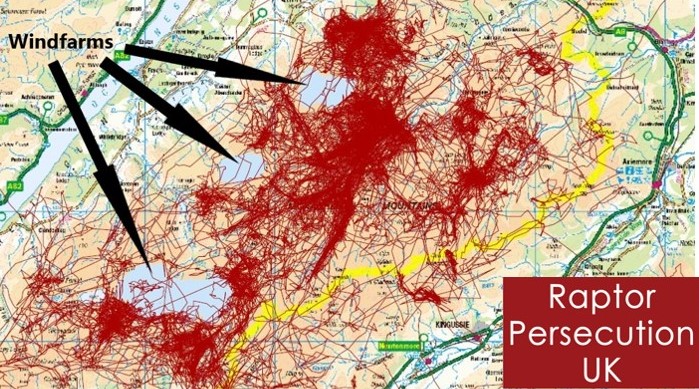
This map shows the flight lines (red) of one of the young satellite-tagged golden eagles that Chris Packham and I are monitoring. It shows, quite clearly, how this young eagle is generally avoiding flying over / through the footprints of three large windfarms (blue) in the Monadhliath Mountains (thanks to Alan Fielding for the data analysis).

Why this avoidance technique seems so prevalent in young Scottish golden eagles, in sharp contrast to findings in some other countries where certain raptor species have been recorded in high incident turbine collisions, is really interesting.

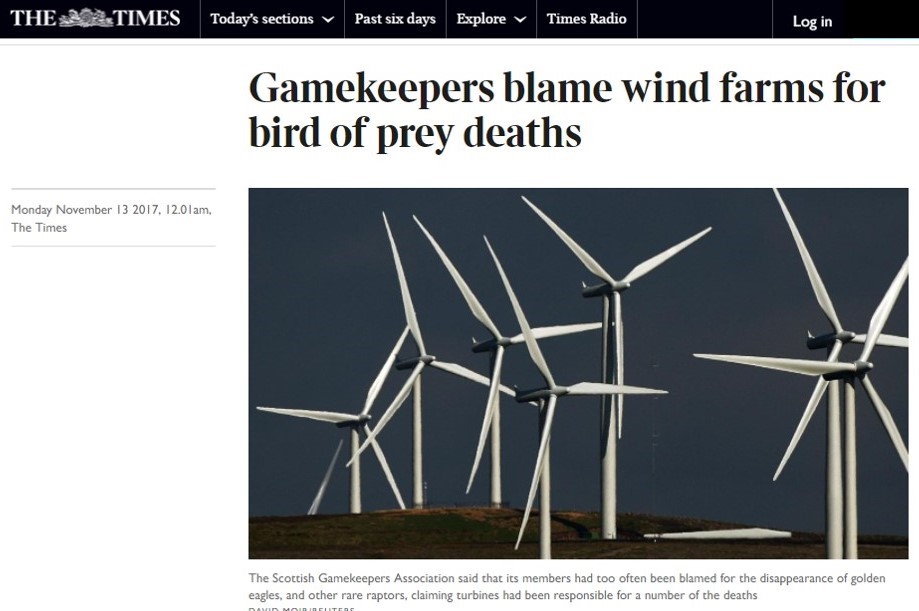
Raptor collision with turbines depends on a wide number of variables including site and habitat-related issues as well as the behaviour and ecology of the particular raptor species. It is a well-studied subject in a number of countries and has demonstrated that just because one raptor species has been killed at one wind farm at one location, it doesn’t automatically mean that every raptor is threatened by every wind farm, everywhere. I’m afraid that’s just simplistic nonsense, trotted out by those who are either (a) anti-wind farm or (b) desperate to deflect attention away from the continued illegal poisoning, shooting and trapping of raptors by gamekeepers in the UK (e.g. see here and here).

In their discussion about why young Scottish golden eagles might be avoiding wind turbines, in addition to the finding that habitat suitability inside and outside of the wind farm is important, the authors in this latest paper refer to a concept known as ‘the ecology of fear’ and discuss the evolutionary history of golden eagle persecution in the UK and how this may be leading to a genetic predisposition to wariness of humans, with wind turbines being used as the ‘cue’ for eagles to express their fear (i.e. by avoidance).

This latest paper from the Golden Eagle Satellite Tag Group is yet another significant contribution to our understanding of how golden eagles use the landscape and, along with this earlier paper from the GESTG, will greatly help planners and statutory agencies to make decisions that will have the least impact on this protected species and its preferred habitat.

It shouldn’t be necessary but apparently it is, to point out that this research is conducted by highly experienced conservationists, under licence, whose sole motivation is the protection of the golden eagle. They sacrifice time with their families and volunteer an enormous amount of personal time, personal funds and technical expertise to undertake this research. In any other country their efforts would be celebrated, applauded and appreciated (as indeed they have been in Spain!). But in Scotland, they are slandered, abused and attacked (e.g. here) by those who are desperate to corrode public and political confidence in raptor satellite-tagging because they know how incriminating these satellite tag data can be, exposing time and again the areas where birds of prey are being illegally killed.

There are a number of other peer-reviewed scientific papers from the Golden Eagle Satellite Tag Group, due imminently.

Author Cameron McNeish criticises SNP’s slow progress on raptor persecution, grouse moors & land reform

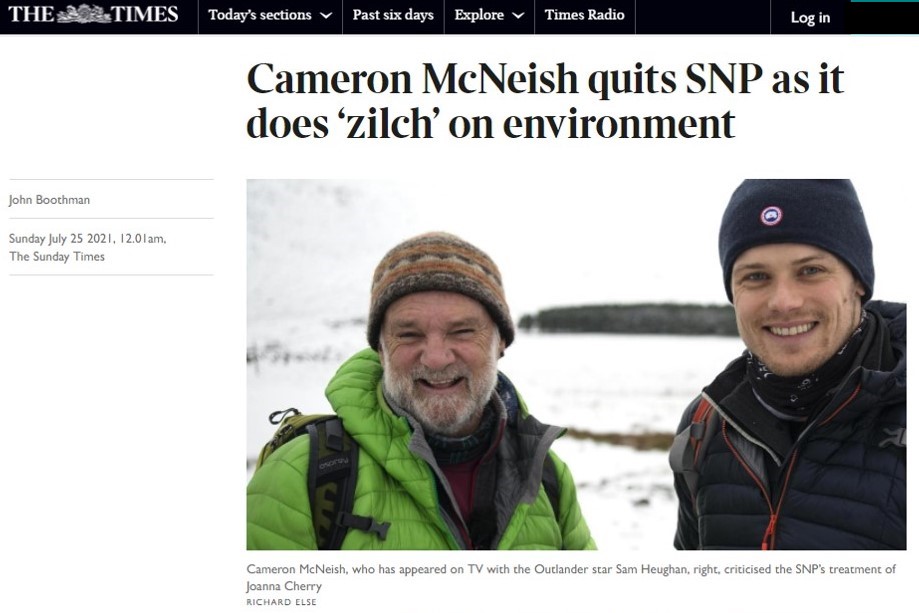
Award-winning author, mountaineer and broadcaster Cameron McNeish has quit the Scottish National Party after ten years of membership, claiming the party has done ‘zilch’ on environmental issues and land reform. He specifically spoke out about raptor persecution and grouse moors.

Mr McNeish told The Times:

It’s been coming for a while. The party has done absolutely zilch on land reform and the environment since Nicola Sturgeon came to power, and I have had a deep frustration over issues like raptor persecution, grouse moors all over Scotland, and what muirburning is doing to the environment.” 

He also described progress on land reform as being “glacier slow” and argued that the previous environment secretary Roseanna Cunningham’s efforts in that area had been frustrated.

He said: “There is no real interest in the SNP on these issues.”

The story was first reported in the Sunday Times and has since been picked up and published elsewhere (e.g. Press & Journal, Herald, National).

Game-shooting industry offers to mark its own homework

Back in 2019 when DEFRA was forced into a review of the ecological impacts of releasing millions of non-native gamebirds on or near protected sites following a legal challenge by campaign group Wild Justice, the gamebird-shooting industry’s self-appointed ‘official marketing board’, the British Game Alliance (BGA), wrote to DEFRA minister Lord Gardiner and offered up industry inspectors to undertake the work, according to an article by Tess Colley published yesterday by the Ends Report.

It’s a bit like offering to mark your own homework. Sure, the industry inspectors used by the British Game Alliance are bona fide independent auditors, but the ‘shoot standards’ which they use to assess shoots as part of their auditing scheme have been ‘developed in-house’ by the British Game Alliance and the assessors have been ‘trained by the Game and Wildlife Conservation Trust (GWCT)’!

The strength of this auditing has been called in to question a number of times as some estates, apparently ‘assured’ under this scheme by the BGA, either have been, or currently are, under investigation by the police for alleged wildlife crime (e.g. see here, here, here, here) and at least one apparent member is currently serving a three-year General Licence restriction imposed by NatureScot on the basis of ‘clear evidence’ of ongoing wildlife crime, according to Police Scotland. What’s particularly fascinating is that once questions were being asked about the suitability of some of these estates to be described as ‘BGA-assured’, the BGA removed its list of member shoots from its website!

The BGA’s stance on credibility and traceability was also recently questioned when Wild Justice discovered that a so-called ‘healthy’ game meat product being sold by Sainsbury’s, and ‘endorsed’ by the BGA, was found to contain levels of toxic lead more than 200 times the legal limit for lead in other meat products and without any health warning for consumers (see here).

The British Game Alliance is one of the nine organisations involved in the recently-launched game-shooting coalition ‘Aim to Sustain’, which I have described as a ‘propaganda supergroup’ which should more aptly be called ‘Aim to Hide the Stains’ (see here).

So yes, the Ends Report is quite right to query the proposal from the BGA that DEFRA use the same inspectors to audit the ecological impact of releasing millions of non-native gamebirds in to the countryside as those used by the game-shooting industry itself in an effort to be seen to be self-regulating.

Did DEFRA agree to this proposal?

Well here’s the article for those who don’t subscribe to the Ends Report:

The British Game Alliance (BGA) offered to carry out environmental inspections for DEFRA during a review of gamebird release management, a freedom of information release has revealed.

While names are redacted, the FOI release also shows that a senior policy advisor at DEFRA responded to the BGA’s letter taking it up on the suggestion of having a meeting to discuss the proposal. 

In September 2019, the BGA wrote to Lord Gardiner – then parliamentary under-secretary for the department – to highlight a “new opportunity” for it to make use of the gamebird industry body’s inspectors to monitor the sector’s environmental impact and compliance.

The offer was made during a review period when the government was looking into how releases of common pheasant and red-legged partridge are managed on or near European protected sites.

DEFRA had been pushed into the review following legal action from campaign group Wild Justice, over the government’s alleged failure to assess the ecological impacts of releasing the gamebirds.

“As DEFRA modernises its policy framework for the shooting sector it faces the perennial problem of finding reliable evidence while navigating vociferous campaigners and entrenched landowners”, reads the letter, before going on to say that the public benefit of such policy work is “undermined by lack of enforcement across millions of acres of remote countryside”.

It continues: “This letter is to alert you to the new opportunity provided by the hundreds of annual inspections now being carried out by Lloyds Register on behalf of the BGA.

“Its inspectors started work last year and have been trained to monitor the 23 land and animal welfare standards required by the BGA. These standards are closely aligned to DEFRA policy.”

The BGA is an industry body which, according to its own website, is focused “exclusively” on the promotion of British game.

The BGA notes in its letter how “profoundly grateful” it is to the government for its help in finding new markets for British game, and says the department’s “thoughtfulness to us deserves reciprocation”.

Neither DEFRA nor the BGA were able to confirm to ENDS at the time of publication if the proposed meeting took place, or if the proposal had been developed.

The government is currently facing fresh legal action on the issue of gamebird releases from Wild Justice, a campaign group formed by Chris Packham, Ruth Tingay and Mark Avery.

Commenting on the BGA letter, Mark Avery said: “This isn’t so much poachers turned gamekeepers, it’s gamekeepers staying as gamekeepers”. He added that it looked like an industry that should be being regulated simply offering to regulate itself.

The group had previously claimed an “historic environmental victory” following the gamebird review last year after DEFRA announced it would bring certain gamebirds under the Wildlife and Countryside Act 1981.

DEFRA committed to a number of actions, including creating a buffer zone around protected sites in which no gamebirds will be released.

However, in June this year Wild Justice issued pre-action protocol letters to DEFRA and said it would be revisiting the issue as it does not consider the government to have done what it told the court it would do.

ENDS

Goshawk found shot dead in notorious persecution hotspot in Scotland

Press release from Police Scotland (23 July 2021)

Appeal for information after protected bird of prey found shot in Loch Farr, Inverness-shire

Officers in Inverness are appealing for information after a bird of prey was found dead in the Loch Farr area of Inverness-shire.

A female goshawk was found in a tree in nearby Forestry Land Scotland (FLS) woodland on Saturday, 10 July. The bird was recovered with assistance from the FLS and the Royal Society for the Protection of Birds (RSPB). Following a post mortem, it was established that the bird had been shot.

Wildlife Crime officer Constable Daniel Sutherland said: “This was a cruel and callous act against a protected bird of prey which will simply not be tolerated.

I am grateful to the member of public who came across the bird and reported it to us. Wildlife crime can be challenging to investigate and we work closely with a number of partners to investigate and bring those who seek to destroy or harm wildlife to justice.

I am therefore appealing to anyone with information about this incident or who may have seen anything suspicious in this area to please contact police on 101, quoting reference NM/3907/21. Alternatively, if you wish to remain anonymous, you can contact the independent charity Crimestoppers on 0800 555 111.”

Ian Thomson, RSPB Scotland’s Head of Investigations said: “It’s both depressing and worrying that in 21st century Scotland, rare and protected birds of prey are still being routinely killed. Goshawks are regularly targeted, even in publicly-owned forests, despite their role as predators of crows and pigeons, species that some people regard as pests.”

Graeme Prest, Regional Manager, North, Forestry and Land Scotland said: “We work hard to safeguard all protected species on our land so it is extremely disappointing to find an incident such as this has taken place on land managed by FLS. We carry out regular monitoring of sites in this area and will continues to work with local police officers, the Highland Partnership against Wildlife Crime and RSPB to ensure that all incidents of wildlife crime are reported and investigated.”

ENDS

First of all, well done to Police Scotland for this relatively speedy appeal for information. There have been a number of cases recently (on which I’ll blog shortly) where there has been a deliberate attempt to withhold information from the public about raptor persecution crimes, in some cases for months and months. That’s not good enough, especially when raptor persecution is supposedly a wildlife crime priority, so I’m very pleased to see this timely press release.

But what about this latest crime? The goshawk was found shot dead on land managed by Forestry and Land Scotland (previously known as Forestry Commission Scotland) and as Ian Thomson says in the press release, this is not a new tactic in areas where goshawks are a perceived threat to gamebirds (e.g. see here, here and here).

Nobody will be at all surprised to learn that the land close to this latest location is managed for gamebird shooting (grouse and pheasants) and that this area of the northern Monadhliaths is recognised as a notorious raptor persecution hotspot, and has been for years and years.

That so-called ‘zero tolerance for raptor persecution’ is going well, then?

UPDATE 18th August 2021: Shot goshawk in notorious persecution black spot: police investigation reaches dead end (here)

Game-shooting industry announces propaganda supergroup

In a desperate attempt to appear relevant and pretend that it has a future, the game shooting industry has announced [Ed: text at foot of blog] a so-called ‘new’ formal partnership designed ‘to highlight the crucial role that sustainable game shooting plays in delivering biodiversity net gain through preserving and protecting cherished rural landscapes and a tremendous array of wildlife‘.

Calling itself ‘Aim to Sustain’, (and not to be confused with another group calling itself the same thing), this propaganda supergroup is nothing new at all. It’s the usual suspects, posturing and claiming with straight faces that modern game shooting is ‘sustainable’ and ‘has the highest standards of self–regulation’ (cough).

Er, if it was sustainable and able to demonstrate self-regulation, it wouldn’t find itself at the centre of so much controversy, scrutiny, police investigations, and calls for enforced regulation and therefore there’d be no need for this supergroup to form!

The partners in the new supergroup include the Countryside Alliance, British Game Alliance, British Association for Shooting and Conservation, Country Land & Business Association, Game Farmers’ Association, Moorland Association, National Gamekeepers’ Organisation and Scottish Land and Estates. The Game & Wildlife Conservation Trust are acting as ‘scientific advisors’.

Interestingly, the Scottish Gamekeepers Association is not involved – that speaks volumes, doesn’t it? Are their ideas too crazy even for this lot to tolerate?

All new members signing up to the partnership will receive a unicorn bubble gun.

They won’t of course, I’ve just made that up, but they might as well distribute unicorn bubble guns for all the credibility they’ll bring. This is the industry that has failed to self-regulate on a wide range of issues, including the continued illegal killing of birds of prey, the mass unregulated use of veterinary drugs spread across the uplands, the burning of vegetation on peatlands, the continued use of toxic lead ammunition, the casual, unregulated killing of hundreds of thousands of so-called ‘pest’ species and the release in to the countryside of millions upon millions of non-native gamebirds every year.

Pretending to be the champions of self-regulation just by saying it loudly and often, isn’t going to cut it, I’m afraid.

As a fantastic example of the propaganda we might expect from this lot, have a look at the very first press release they issued yesterday, which opens with the line:

The creation of Aim to Sustain has already received widespread support within the political world‘.

The press release goes on to provide a single quote of support from one elected politician – Sir Geoffrey Clifton-Brown – who also just happens to be BASC’s Vice President!

The other two ‘politicians’ quoted are unelected members of the House of Lords – Ian Botham and Nick Herbert. Botham is well known for his close links to the game-shooting industry (have a listen to his notorious car-crash radio interview on the subject) and Herbert just happens to be the Chairman of the Countryside Alliance who will be co-chairing this new supergroup with the chair of BASC!!!!!!

It’s hardly ‘widespread’ political support and it’s hardly impartial, is it?!

It looks to me like just another expensive greenwashing exercise. It might as well have called itself ‘Aim to Hide the Stains’.

Next!

AIM TO SUSTAIN ANNOUNCEMENT, 23 JULY 2021:

Rural Organisations Launch New Partnership

Leading UK rural organisations have today (23rd July) announced the launch of a formal partnership to promote the multitude of conservation and community benefits that make the countryside a better place for all to enjoy.

‘Aim to Sustain’ has been formed to highlight the crucial role that sustainable game shooting plays in delivering biodiversity net gain through preserving and protecting cherished rural landscapes and a tremendous array of wildlife.

The partnership will also focus on showcasing the contribution that game management makes to sustaining rural communities, providing high quality food and making the countryside a place that visitors treasure year in, year out.  

The organisations committed to the Aim to Sustain partnership include the Countryside Alliance (CA), British Game Alliance (BGA), British Association for Shooting and Conservation (BASC), Country Land & Business Association (CLA), Game Farmers’ Association (GFA), Moorland Association (MA), National Gamekeepers’ Organisation (NGO) and Scottish Land and Estates (SLE). The Game & Wildlife Conservation Trust (GWCT) are acting as advisors.

The organisations will work together to communicate to the public and decision-makers how sustainability is at the core of progressive game management. The partnership will also promote the highest standards of self-regulation and produce credible, robust and focused research.

Aim to Sustain launches with a 10-week ‘Have Your Say’ consultation that will seek the opinions of the quarter of a million-strong combined membership of the individual organisations.

The Aim to Sustain partnership issued the following joint statement to mark the launch of this new initiative:

“Aim to Sustain is dedicated to protecting, preserving and promoting the many wide-ranging conservation, biodiversity and community benefits that make the countryside the place we love.

“So many people enjoy the great landscapes and tremendous array of wildlife and there is a colossal effort made to make that happen.

“Modern game management is a crucially important part of that effort and we are committed to demonstrating that high standards and robust self-regulation are the foundation of our efforts in delivering for the environment, species, habitat and food. We hope that this new and exciting partnership can achieve greater recognition of the multiple benefits that are provided as a result of game management and shooting.

“We want those benefits to be secured for future generations and we will continue to play our part in tackling climate change, producing biodiversity gain as well as ensuring the sustainability of wonderful wildlife.

“Rural organisations have stood side-by-side for many years but now, working as a partnership, we can be stronger and louder in highlighting the great work that is being done day in and day out for the benefit of the countryside, the environment, local communities and the people who cherish the sights and sounds of rural Britain.”

ENDS

Ex-Minister Fergus Ewing’s plans for pine martens explains a lot about Scottish Government’s approach to raptor protection

Fergus Ewing MSP was the Scottish Government’s Rural Cabinet Secretary from 2016-2021 until he was sacked by Nicola Sturgeon in May (see here).

He has long been viewed with suspicion by conservationists, and many would argue justifiably so (e.g. see here, here and check Google for plenty of other reports) although we did manage to get him to condemn ongoing raptor persecution on Scottish grouse moors after pointing out his long silence on this issue (here).

Many have believed that Fergus Ewing was partly responsible for the Scottish Government’s glacial approach to tackling raptor crime, with oft-heard rumours from within Holyrood circles that he and Environment Cabinet Secretary Roseanna Cunningham were often at loggerheads over how the Government should respond. I don’t know if those rumours were true or not but I do know that the Government has dragged its feet on this issue for years and years and years (and is still doing so now).

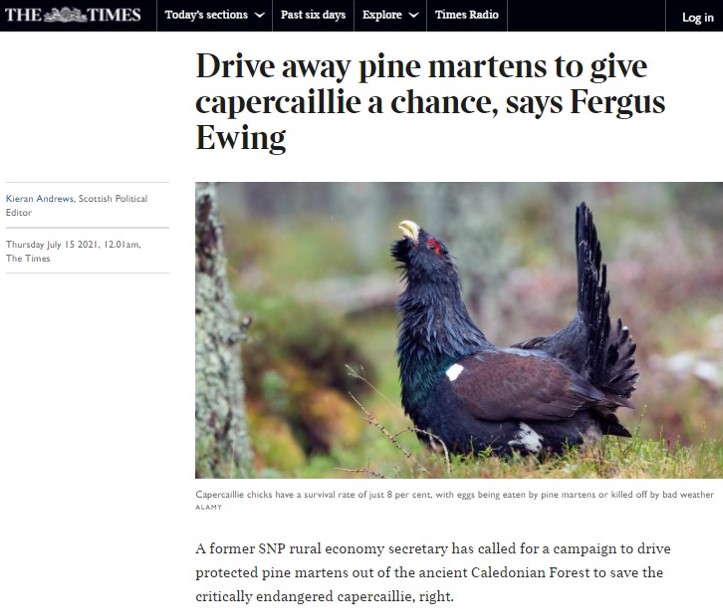
Last week I read a comment piece from Fergus about pine martens, published in The Times, and it did nothing to change my view of what I’d call his dodgy conservation credentials. He can’t expect to be taken seriously when he proposes we should trust the Scottish Gamekeepers Association, GWCT, NFU Scotland and Scottish Land & Estates to carefully manage protected predators, when many of these organisations have either lobbied hard for licences to kill various raptor species perceived to threaten gamebirds and/or lambs, or have repeatedly denied that raptors continue to be killed by criminals within the industry, despite the evidence being clear for all to see.

Here’s what he wrote:

Ask any local farmer, keeper or land manager about the future of the capercaillie and they will talk about the impact of predators upon this bird, whose population in Scotland is under threat. From what I have learnt over two decades as the constituency MSP for much of the Caledonian pine forest, the capercaillie’s preferred habitat, it seems unlikely that the species can survive unless its predators are tackled.

Over the last two decades, millions of pounds of public money and lottery funding have been devoted to saving the caper. But, like other ground-nesting birds such as lapwing and plover, its eggs are breakfast, lunch and dinner for a large variety of predators. In this month’s edition of The Scottish Gamekeeper, there is a photograph of a pine marten holding an egg in its mouth.

Ten years ago the Game and Wildlife Conservation Trust proposed a scheme not to control pine martens but to capture and transport them from Strathspey to places without such easy meals. This, sadly, was not approved. I have lodged in the Holyrood Parliament a motion that the Scottish Government and other funding sources must urgently discuss, with the bodies that understand land management best, how to avert the loss of the caper with sustained and effective predator management programmes. Other funding providers include NatureScot, the Cairngorm National Park and the lottery, who have a programme in Carrbridge seeking to preserve the caper.

Who knows what to do? Primarily those closest to the ground – keepers, farmers, crofters and land managers. If the public and funders are willing to trust those with the knowledge – the Game and Wildlife Conservation Trust, the Scottish Gamekeepers Association, the National Farmers’ Union Scotland, Scottish Land and Estates, Scottish Crofting Federation and others – it may be possible to save this species.

If not, then in addition to more than £10 million already spent on the capercaillie without success, any further public money devoted to it will be wasted. Indeed, the eight-figure sum already spent will be seen as ‘the great caper-caper’ as it were, and expose any public bodies who are shown to have ignored practitioner advice to serious criticism and ridicule.

ENDS

Recently I was shown this photograph of what might also be described as ‘the great caper-caper’ – the result of a capercaillie shoot on a Scottish sporting estate in 1980. It does make me wonder about the motivation of some organisations to ‘save’ the capercaillie. Save them for what? Another shooting party?

Anyway, I digress. Let’s get back to Fergus’s grand plan for ‘driving out the pine marten’.

He mentioned that he’d lodged a parliamentary motion on this issue but I couldn’t find it listed on the Scottish Parliamentary website.

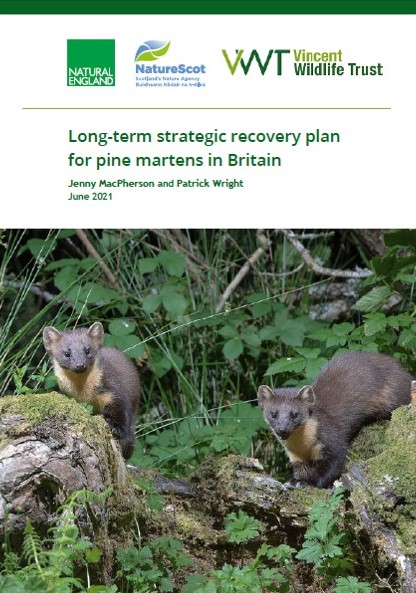
Fergus will be delighted to learn though, that a new long term strategic recovery plan for pine martens in Britain has just been published by the Vincent Wildlife Trust, funded by NatureScot and Natural England, and it’s a very impressive piece of work.

You can download the report here:

Interestingly, I couldn’t find a single recommendation for ‘driving out the pine marten’ from the Caledonian Forest. Funny that.

What I did read was that the pine marten population is still slowly recovering in Scotland, largely thanks to full legal protection and improved habitat availability, but that the population is still vulnerable. As such, the report authors recommend protecting the integrity of existing populations to promote natural recolonisation and, where appropriate, limiting the removal of individual pine martens for potential translocation and reintroduction projects elsewhere in the UK.

There you are, Fergus. A properly-researched, evidence-based, scientific research report written by actual experts on which to base future discussions about pine marten conservation – far more appropriate than the Scottish Gamekeepers Association’s quarterly rag, even though it does have a photo of a pine marten with an egg in its mouth (Shocker! Predator caught eating something!).

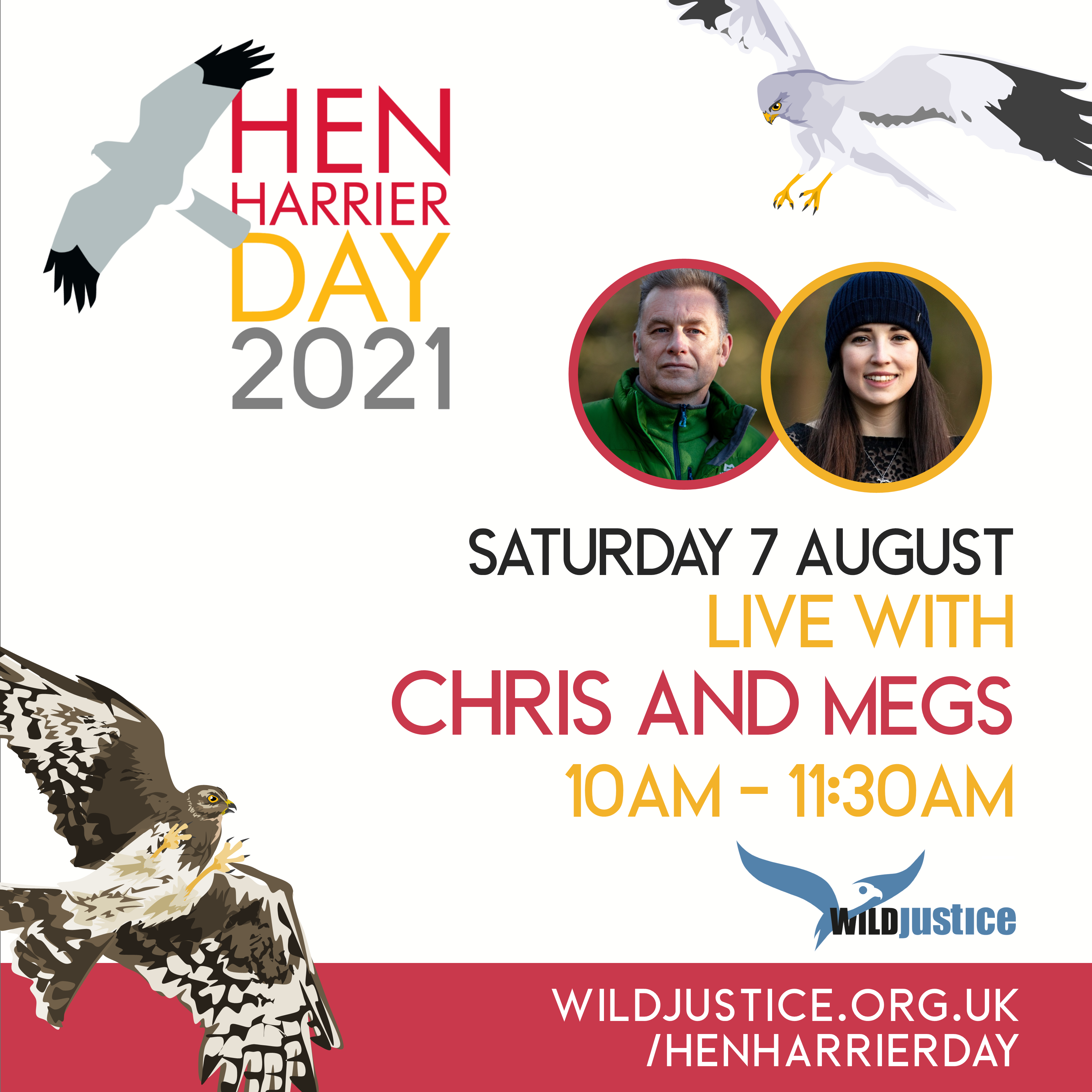
Hen Harrier Day 2021 (Saturday, 7th August)

Hen Harrier Day, established in 2014 as a way to raise public awareness about the widespread killing of hen harriers on the UK’s driven grouse moors, is now entering its 8th year!

In previous years supporters have organised events at various venues across the country where people have gathered at rallies to listen to speeches by campaigners, conservationists, politicians, police officers, educators, film makers and many others. Last year, the pandemic forced us all online instead and we’ll be doing the same again this year.

In the run up to this year’s Hen Harrier Day, there will be an additional online event on Sunday 1st August, organised by the charity Hen Harrier Action. You can find out about that event here.

Hen Harrier Day itself takes place on Saturday 7th August, scheduled as always to take place the weekend before the start of the grouse-shooting season on the Inglorious 12th August.

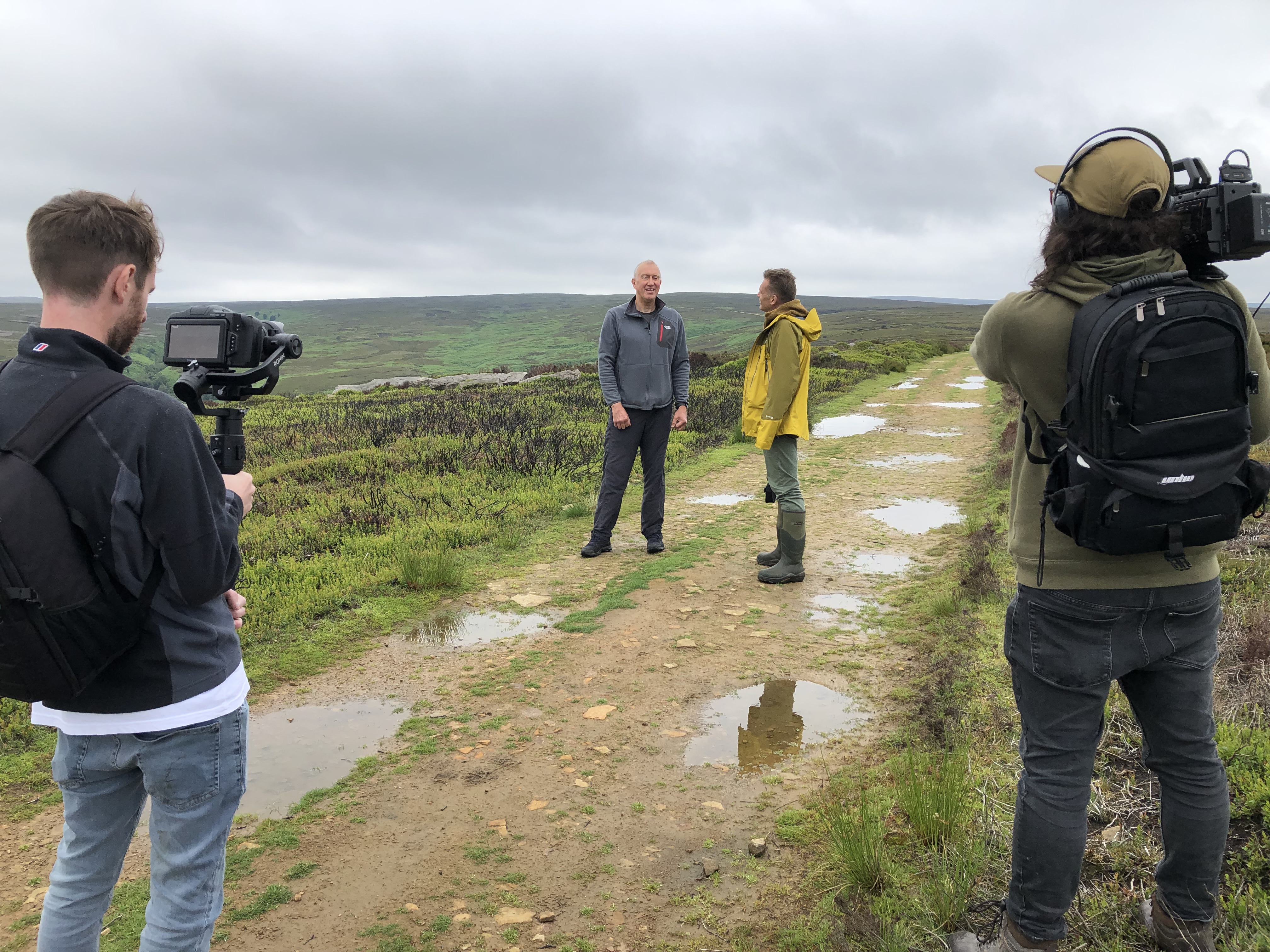
Wild Justice is organising a live, online event bringing together a wide range of contributors from across academia, conservation and the world of campaigning, to deliver what it hopes will be an interesting, informative and entertaining programme. Hosted by the brilliant pairing of Chris Packham and Megan McCubbin, in addition to live interviews there will also be films pre-recorded recently by Wild Justice & colleagues in northern England and Scotland.

Hen Harrier Day 2021 is a free event, as ever, and it’s recommended you sign up for notifications as the big day approaches, to find out more about the programme of events and who’s on, and at what time.

For more information about the event and to sign up, please click here.

Organised crime, harassment & intimidation – another day on the grouse moors (guest blog)

Earlier this year I wrote two blogs as part of a series on the harassment and abuse hurled by gamekeepers at those of us who dare challenge and question the wildlife crime and environmental damage associated with grouse moor management (see here and here but be warned, it’s very nasty, offensive and unpleasant).

What follows is the third instalment in the series, this time written as a guest blog by Bob Berzins (@BerzinsBob) who lives in Sheffield and through fell running has come to know the nearby Peak District grouse moors only too well.

[Bob being interviewed by Chris Packham. Photo by Ruth Tingay]

Organised crime, harassment and intimidation – another day on the grouse moors

Guest blog by Bob Berzins

In December 2020, along with around 20 other people I featured in what can only be described as an online ‘Advent Calendar of Hate’ which was published by a group purporting to be a ‘grassroots moorland community’ in the north of England but who had been exposed as an astroturfing group set up by the grouse shooting industry, paying a London media agency to promote vicious, personal online attacks about anyone who had dared speak out against grouse shooting (e.g. see here).

My own profile is mainly around the Peak District-based Moorland Monitors which is an actual community, grassroots group that lawfully monitors and records what’s happening in the Pennine uplands.

In my case the abuse has continued since December 2020 in various forms, for several months.

Why the interest in me?

A consistent message from countryside interests is that local communities are 100% behind shooting. But that’s not the case at all and Moorland Monitors gives a voice to local people who are otherwise afraid to speak out on their own. There’s increasing interest from the media, local or national, to publish stories about the traps that are used, the wildlife that’s killed and also to touch on animal welfare issues. The audience here doesn’t know or care about “vermin” and they are horrified to see wildlife killed in this way. As this compassionate outlook gains traction, it exposes the lies that underpin the shooting industry.

Tapping out a message on social media isn’t really a crime is it?

Well, yes it can be. Following the Euros final, the hate spewn out on social media has been appalling. Facebook’s definition of hate speech is broad and covers “violent or dehumanising speech, harmful stereotypes, statements of inferiority, expressions of contempt, disgust or dismissal, cursing and calls for exclusion or segregation.”    

Bob the nob”, “Please can you tell us where Bob lives”, “Looks as moronic as a few others I could mention” are just a few of the comments written about me on Facebook but the social media platform failed to delete anything after I complained.

We also have to look at the online articles which drove these comments (written by the same anonymous grouse shooting reps as the advent calendar of hate) and to consider if these constitute ‘incitement’ (to harass). Certainly the abuse started after the publication of their offensive commentaries. I’ve reported everything to the Police but they concluded that the abusive publications were within ‘Human Rights’.

Free speech is a cornerstone of our society but not if it incites hatred and violence.

Harassment escalates

The online abuse, with very obvious photos of me, soon led to the identification of my vehicle.

During lockdown earlier this year we were allowed to exercise locally with one other person. I arranged with 3 friends that we would arrive at different times on a local grouse moor, set off separately and do a timed run. This was as near as we could get to doing a race.

At the end of my run I saw 3 gamekeepers near my vehicle. I didn’t think anything of it.

However, the next day I was at home painting our kitchen and my wife answered the door to a police officer who was making allegations of damage to traps. I was called over and the first thing the officer said to me was that the farmer whose traps had been damaged wouldn’t pursue the case if I paid compensation.

My mind was racing and I could only imagine this was something to do with my run the day before, when I hadn’t seen any traps at all. I did manage to ask what evidence there was and the reply was there was no evidence apart from my car being spotted!

So I was being asked to pay compensation when there was no evidence that any traps had been damaged at all and no evidence that I’d been involved in any criminal damage. None of my friends, who had parked at the same place and who had run over the same area were contacted so it’s clear I was being targeted.

Police Professional Standards Part 1

I knew I hadn’t done anything wrong and it was obvious to me the allegation was a complete fabrication. So I complained to South Yorkshire Police Professional Standards, asking if officers had attended the scene of the alleged damage to gather evidence and requesting that the person who made the allegation be investigated for making a false report, which is the criminal offence of ‘wasting police time’ (knowingly making false reports to the police).

South Yorkshire Police have previously been involved in a similar incident of harassment and false reporting (see here) but don’t seem to have learnt anything from that.

The reply from South Yorkshire Police Professional Standards is sloppy, fails to answer my concerns and is a case study in obfuscation:

 I can see that we received a call from the victim who was put straight throught to the crime recording bureau who determine if there are relevant lines of enquiries and will attach an OIC (officer in charge), if this is the case and on this occasion Pc XXX was allocated.”

Did the alleged ‘victim’ (the farmer) dial 101 or phone an officer direct? The spelling mistake is theirs and indicative of an unprofessional response.

“It was Pc XXX who received a VRM and continued to investigate the allegations….. It was then that you also told Pc XXX that you used the vehicle and often visited the location where the victim had allegedly seen your car. As the victim was unable to provide evidence that would prove your car had been in the area where the damage had occurred and as you had provided reasonable excuse as for your whereabouts the investigation was filed as evidential differences.”

A VRM is a car registration (but that’s not explained). This is the only piece of “evidence” and it’s not actually evidence at all because the alleged ‘victim’ (the farmer) couldn’t show my vehicle was anywhere near where the alleged damage took place.

“Pc XXX states that he/she does not believe he/she investigated a false allegation”

But there’s no evidence of any damage and no evidence that I or my vehicle were near any alleged damage! My car registration appears to have been plucked out of thin air, but of course it wasn’t and the police made no reference to the earlier online abuse I’d logged with them which would have shown what this allegation was really about.

The reply from Professional Standards continued:

“I did also ask Pc XXX regarding your complaint that he/she suggested that you should pay an amount of money to a famer, Pc XXX states that he/she explained the possible outcomes of criminal damage investigations so when he/she explained a CJU10 process he/she would have used this as an example but did not accuse or request the complainant to do this. It was purely an explanation of how a CJU10 works.”

Any the wiser? Me neither. There was a presumption of guilt, no explanation of possible outcomes and I still don’t know what a CJU10 is.

Given this is a department that oversees the professionalism of a major police force, the detail here is appalling. But it’s important to consider the bigger picture as well. A police officer knocking on the door making accusations is intimidating without doubt. This police force is happy to do that on the basis of no evidence, so who made the report and what influence do they have?

Police Professional Standards part 2 – Not Again

A week after South Yorks Police knocked on my door I had a phone call from Derbyshire Police with a virtually identical allegation.

On the day another abusive article about me was published by the same astroturfing grouse shooting industry reps who’d published the advent calendar of hate, I was on a Derbyshire grouse moor recording environmental damage caused by quad bikes. I’d set off from a busy car park but mine was the last car remaining in the afternoon. The local gamekeeper appeared, there was an altercation and as a result I made a police report for threatening/intimidating behaviour.

The officer assigned to investigate this case later justified the gamekeeper’s abusive behaviour by telling me the gamekeeper “knew” I’d damaged his snares. And once again no evidence was provided that there were any snares at all, no evidence of any damage or how that damage had occurred. But the wildlife crime officer I spoke to was certain these “traps” had been damaged when I was on the moor. This case did seem different because the officer was part of a supposedly experienced, specialist team (Derbyshire Police’s rural crime team).

I asked Derbyshire Constabulary’s Professional Standards department to consider if there was bias and collusion in this officer’s investigation. Four months on my complaint hasn’t yet been answered.

Escalation to Criminal Damage

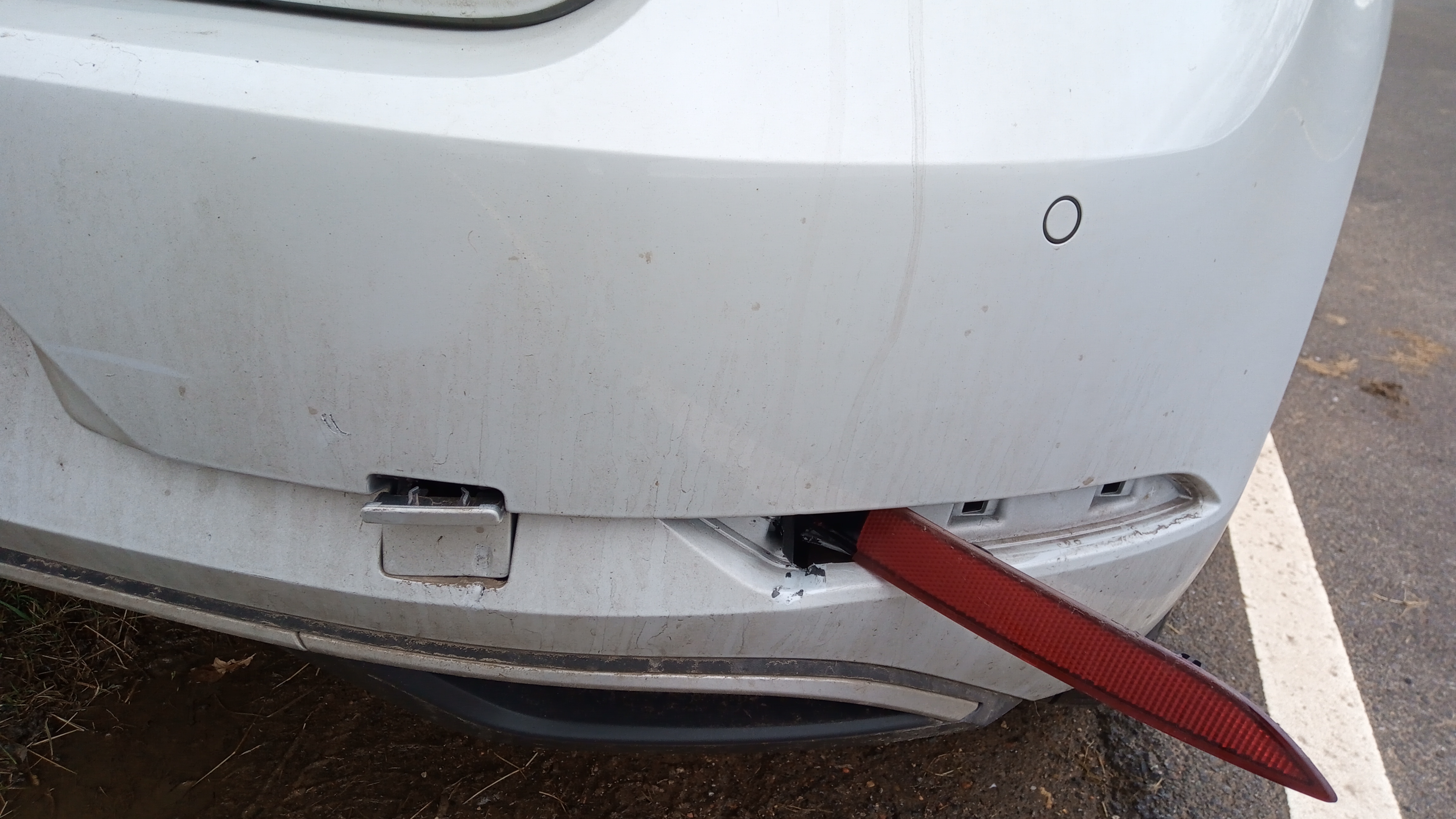
Despite these and other incidents I kept going out on the moors and a few weeks later discovered that someone had stuck a crowbar into the bumper of my vehicle, when it was parked next to a grouse moor.

The car dealer quoted £1200 for a repair – ironic because that will be more than the value of all the snares in the Peak District. I opted for a lesser repair and of course the police had no idea who was responsible.

[Criminal damage caused to Bob’s car when parked next to a Peak District grouse moor. Photo by Bob Berzins]

Policing priorities in the Peak District

Through Freedom of Information requests, I have a redacted copy of the minutes of a May 2019 meeting between Peak District police forces and the gamekeepers of Peak District Moorland Group.

Supposedly dealing with wildlife crime, from the minutes it’s obvious the priority in this meeting was trap tampering.

The minutes document proposals for a national database of trap damage and 360 degree surveillance cameras in car parks which would just happen to put every visitor on a police database. Of course there’s no mention of similar surveillance of vulnerable raptor nests.

The Moorland Monitors group was mentioned but the detail had been redacted. There was also mention of gamekeepers getting direct access to wildlife crime officers.

To me, it seems to be a short step to bypass any evidential-based procedure to targeting individuals because gamekeepers and police apparently “know” who is guilty. 

A Criminal Network

It’s clear to me that the range and geographical spread of abusive incidents indicates a number of people are involved who are communicating and sharing information with the aim of harassment, intimidation and criminal damage.

That’s my definition of organised crime – a term often used to describe the widespread raptor persecution we all know about – and that crime has now escalated to targeting anyone who objects to the shooting industry.

ENDS

  

New type of buyer emerging for traditional Scottish sporting estates

An article from FarmingUK last week:

Demand for land for natural capital and rewilding is boosting the market for Scottish estates, according to rural property consultancy Galbraith.

The increased variety of motivations for acquiring an upland estate has stimulated the market further which was already benefiting from the booming forestry sector.

The firm says it has sold and bought estates valued in excess of £50 million over the last two years.

Demand outstrips supply by a considerable margin, as only around 15 estates will change hands in a typical year.

Average prices are increasing, alongside significant premiums being paid for hill farms and planting land.

Emma Chalmers, Partner of Galbraith said: “The interesting change is there is now a range of buyers with a variety of interests.

No longer are the buyers just interested in the more traditional sports of grouse shooting, stalking, fishing and low ground shooting.”

The sales of Glenlochay Estate in Stirlingshire and Auchavan Estate in Angus, sold in 2019 and 2020 respectively, both prompted a number of natural capital buyers to come forward alongside those who were primarily interested in traditional pursuits.

However, the sale of Kinrara Estate earlier this year saw the majority of potential buyers with interests in woodland creation and natural capital above all else.

Ms Chalmers said: “This was further experienced when a stock farm was marketed and sold privately, also earlier this year, with a natural capital buyer secured. Thus, demonstrating the changing nature of the market.”

Galbraith reports that buyers include corporations, institutions and investment houses, as well as private individuals with a variety of motivations and interests.

Private sales have increased considerably as a percentage of the overall market.

Ms Chalmers continued: “The Scottish estate has always been sought after, formerly principally driven by interest in traditional sports, together with the desire to ‘get away from it all.

Demand has always outstripped supply, with only about 10 to 15 estates offered for sale each year, either privately or on the open market.

However, we are seeing with the accelerating understanding of climate change, growing desire to offset carbon usage, both personally and by business, the need to be more visibly green or indeed by some to meet their net zero targets.”

The traditional estate, together with the hill and stock farms, are attracting increased interest from this new natural capital purchaser, she said.

Some buyers look to plant well designed productive forests, others native woodlands or indeed a diverse mixture of both, with the newer peatland restoration also now coming into the mix.

“However Natural Capital isn’t meaning the ceasing of the traditional sports as there are many buyers who look to retain some or all of the sport whilst introducing or expanding natural capital elements,” Ms Chalmers said.

Now, we have demand from buyers motivated by woodland creation, habitat restoration, traditional sports, together with other opportunities with the potential to generate an income such as installing a hydro scheme, wind turbines or perhaps creating a distillery, holiday lets or a wedding venue.

Land is being acquired by businesses to offset carbon emissions whilst providing a financial return from other parts of the estate.”

The average price for a Scottish estate continues to rise. Hill ground, until recently priced in the region of £600 to £800 per acre, can now see that figure more than double, particularly where natural capital potential exists.

With increased demand and more closing dates this has successfully helped drive sale prices to their maximum achievable level.

ENDS