Press release from RSPB Scotland (1st October 2021)
Scotland’s climate targets are at risk of going up in smoke
Scotland’s hopes of meeting its Net Zero by 2045 goal to address the nature and climate emergency are at risk of failing unless the burning of grassland and heather moorland is more strictly regulated, and almost all burning on peat is banned.
A new report, published today by RSPB Scotland, warns that current muirburn practices are incompatible with Scotland’s net zero ambitions because of the importance of peatlands as carbon stores and provides evidence that the current voluntary Muirburn Code is not working.
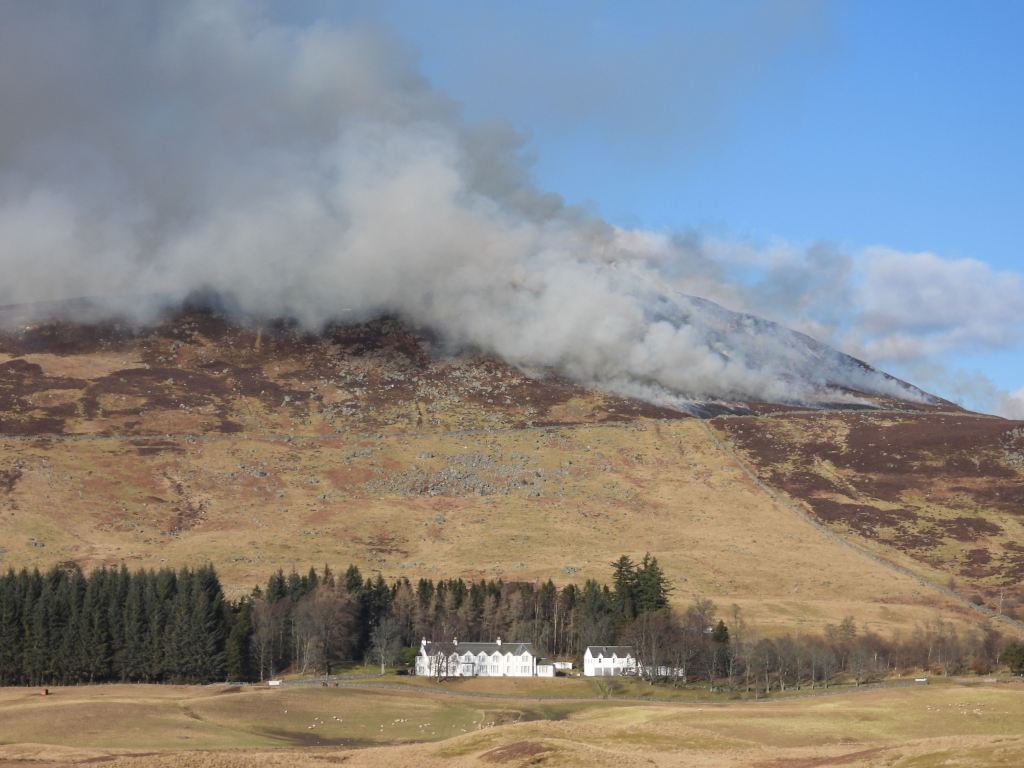
Muirburn is the burning of heather and grass vegetation (usually to promote new growth) and is a land management practice typically associated with managing land for game, deer, and some agricultural purposes. It is currently “lightly regulated” with some outdated statutory regulations supported by a voluntary code of best practice – the Muirburn Code.
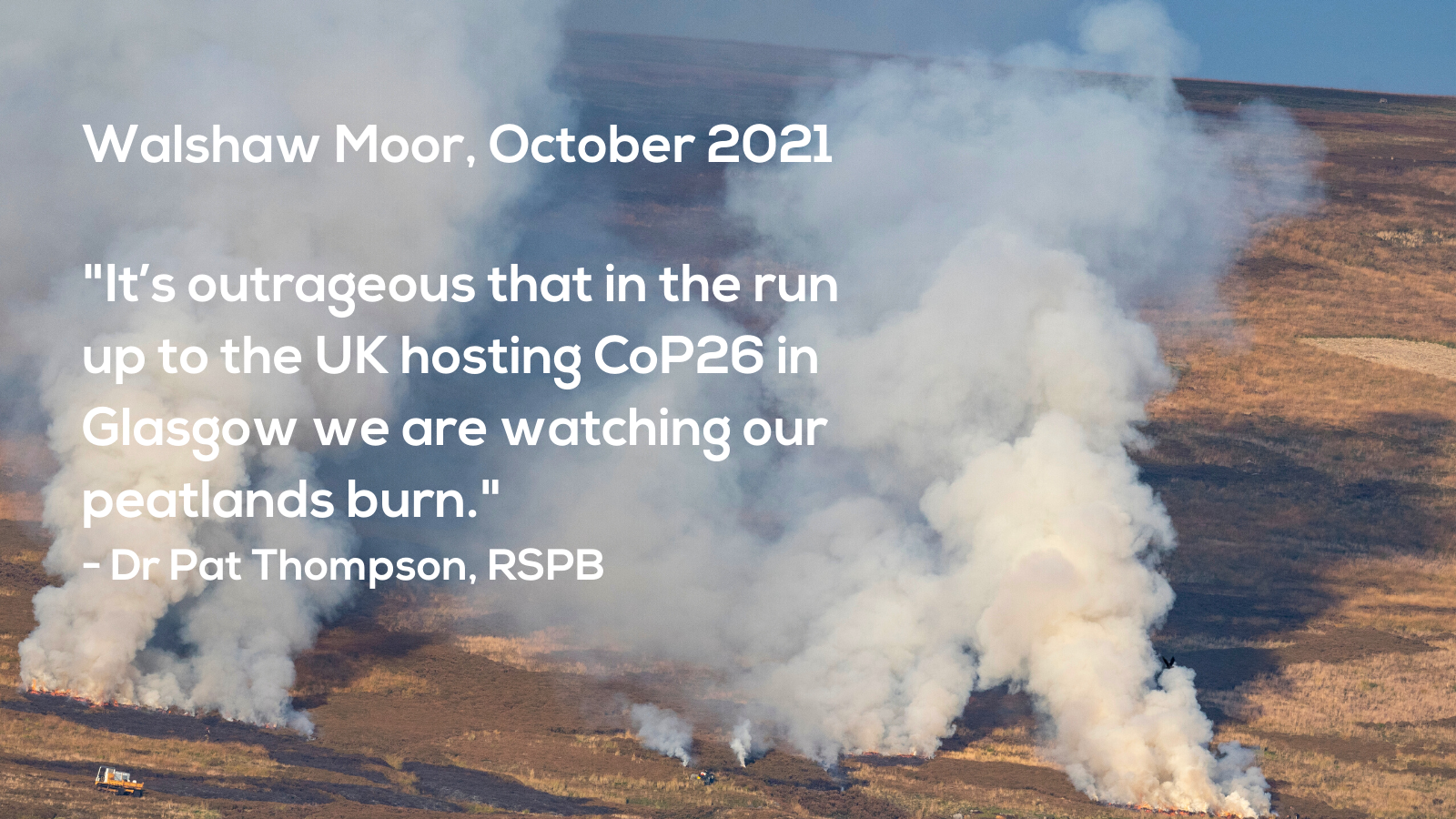
[Muirburn on a grouse shooting estate in Strathbraan earlier this year. Photo by a blog reader who wishes to remain anonymous]
The report calls on the Scottish Government to introduce licensing and regulate the practice to deliver on its 2020 pledge, and to implement this action before the start of the next muirburn season in October 2022. Without regulation the £250 million of public investment in peat restoration over the next decade is at risk of being seriously undermined and cancelled out.
With a month to go until the UN Climate Summit COP26 takes place in Glasgow, the report – How to prevent nature and carbon going up in smoke: Licensing Muirburn – highlights the changes to muirburn legislation and practices that are needed to help Scotland address the nature and climate emergency. It looks in detail at how a licensing system could work.
The report recommends that:
· new muirburn legislation should be implemented in time for the start of the next muirburn season on 1 October 2022.
· all muirburn, whether for gamebird and deer management or agricultural purposes, should be licensed by NatureScot.
· all licenses should be subject to full compliance with an updated Muirburn Code, which puts addressing climate change and nature loss at its heart, delivering Scottish Government priorities for native woodland expansion, peatland protection and biodiversity conservation. Any future breaches of the Code would invalidate licences.
· burning should be prohibited on deep peat soils, except in exceptional circumstances, and a 30 cm depth definition (rather than the current 50 cm) should be adopted for deep peat in line with recommendations from peatland experts.
· details of all muirburn licenses granted by NatureScot in future should be freely available.
In recent years, and increasingly because of the current nature and climate emergency, the costs and benefits of this land management method have been hotly debated. Burning on peatland can lead to a rapid release of stored carbon and a drying out of peatland soils, whereas healthy wet peatlands continually store carbon. Damaged peatlands can also contribute to flooding and affect water quality with significant public costs and can negatively impact wildlife and their habitats.
In November 2020, the (then) Rural Affairs and Natural Environment Minister, Mairi Gougeon MSP gave an official statement to the Scottish Parliament in response to the independent Grouse Moor Management Group Report. It said ‘In future muirburn will only be permitted under licence from NatureScot, regardless of the time of year it is undertaken. And there will be a statutory ban on burning on peatland, except under licence for strictly limited purposes such as habitat restoration.’
RSPB Scotland strongly supported this announcement but believes action to implement this commitment must be taken now and is calling for new legislation and an operational licensing scheme by this time next year.
The report released today reviews the effectiveness of current regulation as well as describing how a licensing scheme could be implemented and administered by NatureScot.
It concludes that unless swift action is taken to regulate muirburn then the public investment of £250 million over the next ten years in peatland restoration, announced by the Scottish Government this summer, is put at risk by allowing these, and other areas which should be restored, to be further burned and damaged. By preventing natural regeneration of trees and scrub, muirburn is also in direct contradiction of the Scottish Government’s ambitious targets to create more woodland cover.
The report also includes examples of muirburn, provided to RSPB Scotland in recent years by concerned members of the public, which appear to show burning on steep scree slops, burning of regenerating trees and juniper, and burning close to nests of protected birds such as golden eagles and peregrine falcons.
RSPB Scotland asserts that these are all likely examples of contraventions of the current voluntary Muirburn Code, providing evidence that self-regulation is failing and that the Scottish Government must urgently intervene in this area of land management practice.
Duncan Orr-Ewing, Head of Species and Land Management said: “In the current nature and climate emergency, it is now widely accepted that all land uses will need to change to play their part in addressing the climate challenge we are facing. In this context, and as part of a wider package of change in land use practices, we believe that muirburn must now be properly regulated. The Scottish Government proposes to licence muirburn and to ban burning on peatlands, which we strongly support. However, this should be done urgently and be in place before the muirburn season of October 2022”.
“In this report, various recent cases are highlighted of what RSPB Scotland perceive to be contraventions of the existing voluntary Muirburn Code. Where self-regulation is failing, it is right that the Scottish Government should intervene. We hope that the Scottish Government will take heed of the recommendations in this report and move swiftly to implementing licensing for muirburn and a ban of burning on peat in line with their commitment last year. The upcoming COP in Glasgow next month will surely reinforce how urgently actions like this are now needed”.
ENDS
The report can be downloaded here:
The RSPB is also asking members of the public throughout the UK to collect information on any current moorland burning, or evidence of recent burning. Please click here for information. If you’re not into using a mobile phone app, there will also be a facility to report your sightings via a computer.
Meanwhile, Wild Justice is taking a legal challenge against DEFRA’s approach on limiting burning of peatlands because the campaign group doesn’t believe DEFRA has gone anything like as far as it must. An application seeking permission for judicial review of this policy has been submitted to the court and a response is due any day.
To be kept informed of Wild Justice’s campaign, please sign up for the free newsletter HERE




 Raptor Persecution UK