Four men charged with raptor persecution offences on game shooting estate in south Scotland

Police Scotland issued the following statement yesterday:

Four men charged with wildlife crime offences in Stewartry

Police Scotland can confirm that four men have been charged in connection with a number of wildlife crime offences in the Stewartry area of Dumfries & Galloway.

Extensive investigations have been ongoing throughout 2021 following reports of ongoing persecution against protected birds of prey and wildlife in the area of Parton near Castle Douglas which culminated with the arrest of the men, aged 59, 52, 46 and 31.

A report has been submitted to the Procurator Fiscal.

Wildlife Crime Officer Constable John Cowan said: “All allegations of wildlife crime are taken very seriously and matters such as this will be investigated vigorously in Dumfries & Galloway.

We have excellent relationships with members of the public in our rural communities and they are only too keen to let us know when the magnificent wildlife in the area is coming to harm.

We will continue to robustly investigate wildlife crime alongside our many partners in the hope that we can completely eradicate such practices.”

ENDS

UPDATE 1st October 2023: Man convicted for killing pine marten on Scottish gamebird shooting estate but something odd going on here…(here)

UPDATE 16 November 2023: Charges dropped for raptor persecution offences committed on Overlaggan Estate, Dumfries & Galloway (here)

Further evidence to support a review of Countryside Alliance’s position on raptor group

A couple of days ago I wrote a blog about whether the Countryside Alliance’s position as a member of the Raptor Persecution Priority Delivery Group (RPPDG) should be reviewed following the judge’s summary comments during the sentencing of huntsman Mark Hankinson, who had been convicted of encouraging or assisting others to commit an offence during a series of private webinars last year (see here).

The judge, Deputy Chief Magistrate Tan Ikram, had intimated in his summing up that the webinar contributions of former Chief Inspector Phil Davies and his references to ‘smoke screens’ and ‘creating elements of doubt’ [in my view, in order for hunting personnel to avoid potential prosecution] were questionable at best, although Mr Davies was neither charged or prosecuted.

Mr Davies is a member of the RPPDG as the Countryside Alliance’s representative.

Since I wrote that blog, more detail has emerged that further increases the justification for reviewing Mr Davies’ position on the RPPDG.

In an exclusive article published today by iNews, it is claimed that the police are ‘furious’ that only Mark Hankinson was prosecuted, because they wanted to see all six webinar contributors face prosecution but the CPS said there was insufficient evidence to proceed.

The article goes on to claim that The League Against Cruel Sports, which was the official complainant in the action, called on the CPS to reopen cases against Lord Mancroft and others involved in the meetings, including Mr Davies.

Whether there was or wasn’t sufficient evidence to prosecute all six, the fact is that Mr Davies’ participated in a webinar that covered the illegal persecution of wildlife, resulting in a conviction for Hankinson, and there hasn’t been any indication that Mr Davies, or any of the other contributors for that matter, challenged Hankinson’s criminal briefing at the time it was delivered. That may be insufficient evidence to prosecute but it does absolutely nothing for public confidence. In my view, Mr Davies’ continued involvement as a member of the RPPDG is no longer tenable on that basis alone.

Here is a copy of the iNews article:

Police officers behind the conviction of a leading figure in the fox hunting lobby have told i they are “furious” that a member of the House of Lords was not prosecuted.

Lord Mancroft, one of 92 hereditary peers who remain in the upper house, was one of six leading hunting figures who appeared in leaked videos that offered advice on deflecting protesters and police.

Police sources said they wanted the CPS to prosecute him­ but that prosecutors did not find sufficient evidence.

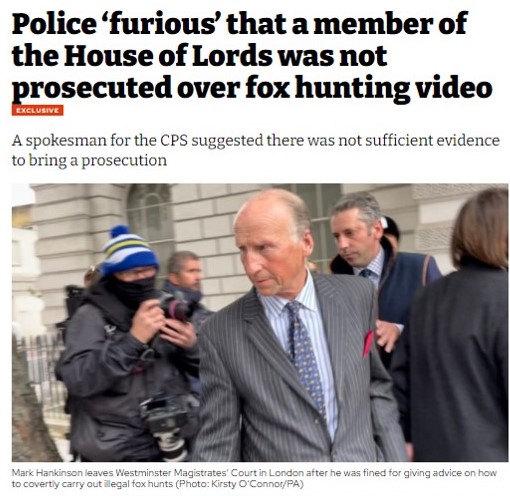
Last week Mark Hankinson, a director of the Master of Foxhounds Association (MFHA), was found guilty of encouraging and assisting hunts across the country to evade the ban on fox hunting.

Passing judgment in Westminster magistrates’ court, Deputy Chief Magistrate Tan Ikram ordered Mr Hankinson to pay a fine of £1,000 along with a contribution of £2,500 towards legal costs.

However, Devon police officers involved in the case since August 2020 said they believed Mr Hankinson should not have been the only person charged under Section 44 of the Serious Crime Act 2007.

One of the investigating officers said that they wanted “six charged, including Lord Mancroft, but the CPS only charged Hankinson. We were furious that Mancroft wasn’t charged.”

Another officer said that the CPS had originally considered charging six of the officials on the leaked webinars to around 100 invited hunt enthusiasts, but that the CPS only accepted the prosecution of Mr Hankinson.

The case centred on the practice of trail laying, which is not illegal and involves the laying of a scent for riders and hounds to follow. It replicates what a traditional hunt would have looked like, but without a fox being chased, injured or killed.

However, Mr Ikram ruled that Mr Hankinson was advising on how trail laying was being used as a cover for illegal hunting.

Investigating officers and anti-hunt groups claim Lord Mancroft was another of the MFHA officials offering advice.

Mr Ikram also referred to Lord Mancroft’s comments during what was meant to be a private online meeting for hunt masters.

Lord Mancroft, who was identified on the videos as Benjamin Mancroft, told the attendees to be careful what they record on body cams during a hunt.

It is common practice for both hunters and saboteurs to record hunts in order to gather evidence of any wrongdoing from either side.

During the webinars, which were recorded on 11 August last year, Lord Mancroft, who was chairman of the MFHA until May this year, said: “Those of you who are filming and recording, please don’t stand there recording the opposition [hunt saboteurs]… flying their gizmos and blowing horns and say ‘isn’t that marvellous that they haven’t seen us because we’ve just caught a fox behind them’ or something like that. I mean you’ve got to be very careful about who’s saying what.

Referring to Lord Mancroft’s comments, Mr Ikram told the court: “I did not hear from him and, of course, the defendant isn’t responsible for another’s words. That said, all the words of the others are relevant because it tells me something about the events he was speaking at and the ‘overall agenda’ in which he was also speaking. I do make clear that the defendant is to be judged wholly on what he said but others’ words, in my view, provide context to what he said.”

Mr Ikram also pointed to comments on the videos made by Phil Davies, police liaison officer at the Countryside Alliance and former chief inspector at Dyfed Powys Police.

Advising on the advantages of laying trails, Mr Davies told hunt masters: “Now, you know more about hunting than the saboteurs or the courts know, but what it will do is create that smokescreen, or that element of doubt that we haven’t deliberately hunted a fox, so if nothing else you need to record that and it will help us to write the defence to your huntsman.”

Responding to Mr Davies’s comments, Mr Ikram told the court: “Mr Davies is, of course, right that the speakers do know more about hunting than this court. This court does however understand well concepts such as creating smokescreens and creating ‘elements of doubt on deliberately hunting foxes’ (and I emphasise the word deliberately). This court is also very familiar with the writing of defences.”

The League Against Cruel Sports, which was the official complainant in the action, called on the CPS to reopen cases against Lord Mancroft and others involved in the meetings, including Mr Davies.

A spokeswoman for the League said: “Questions need to be answered by the CPS as to why others on the webinars were not dealt with in the same manner as Hankinson.

“The CPS needs to reinvestigate why those people were not charged. Because, obviously, the threshold of evidence was met for Hankinson so there surely are questions that need to be asked about whether the threshold had been met for Lord Mancroft and the others, like Phil Davies.”

However, a spokesman for the CPS said that only the evidence against Mr Hankinson was enough to bring a prosecution.

The CPS spokesman said: “We considered possible charges against six suspects and concluded that Mark Hankinson’s case was the only one that met our legal test for a prosecution.”

A spokesman for the MFHA said the group was considering an appeal against Mr Hankinson’s conviction.

Lord Mancroft and Mr Davies were contacted for comment. Devon and Cornwall Police declined to comment.

ENDS

As an aside, the League Against Cruel Sports has published a fascinating blog which provides some insight to how the prosecution against Hankinson came about – here.

UPDATE 25th October 2021: Police boot off Countryside Alliance rep from all wildlife crime priority delivery groups after hunting webinar trial (here)

Short-eared owl confirmed shot in Teesdale grouse moor area where two short-eared owls previously found shot

Article published in the Northern Echo yesterday:

Short-eared owl shot and killed in Teesdale

POLICE are appealing for information after a short-eared owl was shot down in Teesdale earlier this year.

A post-mortem on the bird has confirmed the likely cause of its death was being shot with a shot gun.

The owl was found by the side of the road in May.

PC Lorraine Nelson said: “Persecuting birds of prey is never acceptable and we will always do everything we can to work with partners to act on information received about alleged criminal activity.

We would encourage anyone with information on this incident to get in touch.”

Jack Ashton-Booth, RSPB Investigations Officer, said: “Short-eared owls are declining nationally as a species.

Yet they are still widely targeted in our UK uplands: this is the third shot short-eared owl we are aware of in this area in the last six years.

In 2015 two dead short-eared owls, both of which had been shot, were found in a hole on moorland just over 1km away.

Each of those birds could have gone on to have three, four or five chicks, had they been allowed to live.

When I think of the scale of even just one area of moorland, and its array of nooks and crannies… how many more of these stunning birds could have been shot and concealed down holes or buried under peat?

It’s impossible to know.

This illegal killing must stop.

I urge any of you who may have information regarding individuals targeting these birds to come forward and call them out.”

If you have any information, call 101 and ask to speak to PC Nelson.

Alternatively, call the RSPB confidential hotline on 0300 999 0101.

ENDS

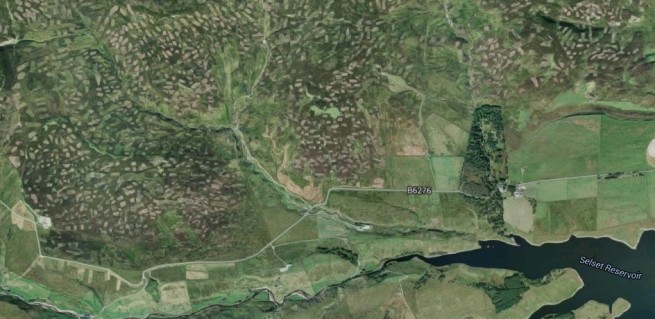
This short-eared owl was found shot in May close to the Selset Reservoir in Teesdale, which is an area dominated by land managed for driven grouse shooting, as you can see from this Google map showing the tell-tale rectangular strips of burned heather:

According to RSPB Investigations Officer Jack Ashton-Booth, the latest victim was discovered just over 1km from where two short-eared owls had been found shot and buried in potholes on the Wemmergill Estate in 2015 (see here). Nobody was prosecuted for those two offences, just as nobody will be prosecuted for this latest wildlife crime.

Wemmergill Estate is also the last known location of satellite-tagged hen harrier Marc, who vanished in suspicious circumstances on this grouse moor in 2018 (see here).

The article published yesterday in the Northern Echo was presumably based on information from Durham Constabulary, and claims that the police are appealing for information. I can’t find anything about the crime, investigation or subsequent appeal on the Durham Constabulary website or the police’s Facebook page. If it is there, it’s well hidden.

And once again, it has taken five months for this ‘appeal’ to emerge. I suppose that’s an improvement on the seven months it took Durham Constabulary to appeal for information after the discovery of the two shot owls found in 2015.

Yesterday’s article in the Northern Echo states that:

A post-mortem on the bird has confirmed the likely cause of its death was being shot with a shot gun‘.

My understanding is that the post-mortem report confirmed the owl had been shot and that was the cause of its death shortly afterwards.

There may be more news to come about this latest crime. I will update the blog if/when I receive further information.

UPDATE 18.00hrs:

The RSPB investigations team has confirmed on Twitter that this latest shot short-eared owl was found dead on a grouse moor (estate unnamed but believed to be the same estate (Wemmergill) where two short-eared owls were found shot and shoved down a pothole in 2015.

Also, Chris Woodley-Stewart, Director of the North Pennines AONB Partnership has written a blog on the AONB website to draw attention to this latest crime (see here). Well done, Chris.

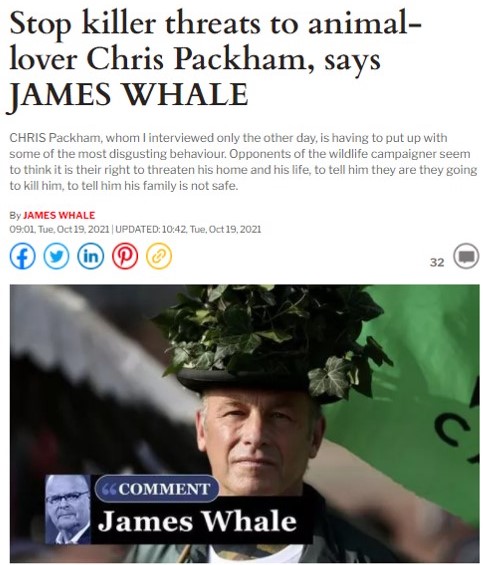
‘Stop killer threats to animal-lover Chris Packham’, says broadcaster James Whale

This comment piece from TV and radio broadcaster James Whale was published in The Express yesterday, in response to the ongoing and targeted abuse directed at Chris Packham by many within the hunting & shooting sector, encouraged by some of the industry’s large membership organisations.

Thanks to blog reader Keith Dancey for the link.

CHRIS Packham, whom I interviewed only the other day, is having to put up with some of the most disgusting behaviour. Opponents of the wildlife campaigner seem to think it is their right to threaten his home and his life, to tell him they are they going to kill him, to tell him his family is not safe.

This is the most revolting thing I have ever heard, I’m also furious with Facebook for not doing anything about some of the trolling that certain people get. I’m not talking about myself – I don’t care, I ignore them as they’re cretinous – but let’s think about it.

The people who are undertaking this mission to try to destroy Chris Packham are those who think he is trying to destroy what they call their fun, their hobby and maybe even their “tradition”. These are the people who think it is perfectly acceptable to go out and kill animals for the fun of it.

There are many such examples, from shooting birds to culling badgers for really no reason to Britain’s best known tradition – foxhunting. In my childhood and early life there was nothing more exciting than seeing the hunt gathering outside their local pub for a stirrup cup and then riding magnificently off into a sunny misty morning with the hounds baying.

But on reflection, when out in the field with the so-called terrier men digging the foxes from their lairs, the hounds running them to ground and literally ripping them limb from limb, it was pretty disgusting.

In past ages we used to enjoy dog fighting, cockfighting, bear baiting and various other forms of entertainment now considered disgusting.

When fox and stag hunting were legally banned, drag hunting, just using a lure for the dogs and hunters to follow, was introduced, but bloodsports fans want the laws repealed and find ways round them.

Tradition doesn’t last forever: we can talk about it, we can look back on it and I don’t want to see any pictures or statues of hunts destroyed. It is all part of our history. But those people who are prepared to carry on the pursuit of killing for fun have to be stopped. And so must their pastimes – if you can call them that.

ENDS

With straight faces, shooting org BASC denies encouraging online abuse of Chris Packham, his step daughter & others

The following article was published in The Times last Saturday.

It sits behind a paywall so I’ve reproduced it below:

The BBC Springwatch presenter Chris Packham has described how his stepdaughter faced a torrent of online abuse after a game-shooting organisation drew attention to her social media account and the fact they are related.

Megan McCubbin, 25, faced weeks of “vile and hateful” messages after the British Association for Shooting & Conservation (BASC), pointed out her connection to Packham, 60.

Packham, who has frequently taken aim at the game-bird industry, alleges that the BASC tacitly extended an invitation to online trolls: “Here’s a young woman, a friend of Chris’s who has started working with him why don’t you have a go?”

A long-running campaign of death threats against the naturalist escalated sharply late last Friday when two men set a car on fire outside his home in the New Forest.

CCTV footage shows one man pulling on a balaclava before stepping out of a Land Rover. He sets light to what appears to be a fuse; moments later the car explodes.

“These people knew exactly what they were doing,” Packham said. “I would suggest that they had prior experience in blowing cars up.”

He added: “I think maybe because I was bullied at school, I don’t have a fear of physical violence. But if they do it to me and they get away with it, they’ll do it to other environmental campaigners. What’s next will it be an exploding car outside Greta [Thunberg’s] house?”

A spokesman for the BASC said that it did not condone online abuse. It had the right to point out to its members that McCubbin was a youth ambassador for the League Against Cruel Sports, which campaigns against shooting, he said.

“McCubbin is using the celebrity status provided by the BBC [where she is a co-presenter of Springwatch] to promote an anti-shooting agenda; we’re allowed to be critical of that,” he added. “Packham plays a very astute game. He is very good at causing the sort of publicity that attacks shooting.”

Packham has received death threats for years. In 2019, after he campaigned to end the indiscriminate shooting of jays, wood pigeons and other birds that many in the countryside consider wrongly, he says to be vermin, two dead crows were strung up outside his home.

On another occasion, an anonymous letter suggested that a traffic accident could be arranged to kill him. Fox and badger carcasses have been dumped on his drive.

Packham said it was possible that the arson attack, which is being investigated by police, was carried out by local vandals or internet trolls. However, he thinks that it was committed too efficiently for that. “I think this is probably fox-hunting related,” he said.

He has been calling for members of the National Trust to vote for a ban on trail hunting, where hounds follow a scent rather than a fox, on its land.

He suspects that the attack may have been timed to coincide with the verdict in the case of a leading huntsman who was prosecuted for allegedly providing advice on how to hunt foxes illegally, behind a smokescreen of trail hunting.

“Fox hunting was always going to come to an end,” Packham said. “But the nails are being driven in faster than they’d anticipated.” A backlash was inevitable, he added.

Speaking to The Times at the Natural History Museum in London this week, where he was presenting the Wildlife Photographer of the Year awards, he was critical of how the online abuse he received had been policed. “It’s a little unfair that when black footballers receive unwanted and appalling hate crime the issue can be dealt with,” he said in a video he posted on Twitter.

“And that’s great, of course, and I would support that fully. But I am surprised that when environmentalists like myself receive similarly hateful torrents of relentless abuse nothing can be done about it.”

The arson attack on his home was part of a broader pattern, he said. “We’re living, post-pandemic, in a very angry time. A time of polarisation and division, the likes of which I’ve not seen before.”

In the past Packham has accused gamekeepers of “genocidal” practices and said that fox-hunting has a “psychopathic element”. He said that he preferred the word “extermination” to extinction” when discussing largescale biodiversity loss.

He once got into trouble for arguing that the giant panda was not worth the time, trouble and expense of saving from extinction, adding that he would happily eat the last one.

“I do weaponise vernacular to some extent,” he said. “I think that language is important, and it’s a very, very powerful tool. It has the power to incite and inflame people. No doubt about that but in a competitive world, we’ve got to get our stories out there.”

ENDS

BASC has responded to this article by stating:

It’s ludicrous to suggest that BASC would encourage online abuse, whether that’s Chris Packham, his step daughter or anyone else for that matter“.

The BASC website article referred to by Chris in The Times was published last year and can be read here. In my view it’s targeted and abusive and celebrates how Megan’s “woke guff was admirably tackled in the comments thread by those who understand there is a far more positive side to grouse shooting“.

You can also read BASC Director Duncan Thomas’s misogynistic online abuse (here) and the apology he was later forced to make (here).

You can make up your own mind whether or not you think it’s ‘ludicrous’ to suggest that BASC staff have published online abuse about named individuals and incited others to join in.

57 hen harriers confirmed illegally killed or ‘missing’ on or close to UK grouse moors since 2018

For anyone who still wants to pretend that the grouse shooting industry isn’t responsible for the systematic extermination of hen harriers on grouse moors across the UK, here’s the latest catalogue of crime that suggests otherwise.

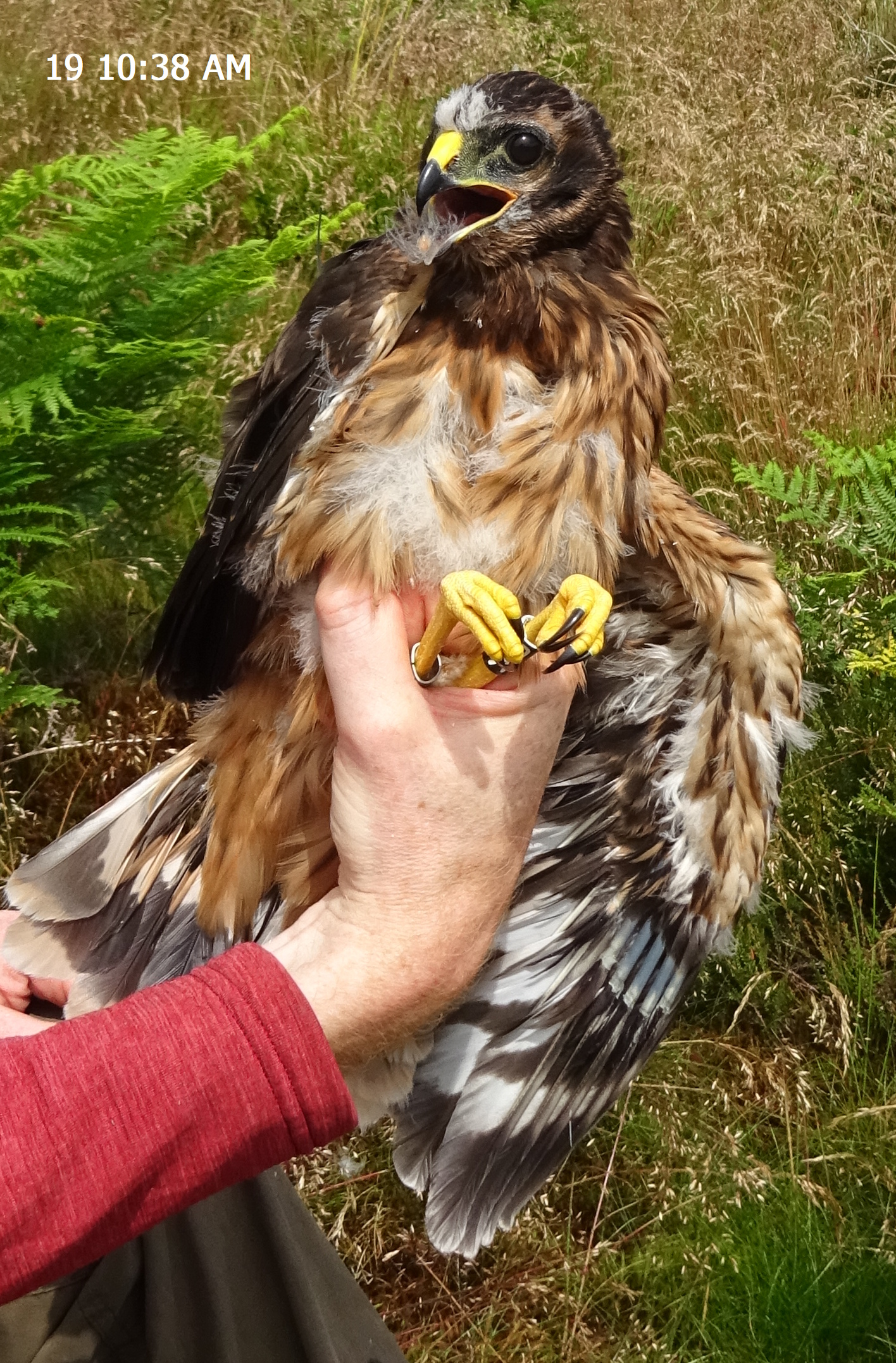
[This male hen harrier died in 2019 after his leg was almost severed in an illegally set trap that had been placed next to his nest on a Scottish grouse moor (see here). Photo by Ruth Tingay]

This is the blog I now publish after every reported killing or suspicious disappearance.

They disappear in the same way political dissidents in authoritarian dictatorships have disappeared” (Stephen Barlow, 22 January 2021).

Today the list has been updated to include the most recently reported victim, a young hen harrier called Reiver who hatched on Langholm Moor earlier this year and whose tag suddenly and inexplicably stopped transmitting on 17th September 2021 in a grouse moor area of Northumberland (see here).

The disgraceful national catalogue of illegally killed and ‘missing’ hen harriers will continue to grow – I know of at least one more on-going police investigation which has yet to be publicised.

I’ve been compiling this list only since 2018 because that is the year that the grouse shooting industry ‘leaders’ would have us believe that the criminal persecution of hen harriers had stopped and that these birds were being welcomed back on to the UK’s grouse moors (see here).

This assertion was made shortly before the publication of a devastating new scientific paper that demonstrated that 72% of satellite-tagged hen harriers were confirmed or considered likely to have been illegally killed, and this was ten times more likely to occur over areas of land managed for grouse shooting relative to other land uses (see here).

2018 was also the year that Natural England issued itself with a licence to begin a hen harrier brood meddling trial on grouse moors in northern England. For new blog readers, hen harrier brood meddling is a conservation sham sanctioned by DEFRA as part of its ludicrous ‘Hen Harrier Action Plan‘ and carried out by Natural England (NE), in cahoots with the very industry responsible for the species’ catastrophic decline in England. For more background see here.

Brood meddling has been described as a sort of ‘gentleman’s agreement’ by commentator Stephen Welch:

I don’t get it, I thought the idea of that scheme was some kind of trade off – a gentleman’s agreement that the birds would be left in peace if they were moved from grouse moors at a certain density. It seems that one party is not keeping their side of the bargain“.

With at least 57 hen harriers gone since 2018, I think it’s fair to say that the grouse shooting industry is simply taking the piss. Meanwhile, Natural England pretends that ‘partnership working’ is the way to go.

‘Partnership working’ appears to include authorising the removal of hen harrier chicks from a grouse moor already under investigation by the police for suspected raptor persecution (here) and accepting a £10K bung from representatives of the grouse shooting industry that prevents Natural England from criticising them (see here).

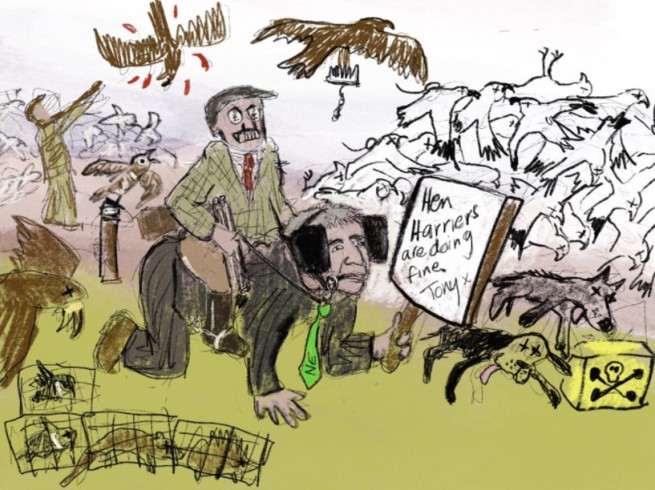
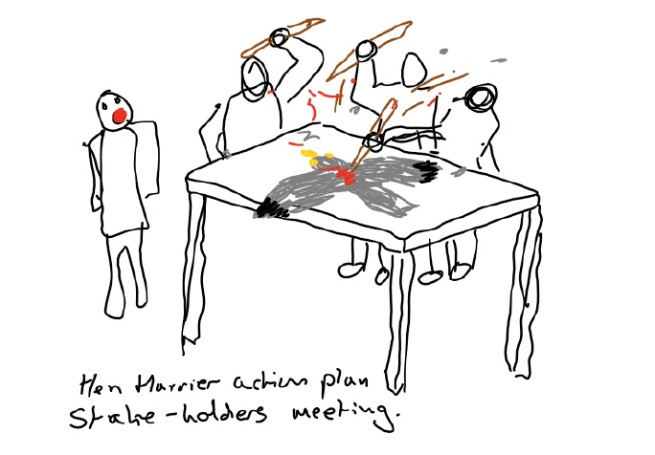
[Cartoon by Gill Lewis]

So here’s the latest gruesome list:

February 2018: Hen harrier Saorsa ‘disappeared’ in the Angus Glens in Scotland (here). The Scottish Gamekeepers Association later published wholly inaccurate information claiming the bird had been re-sighted. The RSPB dismissed this as “completely false” (here).

5 February 2018: Hen harrier Marc ‘disappeared’ on a grouse moor in Durham (here)

9 February 2018: Hen harrier Aalin ‘disappeared’ on a grouse moor in Wales (here)

March 2018: Hen harrier Blue ‘disappeared’ in the Lake District National Park (here)

March 2018: Hen harrier Finn ‘disappeared’ near Moffat in Scotland (here)

18 April 2018: Hen harrier Lia ‘disappeared’ in Wales and her corpse was retrieved in a field in May 2018. Cause of death was unconfirmed but police treating death as suspicious (here)

8 August 2018: Hen harrier Hilma ‘disappeared’ on a grouse moor in Northumberland (here).

16 August 2018: Hen harrier Athena ‘disappeared’ on a grouse moor in Scotland (here)

26 August 2018: Hen Harrier Octavia ‘disappeared’ on a grouse moor in the Peak District National Park (here)

29 August 2018: Hen harrier Margot ‘disappeared’ on a grouse moor in Scotland (here)

29 August 2018: Hen Harrier Heulwen ‘disappeared’ on a grouse moor in Wales (here)

3 September 2018: Hen harrier Stelmaria ‘disappeared’ on a grouse moor in Scotland (here)

24 September 2018: Hen harrier Heather ‘disappeared’ on a grouse moor in Scotland (here)

2 October 2018: Hen harrier Mabel ‘disappeared’ on a grouse moor on the edge of the Yorkshire Dales National Park (here)

3 October 2018: Hen Harrier Thor ‘disappeared’ next to a grouse moor in Bowland, Lanacashire (here)

23 October 2018: Hen harrier Tom ‘disappeared’ in South Wales (here)

26 October 2018: Hen harrier Arthur ‘disappeared’ on a grouse moor in the North York Moors National Park (here)

1 November 2018: Hen harrier Barney ‘disappeared’ on Bodmin Moor (here)

10 November 2018: Hen harrier Rannoch ‘disappeared’ on a grouse moor in Scotland (here). Her corpse was found nearby in May 2019 – she’d been killed in an illegally-set spring trap (here).

14 November 2018: Hen harrier River ‘disappeared’ on a grouse moor in the Nidderdale AONB (here). Her corpse was found nearby in April 2019 – she’d been illegally shot (here).

16 January 2019: Hen harrier Vulcan ‘disappeared’ in Wiltshire close to Natural England’s proposed reintroduction site (here)

7 February 2019: Hen harrier Skylar ‘disappeared’ next to a grouse moor in South Lanarkshire (here)

22 April 2019: Hen harrier Marci ‘disappeared’ on a grouse moor in the Cairngorms National Park (here)

26 April 2019: Hen harrier Rain ‘disappeared’ on a grouse moor in Nairnshire (here)

11 May 2019: An untagged male hen harrier was caught in an illegally-set trap next to his nest on a grouse moor in South Lanarkshire. He didn’t survive (here)

7 June 2019: An untagged hen harrier was found dead on a grouse moor in Scotland. A post mortem stated the bird had died as a result of ‘penetrating trauma’ injuries and that this bird had previously been shot (here)

5 September 2019: Wildland Hen Harrier 1 ‘disappeared’ on a grouse moor nr Dalnaspidal on the edge of the Cairngorms National Park (here)

11 September 2019: Hen harrier Romario ‘disappeared’ on a grouse moor in the Cairngorms National Park (here)

14 September 2019: Hen harrier (Brood meddled in 2019, #183704) ‘disappeared’ in North Pennines (here)

23 September 2019: Hen harrier (Brood meddled in 2019, #55149) ‘disappeared’ in North Pennines (here)

24 September 2019: Wildland Hen Harrier 2 ‘disappeared’ on a grouse moor at Invercauld in the Cairngorms National Park (here)

24 September 2019: Hen harrier Bronwyn ‘disappeared’ near a grouse moor in North Wales (here)

10 October 2019: Hen harrier Ada ‘disappeared’ on a grouse moor in the North Pennines AONB (here)

12 October 2019: Hen harrier Thistle ‘disappeared’ on a grouse moor in Sutherland (here)

18 October 2019: Member of the public reports the witnessed shooting of an untagged male hen harrier on White Syke Hill in North Yorkshire (here)

November 2019: Hen harrier Mary found illegally poisoned on a pheasant shoot in Ireland (here)

January 2020: Members of the public report the witnessed shooting of a male hen harrier on Threshfield Moor in the Yorkshire Dales National Park (here)

23 March 2020: Hen harrier Rosie ‘disappeared’ at an undisclosed roost site in Northumberland (here)

1 April 2020: Hen harrier (Brood meddled in 2019, #183703) ‘disappeared’ in unnamed location, tag intermittent (here)

5 April 2020: Hen harrier Hoolie ‘disappeared’ on a grouse moor in the Cairngorms National Park (here)

8 April 2020: Hen harrier Marlin ‘disappeared’ on a grouse moor in the Cairngorms National Park (here)

19 May 2020: Hen harrier Fingal ‘disappeared’ on a grouse moor in the Lowther Hills, Scotland (here)

21 May 2020: Hen harrier (Brood meddled in 2019, #183701) ‘disappeared’ on a grouse moor in Cumbria shortly after returning from wintering in France (here)

27 May 2020: Hen harrier Silver ‘disappeared’ on a grouse moor on Leadhills Estate, Scotland (here)

day/month unknown: Unnamed male hen harrier breeding on RSPB Geltsdale Reserve, Cumbria ‘disappears’ while away hunting (here)

9 July 2020: Unnamed female hen harrier (#201118) ‘disappeared’ from an undisclosed site in Northumberland (here).

25 July 2020: Hen harrier Harriet ‘disappeared’ on a grouse moor in the Yorkshire Dales National Park (here)

14 August 2020: Hen harrier Solo ‘disappeared’ in confidential nest area in Lancashire (here)

7 September 2020: Hen harrier Dryad ‘disappeared’ on a grouse moor in the Yorkshire Dales National Park (here)

16 September 2020: Hen harrier Fortune ‘disappeared’ from an undisclosed roost site in Northumberland (here)

19 September 2020: Hen harrier Harold ‘disappeared’ on a grouse moor in the Yorkshire Dales National Park (here)

20 September 2020: Hen harrier (Brood meddled in 2020, #55152) ‘disappeared’ next to a grouse moor in North Yorkshire (here)

24 February 2021: Hen harrier Tarras ‘disappeared’ next to a grouse moor in Northumberland (here)

12th April 2021: Hen harrier Yarrow ‘disappeared’ near Stockton, County Durham (here)

18 May 2021: Adult male hen harrier ‘disappears’ from its breeding attempt on RSPB Geltsdale Reserve, Cumbria whilst away hunting (here)

18 May 2021: Another adult male hen harrier ‘disappears’ from its breeding attempt on RSPB Geltsdale Reserve, Cumbria whilst away hunting (here)

17 September 2021: Hen harrier Reiver ‘disappears’ in a grouse moor dominated region of Northumberland (here)

To be continued……..

Satellite-tagged hen harrier ‘Reiver’ disappears in suspicious circumstances in grouse moor area of Northumberland

Press release from RSPB

Another hen harrier disappears in suspicious circumstances

Another satellite tagged hen harrier has suddenly and unexpectedly disappeared, strengthening the RSPB’s call for the urgent licensing of grouse moors.

Reiver, a young female, fledged from a nest on Langholm Moor in the south of Scotland this summer. She was fitted with a satellite tag while still in her nest, as part of an RSPB project to help understand the journeys made by these red-listed birds of prey and the survival challenges they face after fledging.

[Hen harrier ‘Reiver’ just prior to fledging. Photo by Andrew Walton]

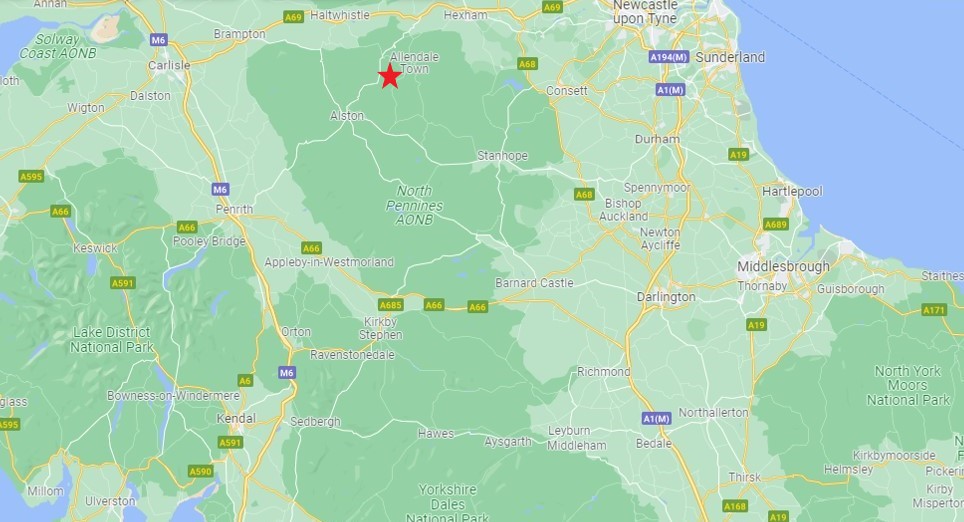
Reiver’s tag was transmitting regularly and as expected, with no sign of malfunction, until it stopped suddenly on 17 September 2021. Her tag’s last fix came from Ninebanks, an area dominated by driven grouse moors in Northumberland, within the North Pennines Area of Outstanding Natural Beauty (AONB).

Reiver is the third Scottish satellite-tagged hen harrier to vanish in identical, sudden and suspicious circumstances in England in 2021. In February this year, Tarras disappeared having been last recorded on a grouse moor near Haltwhistle, just outside the North Pennines AONB boundary. Another bird, Yarrow, from the Scottish Borders disappeared in April while heading for the North York Moors. And in 2019, Ada’s last transmission came from an area of grouse moor east of Allendale, Northumberland.

Fewer than 600 pairs of hen harriers breed in the UK. In England there were just 24 successful nests in 2021, despite enough habitat and food to support over 300 pairs. In 2019, the government’s own study found illegal killing to be the main factor limiting the recovery of the UK hen harrier population.

Jenny Barlow, Estate Manager at Langholm said:There is always such anticipation and excitement for our hen harriers to return each year to the Tarras Valley Nature Reserve here in Langholm. A huge community and volunteer effort goes into monitoring and safeguarding our harrier chicks to make sure they get the best possible start on our reserve. It is extremely sad news for us all that one of our chicks Reiver, won’t be making her way back home to us again.”

Howard Jones, RSPB Investigations Officer, said:It is almost certain that Reiver has been illegally killed. This is more than just a pattern, it is a known fact that hen harrier numbers are so low because of persistent persecution. Satellite tags are highly reliable and will continue to transmit even after the bird’s death. For a tag which has been functioning reliably to suddenly cut out like this strongly suggests foul play. This event is categorised as a ‘sudden stop no malfunction’ and is happening time and again on or near driven grouse moors.

Hen harriers disappearing on English grouse moors is having a devastating effect on both the English and Scottish hen harrier populations, and needs to be urgently addressed by UK governments. The need for licensing of grouse moors has been accepted in Scotland and this needs to be recognised in England too. This then must be implemented without delay in both countries.”

All birds of prey are protected by the Wildlife and Countryside Act 1981. To intentionally kill or injure one is a criminal offence and could result in an unlimited fine or up to six months in jail.

If you have any information relating to this incident, call Northumbria Police on 101 quoting incident reference NP-20210920-0837.

If you find a wild bird of prey which you suspect has been illegally killed, please call 101 and fill in this online form HERE.

If you have sensitive information about the illegal killing of birds of prey, call the RSPB’s confidential hotline on 0300 999 0101.

ENDS

How’s that so-called Hen Harrier Action Plan going, DEFRA & Natural England? Are you prepared to admit its a conservation sham, yet?

Still convinced that your ‘partners’ in the driven grouse shooting industry have stopped their filthy criminality?

Still prepared to pretend that hen harriers are welcomed with open arms on driven grouse moors? Welcomed with firearms, more like.

Still wondering why those of us in the conservation sector are so frustrated with your failure to stand up for hen harriers and all the other raptors that are still systematically killed on driven grouse moors while you get in to bed with the criminals and accept large financial bungs to keep your mouths shut?

[Cartoon by Gerard Hobley]

UPDATE 18th October 2021 13.00hrs: 57 hen harriers confirmed illegally killed or ‘missing’ on or close to UK grouse moors since 2018 (here).

Time to review Countryside Alliance’s position on raptor group after hunting webinar conviction?

Last year the Hunt Saboteurs Association published two secretly-recorded Zoom webinars showing some of the UK’s leading hunting personnel, including high-ranking former police officers, providing a training seminar to over 100 hunt masters across the UK about so-called ‘trail hunting’ (where hunts supposedly follow a laid scent to imitate a fox hunt, since actual fox hunting is now illegal).

Campaigners have long argued, with strong supportive evidence in many cases, that trail hunting is being used as a cover for the continuation of illegal fox hunting. Hunting organisations have denied this, of course, and have always claimed that any fox they’ve killed was caught ‘accidentally’ and not deliberately.

Campaigners claimed that the content of the two leaked webinars (see here) showed that there was now evidence to demonstrate a ‘nationwide conspiracy’ to commit perjury and flout the 2005 ban on hunting with hounds after some of the webinar trainers were caught discussing how to create a smokescreen, presumably to avoid prosecution for illegal fox hunting.

I was interested in these webinars because one of the contributors, former Police Inspector Phil Davies, serves on the Raptor Persecution Priority Delivery Group (RPPDG) as a representative of the Countryside Alliance (see here). The RPPDG is supposed to help prevent raptor persecution crimes in England & Wales, although to date it has achieved naff all other than to create an impression of tackling raptor persecution.

The hunting webinars were brought to the attention of the police and an investigation was launched. This led to the prosecution of Mark Hankinson from The Hunting Office, whose trial took place in September and who last week was convicted at Westminster Magistrates Court of encouraging or assisting others to commit an offence (to illegally fox hunt).

This prosecution and conviction is a huge blow to the reputation of the hunting community and the subsequent widespread publicity will have been damaging (e.g. see here, here, here, here, here, here), with large landowners now considering whether to ban trail hunting on their land.

For those interested in the legal arguments I’d thoroughly recommend reading the following documents: the closing submissions of the defence and prosecution, and the court’s judgement.

In the blog I wrote last year about these webinars (here), I argued that it’d be interesting to see whether there were grounds for Phil Davies and/or the Countryside Alliance to be suspended from the RPPDG as the police investigation in to the webinar content got underway, in the same way that Forestry England, National Trust, United Utilities, Lake District National Park Authority and Natural Resources Wales had initiated a suspension of trail hunt licences. I also wondered whether Mr Davies’ position, and/or that of the Countryside Alliance, on the RPPDG would be reviewed after the findings of the police investigation were known.

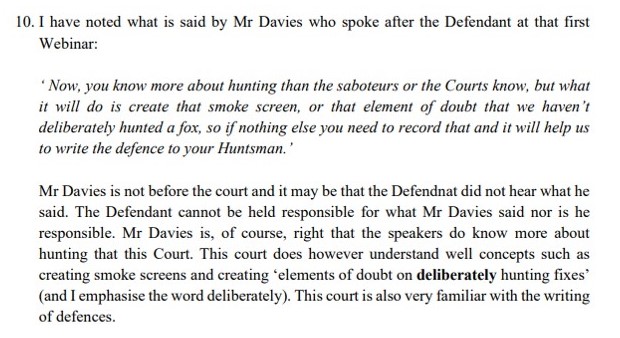
Well, here we are a year and a bit later. Mr Davies was NOT prosecuted for his role in the webinar, only Mark Hankinson was charged and prosecuted. However, if you read the judgement document it seems quite clear to me that Deputy Chief Magistrate Tan Ikram had cause to question the intention behind the comments made by other webinar participants, including Mr Davies, and that the judge wasn’t overly impressed with Davies’ comments about ‘creating smokescreens’ and ‘creating elements of doubt’, in the judge’s view presumably made to help hunt masters avoid prosecutions for illegal fox hunting. Here is the relevant excerpt from the judgement:

As far as I’m aware, Phil Davies was not suspended from serving on the RPPDG while the trial went ahead. So what about now, with the judge’s damning remarks ringing in everyone’s ears?

UPDATE 20th October 2021: Further evidence to support a review of Countryside Alliance’s position on raptor group (here)

UPDATE 25th October 2021: Police boot off Countryside Alliance rep from all wildlife crime priority delivery groups after hunting webinar trial (here)

REVIVE coalition for grouse moor reform: speakers announced for annual conference, 14 November 2021

REVIVE, the coalition for grouse moor reform is holding its 2021 national conference at Perth Concert Hall on Sunday 14th November.

REVIVE’s first conference was held at the Perth Theatre in 2019 and was a sell out event. Two years on, interest and support for the coalition’s aims continues to grow so this year’s conference has been moved to the larger concert hall venue. Perth Concert Hall has implemented a suite of measures to help everyone stay safe – see here.

This year’s conference will be hosted by Chris Packham and the names of those speaking/presenting have just been announced in the preliminary programme, as follows:

10.00: Doors open/registration

10.30: Welcome, by Chris Packham

11.00 – 12.30: SESSION ONE, More wildlife on our moors

Ruth Tingay, Raptor Persecution UK

Robbie Marsland, League Against Cruel Sports Scotland

Kirsty Jenkins, OneKind

Colin Smyth, MSP Scottish Labour, South of Scotland

12.30 – 13.30: lunch

13.30 – 13.40: Welcome back, by Chris Packham

13.40 – 14.00: Polling and public attitudes to grouse shooting, by Mark Diffley (Director, Diffley Partnership)

14.00 – 15.00: SESSION TWO, Energising our Environment

Dr Helen Armstrong, Broomhill Ecology & author of A Better Way

Nikki Gordon, John Muir Trust

Duncan Orr-Ewing, RSPB Scotland

Mark Ruskell, MSP Scottish Greens, Mid-Scotland and Fife

15.00 – 15.20: short break

15.20 – 16.20: SESSION THREE, Land reform, people and power

Duncan McCann, economist and author of Our Land

Robin McAlpine, Common Weal

Lesley Riddoch, journalist, broadcaster and campaigner

16.20: Closing speeches (full line-up tbc)

Andy Wightman, author, campaigner & former MSP

As well as presentations and panel discussions, there’ll be a number of stalls and plenty of time in the breaks for chatting with the REVIVE directors and guest speakers, as well as opportunities for making new connections and for catching up with old friends.

Tickets for this conference are now on sale (£11.50, including £1.50 booking fee per ticket; £5 for unemployed/Under 16s) and can be bought online HERE

I look forward to seeing some of you there.

For those of you who want to find out more about the REVIVE coalition for grouse moor reform, please visit the website here

Wild Ken Hill Estate in Norfolk pulls out of sea eagle restoration project

Well this is all a bit odd.

The Wild Ken Hill Estate has pulled out of hosting a white-tailed eagle restoration project in west Norfolk.

Earlier this year, the progressive rewilding estate was hailed by conservationists as news emerged that the estate had joined forces with the Roy Dennis Wildlife Foundation to release up to 60 white-tailed eagles, donated by Poland, over a ten year period to help restore the species to its former range in East Anglia.

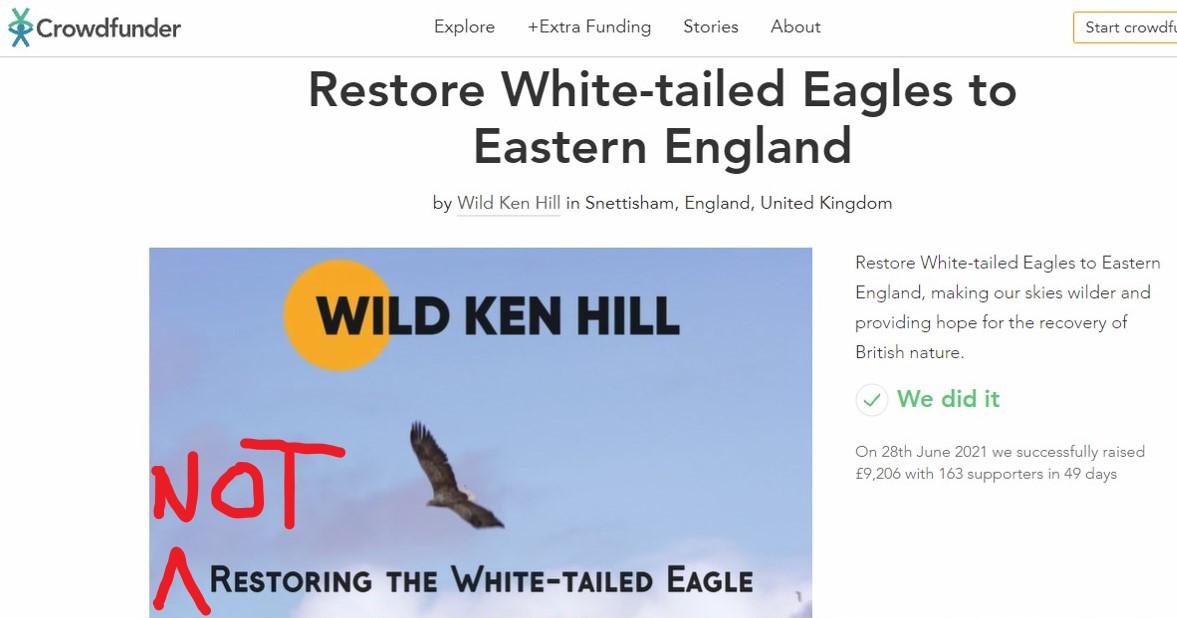
Public support was in place (91% of respondents to a consultation were in favour of bringing the eagles back), even the neighbouring Sandringham Estate was reported to be ‘supportive’ (here), Natural England had agreed to licence the project (here) and a crowdfunder had raised over £9,000 to help pay for logistics (here).

Everything looked to be going ahead for the first eagles to be released in 2022 until a recent announcement on Wild Ken Hill Estate’s blog saying the project was ‘on hold’:

Eagle project on hold

We have reluctantly decided that we will not reintroduce White-tailed Eagles at Wild Ken Hill in 2022 as planned.

We continue to believe that the restoration of White-tailed Eagles to Eastern England is an important and inevitable conservation goal, and also that the original plans for a release beginning in 2022 could have been delivered very successfully in partnership with the Roy Dennis Wildlife Foundation.

We have, however, taken the difficult decision to focus on other aspects of our nationally-significant nature and regenerative farming project. In particular, we feel it is worth putting our full weight behind the pioneering innovations we are making as part of our regenerative farming approach. The greater biodiversity, carbon sequestration, and improved profitability demonstrated at Wild Ken Hill with this approach over the last 3 years have the potential to have a huge impact across the UK if adopted by others; we feel it is therefore imperative to focus on these. In addition to regenerative farming, Wild Ken Hill supports beavers and is a release site for Natural England’s curlew headstarting project.

We are sure that the restoration of the White-tailed Eagle to England will continue successfully on the Isle of Wight, and we hope that dispersing juvenile eagles continue to visit Wild Ken Hill and the Norfolk Coast, attracted by the area’s suitable habitat.

We wanted to specifically and publicly offer our apologies to the Roy Dennis Wildlife Foundation, who have been exceptional project partners to date and a pleasure to work with.

We also would like to thank and apologise to those that supported this project when participating in the consultation, particularly the 91% of the general public that offered their support and the many landmanagers and conservation organisations that did the same.

We will shortly be in touch with those that supported the Crowdfunding campaign to offer a full refund.

ENDS

That’s all a bit odd, isn’t it?

Mark Avery has suggested that some birding, landowning and shooting interests may have been ‘leaning on some members of the family’ (see here) and there is certainly some evidence of that here.

Was that enough to make Wild Ken Hill Estate buckle? It’s pretty disappointing, if it was, especially as real and potential concerns were carefully considered in the project’s comprehensive feasibility report, published in April 2021:

What has been said, and/or what threats have been made since then, to force Wild Ken Hill Estate to reconsider its involvement?

The most ridiculous thing in all of this is that the eagles are already making their way back to Norfolk, including visiting the Wild Ken Hill Estate, as they disperse from the release project on the Isle of Wight.

How long until the first poisoning incident, do you reckon?