Successful Wild Justice petition secures another Westminster debate on banning driven grouse shooting

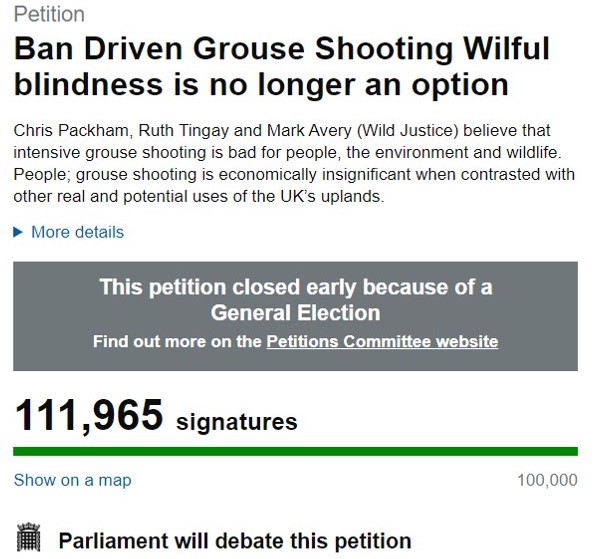
Way back in the summer of 2019, Wild Justice ran a very successful petition calling for the banning of driven grouse shooting, which secured over 100,000 signatures in under three weeks (see here).

Six months later in March 2020, Wild Justice was informed that there would be a parliamentary debate in Westminster Hall in response to the 100,000 signature threshold being reached (see here). This would be the second Parliamentary debate on this issue, following the extraordinarily dishonourable debate that took place in 2016.

However, shortly afterwards the country went in to lockdown and all thoughts of a second debate went out of the window.

Several months later, with most things moved to online platforms, Petitions Committee member Kerry McCarthy MP hosted a video conference call with Chris Packham to discuss the issue of banning driven grouse shooting (see here). Kerry has since been the recipient of malicious online abuse from the usual suspects for having dared to have this discussion!

Last week, the Petitions Committee clerk got back in touch with Wild Justice and announced there’d be a parliamentary debate in Westminster Hall on Monday 25th January 2021 at 6pm. This will be available to watch live, online.

As the Wild Justice blog pointed out in March 2020 (here), don’t assume that this debate will rapidly lead to the banning of driven grouse shooting but do assume that it’ll provide a good opportunity to hear how things have moved on in the four and a half years since the last debate, not least the recent decision from the Scottish Government to introduce a licensing regime for driven grouse shooting ASAP.

Proposal to reintroduce golden eagles to Wales: information finally released

Regular blog readers will be aware that there are currently two separate groups with a stated interest in reintroducing golden eagles to Wales, although both have very different, conflicting approaches.

Previous key blogs on this topic can be read here, here, here, here, here, here, here, here and here.

I’ve been particularly interested in the approach of one of these groups, Wilder Britain, which is headed up by Dr Paul O’Donoghue who is known for, amongst other things, his failed application (under the name of Lynx UK Trust) for a trial release of Lynx at Kielder Forest (here) and his failed attempt (under the name of Wildcat Haven Enterprises CIC) to sue Andy Wightman MSP for alleged defamation (here).

Since February 2019, O’Donoghue has made a lot of noise in the media about his ‘plan’ to reintroduce golden eagles to Wales and he’s been fundraising to support this ‘plan’ but so far, in complete contrast to the Eagle Reintroduction Wales Project, very little detail of his background research or his ‘plan’ has emerged.

As a result, in August last year I submitted a Freedom of Information request to Natural Resources Wales (NRW, the Welsh Government’s statutory conservation agency) for information about any correspondence it’d had with O’Donoghue about reintroducing golden eagles.

It took NRW three months to respond (instead of the statutory 20 working days) and when it finally did respond, it refused to divulge any information because it claimed the requested information was exempt (see here).

I didn’t agree that the requested information was exempt so I challenged NRW to review the decision. It did review it and, two months later, I received the following response yesterday:

The accompanying information that NRW released is posted below. It’s not especially interesting; there’s what looks to be a great deal of posturing and bluster, but essentially NRW has not yet received a licence application from Wilder Britain in relation to the reintroduction of golden eagles to Wales.

Here are the released documents:

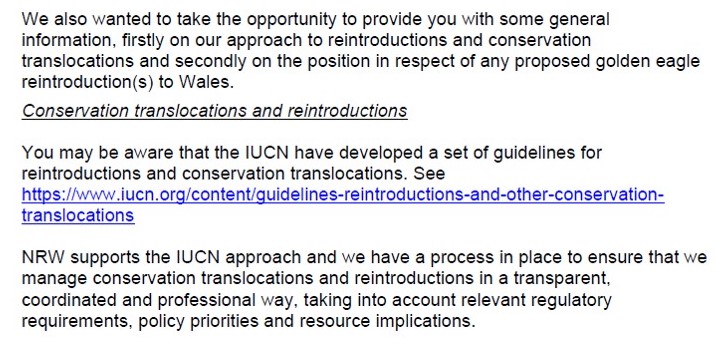
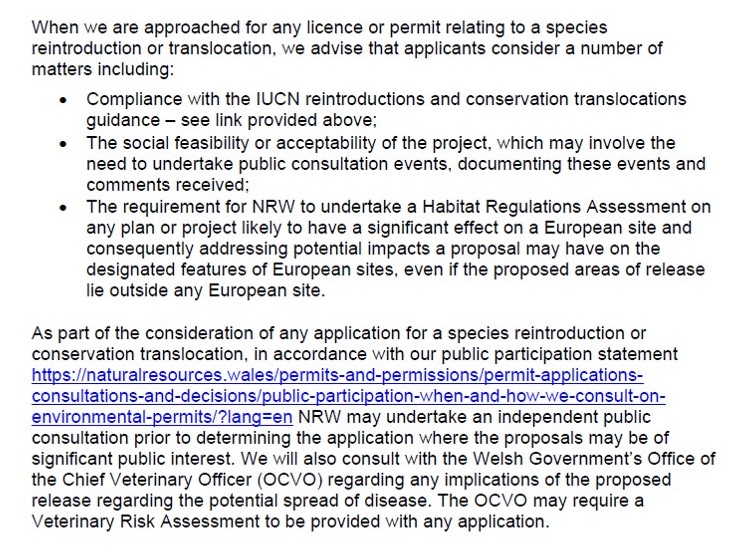
Of much more interest was the second part of the letter from NRW to me, where it sets out its position on reintroductions in general and then specifically on proposed golden eagle reintroductions. This information is useful as it clarifies several issues, including what licences would be required for a reintroduction and the option for NRW to conduct its own public consultation prior to a decision being made. This should be reassuring for many.

It’s also useful to see NRW’s commitment to meeting IUCN standards, and that includes addressing the persecution issue and whether it’s still a risk to golden eagles. Recent revelations exposed on this blog indicate that it is indeed still a significant risk (see here).

In amongst the released documents from NRW is correspondence from Wilder Britain last summer about an intention to submit licence applications to NRW by Xmas 2020 with a view to releasing eagles in summer 2021. This seems ambitious, even without the new Covid lockdown, especially when some key eagle experts in Norway (from where O’Donoghue has claimed to be sourcing donor birds) have apparently said they haven’t agreed to any such project.

Let’s see what happens this year.

Sentencing delay for man convicted of offences against badger and red kites

Back in December it was reported that a man had been found guilty of wildlife crimes against a badger and red kites in Wales (see here).

Dewi James Price, 39, of Commercial Street, New Tredegar, Caerphilly, faced a potential custodial sentence and the sentencing hearing was due to take place at Cardiff Crown Court on 23 December 2020.

However, it has since been reported that sentencing was delayed after Price’s lawyer told the judge that her client wanted to appeal the convictions. Apparently the court adjourned the hearing until 8th January 2021.

This seems a bit odd. Has anybody heard of sentencing being delayed in these circumstances before? Sure, appeals against convictions are common and are an important part of the judicial process, but don’t these appeals usually come after sentencing, not before?

Here’s a copy of the news report from Powys County Times:

Man convicted of killing Builth Wells badger to appeal

By Iwan Gabe Davies (23 Dec 2020)

A MAN found guilty after a trial of hunting and killing a badger is to appeal against his conviction.

Dewi Price, 39, of Commercial Street, New Tredegar, Caerphilly, was also found guilty of offences against red kites.

He was convicted in his absence at Newport Magistrates’ Court.

Price was found guilty of killing a badger in the Builth Wells area of Powys on February 18, 2018.

The defendant was also convicted of taking a red kite in Gelligaer, Caerphilly, on May 19, 2019.

He was also found guilty of intentionally or recklessly disturbing a red kite while it was in, on or near a nest containing eggs or young and of intentionally or recklessly disturbing the dependent young of a red kite.

Price had been due to be sentenced at Cardiff Crown Court but Judge Michael Fitton QC was told by the defendant’s barrister Rosamund Rutter that her client wanted to appeal against his conviction.

The case was adjourned until January 8.

Price was granted conditional bail.

ENDS

UPDATE 13th February 2022: Badger killer and red kite chick thief avoids prison (here)

Where’s the Scottish Government’s promised taskforce on increasing powers for SSPCA?

Ten years ago the Scottish Government was asked to consider extending the powers of the Scottish SPCA, to allow them to investigate a much wider remit of wildlife crime than at present, including raptor persecution.

Since then this issue has been kicked in to the long grass more times than is credible by a long line of six (yes, six!) Environment Ministers. For new blog readers please see the extraordinary timeline of events at the end of this blog.

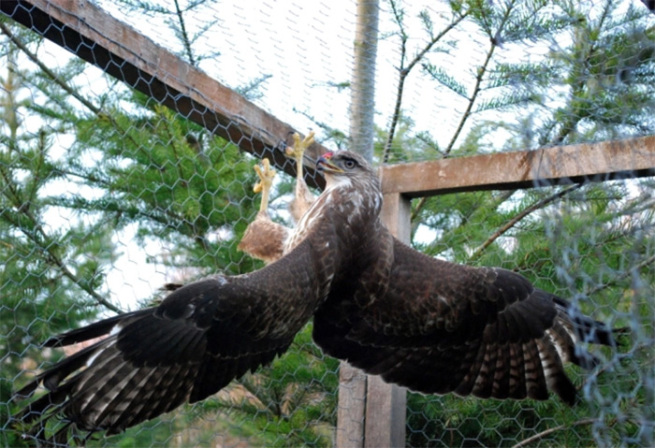
[Buzzard caught inside a crow cage trap. It’s not illegal to trap buzzards in these traps but it becomes illegal if the trap isn’t checked by the operator at least once every 24hrs and the buzzard released immediately upon discovery. Under current legislation, if the buzzard is injured but still alive then the SSPCA can investigate. If the buzzard is dead (as a result of being caught and held illegally) the SSPCA do not currently have the power to investigate and would have to call the police. It’s simply bonkers. Photo by RSPB]

In June 2020, Environment Minister #6, Mairi Gougeon, committed to establishing a new ‘independent’ taskforce to consider, again, increased powers for the SSPCA (see here). This was in response to Mark Ruskell MSP withdrawing an amendment for increased SSPCA powers from the Animals & Wildlife Bill.

Mairi Gougeon stated that she expected the taskforce to convene in the summer (of 2020) and to ‘be in a position to conclude their review and submit a report of their recommendations before the end of the current Parliamentary session‘, as long as Covid and Brexit didn’t impact on this plan. [The dissolution of Parliament is scheduled for the 5th May 2021].

Since that announcement in June, nothing else has been heard on this issue.

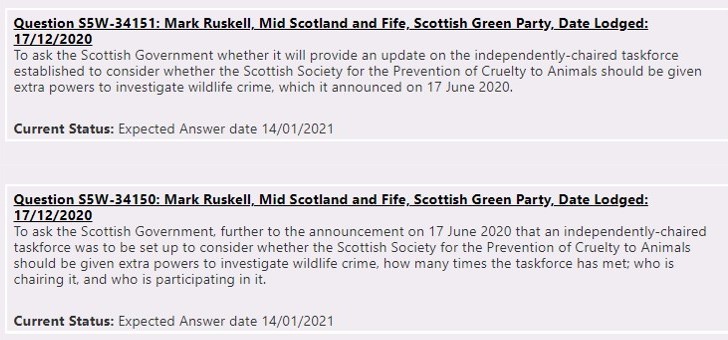
Many thanks to Mark Ruskell MSP for submitting the following Parliamentary questions to find out the status of this taskforce, if it even exists:

For those new to this blog, here’s a quick recap of the timeline of events:

February 2011: Increased powers for the SSPCA was first suggested by former MSP Peter Peacock as an amendment during the Wildlife & Natural Environment (Scotland) Bill debates. The then Environment Minister Roseanna Cunningham rejected it as an amendment but suggested a public consultation was in order.

September 2011: Seven months later Elaine Murray MSP (Scottish Labour) lodged a parliamentary motion that further powers for the SSPCA should be considered.

November 2011: Elaine Murray MSP (Scottish Labour) formalised the question in a P&Q session and the next Environment Minister, Stewart Stevenson MSP, then promised that the consultation would happen ‘in the first half of 2012’.

September 2012: Nine months later and nothing had happened so we asked Paul Wheelhouse MSP, as the new Environment Minister, when the consultation would take place. The response, in October 2012, was:

The consultation has been delayed by resource pressures but will be brought forward in the near future”.

July 2013: Ten months later and still no sign so we asked the Environment Minister (still Paul Wheelhouse) again. In August 2013, this was the response:

We regret that resource pressures did further delay the public consultation on the extension of SSPCA powers. However, I can confirm that the consultation document will be published later this year”.

September 2013: At a meeting of the PAW Executive Group, Minister Wheelhouse said this:

The consultation on new powers for the SSPCA will be published in October 2013“.

January 2014: In response to one of our blog readers who wrote to the Minister (still Paul Wheelhouse) to ask why the consultation had not yet been published:

We very much regret that resource pressures have caused further delays to the consultation to gain views on the extension of SSPCA powers. It will be published in the near future“.

31 March 2014: Public consultation launched.

1 September 2014: Consultation closed.

26 October 2014: We published our analysis of the consultation responses here.

22 January 2015: Analysis of consultation responses published by Scottish Government. 233 responses (although 7,256 responses if online petition included – see here).

We were told a decision would come from the new Environment Minister, Dr Aileen McLeod MSP, “in due course”.

1 September 2015: One year after the consultation closed and still nothing.

25 February 2016: In response to a question posed by the Rural Affairs, Climate Change & Environment Committee, Environment Minister Dr Aileen McLeod said: “I have some further matters to clarify with the SSPCA, however I do hope to be able to report on the Scottish Government’s position on this issue shortly“.

May 2016: Dr Aileen McLeod fails to get re-elected and loses her position as Environment Minister. Roseanna Cunningham is promoted to a newly-created position of Cabinet Secretary for the Environment.

12 May 2016: Mark Ruskell MSP (Scottish Greens) submits the following Parliamentary question:

Question S5W-00030 – To ask the Scottish Government when it will announce its decision regarding extending the powers of the Scottish SPCA to tackle wildlife crime.

26 May 2016: Cabinet Secretary Roseanna Cunningham responds with this:

A decision on whether to extend the investigatory powers of the Scottish SPCA will be announced in due course.

1 September 2016: Two years after the consultation closed and still nothing.

9 January 2017: Mark Ruskell MSP (Scottish Greens) submits the following Parliamentary question:

Question S5W-05982 – To ask the Scottish Government by what date it will publish its response to the consultation on the extension of wildlife crime investigative powers for inspectors in the Scottish SPCA.

17 January 2017: Cabinet Secretary Roseanna Cunningham responds:

A decision on whether to extend the investigatory powers of the Scottish Society for the Prevention of Cruelty to Animals will be announced in the first half of 2017.

31 May 2017: Cabinet Secretary Roseanna Cunningham rejects an extension of powers for the SSPCA ‘based on legal advice’ and instead announces, as an alternative, a pilot scheme of Special Constables for the Cairngorms National Park (here). It later emerged in 2018 that this pilot scheme was also an alternative to the Government’s 2016 manifesto pledge to establish a Wildlife Crime Investigation Unit as part of Police Scotland – a pledge on which it had now reneged (see here).

November 2019: The pilot scheme of Special Constables in the Cairngorms National Park was an absolute failure as a grand total of zero wildlife crimes were recorded by the Special Constables but plenty were reported by others (see here).

June 2020: Mark Ruskell (Scottish Greens) proposed further powers for the SSPCA at Stage 2 of the Animals and Wildlife Bill. Environment Minister Mairi Gougeon persuaded him to withdraw the proposed amendment on the basis that she’d consider establishing a taskforce to convene ‘this summer’ to consider increased powers (see here).

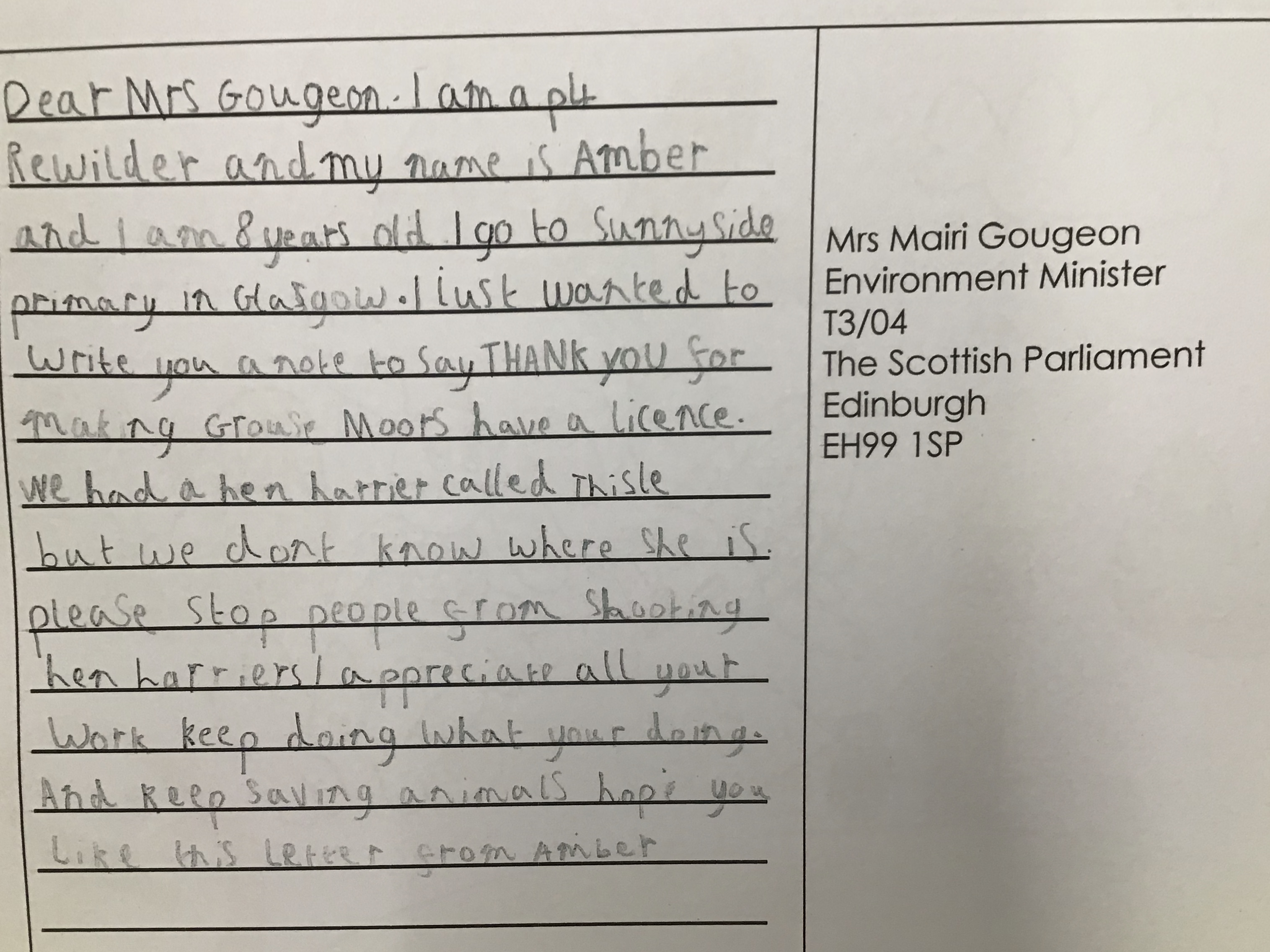
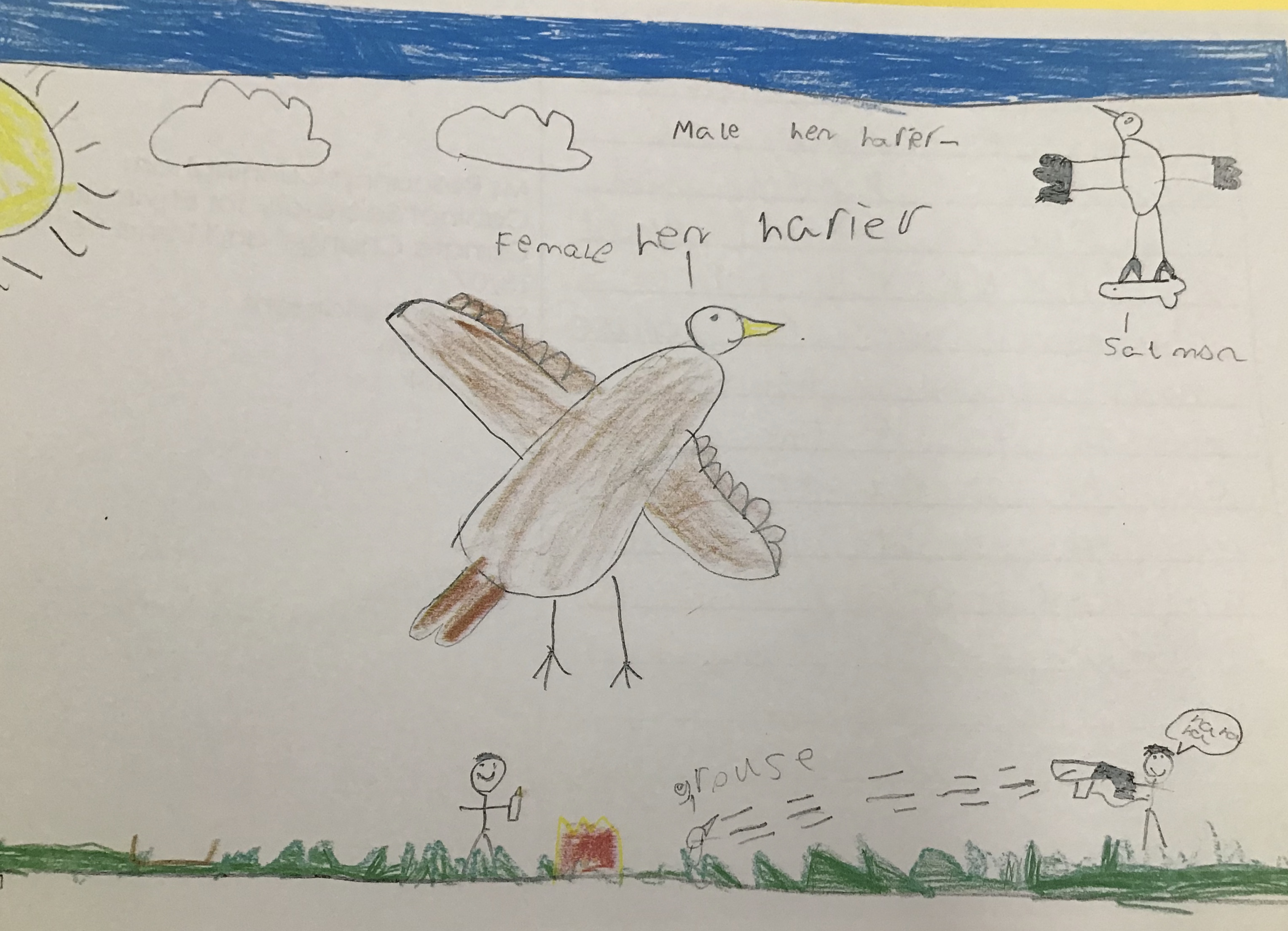
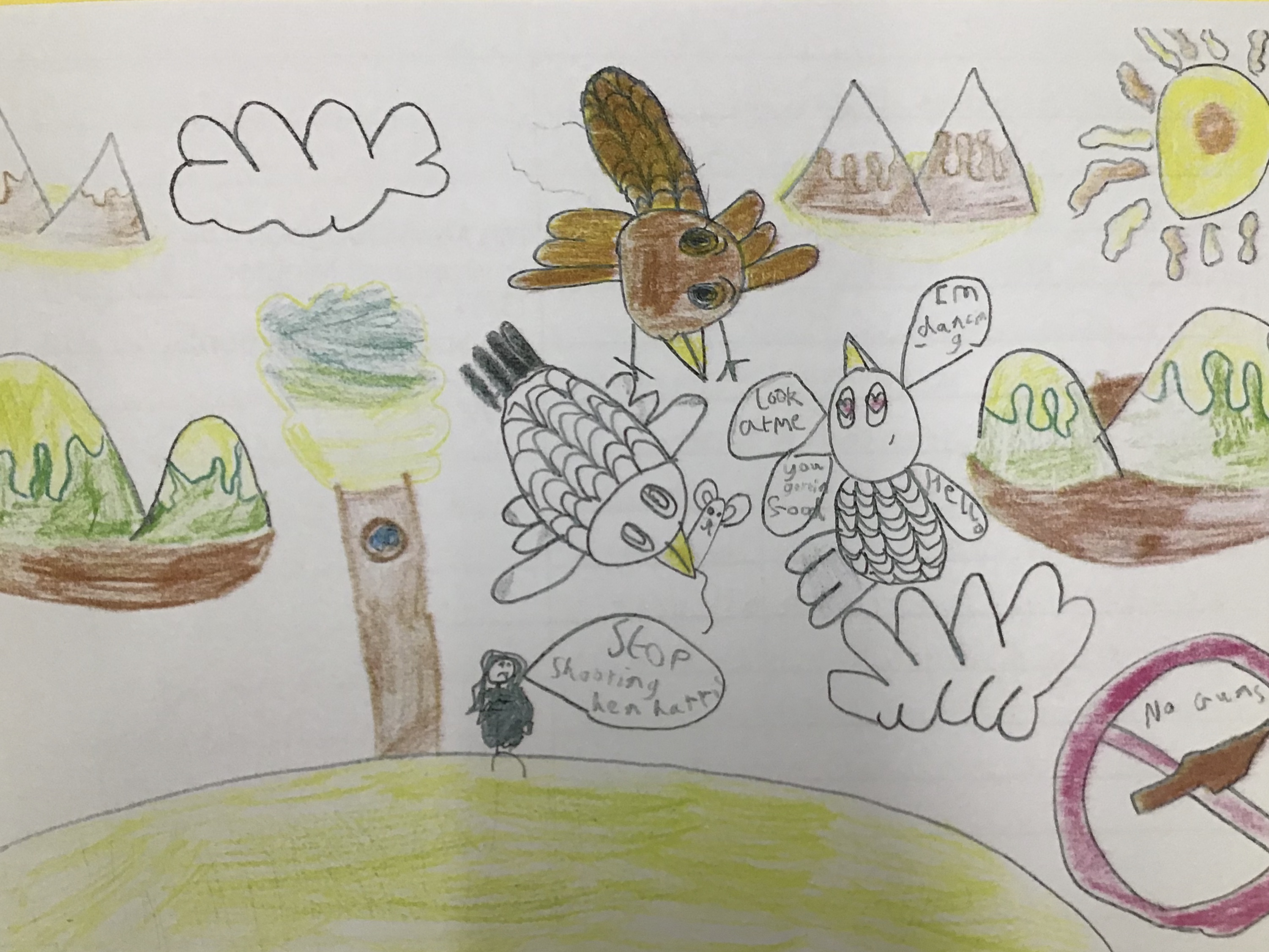
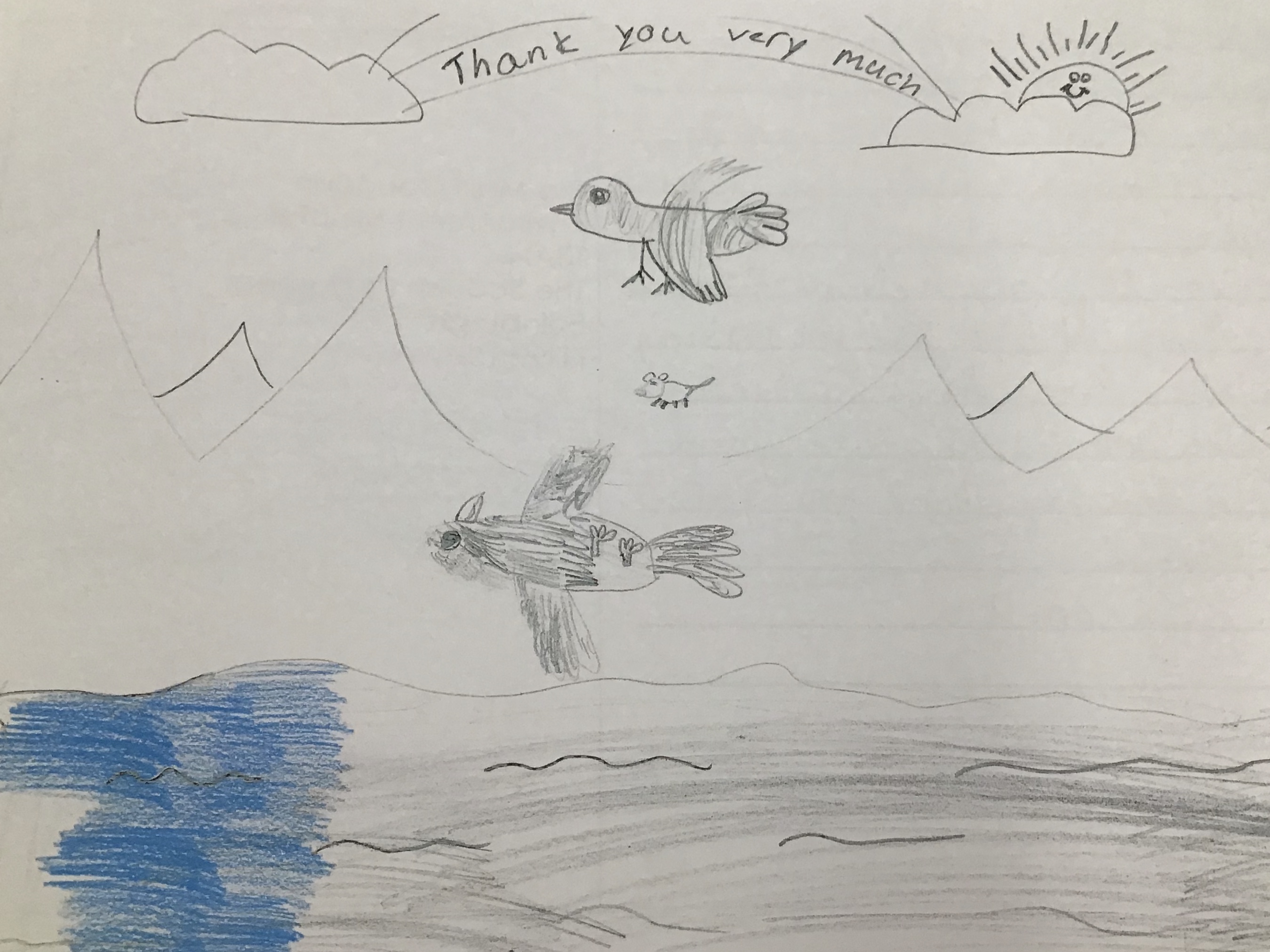
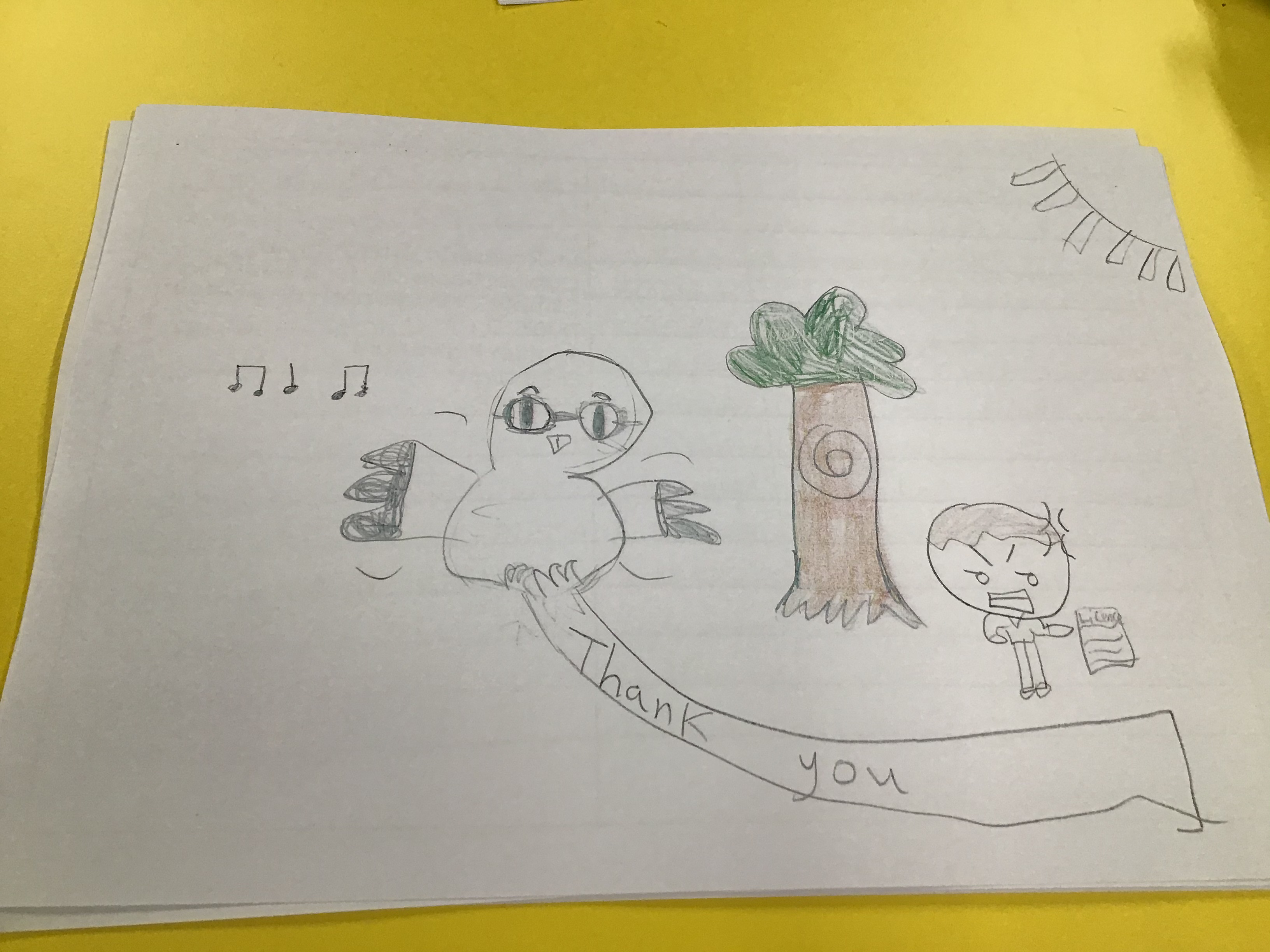
8-year old schoolchildren congratulate Scottish Government on decision to licence grouse shooting

Some of you will no doubt remember / be aware of Sunnyside Primary School in Glasgow and its pupils’ involvement in conservation activities (e.g. see here for a previous blog on their response to the suspicious disappearance of golden eagle Fred in 2018).

These school kids are only too well aware of what happens to raptors on some driven grouse moors, as they had named and were following an RSPB satellite-tagged hen harrier (‘Thistle’) in 2019 that later disappeared in suspicious circumstances on a grouse moor in Sutherland (see here).

Well here they are again, just before Xmas, responding to the Scottish Government’s commitment to establishing a licensing scheme for grouse shooting after many, many years of procrastination.

Here are few of those drawings and letters:

If you want to find out more about Sunnyside Primary School and its brilliant kids, have a watch of this video that they made for Hen Harrier Day 2020:

Crowdfunder to protect Scotland’s beavers exceeds target

A short diversion from this blog’s theme, but an important one.

Press release from Trees for Life (6th January 2021)

Trees for Life crowdfunder to protect Scotland’s beavers raises £60,000

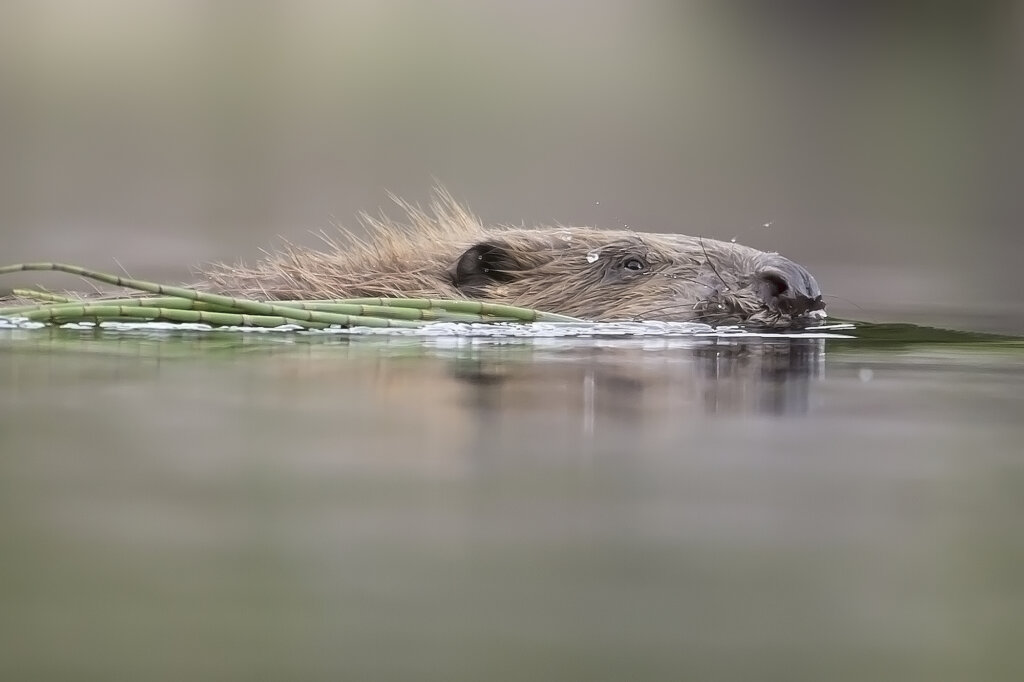
A crowdfunding appeal by Trees for Life to help protect Scotland’s endangered wild beavers has raised almost £60,000 – setting the scene for a court challenge to the Scottish Government’s beaver policy, which the charity says is causing needless loss of beavers’ lives.

[Photo by Scotland The Big Picture]

Trees for Life and legally specialist rewilding charity The Lifescape Project say the Government’s nature agency NatureScot is breaking the law by failing to make killing of beavers a last resort when the animals have unwanted impacts on agricultural land.

A month-long crowdfunder set out to raise at least £40,000 to cover the costs of a current judicial review of the Government’s approach. The legal challenge aims to ensure a safer future for beavers, which can be key allies in tackling the nature and climate emergencies.

The crowdfunder closed on 5 January, exceeding its target thanks to 1,500 supporters. Additional high-profile support came from television presenter and naturalist Chris Packham, whose campaigning conservation group Wild Justice donated £5,000. 

The support for our campaign to protect Scotland’s biodiversity-boosting, flood-preventing beavers has been amazing, and every donation is hugely appreciated. Public opinion clearly supports a more nature-friendly, climate-friendly and farmer-friendly approach to beaver management, said Steve Micklewright, Trees for Life’s Chief Executive.

Beavers’ dams create nature-rich and flood-reducing wetlands. When beavers sometimes also have unwanted local impacts on agricultural land, laws governing protected species require any intervention to have the least possible impact on their conservation. 

After the Scottish Government declared beavers a legally protected species in May 2019, those wanting to kill beavers or remove their dams or lodges must obtain a licence from NatureScot. Dozens of such licences have now been issued.

Because the Government says beavers cannot be relocated to new areas within Scotland – even though NatureScot has identified over 100,000 hectares of suitable habitat – the options for Tayside farmers whose crops are damaged by beavers are currently significantly limited.

A judicial review ruling in Trees for Life’s favour would ensure lethal control is a genuine last resort. Conservationists and others will be able to identify – with proper community engagement – suitable sites around Scotland to which beavers could be moved and be safe and welcome. 

This could also help prevent damage to farmland, and ensure farmers are less often put in the position of having to shoot popular and endangered animals.

Trees for Life is dedicated to rewilding the Scottish Highlands. See treesforlife.org.uk.

ENDS

Many thanks to the RPUK blog readers who supported this crowdfunder.

More pheasants shot & dumped – North Yorkshire & Berkshire

A flurry of reports over the Xmas period detailed how gamebirds had been shot and then dumped at a number of locations across the UK including inside the Peak District National Park (e.g. see here, here, here and here).

Well guess what? This obscene behaviour continues – here are some more examples.

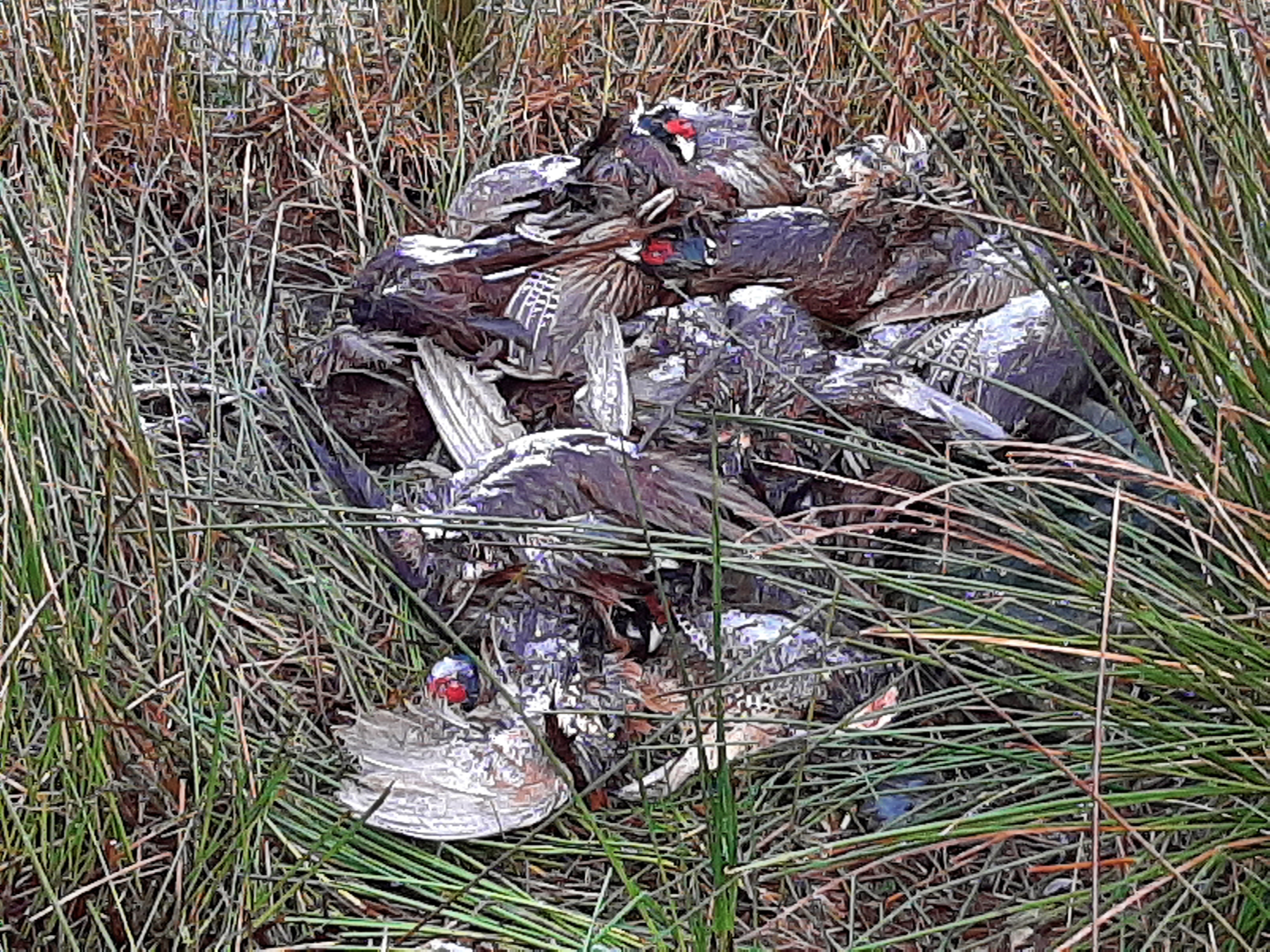
Thanks to the blog reader who sent this photograph of a pile of dead birds, photographed on 27th December 2020, by the roadside in between a grouse moor and MOD land in Swaledale, North Yorkshire.

On Twitter there was another report, this time by an estate manager in Berkshire whose gamekeepers had alerted him to this:

And also on Twitter, in response to David Hill’s tweet, there was another report from North Yorkshire:

As I wrote last week, there are some sensible shooting folk on social media who are condemning this behaviour, and not just because it exposes shooting to bad publicity, and who are offering solutions (like licensing schemes that limit the number of birds released and require accountability for the number shot for example, and a suggestion that if shoots are ‘gifting’ the birds then the birds should be oven-ready) but there are still many others from within the industry who are either (a) denying it’s a widespread problem, (b) accusing ‘antis’ of trying to ‘set up’ shooting, and/or (c) slagging off anyone who dares to criticise, presumably in a futile bid to stop further criticism.

Unfortunately for the game shooting industry, this is an ongoing, criminal and widespread problem, much like illegal raptor persecution is, and it’s drawing even more attention to an industry already under intense pressure to clean up its act.

Previous examples include dumped gamebirds in Cheshire, Scottish borders (here), Norfolk (here), Perthshire (here), Berkshire (here), North York Moors National Park (here) and some more in North York Moors National Park (here) and even more in North Yorkshire (here), Co. Derry (here), West Yorkshire (here), and again in West Yorkshire (here), N Wales (here), mid-Wales (here), Leicestershire (here), Lincolnshire (here), Somerset (here), Derbyshire’s Peak District National Park (here) and Suffolk (here) and again in Suffolk (here).

And it’ll keep getting attention on this blog for as long as the gamebird shooting industry demands licences to kill protected birds of prey for the purpose of ‘saving’ gamebirds.

Some blogs of interest (2)

Some more blogs that you might find of interest:

Parkswatch Scotland: Three new year resolutions for Prince Charles in the Cairngorms (here)

Mark Avery: Thoughts on 2020 (1) – Driven Grouse Shooting (here)

Roy Dennis Wildlife Foundation: Bringing hope in troubled times (here)

Rob Sheldon: Sainsbury’s, obfuscation & toxic lead – day 35 (here)

Wild Justice: General Licences in general and our challenge to the NRW General Licences in particular (here)

Alick Simmons (guest blog for Mark Avery): Digging holes (here)

Guy Shrubsole: The climate sceptic’s grouse moor (here)

Jente Ottenburghs (guest blog for British Ornithologists’ Union): Soaring over Scotland (here)

Vulture Conservation Foundation: Bearded Vulture ‘Vigo’ is actually ‘Flysch’ from Haute Savoie (here)

Wild Justice: Gamekeeping gets a change of job description (here)