Regular blog readers will know that there are currently two separate projects, by two very different organisations, considering the reintroduction of eagles in to Wales.
[Golden eagle photo by Steve Liptrot]
One organisation called ‘Wilder Britain‘, headed by Dr Paul O’Donoghue, is apparently seeking to reintroduce a total of ten golden eagles to Snowdonia National Park but he’s what might be described as a ‘controversial’ figure (google Lynx reintroduction and Wildcat Haven for examples or just read the previous blogs, linked below) and the detailed specifics of his eagle reintroduction research and proposed plan have yet to be made public.
The other organisation, called Eagle Reintroduction Wales Project and headed by Sophie-Lee Williams, is currently assessing the feasibility of reintroducing golden and white-tailed eagles across Wales and has conducted extensive research to inform its proposals. Some of this research has already been published in peer-reviewed journals (e.g. here) and more output is expected shortly. The ERW Project is working with Cardiff University (where Sophie-Lee has just completed her PhD on this topic) and is liaising closely with a network of national and international eagle experts.
This year due to the pandemic, the ERW Project is short of the Government funding that is needed to complete the feasibility studies. ERW has set up a crowdfunder (here) to raise £25K to pay for a full-time researcher to continue this work and conduct public consultations. So far almost £6.5K has been raised. The crowdfunder was due to close last week but has just been extended for a further two weeks to try and attract more support.
For those of you interested in the ERW Project, have a look at this video of Sophie-Lee recently discussing her research findings with the Royal Society of Biology. Her talk lasts for approx 50 minutes and then there’s over an hour of questions and answers. It’s well worth your time.
If you’re able to support the ERW crowdfunder with a small donation please click here.
Earlier this month two blogs were published here about an application from Mark Osborne (representing the Leadhills Estate) to Scottish Natural Heritage (SNH, now re-branded as Nature Scot) for a licence to undertake out-of-season muirburn on the grouse moors of Leadhills (see here and here).
A bit of scene setting – regular blog readers will know all about Leadhills Estate and the catalogue of raptor persecution incidents that have been recorded there since the early 2000s, and the fact that this estate is currently the subject of a three-year General Licence restriction, imposed by SNH after even more alleged offences were uncovered there in recent years, including the discovery of this male hen harrier that was found in 2019 with an almost severed leg caught in an illegally-set trap next to its nest site (see here). Nobody was prosecuted for this barbaric killing.
[Chris Packham holds the corpse of the illegally-trapped hen harrier. Photo by Ruth Tingay]
Since the General Licence restriction was imposed in late 2019, further alleged offences have been reported at Leadhills and are the subject of ongoing police investigations (see here) including the alleged shooting of a(nother) short-eared owl by a masked gunman on a quad bike as witnessed by a local resident and his eight year old son (see here).
And then there was the individual licence that SNH issued to Leadhills Estate to shoot crows between April and June this year (see here). One of the conditions of that licence was that a return had to be made to SNH within one month of the licence expiring. An FoI request revealed that the estate had breached this condition (see here).
And then there’s the additional context of ALL muirburn being temporarily banned in Scotland until 30 September 2020 under emergency Coronavirus legislation.
The first of the two blogs written earlier this month about the licence application for out-of-season muirburn at Leadhills this summer can be read here.
The second blog detailed SNH’s initial refusal to issue a licence to Osborne/Leadhills Estate, and Osborne’s subsequent appeal of that decision (see here).
This latest blog details SNH’s consideration of Osborne’s appeal, which took place in late August 2020.
So, Osborne had been notified by SNH, in mid-August, that a licence to undertake out-of-season muirburn was not going to be issued. Osborne immediately sent a letter of appeal to challenge that decision and here’s what happened next:
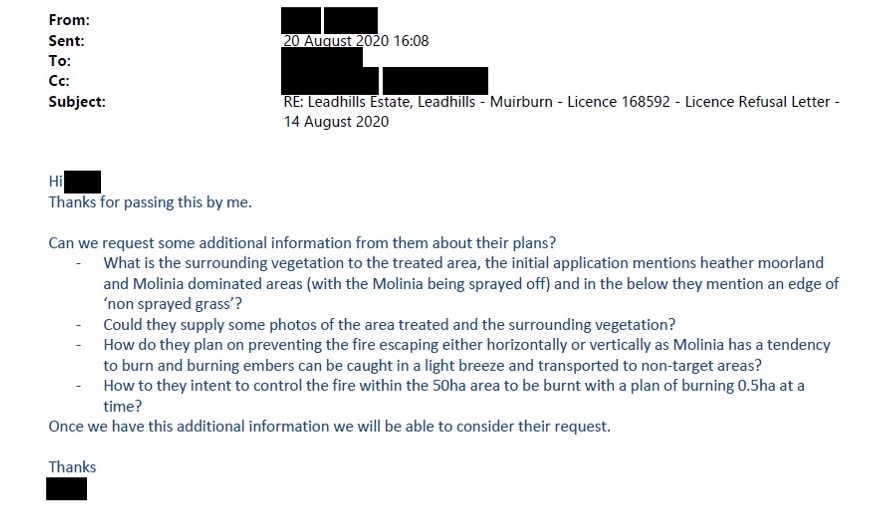
There was some internal dialogue at SNH on 20th August 2020, between unidentified staff members, as follows:
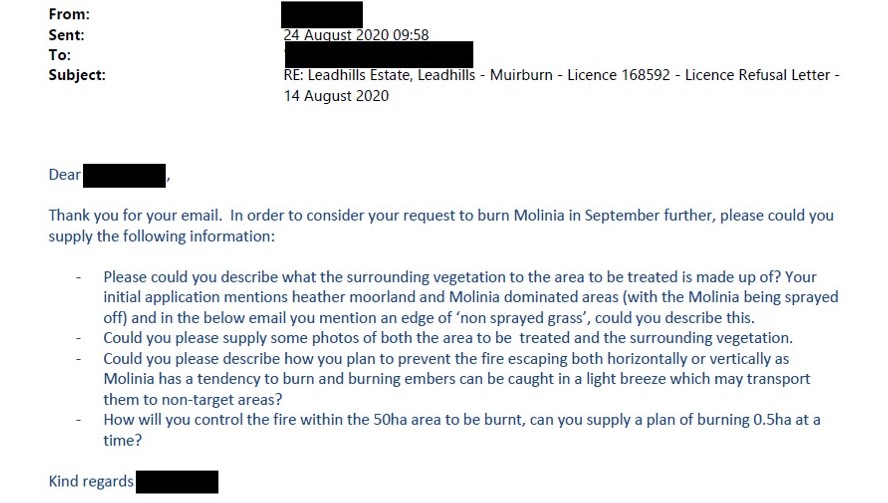
On 24th August 2020 SNH wrote back to Osborne and asked him to provide more detail about his licence application:
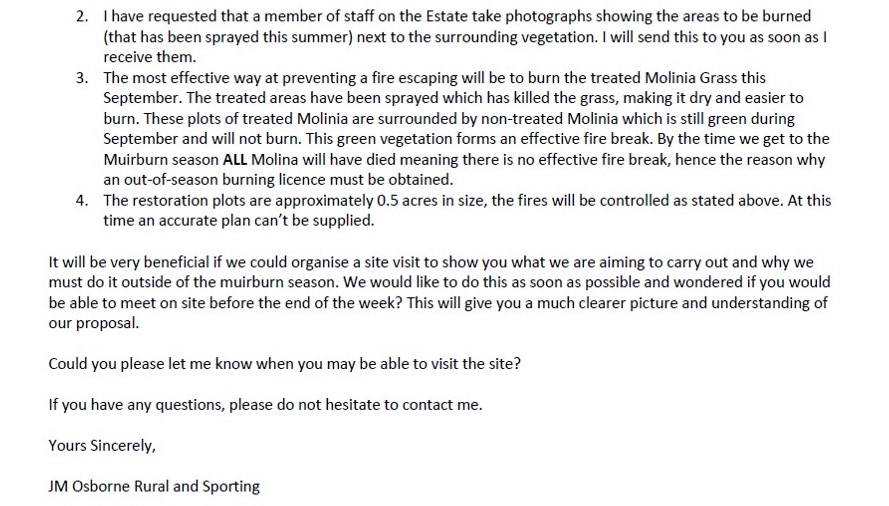
Two days later, Osborne responded with the additional information SNH had requested:
The following day, 27th August 2020, SNH wrote back to Osborne saying that if the requested photos could be supplied then a site visit from SNH at Leadhills wouldn’t be necessary:
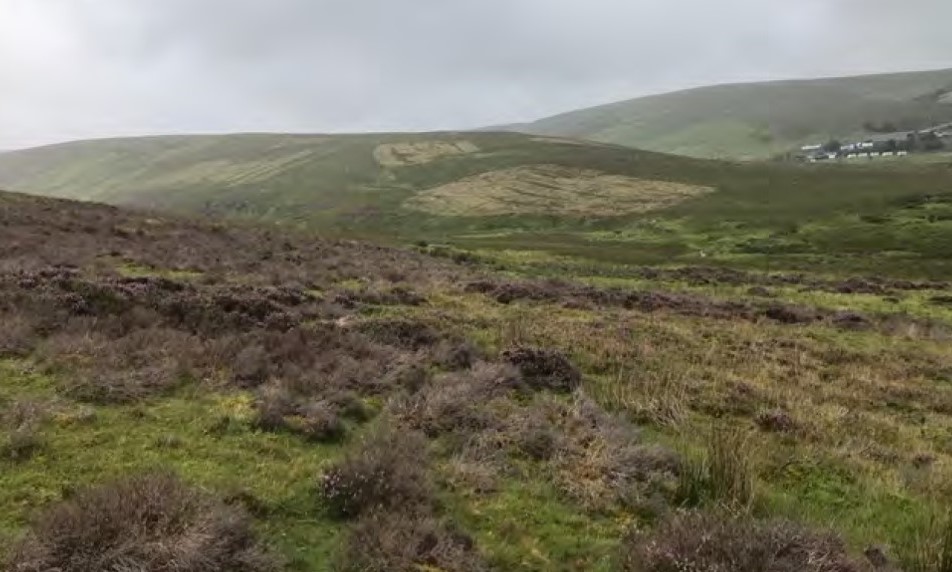
Later the same day Osborne sent over three photographs and a further explanatory email:
The next blog will examine SNH’s response to Osborne’s licence application appeal…..coming shortly.
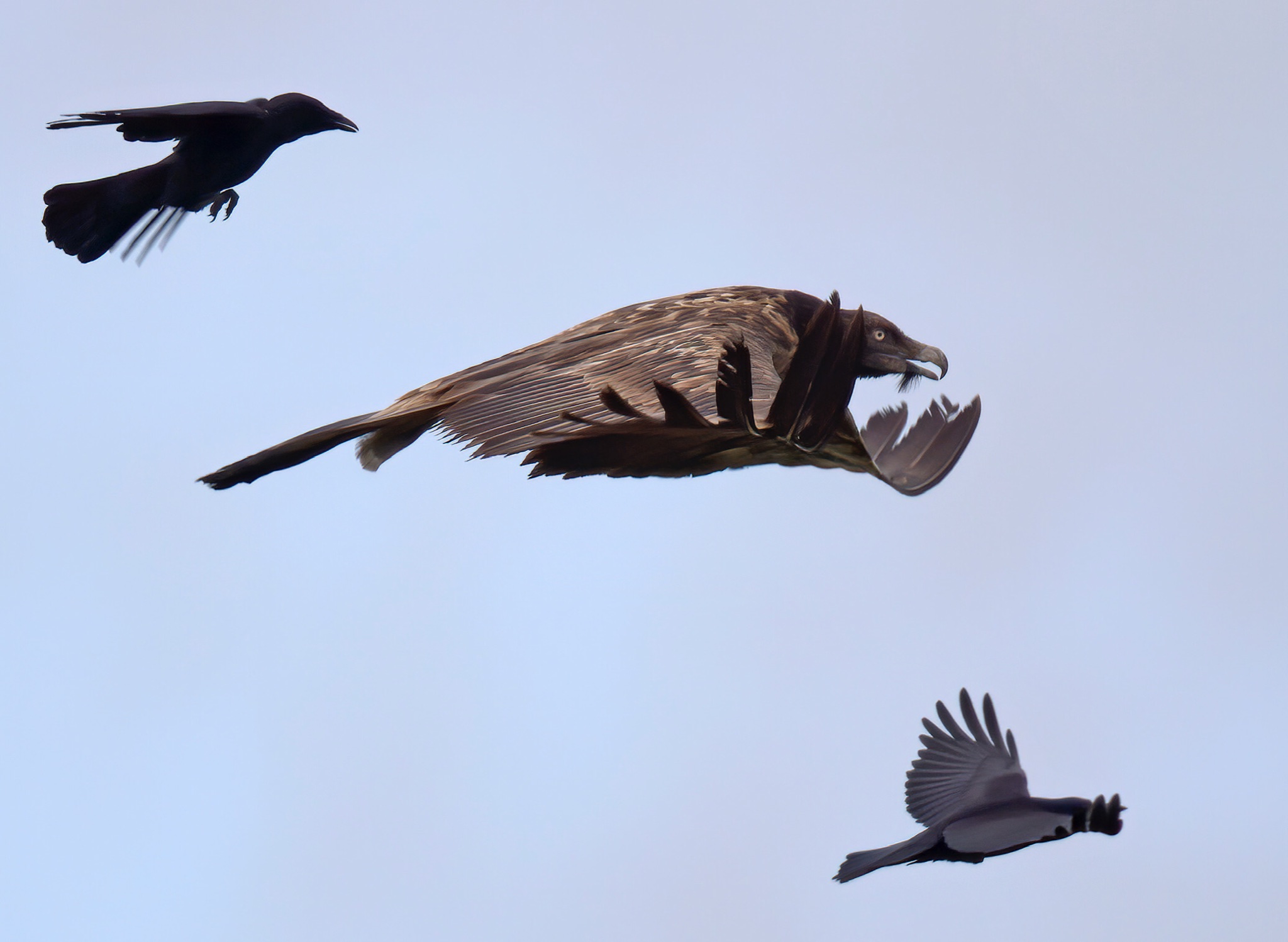
The young bearded vulture that summered in the UK has been photographed flying over Beachy Head on the south coast, presumably heading back to France.
A number of photographers captured the vulture’s apparent departure yesterday, including this fantastic image from Peter Alan Coe:
The vulture, nicknamed Vigo, had been a cause of concern in the summer as it’d chosen to hang out in the Peak District in ‘one of the worst 10km squares for raptor persecution in the UK’ (see here). However, it was able to avoid being shot or poisoned on a Peak District grouse moor, probably due to all the extra attention on the area from visiting birdwatchers with high-powered optics.
In September Vigo left the Peak District and was seen in the fenlands of Cambridgeshire and Lincolnshire. This change of location allowed fieldworkers to go in and collect moulted feathers from one of the favoured roost sites in the Peak District and these were sent off for genetic analysis. A few days ago the results were in and the Vulture Conservation Foundation confirmed that Vigo was a female and had hatched from a nest in the Alps in 2019 (see here).
The threat of illegal persecution doesn’t end just because she’s leaving the UK. Last weekend there was a report (here) that another young Bearded vulture, hatched this year at a zoo in Germany and released during the summer as part of the French reintroduction scheme, had been found shot in Cevennes National Park.
Regular blog readers will be aware of an on-going controversy about plans to reintroduce golden eagles to Wales. There are two separate groups involved, with two very different approaches -see here, here, here, here, here, here, here and here for previous blogs.
You may remember in September there was a parliamentary discussion in the Senedd (Welsh Parliament), later reported in the local press, where Siân Gwenllian, the Member of the Senedd for the Arfon constituency and Shadow Minister for Plaid Cymru, had raised concerns about the project with the Environment Minister Lesley Griffiths MS and urged her not to support reintroduction plans (see here).
There’s been an update on that. During a radio discussion broadcast on BBC Radio Cymru on 25th September 2020 between Dewi Llywd (host), Iolo Williams (conservationist & TV presenter), politician Siân Gwenllian and Rhys Owen (Head of Conversation & Agriculture, Snowdonia National Park) there was clarification from Ms Gwenllian that her opposition was aimed specifically at the reintroduction proposal from Paul O’Donoghue of Wilder Britain, and not for the research being undertaken by the opposing group, Eagle Reintroduction Wales Project.
The discussion was in Welsh and a blog reader has provided a transcript but I’m not going to publish it because the programme has since been removed from the BBC website, apparently for ‘technical’ reasons, but I suspect there may be legal issues afoot. Suffice to say, the Wilder Britain proposal wasn’t supported by any of the panel members, mostly because of the perceived lack of transparency, accountability and poor communication.
It’s not clear at what stage the Wilder Britain proposal has reached because statutory agency Natural Resources Wales hasn’t responded properly to a pretty simple Freedom of Information request that was submitted two months ago in mid-August! A formal complaint has been lodged.
Meanwhile, the other research group, Eagle Reintroduction Wales Project, affiliated with Cardiff University, is about to go under. Its funding runs out in November, thanks to Covid-related difficulties, and the group is making a last-ditch attempt to crowdfund support to see it through to April 2021 when Government funding is reopened.
Without funding, the group’s careful three-year project will come to a premature end, just at the time when its research is needed the most. If you can help with a small contribution, please visit the crowdfunder page HERE (it closes at the end of this week).
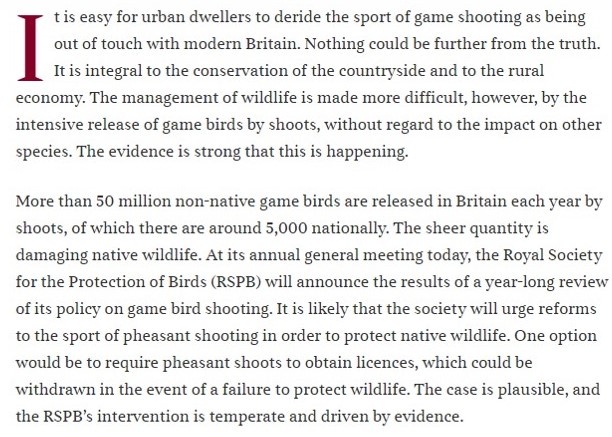
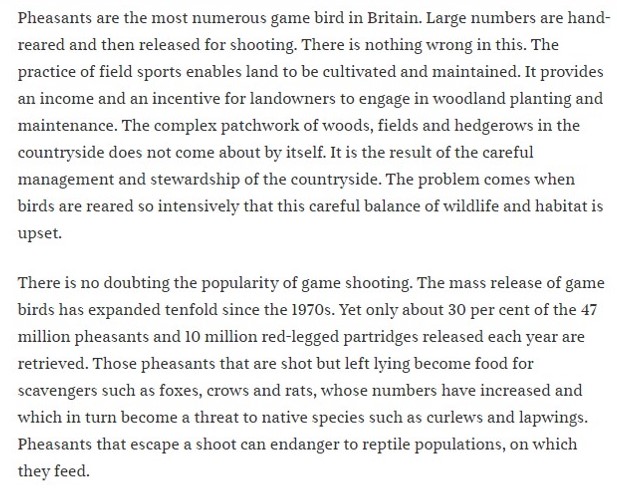
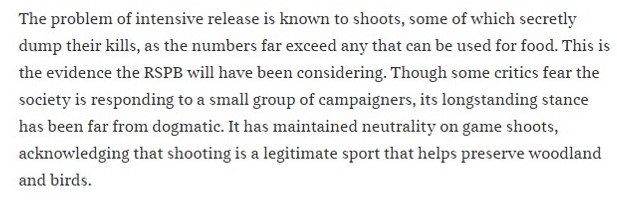
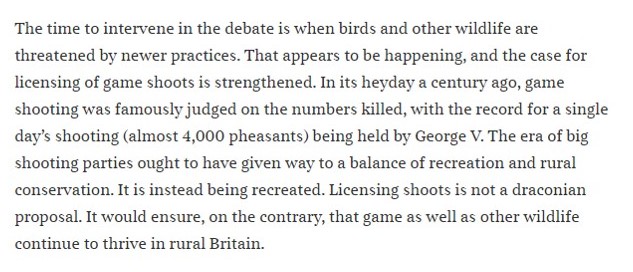
Imagine you are a member of the gamebird shooting industry in the UK, you’d just heard about the RSPB’s plans calling for gamebird shooting reform, and then you’d read the following damning editorial, in The Times no less, you’d surely realise the writing’s on the wall:
And if you were a member of the gamebird shooting industry that had just read this opinion piece from a paper ostensibly seen as being on your side, how would you feel if you then read the reactions of the organisations who are supposed to represent your ‘sport’ but are effectively sticking fingers in ears, denying there’s any need for reform and are instead dancing in a circle singing ‘Tra la la, I can’t hear you‘, e.g. BASC (here), Moorland Association (here), Scottish Land & Estates (here)?
These knee-jerk reactions have been slammed in another editorial, this time in today’s edition of The Guardian (read it here).
The final two paragraphs are compelling:
‘There is no good reason for the oppositional stance that has become a reflex of many countryside organisations. It is the enormous dangers facing the natural world that should concern them, not a confected threat to their way of life. Self-regulation has failed to stop birds of prey including hen harriers from being poisoned by gamekeepers. Nor has it led to advances in land management, despite greatly increased public awareness of the risks of flooding, and the burning of peatlands (carried out in order that grouse can feed on new growth). Even the editor of Shooting Times was moved, in 2018, to decry the “greed that has crept into shooting”.
Ministers cannot continue to look away as landowners dismiss concerns rooted in public opinion and evidence. Conservation efforts must be recognised, and destruction punished. Impartial research into the shooting industry should be ordered. It is reprehensible, given the huge climate and biodiversity challenges facing us, that those who claim to have rural interests at heart appear determined to block progress‘.
It’s not just the broadsheets covering this subject. Have a look at this:
It’s an article that features in a publication called First News, a weekly UK tabloid aimed at 7-14 year olds and with an estimated circulation of 2.2 million. Thanks to the blog reader who sent us this (who also happens to be a teacher who says he’ll be highlighting the issue with his class).
The writing is definitely on the wall. It’s now just a question of when, not if.
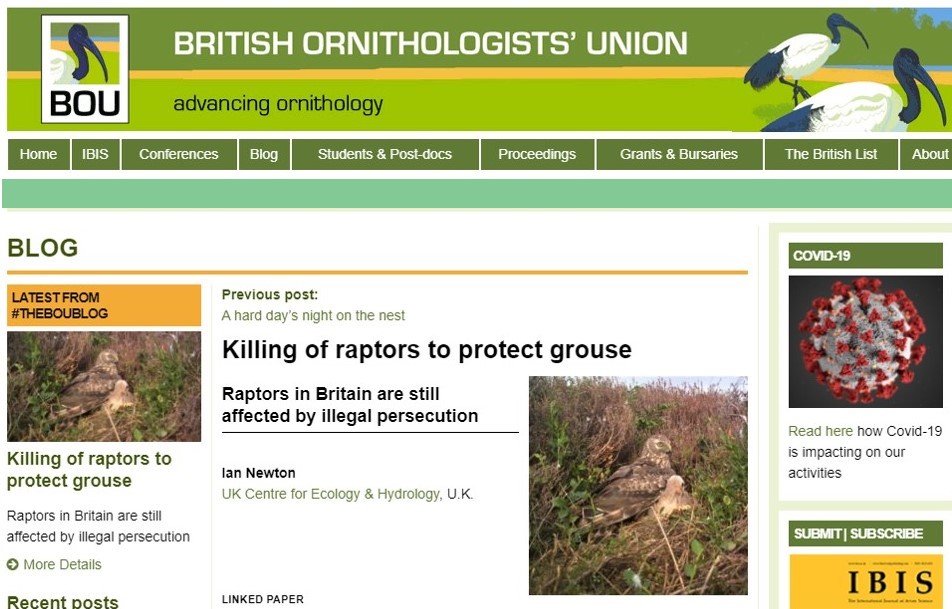
‘Raptors in Britain are still affected by illegal persecution’ is stating the bleedin’ obvious to many readers of this blog but it’s still an important statement to repeat, especially when it’s done by one of the world’s most distinguished ornithologists, Professor Ian Newton.
Ian has just written a review paper on the subject, which again won’t contain anything not already known to many blog readers (that’s why it’s called a review paper, after all) but it’s still worth a read because Ian’s writing style is second to none, in his ability to condense complex ecological principles in to a language that anybody of moderate intelligence can comprehend. (His 1979 book Population Ecology of Raptors is still THE best in its field).
His review article, Killing of raptors on grouse moors: evidence and effects has just been published in the British Ornithologists Union (BOU) journal Ibis and is open access, which means you don’t have to pay to read it.
To accompany the review article in Ibis, Ian has also written a short blog on the BOU website that can be read here.
Ibis is an important platform for Ian’s article for a number of reasons – it’s one of the most well-respected ornithological journals in the world, which means its papers are viewed with high regard by an international audience, and this particular article is likely to reach a wider audience than might normally be interested in UK conservation simply because Ian wrote it!
At the end of his scientific review, Ian has included a discussion section where he outlines the various options for reducing the ongoing killing of birds of prey on driven grouse moors: vicarious liability, licensing and banning.
He’s a bit behind the curve on this, as he suggests, ‘Only dialogue, mutual understanding and compromise are likely to lessen this conflict‘. It sounds like a reasonable approach and is one adopted by many when they first learn about what’s going on, but has to be seen in the context of decades of failed talks, decades of failed partnerships, decades of denial, decades of continued illegal killing and decades of sticking up two fingers to law-abiding society.
Even the mild-mannered RSPB has almost reached the end of its tether, offering the game-shooting industry one final drink in the last chance saloon before calling for a ban on driven grouse shooting.
Some of us are already there – last orders were called some time ago and now it’s chucking out time.
The campaign group Wild Justice has announced the launch of its Raptor Forensics Fund, with an initial budget of £10K available to support police investigations in to raptor persecution crimes.
This fund was first proposed in April 2020 after discussions with a number of Police wildlife crime officers who were frustrated that funding cuts and delayed decision-making was impacting on their efforts to submit evidence for forensic testing in suspected cases of bird of prey persecution.
Several months on the fund has just launched this week with funding provided by Wild Justice, Northern England Raptor Forum, Tayside & Fife Raptor Study Group and a number of individuals.
The Raptor Forensics Fund will be administered solely by the PAW Forensics Working Group and guarantees funding support to police officers and other statutory agencies (e.g. SSPCA) to cover the cost of x-rays and post-mortems in the early stages of investigations and then potentially more funding to cover the full cost of further forensic analysis once a crime has been confirmed.
It is hoped this funding will increase the opportunities for police officers and other statutory investigators to get the raptor-killing criminals in to court.
Let’s see how long it takes before the first funding request appears. Not long, would be my bet.
For further information about the Raptor Forensics Fund please click here.
For further information about Wild Justice’s activities you can subscribe to the free newsletter here.
The main thrust of it is that the RSPB sees two separate approaches, one for driven grouse shooting in the uplands and one for lowland pheasant/partridge shoots, although there is a general principle for both, as follows:
‘First, we believe that new laws backed up by tougher enforcement will be needed to end the illegal killing of birds of prey, to end the use of lead ammunition and to end vegetation burning on peatlands. These practices are entirely incompatible with the imperative to address the climate and ecological emergency and there are perfectly practical alternatives.
Second, we believe that all intensive gamebird shooting should be regulated to reduce the negative environmental impacts‘.
There’s nothing stunningly novel about this, nor controversial. It’s just common sense and it shouldn’t have taken a year-long review to reach such a conclusion.
Here’s what the new policy says about driven grouse shooting:
For “driven” grouse shooting, where beaters drive the birds towards the guns, we believe that the intensification of land management practices over the last two decades is unsustainable and damaging. Between 2004 and 2016 there was a 62 per cent increase in the number of grouse shot. We have concluded that reform leading to an improvement in the environmental condition of our uplands will most effectively be achieved through the introduction of licences for “driven” grouse shoots. These would set minimum environmental standards which, if breached, would result in losing the right to shoot. The RSPB has today set out the principles for how this system could operate.
Our focus is not on “walked up” grouse shooting, but we will re-double our efforts to secure effective licensing for “driven” grouse shooting, and we will learn from the developments anticipated soon on this issue in Scotland. We will provide an annual assessment of progress and review our position within five years. Failure to deliver effective reform will result in the RSPB calling for a ban on driven grouse shooting.
To be perfectly honest, this announcement is a bit underwhelming. Perhaps it needs some time to sink in. They haven’t explained why they’ve decided to wait for five years before calling for a ban, when all the evidence to support an immediate ban is overwhelming, and much of that evidence has been collected by RSPB’s own staff!
It’s not clear what measures will be used to assess what the RSPB describes as annual ‘progress’ or ‘effective reform’. These details need to be made available.
Here’s what the new policy says about pheasant and partridge shooting:
‘For the release of non-native pheasants and red-legged partridges, we propose a different approach. From the data available, the number of birds released annually is estimated to have grown to at least 57 million. Our evidence review shows that habitats created by land managed for these birds can provide benefits for wildlife. Nevertheless, it also shows that there are substantial negative environmental consequences from the industrialised form of this shooting, including the direct and indirect impacts that released birds can have on other wildlife. This situation is recognised by some in the shooting community. A recent review of evidence published by Natural England and the shooting organisation, BASC, reached similar conclusions.
We are keen to work with public bodies and the shooting sector to help address the issues with urgency. Important first steps would be to ensure a reduction in the number of gamebirds being released and full compliance with existing reporting rules. Ultimately, we believe that further regulation will be necessary to drive up environmental standards. We will call for this within 18 months if significant progress is not secured‘.
Errm….well, waiting for 18 months is better than waiting for five years, but again, more detail is needed to understand what the RSPB judges to be ‘significant progress’.
Perhaps I’m being unfair. This morning’s announcement was simply an overview statement given during a ten minute slot during the AGM and knowing the RSPB there’s bound to be a stack of supporting evidence on which they’ve based their new policy and probably a much more in-depth description of the markers they’ll use to assess progress.
But yeah, still mostly underwhelmed at the moment.
The UK game-shooting industry is ratcheting-up its attempts to appear reasonable and law-abiding as the prospect of enforced regulation looms large.
Tomorrow (Saturday) the RSPB announces the results of its year-long review of its policy on gamebird shooting. There has been very little hint of what its new policy might be, but many of us are hoping its a lot stronger than its former policy and if it is, that will result in even more pressure being placed on Governments to introduce statutory enforcement to regulate the currently out-of-control gamebird shooting industry.
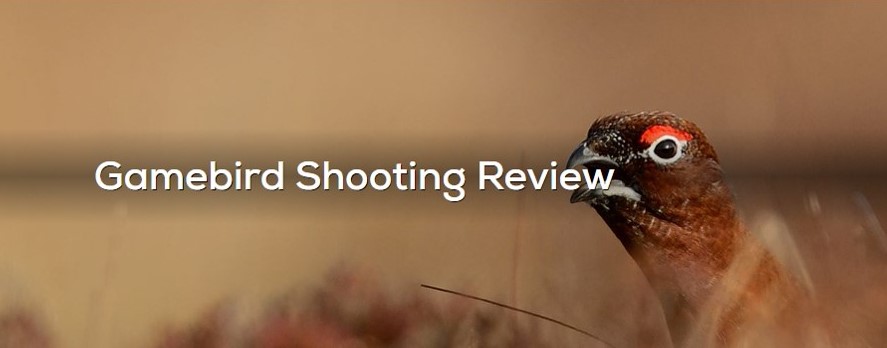
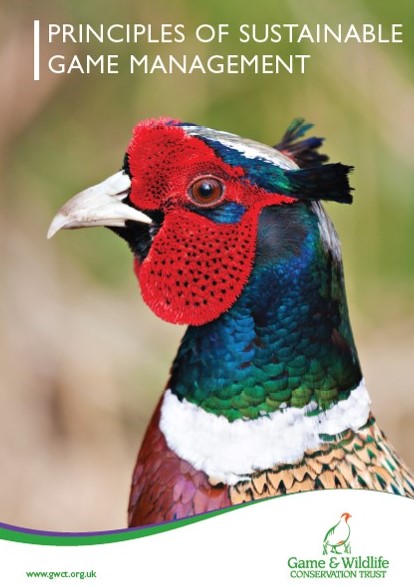
In a rather pathetic attempt to head this off at the pass, today saw the shooting industry in England and Scotland put forward a plea to the respective Governments to support what it calls ‘a new blueprint for the future of shooting’ in the form of a document called ‘The Principles of Sustainable Gamebird Management’, drafted by the GWCT.
The thing is, it’s not a ‘new blueprint’ at all. It’s the same old set of unenforced and unregulated ‘principles’ that the industry has failed to implement year after year. Had these principles been adhered to and self-regulated, the industry wouldn’t be in the mess it’s in now.
In Scotland a coalition of game shooting organisations operating under the banner of RELM (Rural Environment and Land Management) is using these principles as yet another way of trying to persuade the Scottish Government not to introduce a licensing scheme in response to the Werritty Review.
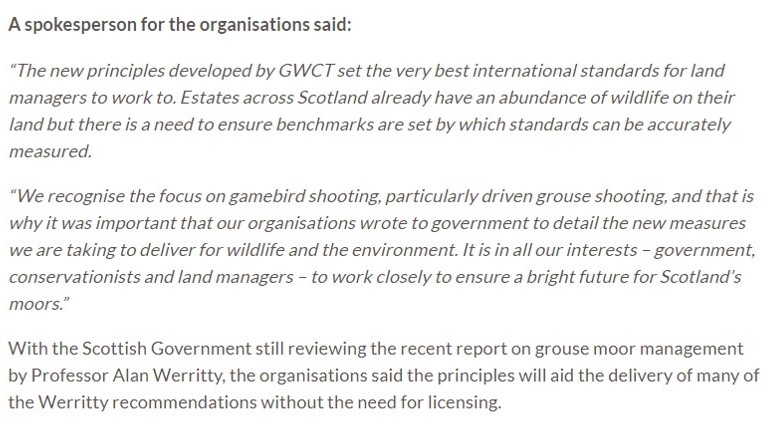
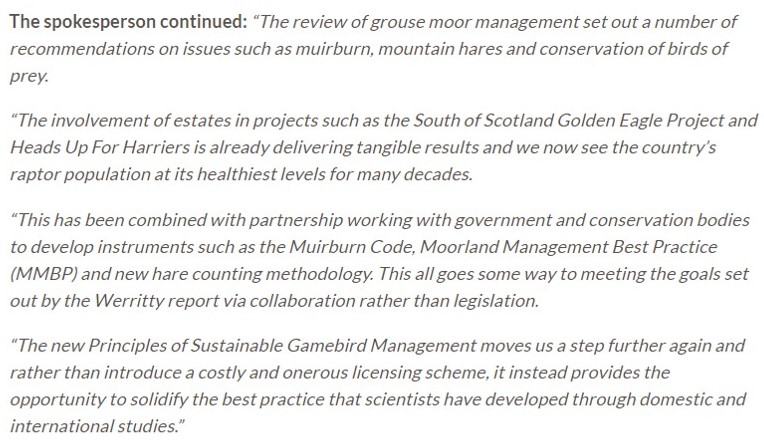
Here’s a desperate press release from Scottish Land & Estates, on behalf of fellow RELM members BASC, Scottish Gamekeepers Association, Countryside Alliance and SACS, explaining why new legislation apparently isn’t required:
As usual, many of the claims made in this statement are brazenly misleading. The Heads up for Hen Harriers project is a greenwashing sham that is definitely not delivering the tangible conservation results it was supposed to (see here), the Muirburn Code is repeatedly ignored, even during a global pandemic (e.g. see here), golden eagles are still being persecuted in areas of high-intensity grouse moor management (see here), as are hen harriers, resulting in significant population decline (see here), peregrines have been systematically removed from many former territories on grouse moors (see here) and merlin populations are suffering due to the intensification of grouse moor management in some areas (see here).
Tomorrow we’ll learn what the RSPB intends to do and sometime soon we might learn what the Scottish Government intends to do….and then the public can decide what it intends to do.
Chief Inspector Louise Hubble is leaving her role as Chair of the National Wildlife Crime Unit (NWCU) in November.
In a letter to colleagues last month, Lou wrote, ‘I am writing to notify you that my two year secondment to the NWCU, which was extended by twelve months last year, concludes in November 2020. Following discussions with Hampshire’s Chief Officer Group it has been decided that I will return to Hampshire in November 2020. I do not know at this time which role I will be going in to but after 21 years as a Wildlife Crime Officer I hope to still be involved in the world of wildlife at some level. I will certainly continue to enjoy my passion for wildlife in my spare time regardless of my policing role‘.
[Lou filming with Chris Packham in the raptor persecution hotspot of Strathbraan, Perthshire. Photo by Ruth Tingay]
It’s not clear whether she jumped or was pushed, but I reckon most of us will have our own view on that. If you work in wildlife crime enforcement in the UK and you’re seen to be doing a decent job, you can expect to be targeted by those who would rather you kept your mouth shut and who have the influence and connections to try and make sure you do.
Lou experienced this first hand (see here and here).
Lou’s departure is really disappointing news, not just for her personally – she is as passionate and focused about her role as anyone you’re likely to meet – but for those of us with long memories about some of the former heads of the NWCU, Lou’s departure signals not just a huge loss for wildlife crime enforcement, but also a weariness that her replacement, whoever that may be, will be starting from scratch, all over again.
There’s still a big question mark over the usefulness and effectiveness of the NWCU as a whole – undoubtedly the unit excels in some areas but is less effective in others and there are still some ‘personalities’ in there that make partnership-working a challenge, to say the least. But Lou wasn’t one of those. She was/is highly respected by those of us in the conservation community for her hard work and high standards.
If you’re reading this, Lou, thanks for your efforts.













 Raptor Persecution UK