Running scared?

The weekend before last we were out filming in Scotland with Chris Packham, at a number of locations and with a number of experts. We’re not going to say too much about that at the moment because….well, you’ll see in due course.

At one particular location we were followed and filmed by an individual. Those photographs were subsequently doing the rounds on social media last week – some of you may have seen them – and they led to a wide range of absurd accusations and claims, including one particular favourite – that Chris was ‘caught filming on a grouse moor and as soon as he was spotted by the gamekeeper he literally ran back to the car and hid his face’.

Now, what was it that Scottish gamekeepers have been accused of doing recently? Was it something about making “greatly exaggerated” claims? Have a look at this video that WE filmed of us leaving that grouse moor, having been followed and filmed by this gamekeeper for at least half an hour – can you see anyone “literally running back to the car to hide their face”?

Note the gamekeeper filming us, sitting in the black 4×4 parked in the lay by behind our two vehicles.

There have also been claims that we were filming “illegally” on the grouse moor. No, we weren’t. Our accusers would do well to read the Land Reform Act and learn about public rights of access in Scotland.

There have also been claims that Chris broke BBC guidelines by filming with a BBC film crew without landowner permission. No, he didn’t. This wasn’t a BBC film crew and landowner permission was not required (see above).

There have also been claims that Chris broke BBC guidelines by ‘campaigning on social media’ during his Springwatch contract. No, he didn’t. Chris wasn’t the one who posted the photos and associated commentary on social media (i.e. ‘campaigning’) – that was done by those in the game-shooting industry, who shot themselves in the foot by bringing it to the attention of Springwatch viewers while the series was still on air! How can Chris be held responsible for someone else’s decision to post photographs of him on social media, accompanied by a string of false accusations?!

There have also been claims that one of the people involved was (a) a security guard or (b) an ‘animal rights extremist/thug’ – no, he wasn’t either of those. It’ll become apparent later in the year exactly who he was and what he was doing there!

There have also been claims that this particular member of our team was violently intimidating towards the gamekeeper, and that he “wouldn’t back down against him”. Have another look at our video – can you see any evidence of violent intimidation or can you see a man walking back to his vehicle and immediately getting in to avoid any confrontation with the gamekeeper who was filming him?

On something of a tangent, it has also been claimed that Environment Cabinet Secretary Roseanna Cunningham and Ruth Tingay of RPUK are “shagging”, which is apparently why the Cabinet Secretary agreed to appear in our Fred video last year. Erm…..

It’s pretty clear that there are some within the game shooting industry who are so terrified about our work and the impact we are having they’ll try anything to discredit us, no matter how pathetic or defamatory the accusations.

It looks like they’re the ones running scared….and so they should be. Some of the footage we filmed in Scotland will be devastating to the grouse shooting industry. Forget Werritty and the long-awaited review – what we have transcends anything that Professor Werritty can report.
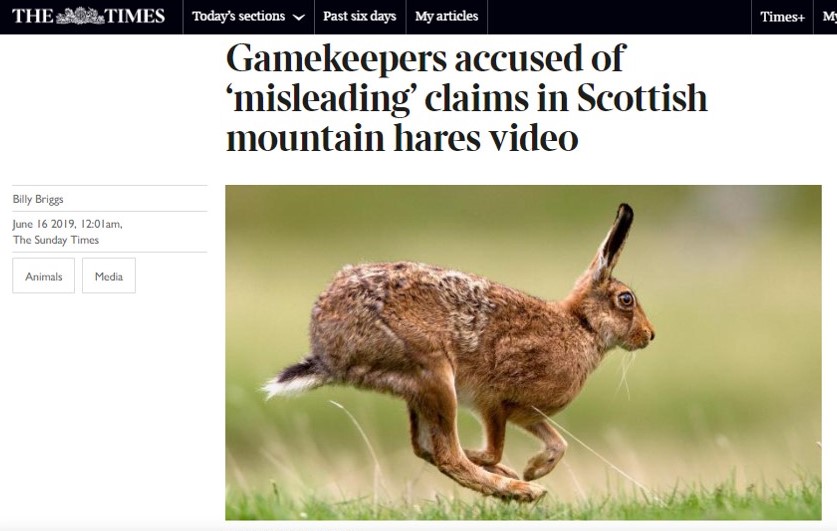
 

Gamekeepers accused of making ‘misleading’ & ‘greatly exaggerated’ claims re: mountain hares

Here’s a shocker. Scottish gamekeepers have been accused of making ‘misleading’ and ‘greatly exaggerated’ claims about mountain hares, according to SNH staff emails, uncovered by a Freedom of Information request from Scottish animal welfare charity OneKind.

Gamekeepers accused of making stuff up? Shurely shome mishtake.

This news was revealed in an article in yesterday’s Sunday Times, and the SNH staff comments are alleged to refer to a propaganda video on grouse moor management, produced by the Grampian Moorland Group.

Here’s the article (illustrated by what looks like a brown hare, not a mountain hare).

Gamekeepers have made “misleading” and “highly questionable” claims over mountain hares, according to Scottish Natural Heritage (SNH) staff emails passed to The Sunday Times.

In recent years sporting estates have defended mass culls of mountain hares in Scotland, an iconic species that animal welfare groups claim is under threat due to large-scale killing.

This newspaper revealed last year that up to 38,000 mountain hares a year had been killed on Scottish estates, some of which have charged people thousands of pounds a day to shoot the animal. More than 1.3m hares have been killed in Scotland over the past 50 years.

Mountain hare killing is unregulated during the open season, but although there has been a sharp decline in hares in northeast Scotland, there is an ongoing dispute as to whether the species is in decline overall.

SNH is the official body with the responsibility for protecting wildlife in Scotland, and it has been liaising with various bodies on how to protect mountain hares, while taking into account the views of gamekeepers and estates who dispute claims the animal is under threat.

Emails released following a freedom of information request reveal that SNH staff raised concerns over a promotional video for grouse moor and hare management produced by the Grampian Moorland Group.

During internal discussions last year, SNH staff said the video made “misleading claims” while another email said the browsing impacts of mountain hares were being “greatly exaggerated”. The emails were obtained by animal welfare charity, OneKind.

Bob Elliot, OneKind director, said: “We are always being informed by the gamekeeping community that large-scale mountain hare culls are needed. Now Scottish Natural Heritage are also raising serious concerns about some of the facts portrayed in online videos and communications by the shooting community. It’s time for the government to ban the large-scale culling of mountain hares for good.”

The Scottish Gamekeepers Association (SGA) said: “The SGA and SNH have long disagreed over issues such as browsing impacts of hare and deer on habitats and would have these same differences tomorrow, regardless of FOIs (freedom of information requests) or internal emails.”

Grampian Moorland Group said: “Group members worked with SNH and the James Hutton Institute on the research to establish the best methods of counting mountain hares. If SNH has a problem, they should contact us directly.”

SNH said: “We know of very few sites where mountain hares are considered to have an impact on site condition. The few we are aware of involve a combination of sheep and/or deer also.

We have not recommended control to improve the condition of any of these.”

ENDS

Case against Scottish gamekeeper accused of 12 alleged wildlife crimes: trial adjourned

Two years on, and the trial against Scottish gamekeeper Alan Wilson, who is accused of committing 12 alleged wildlife crimes, has been adjourned before it even started.

Mr Wilson, 60, is accused of shooting two goshawks, four buzzards, a peregrine falcon, three badgers and an otter at Henlaw Wood, Longformacus, between March 2016 and May 2017.

He also faces charges of using a snare likely to cause partial suspension of an animal or drowning, failing to produce snaring records within 21 days when requested to do so by police and no certificate for an air weapon.

We also believe he is accused of the alleged possession of the banned pesticide, Carbofuran.

Mr Wilson pleaded not guilty to all charges at an earlier hearing in May and his trial was due to begin yesterday (13th June 2019) at Jedburgh Sheriff Court.

For reasons unknown to us, the trial has been adjourned. We don’t yet know if it will be rescheduled and if so, when that might be.

Previous blogs about this case: see herehere here  here herehere and here

Please note: we will not be accepting comments on this news item until legal proceedings have concluded. Thanks.

2019 – The year Natural England “betrayed hen harriers to placate the grouse shooting industry”

Natural England announced last week that hen harrier brood meddling was imminent (see here), despite overwhelming opposition from conservation experts.

In response to that news, you really should read this blog from the Northern England Raptor Forum (NERF). It pulls no punches and NERF’s fury with Natural England is palpable.

If brood management goes ahead as planned 2019 will not be remembered as a good year for the English Hen Harrier population. It will be remembered, by leading conservation groups, including NERF, and Raptor Workers across the country as the year that Natural England (the English Statutory Nature Conservation Organisation) betrayed Hen Harriers to placate the grouse shooting industry.

An industry that is, according to Natural England’s own data, largely responsible for the unexplained demise of 72% of Hen Harriers satellite tagged by their own staff. With that knowledge it is not unreasonable to assume that a similar percentage of un-tagged birds ‘disappeared’ under identical circumstances over the same period. It is also clear from press releases issued by RSPB that many of the birds satellite tagged as part of their Hen Harrier Life Project have also suffered the same fate on land managed for grouse shooting‘.

Read the NERF blog HERE


Two red kites poisoned in south Scotland: tests awaited on third

From BBC Scotland today:

Kirkcudbright red kites were poisoned, tests reveal

Tests have confirmed that two out of three red kites found dead in southern Scotland last month were illegally poisoned. The birds were discovered near Kirkcudbright in early May. Post mortem examinations have shown illegal pesticides were used to kill two of the birds with results on the third still awaited.

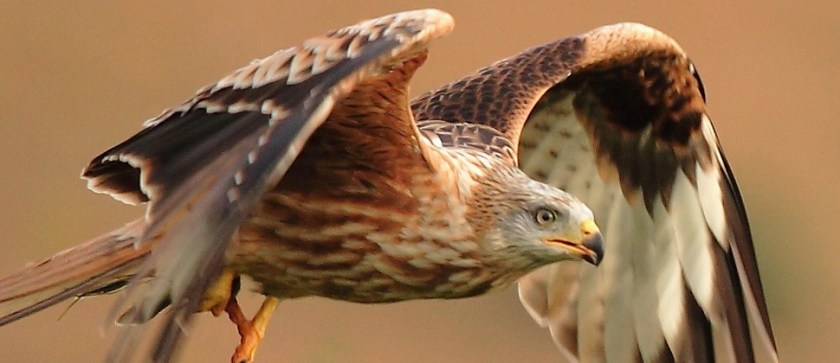
[Red kite photo from Scottish Raptor Study Group]

Police said an investigation was ongoing and have asked for help from the public with information.

Det Con Gary Story said they were working closely with the Scottish SPCA and Science and Advice for Scottish Agriculture. “What we have established is that illegal pesticides have been used to kill two of the birds,” he said. The pesticides identified have been banned in the UK for many years but despite this there would still appear to be those who leave out poisoned bait, whether that is to target crows, foxes, raptors or other wildlife.

The use of such poisoned bait is illegal and totally unacceptable and those responsible should understand that their unlawful activities not only serve to have devastating consequences on their intended targets but also on various other forms of wildlife.”

He said they were “absolutely determined” to put a stop to the deaths and were working with landowners and farmers and RSPB Scotland as part of their investigation.

We have also carried out a number of land searches in the vicinity of where the birds have been located with a view to trying to locate poisoned bait at these locations,” he said. “It is anticipated that further land searches will take place in the near future.”

Scottish SPCA inspector Paul Tuchewicz said two dead red kites had been found within 50 yards of one another near Kirkcudbright on 10 May. “One of the birds had a tracker and we were able to check the last known location of the kite, which was a nest,” he said. “The nest was being used by ravens when we found it. After post mortem, the birds were found to have been poisoned with a banned substance.”

The third bird was found within 100 yards of the same location on 15 May.

A red kite trail in Dumfries and Galloway is reckoned to be worth millions of pounds to the local economy.

A study in 2017 said the Galloway Kite Trail had generated more than £8.2m since it was launched in 2003.

ENDS

These poor kites are the latest victims in a spate of illegal poisonings in south Scotland.

Between January and May 2018 four red kites and buzzards were illegally poisoned in Dumfries & Galloway (see here).

There was also the poisoned peregrine found in the Pentlands in May 2018 (here).

And then in December 2018 a buzzard was found poisoned near Mauchline (here).

Now we learn that at least two red kites have been found poisoned in May 2019 and potentially another one, test results pending.

So much for SNH’s claim in August 2018 that they were “reassured that raptor persecution is not an issue” in this region. Idiots.

It’s good to see strong statements of condemnation from Police Scotland and the SSPCA and confirmation that land searches have taken place and more are anticipated.

Let’s see how Scottish Ministers respond to this news. They said nothing about the recent illegal poisoning of birds in the Cairngorms National Park – are they also going to ignore more poisoning crimes in south Scotland?

Cairngorms National Park Authority finally issues statement on illegally poisoned birds

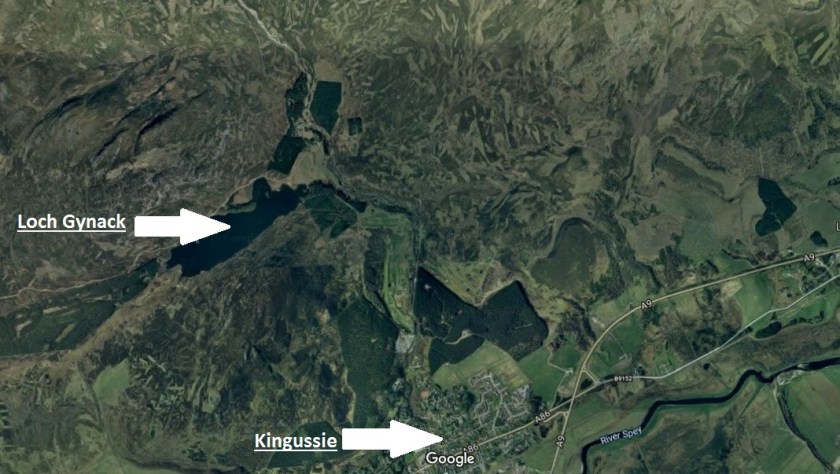
At the end of May we learned, via a Police Scotland statement, that four dead geese had been discovered in April 2019 by estate workers on the Pitmain Estate, nr Kingussie, in the Cairngorms National Park.

Subsequent post-mortem examination of the birds found that they died as a result of ingesting a banned pesticide.

On 25 May 2019, a week after the news broke, we reported that the response to this latest wildlife crime and the use of a deadly poison that is so dangerous that it’s actually an offence to possess it, let alone use it, was as follows:

Cairngorms National Park Authority – silence

Grant Moir, Chief Executive Cairngorms National Park Authority – silence

Roseanna Cunningham, Cabinet Secretary for the Environment – silence

Mairi Gougeon, Minister for Rural Affairs and Natural Environment – silence

Kate Forbes MSP, in whose constituency the poisoned birds were found – silence

PAW Scotland – silence

Scot Gov Greener, ‘the official Twitter channel of the Scottish Government covering the environment and rural economy’ – silence

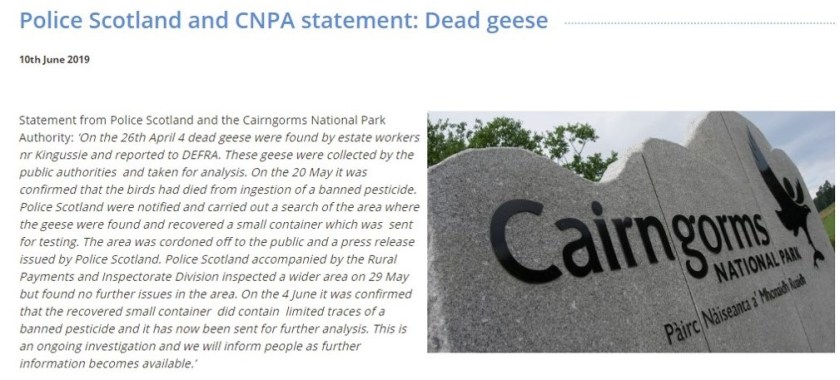
However, on Monday 10th June 2019 the Cairngorms National Park Authority (CNPA) finally released a joint statement with Police Scotland that was posted on the CNPA website and was also tweeted from the CNPA twitter account:

‘Illegally poisoned geese’ would have been a stronger headline than simply ‘dead geese’ but nevertheless, it’s good to see the CNPA finally alerting its website readers and social media followers to this crime.

It’s also interesting that a small container was found and that it had traces of the banned poison on it or in it. We await further updates.

In the meantime, has the CNPA decided to do anything else to warn the public about the immediate threat to life in this part of the National Park? Have they distributed posters and flyers in the local community in and around Kingussie? Put up warning signs in car parks and on paths near to where the poisoned birds were found? Put warning notices in places frequented by visiting tourists who may not be avid readers of the news section of the CNPA website?

If not, why not?

The North Pennines AONB recently did all of this and more in response to the discovery of two shot buzzards on their patch (see here) – it was a brilliant response and should be the blueprint for how all these so-called ‘Protected Area’ Boards and Partnerships need to respond to such criminality.

There can be no more excuses. Stop shielding the criminals.

Last chance to support Andy Wightman’s crowdfunding campaign

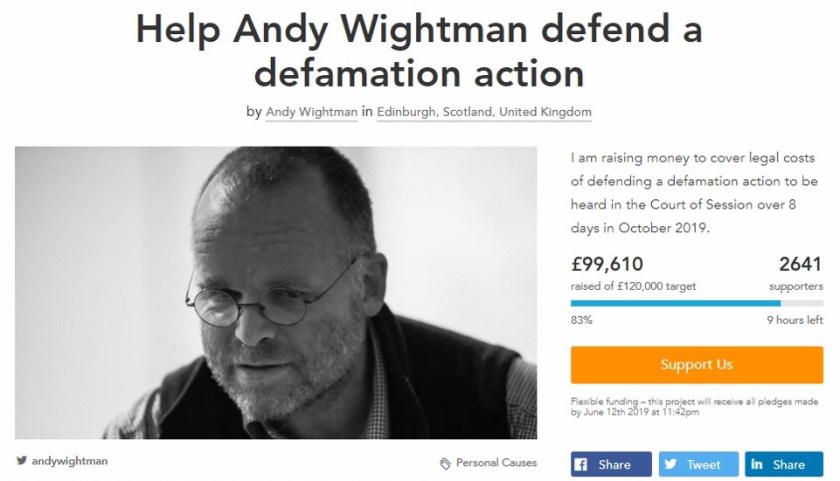
Our long-time friend and colleague (and Golden Eagle Species Champion!) Andy Wightman is being sued for alleged defamation.

His pursuer is claiming astronomical damages of £750,000 (plus 8% annual interest). If Andy loses the case and these damages are awarded in full, he will have to declare bankruptcy and thus stand down as a Member of the Scottish Parliament.

For someone of such integrity, who has campaigned for so long against the abuse of power, this would be the epitome of injustice. We cannot stand by and watch this happen.

Andy is crowdfunding to raise the £120,000 required to cover his judicial costs to fight the case. He’s already raised over £99,000.

Please help him. Visit his crowdfunder page HERE

His crowdfunder closes tonight at 23.42hrs.

Buzzard found shot dead in North York Moors National Park

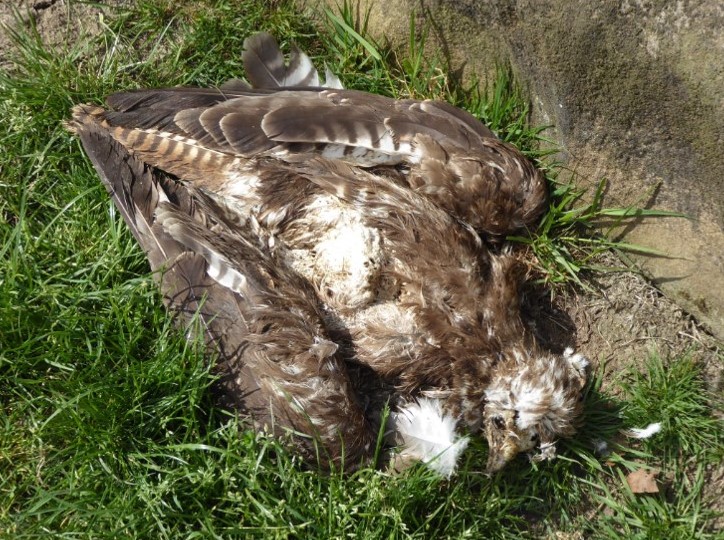
Yet another buzzard has been found shot dead in the North York Moors National Park according to a tweet by the brilliant Jean Thorpe, wildlife rehabber extraordinaire, on 5 June 2019:

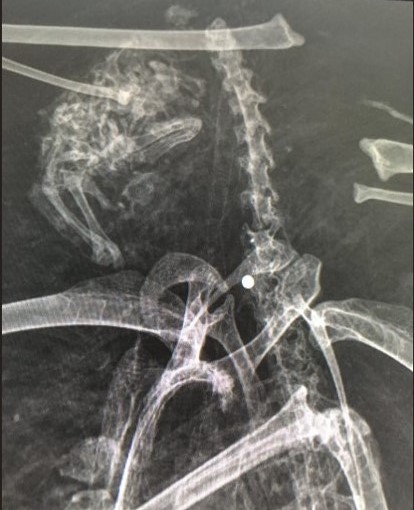
“Shotgun shot buzzard Bransdale Moor, North Yorkshire. National Trust land. Any info please to PC Jez Walmsley, Wildlife crime officer Malton. Yet ANOTHER”.

The x-ray is a bit hard to comprehend, although the spine is clear as is at least one shotgun pellet.

We haven’t been able to find out any further information about this crime.

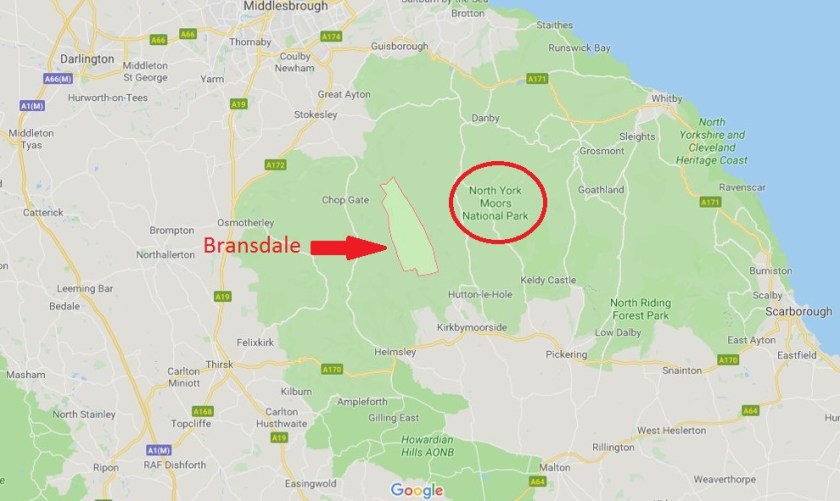
It’s not the first time raptors have been found illegally killed here. In 2010 a shot goshawk was found at Bransdale (see here) and a post mortem reportedly revealed it had also been poisoned (see here).

In 2012 a walker crossing the moorland in Bransdale found a dead sparrowhawk, also reported to have been shot (see here).

The National Trust owns the land in the valley in Bransdale, ‘surrounded by dramatic open moorland’ which has been described elsewhere as ‘the premier grouse shooting estate in the North York Moors area‘ and ‘one of the country’s most prolific grouse moors‘. Obviously it’s not known whether the buzzard was shot on National Trust property, or on the surrounding grouse moors, or even further further afield and then collapsed at Bransdale.

What is known is that this is yet another raptor persecution crime in North Yorkshire, inside the North York Moors National Park.

Why hasn’t this crime been publicised?

Revive conference, Sat 3rd August, Perth: registration now open

Revive, the coalition for grouse moor reform in Scotland is hosting a one-day conference in support of Hen Harrier Day.

Saturday 3rd August 2019, 10am-4.30pm, Perth Theatre (PH1 5HZ).

The event is free but spaces are limited to ~200  due to the venue so pre-registration is required.

The programme will be released in due course but you can expect presentations from the Revive Directors and staff and discussion panels including guests from other prominent environmental NGOs.

To register for this event please see HERE.

Wild Justice launches new legal challenge against Natural England’s General Licence 26

The campaign group Wild Justice has launched a second legal challenge against Natural England’s new General Licence (GL26), in so far as it relates to the killing of Carrion Crows to protect Pheasants.

Wild Justice’s legal team (Leigh Day) sent a pre-action protocol letter to Natural England and DEFRA last Friday. You can find a copy of that letter on the Wild Justice blog here.

Dr Mark Avery, one of the Directors of Wild Justice said:

Licence GL26 is a shoddy document. It is scientifically threadbare and, we contend, legally flawed. It does not form a sound basis to justify widespread, unmonitored, unlimited control of Carrion Crows to protect livestock.

We are glad that Defra has promised a proper review of licensing of the killing of wild birds because, on the evidence of this licence, that killing often amounts to unjustified casual killing.

We call upon Defra to announce the date and substance of that review as quickly as possible so that these matters can properly be examined before 2020’s licences are issued. 

We also repeat our call to Defra not to issue any general licences to allow the lethal control of Jay, Jackdaw, Rook or Magpie for the purpose of protecting wild birds. 

But now we are asking for the elements of GL26 which relate to protection of Pheasants and other gamebirds to be quashed and those elements which relate to other livestock to be thoroughly scrutinised in the review of general licences promised by Defra”.

Natural England (and/or DEFRA) has to respond to the pre-action protocol letter within 14 days (by 4pm on 21 June 2019).