
Private Eye, sea eagles, hill farmers & grouse moor burning

White-tailed eagles are never far from the news and even feature in the latest edition of Private Eye:
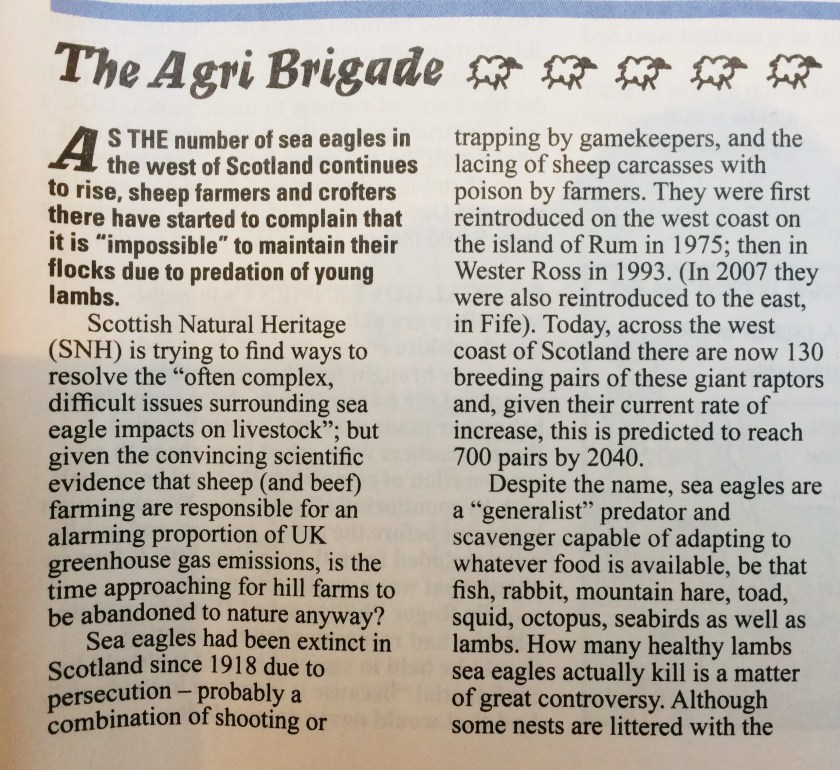
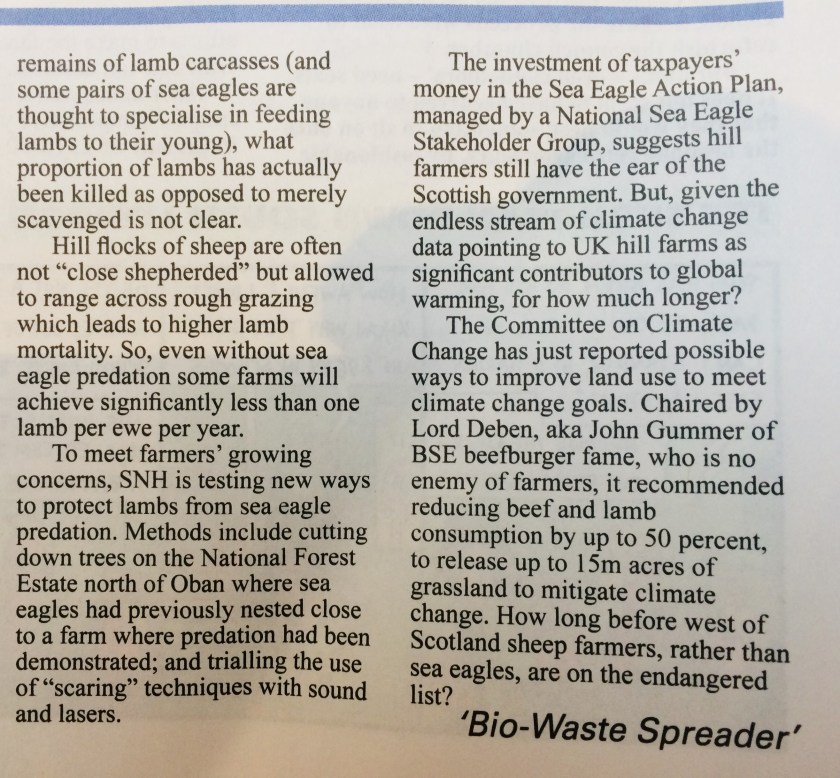
The Committee on Climate Change reports referred to in the article can be found here.

They’re really worth a read. The following text in the report ‘Land use: reducing emissions and preparing for climate change‘ will be of particular interest to those of us concerned about grouse moor management:

4.2. Identifying and removing barriers to transformational land use

Changes on this scale will require a coordinated, national approach. There are several key barriers that will prevent the scale of action that is required to meet long-term climate change mitigation and adaptation goals:

Missing and incomplete markets for public goods.

At present, the private social costs and benefits related to land use can differ widely, leading to sub-optimal land management strategies from a social perspective. For example, there has been a large-scale effort through government programmes to increase the value land owners place on preserving the carbon locked up in peat soils, in order to incentivise peatland restoration over and above activities such as maintaining heather cover and burning to support grouse shooting.

Between 2007 and 2013, £27 million was paid out to land owners who had taken up moorland restoration under the Higher Level Stewardship scheme. Water companies invested £45 million between 2005 and 2015 in programmes to work with landowners to improve peatland condition as a way of improving water quality.

However, so far these restoration efforts remain insufficient to incentivise the degree of restoration that is needed in the face of climate change. The condition of upland peat SSSIs in England is continuing to decline, from 19% in favourable condition in 2003 to 10% in 2016.

ENDS

Some interesting stats in that last sentence, and worth bearing in mind the next time the grouse shooting industry’s spin doctors try to infer that grouse moor SSSIs are an indication of ‘environmental quality‘.
New RSPB Head of Investigations

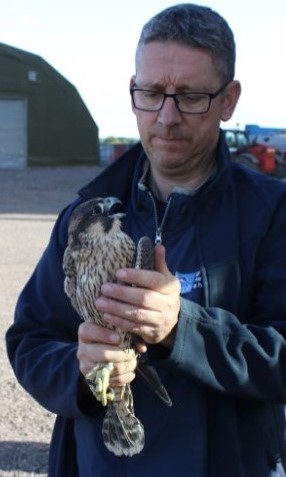
Congratulations to Mark Thomas who will be taking on the role of RSPB Head of Investigations in January, following the departure of Bob Elliot earlier this year.

Mark is no stranger to this field. He joined the RSPB’s Investigations Team based at The Lodge HQ way back in 1999 and has spent the last 19 years on the front line, gaining invaluable first hand experience in every type of crime against birds, not least those against birds of prey.

This is an excellent decision by the RSPB – it ensures continuity at a time of great upheaval for RSPB staff and at a critical time for tackling illegal raptor persecution.

Mark said: “Things have changed a lot since I first began. At that time we were the only ones banging on about raptor persecution but these days the word has spread and we receive massive support for our work through the police and other agency partners, as well as from the general public. I’m looking forward to supporting everyone in my team [which includes a number of field investigators as well as intelligence officers and analysts] to help them continue our efforts to tackle bird crime across the country“.

Well done, Mark, this is a well-deserved promotion.

New forensic tool to identify human fingerprints on illegally-killed raptors

Press release from Abertay University (29/11/18):

Scientitists recover fingerprints from feather exposed to outdoor conditions

An Abertay University study has discovered that fingerprints can be recovered from bird feathers that have been left outside, exposing them to environmental conditions.

Previous research from PhD Student Helen McMorris had revealed that it was possible to obtain fingerprints from feathers under lab conditions.

For the first time, she has been able to prove it is possible to recover them from feathers that have been exposed to environmental conditions such as wind and rain.

[Helen McMorris obtains a fingerprint from buzzard feathers. Photo from Abertay University]

In the long term, it’s hoped the research will have a transformative impact on the number of wildlife crime convictions in the UK.

According to the latest RSPB Birdcrime report there were 68 confirmed incidents of raptor persecution last year, with only four prosecutions. From these, just one led to a successful conviction.

Investigations into such incidents can be extremely difficult as there’s no accurate measure of determining human involvement.

McMorris – also a Teaching Fellow at Abertay – said this makes it difficult to prosecute: “At this moment in time toxicology tests can prove that a raptor has been poisoned, and you can prove that a bird has been shot through x-rays and post mortem.

But there’s no way of telling if a human has had any contact with that bird if it’s found dead in a field or on a hillside. You have to assume there has been foul play of some description, but you can’t hone in on the actual person responsible.

This technique potentially gives investigators the chance to prove actual human involvement in raptor persecution, be it through an identifiable fingerprint or a touch mark from a human finger that identifies exact areas of contact on the bird-of-prey”.

Head of Science Dr Ben Jones said “As part of Abertay’s research in improving forensic investigation techniques, this study is an important step in moving from the laboratory closer to a real-life situation, as the technique moves from research to development for use in an investigative setting.”

ENDS

For those interested in the science, this research has been published in Science and Justice, the journal of the Chartered Society of Forensic Sciences. Publishing restrictions prevent us from posting the full paper here but here’s the abstract:

It’s probably a bit of an overstatement to claim that these results “will have a transformative impact on the number of wildlife crime convictions in the UK“. These days the majority of raptor killers are much more savvy about hiding their crimes and often remove and destroy all the evidence (cf all those ‘missing’ satellite tagged raptors that vanish in to thin air).

However, there are still some who are too stupid/lazy/arrogant to get this right, e.g. the shooting of a hen harrier on a grouse moor at Leadhills last year (here). This shooting by a masked gunman was witnessed by a member of the public, and the witness was later able to point the investigating authorities to the location which led to the discovery of the harrier’s body, partly-hidden in vegetation. In rare cases like this, the ability to test the corpse for fingerprints may well have helped to identify the perpetrator.

Similarly, in the recent case of gamekeeper Tim Cowin who shot, then stamped on, and then buried the bodies of two short-eared owls on a grouse moor in Cumbria (here), had the RSPB’s video evidence of Cowin committing his crimes been deemed inadmissible, testing the owls’ feathers for human fingerprints may well have led to Cowin having to face some awkward questions.

This new research isn’t a panacea but it is still another useful weapon in the armoury of those fighting the illegal killing of birds prey, a fight that Ian Thomson (Head of Investigations, RSPB Scotland) has described as ‘an arms race’ (here).