Great reception for launch of Revive, the coalition for grouse moor reform

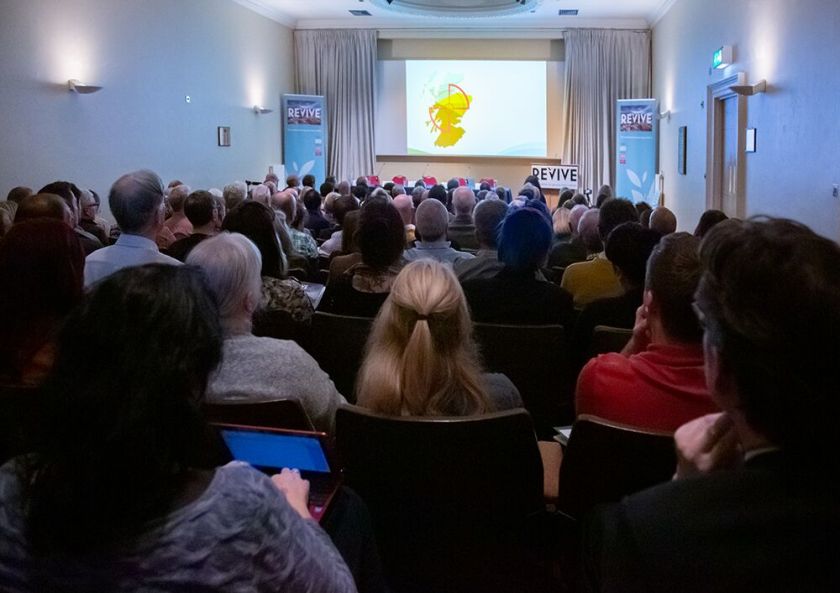
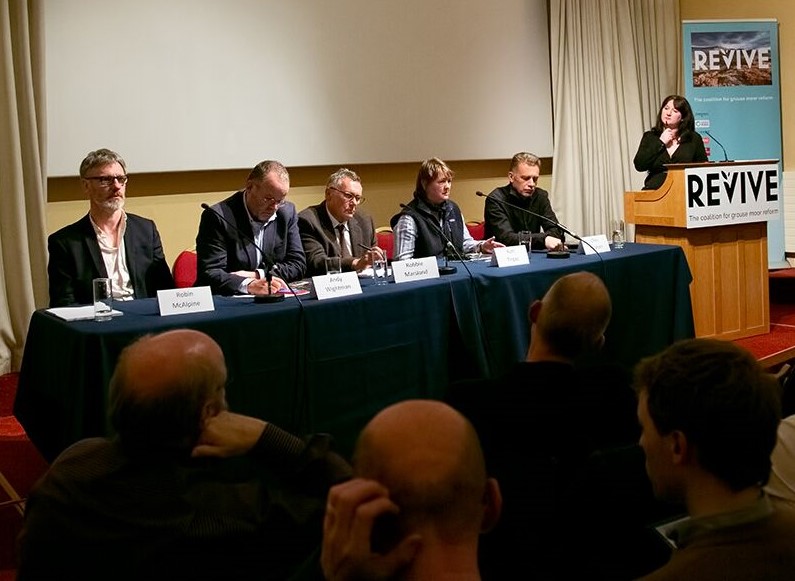
Revive, the coalition for grouse moor reform, was formally launched in Edinburgh on Tuesday evening and what a fantastic reception it received!

The Revive coalition is an unusual alliance of campaigners, scientists and policy advocates from the fields of social justice, conservation, animal welfare and environmental protection, coming together to present the case for the reform of Scottish grouse moors. The founding groups areĀ Common Weal, Friends of the Earth Scotland, The League Against Cruel Sports Scotland, OneKind, and Raptor Persecution UK.

The packed audience at Tuesday night’s reception reflected this diversity of interests and it was a who’s who of leading campaigners, politicians, researchers, journalists, scientists, lawyers, land reformers and policy advisors. We were especially pleased to see Professor Alan Werritty in the audience (Chair of the Scottish Government’s-commissioned review on grouse moor management, due to report in spring 2019).

Lesley Riddoch, a leading light in the world of land reform was also present and has written a piece in The National today, remarking on the “incredible turnout” (see here).

The evening began with two videos, one a brilliant animation put together by Pete Cairns and his team at Scotland: The Big Picture showing how the grouse moor landscape could look if it was allowed to revive, and another animation outlining the coalition’s concerns about the intensification of grouse moor management:

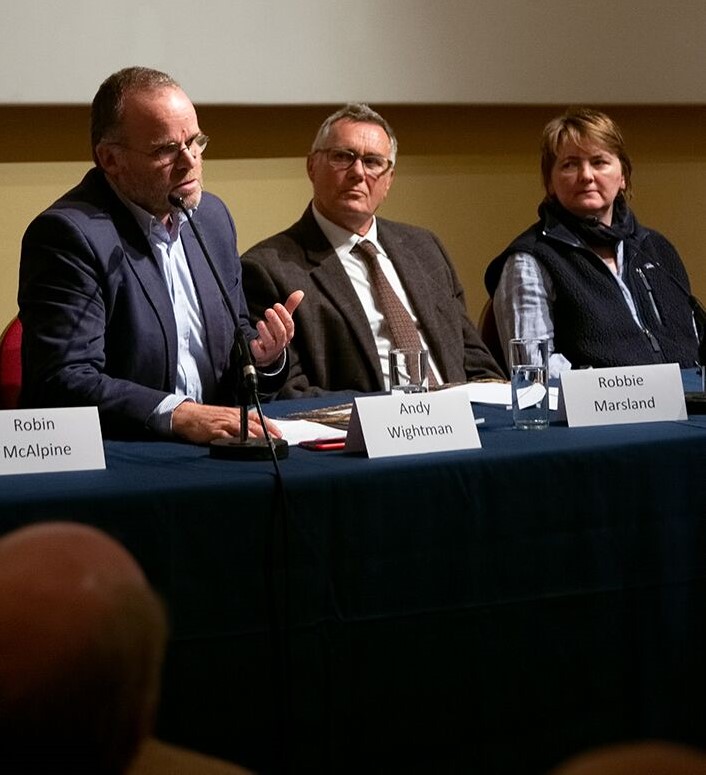
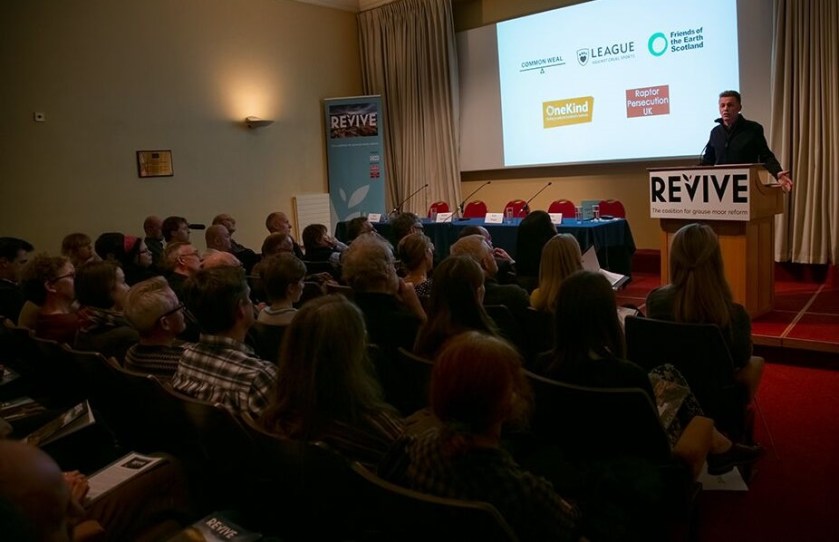
Chris Packham then formally opened proceedings with his usual hard-hitting approach (the event was live-streamed on Revive’s social media accounts so you should still be able to access this video – see @ReviveCoalition), follwed by a Q&A session with members of the coalition (also live-streamed in a separate video).

[Photos by Linda Macpherson]


The coalition’s first commissioned report was also launched at the event – The Case for Reforming Scotland’s Driven Grouse Moors, authored by Ruth Tingay and Andy Wightman. This report builds on an earlier report from the same authors, published in 2015, but the current report is greatly expanded. Lesley Riddoch describes it as “the most thorough demolition of the case for ā€œsporting estatesā€ I’ve ever seen in print“.

Attendees were all provided with a hard copy of the report and it is also available to download here (13MB):

Revive Report 2018

So what’s next for the Revive Coalition? There’s lots planned, and we’d encourage you to visit the coalition’s website (here) for further information and to keep updated.

There’s one thing you can do right now to show your support for the coalition – sign the pledge for significant reform of Scotland’s grouse moors – PLEASE SIGN HERE

Many thanks to Max Wiszniewski (Revive Campaign Manager) and his team for such a superbly-organised event, and many thanks to all those who came along, who share the coalition’s vision and determination to bring about change.

Four more satellite-tagged hen harriers ‘disappear’ on Scottish grouse moors

Press release from RSPB Scotland (6 Nov 2018):

Four rare hen harriers disappear on Scottish grouse moors: RSPB Scotland appeals for information

RSPB Scotland is appealing for information following the suspicious disappearance of four satellite tagged hen harriers over the last 10 weeks.

All of the birds were tagged at various nest sites, three this summer and one in 2017, in Scotland and Northern England as part of the RSPB’s EU-funded Hen Harrier LIFE project.Ā The last known locations of all four birds were over land managed for grouse shooting.

Satellite tagging technology is increasingly being used to follow the movements of birds of prey, allowing scientists to identify areas important for their feeding, roosting and nesting. The tags are fitted by licensed, trained fieldworkers and are designed to transmit regularly, even after a bird has died. In all four cases, the tags had been functioning without any issues before they suddenly and unexpectedly stopped transmitting, suggesting criminal interference has taken place.

[RPUK map showing the last known locations of the four hen harriers before their satellite tags suddenly and unexpectedly stopped working and the birds ‘disappeared’]
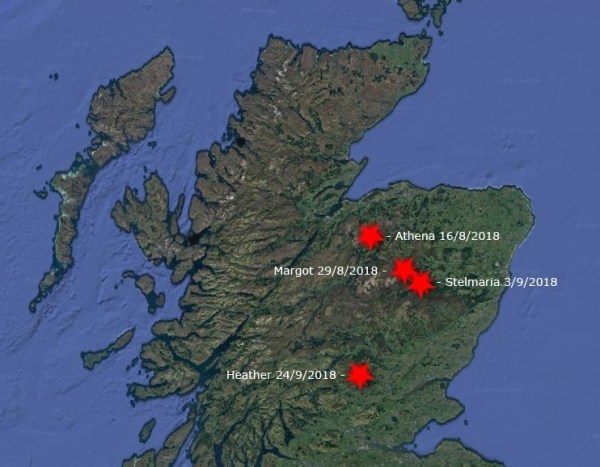
The first bird to disappear, Athena, was one of a small number of chicks to fledge from a nest in Northumberland. She travelled north into Scotland, with her last known position on a grouse moor a few miles north west of Grantown on Spey in Inverness-shire, on 16thAugust.

Two of the birds were tagged on the National Trust for Scotland’s Mar Lodge Estate in Aberdeenshire this summer. Margot disappeared on 29thĀ August, with her last known position on a grouse moor on the Aberdeenshire/Moray border, a few miles south west of the Lecht ski centre. Stelmaria was last recorded on grouse moor a few miles north west of Ballater, Aberdeenshire on 3rdĀ September. Stelmaria’s mother was DeeCee, a hen harrier tagged by the project in Perthshire in 2016.

The fourth missing bird, Heather, was a year older than the others. She was tagged at a nest in Perthshire in 2017, and last recorded on a grouse moor to the north of Glenalmond on 24thĀ September.

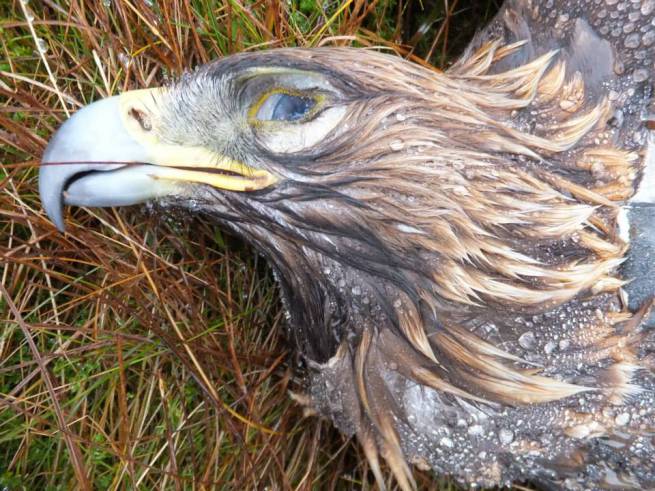
[Hen harrier Margot – photo from RSPB Scotland]

Dr. Cathleen Thomas, Project Manager for the RSPB’s Hen Harrier LIFE project said: ā€œTo have more hen harriers disappear, including three of this year’s youngsters, is devastating for all of us involved in monitoring these hen harrier chicks. These birds have vanished in similar suspicious circumstances to four other birds tagged by the project that disappeared this summer with last recorded locations on or near grouse moors in England and Wales. These eight suspicious disappearances in the past 10 weeks are a further blow for the conservation of a species whose UK population has declined by 24% since 2004.

The main factor limiting the hen harrier population in the UK is illegal killing associated with intensive management of driven grouse moors. Young hen harrier chicks already face huge survival challenges in their first few years of life without the added threat of illegal persecution.ā€

Each year a number of the chicks tagged by the project are lost through natural predation or starvation. So far in 2018 the remains of 12 young hen harriers have been recovered. Their tags continued to transmit after they died allowing their remains to be located and for post mortems to take place. These established that they all died of natural causes.

Ian Thomson, Head of Investigations for RSPB Scotland said: ā€œGiven the tiny number of hen harrier chicks tagged each year, the regularity with which they disappear, again indicates that we are only ever aware of a tiny proportion of the true number of protected raptors that are being illegally killed.

In common with so many previous disappearances of satellite-tagged birds of prey, each of these missing birds was last known to be on a moor managed for driven grouse shooting before its transmitter suddenly stopped. The picture is becoming ever more clear – in almost all cases when a tagged birds dies naturally we are able to recover its remains; if it disappears over a Scottish grouse moor, it’s never seen or heard of again.ā€

Information about the birds’ disappearances were passed to Police Scotland, and while local enquiries have taken place in each case, no further information on what has happened to the birds has been found. Anyone who can provide information about any of these missing birds is asked to contact Police Scotland on 101 or the RSPB’s raptor crime hotline onĀ 0300 999 0101.

ENDS

The criminals within the grouse shooting industry couldn’t give the Scottish Government, nor the public, a clearer message. Despite being under the closest scrutiny the industry has ever faced and with the very real threat of enforced regulation and legislation looming large, the message is still ‘screw you all, we’ll do what we like and we’ll continue to do it safe in the knowledge that we’ll never face any consequences’.

And they’d be right. They won’t face any consequences, at least not for a while. Sure, the Scottish Government is all over grouse moor management like a rash right now but we still have to sit and wait for the findings of the Werritty Review, which isn’t due to report until spring 2019. And if Professor Werritty’s review does recommend licensing grouse shooting estates to bring them under some sort of control (any control would be nice), there’ll then be more inevitable delays while consultations ensue and the dark side uses its mighty influence and power to weaken any proposals put forward.

Actual meaningful regulation, properly enforced, could still be years away. Meanwhile, the illegal killing will continue. Since the analysis was completed in January 2017 for the Golden Eagle Satellite Tag Review (which showed that over 40 golden eagles have vanished in recent years on or close to driven grouse moors) a further 14 satellite-tagged raptors have ‘disappeared’ in highly suspicious circumstances in Scotland, and most of them on or close to intensively managed driven grouse moors ( 4 x golden eagles, 8 x hen harriers, 2 x white-tailed eagles).

How many more will be killed before the Scottish Government brings the criminals to account?

Several of the grouse moors from where the latest four hen harriers ‘disappeared’ are of significant interest to us. We’ll be coming back to those in some more blogs later on.

But of course this isn’t just a Scottish issue. South of the border in England and Wales already this year we’ve seen reports of another five hen harriers all ‘disappearing’ in suspicious circumstances on or close to driven grouse moors (Hilma, Octavia and Huelwen here; Thor here; Mabel here).

[RPUK map showing the last known locations of nine satellite-tagged hen harriers across the UK uplands in 2018 before their tags suddenly and unexpectedly cut out and the birds ‘vanished’]
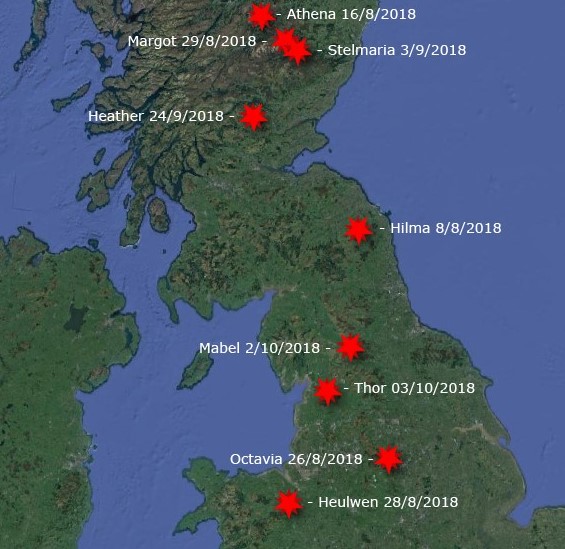
NINE hen harriers, all gone on or close to grouse moors since August! There is no doubt that this is serious organised crime on a national scale, all exposed by the use of satellite tag technology.

Is anybody still wondering why the grouse shooting industry is so keen to corrode public and political confidence in the use of satellite tags?

ā€œThey can hide the tags. They can hide the bodies. But they can’t hide the patternā€œ (Dr Hugh Webster).

UPDATE 22 Nov 2018: Did hen harrier Margot ‘disappear’ on a royal grouse moor? (Here)

UPDATE 23 Nov 2018: From which grouse shooting estate did hen harrier Stelmaria ‘disappear’? (here)

Revive: the coalition for grouse moor reform – why it’s needed

The newly-formed Revive Coalition for grouse moor reform will be launched tomorrow evening in Edinburgh.

As a build up to the event, two coalition members have published opinion pieces today on why grouse moor reform is needed:

Robbie Marsland, Director of the League Against Cruel Sports Scotland has a guest blog on Mark Avery’s blog here

Bob Elliot, Director of animal welfare charity OneKind has an opinion piece in The Herald here

We’ll be blogging about the launch later this week….

Golden eagle satellite tag review “exemplary” and “thorough”

A new scientific peer-reviewed paper, authored by a group of highly-respected award-winning ecologists, commends the “exemplary” and “thorough” scientific approach of the golden eagle satellite tag review.

The paper has just been accepted for publication but due to publishing restrictions we’re unable to publish it here (although we’ve read it in full). When it finally becomes available it’ll be a must-read for researchers involved in animal satellite-tracking projects where being able to distinguish between actual death and transmitter failure is important to understanding threats to that species.

Sergio, F., Tanferna, A., Blas, J., Blanco, G. and Hiraldo, F. (2018). Reliable methods for identifying animal deaths in GPS – and satellite-tracking data: review, testing and calibration. Journal of Applied Ecology. doi: 10.1111/1365-2664.13294.

The authors have devised a system, based on the interpretation of various tag data, which correctly distinguished between actual death and transmitter failure in their sample. They found this system worked perfectly for their GPS tags but was not so reliable for tags using only Doppler locations.

[Fig. 3 from the paper]

Using this system, the authors suggest that the highly suspicious disappearance of golden eagles in Scotland as identified in the Golden Eagle Satellite Tag Reviewwould be most likely confirmed as deaths by our method, thus strengthening the suspicion of illegal killings (Branch 3b, Fig 3)”.

For the reader with a limited understanding of different tag types and the quality of technical data associated with different tags, this paper probably won’t make much sense at all. However, we’ve highlighted it here for good reason.

A couple of weeks ago some extraordinary claims were made about the Golden Eagle Satellite Tag Review. Ronnie Clancy QC, a senior lawyer, claimed that the review contained “significant shortcomings” and that there was evidence of “unconcious bias“. His rationale for these comments is apparently contained in a report he was commissioned to write by the Scottish Gamekeepers Association (SGA), although this report has not been released in the public domain and the story was only run on the BBC News website (here), so we’ve been unable to see the context of these selective quotes.

However, when you look at the quotes that were published by the BBC, it’s not difficult to tear them apart. On the allegation of supposed “unconcious bias”, the BBC reports that Mr Clancy QC said the report authors (Drs Whitfield and Fielding) looked like they had “manipulated” the study “to obtain a desirable result“. This opinion was further fuelled in the BBC report by the SGA’s Chairman Alex Hogg, who claimed that the report’s findings were initially insignificant “until the authors (Whitfield & Fielding) shifted the parameters and extended the boundaries of the moors by up to 4km“.

Dear oh dear. Had they paid attention to the Sat Tag Review they would have read the discussion about why the parameters were extended – which is a perfectly acceptable scientific method known as hypothesis testing – to 4km. Initially, Drs Whitfield & Fielding had used the presence of strip muirburn as a simple way of mapping the location of grouse moors. However, as they explained in the review, grouse moor management extends beyond the boundaries of strip muirburn, often to a considerable distance (e.g. predator control to benefit red grouse takes place in forestry and woodland beyond the actual moors) so to capture the full extent (and impact) of grouse moor management requires extending the search boundary beyond the actual moor. They illustrated this point with this map (we have added the yellow arrow for clarity) showing the last known locations of three satellite-tagged golden eagles. One of these (yellow arrow) ‘disappeared’ on land that wasn’t a grouse moor, per se, but was surrounded by grouse moor. Had they stuck rigidly to using strip muirburn as the grouse moor proxy, this eagle, and several others that ‘disappeared’ when roosting in forestry close to a grouse moor, would not have been classified even though it’s blindingly obvious that the location was associated with grouse moor management.

Quite why the SGA asked a lawyer to opine on a piece of scientific research is anyone’s guess. No doubt, Mr Clancy is a skilled lawyer – you don’t gain QC status without demonstrating legal excellence. But is Mr Clancy a scientist? Does he have experience and expertise in assessing scientific rigour? Is he familiar with satellite tag technology? Is he an expert in golden eagle ecology? Does he have a detailed understanding of the ~100 scientific references cited in the review? Has he authored any scientific papers himself? Why didn’t the SGA commission a review by a qualified scientist? Couldn’t they find one who’d say what they wanted to say? And why has this opinion piece only just emerged, some 17 months after the Golden Eagle Satellite Tag Review was published?

The more you think about this, the more intriguing it becomes. Our guess is that the SGA, realising how comprehensively damning were the findings of the Sat Tag Review, sought advice on making a legal challenge against the Scottish Government for accepting the review’s findings. Why else consult a lawyer? However, although the Cabinet Secretary commissioned the current grouse moor management (Werritty) review on the back of the Sat Tag Review’s findings, there have been no legislative changes based explicitly on the Sat Tag Review, which makes a legal challenge untenable. And even if legislative change (e.g. licensing) does occur after the Werritty Review, the Sat Tag Review will only have played a small role – it just happened to be the final straw in a giant haystack of evidence against the unsustainable and environmentally damaging aspects of grouse moor management.

If this is what happened, then rather than waste the money they spent seeking legal advice (unless Mr Clancy worked pro bono), perhaps the SGA thought they’d make the best of a bad job and simply present the advice as legal opinion in an attempt to undermine the evidence being presented to the ongoing Werritty Review.

Sadly, the SGA hasn’t published Mr Clancy QC’s report – and that is their perogative, as it is, after all, a privately-commissioned piece of work – but it’s a real shame because we would have been very interested in reading Mr Clancy’s opinion on the contemporaneous records of illegal raptor persecution associated with the various geographic clusters of ‘disappearing’ eagles on or close to grouse moors, and the ever-increasing pile of peer-reviewed scientific research that has linked grouse moor management to illegal raptor persecution, all documented and referenced in the Sat Tag Review. Oh, and not to mention the long list of golden eagles whose bodies have previously been found shot and poisoned on, er, grouse moors.

[Golden eagle ‘Fearnan’ found illegally poisoned on an Angus Glens grouse moor. Photo by RSPB]

We understand Mr Clancy’s report has been submitted to the Werritty Review as ‘evidence’. We welcome this. Professor Werritty, as a senior academic of some repute, will no doubt treat it with all the regard deserving of a non-scientific opinion commissioned by an organisation that has repeatedly sought to deny the link between grouse moor management and golden eagle persecution.


Proposal to reintroduce white-tailed eagles to Isle of Wight

From the Roy Dennis Wildlife Foundation:

White-tailed Eagles were once widespread along the whole of the South Coast of England, from Cornwall to Kent, before being driven to extinction by relentless persecution that began in the Middle Ages. The last pair bred on Culver Cliff on the Isle of Wight in 1780. Many parts of southern England remain highly suitable for the species, and following the reintroduction of White-tailed Eagles to Scotland – where there are now over 130 breeding pairs – we believe that an English reintroduction would be equally successful and the best way to re-establish these magnificent birds in their former haunts. Restoring a population of White-Eagles on the South Coast would help to link populations in Scotland and Ireland with those in the Netherlands and France.

[White-tailed eagle by Ronnie Gilbert]

Together with the Forestry Commission we have identified the Isle of Wight as a potential location for a reintroduction, and are currently working on a feasibility report. It is the last known breeding site of the species in southern England, the Solent and surrounding estuaries will provide a rich food supply, there are numerous potential nesting sites in woods and cliffs, and also good loafing areas for young birds. It is also a highly strategic location that would enable the birds to spread east and west along the South Coast.

Evidence from the Netherlands, where there is a small but growing population of White-tailed Eagles, shows that the species will readily nest in densely populated areas, close to people. The species has a broad diet and tends to favour the most seasonally abundant prey: waterbirds are important, including in summer the young of Greylag and other geese as well as Coot; fish are taken when available as well as carrion such as dead and dying birds and fish. Dutch researchers studying White-tailed Eagles have found that any disturbance to wading birds by the eagles is similar to that of Peregrine, and species get used to their presence; while breeding colonies of gulls and terns are effective at mobbing and driving off the eagles.

In addition to the conservation benefits, we believe that the project would give a significant boost to the Isle of Wight economy, including in winter. In Scotland eagle tourism is extremely popular and recent reports have shown White-tailed Eagles generate up to £5 million to the economy of the Isle of Mull each year, and £2.4 million to the Isle of Skye.

The proposed project is a partnership between the Forestry Commission and Roy Dennis Wildlife Foundation, with potential for other local partners to join.

If the project was to go ahead juvenile White-tailed Eagles would be collected from nests in Scotland and translocated to the Isle of Wight in late June. They would be held in special cages in a quiet location for approximately three-four weeks before being released. Food would be provided close to the release site during the autumn and winter before the young eagles become independent. Up to 60 birds would be translocated in this way over a five year period. The project requires a special licence from Scottish Natural Heritage to collect eagle chicks from Scottish nests, and permission from Natural England to release them on the Isle of Wight.

Young White-tailed Eagles do not breed until they are four or five years of age. It is hoped that a small population would become established on the Isle of Wight, with birds spreading east and west along the South Coast thereafter.

We are keen to consult with the local community, landowners and other stakeholders to encourage support and involvement with the project, and to identify and resolve any concerns.

Three drop-in sessions will be held at three locations across the Isle of Wight to enable members of the public to learn more about the proposed project. These will be held as follows:

  • Monday 12th November: 6-8pm, YMCA Winchester House, Shanklin
  • Tuesday 13th November: 11am – 1pm, 5th Ryde Scout Group Hall, Ryde
  • Tuesday 13th November: 6-8pm, Cowes Yacht Haven, Cowes

You can arrive at any time during the drop-in sessions, and the project team will be present to answer questions and to discuss the proposals. You can also provide feedback on the proposals via our online questionnaire.

For further information about the proposals check out ourĀ Frequently Asked Questions page.

ENDS