Gamekeeper cautioned after merlin killed in illegally-set trap on grouse moor

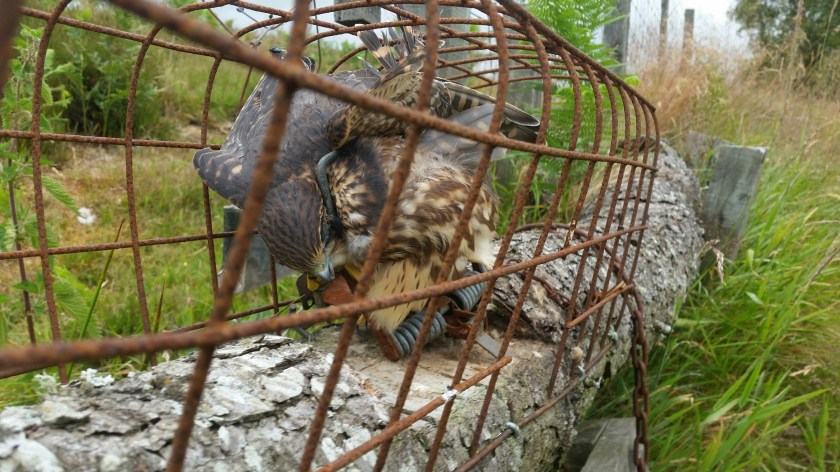
This merlin was found dead in a trap on an un-named driven grouse moor in Northumberland in July this year. A fell runner discovered the bird and reported it to the RSPB.

The RSPB went to the site the next day and realised that this trap had been illegally-set as no attempts had been made to restrict access to the tunnel entrance, meaning non-target species (such as this merlin) could easily access the tunnel, with the inevitable result.

The incident was reported to Northumbria Police and a wildlife crime officer visited the site with an RSPB investigator.

An ‘experienced’ gamekeeper was formally interviewed and admitted setting the trap. Unbelievably, the police decided to issue him with a police caution instead of seeking a prosecution via the Crown Prosecution Service.

Haven’t we been here before? Ah yes, here and here.

Once again, another gamekeeper gets let off for committing a wildlife crime on a driven grouse moor. And before anyone says, ‘A caution isn’t a let off’, it absolutely is if this gamekeeper is permitted to keep his firearms and shotgun certificates, and his job, despite now having a criminal record.

Sure, he probably didn’t intend to trap and kill this merlin but that’s not the point. If he’s employed as a professional gamekeeper he has a responsibility to operate his traps within the terms of the law. With this trap, he chose not to do that, knowing full well that a non-target species could be killed, which it was. That’s an offence and he should have been charged and prosecuted.

Further details about this merlin case can be read on the RSPB Investigations Team blog here

What’s going on on this Peak District grouse moor?

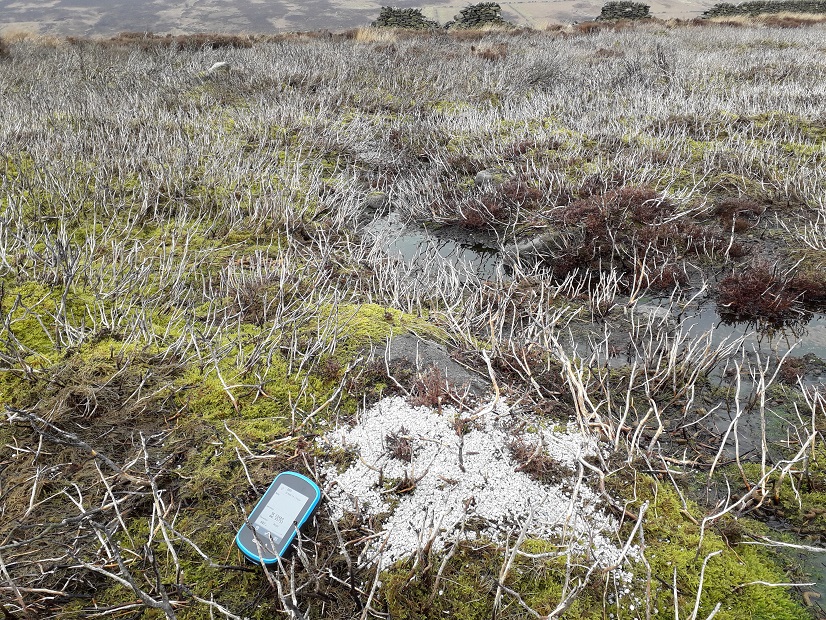
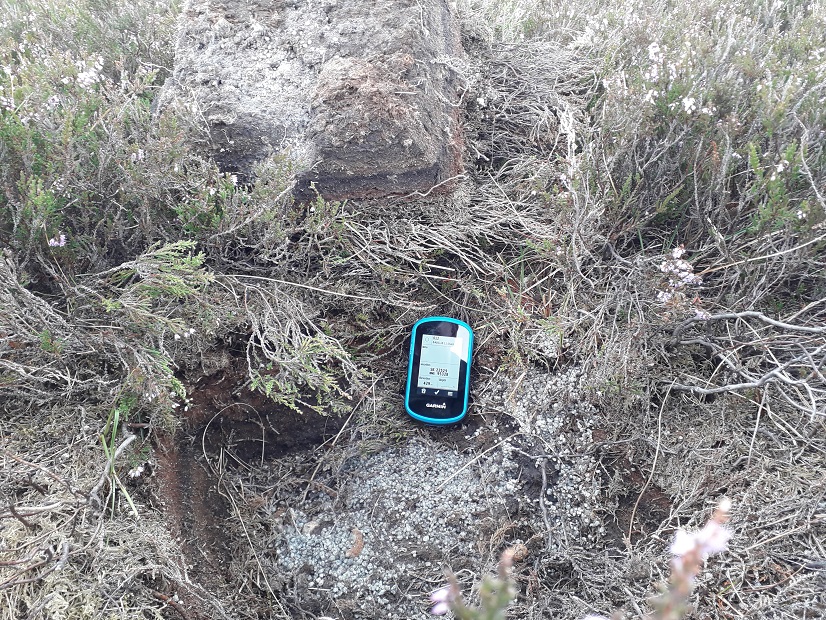
A few months ago, one of our blog readers sent us this photograph of some grit that had been spread directly on the grouse moor at Broomhead Estate in the Peak District National Park:

The photograph was taken in March 2018, so given the time of year you might expect that this was medicated grit (as opposed to unmedicated grit), which is typically used in winter/spring during the closed grouse shooting season. Although given that it had been thrown directly on the ground next to water, this would be in breach of the GWCT’s ‘best practice’ guidelines on the use of medicated grit which suggest proximty to standing or running water should be avoided, so given this photograph you’d have to assume it was actually unmedicated grit. There’s no way of telling which type of grit it is just by looking at it.

So let’s assume the grit in that photograph taken in March was unmedicated grit.

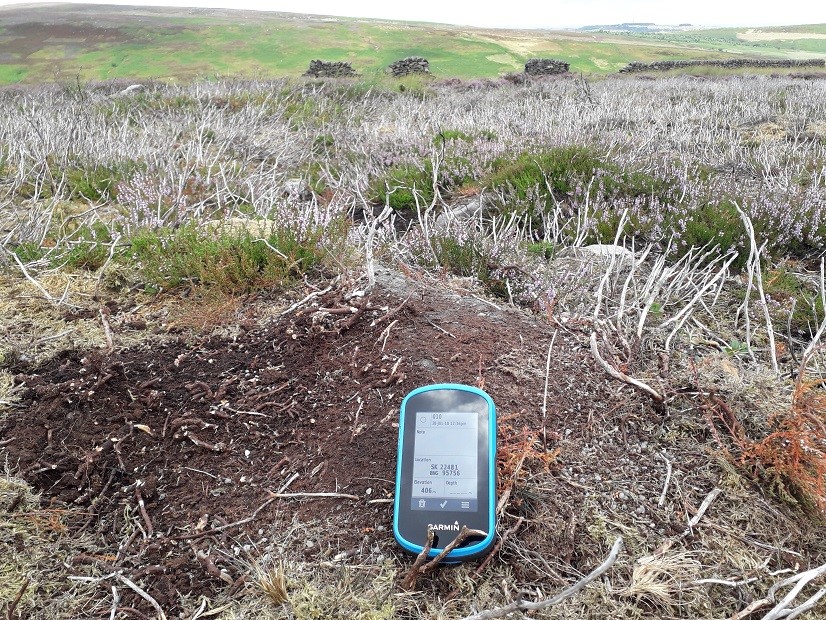
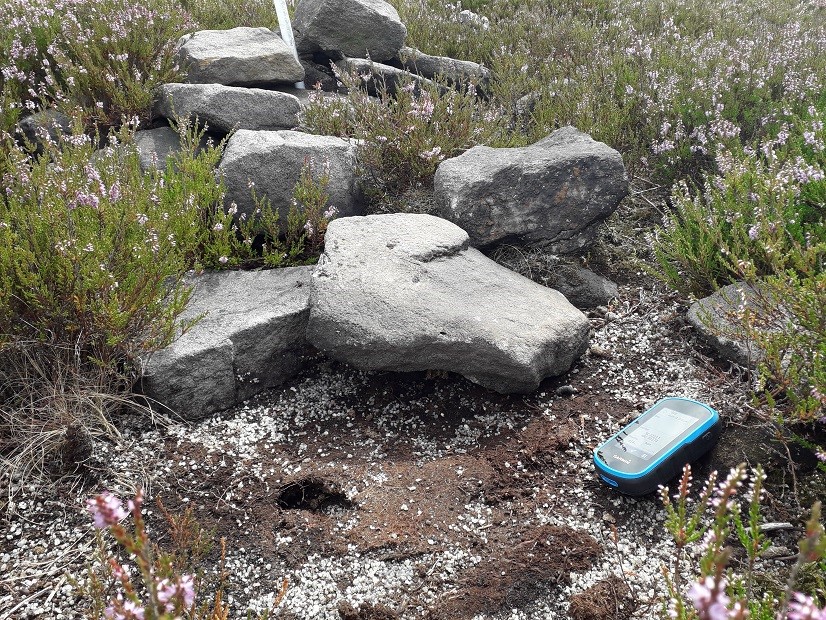
But look what our blog reader found when he revisited the location in July 2018:

The pile of grit had ‘disappeared’ and in its place was a fresh pile of peat. How odd! If this was unmedicated grit, why would it have been removed in July? There’s no legal requirement to remove unmedicated grit at that time of year, but there is a legal requirement to remove medicated grit, 28 days before the start of the grouse shooting season, to ensure the veterinary drug (Flubendazole) does not enter the human food chain when the red grouse are shot in August. Hmm.

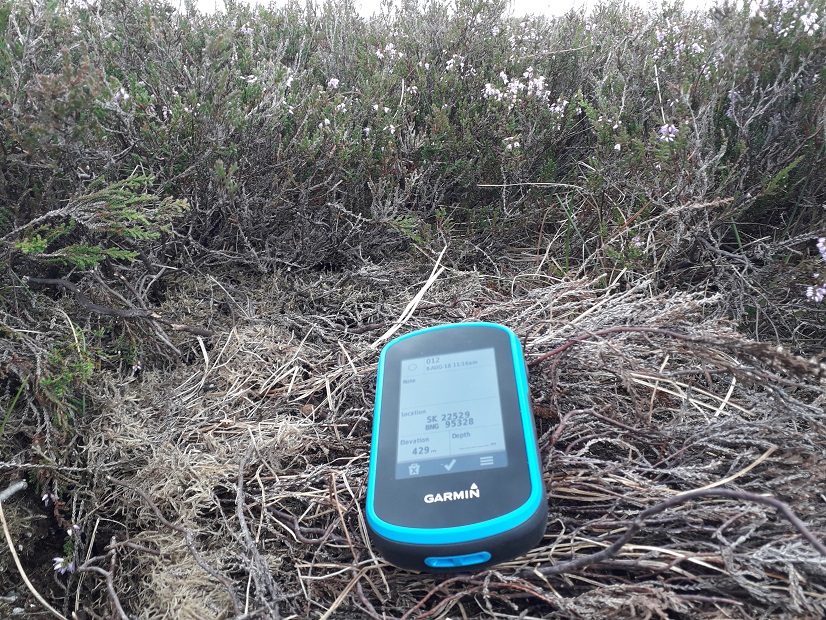
Our blog reader checked a few more gritting stations on this grouse moor at Broomhead Estate and took some other very interesting photos.

Here’s a photo taken in March 2018 showing a freshly-cut square of turf with fresh grit piled on top of it and some grit pieces in the exposed peaty water. Again, there’s no way of knowing, just by looking at it, whether this was medicated or unmedicated grit:

Here’s the same site revisted in July 2018. Look at that! The square of turf had been flipped back in to its hole and the grit was nowhere to be seen. If this was unmedicated grit, why would anyone bother removing it at this time of year…unless it was medicated grit?:

What do you think happened to all grit that had been photographed at this site in March 2018? Do you think the gamekeeper carefully picked up every last piece and removed it from the moor (which is what is supposed to happen if it was medicated grit)? Shall we have a look? Here’s what our blog reader photographed when revisiting this location in August 2018. Removing the turf from the hole, he found a load of grit that had been sandwiched between the peat and the turf. If this was medicated grit, this method of ‘disposal’ was against ‘best practice’ guidelines:

Here are some more photographs from other locations on this grouse moor at Broomhead Estate, appearing to show a similar practice:

Here’s a photograph taken in August 2018, with the cut turf back in place in the hole:

And here’s the same location, also photographed in August 2018, with the turf lifted to see what was underneath. Look at all that grit!:

And here’s yet another one, photographed in August – here’s the turf back in place:

But here’s what was photographed once the turf had been lifted. That’s a lot of residual grit!:

Here’s another location photographed in March 2018, with the grit thrown directly on the upturned turf:

Here’s the same location photographed in July 2018, with the turf back in place but with plenty of redisual grit left on the surface, freely available to any red grouse that happened to walk by:

We’ve got plenty more photographs showing exactly the same thing across this moor but you’ve probably got the picture by now.

So what the hell is going on here? Is this harmless unmedicated grit? If so, why bury it? Or is this actually medicated grit that has not been properly disposed of, just lazily left to seep in to the water and peat? If so, what damage might this be causing to the environment?

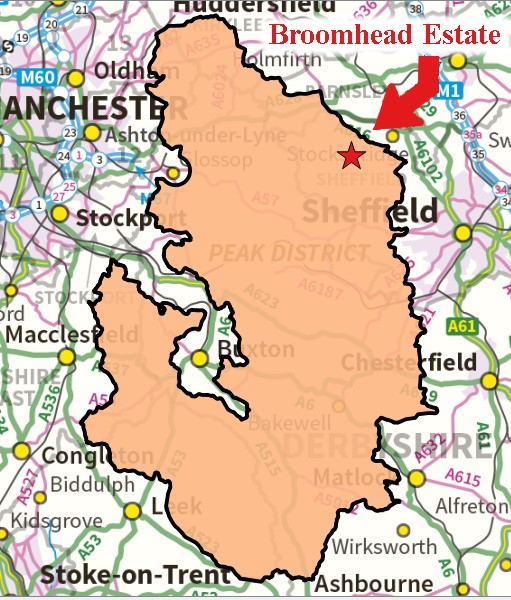
We looked up the Broomhead Estate in the Peak District National Park. Here’s its location:

And here are details of the agri-environmental payments this estate is receiving (over £1million to date under the Environmental Stewardship Scheme) and the protected status of parts of this estate (which includes an SPA, SSSI and a SAC):

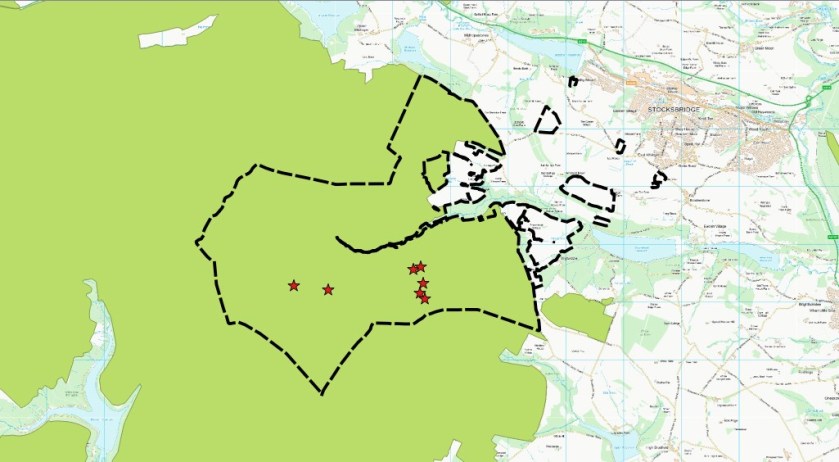
We looked to see whether the grit locations lay inside any of these protected areas and it turns out that yes, they all lie within the SPA, SSSI and the SAC: [black dotted line is Broomhead Estate (as detailed in the the agri-environmental scheme), the green area is the combined SPA, SSSI and SAC, and the red stars are the locations where these grit piles were photographed]

So is anybody checking whether this is medicated or unmedicated grit? We doubt it. We know from previous correspondence with DEFRA’s Veterinary Medicines Directorate (VMD) that it barely checks dead grouse for veterinary medicines residues and it certainly doesn’t check gritting locations to ensure compliance with the statutory withdrawal times, because it told us as much.

Is Natural England checking whether this is medicated or unmedicated grit? We know from recent research that the drug Flubendazole can cause contamination and damage to aquatic ecosystems – so is Natural England concerned about the potential ecotoxicity of medicated grit use on grouse moors in general, let alone those like Broomhead with protected status designations? We doubt it, given NE’s recent track record of turning a blind eye to everything that goes on up on the moors.

We could check for ourselves whether this is medicated or unmedicated grit, by collecting a few samples and having them tested. But if we did this, we’d be open to charges of ‘theft’ (of the grit from the moor) by the landowner if he/she felt so inclined.

What we’re left with then is yet another aspect of potentially damaging grouse moor management without any statutory monitoring whatsoever, and instead we’re supposed to rely on the industry’s own self-regulation to ensure environmental protection. And we all know how good this industry is at that.

RSPB launches its own UK raptor persecution map hub

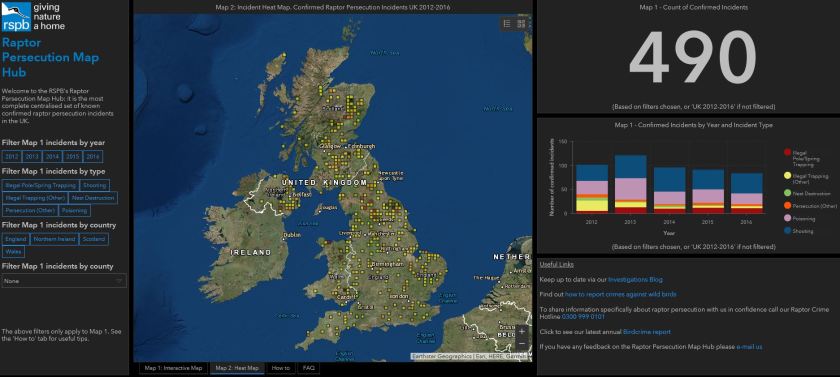
The RSPB has today launched its own UK raptor persecution map hub – an interactive, user-friendly system that will allow everyone to examine the full extent of reported raptor persecution crimes throughout the UK.

You can access and explore the map hub here

Read the RSPB blog about this project here

Prior to this map being made available, all we had to work with were the non-interactive maps published annually in the RSPB Birdcrime reports, the annually produced and non-interactive maps produced by PAW Scotland, and in England & Wales, the useless, inaccurate and out of date interactive map launched by DEFRA on behalf of the Raptor Persecution Priority Delivery Group (RPPDG) last year.

The DEFRA interactive map was heavily criticised on its launch (by us: see here; by the Northern England Raptor Forum: see here; and by the RSPB: see here), not only for being extremely difficult to navigate but also because the data included in that map were heavily disputed. The RPPDG, a sham-partnership including the likes of the Moorland Association, Countryside Alliance and the National Gamekeepers Organisation, went to great lengths to remove as much incident data as possible to make it look like raptor persecution is not as widespread and rampant as it actually is.

By publishing its own UK raptor persecution map hub, the RSPB is able to sidestep all the attempts at obfuscation and denial and provide the public with a much more reliable source of information.

There is still room for improvement with the RSPB’s new map hub, for example by adding ‘probable’ and ‘possible’ raptor crimes to the data set instead of just including ‘confirmed’ incidents as at present, but we’re confident the RSPB will be adding further layers to the map over time.

This is a fantastic new resource and the RSPB is to be commended for making it freely available. As more and more data are added, this map hub will make a significant contribution to helping educate the public and importantly, the politicians, about the widespread and continued illegal persecution of raptors across the UK.

Farmer guilty of recklessly disturbing Lake District ospreys

A farmer has been convicted of recklessly disturbing a pair of breeding ospreys at Bassenthwaite, in the Lake District, in June last year.

Paul Barnes, 58, of Brook Cottage, Keswick, was today found guilty after a three-day trial at Workington Magistrates. The court heard how he had taken a group of children in his tractor and trailer close to the site, without a Schedule 1 disturbance licence, causing the birds to leave their nest.

He was fined £300 with £2,000 costs.

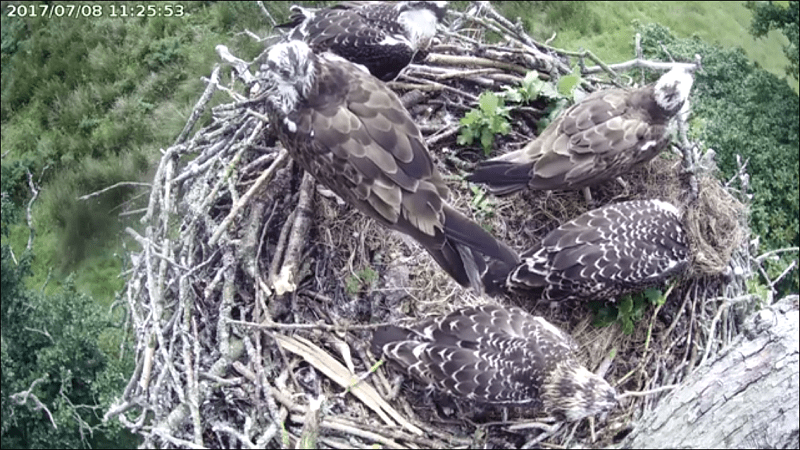
[Photo of the Bassenthwaite osprey pair with their offspring in 2017, photo by The Lake District Osprey Project]

The Lake District Osprey Project, a partnership between the Forestry Commission, the RSPB and the Lake District National Park Authority, aims to ensure the continued success of breeding ospreys at Bassenthwaite. Since the birds returned in 2001, ospreys have raised over 30 chicks and delighted over a million visitors there.

Like all wild birds, ospreys are protected by law under the Wildlife and Countryside Act 1981 and it is a criminal offence to harm or disturb them during the nesting period. Anyone found to have done so faces an unlimited fine and/or up to six months in jail.

There are 21 breeding pairs in England, and are worth £2million per year to the Cumbrian economy.

Annabel Rushton from the Lake District Osprey Project said: “A huge effort has been made to bring the osprey back to Cumbria and here at The Lake District Osprey Project. Local staff and volunteers have worked tirelessly to ensure the birds can nest in safety, while enabling visitors to be inspired by these wonderful birds from the designated public viewpoints at Dodd Wood and Whinlatter. Barnes acted recklessly by running his own tours which did not follow the correct protocol and resulted in the disturbance of the Bassenthwaite pair of ospreys, which could have been detrimental to their breeding success.

We would like to thank Cumbria Police for their support and diligent work in this case.”

PC Sarah Rolland of Cumbria Police said: “Laws are in place to protect all species of birds and, without these laws and their enforcement, these birds will be put at great risk. The osprey is a rare bird in the UK and therefore has a high level of legal protection under Schedule 1 of the Wildlife and Countryside Act 1981. A disturbance like this during the nesting period could be detrimental to their breeding success and their very existence within the UK.

In this instance, there was a clear offence of disturbing a Schedule 1 bird, whilst having young in the nest during the nesting period. This was fully investigated resulting in a charge following a CPS charging decision.

We hope that today’s result will serve to highlight the importance of adhering to these laws and serve as a warning to others that there will be consequences if the laws are ignored or willfully broken in relation to wildlife crime.”

Lake District Osprey Project website here

UPDATE 26 March 2019: Lake District farmer’s osprey ‘disturbance’ conviction is quashed (here)

Scottish Land & Estates admits it needs help to interpret scientific data

In response to this morning’s news of the massive decline in mountain hares on some grouse moors in NE Scotland, the grouse shooting industry has treated us all to its usual display of outright denial and utter contempt in response to any scientific research that undermines its mantra that grouse shooting is environmentally sustainable and doesn’t need any kind of regulating.

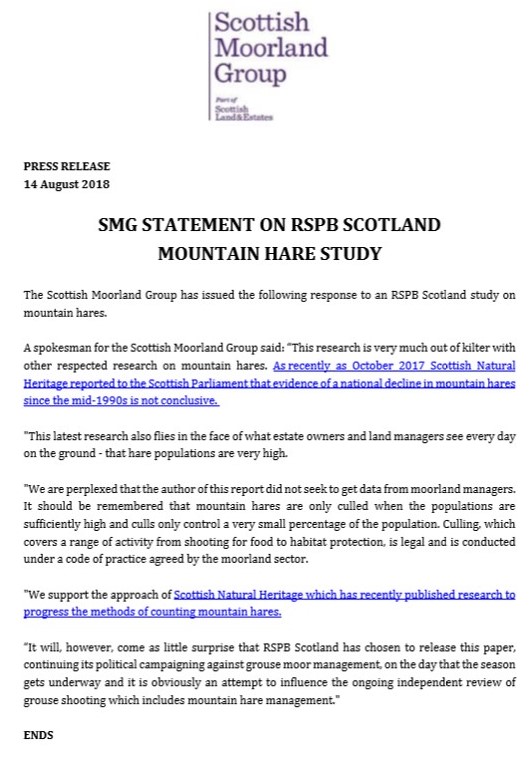
Here’s the full response of the Scottish Moorland Group (part of the landowners’ lobby group Scottish Land & Estates):

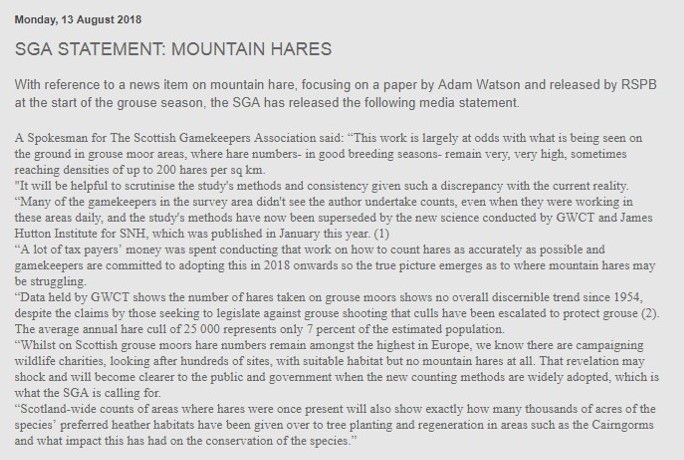
And here’s the full response from the Scottish Gamekeepers’ Association:

Both statements are pitiful in their arguments: ‘We didn’t see him’, ‘He never asked us for our data’ and they confuse rigorously-collected scientific data with vested interest opinion, as seems to be the norm these days. On social media several gamekeepers have chosen to make personal attacks on the integrity of the study’s authors, Dr Adam Watson and Professor Jeremy Wilson, both of whom are highly respected experts within their fields. Questioning the honesty of an 88 year old man, just because you disagree with his research findings, is not a good look.

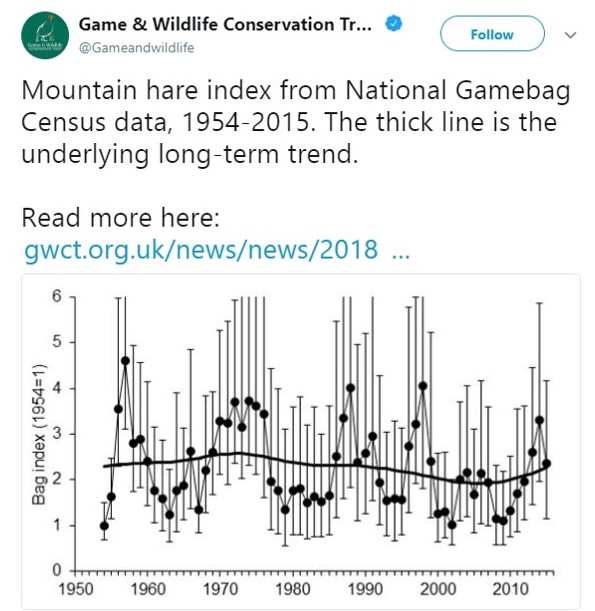
Neither of these two organisations make any attempt to critique the study’s actual scientific methods, although both have disputed the scientific findings and both have posted a copy of a graph from the GWCT, purporting to show ‘no discernible trend’ in the mountain hare population. They’ve probably been encouraged to cite this graph as ‘evidence’ to support this claim because that’s exactly what the GWCT has been doing all day, too:

What none of them seem to acknowledge (or even understand?) is that this GWCT graph bears no relevance whatsoever to the findings of Watson & Wilson that the mountain hare has suffered a catastrophic decline on some grouse moors in NE Scotland over a seven-decade-long study.

This GWCT graph shows data collected as part of the National Gamebag Census as an indication of the number of mountain hares that have been bagged (killed) since the 1950s. It is NOT a graph showing a population census of mountain hares over this period. All it shows us is that gamekeepers have been killing mountain hares at a fairly consistent rate over a long period of time (despite the so-called ‘voluntary restraint’ introduced a few years ago!), irrespective of the species’ declining population status. Dr Hugh Webster has written an excellent blog explaining this (see here).

We might have expected better from the GWCT, although let’s not forget this is the organisation that devised the Strathbraan raven cull ‘study’, recently slammed by scientific experts as being “completely inadequate“, “seriously flawed” and “will fail to provide any meaningful scientific evidence“.

We don’t, however, expect any better from the Scottish Moorland Group (or SLE) or the Scottish Gamekeepers’ Association, as neither are recognised for their glittering academic prowess. Although, the SGA statement does include the sentence, “It will be helpful to scrutinise the study’s methods and consistency given such a discrepancy with the current reality“. Perhaps they’ll ask their mate’s son, that HMRC tax officer (BSc Physics), to critique the authors’ critical thinking and scientific methods. We’ll look forward to that.

But things might be about to change at Scottish Land & Estates – they’re advertising for an ‘Environment Assistant’ with the specific role of ‘developing the organisation’s ability to understand, analyse, interpret and sometimes to challenge, a wide range of scientific reports and data on environmental issues‘:

Read the full job advert here: SLE Environment Assistant job description_Aug2018

God knows SLE needs some help in this area but looking at the job spec, desired experience and salary, SLE isn’t expecting to recruit anyone with much ability. Not that they’ll need much if all they have to do is explain to the Scottish Moorland Director that if the Scottish hen harrier population has suffered a 27% decline over a 12 year period that doesn’t mean the population has “remained static“.

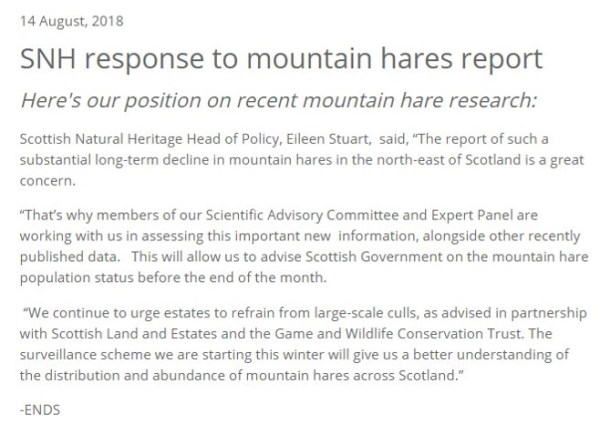
Meanwhile, SNH has responded to the Watson & Wilson mountain hare decline paper with this:

Obviously having learned a lesson from its approval of the “completely inadequate” and “seriously flawed” Strathbraan raven cull licence, SNH is no longer willing to rely upon its own scientific staff and is quite rightly seeking the input of its Scientific Advisory Committee on this important issue.

It’ll be very interesting to see whether SNH is still willing to claim the mountain hare is in ‘favourable conservation status’ (as it did on very shaky evidence last year) in light of today’s publication. If it isn’t in favourable conservation status (and we don’t see how it possibly can be), that should be the green light for the Environment Secretary to extend the closed season year-round, meaning no more mountain hare massacres unless under a specific licence from SNH.

New study reveals shocking decline of mountain hares on Scottish grouse moors

[Photo shows shot mountain hares, dumped and left to rot on Glenogil Estate in the Angus Glens. Photo by OneKind]

Press release from RSPB Scotland (14 August 2018):

SEVERE DECLINES OF MOUNTAIN HARES ON SCOTTISH GROUSE MOORS

New study shows mammals at less than one per cent of original levels

Mountain hare numbers on moorlands in the eastern Highlands have declined to less than one per cent of their initial levels, according to a newly published long-term scientific study.

Counts of mountain hares from six decades of consistent spring counts on moorland managed for red grouse shooting and on neighbouring mountain land were analysed in the research by the Centre for Ecology & Hydrology and the RSPB.

From 1954 to 1999 the mountain hare population on moorland sites decreased by nearly 5% every year. This long-term moorland decline is likely to be due to land use changes such as the loss of grouse moors to conifer forests, and is reflective of wider population declines that mountain hares are facing across their range.

However, from 1999 to 2017 the scale of the moorland declines increased dramatically to over 30% every year, leading to counts in 2017 of less than one per cent of original levels in 1954.

[Graphs from the study give a vivid illustration of the dramatic decline of mountain hares on the study’s grouse moors from 1999 onwards]

The dominant land use in these sites was intensive grouse moor management.  Here, the unregulated practice of hare culling as a form of disease control, ostensibly to benefit red grouse, has become part of the management of many estates since the 1990s, despite the absence of evidence that it has any beneficial impact on total numbers of grouse shot.

On higher, alpine sites numbers of mountain hares fluctuated greatly, but increased overall until 2007, and then declined, although not to the unprecedented lows seen on moorland sites.

The Mountain hare is the UK’s only native hare and was listed as Near Threatened in a recent review by the Mammal Society indicating that the species is of conservation concern in the UK.

[Photo of a blood-soaked mountain hare dumped on Glenogil Estate, Angus Glens. Photo by OneKind]

Dr Adam Watson, of the Centre for Ecology & Hydrology, who was lead author of the work, comments:  “Having reached the age of 88 I am both delighted and relieved to see this paper published in the Journal of Applied Ecology.  Having counted mountain hares across the moors and high tops of the eastern Highlands since 1943, I find the decline in numbers of these beautiful animals both compelling and of great concern.  We need the Scottish Government and Scottish Natural Heritage to take action to help these iconic mammals of the hill – I hope they will listen to the voice of scientific research

Professor Jeremy Wilson, RSPB’s Head of Conservation Science in Scotland who assisted in analysis of the data, said: “It has been an honour to support Dr Watson in the analysis of his extraordinary long-term data set.  These data reveal severe recent declines on grouse moors that are strongly correlated with the start of mountain hare culls for which there is no clear scientific justification.  Urgent action is needed if the future conservation status of mountain hares is to be secure.”

Duncan Orr Ewing, Head of Species and Land Management at RSPB Scotland said: “The mountain hare is a keystone native species of the Scottish uplands. This authoritative research suggests that we should be very concerned about its population status in its former strongholds. We consider that large-scale population reduction culls are both illegal under EU law and unwarranted as a method for controlling grouse disease.

Management of this species should now be more tightly controlled by Scottish Natural Heritage to safeguard mountain hare populations. We expect this subject to be given thorough consideration by the current independent grouse moor enquiry, which is looking at how grouse moors can be managed sustainably and within the law.”

ENDS

The full paper citation: Watson, A. and Wilson, J. (2018). Seven decades of mountain hare counts show severe declines where high-yield recreational game bird hunting is practised. Journal of Applied Ecology. [UPDATE 8am: Now available to read in full here]

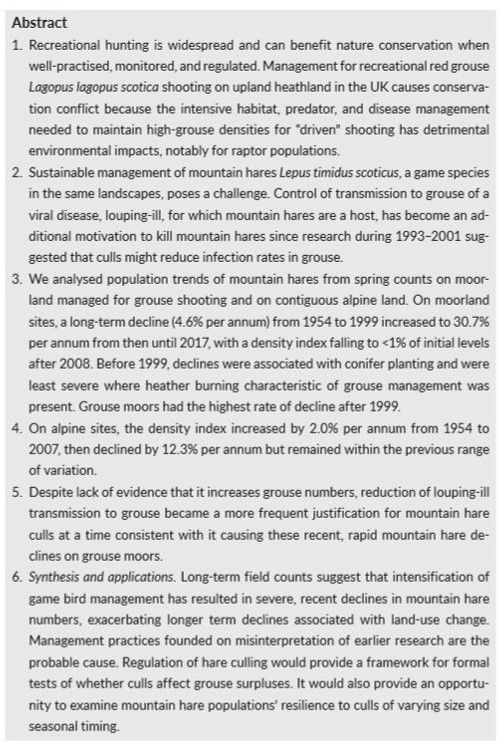
Unfortunately we’re not allowed to publish the paper in full but here’s the abstract:
Amusingly, the Scottish Gamekeepers Association’s response to these damning results is a pathetic attempt to discredit the study by claiming, “Many of the gamekeepers in the survey area didn’t see the author undertake counts, even when they were working in these areas daily“.

The response from Scottish Land & Estates (issued via Media House!) isn’t much better: “We are perplexed that the author of this report did not seek to get data from moorland managers“. Er, that’s probably because Dr Watson knows that gamekeepers’ data aren’t exactly reliable and besides, he was collecting his own data, using a consistent method, for 70 years.

SLE’s press statement continues: “It will, however, come as little surprise that RSPB Scotland has chosen to release this paper, continuing its political campaigning against grouse moor management, on the day that the season gets underway and it is obviously an attempt to influence the ongoing independent review of grouse shooting which includes mountain hare management“. They’re such hypocrites, given what they published on Monday, blatantly timed to coincide with the start of the grouse shooting season!

Anyway, back to more important and relevant matters…..

Under the European Union’s Habitats Directive the Scottish Government has a legal duty to maintain mountain hare populations in a state of good health. In 2014 SNH called for a period of voluntary restraint on hare culls. Data from this study shows that declines continued in many areas despite this period of “restraint”.

In 2015 and 2017 ten environmental NGOs, led by RSPB Scotland, called for a moratorium on mountain hare culls until further information could be obtained to prove that populations were healthy and sustainable. The Scottish Government did not enact this moratorium with the reasoning that there was a lack of evidence to prove that populations were declining.

In 2016, Environment Secretary Roseanna Cunningham, in answer to a Parliamentary Question from Alison Johnstone MSP, stated:

If evidence emerges that large-scale culls are continuing, the Scottish Government will consider the case for tightening regulation of this issue.

Also in 2016, Roseanna addressed a OneKind rally outside the Scottish Parliament and said the Scottish Government opposes mass culls, that legislation to protect mountain hares has not been ruled out, but that the Government needs evidence before it can act.

Earlier this year, First Minister Nicola Sturgeon said in Parliament that the brutal, military style mass culling of mountain hares on grouse moors was “not acceptableafter seeing video footage from OneKind, League Against Cruel Sports and Lush.

The time for talking has ended. The shocking results of this new scientific study cannot be ignored.

Please join 15,000 people and sign OneKind’s open letter to the Scottish Government and SNH calling for an end to this barbaric unregulated slaughter.

UPDATE 20.30hrs: Scottish Land & Estates admits it needs help to interpret scientific data (here)

More shameless Hen Harrier propaganda from Scottish Land & Estates

It’s no coincidence that on the opening day of the grouse shooting season, and the day after Hen Harrier Day, Scottish Land & Estates (SLE, the landowners’ lobby group) has come out with more fake news about how shooting estates are “committed” to hen harrier conservation.

You might have seen a couple of articles about this in the press today, including in The Times (here, but behind a paywall) and in The Express (here, not behind a paywall and virtually identical to the article in The Times so you might as well read this one).

Fortunately, the journalists writing these articles didn’t rely solely on the press release from SLE (see below) but instead did their own research and included information about the illegal persecution of hen harriers on grouse moors, the long-term population decline in hen harriers, and also added a bit about the Scottish Government’s commissioned review on grouse moor management following the damning findings of the Golden Eagle Satellite Tag Review, which demonstrated 31 of 141 sat-tagged golden eagles had ‘disappeared’ in suspicious circumstances on driven grouse moors.

It is indeed fortunate that the journalists did their own homework instead of simply cutting & pasting SLE’s press release, because if they hadn’t, this tosh is what would have appeared in today’s papers. Thanks to the journalist who sent us a copy:

Either SLE hasn’t read/understood the scientific papers and reports on this issue, or it has read/understood them but has chosen to ignore the findings and instead publish a load of made-up nonsense in a desperate attempt to mislead the public about how great grouse moors are for raptor conservation. Actually, we know that SLE has read/understood the papers because Tim (Kim) Baynes of SLE is quoted in this BBC article last year as saying the most recent population decline in hen harriers was ‘disappointing’.

Hen harrier numbers in Scotland HAVE NOTremained static“, as SLE claims. The last national survey (2016) revealed the Scottish hen harrier population has suffered a decline of 27% since the 2004 national survey. That’s over a quarter of the population gone in twelve years. In what way can that possibly be described as “remaining static“?

There is also no evidence whatsoever that “raptor crime of all types has been dropping steadily” and that “real progress has been made“, as SLE claims. What we do have is evidence of the continued suppression of various raptor species on land managed for driven grouse shooting as revealed by national and regional surveys (e.g. red kitehen harrier, golden eagle, peregrine), and evidence that the raptor killers have changed their tactics, no longer relying so much on the use of illegal poisoned baits (which are easy to detect) but instead preferring to shoot these raptors and then quickly remove the evidence, although if the shot raptor is carrying a satellite tag, the associated data evidence is impossible for the criminals to hide. Does this recent tally of ‘missing’ sat tagged raptors, just in the space of the last year, look like “real progress has been made“?

And as for SLE’s claim that golden eagles “thrive” on grouse moors – it’s a well-rehearsed claim that was rightly condemned by the RSPB as “risible, make-believe tosh” the last time it was made in 2016 (see here). And of course since then the Golden Eagle Satellite Tag Review has shown that golden eagles are 25 times more likely to suddenly and inexplicably ‘disappear’ in highly suspicious circumstances on some driven grouse moors than anywhere else in the world.

How on earth does SLE (and it’s associated bodies such as the Scottish Moorland Group and the Gift of Grouse) keep getting away with publishing such drivel?

The Heads up for Hen Harriers project is supposedly a partnership – do the rest of the partners (PAW Scotland Raptor Group and all its members, and SNH) support these false claims? If not, why aren’t those partner organisations saying something about this? Why hasn’t SLE been booted off this ‘partnership’?

And speaking of the Heads up for Hen Harriers project, you may remember we’ve blogged extensively about this partnership sham, and it was slammed in Parliament by Andy Wightman MSP as “a greenwashing exercise” (see here).

We blogged last December about some of our concerns about the claims being made about this project (see here) but we needed to do a bit more research to confirm our suspicions. We haven’t forgotten about this; we’ve been trying, unsuccessfully, to get some information out of SNH via a series of FoIs but SNH has consistently refused to provide the requested information. So we’ve had to do some fact checking via various different routes, which has been time-consuming, but we’re just about there. We intend to blog about our findings shortly, and it doesn’t look good for either SLE or SNH.

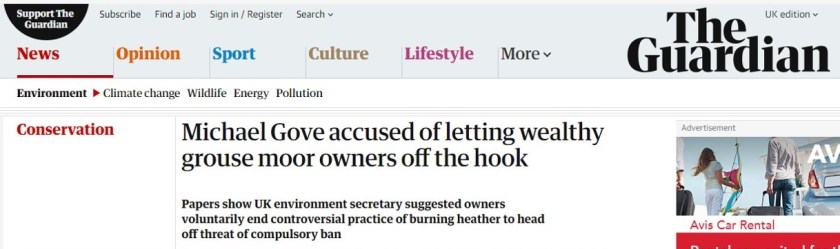
Michael Gove accused of letting grouse moor owners off the hook

There’s a fascinating article in The Guardian today about how the UK Environment Secretary, Michael Gove, appears to have held a secret meeting with wealthy grouse moor owners to encourage them to voluntarily end controversial heather burning to head off a threat of a compulsory ban by the European Commission.

Have a read of the Guardian article (here) and then have a look at this blog on the website Who Owns England, written by environmental campaigner Guy Shrubsole, whose painstaking research is revealing quite a lot about grouse moor ownership in England, including the detail behind today’s headline story.

Aside from the newsworthiness of Michael Gove’s apparent interest in protecting grouse moor owners from the potential constraints of European environmental protection regulation, there’s something else very interesting about this story, as referenced by Mark Avery this morning.

Earlier this year (March), Mark submitted several FoIs to DEFRA to ask whether Michael Gove had met with Teresa Dent (GWCT), Ian Coghill (GWCT), Nick Downshire (Jervaulx Moor) and Amanda Anderson (Moorland Association). DEFRA’s response was a bit odd – agreeing that a meeting had taken place with Teresa Dent but apparently not with the other three (see Mark’s blog here for details).

Now, have a look at the redacted list of attendees at this meeting with Michael Gove to discuss a voluntary end to heather burning, which took place on 1 February 2018 (i.e. BEFORE Mark submitted his FoI):

It’s not very helpful, is it? What is helpful though, is that whoever undertook this redaction exercise didn’t do a very good job because if you cut and paste the text in to a WORD doc, the redacted names can be seen:

Ian Coghill’s name isn’t on the list of attendees, but Nick Downshire’s name is there, as is Amanda Anderson’s. Imagine that! Mark Avery says he’s going back to DEFRA to ask for an explanation about their ‘forgetfulness’.

Another interesting angle to today’s headline story is this notion of ‘voluntary’ action. This is becoming quite a theme for grouse moor management, isn’t it? We’ve seen the so-called ‘voluntary restraint’ on the mass slaughter of mountain hares on grouse moors in Scotland (not working), the so-called voluntary regulation of game shoot management in the form of the British Game Alliance (not fit for purpose, see here and here), the recent ‘voluntary suspension’ by Strathbraan gamekeepers on killing ravens (pointless, as the waders whose chicks they were supposedly protecting have finished breeding for this year anyway), and now a ‘voluntary end’ to environmentally damaging heather burning on grouse moors.

The common demoninator in all this ‘voluntary’ action is that none of it is legally binding. So if any of these practices were to continue (and we know some of them are), the enforcement authorities wouldn’t be able to do a thing about it. Meanwhile, the grouse shooting industry and the Westminster & Scottish Governments can all pretend that grouse moor managers are truly responsible curators of the countryside, as evidenced by their ‘voluntary self-regulation’, so there’s no need to bring in any legislation to control their clearly unsustainable practices.

Great, isn’t it?

A Hen Harrier Day poem

This poem was delivered at the Hen Harrier Day event at the RSPB’s superb Rainham Marshes reserve yesterday and a number of people have suggested it should be posted on this blog.

[Photo by Alan Shearman from his blog about Rainham Hen Harrier Day 2018]

HEN HARRIER DAY

by Ruth Tingay

2014 is when it all began

Amidst Hurricane Bertha at the Derwent Dam

There was a bloke called Avery and a bloke called Packham

And the Sodden 570, united in passion.


We arrived as strangers but left as friends

Determined to bring the killing to end

To protect our skydancer from the guns and the traps

And the murderous intent of the men in tweed caps


There were only four nests in England that year

The grouse shooters toasting success with a sneer

But to underestimate us was their biggest mistake

We are defiant and strong and we’ll do what it takes


These rallies and banners are just the beginning

There’s a long way to go but we know about winning

They can hurl their abuse and call us all liars

We don’t give a damn ‘cos our bellies have fire


We’ve come a long way since that very first rally

Westminster, the papers, all over the telly

We’ve changed the narrative and people are listening

Grouse shooting no longer all shiny and glistening


We’re exposing their fiction, their greed and their crimes

Their friends in high places all wilfully blind

Nine nests this year and we’re supposed to be pleased

Our hen harrier population, brought to its knees


You can keep your fake partnerships and your grouse-shooting peers

Your Gilruths, Amandas and your crocodile tears

Stuff your brood meddling right up your arse

We know what you’re up to and we know it’s a farce


There’s progress in Scotland and the grousers are fearful

That’s reason enough for us to be cheerful

So raise up your banners, keep singing our song

By standing together we won’t go wrong


END

The event was superbly organised by Lisa Mobley and her team of volunteers. Other speakers included Mark Avery, Natalie Bennett, Martin Harper, Chris Packham and Barry Gardiner MP. The presentations were filmed by PJS Films and can be viewed HERE.

Other Hen Harrier Day events took place on Saturday and there are more being held today, the Inglorious 12th. Find the one closest to you HERE.

[Photo from Hen Harrier Day 2018 at RSPB Rainham Marshes by @RSPBUrban]

Case against grouse moor gamekeeper Timothy Cowin: part 4

Criminal proceedings continued last Monday (6 August 2018) against grouse moor gamekeeper Timothy Cowin, who is accused of a series of alleged wildlife crimes, including the shooting of two short-eared owls in April 2017 at Whernside, Cumbria in the Yorkshire Dales National Park. It is further alleged he was in possession of items (a shotgun and an electronic calling device) capable of being used to kill wild birds.

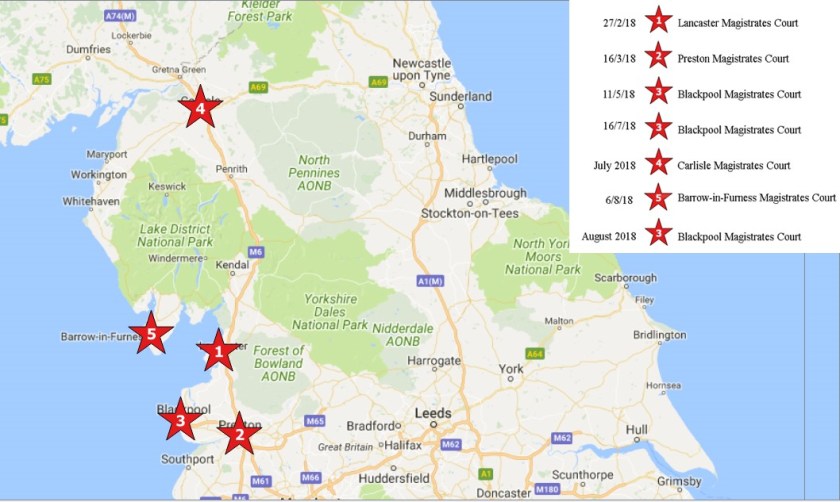
Since court proceedings against Mr Cowin began six months ago, this case has been dragged around a number of magistrates courts in the NW of England. It’s been quite astonishing:

The first court hearing took place at Lancaster Magistrates Court on 27 February 2018.

[Lancaster Magistrates Court, photo by Ruth Tingay]

Mr Cowin’s solicitor, Michael Kenyon, requested an adjournment and no plea was entered. The defence also requested that the case be heard by a District Judge instead of a panel of magistrates (a District Judge is legally-qualified, usually a former solicitor or barrister, whereas magistrates are non-legally qualified volunteers who depend on a qualified legal advisor in the court to direct them on the relevant law). The defence’s request was granted.

The next court hearing took place at Preston Magistrates Court on 16 March 2018 for a case management hearing in front of District Judge Goodwin (the same judge who presided over the Bleasdale peregrine case).

[Preston Magistrates Court, photo by Ruth Tingay]

This was a farcical hearing that we blogged about at the time (see here). No plea was entered by the defendant and his solicitor argued that the case should be thrown out on legal technicalities because he claimed some of the witness statements were incorrectly dated and some of the procedural paperwork was “defective in its wording”.

The case was adjourned and District Judge Goodwin suggested the case be moved to Blackpool to be heard by another District Judge (DJ Chalk) as DJ Goodwin thought she might be away and didn’t want to delay future proceedings.

The case duly moved to Blackpool Magistrates Court and was due to be heard there on 11 May 2018. However, the case was adjourned again.

[Blackpool Magistrates Court, photo by Ruth Tingay]

The case was scheduled to continue at Blackpool Magistrates Court on 16 July 2018. However, the DJ was unwell so the hearing was cancelled a few days earlier. The court admin managed to get this information to the defence team in time but failed to notify the prosecution team, who all duly turned up in Blackpool only to be told the case wasn’t running that day after all!

Later in July, according to a court clerk, District Judge Chalk appears to have reviewed the legal arguments in private chambers at Carlisle Magistrates Court.

A further case hearing was scheduled for 6 August 2018, this time at Barrow-in-Furness Magistrates Court. This hearing did go ahead and legal argument was finally heard. District Judge Chalk apparently ruled in favour of the Crown Prosecution Service.

After the District Judge’s ruling in favour of the CPS, the defendant entered a not guilty plea. The next court hearing is expected to take place later this month, possibly back in Blackpool.