More wildlife destruction on more Scottish grouse moors

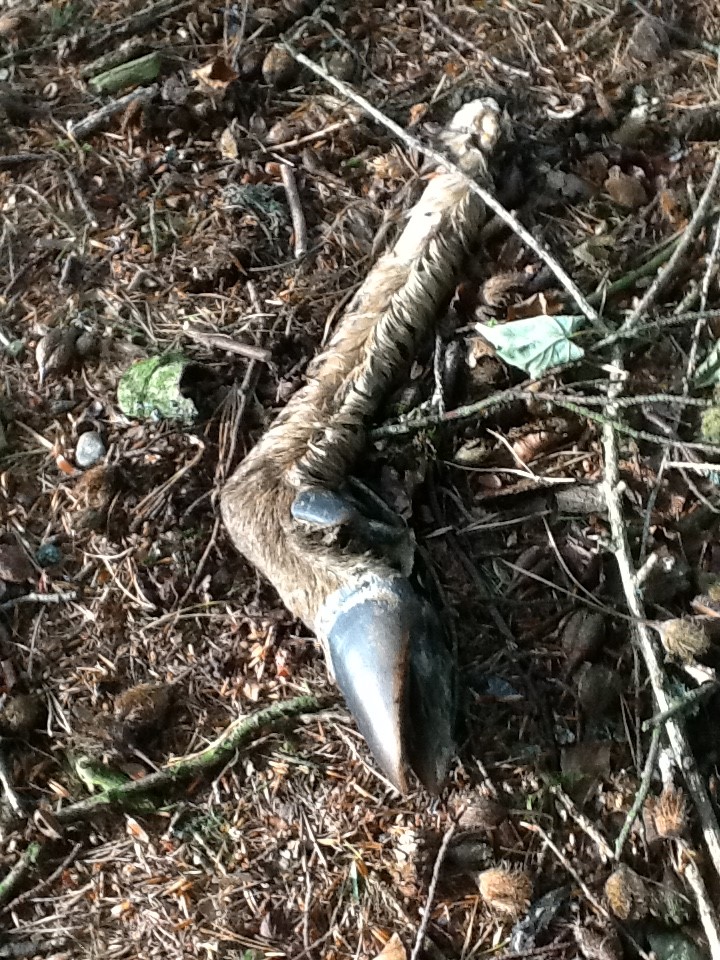
Yesterday’s blog showing images of wildlife carnage photographed on a grouse moor in the Moorfoot Hills, south Scotland has caused quite a reaction and a few blog readers have been sending us their own grisly photographic evidence from walks in the hills.

As we said yesterday, this wildlife destruction is characteristic of what you’ll find on many grouse moors, especially those that are intensively managed for driven red grouse shooting, where it’s not unusual to have 2,000+ traps set out to kill native wildlife (just because shooting estates want to maximise the number of grouse available for ‘sport’ shooting). As we saw yesterday, and as you’ll see in today’s blog, these traps are indiscriminate and often catch non-target species.

This is routine, every-day wildlife carnage on driven grouse moors. Or as Rob Sheldon (@_robsheldon) described it on Twitter yesterday, ‘collatoral damage’. Red grouse is king and anything that gets in the way of red grouse production will be killed.

The photographs also sparked a lot of discussion about whether a trap was lawfully or unlawfully set. It’s a complex issue, the legislation is mostly ambiguous and debate is set to continue on each and every case. However, a good overview of the legislation relating to tunnel traps (shown in yesterday’s and today’s blog) can be found here, written in 2016 by former Police Wildlife Crime Officer Alan Stewart.

The following photographs come from three different grouse-shooting estates in the Angus Glens. It’s hard to believe they’re not historical photographs from a by-gone Victorian era, but no, the traps were photographed in 2013 and 2015, and the stink pit was photographed last week.

Stink pits are locations where animal corpses are dumped and the stench of rotting flesh is used to attract in other predators that are then killed and added to the pile. Incredibly, this disgusting practice is entirely unregulated and still legal although last year the Scottish Government announced two reviews of stink pit use (see here), including as part of the current review of grouse moor management (see here) which is due to report next spring.

Wildlife destruction on a Scottish grouse moor

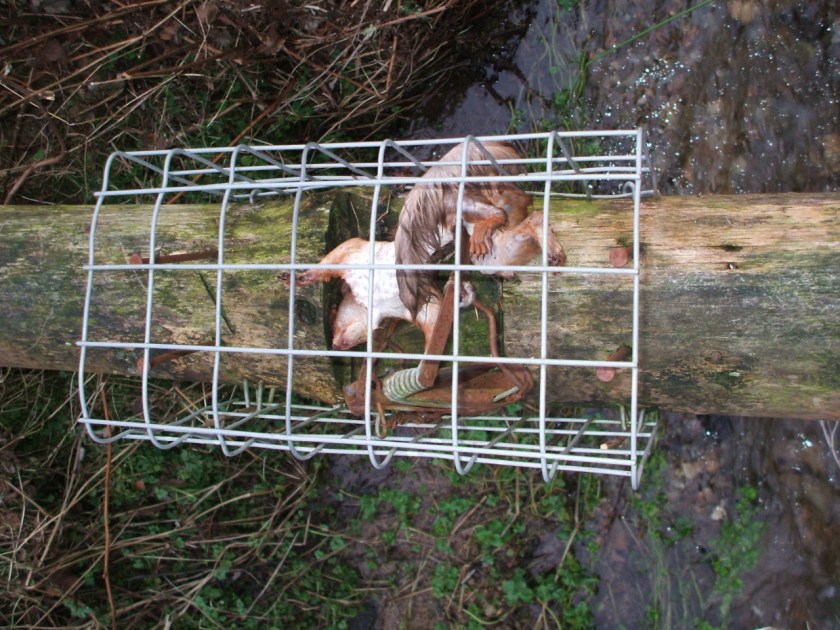
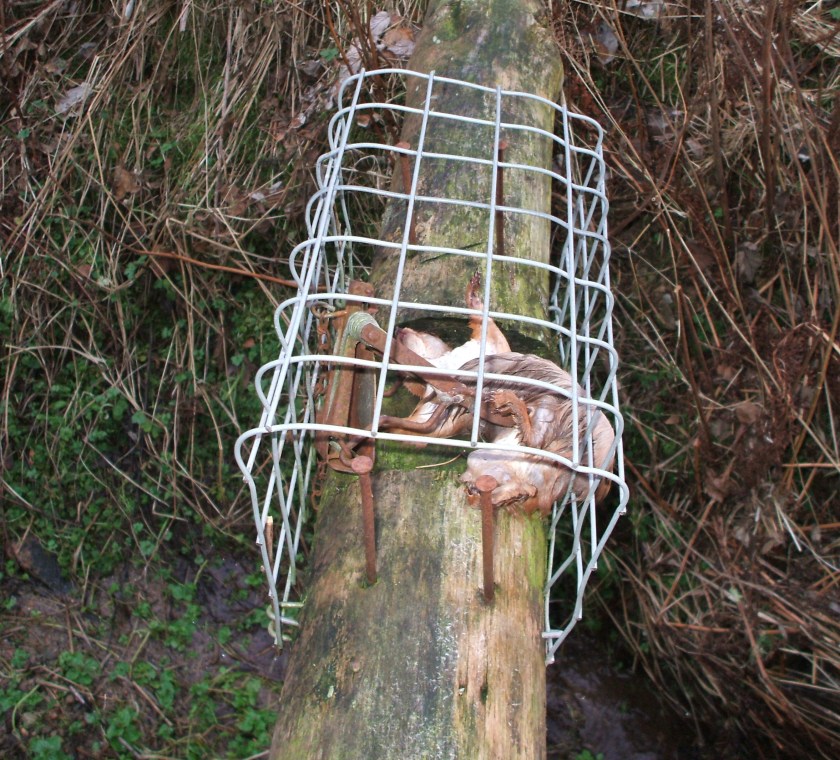
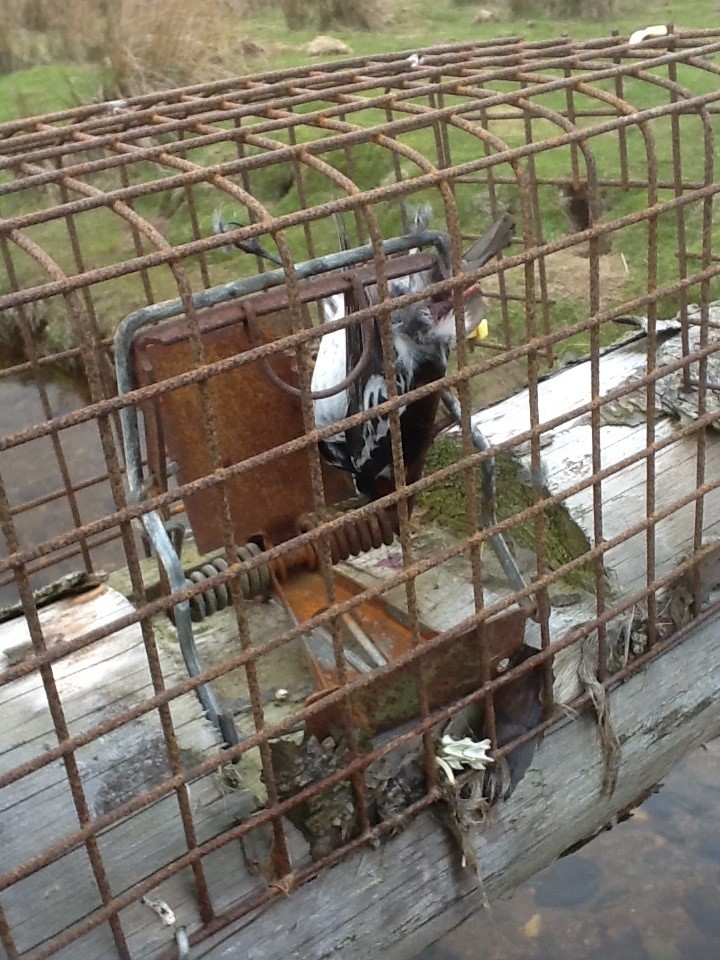
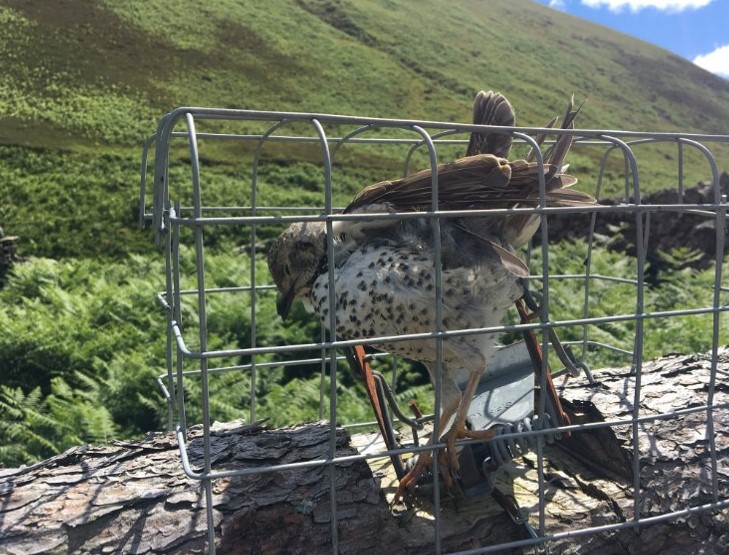
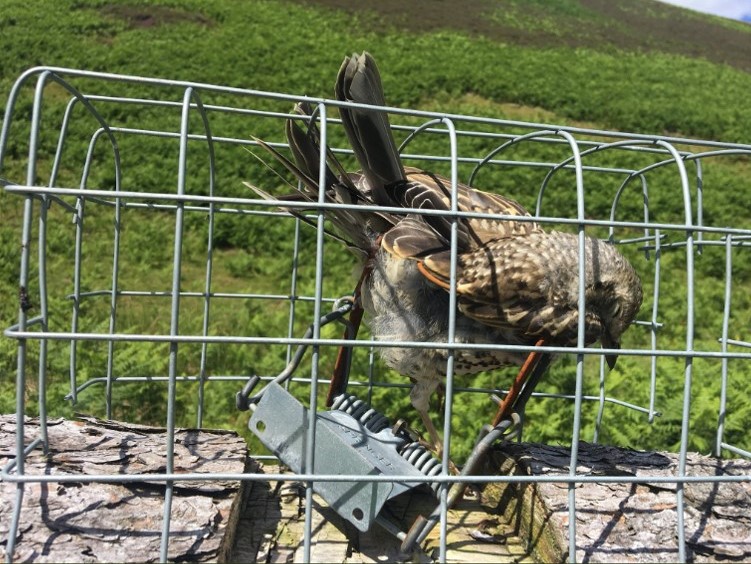
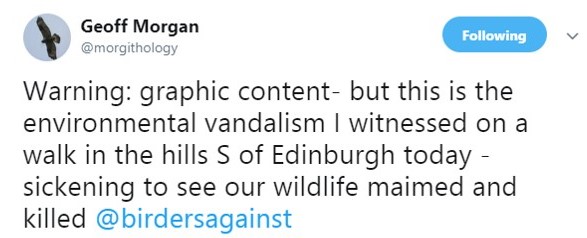
The following photographs were posted on Twitter yesterday. They were taken on a grouse moor in the Moorfoot Hills, south Scotland, and are representative of what you’ll find on many grouse moors across northern England and Scotland.

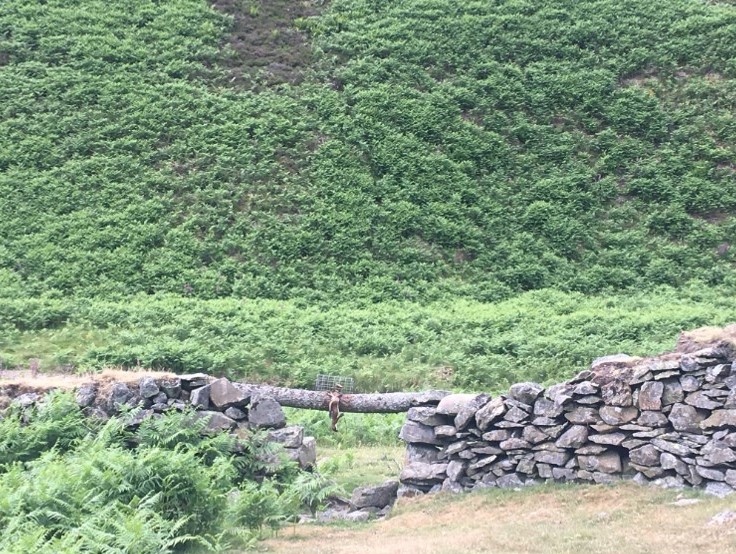
The traps ‘appear’ to be lawfully set (i.e. the spring trap has been set within a natural or artificial tunnel and the entry/exit is tapered to restrict access to non-target species), although clearly not restricted enough to prevent this mistle thrush getting in. The rules about what makes a trap lawfully or unlawfully set are notoriously vague – sometimes its obvious (e.g. if the trap is set in the open) but often it isn’t clear at all.

And you have to wonder how a trapped stoat (a lawful target species) can get underneath the wire cage to hang below the log to suffer what must have been a gruesome and prolonged death.

Grouse moor management = wildlife carnage.

UPDATE 6 July 2018: More wildlife destruction on more Scottish grouse moors (here)

#Justice4Ravens: application lodged for judicial review

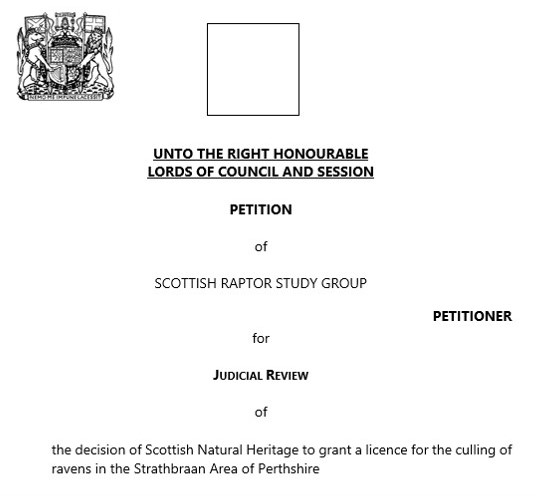
Yesterday a legal application seeking permission for judicial review of SNH’s disgraceful decision to licence the mass culling of ravens in Strathbraan ‘just to see what happens’ was lodged at the Court of Session on behalf of the Scottish Raptor Study Group.

The fantastic legal team working on this issue (thanks to the generosity of those who supported the crowdfunder) have worked hard to build a case and lodge this application within the restricted time frame allowed. Kudos and thanks to Sindi Mules of Balfour & Manson and Aidan O’Neill QC of Matrix Chambers.

The next steps will be a court order permitting the lawyers to serve the petition on SNH, and then a period of 21 days for SNH to provide ‘Answers’ (a response) to the points raised in the petition.

Then a judge at the Court of Session will consider the petition and the Answers and decide whether the case is strong enough to proceed to a full substantive hearing. There isn’t a set time frame for this and much will depend on how busy the court is.

We’ll keep you posted, of course, but won’t be providing any further details of the petition as legal proceedings have now begun.

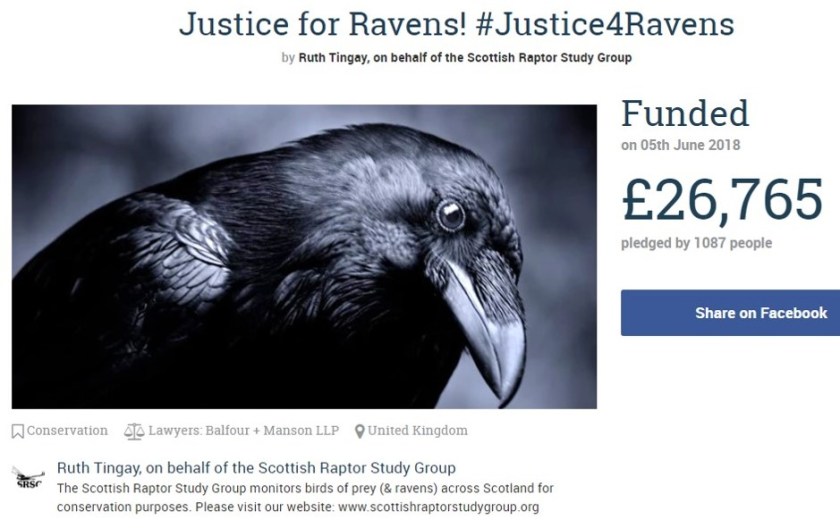
The crowdfunder closed early this morning and the stretch target of £25k was smashed! An amazing 1087 people donated £26,765. That’s brilliant!

Thank you to everyone who donated and supported this effort to get #Justice4Ravens and made this legal challenge possible.

Hen harriers breed on grouse moor in Peak District National Park

Press release from the National Trust, 3 July 2018:

Welcome return of the skydancer to the High Peak

One of Britain’s most threatened birds, the hen harrier, has bred on the National Trust’s High Peak Moors in the Peak District National Park, for the first time in four years.

The four chicks are said to be in a ‘healthy condition’ after hatching just a few days ago on land managed by the conservation charity.

[Photo of the 4 hen harrier chicks from National Trust website]


The hen harrier is one of the most special birds of the British uplands and is famed for the adult’s mesmerising and dramatic ‘sky dance’, which the male performs as it seeks to attract a female.

We’re delighted to learn of this nest” said Jon Stewart, the National Trust’s General Manager for the Peak District.

The hen harrier has been one of the most illegally persecuted birds of prey in Britain for many years and we have set out on a mission to work with others to create the conditions for the harrier and other birds of prey to thrive once again in the uplands.

We hope this will be a positive model for improving the fate of our birds of prey and providing the healthy natural environment that so many people care about and want to see”.

In 2013 the Trust published its High Peak Moors Vision, which put at its heart restoring wildlife, including birds of prey, and involving people in the care of the moors.

The conservation charity leases much of its High Peak moorland for grouse shooting and all shooting tenants have signed up to actively supporting the Vision.  As well as the hen harrier, initial signs are promising this year for other species such as the peregrine falcon, merlin and short eared owl.

It is critical the birds are now given the space and security to rear their young without the threat of disturbance or worse.” Jon continued, “The Trust will be working with its partners and tenants to give the birds the best chance of success. We are also working with the RSPB EU-funded Hen Harrier LIFE project to fit satellite tags to the chicks so that we can monitor their movements and learn more to inform the conservation of this very special bird. There is a great sense from everyone closely involved that we want this to work not just for these birds now, but as a symbol for the whole future direction of our uplands.  Uplands that are richer in wildlife and beauty, widely enjoyed and providing huge public benefits.”

ENDS

This is very encouraging news indeed. It’s early days, of course, but the fact the harriers have been ‘allowed’ to settle for a breeding attempt is a vast improvement in this part of the Peak District National Park, where two years ago we reported on an armed gamekeeper using a decoy hen harrier in what was widely believed to be an attempt to attract in, and then shoot, any prospecting hen harriers (see here).

As a direct result of that video footage, the National Trust bowed to public pressure and pulled the lease from the shooting tenant (see here) and earlier this year new tenants were installed on several moors in the area (see here).

Let’s hope these chicks are ‘allowed’ to fledge, without any brood meddling from Natural England, without being stamped on by neighbouring gamekeepers, without the adult male being shot while away hunting, and without the nest receiving any disturbance from well-intentioned birdwatchers.

It’s also good to see that if they do fledge, the chicks will be satellite-tagged by the RSPB’s Hen Harrier LIFE Project and not by Natural England, so we might just get some information about their fate.

#Justice4Ravens crowdfunder target smashed!

A massive, massive thank you to everyone who has supported the #Justice4Ravens crowdfunder, which smashed through its £25k target this lunchtime!

A fantastic response by over 1000 people who’ve been prepared to put their hands in their pockets and support this legal challenge against SNH’s deliquent decision to issue a raven cull licence to a load of grouse moor gamekeepers just ‘to see what happens’.

Some said a crowdfunder was futile and it’d be foolish to start it as we’d never raise £25k ‘just for ravens’. It turns out they were foolish to underestimate the strength of feeling on this issue.

Thank you, to everyone who has supported this effort, no matter how little or how much – you supported it and that’s what counts.

We’ll provide updates on proceedings as and when its appropriate.

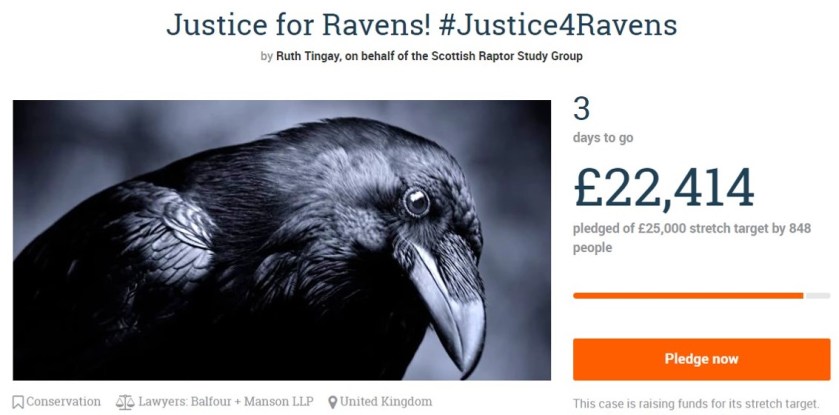
Last push on #Justice4Ravens crowdfunder

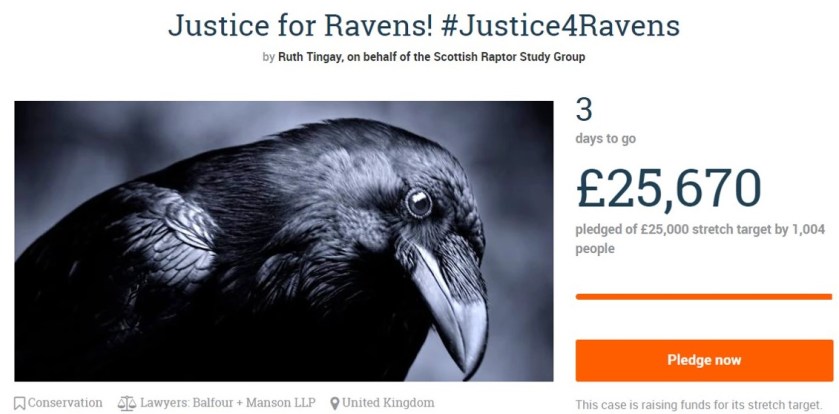
There are just three days to go for the Scottish Raptor Study Group’s #Justice4Ravens crowdfunder.

Aiming to reach £25k, this fundraiser was set up to help cover the costs of a legal challenge against Scottish Natural Heritage’s disgraceful decision to allow the killing of ravens on grouse moors as part of a peverse experiment ‘just to see what happens’.

Several top-class lawyers, all experts in judicial review, are currently working hard on building the case.

An incredible total of £22,414 has been raised so far by an amazing 848 donors, including £1,750 raised by The Probable Bird Society (@ProbableBS) through sales of #Justice4Ravens t-shirts and beanies.

It would be fantastic if the remaining £2,586 could be raised by Wednesday to reach the target by the time the crowdfunder closes.

If you’d like to help this fight, please visit the crowdfunder page HERE

THANK YOU!