
Well this is fascinating.
In December 2017, a pest control company and one of its directors was sentenced for the illegal storage of poisons, following an HSE investigation in to the alleged secondary poisoning of a tawny owl (by rodenticide).
During the investigation, a number of poisons not authorised for use were found improperly stored at the premises. In addition, part used canisters of Phostoxin (a compound that reacts with moisture in the atmosphere or the soil to produce phosphine, a poisonous gas, used to control rabbits within their burrows) were found stored inside a filing cabinet within the workplace.
Rodent Service (East Anglia) Limited of Cooke Road, Lowestoft, Suffolk pleaded guilty to breaching Sections 2 (1) and 3 (1) of the Health and Safety at Work etc. Act 1974. The company has been fined £100,000 and ordered to pay costs of £10,000. The company was also ordered to pay a victim surcharge of £170.
Donald Eric Martin, Director of Rodent Service (East Anglia) Limited also pleaded guilty of an offence of neglect by virtue of S37 of the Health and Safety at Work etc. Act 1974. He was sentenced to a six months in prison, suspended for 12 months, and ordered to pay costs of £1000 and a victim surcharge of £115.00.
Details of this case can be found on the HSE website here (thanks to one of our blog readers, Mick, for drawing this to our attention).
Now, compare the outcome of this case with that of the recent case involving the discovery of an illegal poisons cache found buried in a hole in woodland on Hurst Moor, a grouse moor on the East Arkengarth Estate in North Yorkshire.
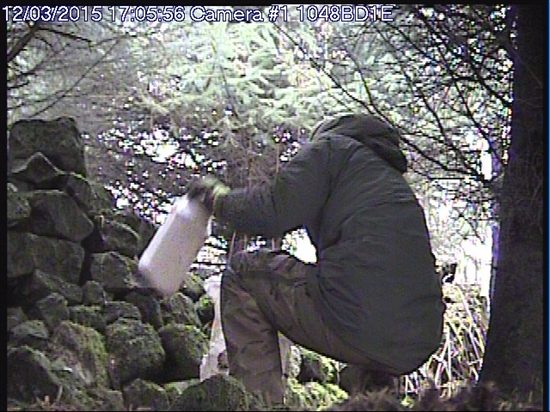
In the East Arkengarth Estate case, the RSPB had discovered a number of poisons, including Cymag (another fumigant with similar properties to Phostoxin), Bendiocarb and Alphachloralose and had identified a gamekeeper who was filmed visiting the cache. However, the Crown Prosecution Service refused to prosecute due to ‘procedural concerns’ but North Yorkshire Police, quite reasonably, considered the gamekeeper unfit to be in charge of firearms and removed his firearms certificates.
The gamekeeper appealed this decision (with the help of the BASC Chairman as his defence lawyer!) and the court held that although it was accepted he had stored dangerous poisons at an unauthorised location, removing his firearms certificates was deemed ‘disproportionate’ and they were duly reinstated.
Although there are differences between these two cases, there is one very clear parallel. Both cases involved professional pesticide users who should have completed COSHH risk assessments and training and thus known there are very strict rules and regulations about the storage and use of these inherently dangerous chemicals.
In one case, not connected with the grouse shooting industry, the company (and its Director) was absolutely thrashed by the court for such serious offences.
In the other case, directly linked to the grouse shooting industry, there was no prosecution, the gamekeeper was considered fit to be entrusted with a firearm, and there was no subsidy withdrawal for the estate as the poisons cache was found in a small plantation, not on agricultural land (see here).
In other words, there were no penalties or consequences whatsoever for the East Arkengarthdale Estate and its employee.
Amazing, eh?
 Raptor Persecution UK
A total re-working/re-writing of the law over use of video evidence – which I presume was the “procedural problem” in the grouse moor case – is needed to sort out this idiotic anomally. Starting in Scotland where our parliament seems a bit more clued up on environmental matters, if not always on the scale of the problem of grouse moors…How on earth can the health and safety of the general public be of lesser concern than that of employees working in a building in a built up area?
Excellent work spotting this RPUK, once done the anomaly and implications are very clear indeed. Good item to bring up whenever the estates whinge about how hard they are being treated, the opposite is true clearly.
It seems that not a day goes by without us hearing of yet another abuse of power by the landed gentry. They get away with this abuse because of a lack of information to the general public. Clearly only a very small number of people know about this due to blogs such as this or M Avery’s.
The politicians and courts know they have nothing to fear as long as this remains the case, and will continue to protect their friends with no fear of a backlash.
While our NGOs remain silent on the issues we need to find another way to publicise what is going on to a much wider public.
So far, we are just preaching to 123000 converted.
Exactly , this the problem but we seem to be up against an establishment brick wall here , I have on numerous occasions highlighted similar scandalous stories to left leaning newspapers and conservationist /journalists .I presume that RPUK , Mark Avery and the like have also tried and failed to bring incidents to a wider audience. We can tut tut and wring our hands as much as we like but until we reach the general public ( who would be totally aghast if they knew what was going on ) then we are are just raising our own blood pressures.
How we take this forward I dont know , the only wildlife story newspapers seem interested in is the cuddly polar bear having a baby one ( Failing to point out by the way the futility and cruelty of imprisoning these poor beasts in sordid conditions) . This is the reality of where we are at present in engaging the general public in wildlife debate.
bastards always win when will joe blogs learn
The Landed Gentry always win….when will Joe Public learn??
I’d doubt many Gamekeepers will have done COSHH training, or any complete risk assessments being written by estate management as they cant obviously state that banned poisons are in use. I remember writing a letter to the Scottish Environment minister asking about this, and its the responsibility of the HSE (not devolved) to chase on breaches in Scotland too.
Bringing the perception of lack of training, regular risk assessments, breaches to their attention where there has been evidence of Hazardous substances found on an estate should be the responsibility of the police? Or of not them, then I’d think anybody can flag concerns.
I’d suspect even the use medicated grit would fall under this legislation (its labelled as an irritant https://www.spexcertiprep.com/MSDS/S-4611.pdf, and identified to be kept out of reach of children too for that matter) so Id think COSHH applies before it can be used and stored, as well as written risk assessments for its use, including danger to the public on land which is accessible. And are the medicated grit boxes on estates labelled warning the public not to touch them, and are clients on shoots told about known hazards on the moors?
I’d think video evidence is irrelevant for COSHH legislation – if the substance is on an estate regulations (and the associated red-tape) needs to apply.
Here’s a couple of other cases you might want to use as comparisons. The first I think is probably a bit harsh as the couple seemed to have no idea they were breaking the law or the true value of the birds. Certainly not hardened criminals. The second is not unreasonable.
http://www.nwcu.police.uk/news/nwcu-police-press-releases/father-and-daughter-plead-guilty-to-trying-to-sell-wild-peregrines/
http://www.sidmouthherald.co.uk/news/falconer-s-career-in-ruins-after-he-forged-eagle-s-passport-1-3889886
I have often wondered why HSE are not involved in cases of misuse of toxic substances. I think it is an excellent angle of attack. I also wonder about the inland revenue and beaters wages. I bet they are paid in cash.
Because Gerard HSE in my experience, are as hidebound as the police forces appear to be in these cases – too much forelock touching.
The HSE are all about education first, enforcement second, then prosecution. The reason behind the ‘forelock tucking’ is due the fact that they want to be seen to help industry rather than enforcer. This is bourne out by their continuing campaign against the ‘elf and safety gorne madam’ cries. In reality when people quote ‘on the grounds of health and safety’ they really mean ‘in order to protect us from any litigation’.
They will always look to help and educate rather than prosecute. In the case of the estate they would probably visit ask to see the risk assessments and COSHH data, if the estate didn’t have this in place they would point them in the right direction, on how to do this. But they would take it seriously and arrange follow up visits.
There is a more serious issue however in regarding the shooting (and right leaning) press in the vilification of regulation as a bad thing. I find is very strange the shooting estates have a much more less regulation than other food producers.
This is going off-topic, but it’s the sort of thing we need promulgating if the whole issue of shooting is to be brought to the attention of a wider audience:
https://www.thepetitionsite.com/en-gb/takeaction/538/198/756/?z00m=29933049&redirectID=2568220433
As regards the two poisoning cases, what sticks in my memory is the duplicity of the BASC in supporting this gamekeeper yet, in another place on the same day, saying that offenders against wildlife should get their just deserts!
Good luck to those who want to nail thesew basteds, there is far too much of this going on.
As usual I agree with J. Coogan’s comments. I would add that Chris Packham has brought an awareness of raptor persecution to a much wider audience. Such a shame that can’t be said of David Attenborough.
Yet another fine blog pointing out the ridiculous. I know how incensed we all feel about this but imagine how pissed off Donald Martin of Rodent Services would feel!
Its not just the apparent duplicity of the authorities, particularly returning [an alleged] wildlife criminals shot gun etc, it is the fact that the poisons in the cache have no legitimate and legal use by a gamekeeper. If the court accepted that the cache was his, the question then to ask was why the hell was he not prosecuted?
The estate itself has an unenviable reputation, yet the keepering staff seem to have nine lives after allegedly being responsible for xxxxx xxxxx xxxxx xxxxx xxxxx xxxxx xxxxx xxxxx xxxxx xxxxx xxxxx xxxxx xxxxx xxxxx xxxxx xxxxx xxxxx xxxxx xxxxx xxxxx xxxxx xxxxx xxxxx xxxxx xxxxx xxxxx xxxxx xxxxx xxxxx xxxxx xxxxx xxxxx xxxxx xxxxx xxxxx xxxxx xxxxx xxxxx xxxxx
What happened to Rodent services is harsh but fair what happened at and to East Arkengarth Estate is a travesty and an anathema to law enforcement.
Because the CPS had ‘procedural concerns’. Whether we like their decisions or not, we have to accept that they know what they’re doing. They may have considered that there was a weakness in the case which made it insecure as it could be exploited by the defence – I know what tack I would have taken if I’d been defending him. Begs the question as to which would have been worse – the case not being taken or a smug keeper coming out of court grinning from ear to ear because the case against him had collapsed on an evidential issuer? If the latter had occurred, no doubt the CPS would then have been asked why they’d allowed the case to proceed in the first place!!
I accept all that BUT in the court case for the return of his firearms and shotgun certificates and thus his guns and the right to use them he admitted in that court case that the poisons cache was his. Why then on the basis of that admission was he not prosecuted for the illegal possession and storage of those poisons and pesticides. To put it another way he admitted to an offence in court of which he has not been charged or prosecuted. In my mind found guilty or not he is a self admitted wildlife criminal and should not be entrusted with firearms.
[Ed: Hi Paul, as an important clarification, as far as we’re aware this individual didn’t ‘admit’ in court that the poisons cache was his; it was reported that the court ‘accepted’ he was involved. This, presumably, came from an admission somewhere along the way but we don’t know when/where it happened, if indeed it did].
It might well have arisen from the combination of the photograph of a person at the cache and him subsequently being identified as that person. Even if he had admitted that the cache was his in the course of the firearms certificate court case, this would have been after the CPS had already taken the decision not to prosecute because of their ‘procedural concerns’..